Marco Polo and Venice: the city behind the world's most famous traveller
Venice: city center historical guided walking tour
Was Marco Polo really from Venice?
Yes. Marco Polo was born in Venice around 1254, the son of a merchant family. He left for Asia in 1271 with his father Niccolò and uncle Maffeo, returned to Venice in 1295, was captured in a sea battle with Genoa, and dictated his account of his travels to a writer named Rustichello da Pisa while in prison. The house in the Cannaregio neighbourhood traditionally identified as his birthplace still stands.
Why Venice produced the world’s most famous traveller
Marco Polo was not, in any simple sense, an explorer. He was a merchant’s son following an established commercial route. His father Niccolò and uncle Maffeo had already made the journey to Kublai Khan’s court once before Marco was born, and it was their return to Venice (around 1269) and second departure (1271, taking Marco with them) that set the record-breaking journey in motion.
But Venice was exactly the city that would produce someone like Marco Polo. In the second half of the 13th century, Venice was the most commercially connected city in the Western world. Venetian merchants had trading posts from London to Alexandria to the Black Sea. The trading routes east — overland through Persia and Central Asia, by sea around Arabia — were not unknown to Venice; they were how Venice made its money. When the Polo family undertook their journey, they were operating in a commercial world that Venice had spent centuries building.
| Where | Corte del Milion, Cannaregio, near San Giovanni Crisostomo |
| Cost | free to visit — no museum, no entry fee |
| Time needed | 15–20 minutes at the courtyard itself |
| Getting there | walk from Rialto (10 min) or vaporetto to Ca’ d’Oro |
| Best time | any time; combine with a wider Cannaregio walk |
The Polo family and their trade
The Polo family were mercanti — merchants — with long commercial connections to the Levant and the Black Sea trading networks. Niccolò and Maffeo Polo had been trading in Constantinople (then under Latin rule following the Fourth Crusade) and in the Black Sea ports when political upheaval forced them eastward. Their first journey to the court of Kublai Khan (roughly 1260–1269) was a combination of diplomatic accident and commercial opportunism: stranded in Central Asia by warfare, they pressed on rather than turn back.
When Kublai Khan sent them back to Europe with a request for 100 learned men and some oil from the lamp at the Holy Sepulchre in Jerusalem, the Polos returned to Venice. The Pope eventually sent two friars rather than a hundred scholars — both turned back almost immediately — and some oil from Jerusalem. When they departed again in 1271, 17-year-old Marco came with them.
The journey: overland to China
The route the Polos took in 1271 was roughly: Venice → Acre (port in modern Israel) → Ayas (in what is now Turkey) → across Anatolia → Tabriz (Persia) → through Persia to Khorasan → across the Pamir mountains → through Central Asia → the Gobi Desert → to the court of Kublai Khan at Shangdu (Xanadu), north of modern Beijing.
The journey took approximately three and a half years. Marco Polo gives detailed accounts of what he observed along the way: the salt flats of Persia, the Pamir plateau (“the roof of the world”), the oasis cities of the Silk Road (Kashgar, Samarkand, Khotan), the structure of the Mongol empire’s postal relay system. His descriptions of places and peoples that European readers had never encountered were either remarkable intelligence gathered at first hand, or a compilation from other sources — historians debate which proportion applies to which passage.
At Kublai Khan’s court, Marco Polo apparently impressed the Khan sufficiently to be employed as a court official and envoy. His claim to have governed the city of Yangzhou for three years is one of the most contested specific assertions in the book. What is not contested is that he spent nearly 17 years in the service of the Mongol court and returned to Venice knowing things about Asia that no Western European had previously set down.
The return and the book
Marco Polo returned to Venice in 1295 — 24 years after departure, with a fortune in gems sewn into the seams of their coats according to family tradition. Three years later, he was commanding a Venetian war galley in a naval engagement with Genoa.
Venice and Genoa were the dominant maritime powers of the medieval Mediterranean, and they fought repeatedly for commercial supremacy. The Battle of Curzola (September 1298, near modern Korčula in Croatia) was a serious Venetian defeat: 65 Venetian galleys were captured or destroyed, and Marco Polo was among the prisoners taken to Genoa.
In the Genoese prison, Polo met a writer from Pisa named Rustichello da Pisa, who was already established as a writer of romance literature. Together they produced Divisament dou Monde — the Description of the World — with Polo providing the material and Rustichello providing the literary form. The book was written in Old French, the prestige literary language of the period, though it circulated quickly in Italian and other translations.
The original manuscript does not survive. What survives are approximately 150 manuscript copies in various languages, each differing from the others — which tells you that the book was copied and adapted rapidly and widely, and that there is no single authoritative text.
Why the book matters
Il Milione (as it became known in Venice) was the most comprehensive geographical description of Asia that any European had produced. It described China’s cities, Kublai Khan’s court, the postal system of the Mongol empire, the trade routes, the products, the peoples, and the customs of regions from Persia to Japan (which Polo never visited but described from hearsay).
Its immediate commercial impact was enormous. Merchants and rulers read it as an intelligence document about trading opportunities. Columbus, more than two centuries later, was reading an annotated copy of Marco Polo when he sailed west hoping to reach Asia from the other direction — the copy with Columbus’s marginal notes survives in a library in Seville.
Whether Marco Polo exaggerated, misremembered, or fabricated portions of the account is a question that historians have pursued without reaching a consensus. The fact that he does not mention the Great Wall of China, tea-drinking, or Chinese writing systems — things a 17-year resident would presumably have noticed — is one of the main arguments used by those who question how much of the account is first-hand observation. The response of defenders is that the book covers a vast territory and was shaped by what Rustichello thought would interest European readers, not by comprehensive ethnographic documentation.
The honest answer is: we do not know exactly what Marco Polo saw with his own eyes. But we know that the book existed, that it was read obsessively by the people who shaped the Age of Exploration, and that it changed how European thinking about Asia — and about the world’s scale and diversity — evolved over the following centuries.
The Corte del Milion: visiting Marco Polo’s Venice
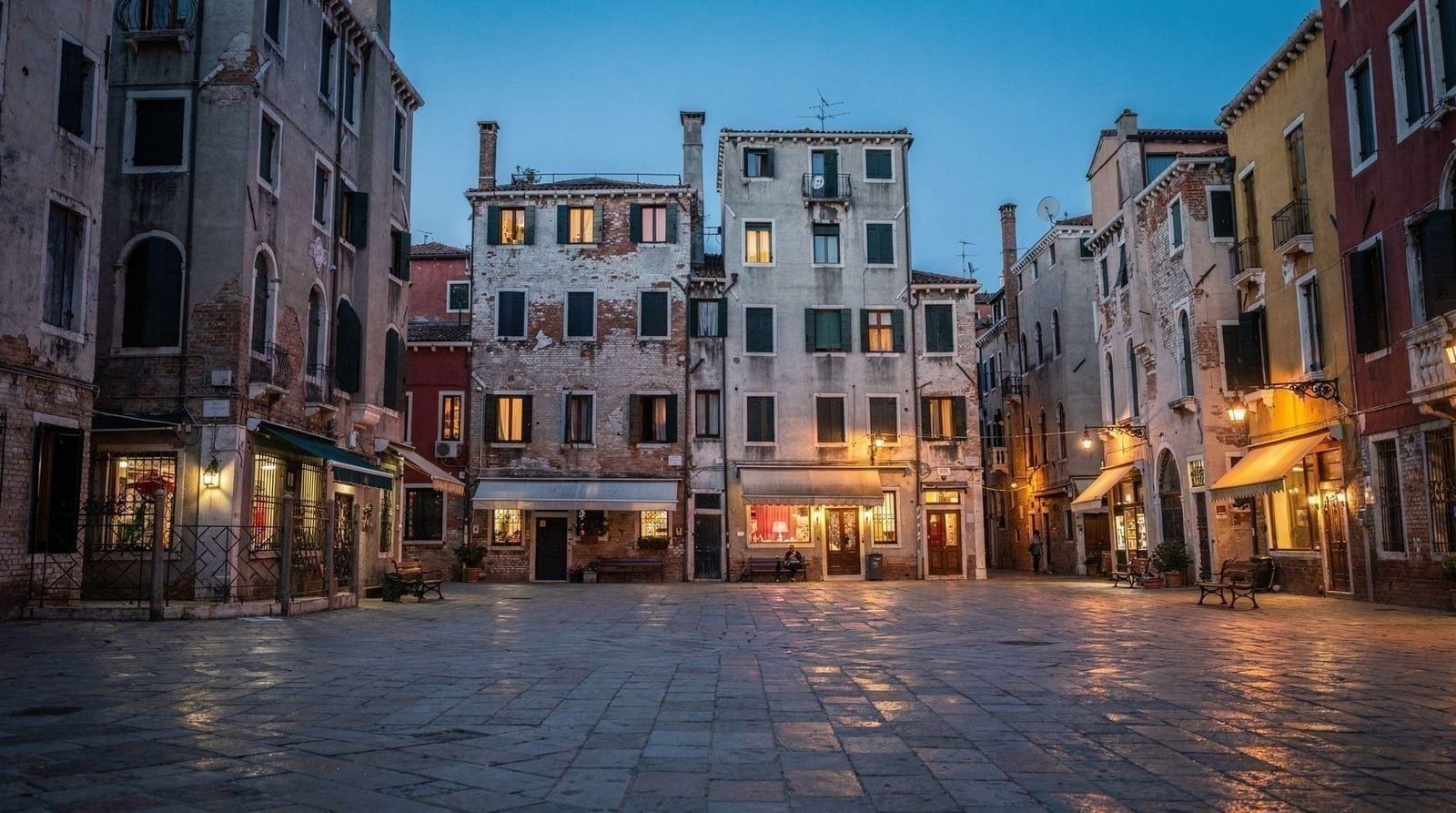
The traditional site of Marco Polo’s birth and childhood home is in the Corte del Milion (also known as Corte Seconda del Milion), a small courtyard in Cannaregio, near the church of San Giovanni Crisostomo. The medieval houses associated with the Polo family still stand — a rare survival given how much of Venice has been rebuilt over the centuries. A plaque commemorates the site.
The courtyard is not a tourist attraction in any formal sense; there is no museum, no guided tour, no entry fee. It is simply a Venetian courtyard with medieval buildings, which is itself something. The experience of finding it — which requires navigating through the streets of Cannaregio rather than following signs — is a small version of the navigational independence that Venice rewards.
From the Corte del Milion, you are close to the Teatro Malibran, which occupies the site of the Polo family’s larger property and was named after the opera singer Maria Malibran in the 19th century. The Cannaregio neighbourhood guide covers the area in detail.
For visitors who want the Marco Polo story told with context rather than found alone with a guidebook, a guided walking tour through Cannaregio’s back streets can connect the Corte del Milion to the Jewish Ghetto, the Rialto markets, and other merchant-era Venice sites that explain the commercial world the Polos operated in.
Venice historical walking tour — city centre and merchant historyPlacing Marco Polo in Venice’s wider merchant history
The Polo family’s journey did not happen in isolation — it happened because Venice had already built the commercial infrastructure that made a three-and-a-half-year overland journey to China a rational business decision rather than a reckless gamble. The Venice history overview sets out how the Republic became the dominant Mediterranean trading power in the centuries before the Polos, and the Doge’s history explains the political system that protected and directed that commercial expansion. The Jewish Ghetto guide, a short walk from the Corte del Milion, covers another dimension of Venice’s role as a cosmopolitan trading hub, home to merchant and refugee communities from across the Mediterranean and beyond.
Marco Polo in Venetian cultural memory
Venice has not always treated Marco Polo as the straightforward hero that tourist marketing might suggest. The Republic of Venice’s relationship with him during his lifetime was transactional rather than celebratory — he was a merchant who had been useful to a foreign ruler, whose book was read with interest but not treated as a document of Venetian glory. The later lionisation of Polo as a Venetian ambassador to the world developed gradually, accelerating in the 19th and 20th centuries as his story became more widely known internationally.
The Teatro Malibran — the opera house built on the site of the Polo family’s larger property, now one of Venice’s main venues for opera and classical music — was originally called the Teatro San Giovanni Grisostomo (after the nearby church). It was renamed in the 19th century after the soprano Maria Malibran, who died young in Manchester in 1836 and was deeply mourned. The Polo family connection to the site is a footnote rather than the primary association.
What does survive is the Corte del Milion, and the authentic medieval buildings around it — a rare physical connection to the Venice of the 13th century that most of the city’s architecture does not provide. Most of Venice’s medieval fabric has been rebuilt, restored, or obscured. The Polo courtyard’s medieval houses are a genuine survival.
How Marco Polo’s account influenced later exploration
The specific influence of Il Milione on the Age of Exploration is worth understanding in detail. Columbus is the most famous reader, but he was not unique. Vasco da Gama, who opened the sea route to India in 1498 — the route that eventually undermined Venice’s commercial supremacy — was working against a background of Marco Polo’s descriptions of Indian Ocean trade. John of Plan Carpini, the earlier Franciscan traveller who visited the Mongol court, and William of Rubruck, who followed him, had established that the overland Asia routes were possible; Marco Polo extended what was known dramatically.
The peculiar thing about Polo’s influence is that it operated most powerfully in failure: Columbus believed he had reached Asia partly because he was measuring distances against Polo’s account, and Polo’s estimates of Asia’s eastern extent were substantially exaggerated. The distance from Europe to Japan, as Columbus extrapolated from Polo, was much smaller than reality. This mistake — which contributed to Columbus’s conviction that he had reached Asia when he reached the Caribbean — has led some historians to argue that without Marco Polo’s errors, Columbus might not have persuaded his backers that the voyage was feasible.
Marco Polo Airport: his name in daily use
Venice Marco Polo Airport (IATA: VCE) handles approximately 11 million passengers a year and is the primary international gateway to Venice. It is located on the mainland near Mestre, approximately 12 km from Piazza San Marco.
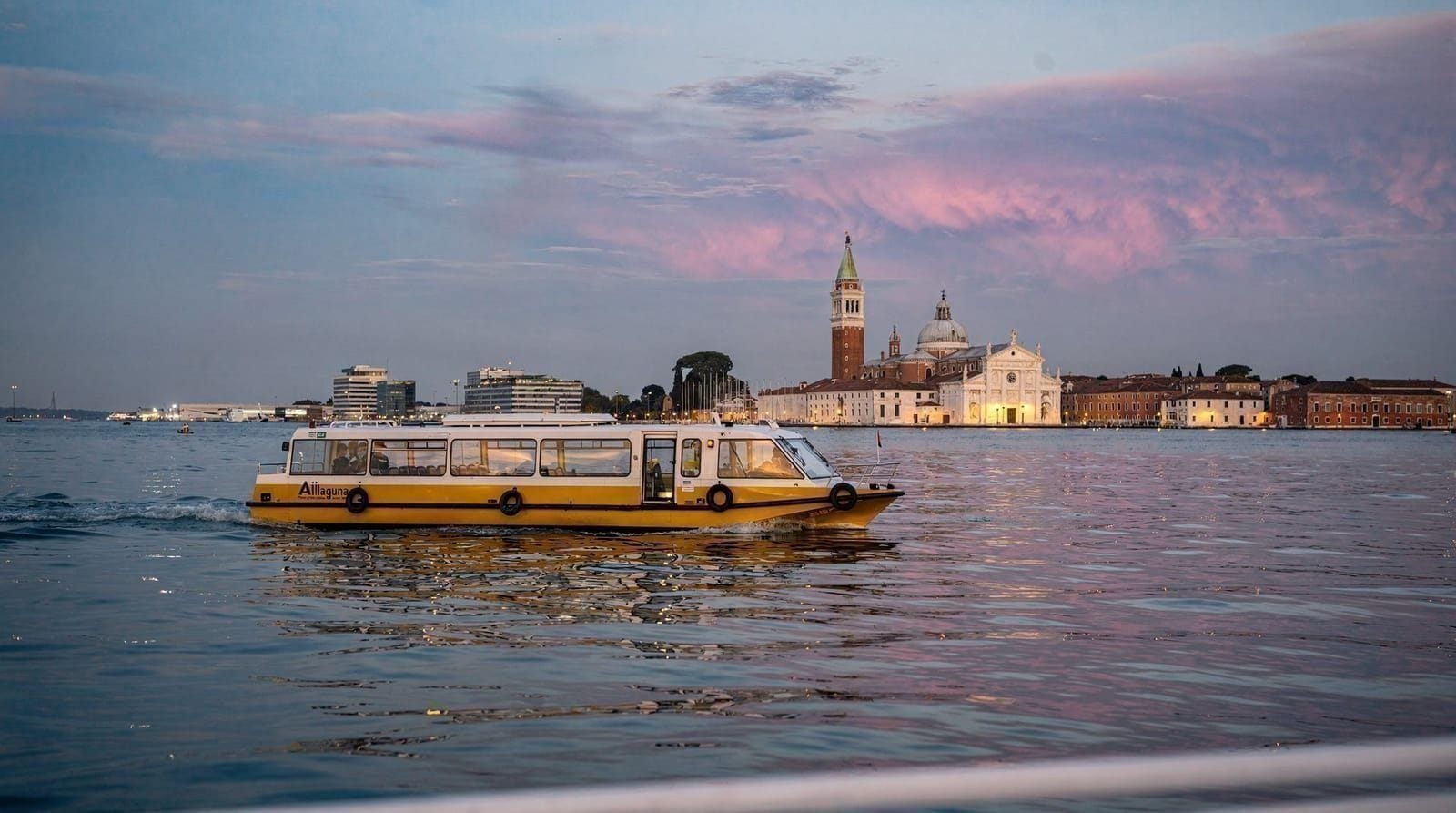
The practical question for visitors is how to get from the airport to Venice. Options include: the Alilaguna public water bus (€15, approximately 75 minutes to Piazza San Marco); a shared water taxi (approximately €25–35 per person); a private water taxi (approximately €120 for up to 6 passengers); or a bus to Piazzale Roma followed by a vaporetto into the centre.
See the Marco Polo airport transfer guide for detailed comparisons of cost and time. For onward travel once you have landed, the getting around Venice guide covers the vaporetto network you will use to reach Cannaregio and the Corte del Milion, and the arriving by train guide covers the alternative rail approach for those not flying in.
Fitting the Corte del Milion into a Venice visit
For first-time visitors following the standard sights, the Corte del Milion is a worthwhile detour rather than a headline stop — see the first-time Venice guide for how it fits alongside the Basilica, the Doge’s Palace, and the Rialto. On a multi-day visit, it slots naturally into a Cannaregio afternoon; the Venice 3-day itinerary has a day structured around exactly this kind of neighbourhood wandering rather than monument-ticking.
Frequently asked questions about Marco Polo and Venice
Where was Marco Polo born in Venice?
The traditional site is the Corte del Milion (Corte Seconda del Milion) in Cannaregio, near the church of San Giovanni Crisostomo. The medieval houses associated with the Polo family still exist. A plaque marks the site.
Why is Marco Polo’s book called ‘Il Milione’?
‘Il Milione’ is the nickname most used in Venice. It derives either from the Polo family nickname (possibly meaning million, referring to their wealth) or from the supposed scale of exaggerations in the book.
Did Marco Polo really travel to China?
The broad outlines — overland through Persia and Central Asia to Kublai Khan’s court, nearly 17 years in Asia, return by sea — are accepted by most historians. Some specific claims have been questioned, but the consensus is that he did travel to Asia.
What is named after Marco Polo in Venice?
Venice Marco Polo Airport (VCE) is the most prominent example. Various streets and commercial establishments in Venice also bear the Polo name.
When did Marco Polo return to Venice and what happened after?
Marco Polo returned to Venice in 1295. In 1298 he was captured at the Battle of Curzola fighting for Venice against Genoa. While imprisoned, he dictated his travels to Rustichello da Pisa. He returned to Venice in 1299, married, had three daughters, and died there in 1324.