Dorsoduro
Venice's art district — the Accademia, Peggy Guggenheim Collection, Campo Santa Margherita, and one of the most beautiful waterfronts in the city.
Venice: Accademia gallery guided tour with art expert
Quick facts
- Best for
- Renaissance art, contemporary art, lively squares, canal views
- Vaporetto stops
- Accademia, Ca' Rezzonico, Salute, Zattere
- Time needed
- Half day for the art; full day if including Punta della Dogana and Zattere waterfront
- Don't miss
- Gallerie dell'Accademia, Peggy Guggenheim, Campo Santa Margherita at aperitivo hour
- Art pass
- Dorsoduro holds 3 of Venice's top 5 museums
Venice’s art district and its most liveable square
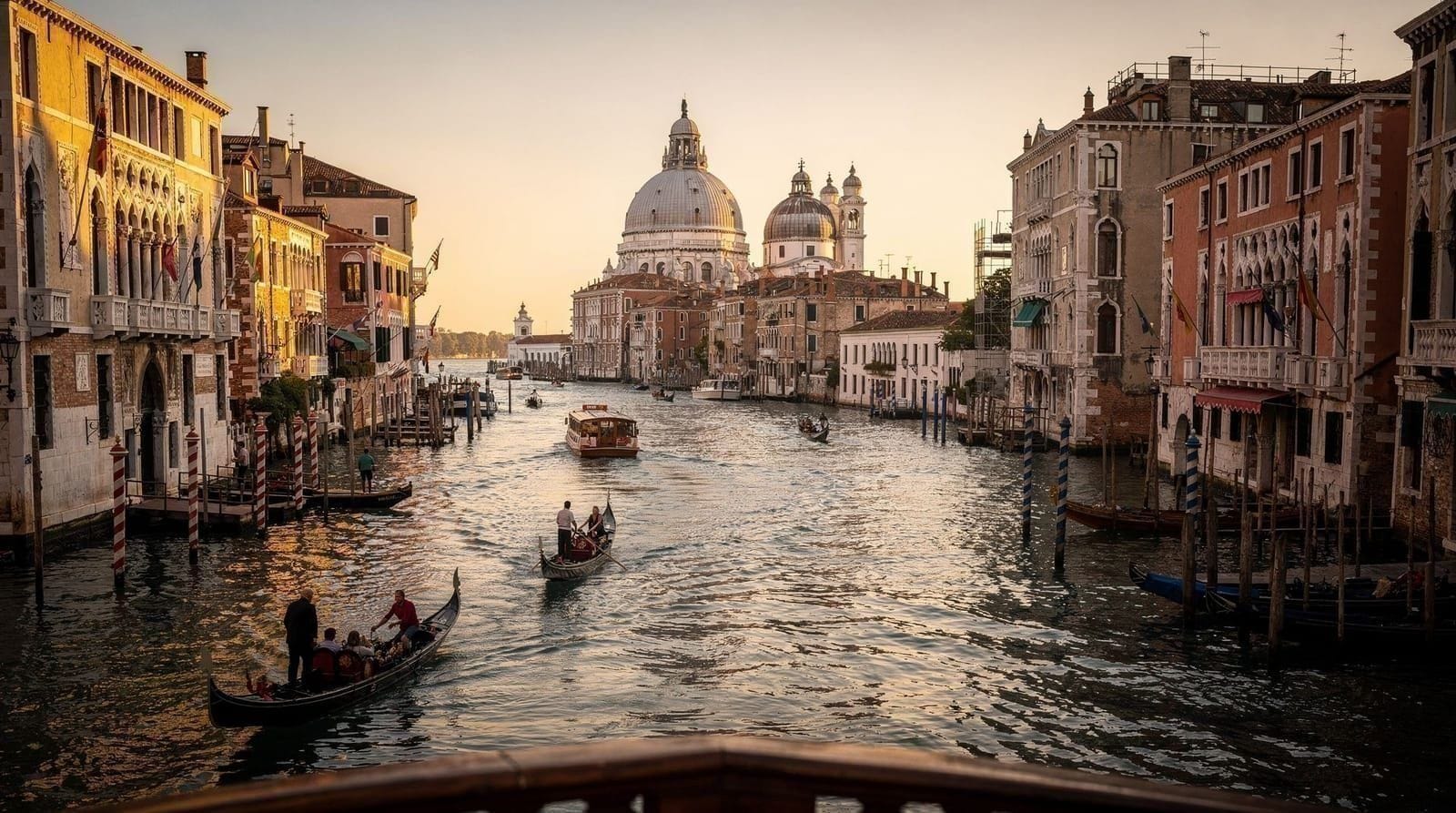
Dorsoduro occupies the southwestern tip of Venice’s main island, bounded by the Grand Canal to the north, the Giudecca Canal to the south, and the broad Zattere waterfront facing the island of Giudecca. It is simultaneously Venice’s premier art destination and one of its most genuinely liveable neighbourhoods. The Accademia and the Peggy Guggenheim Collection are both here; so are Venice’s best university area, the livliest square for an evening spritz, and a waterfront where you can watch the ships go by with a Campari and soda.
Dorsoduro feels different from San Marco. The streets are less crowded, the restaurants are better value, and the concentration of art is astonishing for a neighbourhood that takes under an hour to walk end to end.
| Where | Southwestern tip of Venice, between the Grand Canal and Giudecca Canal |
| Cost | Accademia €15; Guggenheim €18; spritz €3.50–5; dinner €25–40 |
| Time needed | Half a day for one museum; a full day for the Accademia, Guggenheim and Zattere |
| Getting there | Vaporetto to Accademia, Ca’ Rezzonico or Salute; 15 min walk from San Marco |
| Best time | Spring and autumn; mornings for the Accademia, evening for Campo Santa Margherita |
Gallerie dell’Accademia
The Accademia is Venice’s great repository of Venetian painting from the 13th to the 18th century. The building is a converted monastery and scuola (charitable fraternity). The collection traces the full arc of Venetian painting: Byzantine gold-ground altarpieces in the early rooms, then Bellini’s tender Madonnas, Carpaccio’s narrative cycle of St Ursula, Giorgione’s enigmatic Tempest, Titian’s extraordinary late works, Veronese’s magnificent Feast in the House of Levi (painted as a Last Supper but revised when the Inquisition objected to its secular detail), and Tiepolo.
Entry costs around €15; book online to skip the queue, which can be 30–45 minutes at peak times. Guided art expert tours are genuinely informative here — the attribution stories and Venice-specific context add significantly to the experience. Allow 1.5–2 hours minimum.
Venice: Accademia gallery guided tour with art expertRead the full Accademia gallery guide.
Peggy Guggenheim Collection
The Palazzo Venier dei Leoni, which Peggy Guggenheim bought in 1949 and lived in until her death in 1979, houses one of Europe’s finest collections of early 20th-century modern art. Pollock, Picasso, Dalí, Ernst, Miró, Mondrian, Magritte, Calder — the collection is extraordinary in its breadth and in the quality of individual works.
The terrace facing the Grand Canal, where Peggy’s sculptures are displayed and where you can watch the water traffic with a Pollock on your right and a Brancusi on your left, is one of the more unusual art experiences in Venice. Entry costs €18; the Guggenheim has a Venetian member of the family buried in the garden. Relatively uncrowded compared to the Accademia — a good option for the afternoon once the Accademia is done.
Read the full Peggy Guggenheim guide.
Punta della Dogana
The converted 17th-century customs warehouse at the tip of Dorsoduro, where the Grand Canal meets the Giudecca Canal, is now a contemporary art space owned by collector François Pinault (the other Pinault venue in Venice is Palazzo Grassi in San Marco). The permanent collection and temporary exhibitions focus on large-scale contemporary and post-war work — Koons, Murakami, Cattelan. Entry around €18; combined tickets with Palazzo Grassi available. Worth it for serious contemporary art visitors; optional for others.
Campo Santa Margherita
The largest campo in Dorsoduro is the social heart of the neighbourhood and Venice’s most authentic public square. It is where the university students congregate, where local families bring their children in the afternoon, and where the aperitivo culture is at its most genuine. The surrounding bars — Il Caffe (also known as Caffè Rosso for its red sign), Bar Salus, and Caffè Santa Margherita — serve spritz from around €4–5, well below San Marco prices.
The square has a small market most mornings (fish, vegetables) and is busiest from around 5–8pm when students and locals mix for the ombra (small wine) ritual. This is the liveliest free entertainment in Dorsoduro.
The Zattere waterfront
The Zattere is Dorsoduro’s southern embankment facing the Giudecca Canal and the island of Giudecca across the water. It is about 800 metres long, wide enough for walking and cycling (the only major east-west cycling route in Venice), and lined with cafés, trattorias, and gelaterias. The view south from here — across to the Redentore church on Giudecca and the Molino Stucky industrial-turned-hotel complex — is very different from the Grand Canal view.
Il Gelatone near the Zattere al Salute stop is one of Venice’s better gelaterias (try crema veneziana or a seasonal fruit flavour). Nico further along is Venice’s oldest gelateria, famous for the gianduiotto — a block of gianduja ice cream in whipped cream.
Ca’ Rezzonico — the museum of 18th-century Venice
The Ca’ Rezzonico on the Grand Canal is a Baroque palace now housing the Museo del Settecento Veneziano, giving a vivid picture of 18th-century Venetian aristocratic life: Tiepolo ceiling frescoes, Guardi views of Venice, furniture, theatre costumes, and puppets. Entry around €10. Usually much less crowded than the Accademia or Guggenheim and genuinely interesting for context.
Santa Maria della Salute
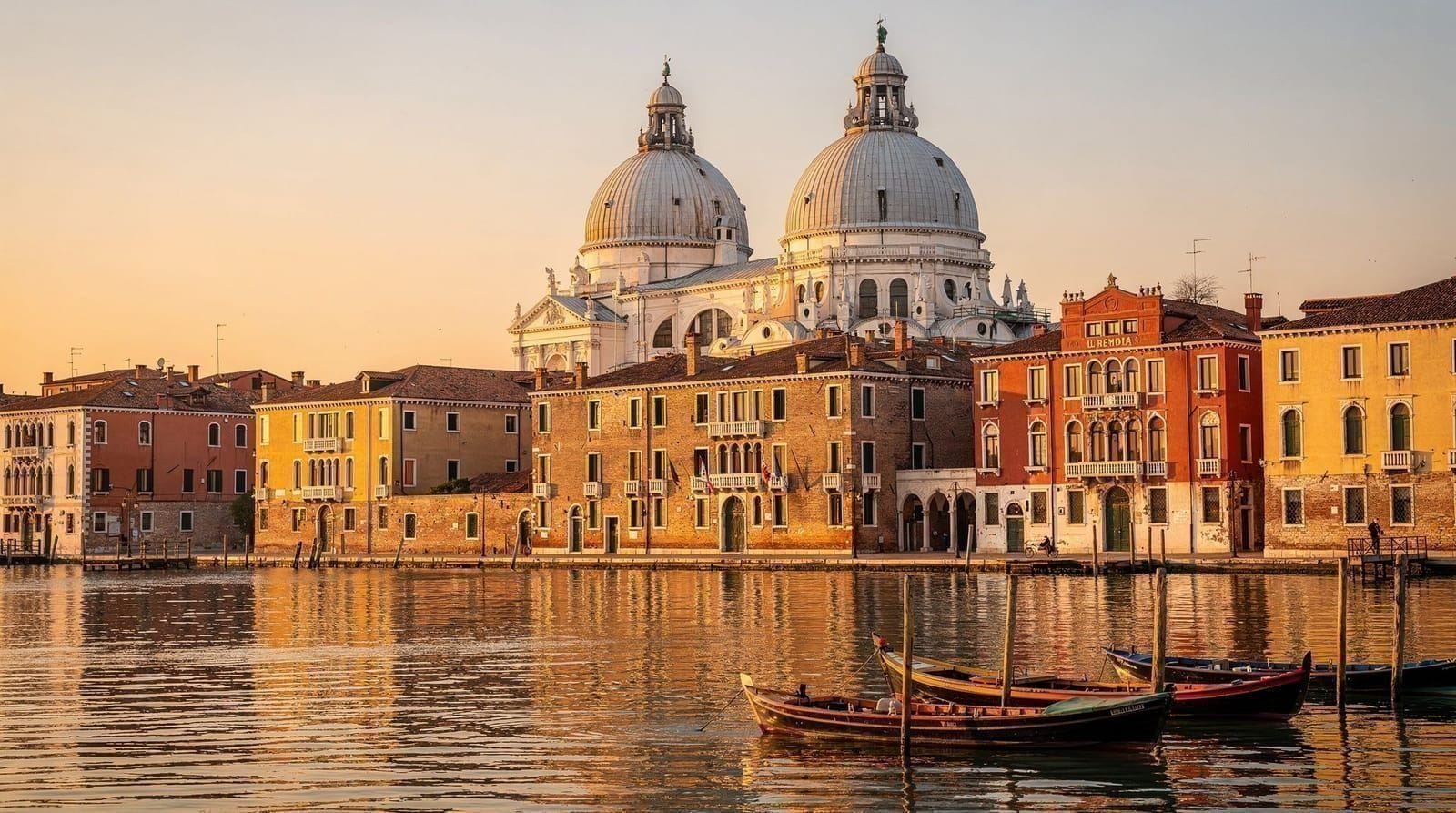
The baroque rotunda of La Salute at the tip of Dorsoduro, facing the Punta della Dogana, is one of Venice’s defining skyline elements — visible from almost anywhere on the Grand Canal. Built as a votive church after the plague of 1630, its interior by Baldassarre Longhena is decorated with Titian’s Pentecost and Tintoretto’s Marriage at Cana. Entry is free; the Sacristy (€4) contains the main Titian and Tintoretto works. The exterior at golden hour is one of Venice’s great photography subjects. See the best photo spots guide and golden hour guide.
Where to eat in Dorsoduro
Dorsoduro has some of Venice’s best value restaurants, particularly in the streets around Campo Santa Margherita and the Zattere.
Trattoria ai Cugnai (Piscina del Forner near Accademia): reliable mid-range Venetian cooking, good sarde in saòr and bigoli in salsa. Osteria Enoteca Ai Artisti (Fondamenta della Toletta): excellent natural wine list and cicchetti. Trattoria Dalla Mora on the Zattere: straightforward Venetian fish and pasta, fair prices. A sit-down meal with wine in Dorsoduro runs €25–40 per person — well below San Marco rates for similar quality.
For evening drinks, Campo Santa Margherita is the obvious destination. The spritz price check: Il Caffè Rosso charges around €3.50, which is among the lowest in central Venice.
Churches and palaces beyond the main museums
Dorsoduro is full of churches that most visitors never enter. The Church of the Gesuati (Santa Maria del Rosario) on the Zattere has a Tiepolo ceiling that rivals anything in the Accademia — three large ceiling frescoes painted between 1737–1739, in extraordinary condition, admission around €3.50 with the Chorus Pass. Almost no one goes.
The Church of San Sebastiano (behind the Piazzale Roma side of Dorsoduro) is entirely decorated by Paolo Veronese from 1555 onward — ceiling, walls, organ shutters, choir stalls. It was his home parish church; he is buried here. Entry with the Chorus Pass. Quiet and exceptional.
The Scuola Grande dei Carmini, just off Campo Santa Margherita, is a former religious confraternity building with a main hall ceiling painted by Tiepolo in 1740–1744 (the central canvas shows the Virgin bestowing the scapular on the founder of the Carmelites). Entry around €5. The building itself is a good example of a scuola grande interior, less visited than the Scuola di San Rocco.
The art mile from Salute to Accademia
Dorsoduro’s main cultural axis runs along the Grand Canal from the Santa Maria della Salute at the eastern tip to the Accademia bridge at the western end — a distance of about 700 metres of waterfront path. Along this “art mile” you pass: La Salute itself, the Peggy Guggenheim Collection, the Punta della Dogana (if you choose to enter), and the Accademia. Each is a 10-minute maximum walk from the next.
For this route see the Dorsoduro guide which covers the art mile in sequence. The Venice photography 3-day itinerary uses this walk at golden hour and dawn for canal and lagoon photography.
Budget eating and drinking in Dorsoduro
Dorsoduro offers Venice’s best combination of value and quality in its restaurant scene. The rule: the further from the Accademia bridge (and toward Campo Santa Margherita or the Zattere), the better the prices without any drop in quality.
Typical midday cicchetti prices around Campo Santa Margherita: spritz €3.50–4.50, glass of house wine €2.50–3.50, single cicchetto €1.50–3. This is the best value-for-money eating in central Venice. By comparison, a coffee at Caffè Florian on Piazza San Marco costs €12–18 with music surcharge.
The Venice on a budget guide and cheap eats Venice guide both feature Dorsoduro prominently for afternoon cicchetti and evening spritz.
Connecting Dorsoduro to the rest of Venice
Dorsoduro is well-connected. The Accademia bridge (the most beautiful of Venice’s four Grand Canal crossings, a wooden arch with lagoon views) connects directly to San Marco in a 15-minute walk. The Ca’ Rezzonico stop connects north toward San Polo and Cannaregio. The Zattere waterfront connects west toward Piazzale Roma and Santa Croce, or east to the Salute stop and beyond.
The Venice 2-day itinerary covers Dorsoduro on the afternoon of day one (post-Accademia) and the morning of day two (Guggenheim, Zattere). The Venice photography itinerary starts each day from Dorsoduro.
Dorsoduro for families and groups
Campo Santa Margherita has a playground and is one of the few central Venice squares where children have space to play. The neighbourhood’s parks and open spaces — while nothing compared to a mainland park — are more generous than San Marco or Cannaregio. The Venice with kids guide recommends Campo Santa Margherita as a base for family rest-stops on a full-day Venice itinerary.
The Accademia is worth visiting with older children (10+) who have some art history interest; the Peggy Guggenheim is often more accessible to children because the modern art is vivid and the outdoor sculpture garden is hands-on in feel. Ca’ Rezzonico, with its costumed mannequins, puppet theatre, and period room recreations, tends to work well with younger children too.
Day planning from Dorsoduro
Dorsoduro is an excellent home base for exploring the rest of Venice. From the Accademia bridge, San Marco is 15 minutes on foot. From the Zattere, the No. 2 vaporetto runs to Giudecca in 3 minutes, San Marco in 12, and Piazzale Roma in 15. From Ca’ Rezzonico, the No. 1 runs north to Rialto and beyond.
For the Venice couples 3-day itinerary, the suggested base is Dorsoduro — the combination of Campo Santa Margherita evenings, the Accademia and Guggenheim by day, and the Zattere waterfront for morning coffees makes it the most liveable sestiere for a multi-day stay.
Choosing between Dorsoduro’s museums
With three of Venice’s top five museums in one sestiere, it helps to know how they differ before committing a full day.
| Museum | Focus | Entry | Time needed |
|---|---|---|---|
| Gallerie dell’Accademia | Venetian painting, 13th–18th century | ~€15 | 1.5–2 hours |
| Peggy Guggenheim Collection | 20th-century modern art | €18 | 1–1.5 hours |
| Punta della Dogana | Large-scale contemporary art | ~€18 | 1 hour |
| Ca’ Rezzonico | 18th-century Venetian life | ~€10 | 45–60 minutes |
For a single half-day visit, the Accademia and Guggenheim pair best — Renaissance in the morning, modern art in the afternoon, both within a 15-minute walk of each other. Punta della Dogana and Ca’ Rezzonico suit a second day or visitors with a specific interest in contemporary art or 18th-century decorative arts.
Practical tips before you go
Book the Accademia online in advance during peak season — the queue can run 30–45 minutes without a pre-booked slot. Campo Santa Margherita’s bars get genuinely busy from around 6pm, so arrive slightly earlier if you want a table rather than standing room. Chorus Pass churches like San Sebastiano and the Gesuati keep their own hours and are usually closed Sunday mornings for services. If combining Dorsoduro with a full day of art, pace yourself — three museums in one day is possible but tiring; the Dorsoduro guide has a more detailed sequencing suggestion for the art mile.
Frequently asked questions about Dorsoduro
Is the Accademia or the Peggy Guggenheim better?
They cover completely different ground. The Accademia is for Italian Renaissance painting; the Guggenheim is for 20th-century modern and contemporary art. If you have one day in Dorsoduro, do the Accademia in the morning (2 hours) and the Guggenheim in the afternoon (1.5 hours). If you only have time for one, your preference for Renaissance vs. modern art should decide.
How long does the Accademia gallery take?
Budget 1.5–2 hours for a thoughtful visit of the main collection. With a guide, you can do the highlights in 90 minutes. The full collection, including prints and drawings, takes 3+ hours.
Where is Campo Santa Margherita?
About 10 minutes west of the Accademia bridge, or a 5-minute walk from the Ca’ Rezzonico vaporetto stop. It is the large open square — not hard to find once you are in Dorsoduro.
Is Dorsoduro a good area to stay in Venice?
Yes — it combines good transport connections (Accademia and Ca’ Rezzonico stops on line 1), excellent restaurant options, and a more local atmosphere than San Marco. Hotel prices are mid-range; apartments in the quieter streets around Campo Santa Margherita are popular with longer-stay visitors.
What is the best view in Dorsoduro?
From the terrace of Santa Maria della Salute at the tip of Dorsoduro, looking north across the Bacino toward San Marco. The Accademia bridge also gives a fine view east and west along the Grand Canal. The Zattere at sunset, looking across at Giudecca, is excellent for photography.
Is one day enough for Dorsoduro, or should I split it across a trip?
One focused day covers the essentials — the Accademia, the Guggenheim, and an evening in Campo Santa Margherita. Splitting Dorsoduro across two half-days, as the Venice 2-day itinerary does, works well if you want to add Punta della Dogana or Ca’ Rezzonico without rushing, or if you are staying in the neighbourhood and prefer to weave it into a broader Venice stay.
Top experiences
Bookable activities with verified prices and instant confirmation on GetYourGuide.