Golden hour in Venice: the best spots for evening photography
Venice: photoshoot at the Grand Canal & Rialto bridge
Where is the best place for golden hour photography in Venice?
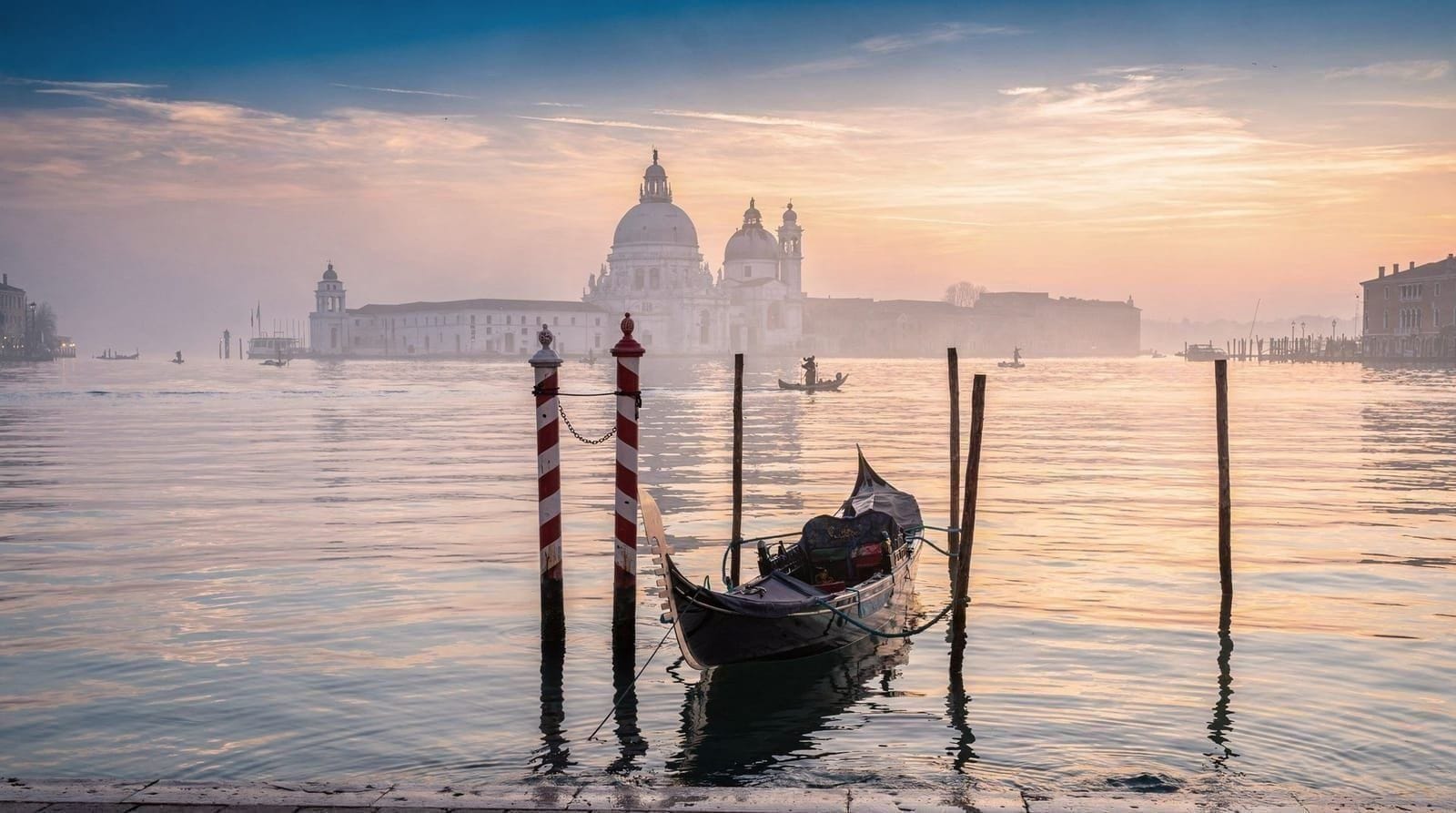
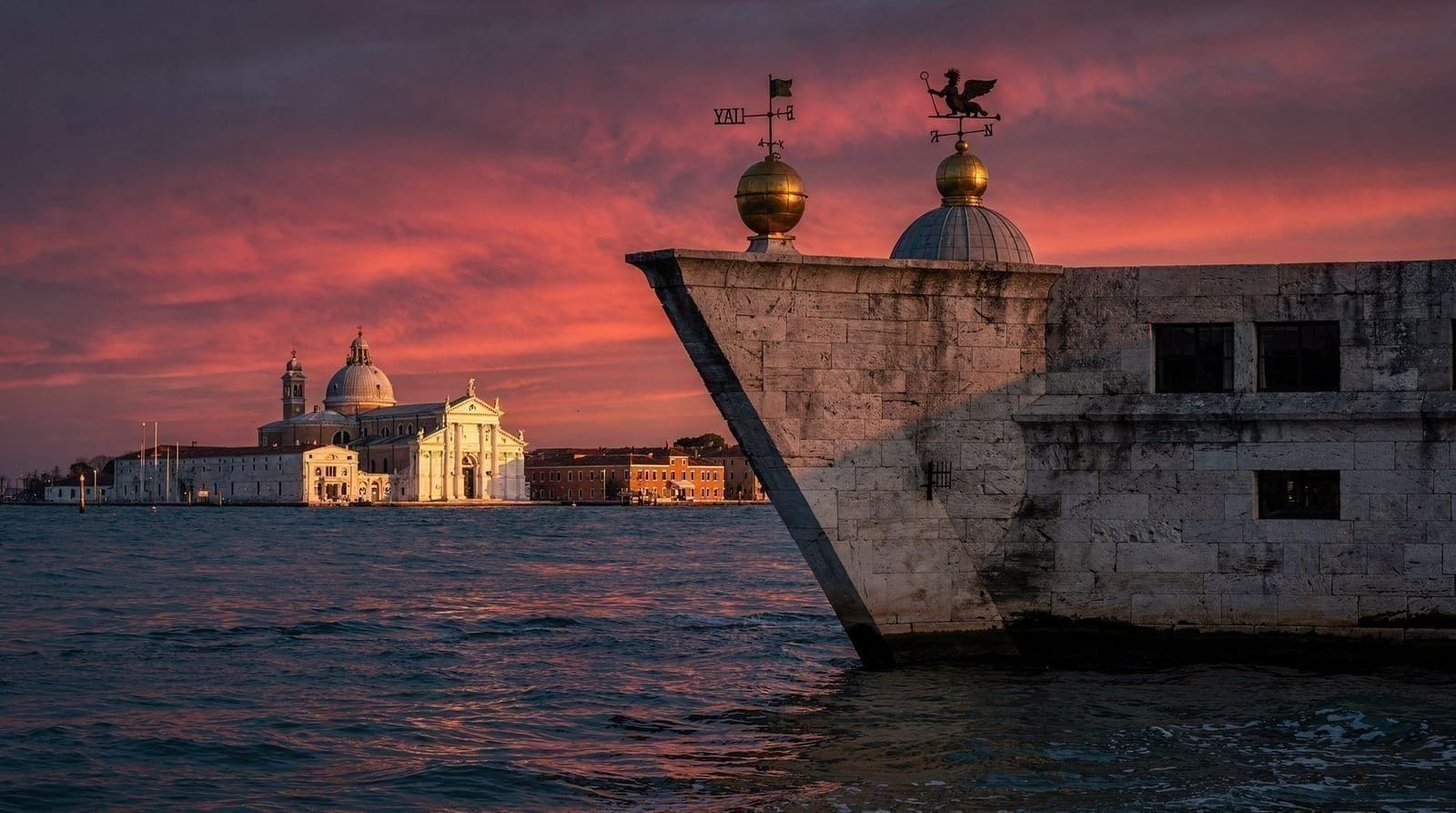
Punta della Dogana (the tip of Dorsoduro) is the finest golden-hour position in Venice: the Salute's dome turns orange, the San Giorgio Maggiore campanile lights up across the water, and the Bacino di San Marco opens in front of you. Ponte dell'Accademia looking northeast toward the Salute is a close second. Both work best in the 45 minutes before sunset.
| Best spot | Punta della Dogana, tip of Dorsoduro |
| Cost | Free (public waterfront, no ticket) |
| Time needed | Arrive 45 min before sunset |
| Getting there | 10–15 min walk from Accademia, or vaporetto to Salute |
| Best season | Autumn/winter for deeper colour, fewer photographers |
Why evening light changes Venice
Venice faces the Adriatic. The city’s dominant orientation is east–west: the main waterfront (the Bacino di San Marco) faces south across the water, and the Grand Canal runs roughly east–west through the city before curving southwest toward the sea. This geography means that evening light — from the west, lowering toward the sea — illuminates the southern-facing facades of the city’s most important buildings directly.
The Basilica della Salute, at the western end of the Grand Canal, faces southwest. The Church of San Giorgio Maggiore, on its island across the water, faces northwest. Both are lit from the front in the hour before sunset. The Bacino di San Marco — the broad basin where the Grand Canal meets the open lagoon — faces roughly south, and its surface catches the low western sun as a sheet of orange and pink.
This is the golden hour configuration that makes Venice’s evening photography so exceptional. No other major European city has this combination of maritime exposure and historically significant architecture oriented toward the evening light. For a fuller rundown of spots across the day, not just sunset, see the best photo spots guide and its morning counterpart, the sunrise photography guide.
Punta della Dogana: the single best position
The Punta della Dogana is the extreme tip of the Dorsoduro peninsula, where the Grand Canal meets the Giudecca Canal. The former Customs House building (now the Punta della Dogana contemporary art museum) sits at the point. From the public waterfront immediately around the building — no ticket required — you have:
- The Basilica della Salute directly ahead (northwest) and turning gold as the sun drops
- The Bacino di San Marco opening to the east, with the Doge’s Palace and San Giorgio Maggiore visible
- The mouth of the Grand Canal behind you
- The Giudecca Canal to the south, with the Redentore church visible on Giudecca island
In the 45 minutes before sunset, this point receives the full weight of the evening light from all directions simultaneously — reflected off the water, direct on the facades, creating the colour transition from white to gold to orange that defines the best Venice photographs.
How to get here: Walk from the Accademia along the canal-side (Fondamenta della Dogana) — approximately 10–15 minutes from the Accademia Bridge. Or take vaporetto line 2 to Salute stop and walk 5 minutes around the Salute church.
When to arrive: Be at the point 45 minutes before sunset to secure a position and adjust your composition as the light develops.
Ponte dell’Accademia: the Grand Canal view
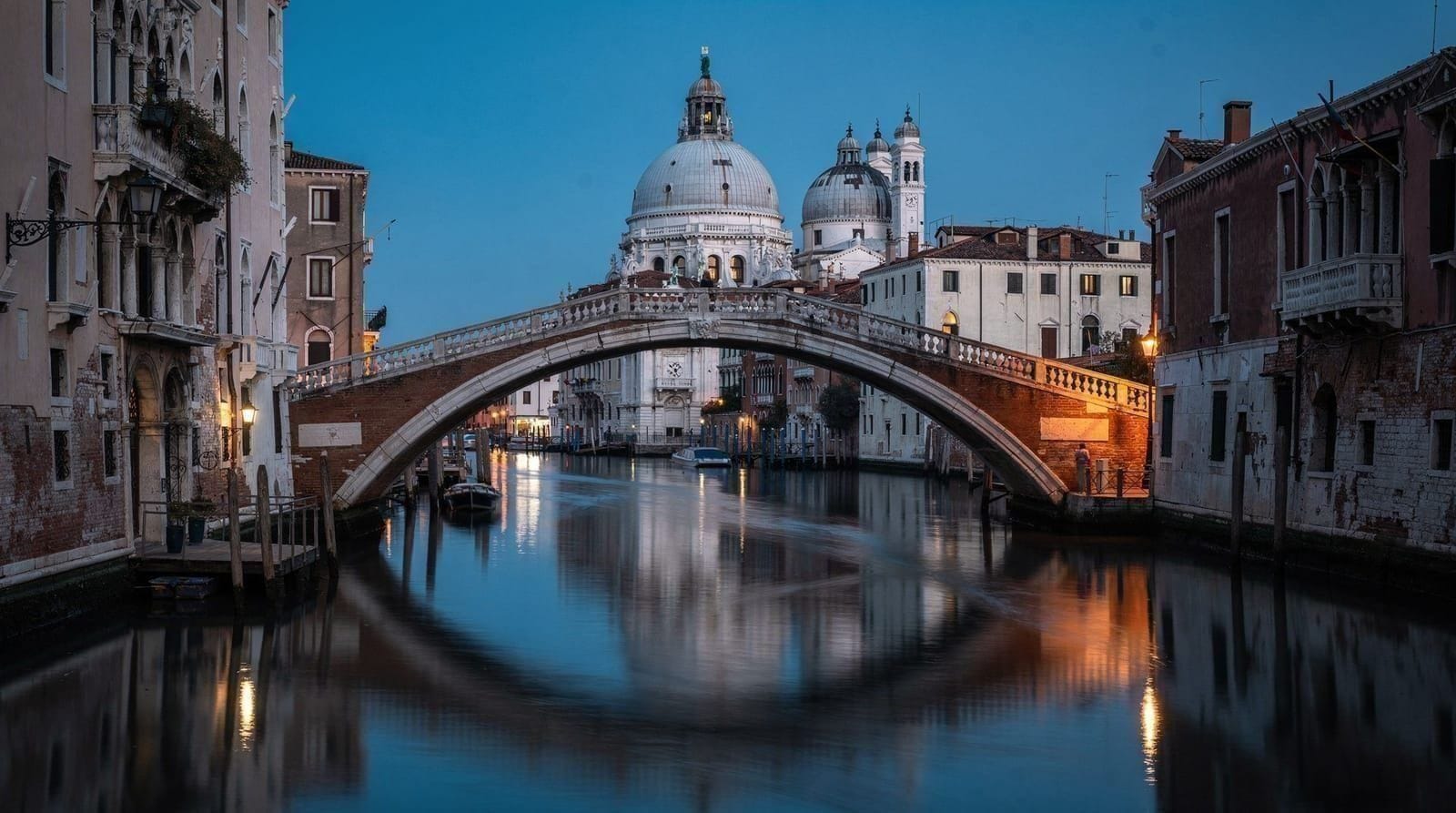
The wooden Accademia Bridge in Dorsoduro gives you the long view northeast down the Grand Canal toward the Salute dome and San Giorgio beyond. This is the most widely reproduced Venice golden-hour composition: the canal narrowing toward the distance, gondolas and vaporetti in the foreground, the Salute rising in warm light at the end of the tunnel.
Position: Stand on the bridge’s middle section and look northeast. The bridge is always occupied, but the eastern side tends to have fewer people than the western side because the sunset light is behind you in this direction. Go as close to the railing as possible.
Timing: The light is most effective when the sun is 15–30 degrees above the horizon — approximately 45 minutes before sunset in summer.
Variation: Turn 180 degrees and look southwest from the same bridge position. The view toward the open Grand Canal and the station area catches the direct sunset light and is less photographed but often more dramatically lit.
Zattere: the long promenade
The Zattere is the long promenade along the southern edge of Dorsoduro, facing south across the Giudecca Canal. In the evening, as the sun drops toward the southwest, the western end of the Zattere (near the Punta della Dogana) receives warm side-light from the right. The Giudecca Canal itself is wide enough to provide open-sky reflections.
The Zattere is also one of the most pleasant evening walks in Venice — residential, with ice cream shops and a few bars, popular with Venetians rather than primarily with tourists. The photographic quality is informal and documentary rather than monumental.
What to photograph here: The Giudecca island buildings across the water, lit from the west in late afternoon; couples and families on the promenade in the warm light; the Redentore church dome visible toward the western end. The Giudecca guide covers crossing over to shoot the reverse view.
San Giorgio Maggiore campanile: the aerial perspective
The campanile of San Giorgio Maggiore can be climbed by lift (€8) for the 360-degree view of the lagoon. In the late afternoon, this viewpoint provides the most dramatic golden-hour aerial photography in Venice: the Bacino turning gold, the Grand Canal catching the light, the entire city illuminated in warm orange.
The timing is the critical variable. You want to be at the top of the campanile approximately 30–45 minutes before sunset. The campanile closes at sunset or shortly before — check the current hours before planning and factor in the 5-minute vaporetto crossing from San Zaccaria.
What to photograph: Look west toward the city and the sun. The Grand Canal’s full curve, the Campanile di San Marco, the roofline of the Doge’s Palace, the dome of the Frari visible in the distance. Then turn east for the lagoon and the distant Lido strip. Then south for the Giudecca Canal and the open sea.
The Giudecca Canal from Giudecca island
Taking the vaporetto line 2 from Zattere to Palanca (Giudecca) takes 3 minutes and puts you on the northern shore of Giudecca island, looking back at Venice. The view of the Zattere, the Salute, and the Punta della Dogana from Giudecca in the evening light is underused — most photographers stand on the Venice side looking at Giudecca, but the reverse is often more interesting because you have the entire Dorsoduro waterfront lit from the southwest.
The Grand Canal at golden hour: from a boat
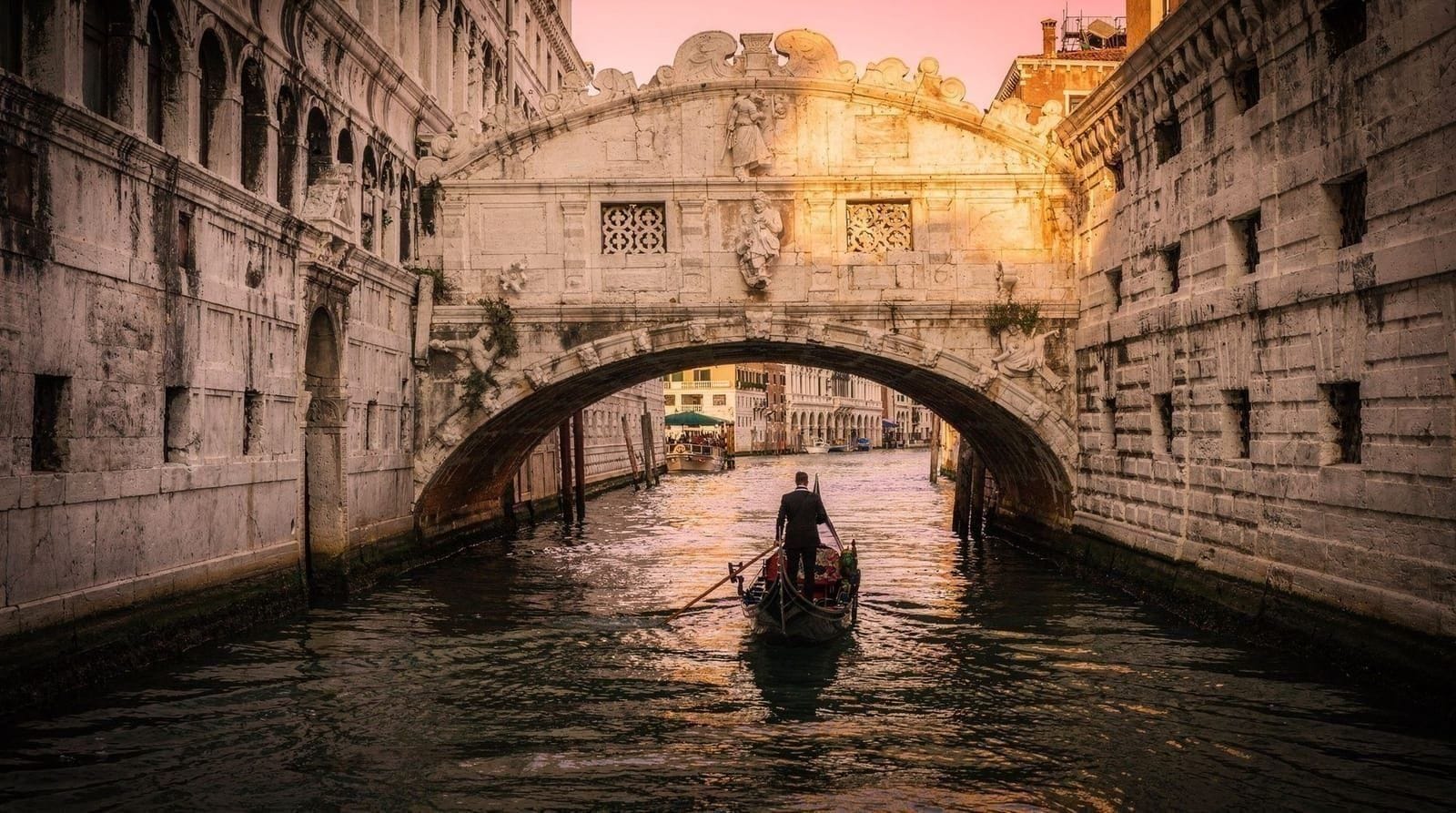
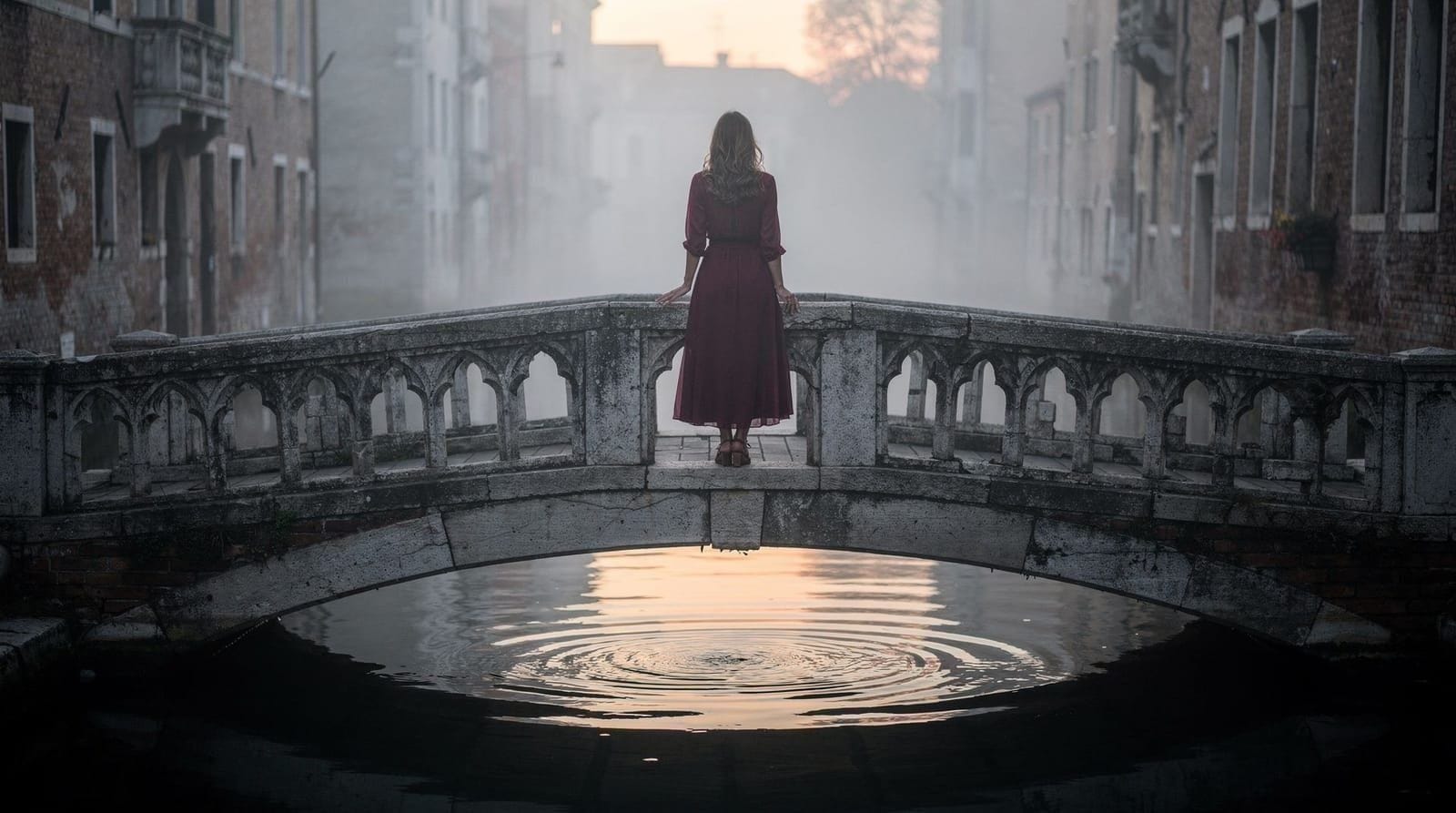
The most immersive golden-hour experience is from water level. A private gondola for the 30–45 minutes of the golden hour puts you at the same height as the canal surface, with the low light reflecting between the canal water and the lower-floor windows of the palazzi on both sides. This is the position of the classic Venice canal photograph — the one that looks like it was taken on film in 1970.
For a professional portrait photoshoot at golden hour, the Grand Canal and Rialto photoshoot works specifically with the evening light and positions you (and a companion) as subjects within the canal’s golden-hour environment. The photographer handles the technical elements; you experience the light.
For a more exploratory approach to the city’s photographic possibilities — including evening locations chosen by the guide based on the specific day’s light — the private photo-walk with photographer guide can be scheduled for golden-hour departure.
Autumn and winter golden hour: why the timing advantage matters
In June, golden hour in Venice begins around 7:00 pm and sunset is near 8:00 pm. In October, golden hour begins around 4:15 pm and sunset is at 5:00 pm. The practical implications:
-
Summer: You can have dinner first, then go out for golden hour. The extended daylight also means that the waterfront is still busy with visitors as you arrive at Punta della Dogana. The colours are warm but the atmosphere is crowded.
-
Autumn/winter: Golden hour arrives while museums are still open and the afternoon energy of the city is not yet over. But it also arrives while fewer tourists are in the city overall — the density at the Punta della Dogana or Ponte dell’Accademia in October is dramatically lower than in July.
The autumn advantage for golden-hour photography is the combination of later-in-the-day sun angle (producing more dramatic shadows and longer warm-light periods), atmospheric lagoon haze, and fewer competing photographers at the prime spots.
There’s a practical trade-off worth knowing before planning a trip around this: shorter winter days compress your whole photography schedule, since sunset at 4:30 pm means golden hour is over well before dinner, and museums and shops may already be closing as you’re setting up a shot. Summer gives you more daylight hours to combine sightseeing with a late golden-hour session, at the cost of denser crowds at every prime spot. Neither trade-off is objectively better — it depends on whether your priority is quality of light or flexibility of schedule.
The specific colour temperature of Venetian golden hour
Photographers talk about golden hour as if it were a single thing, but the quality of the light varies significantly by season and weather conditions in Venice.
In summer (June–August), the sun sets late (after 8 pm) and the light’s path through the atmosphere is relatively direct — the colour temperature shifts from white to golden yellow in the final hour, and the whole event is compressed into roughly 45–60 minutes. The colour is warm but not extreme.
In autumn and winter (October–February), the sun’s angle at sunset is lower and the light travels through more atmosphere. The result is a colour temperature that shifts further toward orange and red, and the quality of the light is more saturated and dramatic. An autumn Venetian golden hour, with atmospheric haze over the lagoon diffusing the light further, produces a depth of orange that summer cannot match.
The specific conditions that produce the most dramatic Venetian golden hours:
- Partial cloud cover: Clouds that catch the low sun and reflect it amplify the colour intensity. Clear days produce beautiful but predictable golden hours; a sky with high cloud at the right position creates spectacular conditions.
- Lagoon haze: The water vapour in the lagoon air diffuses and softens the light, turning a sharp golden disc into a colour wash that covers the entire western sky.
- Post-rain clearing: When a weather front has passed through and the sky clears in the late afternoon, the air is unusually clean and the colours unusually saturated. Venice after autumn rain, clearing at 4 pm to a golden sky, is one of the most photogenic conditions the city produces.
The ethical question: crowds at popular golden-hour spots
The Punta della Dogana and Ponte dell’Accademia can become significantly crowded with photographers during peak golden-hour periods in summer. The etiquette is similar to other popular photography locations: take your shot and move, rather than occupying the prime position for an extended period. Venice’s public spaces belong to everyone.
For less crowded golden-hour alternatives that still offer excellent light:
- Riva degli Schiavoni (eastern end, near the Arsenale): Less crowded than the San Marco section, facing southwest across the Bacino.
- Fondamenta Zattere al Spirito Santo: The southern tip of the Zattere, facing the open Giudecca Canal. Better angles for the Redentore church and the western sky.
- San Giorgio Maggiore campanile: You are above the crowds and the view is unobstructed in every direction.
- Giudecca waterfront: Looking north at Venice across the Giudecca Canal, the entire Dorsoduro and San Marco skyline in profile in the golden light.
Planning golden hour photography across your Venice visit
A good structure for a multi-day Venice trip:
- Day 1, morning: Early rising, Rialto at sunrise, Piazza San Marco at dawn. Understand the baseline.
- Day 1, evening: Punta della Dogana at golden hour. Experience the best single position.
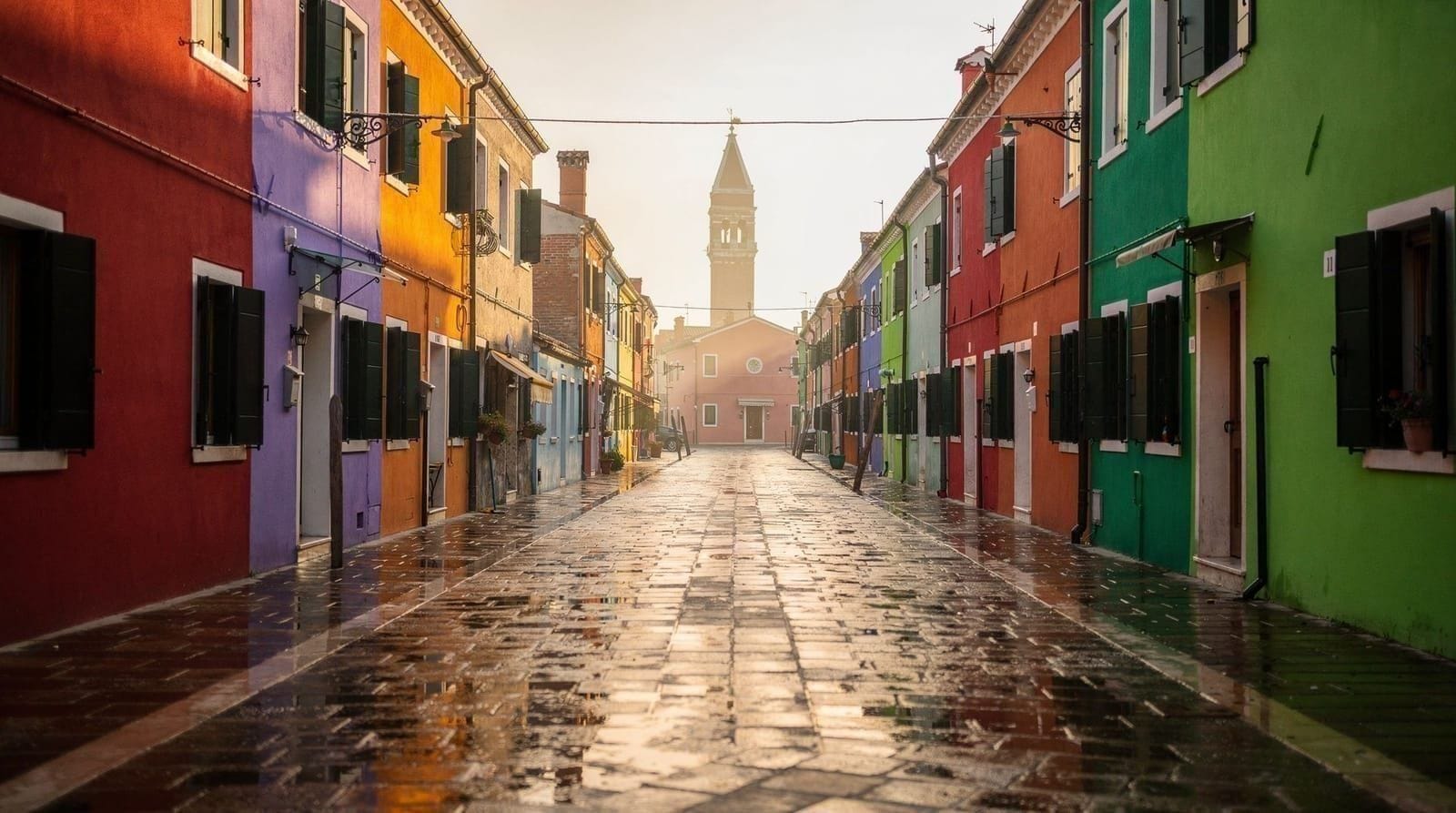
- Day 2, morning: Burano by early vaporetto. Different light, different subject matter.
- Day 2, evening: Ponte dell’Accademia or Giudecca for the alternative waterfront perspective.
See the Venice photography 3-day itinerary for a fully planned schedule around photography, and the best time to visit Venice guide for choosing which season suits your photographic goals.
Golden hour by season: what to expect
| Season | Sunset (approx.) | Light quality | Crowds at prime spots |
|---|---|---|---|
| Winter (Dec–Feb) | 4:30–5:00 pm | Deep orange-red, lower sun angle | Light |
| Spring (Mar–May) | 6:00–8:00 pm | Clean, warm yellow-gold | Moderate |
| Summer (Jun–Aug) | 8:00–8:45 pm | Warm but compressed, hazy days common | Heavy |
| Autumn (Sep–Nov) | 5:00–6:45 pm | Most saturated colour, lagoon haze | Light to moderate |
Autumn is the sweet spot for photographers: the light is the most dramatic of the year and the Punta della Dogana rarely feels crowded, unlike the July and August evenings described above.
Golden hour from the water: alternatives to a private gondola
If a private gondola isn’t in the budget, a shared sunset cruise covers similar water-level light from a different vantage — moving through the Bacino di San Marco and the Giudecca Canal rather than the narrow back canals a gondola reaches. It’s a good option for photographers travelling solo or in a larger group who want the golden-hour water perspective without the per-boat gondola price. Combine it with a visit to Burano for morning photography the next day for a genuinely varied photography itinerary, and see the Instagram Venice guide for composition ideas at each of these spots.
Frequently asked questions about golden hour in Venice
What time is golden hour in Venice?
Approximate sunset times: January 4:35 pm, June 8:40 pm, September 6:45 pm, December 4:30 pm. Golden hour begins roughly 45–60 minutes before these times.
Is morning or evening better for photography in Venice?
Both have specific qualities. Morning is better for empty-street and canal photography. Evening is better for waterfront and skyline photography. Plan a morning session and an evening session on separate days.
Where can I watch the sunset in Venice?
Best spots: Punta della Dogana, the Zattere promenade, the San Giorgio Maggiore campanile, Fondamenta delle Zattere, and the roof terrace of the Molino Stucky hotel on Giudecca.
Does Venice fog affect golden hour photography?
Positively — fog and haze diffuse the light as the sun drops, turning it from sharp yellow to deep orange-red. Atmospheric haze is one of Venice’s most photogenic qualities.
Is it possible to take a boat for golden hour photography?
Yes. A private gondola for the golden-hour period provides canal-level perspectives impossible from bridges. Budget €80–120 for a private gondola.
Top experiences
Bookable activities with verified prices and instant confirmation on GetYourGuide.