Instagram Venice: the most shareable spots and how to find them without crowds
Instagram tour of Venice with a private photographer
What are the most Instagrammable places in Venice?
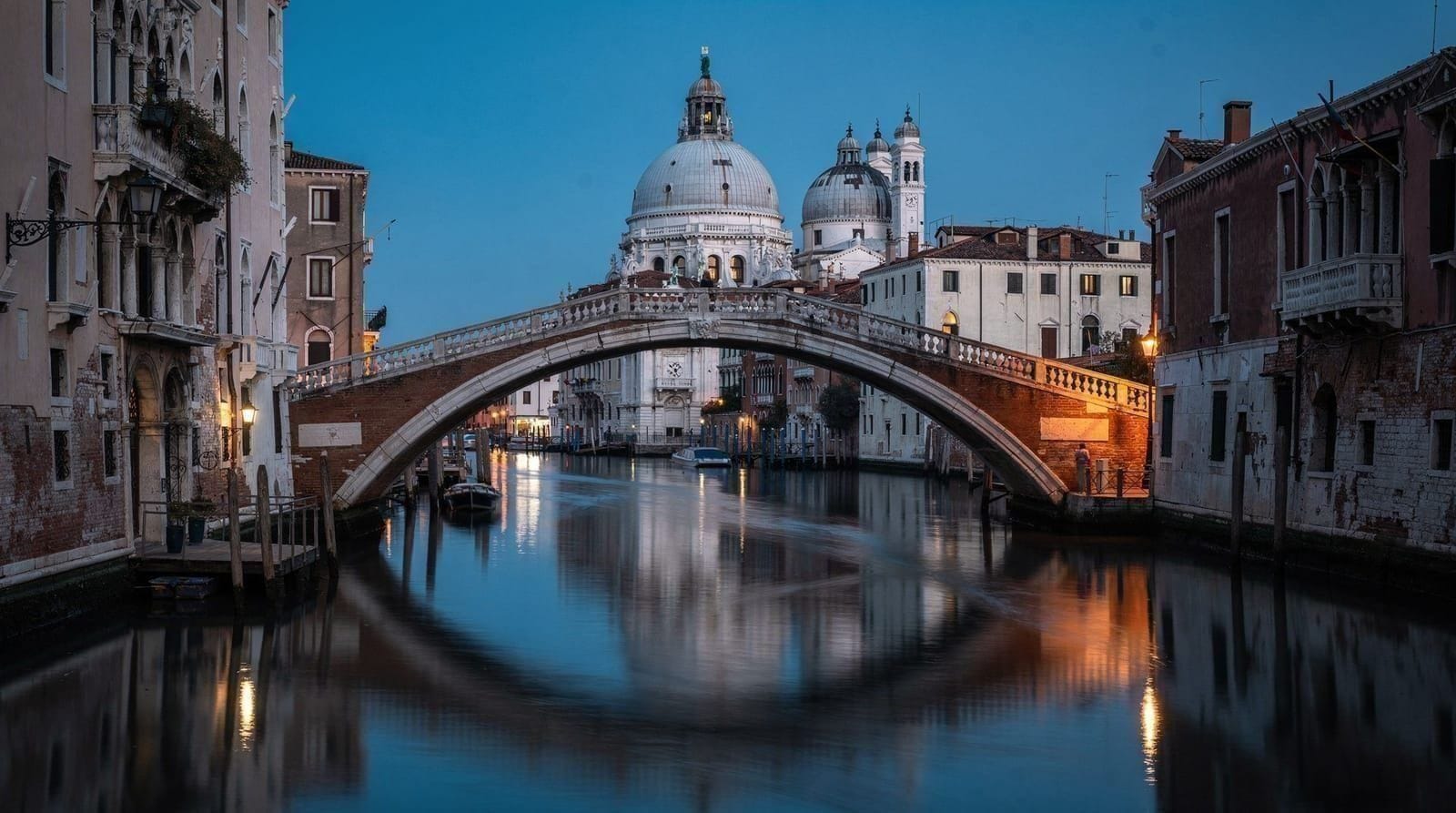
The most reliably photogenic spots in Venice are: Burano's coloured houses, the Libreria Acqua Alta bookshop interior, the Rialto Bridge at dawn, the view from Ponte dell'Accademia at golden hour, Fondamenta della Misericordia in Cannaregio, Piazza San Marco in mist, and the gondola yard at San Trovaso. The common factor: arrive early or late. Most shots require either sunrise or the hour before sunset.
What makes Venice work on camera
Venice is a photographer’s anomaly: a city where almost every direction you point a camera produces something worth seeing, yet where getting an image that looks genuinely original requires real effort. The challenge is not subject matter — it is separation from the crowd that has already photographed the same subject from the same position at the same time of day.
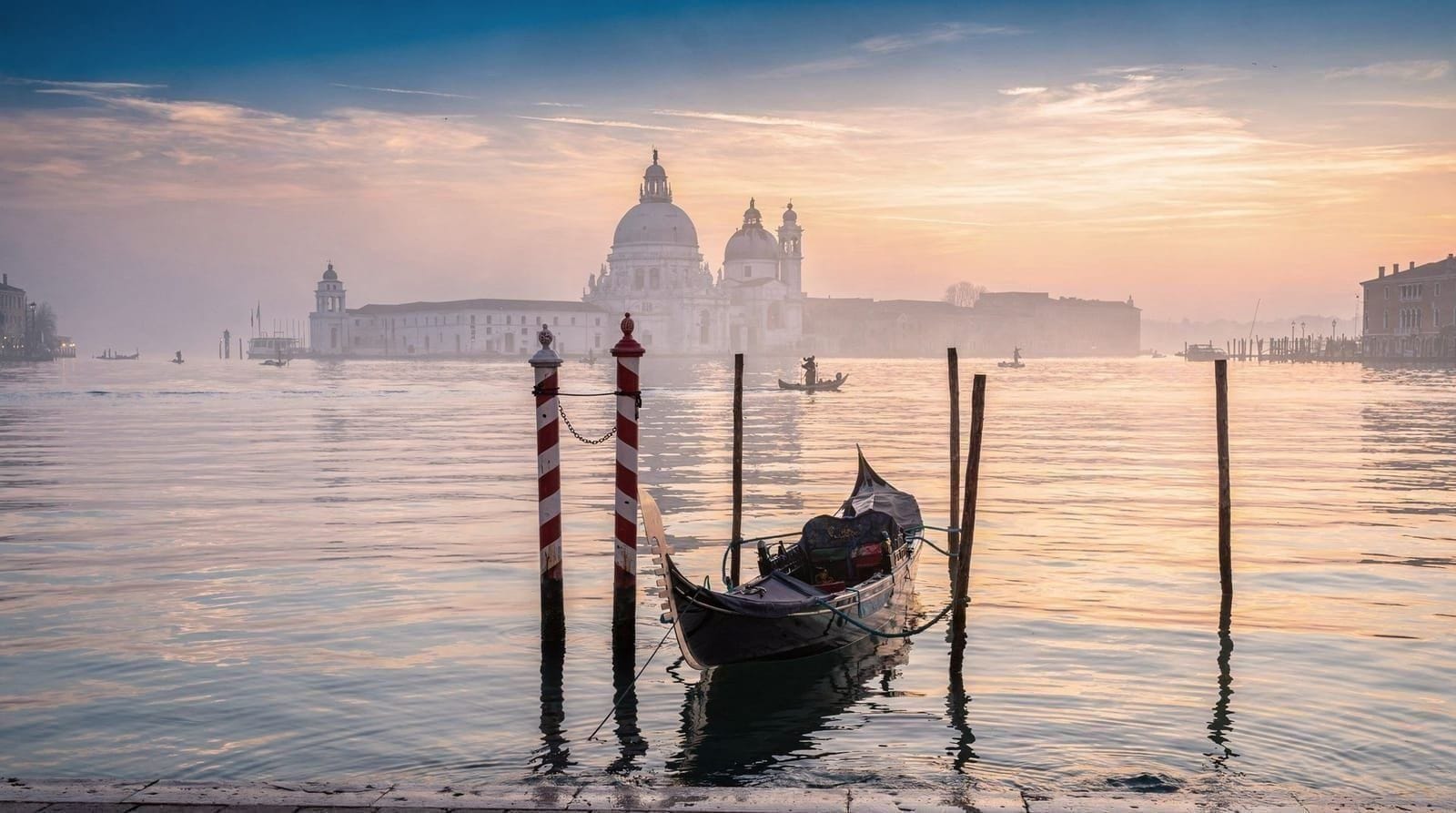
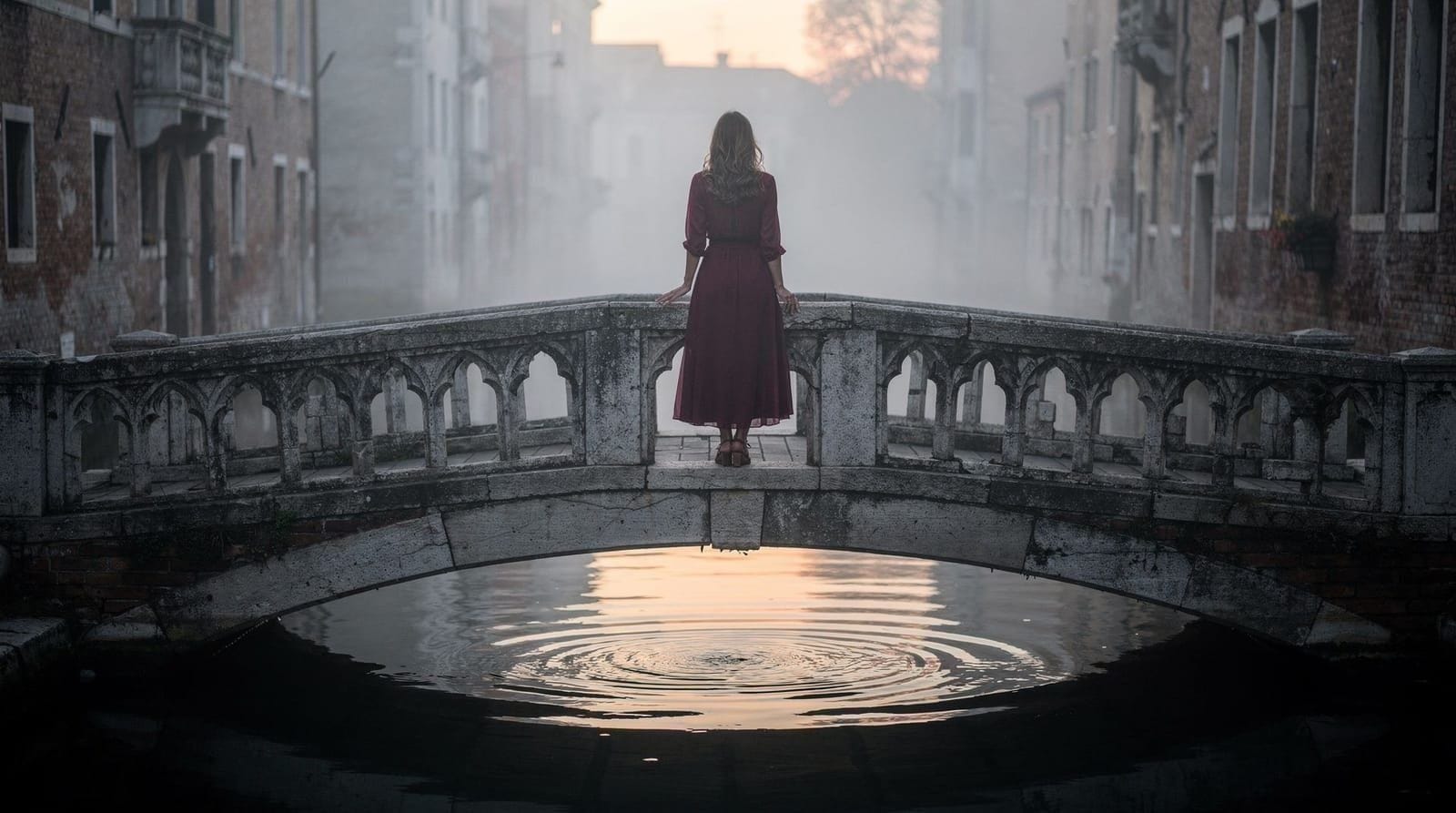
The good news is that the separation is achievable. Venice’s transformation between 6 am and 9 am is more extreme than almost any other major European city. The empty piazza, the mist on the water, the reflections in the slicked morning stone — these are not marketing fictions. They exist. You just have to be there before everyone else.
| Best light | 5:30–8:00am or the hour before sunset |
| Top spots | Libreria Acqua Alta, Burano, Fondamenta della Misericordia |
| Cost | Free to walk; guided photo sessions around €80–150+ |
| Getting around | On foot and by vaporetto |
| Best season | Autumn for mood, spring for light, winter for empty streets |
The Libreria Acqua Alta: the most reliably shareable interior
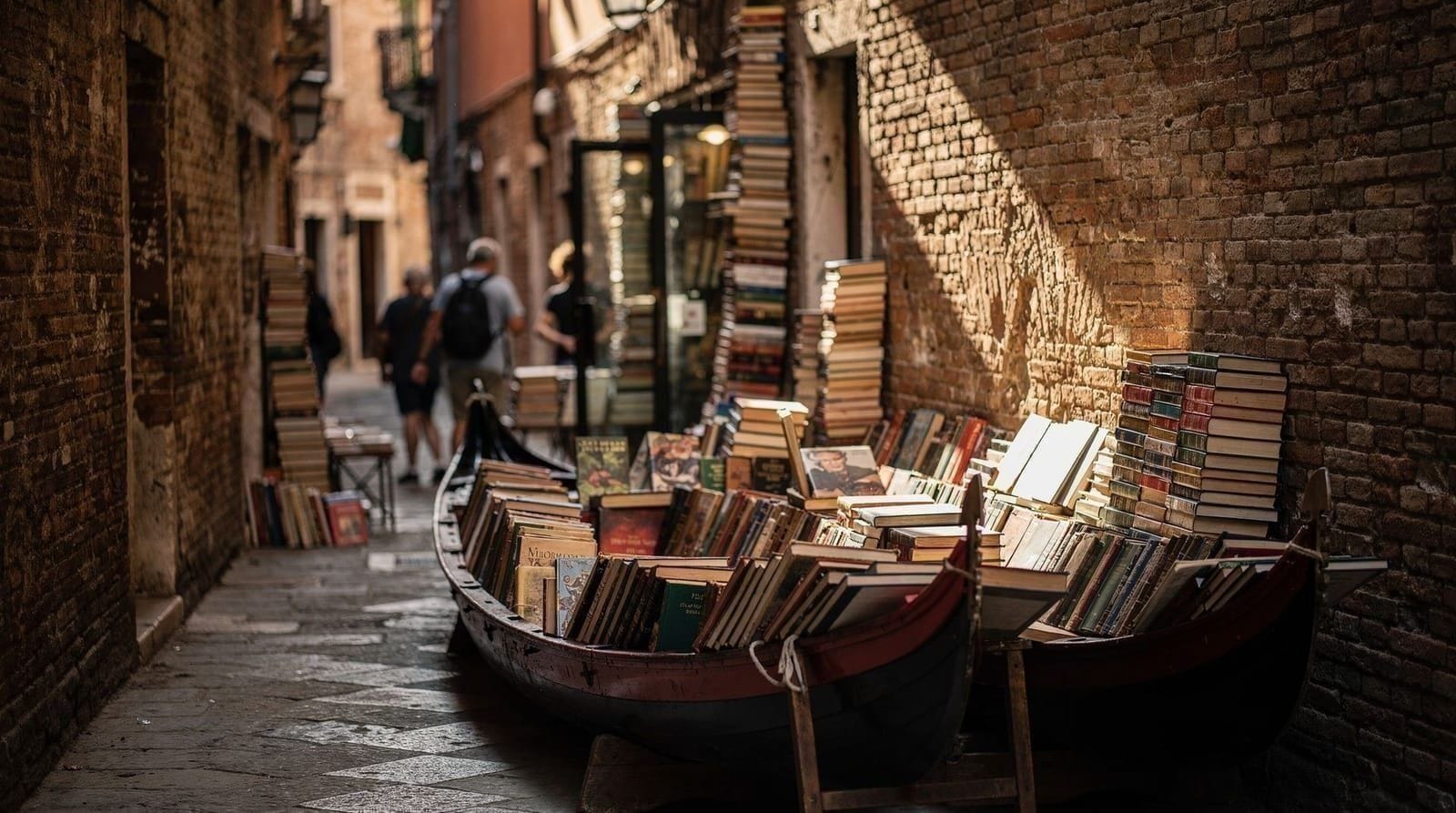
The Libreria Acqua Alta at Calle Lunga Santa Maria Formosa in Castello is not a tourist attraction in any formal sense — it is a working (if eccentric) bookshop. But its interior is one of the most reliably photogenic enclosed spaces in Venice: gondolas used as book shelves, bathtubs overflowing with paperbacks, a spiral staircase built from stacked encyclopaedias, a canal opening at the back of the shop.
The reason it works so well on social media is that it is genuinely unusual — not staged for photography but organically accumulated over decades. It looks fantastical because it essentially is.
Timing: arrive when the shop opens (usually 9 am on weekdays). On weekend mornings in peak season, it can already have a queue by 9:30. The staircase photograph works best without other people on it — give it 10 minutes of patience and it is usually achievable.
Piazza San Marco: the inverse wisdom
Everyone knows Piazza San Marco is photogenic. Fewer people act on the logical implication, which is that you need to be there at dawn, not at 10 am.
At 6 am in summer, with the sun low and east-facing (the basilica facade faces west, so the morning light hits it obliquely in gold), the piazza is something extraordinary: entirely empty of tourists, the flagpoles and Campanile casting long shadows, the reflected arcades in the stones when they are damp. On winter mornings when the piazza floods in acqua alta, the reflections of the basilica in several centimetres of water are genuinely breathtaking.
At 10 am in July, the same space has 5,000 people in it and looks like a crowded airport terminal.
What to photograph in the piazza: the basilica facade with empty foreground (dawn); the arcades of the Procuratie and their reflections when wet; the Campanile from the far end of the piazza; the Doge’s Palace from the Riva degli Schiavoni (outside the piazza, looking back) with gondolas in the foreground.
Fondamenta della Misericordia: the photogenic neighbourhood canal
This long canal-side street in Cannaregio runs roughly north-south through the northern part of the sestiere. It is one of the most picturesque canal streets in Venice that most guidebooks do not specifically name — a long walk of residential buildings, bacari, and local life that produces the kind of authentic-Venice photograph that is increasingly scarce near San Marco.
What to photograph here: the canal reflections of the buildings in still water (morning, before boat traffic); the string of lights above the outdoor tables in the evening; the bridges and arches along the canal; laundry between windows (more common than you might expect in a working residential area).
The evening here is also worth experiencing for what it is: a series of canal-side bars where Venetians drink spritz at communal tables, which makes for genuine street photography rather than tourist photography.
Burano: the colour island
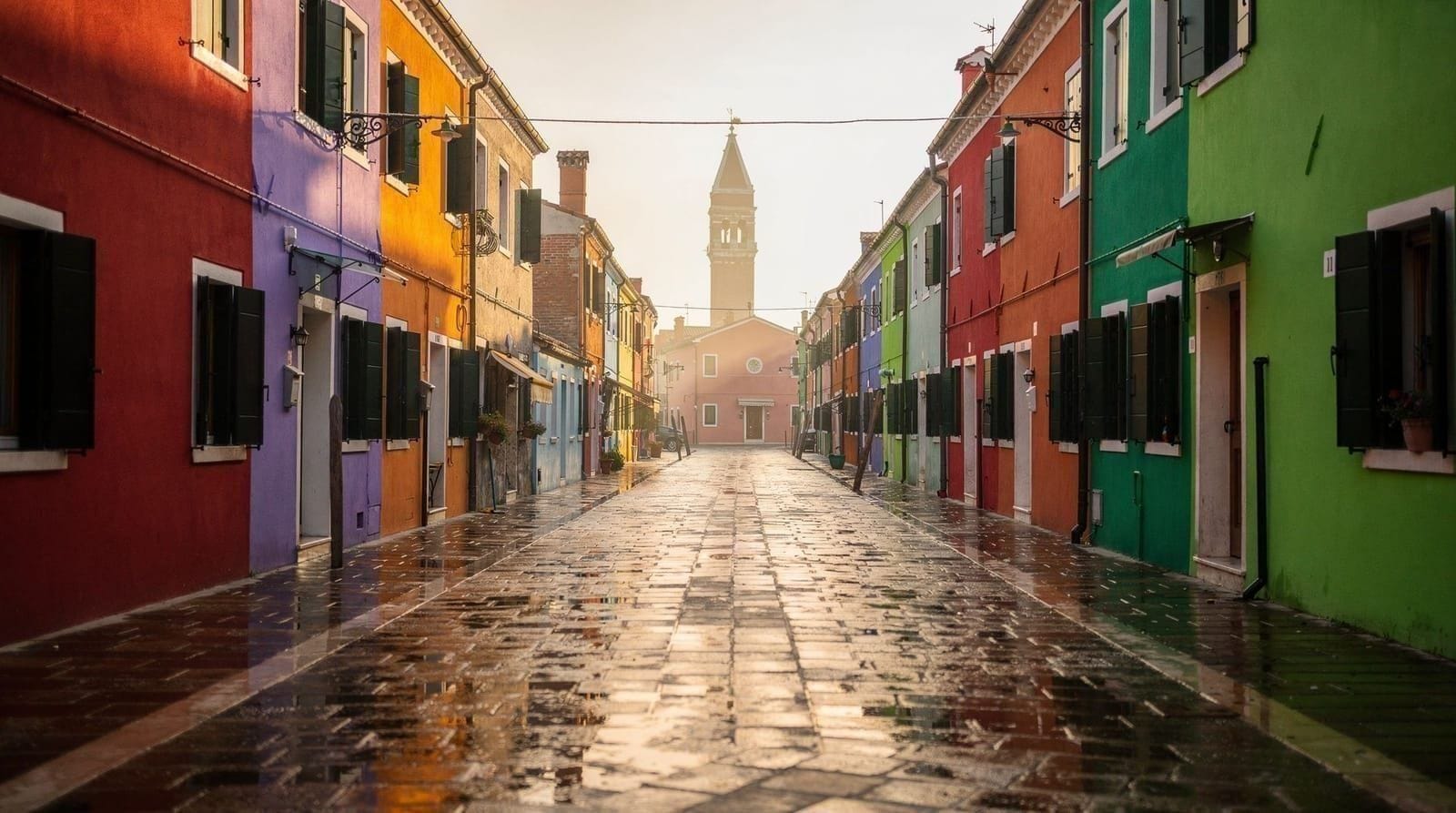
Burano’s coloured houses are among the most-photographed subjects in the entire Venetian lagoon, but the island is sufficiently removed from Venice (40 minutes by vaporetto) that it requires specific commitment to visit. That commitment is worthwhile. The colour saturation on Burano is real: the houses are painted in shades of ochre, crimson, cobalt, lime green, and turquoise, mandated by municipal code and maintained by residents. The effect is unlike anything on the main island.
The full Burano photography guide covers specific streets and timing. The summary: Via Baldassare Galuppi (the main street) is colourful but crowded; the side streets — Via San Mauro, Via Giosuè Carducci, the streets around the Piazza Galuppi — offer the same colours with less traffic. Before 9 am on a weekday is the optimal window before tour groups arrive.
An Instagram tour with a private photographer covers the best spots across Venice — including Burano if you want it — with a photographer who handles both the shooting and post-processing of your images. This is particularly useful for visitors who want a record of themselves in Venice rather than just photographs of Venice.
Scala Contarini del Bovolo: Venice’s best-kept spiral
The Scala Contarini del Bovolo (Campo Manin, San Marco) is a 15th-century palazzo with an extraordinary external spiral staircase — bovolo means snail shell in Venetian dialect, which describes the helix perfectly. The staircase rises through five loggia levels in a combination of Gothic, Renaissance, and Byzantine elements that is architecturally unique. It is accessible through a small courtyard just off Campo Manin.
Entry: €7. Open daily, hours vary seasonally. Most visitors to Venice do not know it exists. Photographs of the staircase from below looking up are the most dramatic. See the Scala Contarini Bovolo guide for full details.
Giudecca island: the quiet alternative
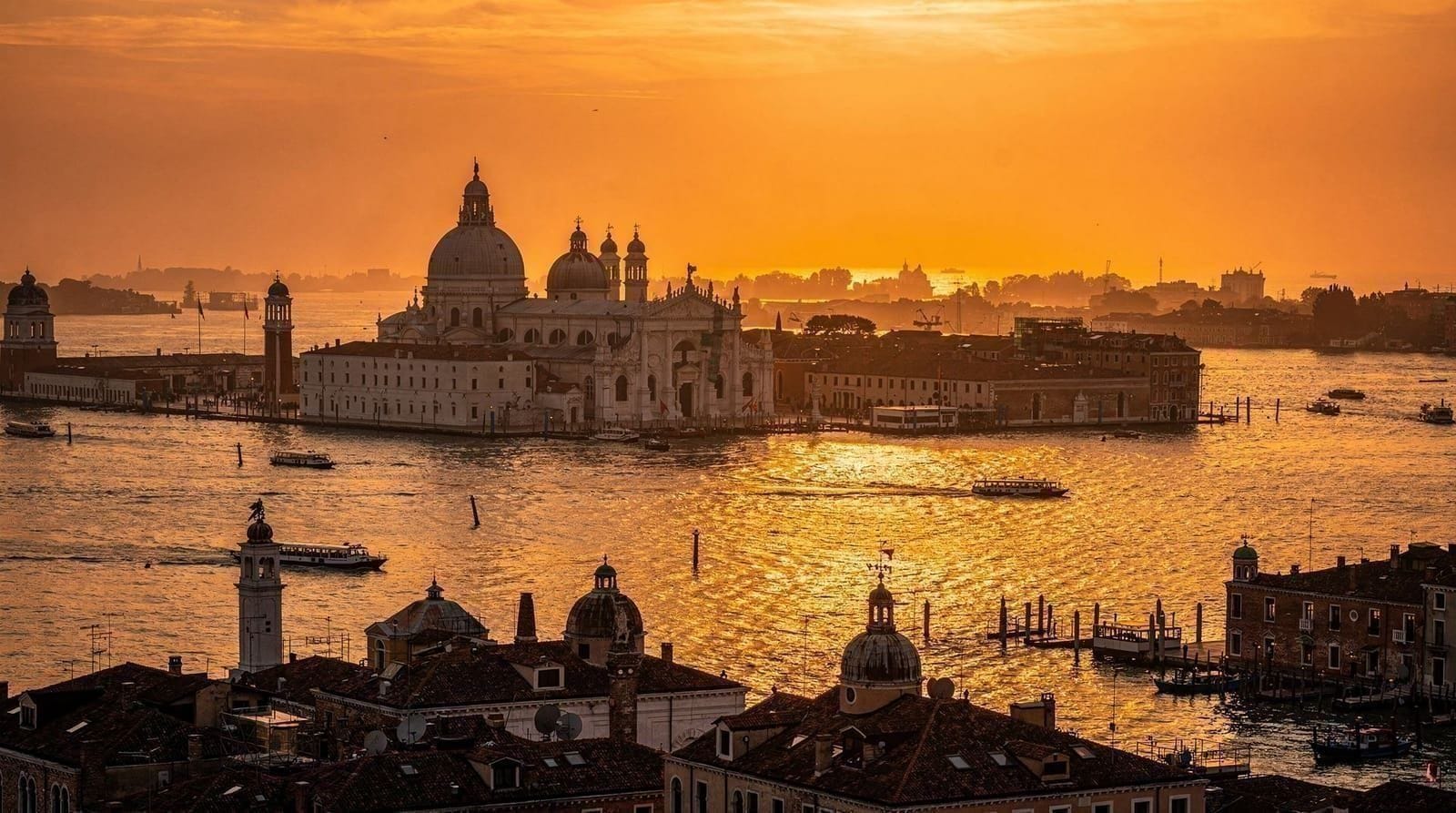
The island of Giudecca is separated from the Dorsoduro sestiere by the Giudecca Canal — a 5-minute vaporetto ride from Zattere. It is extensively residential, significantly less visited than any part of the main island, and offers views back toward Venice that you cannot get from Venice itself: the full length of the Giudecca Canal with the domes of the Salute and San Giorgio visible; the Zattere waterfront in the evening light.
The waterfront of Giudecca on its canal-facing side is one of the quietest and most visually satisfying walks in Venice. Combine with the church of the Redentore (Palladio, 1592) if you want architectural photography as well.
San Giorgio Maggiore: the island that frames Venice
The island of San Giorgio Maggiore is 5 minutes by vaporetto from San Zaccaria (line 2). The campanile lift (€8) gives you the best elevated view in Venice. But for Instagram purposes, the most useful thing about San Giorgio is its position: from its waterfront, looking north, you have Venice’s entire iconic skyline — the Doge’s Palace, the Campanile, the two columns, the Riva degli Schiavoni — across a narrow stretch of water that gondolas and vaporetti cross continuously.
This view is better photographically than the reverse (Venice looking at San Giorgio) because you get both the architectural complexity of the San Marco waterfront and the foreground water activity in one frame.
Working with a professional photographer
If the goal is not just photographs of Venice but photographs of you in Venice — couple portraits, solo portraits, memorable-trip documentation — a professional photographer is the most efficient route.
The Grand Canal and Rialto photoshoot pairs you with a professional at two of the most visually powerful locations in the city, with the Grand Canal as backdrop. Sessions typically run 45–90 minutes and produce edited images delivered digitally. The result is documentary-quality images rather than phone selfies — genuinely worth considering for a significant trip.
For a more exploratory approach — walking the city with a photographer who serves as both guide and documentarian — the private photo-walk with photographer guide covers 2.5 hours and multiple locations, adapting the route based on the light and what you want to capture.
Seasonal differences in Venice’s Instagram photography
The photographs that perform best on social media from Venice vary by season, and the seasonal differences are significant enough to affect your planning.
February (Carnival): Costume photography is concentrated in Piazza San Marco on weekend afternoons. The crowds around the best-costumed participants are thick — phones and cameras extended from every direction. If you want the costume photograph without the crowd context, position yourself slightly away from the main concentration and use a longer focal length. The Carnival photographs that stand out are usually taken in less expected locations: a costumed figure alone in a narrow calle, a bauta mask reflected in a canal, a volto in the mist.
April–June (spring): Lower crowds than summer, good temperatures, and the light is softer than mid-summer. The wisteria that grows over the calli in some Dorsoduro streets is at its peak in April–May — a Venice photograph most people do not know to look for.
July–August (summer): The highest tourist density but also the most reliable sun. The challenge is crowd management; the benefit is long daylight hours that give you multiple golden-hour sessions per day (5:15 am sunrise, 8:40 pm sunset in June). The Rialto fish market photographs are seasonal too — it closes by 10 am and does not operate Sunday.
October–November (autumn): The most photogenic season for atmospheric, moody photography. Morning mist over the lagoon, acqua alta episodes in San Marco, the golden autumn light on the canal facades. Fewer tourists than summer. The high-water season means that some streets near San Marco flood periodically — these photographs of Venice’s relationship with the water are specific to this season and require no special access, just presence.
December–January (winter): Empty streets and dramatic light. The Piazza San Marco in fog at dawn, with no other visitors. The Christmas market on Strada Nova in Cannaregio. Carnival preparation events in late January. The trade-off is cold and shorter days — sunset at 4:30 pm compresses your golden-hour window severely.
Seasons at a glance
| Season | Best for | Trade-off |
|---|---|---|
| Feb (Carnival) | Costume portraits | Very crowded around San Marco |
| Apr–Jun | Soft light, wisteria | Rising crowds by June |
| Jul–Aug | Long golden hours | Peak heat and density |
| Oct–Nov | Mood, mist, acqua alta | Shorter days |
| Dec–Jan | Empty streets, dramatic light | Cold, early sunset |
For a fuller seasonal breakdown beyond photography, see best time to visit Venice, and for planning a trip built specifically around photography, the Venice photography 3-day itinerary sequences several of the spots above into a realistic route.
What phone cameras can do in Venice and where they fall short
Modern phone cameras — particularly the latest generation from Apple and Google — are genuinely excellent in Venice’s conditions. In daylight, the computational photography that compensates for small sensor limitations produces images that are difficult to distinguish from those taken with a dedicated camera. The main limitations appear at the extremes:
Low light: Inside churches, at pre-dawn, and in the late evening, phone cameras add noise and lose detail more quickly than a dedicated mirrorless camera with a larger sensor. The difference is significant if you want to print your images large.
Telephoto compression: Venice’s long canal perspectives and the ability to compress distance — the gondola small in the foreground, the Salute huge in the background — require a longer focal length than most phone cameras’ main lens. The telephoto modules on current phones are improving but remain inferior to a 85–135mm lens on a mirrorless.
Speed: Venetian photography often requires fast response — the delivery boat framing itself perfectly in a canal entrance, the pigeon taking flight from the Campanile base, the gondolier’s stroke at the exact point of maximum visual compression. Phone cameras are increasingly fast but still marginally slower than a dedicated camera body in continuous shooting mode.
What to pack: a lightweight tripod or a small clamp helps for low-light interiors and blue-hour exteriors where a steady shot matters more than speed. A polarising filter cuts glare off canal water and wet stone, which is common given Venice’s damp conditions. A dry bag or simple rain cover for your camera is worth carrying even outside acqua alta season — Venice’s weather changes quickly, and some of the best shots happen in the rain rather than despite it.
The Venice you do not see on Instagram
There is also a counter-argument: the most rewarding photography in Venice may not be the iconic views at all. The rii (small interior canals) that do not appear in any postcard; the vegetable boat making morning deliveries along a canal in Castello; the elderly Venetian reading a newspaper under a Gothic arch; the children playing football in a campo at evening.
These require a different approach — patience, slow walking, willingness to spend 20 minutes in one place rather than ticking off locations. For some photographers, this is more satisfying than the curated shot of the Bridge of Sighs at dawn. Both are valid. Venice is generous enough to reward both.
The neighbourhoods that reward this slower approach most consistently are the same ones covered in the hidden Venice tour guide — Cannaregio north of Strada Nuova, eastern Castello, and western Dorsoduro. None require a boat or an entry ticket; they require only the decision to walk five minutes past where the tour groups stop.
Frequently asked questions about Instagram spots in Venice
What is the best hidden spot for photos in Venice?
Fondamenta degli Ormesini in Cannaregio is consistently photogenic and rarely mentioned. The Scala Contarini del Bovolo near Campo Manin is architecturally unique. Giudecca island provides Venice skyline views that few visitors seek out.
Where can I take photos in Venice without crowds?
Early morning (5:30–8:00 am) anywhere. Northern Cannaregio near Madonna dell’Orto. Giudecca island. Torcello island in the northern lagoon.
Can I get Instagrammable photos of Venice from a gondola?
A gondola at water level gives canal perspectives impossible from bridges. The standard shared gondola ride does not stop for photography; a private gondola allows pauses at specific points. Budget €80–90 daytime, €100–120 evening.
What Venice photo ideas are overrated?
Jumping shots from the Riva degli Schiavoni, identical posed shots on the Rialto Bridge, gondola selfies from the vaporetto. These are common but not distinctive.
Is Venice photogenic in bad weather?
Yes — often more so than in sunshine. Overcast light eliminates harsh shadows. Morning fog in acqua alta season creates atmospheric quality. Rain on Piazza San Marco stones is genuinely beautiful.
Do I need a professional photographer to get good Instagram photos in Venice?
No — the locations and timing advice in this guide work with a phone camera. A professional is worth it specifically if you want polished portraits of yourself rather than photographs of the city, or if you want the logistics (locations, timing, editing) handled for you. See the Venice photoshoot guide for how the sessions typically work.
How do these Instagram spots fit into a short Venice trip?
Most can be folded into a normal sightseeing itinerary if you build in early starts — the Libreria Acqua Alta and Fondamenta della Misericordia are both close to the main circuit. Burano and Giudecca need a dedicated half-day. The best photo spots guide ranks locations by how much detour they require.
Top experiences
Bookable activities with verified prices and instant confirmation on GetYourGuide.