Professional photoshoot in Venice: how to plan and what to expect
Venice: photoshoot at the Grand Canal & Rialto bridge
How much does a professional photoshoot in Venice cost?
Professional photoshoot sessions in Venice typically cost €70–€250 depending on duration (45–120 minutes), number of locations, and how many edited images are included. Shared-rate group portrait sessions start around €70 per couple. Private sessions with a professional photographer who handles location scouting, lighting, and post-processing run €120–€250 for 1–2 hours.
Why a professional photoshoot in Venice is different from anywhere else
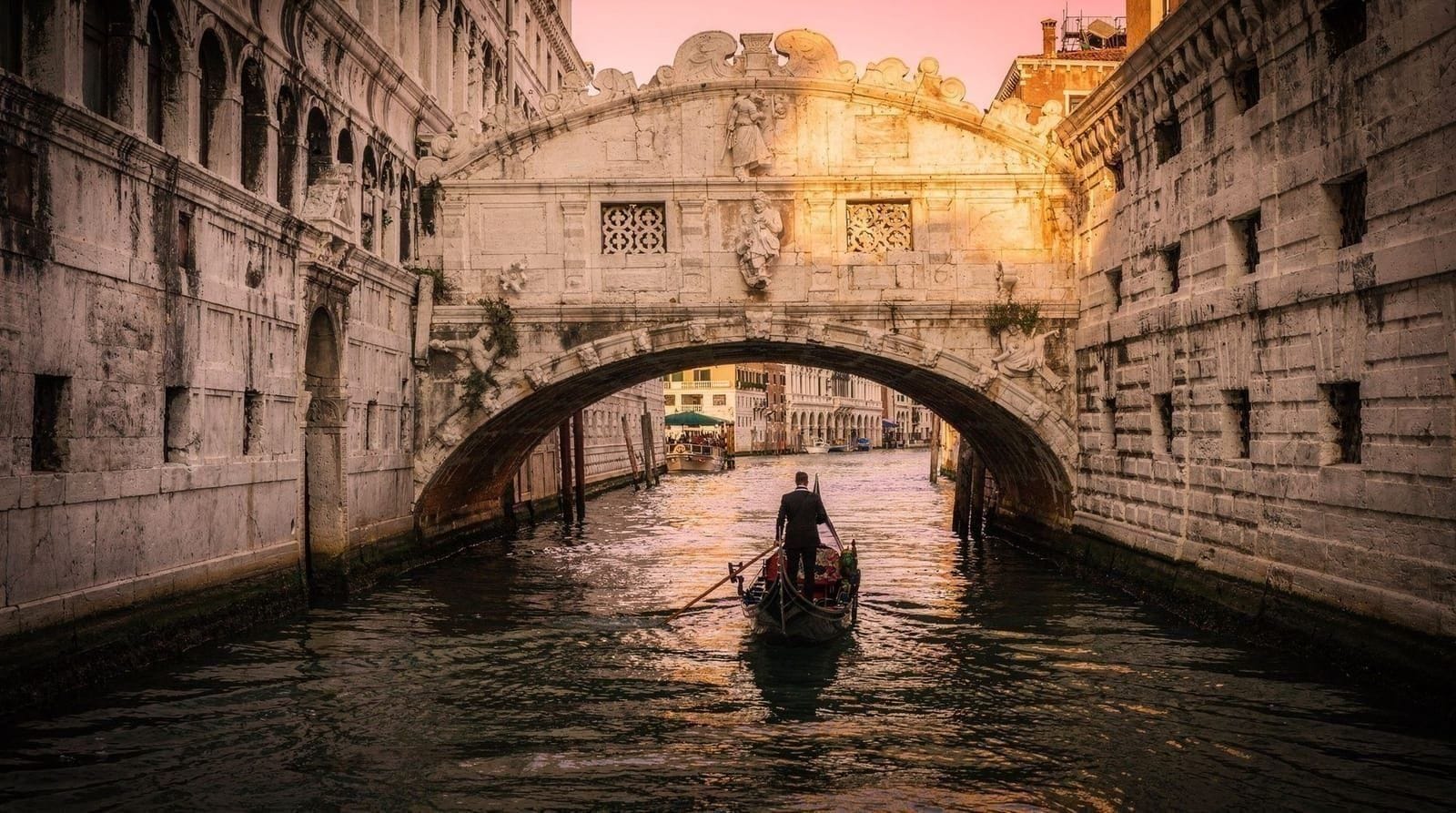
Venice is architecturally spectacular, but it is also extraordinarily dense. The canals, bridges, and narrow streets that make the city beautiful also mean that in peak season, an attempt at an unobstructed background photograph from a public vantage point is a navigational puzzle — other visitors, tourist boats, and service vehicles appear in frame constantly.
A professional photographer who works Venice regularly has solved these problems in advance. They know which angle of the Rialto gives you a clean background at 8 am, which canal-side street is consistently quiet until 10 am, which bridge has the light falling the right way for the specific date of your visit. They also handle the technical elements — exposure, composition, post-processing — that make the difference between a photograph you share once and one you print large and keep.
The question is not whether Venice looks good in photographs. It does, demonstrably. The question is whether you want to be a subject in those photographs, or just the person taking them.
| Where | Grand Canal, Rialto, Dorsoduro, or a route chosen by your photographer |
| Cost | Around €70–250 depending on duration, locations and images included |
| Time needed | 45–120 minutes per session |
| Getting there | Meeting point set by the photographer, usually central and vaporetto-accessible |
| Best time | Golden hour or the hour around sunrise for the most flattering light |
What types of photoshoot sessions are available
Portrait and couple sessions
The most common format: a professional photographer meets you at a pre-arranged location, guides you through a series of positions and movements designed to produce natural-looking rather than posed images, and delivers a set of edited photographs. Session length typically ranges from 45–90 minutes for most standard bookings.
The Venice photoshoot at the Grand Canal and Rialto is designed specifically for couple and individual portraits at two of Venice’s most visually powerful locations. The session begins at a time chosen by the photographer to take advantage of the specific day’s light and runs approximately 45–60 minutes, delivering 30+ edited images. The Grand Canal and Rialto combination gives you both water reflections and architectural context in a single session.
Beyond the Rialto set-pieces, a private photo shoot with professional images can be routed through the quieter sestieri, where the backgrounds are not shared with forty other people holding phones.
Instagram and content creation sessions
A somewhat different format: a photographer who is also a social media content creator guides you through a curated set of Venice’s most photogenic spots, shooting as you move and handling both photography and basic post-processing. The result is a set of edited images optimised for social media dimensions and visual style.
The Instagram tour with private photographer covers the city’s photogenic highlights over approximately 2 hours, producing content-ready images. This format works well for solo travellers or couples who want a mix of location photography and personal documentation.
Guided photo walk: you as the photographer
This is a different service again — a guide who teaches you to take better photographs yourself, rather than taking them for you. The 2.5-hour private photo-walk with photographer guide is designed for visitors who want to improve their own Venice photography, with a guide who knows the timing, angles, and access points for the best results. You keep your own images; the guide provides the knowledge that improves them.
Comparing the three formats
| Format | Time | Typical cost | Who owns the camera |
|---|---|---|---|
| Portrait/couple session | 45–90 min | €70–200 | Photographer |
| Instagram/content session | About 2 hours | €120–200 | Photographer |
| Guided photo walk | 2.5 hours | €100–180 | You |
If you already know how to use your own camera and simply lack local knowledge, the guided walk is usually better value than a portrait session. If you want to appear in the photographs yourself, choose one of the first two formats. For a broader sense of where to shoot independently, see the best photo spots guide, the golden hour Venice guide, and the sunrise photography guide.
Location strategy: how professional photographers approach Venice
The best professional photographers in Venice do not use a fixed route. They choose locations based on the specific combination of time of day, season, weather conditions, and what you are wearing. A few examples:
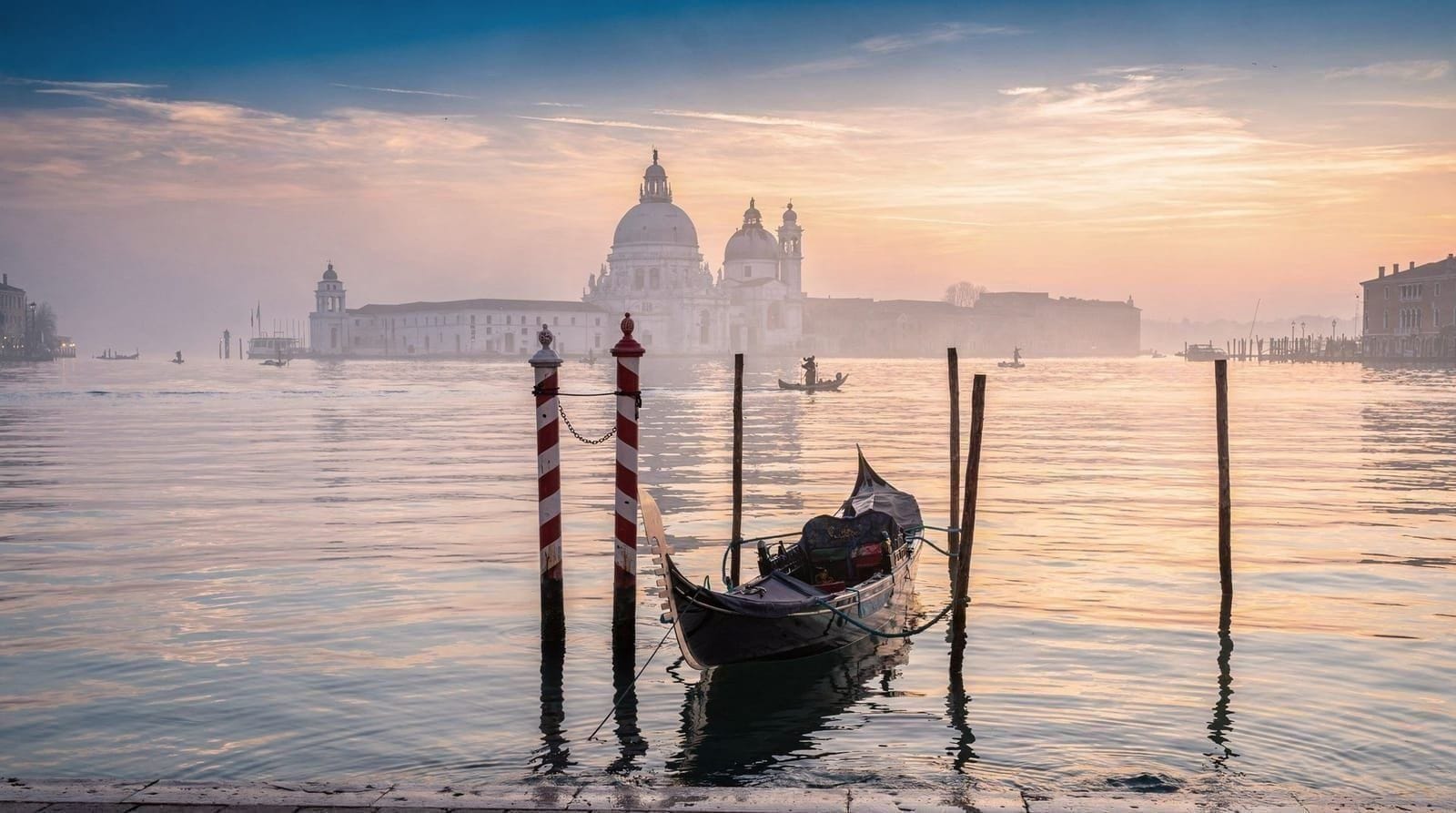
Morning (7–9 am): The Rialto Bridge and the Grand Canal north of San Marco are viable for portrait photography with clean backgrounds. The low sun from the east creates warm directional light on westward-facing subjects. The Cannaregio canal-side streets are also excellent at this hour — quieter and more residential.
Late morning/midday: Under flat overcast conditions, the Dorsoduro neighbourhood — particularly the area around the Punta della Dogana and the Zattere — photographs well. The soft light reduces shadows in narrow streets and makes colours accurate without bleaching. Under direct noon sun, photographers typically look for shade — under a portico, in a courtyard, or on the less-crowded side of a fondamenta.
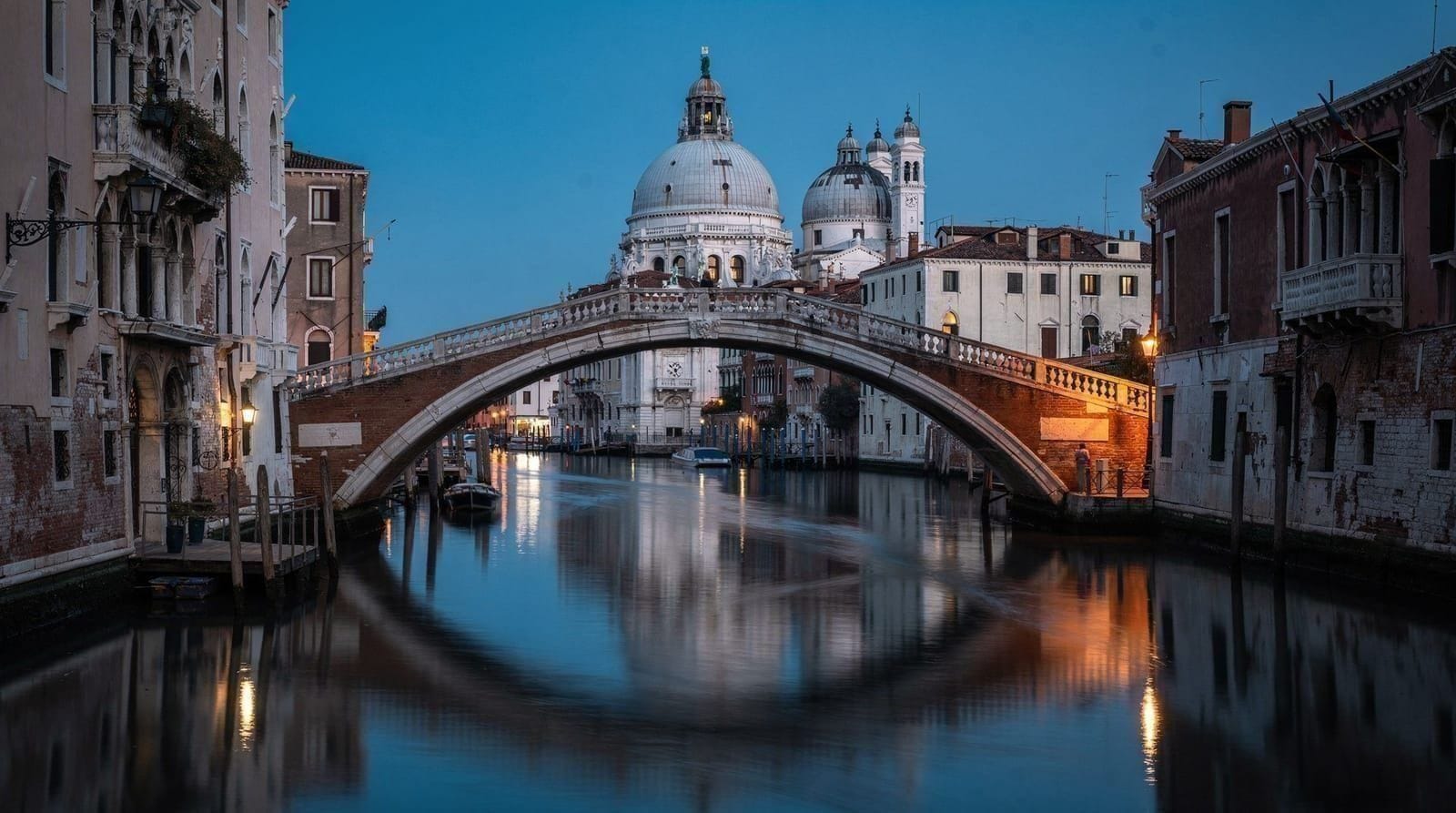
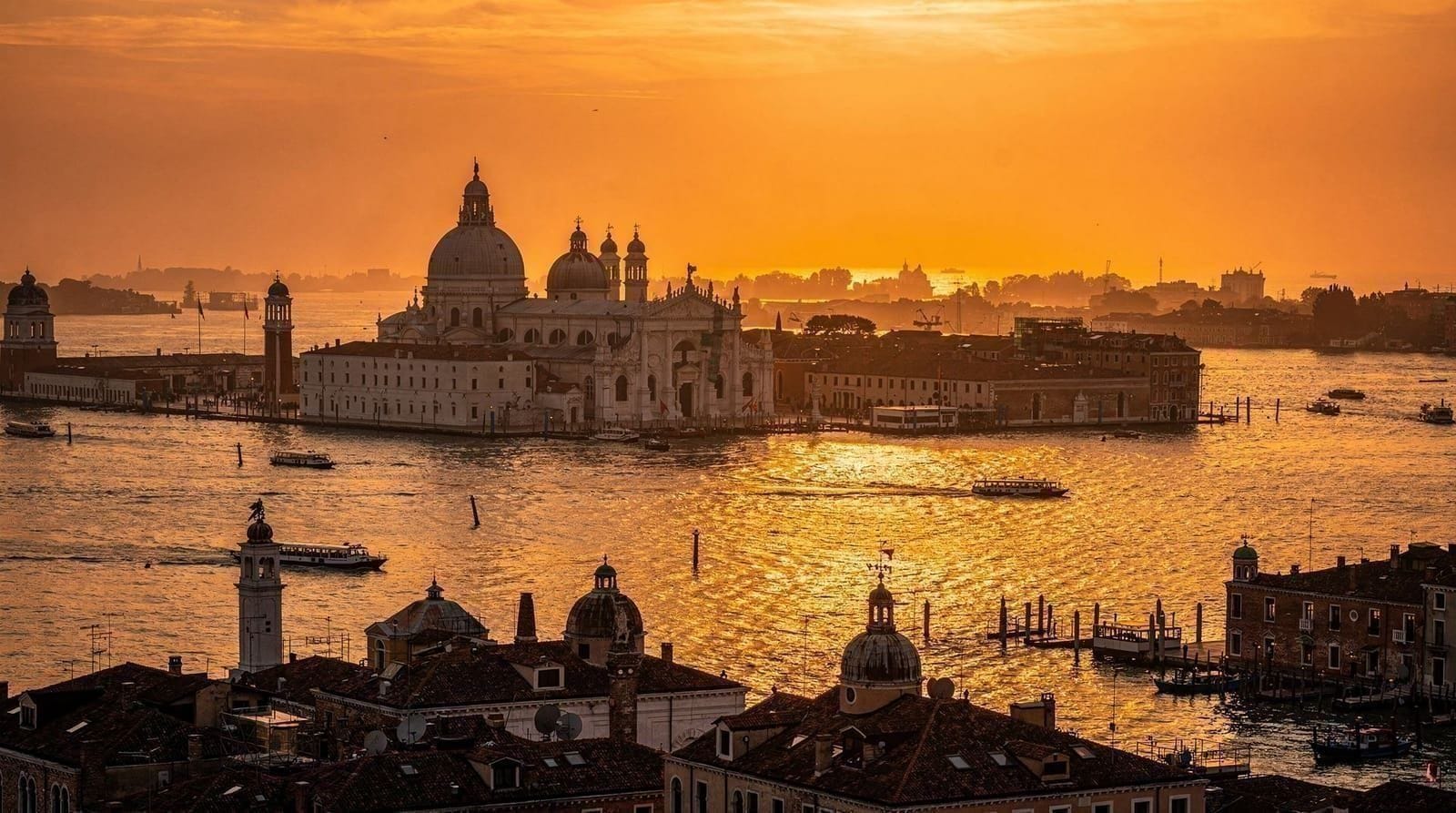
Golden hour (45 min before sunset): Punta della Dogana and Ponte dell’Accademia for the iconic Salute/Grand Canal backdrop. The light is usually the most intense and most flattering of the day. Most serious Venice photographers prioritise this window for their premium sessions.
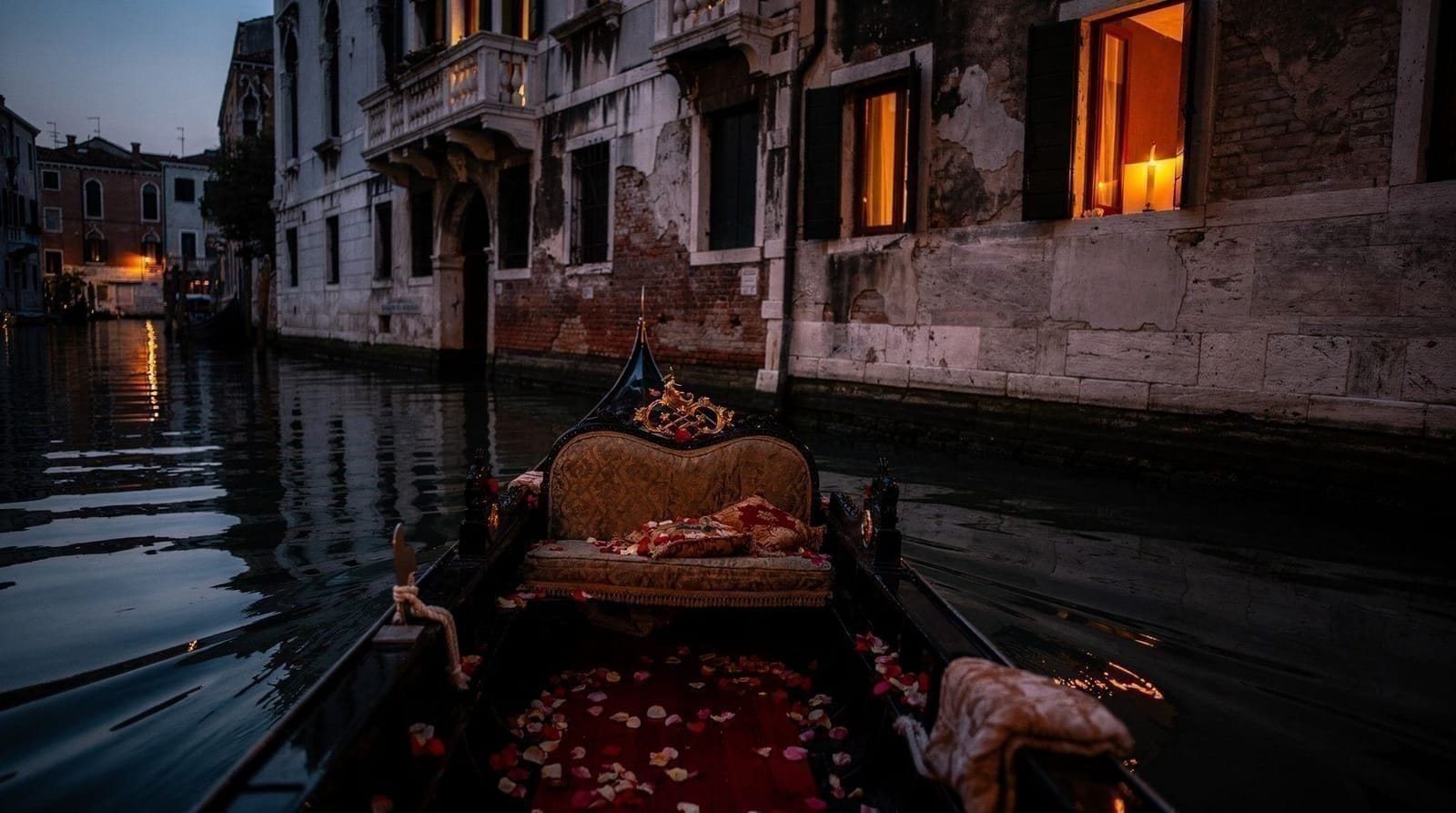
After sunset (blue hour): The 15–30 minutes after the sun drops below the horizon but before full darkness, when the sky is a deep blue and the city lights are on. This is a specialist window that requires fast lenses and camera bodies — not accessible to phone photographers — but produces images that look genuinely cinematic.
What to wear and how to prepare
Venice’s architecture consists primarily of warm ochre, terracotta, pink, and cream tones on stone and plaster, with blue-green water and grey stone bridges. Clothing that complements rather than competes with these tones photographs most harmoniously.
Colours that work well:
- Soft mid-tones: dusty rose, blush, terracotta, sage green, cream, navy
- Earth tones: warm brown, caramel, khaki
- Deep jewel tones at golden hour: burgundy, forest green, navy
Colours that require more care:
- Pure white in direct sun — overexposes against stone backgrounds
- Very dark navy or black in evening light — loses detail and merges with shadows
- Neon or extremely saturated colours — fight with the landscape for attention
Practical notes:
- Venice is cobbled stone throughout. Stiletto heels are impossible. Elegant flat shoes, block heels, or clean trainers are the practical choices.
- Layer appropriately — the canal wind is cooler than the street temperature, and early morning sessions can be cold even in spring.
- For a couple session, coordinate rather than match: different shades of the same colour family, or complementary hues, photograph better than identical outfits.
Children’s photoshoots in Venice: specific considerations
Photographing children in Venice requires adapting the standard portrait approach significantly. Children’s attention spans are shorter, their tolerance for standing in specific positions is limited, and the best photographs of children are almost always candid rather than posed.
The most effective approach for family photoshoots in Venice is to choose child-friendly locations that provide genuine engagement — feeding the pigeons in a quieter campo (smaller squares away from San Marco tend to be less overwhelming), watching gondolas pass under a bridge, exploring the Libreria Acqua Alta’s stacks — and photograph the child engaged with the environment rather than posed against it.
Morning sessions work better for children than evening: energy levels are higher in the first half of the day, and morning light is also excellent for photography. Late-afternoon golden hour, though often the best light, can coincide with children’s tired periods and produce more difficult sessions.
Most professional photographers in Venice who work with families will have specific child-engagement strategies — they know how to get natural expressions without forced smiles, and they know which locations keep children interested for the duration of a session. When booking for a family with young children, mention the children’s ages; a good photographer will adapt their approach accordingly.
Booking logistics
Most photography session operators in Venice work on a small-group or private basis and have capacity limits for each date. In peak season (April–October), popular slots — particularly golden-hour sessions — book out several weeks in advance. For a session during Carnival (late January/early February), book at minimum a month ahead.
Key questions to confirm when booking:
- Delivery time: When will you receive the edited photographs? 2–7 days is standard; same-day delivery is rare.
- File format and resolution: Will you receive high-resolution files suitable for printing?
- Number of edited images: How many photos are included in the standard package?
- Meeting point and plan: Where do you meet? What happens if weather prevents the planned session?
- Rescheduling policy: Most Venice photographers have a rain policy — some include a free reschedule, some do not.
Solo traveller photoshoots: documenting yourself in Venice
There is a particular challenge for solo travellers that couple and family visitors do not face: getting a photograph of yourself in Venice that looks like more than a selfie at arm’s length. The solution — either a timer and tripod, which requires setup time and a stable surface in every location, or a professional photographer for a session focused entirely on you — depends on how important the documentation is.
For most solo travellers, a 45–60 minute session with a professional photographer is a compact investment that produces images unavailable by any other means: properly composed portraits with Venice’s architecture and light as the background, at locations and times chosen for photographic quality rather than accessibility. The result does not need to look formal or posed — the best photographers in Venice specialise in candid, documentary-style portraits that show the subject genuinely engaged with the city.
Solo sessions can be combined with a walking tour: the photographer serves as both guide and documentarian, walking you through the city while photographing as you move. This format typically produces the most natural images because the movement and engagement with the environment prevents the self-consciousness that comes from posed static portraits.
Understanding post-processing: what the delivered photos will look like
One significant variable that visitors underestimate when booking a Venice photoshoot is the editing style of the specific photographer. Two photographers who use identical equipment at the same location at the same time will deliver images that look substantially different if their post-processing approaches differ.
Natural editing: Minor corrections to exposure, contrast, and colour balance. The images look like what the eye saw, or close to it. Venice’s colours are accurately reproduced — the warm stone, the green-grey water, the blue sky. This style works well for documentation and for subjects who want to remember the place as it actually appeared.
Film-style editing: A warmer, slightly faded look designed to evoke analogue photography. Popular for couple and honeymoon sessions, where the aesthetic association with timelessness has appeal. Can make Venice look somewhat different from reality — warmer, more saturated, slightly lower in contrast.
Heavy processing: High contrast, strong colour grading, selective desaturation. Can produce striking images but dates faster than more natural approaches, and Venice’s inherent visual quality is sufficient that heavy processing often reduces rather than increases impact.
When reviewing a photographer’s portfolio before booking, look for consistency of style rather than just individual strong images. The portfolio tells you what your images will look like; the individual strong image tells you only that the photographer has had at least one good day.
For honeymoon and couple sessions: the romantic context
Venice has been associated with romantic occasions since at least the 18th century, when it became Europe’s premier destination for elopements, assignations, and theatrical passion. The contemporary honeymoon or anniversary visit has absorbed all of that historical weight.
For the photographs to match the occasion, the professional session at golden hour — with the Salute turning orange in the background and the canal reflecting the sky — is the right investment. It is also, honestly, not an excessive one: the memory documentation of a significant trip is worth more as time passes than it seems at the moment.
See the honeymoon Venice guide and the romantic things to do guide for the broader context of planning a romantic Venice visit. If photography is the central theme of your trip rather than one part of it, the 3-day photography itinerary sequences a whole visit around the best light and locations, and the couples itinerary tips guide has more on building a session into a wider romantic schedule.
Beyond the professional session: Burano and self-shot content
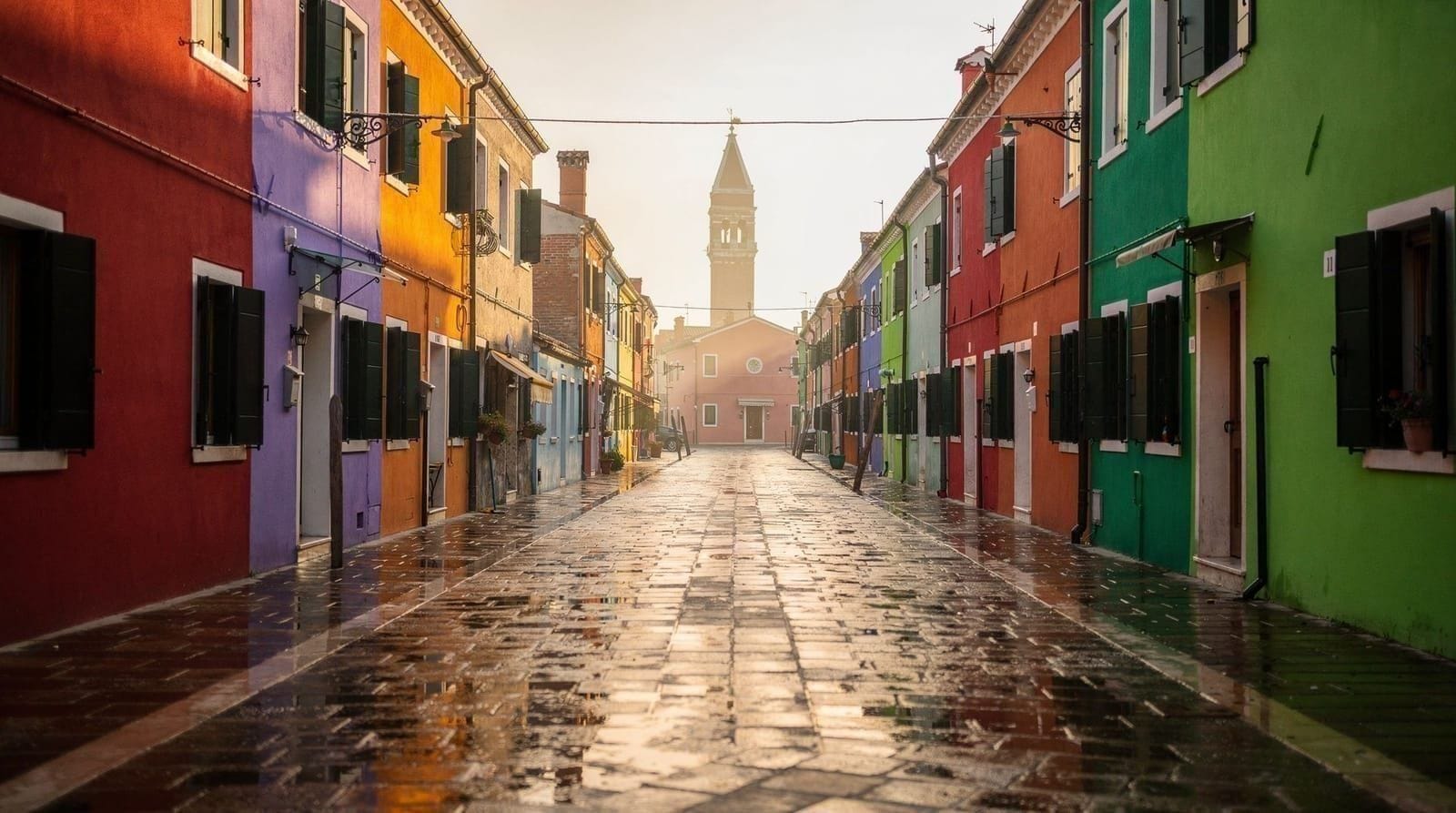
Not every memorable Venice photograph needs a booked photographer. Burano’s coloured houses are one of the most rewarding self-shot subjects in the lagoon — see the Burano photography guide for timing and composition specifics. If your goal is simply a strong social feed rather than formal portraits, the Instagram Venice guide covers the specific spots and framing that photograph best without professional help.
Frequently asked questions about professional photoshoots in Venice
What are the best locations for a photoshoot in Venice?
The Rialto Bridge (early morning), Ponte dell’Accademia (golden hour), Punta della Dogana (sunset), narrow canal streets in Dorsoduro, and Burano’s coloured streets. Good photographers adapt to the time of day and light conditions.
When is the best time of day for a photoshoot in Venice?
Golden hour (45 minutes before sunset) and the hour around sunrise. Most professional photographers strongly prefer these windows.
Do I need a permit for a professional photoshoot in Venice?
For informal portrait sessions in public spaces, no permit is required. Most session operators handle any required permissions for their standard routes.
What should I wear for a photoshoot in Venice?
Solid mid-tones (dusty rose, terracotta, navy, cream) work well with Venice’s warm stone and water colours. Comfortable flat shoes are essential. For couples, coordinate rather than match.
Can I book a couples or honeymoon photoshoot in Venice?
Yes. Couple and honeymoon photoshoots are among the most popular photography services in Venice. Venice’s evening light creates genuinely cinematic conditions for couple portraits.
How many photos will I receive from a Venice photoshoot?
A 1-hour session typically produces 30–60 edited images delivered digitally within 3–7 days. Confirm delivery details when booking.
Should I choose a posed portrait session or a photo walk where I take the pictures?
It depends on what you want at the end. Choose a posed portrait or Instagram session if you want to appear in polished images yourself. Choose a guided photo walk if you already enjoy photography and want local expertise on timing and locations rather than a finished product handed to you.
What happens if it rains on the day of my photoshoot?
Most Venice photographers have a rain policy, typically either a free reschedule or a rain-adapted session using covered locations like porticoes and arcades, which can produce striking moody images in their own right. Confirm the specific operator’s policy when booking, since it varies.
Top experiences
Bookable activities with verified prices and instant confirmation on GetYourGuide.