Venice history: from lagoon refugees to the world's most improbable city
Venice: Doge's Palace, prison and secret passageways tour
How was Venice founded and why was it built on water?
Venice was established by mainland Italians fleeing Barbarian invasions in the 5th and 6th centuries. The lagoon islands offered protection that no land city could: armies could not easily advance across water, and navigation required local knowledge. What began as a refugee settlement became the most powerful trading republic in medieval Europe.
Refugees on the water: how Venice began
The lagoon that would become Venice was not an obvious place to build a city. It was shallow, salt-streaked, and mosquito-ridden, its islands barely above the tide line. No sane urban planner would have chosen it.
But the people who built Venice were not following a plan. They were running for their lives.
In 452 AD, Attila and his Hunnic army swept across the Po Valley, devastating the Roman cities of Aquileia, Altino, Concordia, and Padua. Survivors fled into the marshy lagoon, where horses and infantry could not easily follow. When the immediate danger passed, some returned to the mainland. Others stayed. A century later, the Lombard invasion of 568 AD drove a second, larger wave of refugees into the islands — and this time, the settlement became permanent.
The islands offered a defence that no wall could match: an enemy who did not know the shallow channels would ground their boats and founder. Local knowledge was the first Venetian asset, and it was worth everything.
| Founded | Traditionally 421 AD; permanent settlement 452–568 AD |
| First doge | 697 AD (Orso Ipato) |
| Republic lasted | 1,100 years, until 1797 |
| Peak population | Around 175,000 (1950s residents; medieval peak similar) |
| See it today | Doge’s Palace, St Mark’s Basilica, the Arsenale |
The first doge and the birth of a republic
In 697 AD, according to traditional accounts, the inhabitants of the lagoon islands elected their first doge — from the Latin dux, leader. His name was Orso Ipato. The historical record for this period is fragmentary, but the institution of the elected doge would endure, in evolving forms, for over 1,100 years.
The Venetian Republic was, by medieval and early modern standards, an unusually complex political system designed to prevent any single person or family from accumulating unlimited power. The doge was elected but his authority was hemmed in by councils, committees, and elaborate procedural constraints. Votes were taken in secret. Powerful families were balanced against each other. The system was neither democratic in a modern sense nor simply aristocratic — it was a sophisticated oligarchic republic that prized stability above most other values.
Whether the system actually worked is debatable. Venice did maintain extraordinary political continuity over eleven centuries — no revolution, no dynasty, no single hereditary line dominating the state. The cost was that innovation was slow and consensus was paramount. But by the standards of European political history, where thrones changed hands through violence as a matter of routine, Venetian stability was genuinely remarkable.
Building a city on water: the engineering
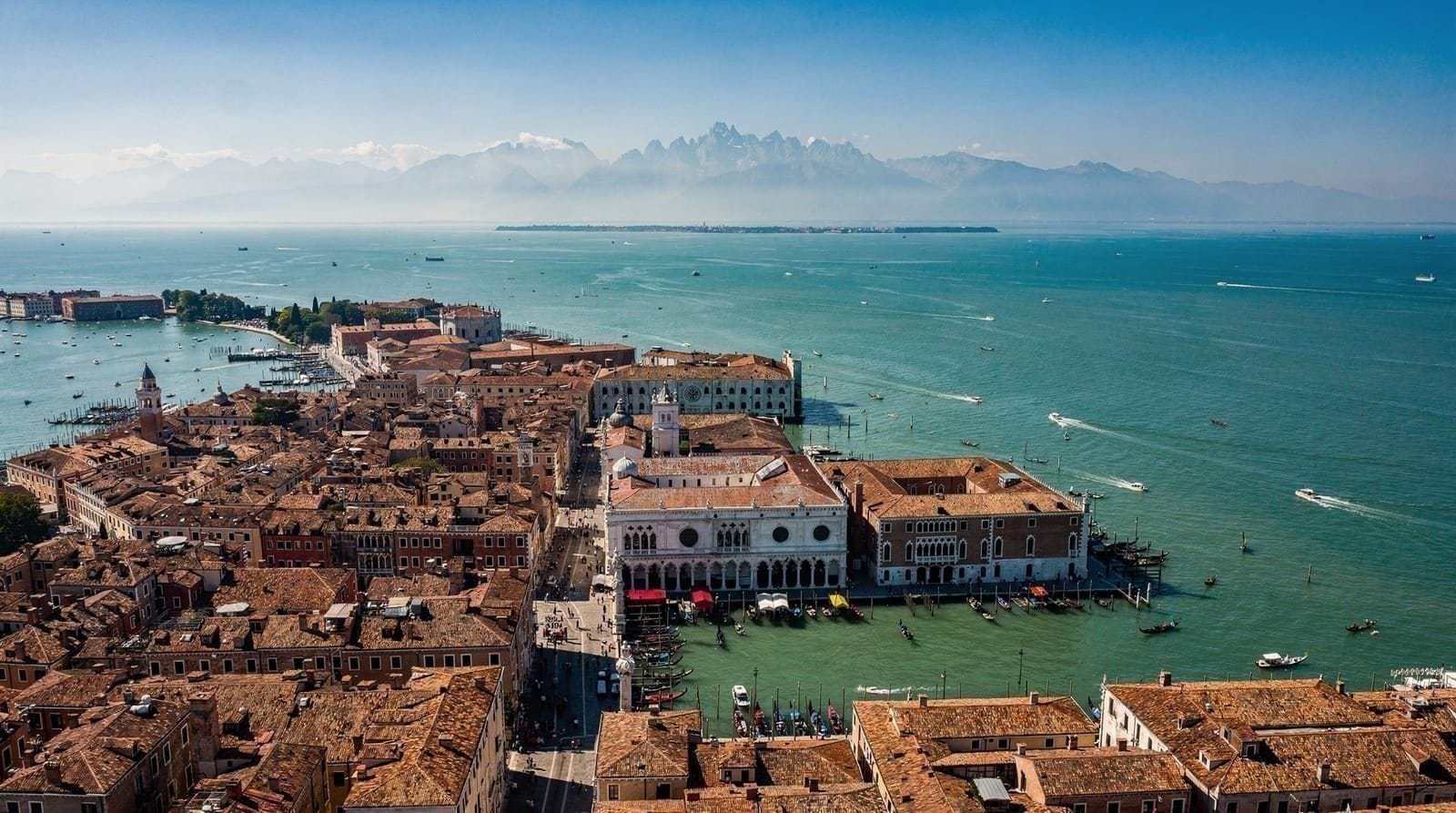
Venice stands on approximately 118 islands separated by about 160 canals, connected by some 400 bridges. The buildings rest on wooden piles driven into the lagoon sediment — millions of them, primarily alder and oak sourced from forests in Slovenia and the Friulian Alps. These piles do not rot in the anaerobic mud; they petrify over time, becoming stone-hard. The bases of Venetian buildings are not so much resting on the piles as fused to them.
The construction of Venice was an engineering project on a scale comparable to the great cathedrals — sustained over centuries, requiring constant material supply, and never finished. The lagoon itself had to be managed: channels dredged, inlets controlled, the balance between fresh and salt water maintained. The Venetian government employed hydraulic engineers from at least the 13th century onward, and the management of the lagoon was treated as a matter of state security.
Trade, the Crusades, and the empire
Venice’s wealth was built on trade, and trade was built on geography. Positioned at the northern end of the Adriatic, Venice sat at the intersection of two commercial worlds: Western Europe, with its demand for Eastern luxury goods, and the Byzantine and Islamic East, with its demand for European metals, timber, and wool. Venice charged tolls and fees for passage through its waters and leveraged its naval power into trading privileges in ports from Alexandria to Antioch.
The critical event in Venice’s imperial expansion was not a trade agreement but a military campaign: the Fourth Crusade of 1202–1204. Venice provided the ships and logistics for a crusade that was supposed to attack Egypt. Under complex circumstances that historians still debate, the crusade was redirected first to Zara (a Dalmatian city that Venice wanted captured) and then to Constantinople itself. The Byzantine capital was sacked in 1204, and Venice walked away with the quartae et dimidiae imperii Romani — a quarter and a half of the Roman Empire. What that meant in practice was control of key ports, islands, and fortifications throughout the Aegean and eastern Mediterranean.
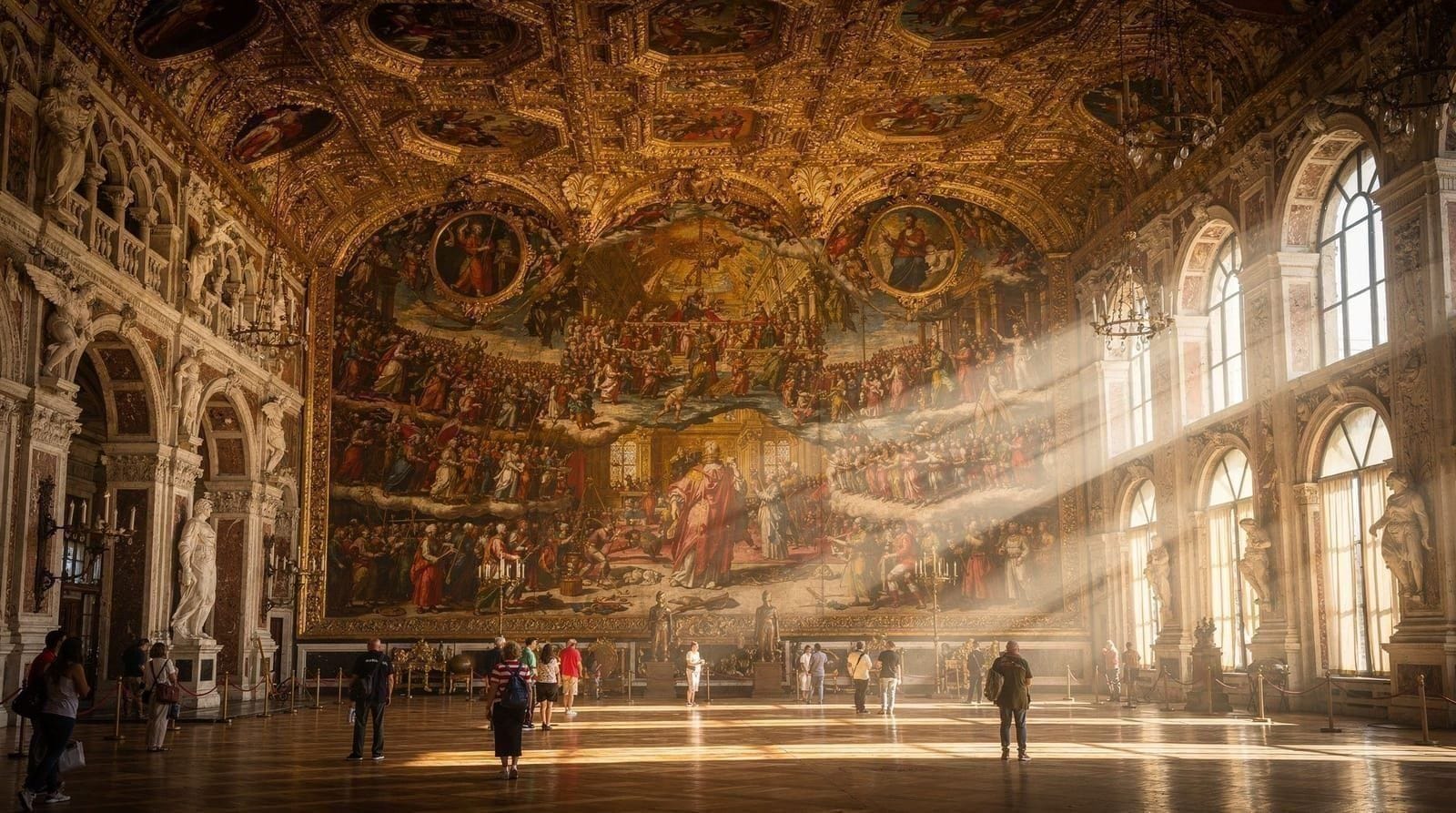
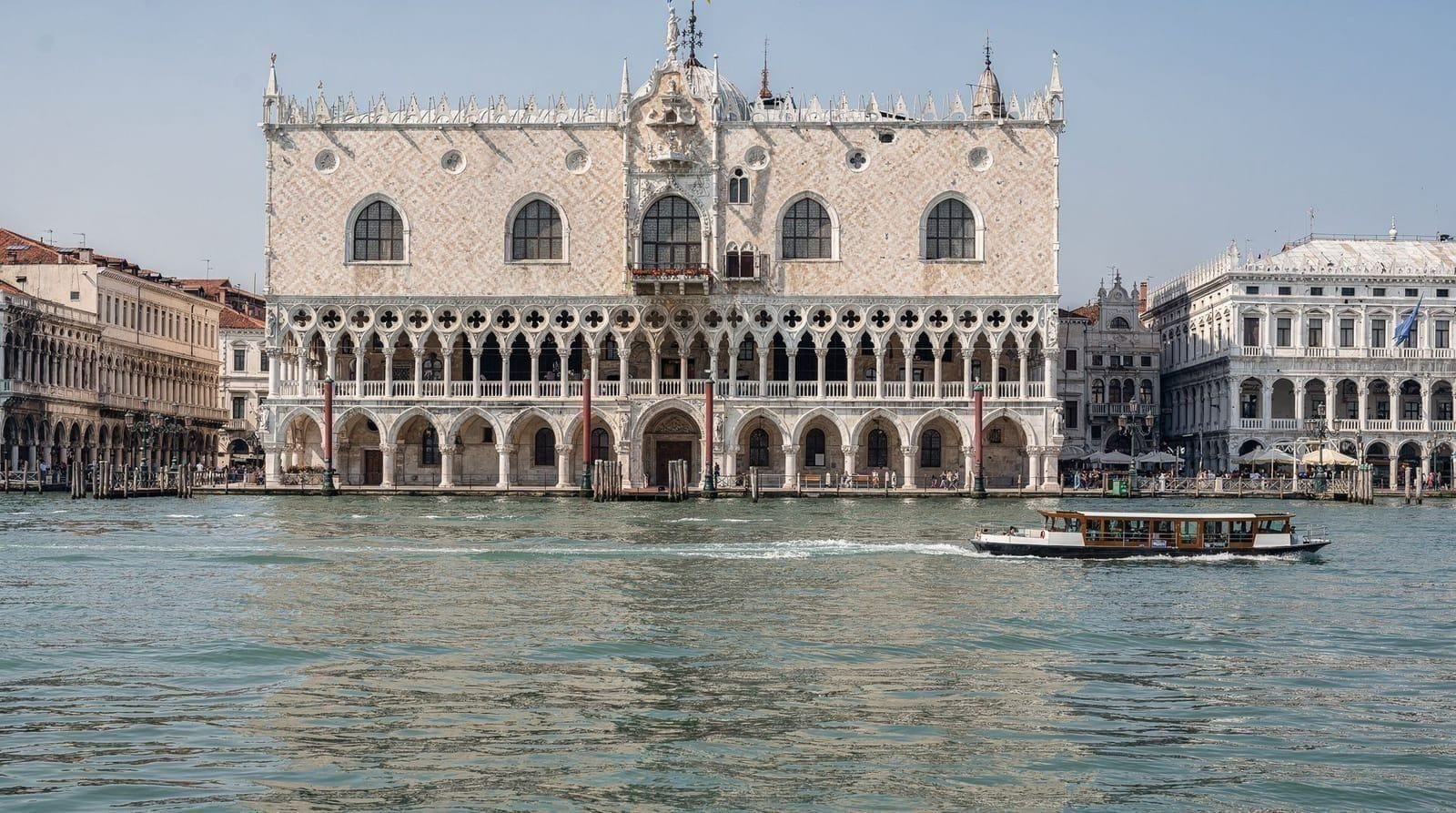
The four bronze horses above the entrance to St Mark’s Basilica are the most visible reminder of this event. They were looted from the hippodrome of Constantinople, where they had stood since at least the 4th century AD. They stood atop St Mark’s until Napoleon had them removed to Paris in 1797; they were returned to Venice in 1815 and are now inside the basilica (the horses on the facade are replicas). The Doge’s Palace — the centre of Venetian political power — and St Mark’s Basilica, the state church — are the physical manifestation of the wealth generated by Venice’s commercial empire. The Doge’s Palace secret passageways tour accesses areas of the palace closed to standard visitors, including the Council Chambers where Venice’s political decisions were actually made and the prison where Casanova was held.
The Black Death and the plague years
Venice was hit harder by the Black Death than almost any other European city. The first epidemic struck in 1347–1348, killing an estimated 60% of the city’s population — more than 50,000 people in a city that had perhaps 90,000 at its peak. The plague returned repeatedly: 1382, 1397, 1485, 1575–1577, and finally 1630–1631, when another 45,000 died.
Venice’s response to plague produced two enduring innovations. The first was the quarantine: ships arriving from suspected plague areas were required to anchor for 40 days (the word quarantine comes from the Italian quarantina, meaning forty) before their crews and cargo were allowed to enter the city. This was introduced in 1377 and represents one of the first systematic public health policies in European history.
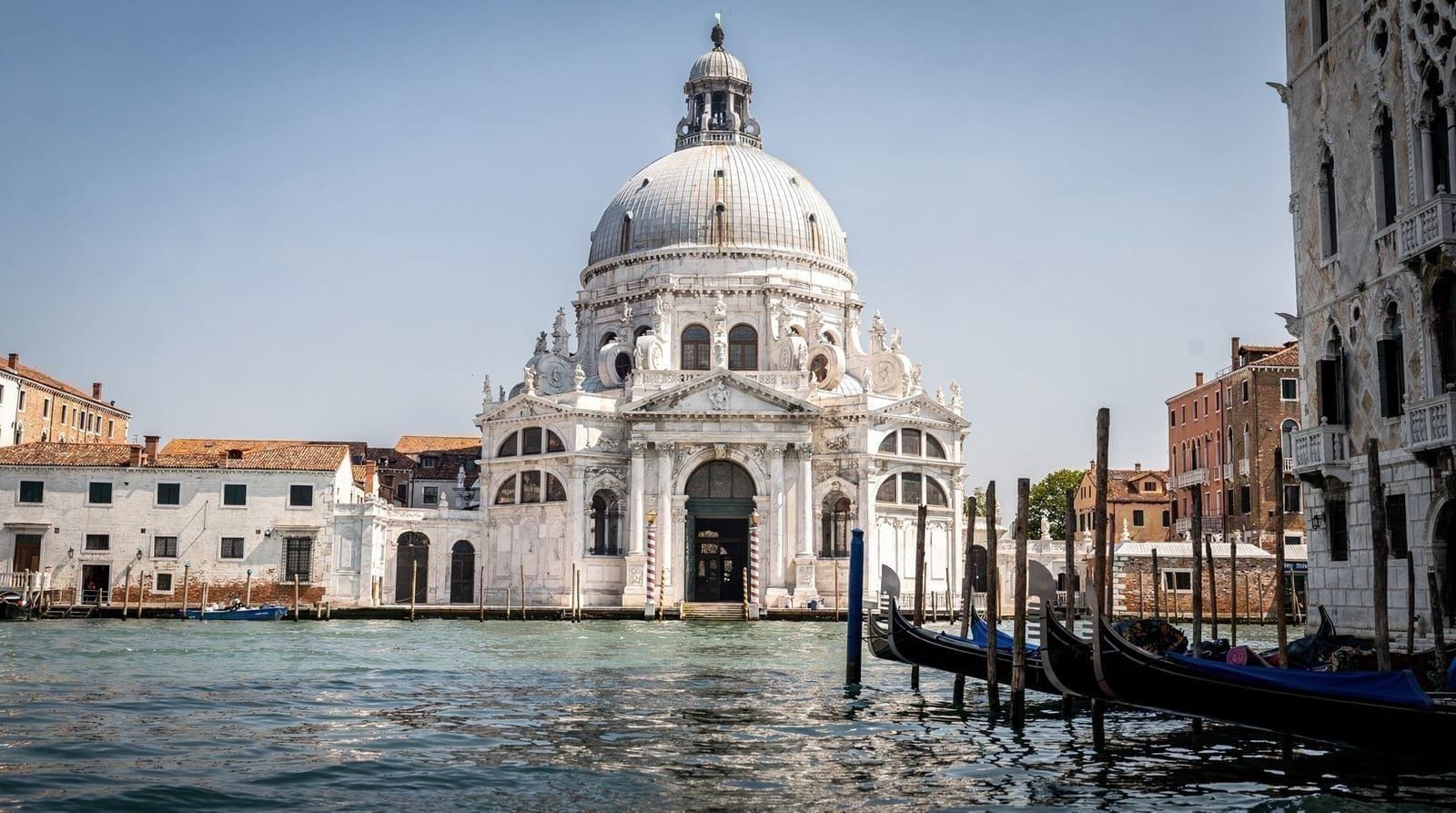
The second was the church of Santa Maria della Salute, which stands at the entrance to the Grand Canal and dominates Venice’s western skyline. It was built in fulfillment of a vow made during the 1630–1631 plague: if Venice survived, the Republic would build a church in honour of the Virgin Mary. The architect Baldassare Longhena designed a structure that has no precedent in Venice’s architecture — an octagonal basilica topped by a vast dome, flanked by scrolled buttresses. It was begun in 1631 and consecrated in 1687. Every year on November 21, Venetians walk to the Salute across a temporary bridge of pontoons to give thanks — a tradition that continues today.
The Ottoman wars
Throughout the 15th–17th centuries, Venice fought an intermittent, grinding war with the Ottoman Empire for control of the eastern Mediterranean. Cyprus fell in 1571 after a year-long siege; the Venetian commander Marcantonio Bragadin was flayed alive by the Ottomans. The Battle of Lepanto (1571), in which a Christian alliance including Venice defeated the Ottoman fleet, is remembered as one of the defining naval battles of the Mediterranean. Venice’s strategic position never fully recovered from the loss of Cyprus, Crete (which fell in 1669 after a 21-year siege), and gradually the entire eastern island empire.
Carnival, the casino, and the pleasure city
By the 18th century, Venice was in political and economic decline — but it was experiencing one of the most brilliant periods of cultural production in its history. Vivaldi was working at the Ospedale della Pietà, an orphanage-conservatory that was one of the finest music institutions in Europe. Goldoni was reforming Italian theatre. Tiepolo was painting the ceilings of the Doge’s Palace and the Church of the Gesuati. Casanova was navigating the city’s labyrinthine social world with characteristic energy.
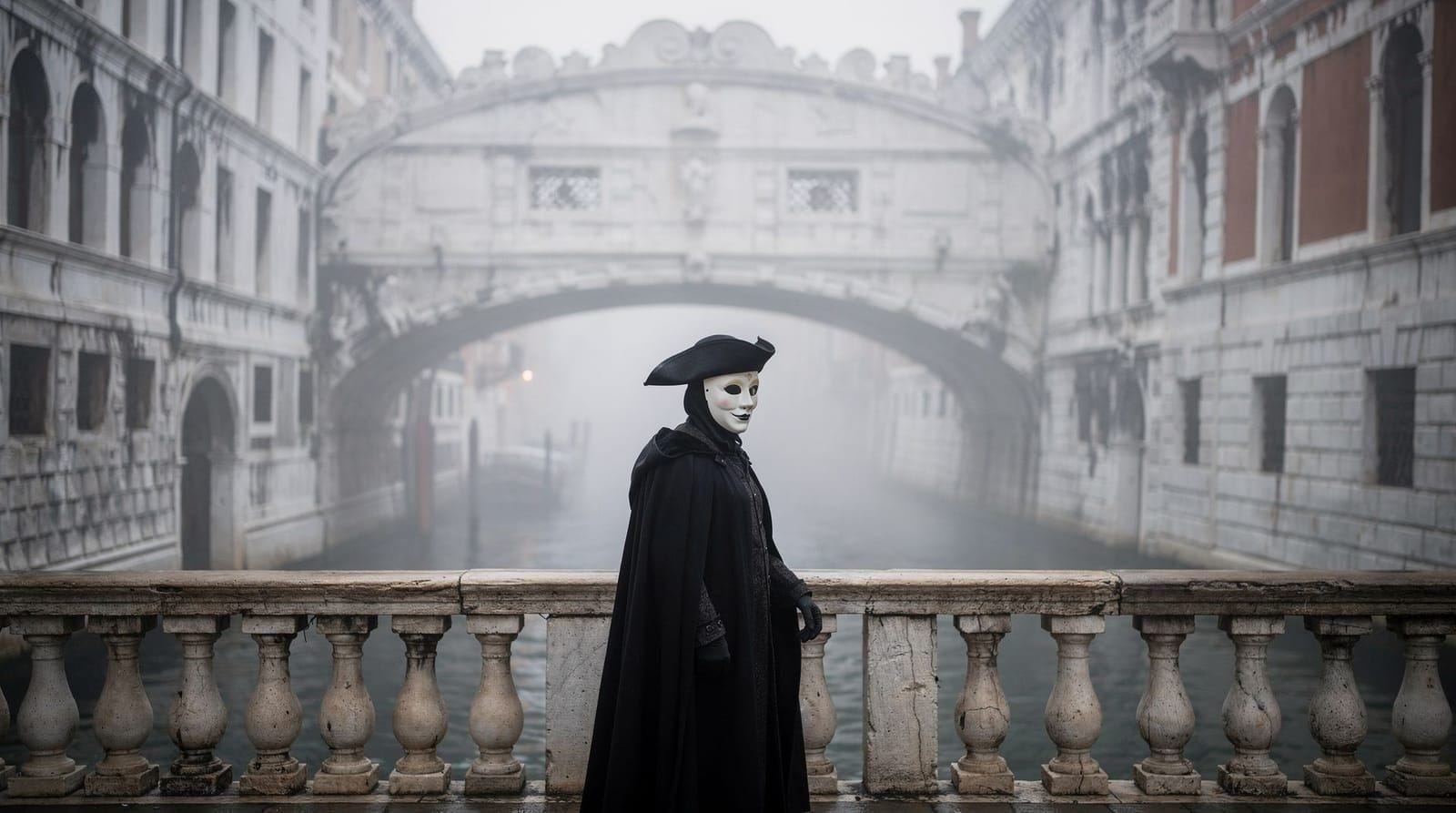
The Carnival that peaked in the 18th century was, by any measure, extraordinary. Tourists came from across Europe specifically to attend it. Gambling was legal, mask-wearing provided social anonymity, and the city operated on different rules from the rest of Italy. Venice had become, as the historian John Julius Norwich put it, “a city of pleasure — or perhaps of escape.”
For more on the Carnival tradition, see the Venetian Carnival history guide.
The fall of the Republic
Napoleon’s Italian campaign of 1796–1797 ended with French forces approaching Venice. The Serenissima had maintained official neutrality but could not sustain it. On 12 May 1797, the last doge, Ludovico Manin, abdicated. The Great Council — which had governed Venice for centuries — was dissolved. 1,100 years of self-governance ended without significant military resistance.
Napoleon looted the city systematically: the bronze horses from St Mark’s (returned in 1815), manuscripts, artworks, documents. He demolished portions of the Doge’s Palace to build himself a garden. He closed the monasteries and converted churches to military barracks. Venice was then traded to Austria in the Treaty of Campo Formio later in 1797.
The Austrian period lasted, with interruptions, until 1866. Venice joined unified Italy not through popular revolution but through a plebiscite following the Austro-Prussian War. The city’s political identity as part of Italy has been unchallenged since, but its cultural distinctiveness — its dialect, its relationship with the water, its artisan traditions — remains a source of local pride that visitors can still feel.
Venice’s history at a glance: key dates
| Year | Event |
|---|---|
| 452–568 AD | Refugees settle the lagoon islands permanently |
| 697 AD | First doge elected |
| 1204 | Fourth Crusade sacks Constantinople; Venice’s empire expands |
| 1347–1348 | Black Death kills ~60% of the population |
| 1571 | Battle of Lepanto |
| 1630–1631 | Final great plague; Santa Maria della Salute vowed |
| 1797 | Napoleon ends the Republic; last doge abdicates |
| 1866 | Venice joins the Kingdom of Italy |
| 2020 | MOSE flood barrier system completed |
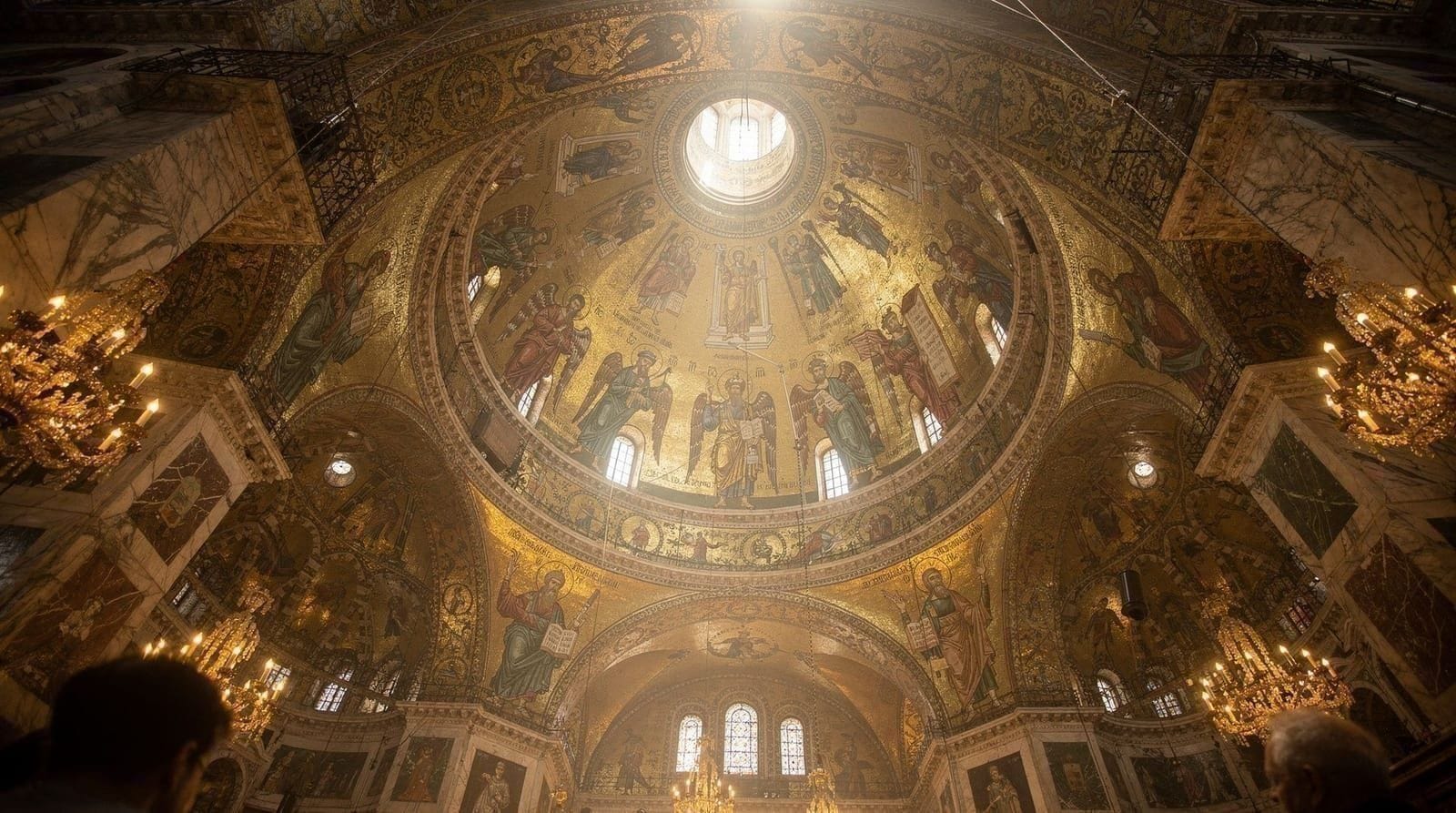
This timeline is worth keeping in mind while walking the city — the Doge’s Palace spans several of these eras in a single building, and the St Mark’s Basilica mosaics narrate biblical history using techniques that were already centuries old when the Fourth Crusade brought home the loot displayed on its facade today.
How to see this history in a day or two
For visitors who want the history to shape their sightseeing rather than reading about it afterward, a practical route works well: start at St Mark’s Basilica and the Doge’s Palace for the Republic’s political and religious core, walk to the Rialto for the trade history that funded it all, and finish at the Jewish Ghetto in Cannaregio for the more complex, less triumphant history of the Republic’s minorities. This route is easily built into the first-time Venice guide’s broader itinerary or the standalone 3-day Venice itinerary.
Venice today: between preservation and flooding
Venice faces two existential challenges in the 21st century. The first is physical: the city sinks gradually into the lagoon as the soft sediment compresses, while sea levels rise. The MOSE flood barrier system — a set of inflatable gates across the three lagoon inlets — was completed in 2020 after decades of construction and political scandal. It has functioned in major acqua alta events since, though its long-term effectiveness against continued sea level rise is uncertain. Read the acqua alta guide for the practical visitor implications.
The second challenge is demographic. Venice’s resident population has fallen from around 175,000 in the 1950s to approximately 50,000 today. Tourism — 20–25 million visitors a year — shapes the city’s economy completely. The Venice access fee guide explains the Contributo di Accesso, Venice’s attempt to manage day-tripper numbers.
The tension between preservation and change is not new in Venice — the city has been managing it since the first refugees drove the first piles into the lagoon mud fifteen centuries ago.
Frequently asked questions about Venice’s history
When was Venice founded?
Tradition dates Venice’s founding to 421 AD, but the earliest significant settlement occurred between 452 and 568 AD, when refugees fleeing Barbarian invasions moved into the lagoon islands. The first doge was appointed in 697 AD.
How long did the Venetian Republic last?
The Serenissima lasted from 697 to 1797 — over 1,100 years. It is one of the longest-lived political entities in European history.
How did Venice become so wealthy?
Venice positioned itself as the trading gateway between Western Europe and the Eastern Mediterranean. The Fourth Crusade of 1204, during which Venice directed a crusade to sack Constantinople, massively expanded its commercial empire.
What was the Fourth Crusade and what did Venice gain from it?
The Fourth Crusade (1202–1204) resulted in the sack of Constantinople. Venice gained control of strategic ports and islands throughout the Aegean and eastern Mediterranean, including the bronze horses now displayed in St Mark’s Basilica.
What caused the decline of Venice?
Vasco da Gama’s sea route to India (1498) bypassed Venice’s trade routes. Ottoman expansion reduced access to eastern Mediterranean markets. Repeated plague epidemics devastated the population. By the 18th century, Venice was a pleasure city rather than a commercial powerhouse.
What happened to Venice after Napoleon?
Napoleon ceded Venice to Austria in 1797. The city remained under Austrian rule until 1866, when it joined the Kingdom of Italy following the Third Italian War of Independence.
Where can I see Venice’s history most directly today?
The Doge’s Palace and St Mark’s Basilica together cover the largest span of the Republic’s political and religious history in a single visit. For the darker, more surveillance-focused side of the story, the Doge’s Palace Secret Itineraries tour accesses the prison cells and council chambers directly. For the Republic’s minorities and a more complex history, the Jewish Ghetto in Cannaregio is essential.
Did Marco Polo really come from Venice?
Yes, and his family’s trading connections are typical of the Republic’s commercial reach at its height. Marco Polo departed Venice in 1271 on the journey that eventually took him to the court of Kublai Khan in China, returning over two decades later with accounts of the East that shaped European understanding of Asia for centuries. His travels illustrate exactly the kind of long-distance trade network that made Venice wealthy. See the Marco Polo Venice guide for more on his life and the places in the city connected to him.
Top experiences
Bookable activities with verified prices and instant confirmation on GetYourGuide.