Venice churches: the 10 most important to visit and why
Venice St. Mark's pass: basilica, Doge palace & bell tower
Which churches in Venice are worth visiting?
St Mark's Basilica is non-negotiable. Beyond it, prioritise the Frari (for Titian's Assumption), the Gesuati (Tiepolo ceiling), San Zaccaria (Bellini altarpiece), Santa Maria della Salute (architectural masterpiece), and the Scuola Grande di San Rocco (Tintoretto at his greatest). Most cost €3–€5 to enter or are free.
Why Venice’s churches matter
Venice built its wealth partly on religion — or rather, on the prestige that accompanied the possession of important relics and the patronage of magnificent churches. The Republic competed with other Italian city-states in the quality of its ecclesiastical architecture and the importance of its sacred objects. The result, compressed onto a small archipelago, is one of the most extraordinary concentrations of religious art in the world.
But Venice’s churches are not simply art galleries with crosses. They are active places of worship (most hold daily Mass), they reflect the social structure of Venetian Republic society (the great churches were built by wealthy scuole — lay confraternities — as much as by the church hierarchy), and they represent the meeting point of Byzantine, Gothic, Renaissance, and Baroque influences in a way that is specific to Venice.
Understanding what you are looking at inside a Venetian church — why the apse is covered in gold mosaic, why the organ loft has carved figures, why the floor is slightly uneven and tilted — turns a routine visit into something that stays with you.
| Non-negotiable | St Mark’s Basilica |
| Typical entry | Free–€10 per church; Chorus Pass €15 for 16 churches |
| Time needed | 20–40 minutes per church, half a day for the top five |
| Dress code | Shoulders and knees covered, all churches |
| Best combined with | A San Polo/Rialto walk or a Dorsoduro walk |
St Mark’s Basilica: the most important building in Venice
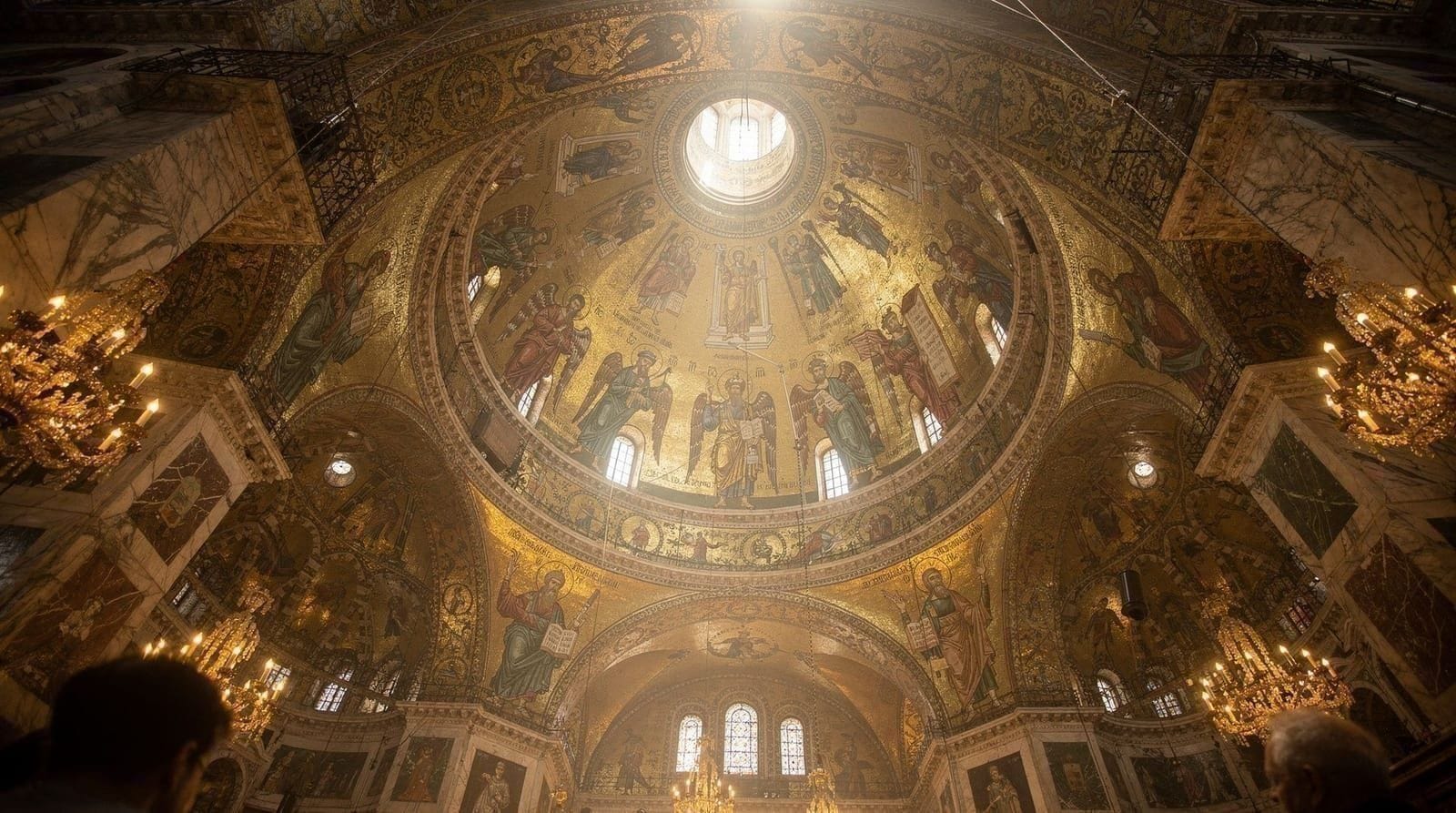
St Mark’s Basilica (Basilica di San Marco, Piazza San Marco) is the state church of the former Venetian Republic, built to house the relics of St Mark the Evangelist. Those relics — acquired from Alexandria in 828 AD in what amounts to ecclesiastical piracy — gave Venice a saint of apostolic rank and the political legitimacy that came with it. The basilica built around them is a Byzantine-derived structure covered in approximately 8,000 square metres of gold mosaic, layered over nine centuries of addition and modification.
The exterior is a statement of power: the four bronze horses looted from Constantinople’s hippodrome stood over the central portal until Napoleon removed them (the originals are now inside; the outdoor horses are replicas). The five portals are covered in Romanesque carvings and Byzantine reliefs. The entire facade is, deliberately, a display of Venice’s capacity to acquire and accumulate the most valuable things in the world.
Inside, give yourself time for the mosaics. The oldest, covering the narthex (entrance hall), date to the 12th and 13th centuries and include the entire narrative of Genesis in extraordinary detail. The main body of the church is lit primarily by candlelight — which is intentional — and the gold tessere of the mosaics reflect in a way that no photograph adequately captures. The floor is uneven because the foundation piles have settled unevenly over centuries; the slight undulation is itself evidence of how old this building is.
The add-on options: the Pala d’Oro (the high altar’s golden altarpiece, studded with enamel miniatures and precious stones — arguably the most valuable object in Venice) is €5 extra. The Museo di San Marco (including the original bronze horses) and the terrace are €7. Both are worth it. See the St Mark’s Basilica guide for how to book in advance.
The Venice St Mark’s Pass combining Basilica, Doge’s Palace, and Campanile is the most efficient way to cover the main Piazza San Marco monuments without queuing for each separately.
Santa Maria Gloriosa dei Frari: Titian’s masterpiece
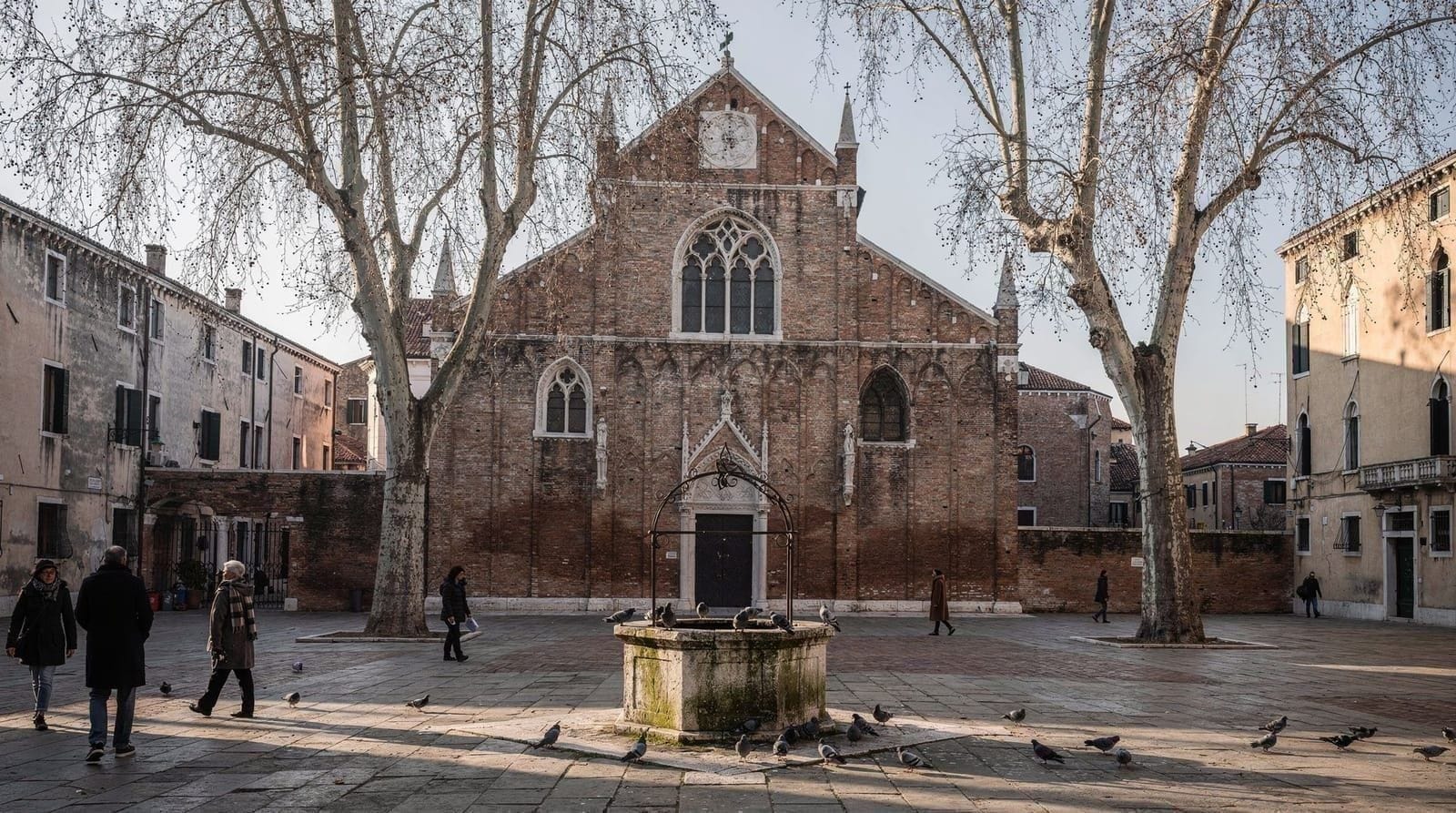
The Frari (Campo dei Frari, San Polo) is the greatest Gothic church in Venice, built by Franciscan friars between 1340 and 1443. Its brick exterior is massive and unadorned; the interior is a shock of spatial scale after the narrow streets outside.
Titian’s Assumption of the Virgin (1516–1518) hangs above the high altar. It is the largest altarpiece Titian ever painted, and it is commonly regarded as the work that established him as the dominant figure in Italian painting. The composition — the apostles gesturing upward, the Virgin ascending in a burst of light, God the Father waiting above — uses colour and movement in a way that still reads as revolutionary more than 500 years later. It is also simply beautiful in the way that the greatest paintings are beautiful: it changes when you look at it from different distances and in different lights.
The Pesaro Madonna (left aisle) is a second Titian of major significance. Donatello’s wooden statue of St John the Baptist (in the Florentine chapel) is a work of startling psychological intensity for a carved figure. Bellini’s triptych in the sacristy is serene and luminous.
Entry: €5 (Chorus Pass accepted).
Scuola Grande di San Rocco: Tintoretto’s life work
Technically not a church but a scuola grande (a major lay confraternity building), the Scuola Grande di San Rocco (San Polo, adjacent to the Frari) contains the most concentrated display of Tintoretto’s work anywhere in the world. Tintoretto spent over 20 years painting the ceilings and walls of the Sala dell’Albergo, the Sala Capitolare, and the ground floor hall, producing a cycle of over 50 large-scale paintings on Old and New Testament themes.
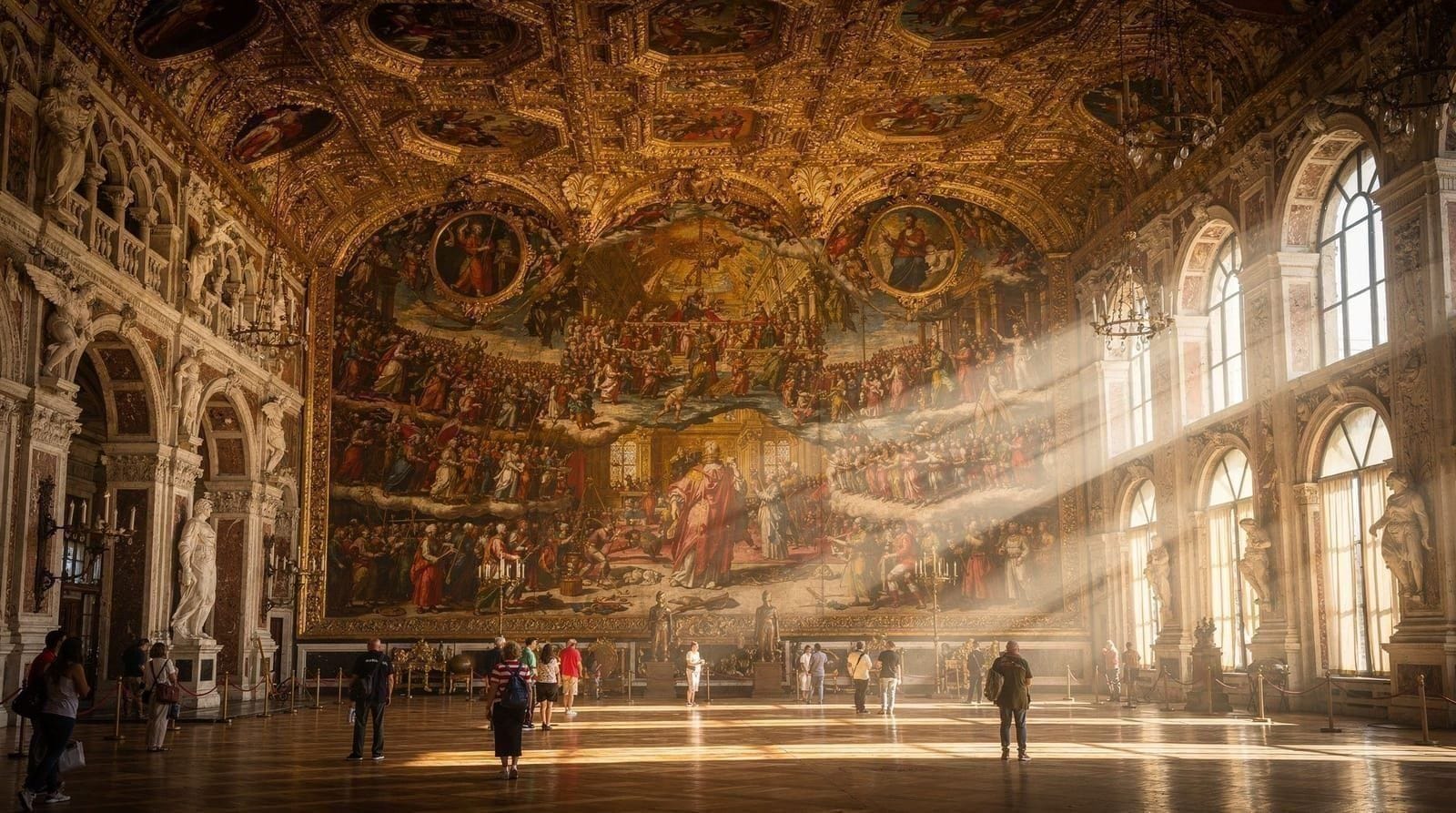
The ceiling of the Sala Capitolare — which you must view lying back or using the mirrors thoughtfully provided — shows Old Testament scenes in a torrential, almost violent visual language. The Crucifixion in the Sala dell’Albergo is possibly the greatest single painting in Venice, 22 metres wide and depicting the moment of Christ’s death with an intensity that no photograph can convey at full scale.
Entry: €10. No Chorus Pass.
Santa Maria della Salute: votive church of the Republic
The Salute (Campo della Salute, Dorsoduro) was built between 1631 and 1687 in fulfillment of a vow: the Republic promised God a great church in exchange for deliverance from the plague of 1630–1631, which had killed 45,000 Venetians. The architect Baldassare Longhena designed an octagonal basilica with a vast dome and flanking scrolled buttresses (volute) that have no precedent in Venetian architecture. The result is the most distinctive building on the Venetian waterfront — the view from the Grand Canal looking south, with the Salute’s dome rising above the water, is the canonical image of Venice.
The interior has Titian’s altarpiece Saint Mark Enthroned and a Marriage at Cana by Tintoretto in the sacristy. But the real experience of the Salute is architectural: standing inside the dome, looking up through the eight windows to the lantern, understanding how Longhena solved the problem of placing a round building on a non-circular footprint. Free entry. November 21 each year, Venetians cross a pontoon bridge to the Salute for the traditional thanksgiving ceremony (Festa della Salute).
San Zaccaria: Bellini’s finest altarpiece
San Zaccaria (Campo San Zaccaria, Castello) is one of Venice’s oldest churches, rebuilt in the late 15th century in a building that transitions — unusually — from Gothic at the lower level to Renaissance above. Giovanni Bellini’s altarpiece of the Sacred Conversation (1505) is in the second chapel on the left. It is one of the most perfectly balanced compositions in Venetian painting — the Virgin and Child flanked by saints, suffused in a golden afternoon light, spatially coherent in a way that Bellini’s early work was not. Bellini was 75 when he painted it.
The crypt, partially flooded (Venice’s groundwater levels mean that many underground spaces fill with water), contains the tombs of early doges. Free entry.
I Gesuati: Tiepolo’s ceiling
The Gesuati (Fondamenta delle Zattere, Dorsoduro) is a late Baroque church facing the Giudecca Canal, with three ceiling frescoes by Giambattista Tiepolo (1737–1739). These are among the finest Rococo religious paintings in Venice: luminous, theatrical, and demonstrating Tiepolo’s extraordinary control of perspectival illusionism — the figures painted on a flat ceiling appear to be floating in real space above you. Entry: €3 (Chorus Pass accepted).
San Giorgio Maggiore: the view and Palladio’s geometry
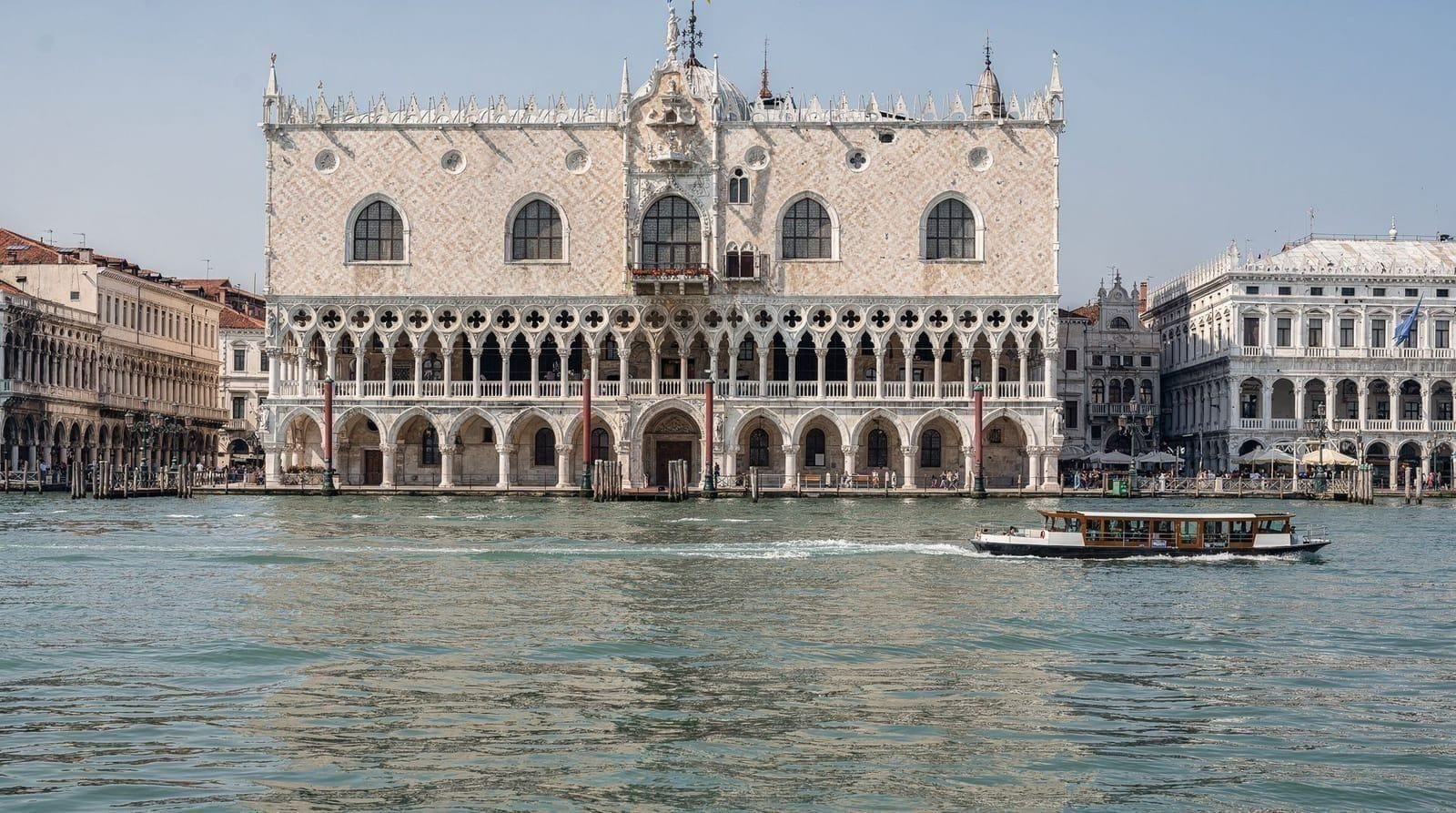
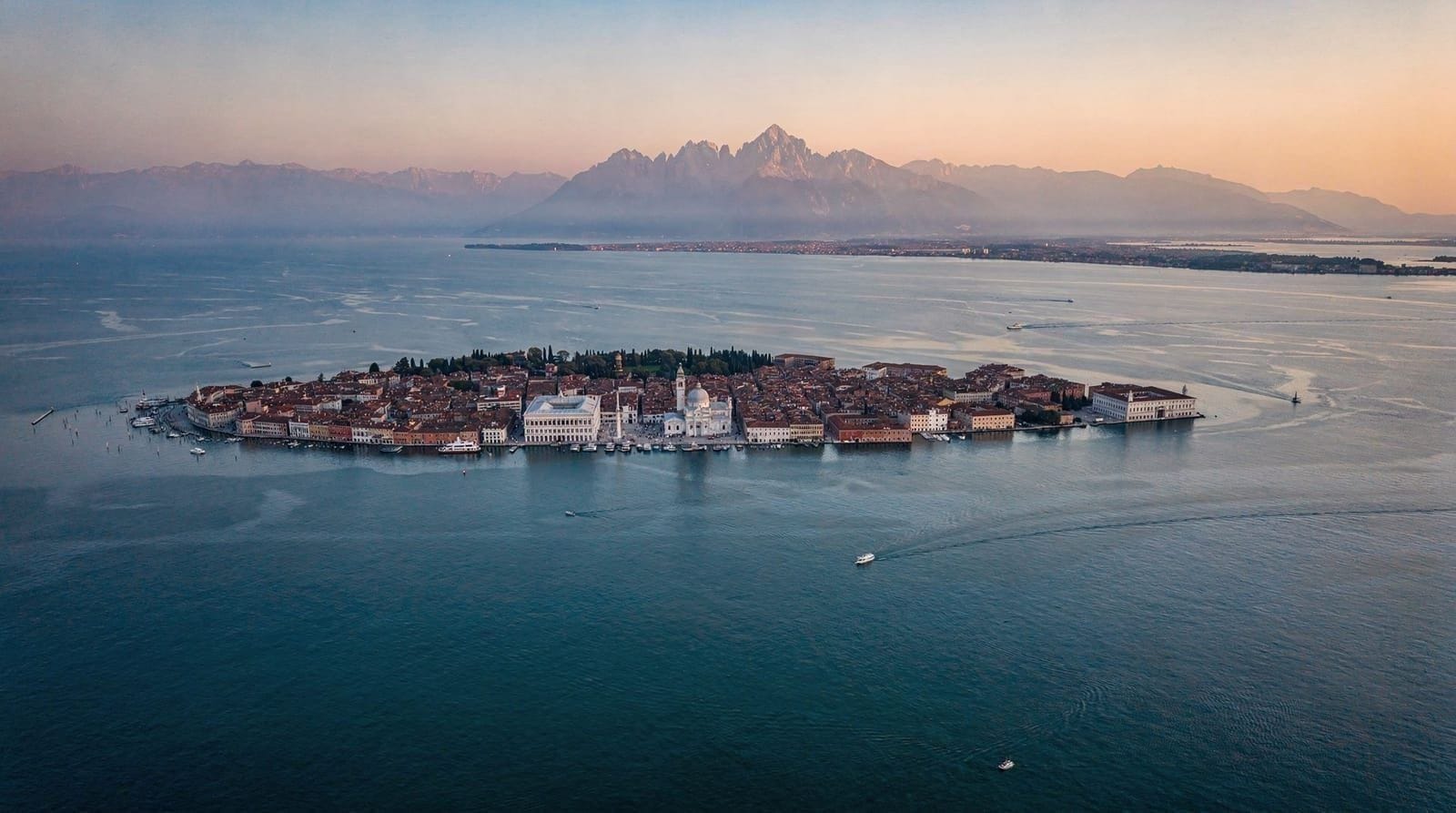
San Giorgio Maggiore (island of San Giorgio Maggiore) is Andrea Palladio’s masterpiece — a white marble church on its own island, directly across the Bacino di San Marco from the Doge’s Palace. The facade is Palladio’s attempt to solve the problem that had stumped church architects since the Renaissance: how to apply a classical temple front to a building with a tall nave and lower side aisles. His solution — two interlocking temple pediments — became enormously influential.
Take the lift up the campanile (€8) for the best 360-degree view in Venice: San Marco and the Doge’s Palace to the north, the Giudecca Canal to the west, the open lagoon to the east. Two Tintorettos flank the high altar — late works, slightly laboured compared to the great San Rocco cycle, but still impressive at scale.
Take vaporetto line 2 from San Zaccaria to San Giorgio (10 minutes). Free entry; campanile €8.
SS Giovanni e Paolo: monument to the doges
Santi Giovanni e Paolo (Campo SS Giovanni e Paolo, Castello) is the Dominican answer to the Franciscans’ Frari — another vast Gothic basilica built between the 13th and 15th centuries, used as the burial church for the doges of Venice. Twenty-five doges are buried here. The monuments lining the interior walls represent five centuries of Venetian funerary sculpture, from Gothic to Baroque.
The Equestrian statue of Bartolomeo Colleoni outside, by Verrocchio and cast by Leopardi, is considered one of the finest equestrian bronzes of the Renaissance.
Entry: €3.50.
Madonna dell’Orto: Tintoretto’s parish church
Madonna dell’Orto (Cannaregio) was Tintoretto’s parish church throughout his life, and he is buried here. The church contains several of his paintings, including The Presentation of the Virgin in the Temple and The Last Judgment — large-scale works that show Tintoretto in full rhetorical flight. The setting — a quieter corner of Cannaregio, away from tourist circuits — makes this a particularly rewarding visit for visitors who want to engage with the work without fighting crowds.
Entry: €3 (Chorus Pass accepted). See the Cannaregio guide for combining this with a walk through the neighbourhood.
Two more churches worth a short detour
Santa Maria dei Miracoli: the marble jewel box
The Miracoli (Cannaregio, near Fondamente Nove) is one of the most purely beautiful buildings in Venice — a small Renaissance church entirely sheathed in marble, inside and out, designed by Pietro Lombardo in 1481–1489. The interior is a single barrel-vaulted nave with a raised choir and an extraordinary variety of carved marble decoration. The building manages to be both intimate and monumental simultaneously, which is rare.
It is also a genuinely unusual form of beauty for Venice, which is predominantly a Gothic city with later Baroque additions. The Miracoli’s Renaissance classicism feels transplanted from Florence, and perhaps it was — the Lombardo family had strong connections to Florentine architectural ideas. Entry €3 (Chorus Pass accepted).
Redentore: Palladio’s votive church
The Redentore on Giudecca island (Palladio, 1577–1592) was built as a vow in thanksgiving for deliverance from the plague epidemic of 1576–1577, which killed approximately 50,000 Venetians including the painter Titian. It sits on the Giudecca waterfront facing north across the canal toward the Zattere. The annual Festa del Redentore (third Sunday of July) still involves a procession of boats to the church and fireworks over the lagoon — one of Venice’s most important civic religious festivals.
The Redentore’s facade is the fullest expression of Palladio’s solution to the Renaissance church front problem — more successful, most architectural historians agree, than even San Giorgio Maggiore. The interior is cooler and less ornate than most Venice churches. Free entry; take vaporetto line 2 to Redentore.
Which churches to prioritise, by time available
| Time available | Recommended churches |
|---|---|
| Half a day | St Mark’s Basilica, the Frari, Scuola Grande di San Rocco |
| Full day | Add Santa Maria della Salute, San Zaccaria |
| Two days, art-focused | Add I Gesuati, Madonna dell’Orto, San Giorgio Maggiore |
| Architecture-focused | St Mark’s, the Salute, San Giorgio Maggiore, the Redentore |
| Quiet/off-circuit priority | Madonna dell’Orto, SS Giovanni e Paolo, Santa Maria dei Miracoli |
If you only have a single morning and want the highest concentration of masterpieces, the Frari and the adjacent Scuola Grande di San Rocco together take about 90 minutes and cover Titian’s Assumption and the full Tintoretto cycle — arguably the two most important religious art sites in Venice outside St Mark’s itself. See the San Polo and Rialto guide for combining this with the market and cicchetti circuit nearby.
A one-day church itinerary
For visitors with a single day to dedicate to Venice’s religious architecture, a workable route runs roughly west to east: start at the Frari and San Rocco in San Polo (late morning, before midday crowds), cross to the Salute in Dorsoduro for the architecture and the Grand Canal view, then take the vaporetto to San Giorgio Maggiore for the campanile view, and finish at St Mark’s Basilica in the late afternoon when queues typically thin. This route touches four sestieri and gives a genuine sense of how Venice’s church architecture evolved from Gothic through Baroque to Palladian classicism. Pair it with the first-time Venice guide if this is your introduction to the city, or slot it into the 3-day Venice itinerary as a dedicated culture day.
Practical advice for church visits
Chorus Pass: €15, valid for 16 churches. Buy at the first church you visit or online at chorusvenezia.org. If you plan to visit more than five Chorus churches, it pays for itself.
Opening hours: Most churches open 10:00–17:00 Monday to Saturday, with reduced or no access during services. Many close Monday morning. Hours change seasonally and sometimes without notice; check before making a special journey.
Photography: Most Venice churches permit photography without flash. Some major works have photography restrictions — if in doubt, ask.
Services: Several churches still hold regular Sunday Mass with music, which is a different experience from a tourist visit. San Marco holds a sung Mass most Sundays; the Frari choir performs on special occasions.
Frequently asked questions about Venice churches
How many churches does Venice have?
Venice has approximately 120 churches still standing, of which about 50 are regularly open to visitors. Around 16 are managed by the Chorus Pass scheme.
What is the Chorus Pass for Venice churches?
The Chorus Pass gives access to 16 of Venice’s most important historic churches for €15. Individual church entry is €3 each. It does not include St Mark’s Basilica.
Do I need to book St Mark’s Basilica in advance?
For the free main nave, advance booking is strongly recommended in peak season (April–October). A reservation (€3) allows you to skip the standard queue.
Are Venice’s churches dress-code enforced?
Yes. Shoulders and knees must be covered. This applies to men and women. Carry a scarf or light layer.
Which Venice church has the best artwork?
For sheer concentration of masterwork, the Frari in San Polo: Titian’s Assumption, the Pesaro Madonna, and Donatello’s St John the Baptist. The adjacent Scuola Grande di San Rocco with its Tintoretto cycle surpasses almost any other single-artist concentration in Venice.
Can I combine church visits with the Doge’s Palace and St Mark’s Square?
Yes, and it makes an efficient half-day. St Mark’s Basilica sits directly on the Piazza alongside the Doge’s Palace and the Campanile, so a single morning can cover the state church, the seat of government, and the bell-tower view without significant walking between them. See the St Mark’s Square guide for the layout of the Piazza and how to sequence a visit that avoids the worst of the midday queues.
Are Venice’s churches suitable for children?
Most are, though the appeal varies by child. The scale and gold mosaics of St Mark’s Basilica tend to impress even young children, while the Frari and Scuola Grande di San Rocco’s large dramatic canvases (the Crucifixion in particular) can hold older children’s attention better than smaller devotional paintings. Keep visits brief for younger children — 15–20 minutes per church is usually the practical limit before restlessness sets in. See family-friendly Venice for pacing a day that mixes churches with more active breaks.
Top experiences
Bookable activities with verified prices and instant confirmation on GetYourGuide.