Venetian Carnival history: from Republic tradition to modern revival
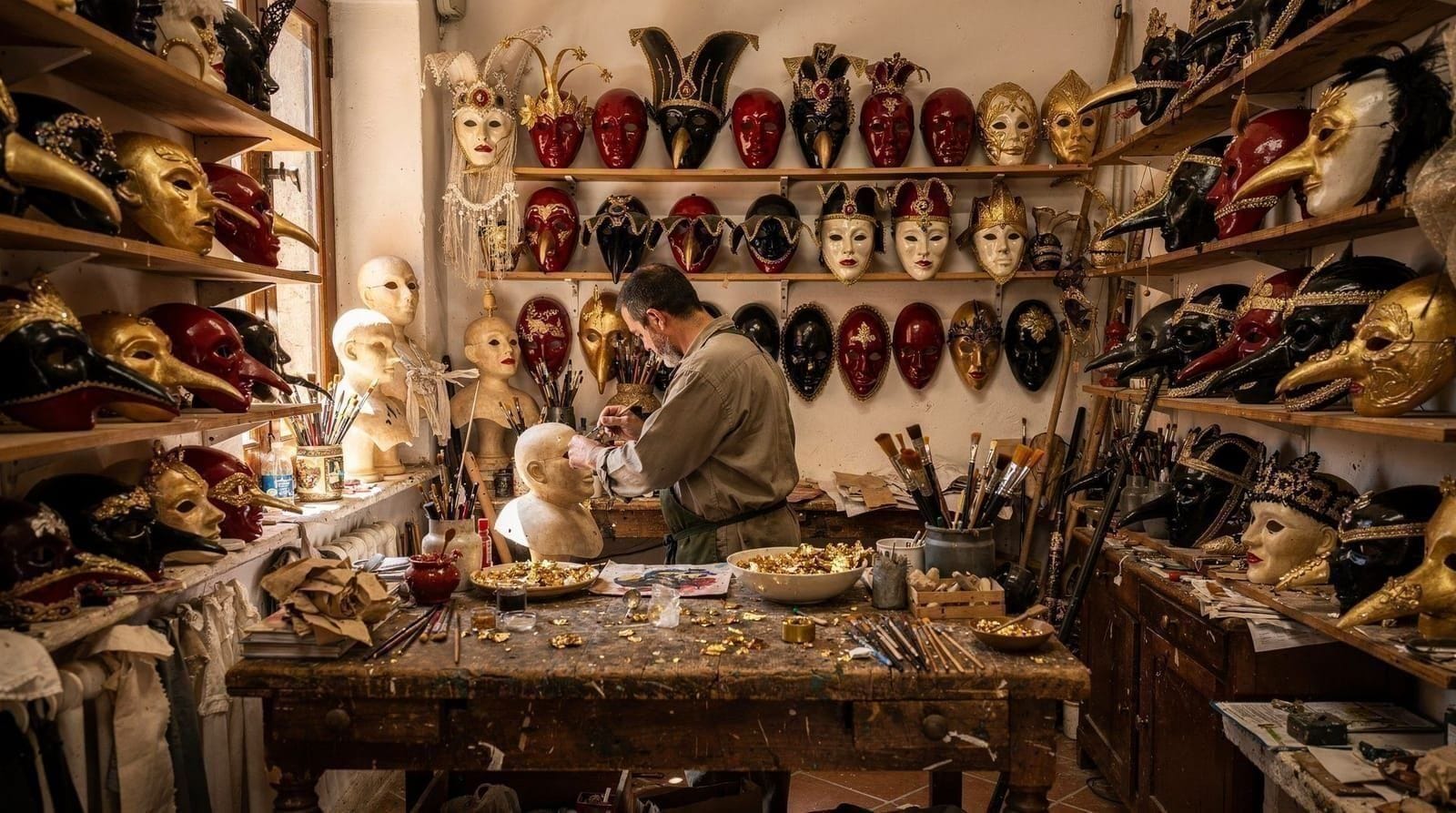
Venice: Carnival mask workshop
When did Venice Carnival begin and why?
Venice Carnival's origins are traced to at least the 11th century, when festivities before Lent were recorded in official documents. By the 13th century, mask-wearing was common enough to require regulation. At its 18th-century peak, Carnival lasted from December 26 to Fat Tuesday and attracted visitors from across Europe. It was suppressed by Napoleon in 1797 and revived in 1979.
| Documented origins | At least the 11th century (1094 decree) |
| Golden age | 18th century, Republic’s final decades |
| Suppressed | 1797, by Napoleon’s abolition of the Republic |
| Revived | 1979, after informal 1970s student gatherings |
| 2026 dates | January 31 – February 17 |
The word behind the celebration
Carne vale — flesh, farewell. The etymology of Carnival points directly to its function: the last period of feasting and celebration before the Lenten fast. The word appears in the same root form in Latin, Italian, and most Romance languages. The concept of a reversal period before deprivation — a time when normal rules are suspended, hierarchies are inverted, and excess is permitted before restraint — is ancient and probably predates Christianity, with roots in Roman Saturnalia.
But Venice made it uniquely Venetian.
Origins: documents and traditions
The first documentary evidence of Venetian Carnival comes from a decree of 1094 by Doge Vitale Falier, who referred to public festivities as an established tradition. A century later, in 1162, the Senate decreed that annual festivities should be held in Piazza San Marco to celebrate Venice’s victory over the Patriarch of Aquileia. These celebrations included the slaughter of a bull and twelve pigs, symbolic of a ransom paid in animal flesh rather than human lives — an early indication of the city’s taste for theatrical ceremony with political undertones.
Mask-wearing became legally codified from the 13th century onward. The regulations of 1268 prohibited masked persons from entering convents or other restricted spaces — which implies that anonymous mask-wearing was already common enough to be a problem. Subsequent laws specified when masks could be worn, who could wear them, and what social contexts permitted disguise. The sheer number of laws about masks tells you more about how pervasive the practice was than about its suppression.
The golden age: the 18th century
By the 18th century, Venice Carnival was the most famous civic celebration in Europe. The mask-wearing season officially ran from St Stephen’s Day (26 December) to Fat Tuesday, with additional mask-permitted periods at other points in the year. In practice, certain venues — the casino above all — permitted masked entry throughout the year.
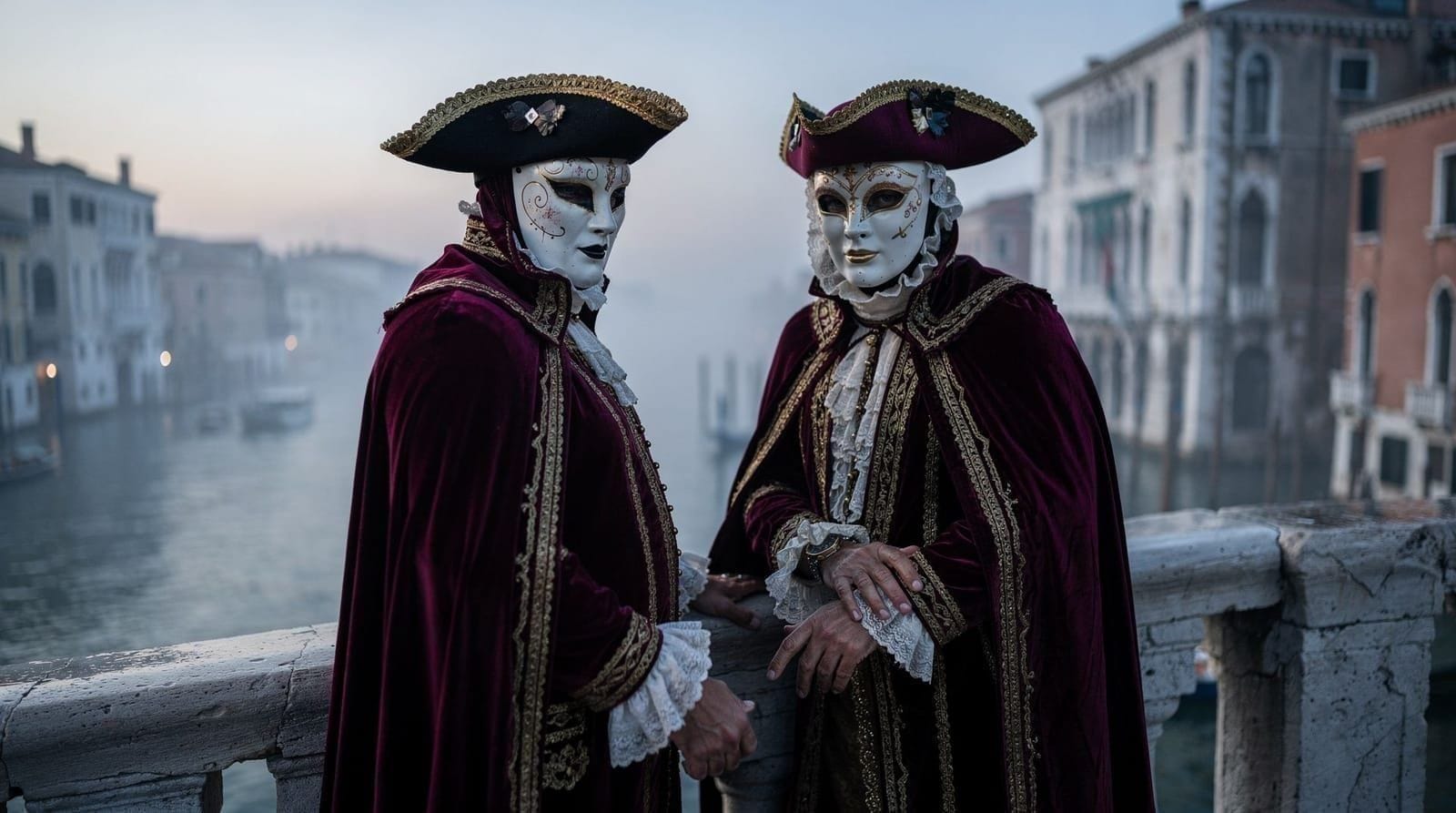
What made 18th-century Venice Carnival remarkable was its social comprehensiveness. The bauta — the white face mask with the projecting chin, worn with a black cloak and tricorn hat — was worn by all social classes. A doge and a fisherman could stand in the same gambling house and be indistinguishable in dress. The anonymity was real: not just a costume game but a social technology that briefly dissolved the rigid hierarchies of Venetian life.
Gambling was central. The Ridotto, a public gambling house near San Marco, opened in 1638 as one of the first legal casinos in Europe. It operated under the Republic’s supervision (the croupiers, improbably, were required to be Venetian patricians). Foreign visitors came specifically to gamble at the Ridotto; it was a significant source of tourist revenue and a constant source of moral hand-wringing. The Republic closed it in 1774, concerned about the financial ruin it was causing to noble families — and then opened it again privately a few years later under different terms.
The theatrical culture of Carnival was equally rich. Venice had multiple opera houses by the 17th century, and the Carnival season was when the major new operas premiered. La Fenice (though it was not built until 1792) and the Teatro Malibran (still operating today) carried on a tradition of winter theatrical performance that extended Carnival’s entertainment calendar. For more on La Fenice’s history and current programming, see the La Fenice guide.
Foreign visitors wrote extensively about Venetian Carnival. The philosopher Montaigne visited in 1580 and left detailed notes. Casanova’s memoirs — which cover roughly the mid-18th century — describe a social world saturated with masked encounters, gaming, and theatrical intrigue. Charles de Brosses, an 18th-century French magistrate, recorded with evident delight that Venice was a city where “masks, gaming, and music are the sole occupations.”
The specific events and traditions
Il Volo dell’Angelo (Flight of the Angel) opens the modern Carnival on the first Sunday. Historically, an acrobat descended on a wire from the top of the Campanile in Piazza San Marco toward the Doge’s Palace — an act of homage to the doge. The 16th-century version used an acrobat who performed tricks while descending; the modern version has a costumed performer descend in a more ceremonial manner. It is the moment when the whole Piazza San Marco fills with upturned faces.
The parade of costumes is the defining visual experience of modern Carnival. Participants — many of whom travel to Venice specifically to costume — gather in Piazza San Marco on weekend afternoons to show their elaborate historical dress. The best costumes are extraordinary: accurate 18th-century noble dress, silk and velvet and brocade, handmade masks and headdresses. Photography is welcomed and reciprocated.
Martedì Grasso (Fat Tuesday, Shrove Tuesday) is the climax. The final day of Carnival historically generated the most extreme behaviour — the farewell to flesh before the fast. The modern version closes with the Flight of the Eagle ceremony, where the doge’s role is recalled in a symbolic ceremony in Piazza San Marco.
Napoleon’s suppression
On 12 May 1797, Napoleon’s representative arrived at the Great Council of the Venetian Republic with an ultimatum. Rather than face military resistance — which would have been futile — the last doge, Ludovico Manin, resigned. In what was perhaps the most undramatic end to a thousand-year republic in history, the council dissolved itself. Carnival, along with the other civic ceremonies of the Serenissima, was abolished.
For the next 180 years, Carnival did not officially exist in Venice. Some private celebrations continued, and the mask tradition survived in folk memory, but the public civic celebration — the mass participation, the official ceremonies, the winter transformation of the city — was gone.
The revival: 1979 to the present
The modern Carnival revival was not a single decision but a gradual process. In the early 1970s, students and young Venetians began organising informal gatherings during the pre-Lenten period, dressing up and gathering in the streets as a cultural statement. The approach was playful and political — a reclamation of Venetian identity against the homogenising forces of Italian national culture.
By 1979, the municipality organised the first official Carnival, with a programme of events and international publicity. The response was electric. Photographs of masked figures in Piazza San Marco — the mist of the winter lagoon behind them, the Campanile rising above — circulated worldwide. Venice had rediscovered something that had been dormant for 180 years.
The 1980s brought rapid commercialisation. Tour operators included Carnival packages; hotels raised prices dramatically; the quality of the event became uneven as visitor numbers grew. Today, Venice Carnival receives approximately 3–4 million visitors over two weeks — more than at any other time of year. The tension between spectacle and experience is real.
The Carnival costume culture today
The modern Carnival of Venice is sustained by a community of costume enthusiasts who invest enormous time, skill, and money in their historical dress. The most elaborate costumes — accurate 18th-century noble dress, silk and velvet and brocade, hand-stitched masks — represent hundreds of hours of work and thousands of euros in materials.
Most participants are not Venetians. They come from across Italy and from other European countries, following a circuit of Carnival events that includes not just Venice but Viareggio, Ivrea, and others. The most serious enthusiasts attend Venice Carnival multiple years in consecutive editions, developing increasingly elaborate costumes. They photograph each other extensively and maintain a parallel social world around the shared interest in historical dress.
For the visitor arriving without a costume, there are two responses. The first is to hire or purchase one — Venice has several shops that rent elaborate 18th-century dress by the day, at prices from €80–€200 for a basic costume to €500+ for something genuinely impressive. The second is to acknowledge that you are attending as a spectator, which is entirely legitimate and which gives you freedom of movement that costumed participants lack. A heavy brocade dress and a full mask headdress in a February crowd is physically demanding.
What Carnival looked like in the 18th century: primary sources
The most vivid description of Venice Carnival at its 18th-century peak comes not from history books but from Giacomo Casanova’s memoirs. His Histoire de ma vie — written in French in the 1790s — describes in specific detail the social mechanisms of Carnival: the casino culture, the use of the bauta mask to maintain anonymity in politically sensitive conversations, the theatrical productions at the opera houses, and the complex erotic and social games that mask-wearing enabled.
What emerges from Casanova’s account is not primarily the spectacle of Carnival but its functionality: the mask as tool rather than costume. The 18th-century Venetian who put on a bauta was not dressing up for a party; they were adopting a legal and social position that allowed them to conduct business, pleasure, and politics in a register unavailable to unmasked identity. Carnival was, at its core, a structured institution for managing the tension between the rigid hierarchy of Venetian noble society and the human desire to escape it periodically.
Making your own mask for Carnival
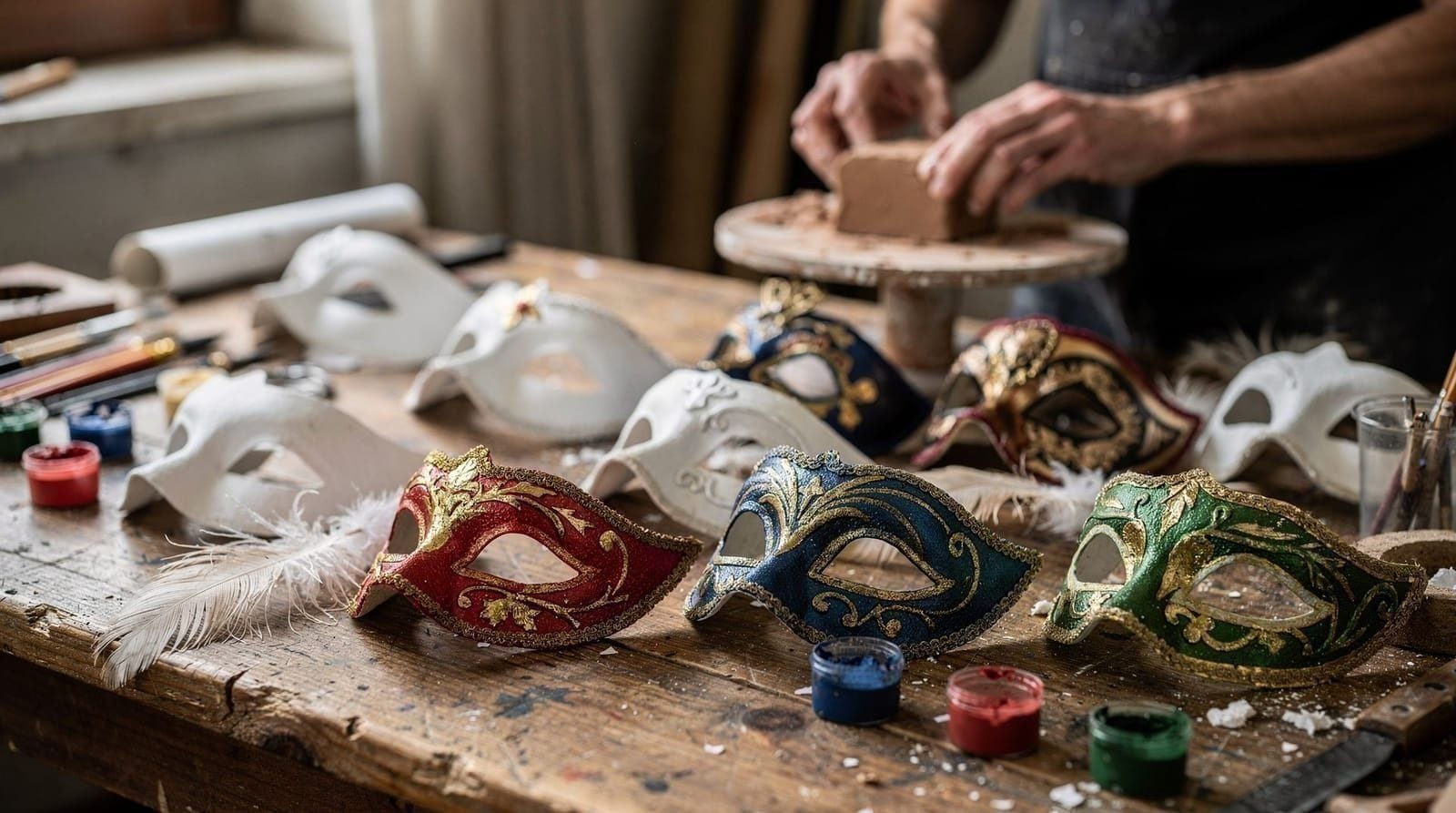
The most direct way to engage with the mask tradition is to join a workshop before or during Carnival. The Venice Carnival mask workshop runs throughout the Carnival period and lets you decorate your own traditional mask form under artisan guidance. Wearing it in Piazza San Marco afterward gives the workshop a context that deepens both the making and the wearing.
For the historical background on specific mask types — the bauta, moretta, medico della peste — read the Venetian mask history guide. For a full guide to attending the 2026 Carnival, including the programme, accommodation advice, and which days are worth prioritising, see the Carnival 2026 guide.
Carnival’s other legacy: masks year-round
Carnival’s most lasting cultural export beyond the two-week event itself is the mask-making craft. Venice’s mask ateliers, concentrated in San Polo, Cannaregio and around Campo San Barnaba, operate year-round, not just during the pre-Lenten weeks — the demand from visitors and from theatrical and film costume departments worldwide keeps the craft alive outside its original seasonal context. If mask-making interests you beyond a single decorating session, the artisan crafts in Venice guide covers the wider landscape of traditional workshops, including glass and lace, that share Carnival’s emphasis on hand skill passed down through generations.
Visiting Venice for Carnival versus visiting in winter generally
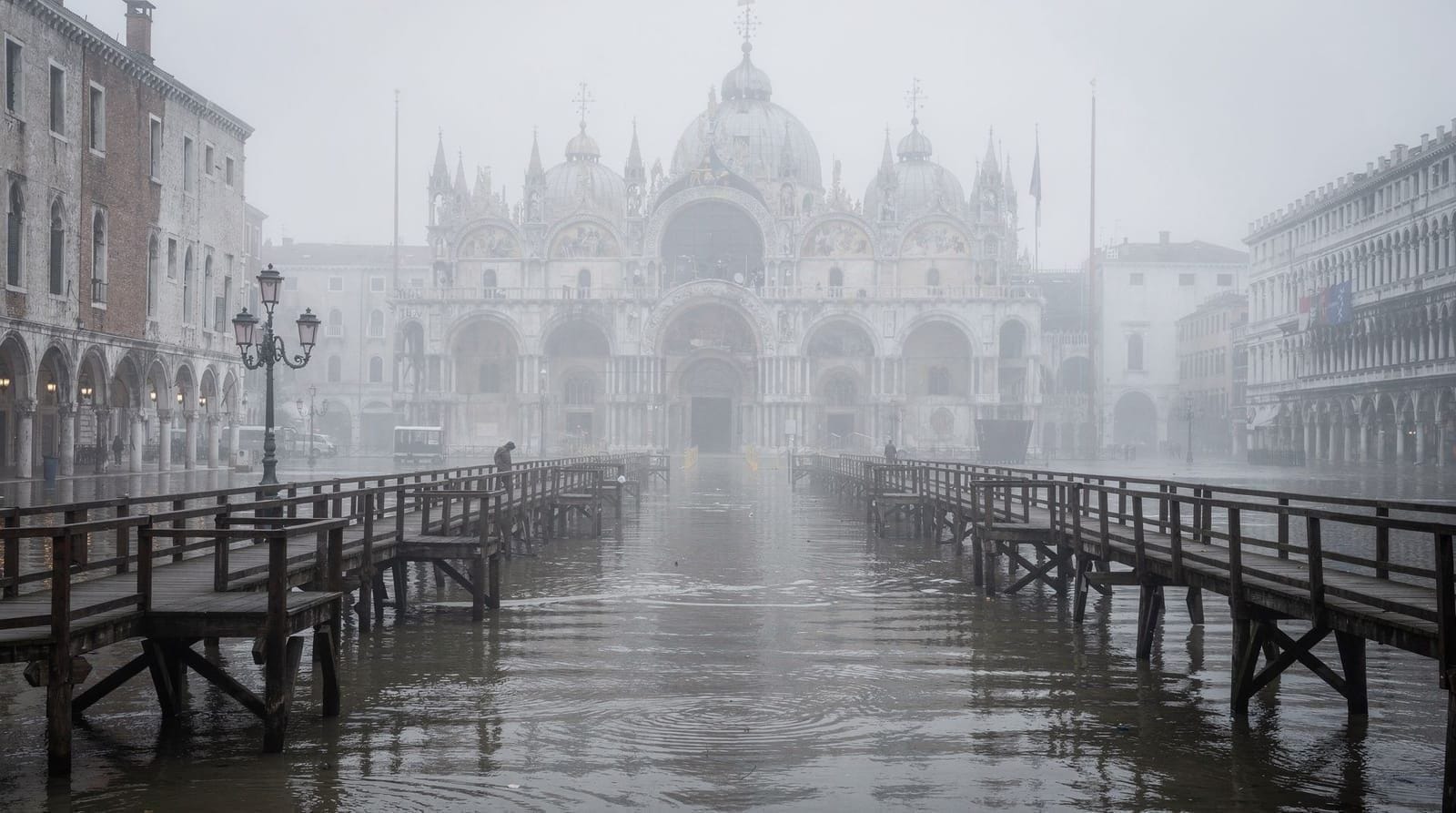
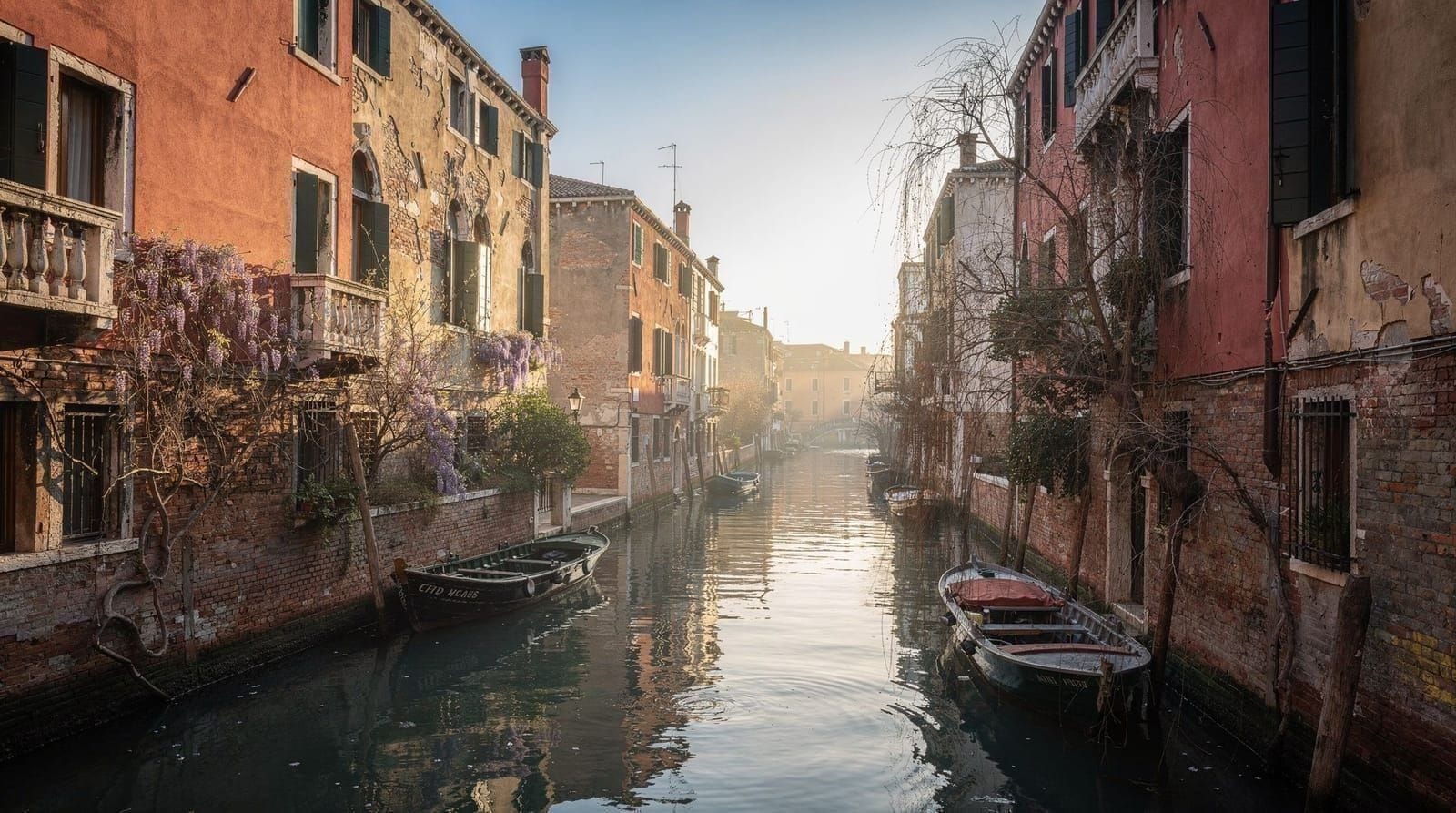
Carnival concentrates Venice’s winter tourism into a narrow, intense window, which changes the calculation for anyone weighing whether to visit during the event or simply during the winter season more broadly. Outside the two Carnival weeks, winter Venice (see the Venice in winter guide) offers a quieter, moodier version of the same lagoon light and off-season prices, without the costume crowds, the accommodation price spikes, or the need to book a mask workshop or restaurant table weeks ahead. Both are legitimate ways to experience the city in the cold months; the choice depends on whether the spectacle itself is the draw or whether solitude and atmosphere matter more.
Carnival 2026 key dates
Venice Carnival 2026 runs from January 31 to February 17.
- Opening weekend (January 31 – February 1): Opening ceremonies and the Flight of the Angel on Sunday, February 1.
- Weekday periods: Significantly fewer crowds than weekends. The best days to experience costume parades without overwhelming density.
- Final weekend (February 14–15): The largest costume parades.
- Martedì Grasso (February 17): Final day, closing ceremonies and the Flight of the Eagle.
Accommodation books out months in advance for peak Carnival weekends. Prices double or triple compared to the surrounding period. If you want to attend without paying peak rates, consider weekday visits rather than the main weekend concentrations.
Frequently asked questions about Venetian Carnival history
When is Venice Carnival 2026?
Venice Carnival 2026 runs from January 31 to February 17. The main events centre on Piazza San Marco, with the Flight of the Angel on the first Sunday.
What is the Flight of the Angel?
The Volo dell’Angelo is the opening spectacle of Carnival, held on the first Sunday. A costumed performer descends on a wire from the top of the Campanile to the Doge’s Palace loggia.
What is Fat Tuesday in Venice?
Martedì Grasso (Shrove Tuesday) is the final day of Carnival and historically the most extravagant. It remains the peak day of the modern Carnival, with the largest costume parades and the closing Flight of the Eagle ceremony.
Why was Venice Carnival suppressed?
Napoleon abolished the Venetian Republic on 12 May 1797. Carnival was suppressed as part of the political erasure of the Serenissima and remained effectively banned until the 1970s revival.
How did the modern Venice Carnival revival begin?
The revival began in the early 1970s when Venetian students and artists organised informal Carnival events as a cultural reclamation project. By 1979, the municipality organised the first official modern Carnival.
Is Venice Carnival worth attending as a tourist?
Yes, with realistic expectations. The costume culture is spectacular, especially on weekend afternoons in Piazza San Marco. Book accommodation months in advance and expect premium prices.
Do I need to wear a costume to enjoy Venice Carnival?
No. Spectators without costumes are the majority of visitors, and watching the parades and photographing the costumed participants in Piazza San Marco is a legitimate and comfortable way to experience Carnival. A costume adds a different, more immersive layer, but it is not required and comes with real physical demands in a crowded square.
How is Venice Carnival different from Carnival in Rio or elsewhere?
Venice Carnival is quieter, more visual and more historically rooted than Rio’s music-and-parade-driven celebration — there is no equivalent of samba parades or large-scale street dancing. The Venetian version centres on costume display, mask culture and a handful of ceremonial events (the Flight of the Angel, the Flight of the Eagle) rather than continuous street festivity, reflecting its origins in an aristocratic Republic rather than a Carnival tradition built from popular street culture.
Top experiences
Bookable activities with verified prices and instant confirmation on GetYourGuide.