Carnival without the crowds: how we made it work in 2026
The Saturday problem
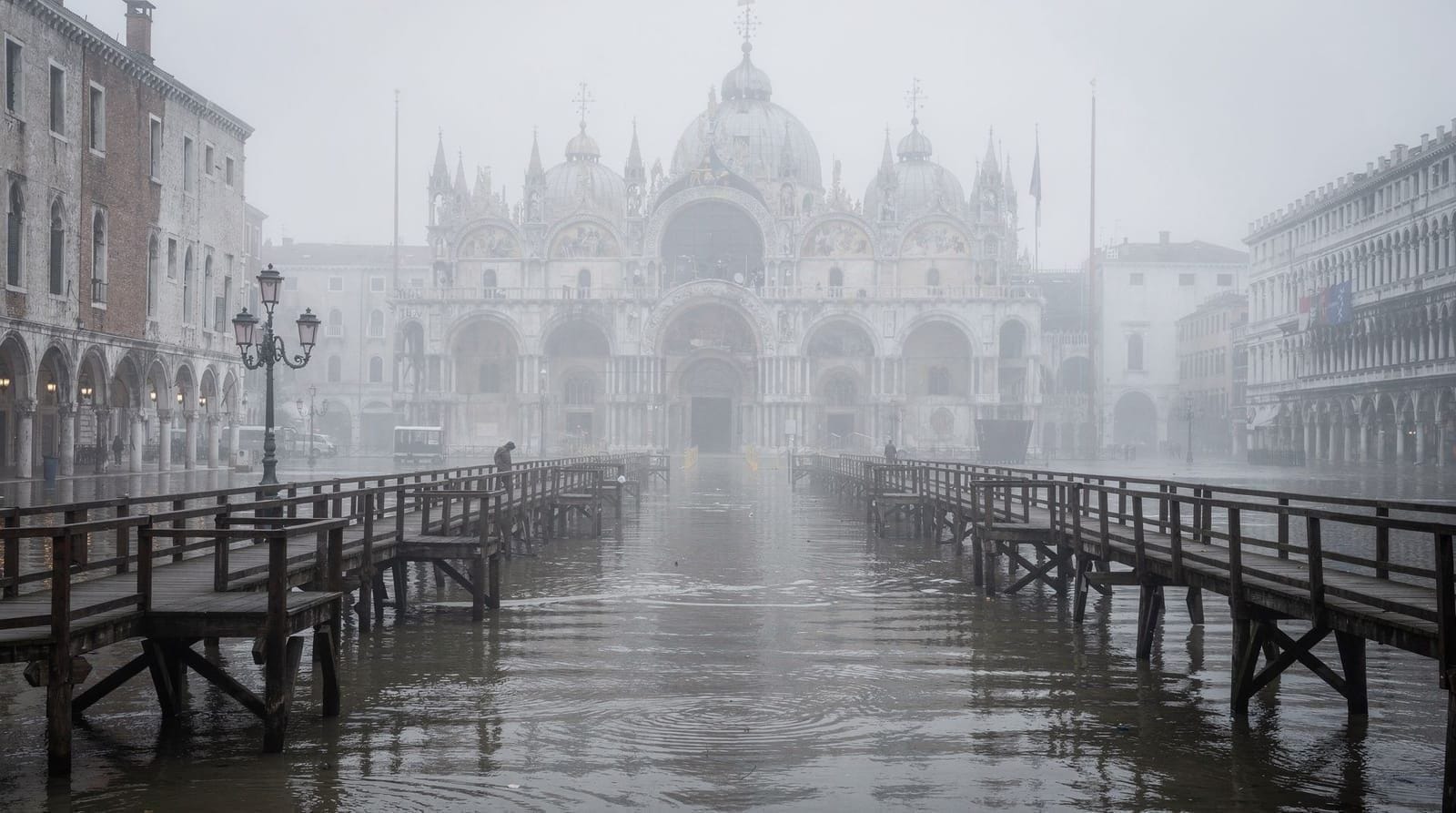
Venice Carnival runs for about two weeks every January and February. The 2026 edition went from January 31 to February 17. If you arrived on the first Saturday, you were in one of the most photographed crowds in Europe — St Mark’s Square packed so tightly that movement was lateral rather than forward, everyone in costumes of varying quality, the smell of vin brulé and wet feathers.
If you arrived on a Wednesday in the second week, you were in Venice during Carnival almost by yourself.
We’ve been to Carnival three times now. The first time we went on a Saturday (mistake). The second time we went on a Sunday of the second week (better but still busy). This year we arrived on a Tuesday and left the following Thursday. The difference was significant.
| Where | San Marco for spectacle, Cannaregio/San Polo for the quieter layer |
| Cost | Free public events; mask workshop around €70–90; hotels +20–40% |
| Time needed | 3–4 days to get both the spectacle and the quiet version |
| Getting there | Standard Santa Lucia train/vaporetto access; book ahead for Carnival dates |
| Best time | Weekdays, especially the second week, avoiding the two Saturdays |
Carnival days, side by side
| Day | Crowds | What you get |
|---|---|---|
| First Saturday | worst of the two weeks | full spectacle, lateral-only movement in San Marco |
| First Sunday | very busy | Volo dell’Angelo (Flying Angel) ceremony |
| Weekday, either week | light to moderate | neighbourhood performances, workshops, walkable San Marco |
| Penultimate Saturday | very busy | costume competition, extremely photogenic |
| Final week weekdays | quietest | best value hotel-wise, city still fully decorated |
What Carnival actually involves
The Venetian Carnival has several layers. There’s the commercial tourism layer — the public concerts and shows in San Marco, the rented costumes for photographs, the selfie-with-a-stranger-in-a-bauta energy of the crowded piazza. There’s the artisanal layer — the mask workshops, the costume designers who’ve been making silk-and-velvet pieces for forty years, the atelier owners who have waiting lists and don’t chase tourist trade. And there’s the social layer — the Venetian families who dress their children in traditional costumes for the last weekend, the parties that visitors mostly don’t access, the dinner events where the food actually matters.
The Carnival history guide goes into the long story. The condensed version is that the Venetian Carnival was banned by Napoleon in 1797, forgotten for nearly two centuries, and revived in 1979 as a tourism initiative. The current event is therefore partly authentic (the mask tradition, the artisanship, some of the neighbourhood culture) and partly invented (the Flying Angel ceremony, the international costume competitions). Both can be worth your time.
The 2026 Carnival ran from January 31 to February 17. The 2027 edition is expected to run from January 30 to February 9. Dates shift year by year based on the Easter calendar; the Carnival always ends on Shrove Tuesday. Check the official Venice Carnival website for the confirmed schedule in any given year — the programme of free events in the campi is usually posted in early January.
What we did on a Tuesday in February
We arrived at Santa Lucia station at ten in the morning. The train from Milan was half-empty. The station itself was calm. We walked to our hotel in Cannaregio without touching another tourist for five minutes, which doesn’t happen in August.
By eleven we were at Campo San Polo, where a free public performance — puppet theatre, traditional Venetian style — was taking place for what appeared to be an audience of fifteen tourists and forty Venetian grandparents with grandchildren. The children in half-costumes watching the Punch and Judy equivalent were more enchanting than anything I’d see in San Marco that afternoon.
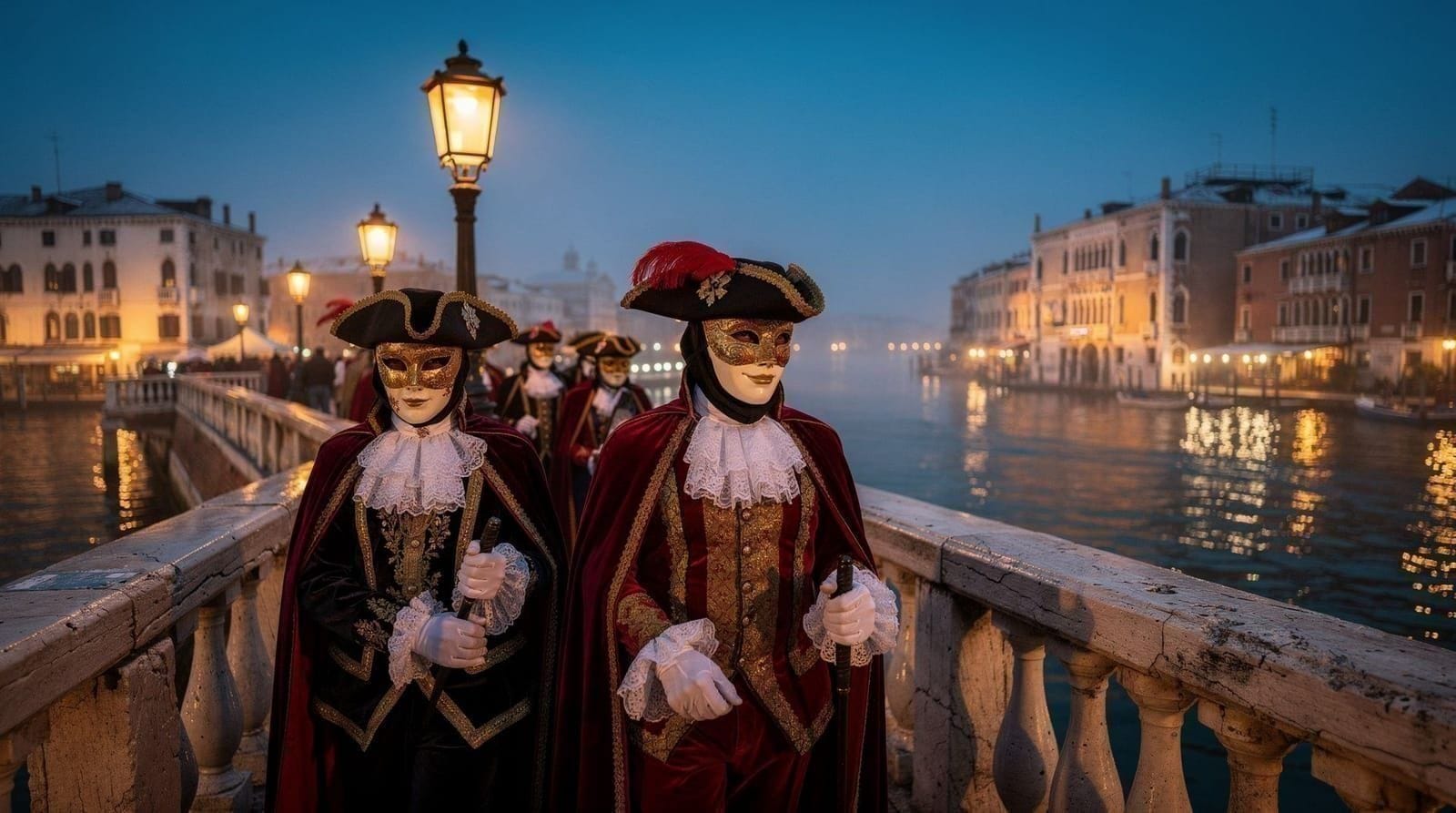
San Marco at eleven on a Tuesday was busy but walkable. People in full historical costume were posing for photographers along the colonnade — the elaborate eighteenth-century silk affairs that cost €800 to rent, worn by people who’d flown in from Japan or Brazil specifically for this. The composition of some of those costumes against the Byzantine gold of the Basilica facade is, genuinely, worth the trip.
We watched a portly man in a perfectly assembled Pantalone costume eat a tramezzino while checking his phone, which was somehow the most Venetian thing I saw all week.
The mask workshop question
We did a mask workshop on Wednesday afternoon. This is something we’d avoided on previous Carnival trips because it seemed like a tourist-trap concession, and on the first two visits we never had time. This time we had time.
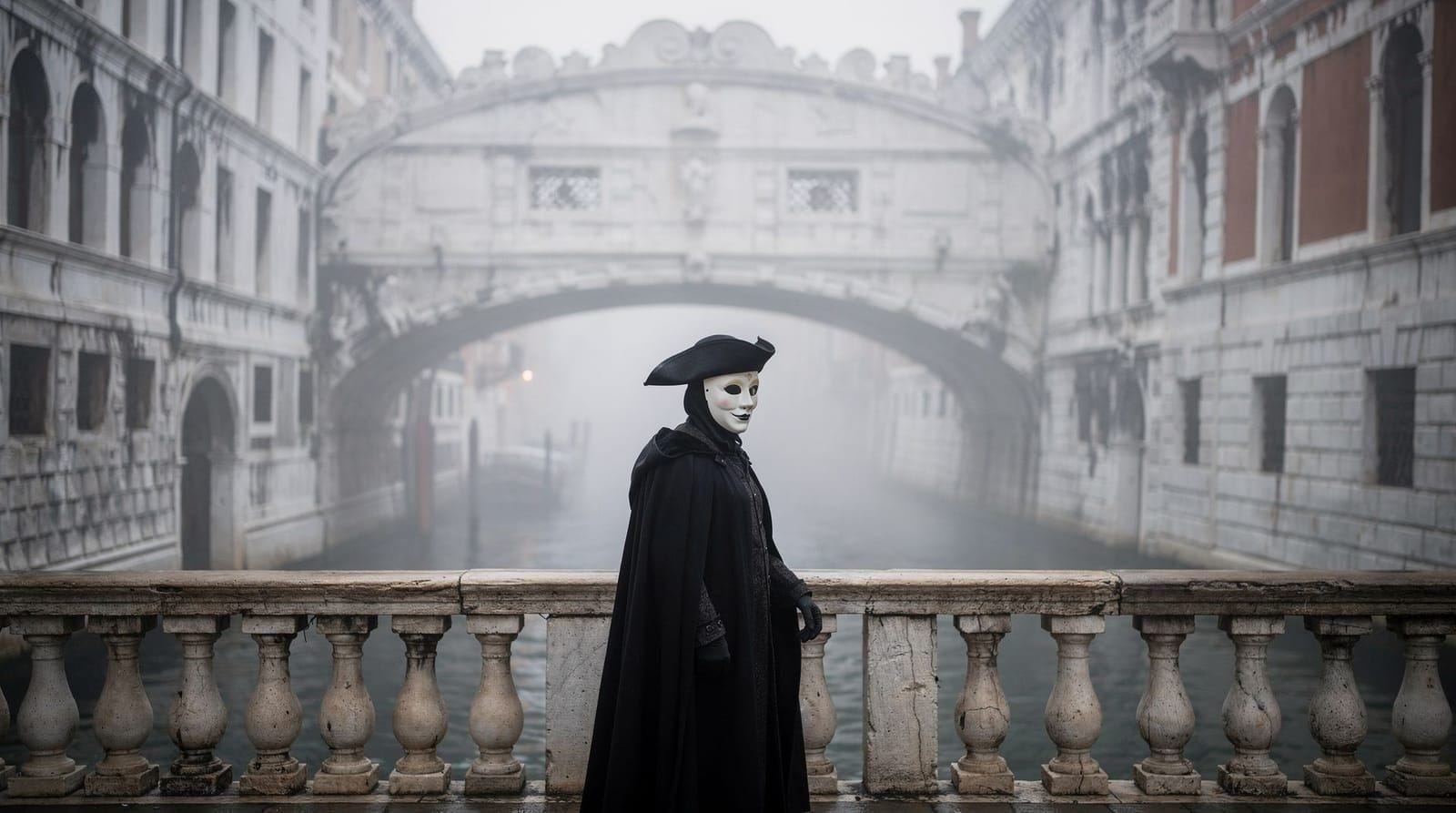
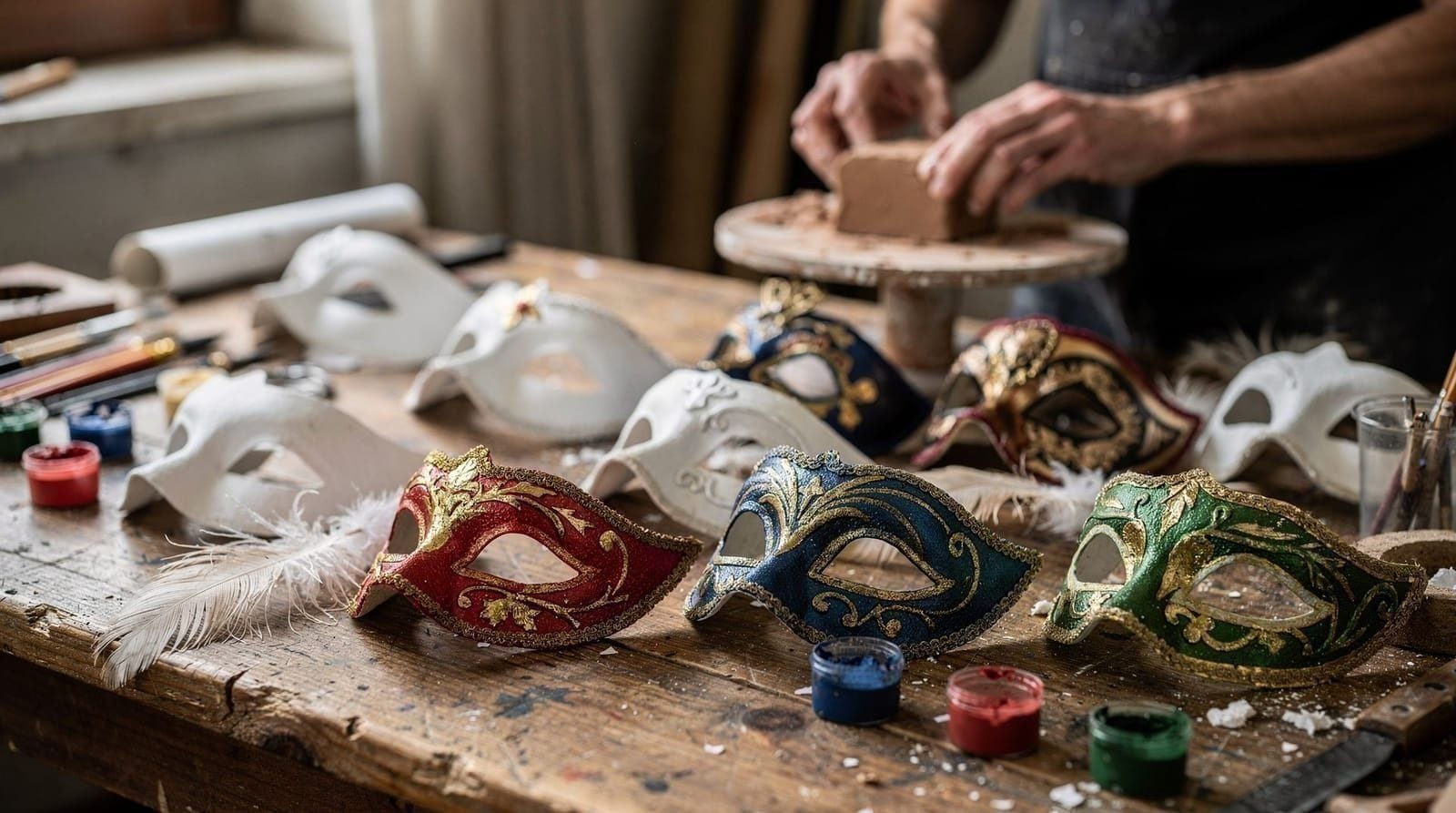
The workshop was three hours in a studio near San Polo, with a craftsman who’d been making masks in traditional papier-mâché since the 1990s. We made the base, applied gesso, painted, and were allowed to take an unfinished mask home to complete the decoration ourselves. The instructor was patient and genuinely interesting about the iconography of the different mask types: the Bauta (white, angular, allows eating without removal — designed for anonymity), the Moretta (black oval, held in place by a button between the teeth — literally silences the wearer), the Medico della Peste (the plague doctor bird-beak, originally stuffed with herbs to filter the air).
Traditional mask-making and decorating workshop in VeniceThe masks for sale in most tourist shops are not made this way. They’re often printed, not handmade, and sometimes machine-pressed in Asia. The price difference between a tourist-grade mask (€8 to €25) and a real artisan piece (€80 to €500) reflects the difference in craft. Neither is wrong to buy — you need to know what you’re getting.
Avoiding the Saturday peak without missing the spectacle
The Flying Angel ceremony — the Volo dell’Angelo — is the Instagram moment of Carnival: a person in costume flies on a wire from the campanile across St Mark’s Square. It happens on the first Sunday. Go if you can, but go early and find a position on the outer edge of the square rather than fighting for the centre. Or watch from a café terrace on the Procuratie Vecchie, where you’ll be able to see and will also have a coffee.
The costume competition on the penultimate Saturday night is spectacular and extremely crowded. If your hotel is near San Marco, you’ll hear it from your window. If being in it sounds appealing, leave your valuables behind and wear comfortable shoes.
The weekday events — the neighbourhood performances, the children’s processions in the campi, the free concerts — are where you get Carnival without earning it through crowd management. They’re less dramatic and more human.
Venice under Carnival’s lighting
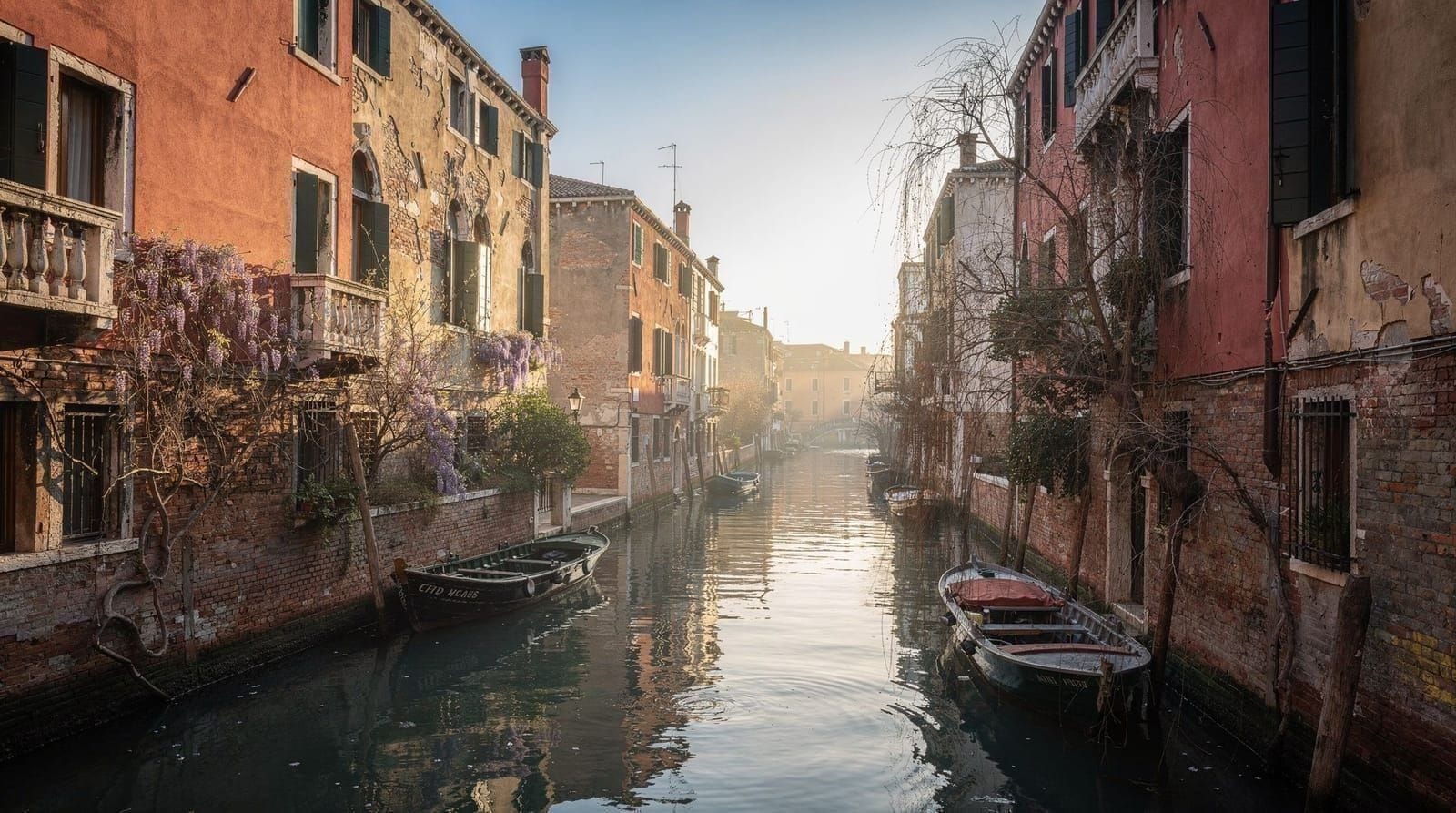
Winter light in Venice has a quality that summer can’t match. The low sun in February angles under the arcades and catches the gold on the masks and the water at the same time. In the early morning, before nine o’clock, the costumes that Carnival people wear for atmospheric photos are genuinely extraordinary against the city’s silence.
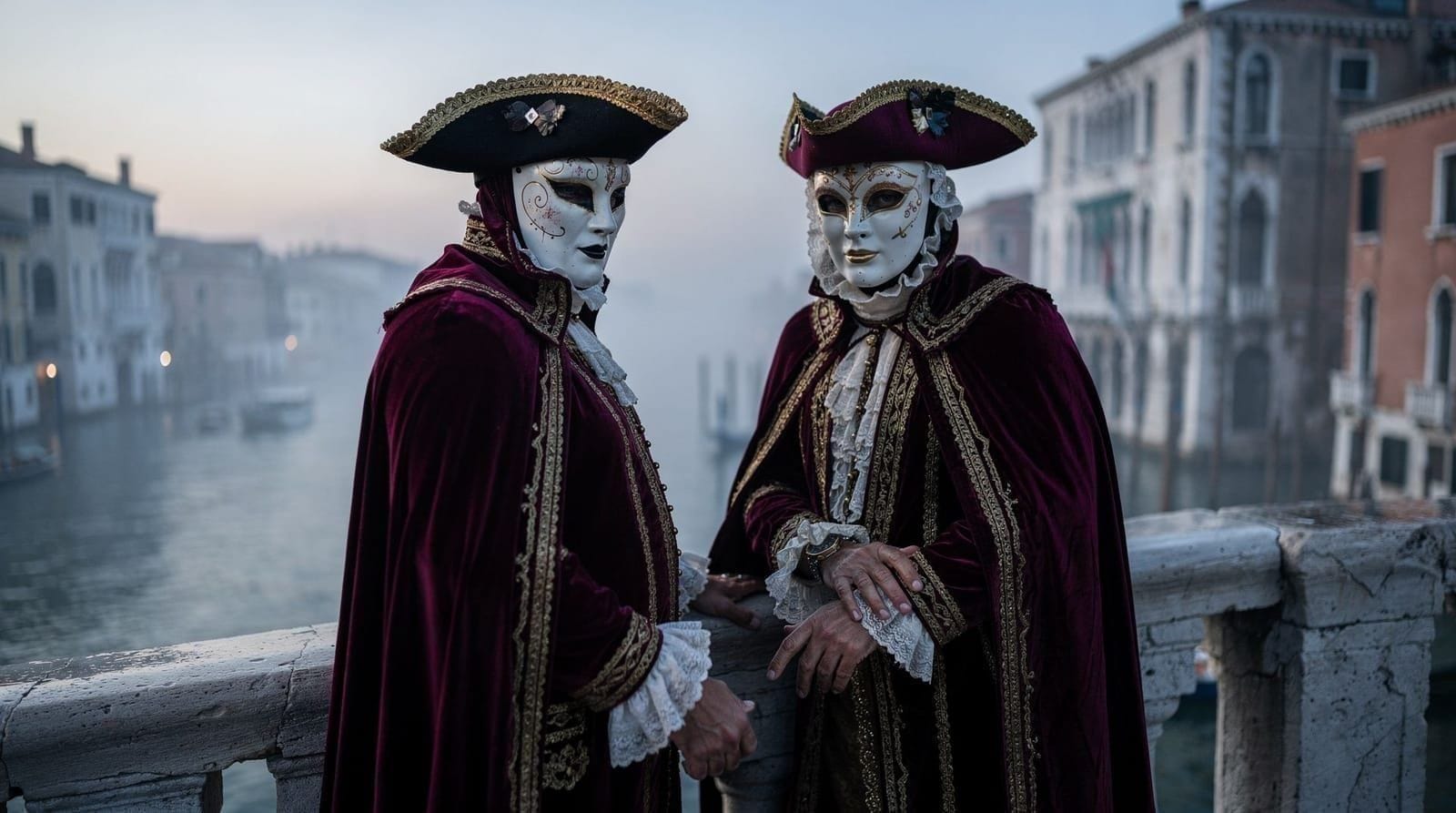
We were up at seven on Thursday, the last morning, and walked to the waterfront near the Giardini. Three people in elaborate eighteenth-century dress were being photographed on a wooden pier with the Lido just visible across the water. Nobody else was there. The mist was still on the lagoon.
The winter Venice guide makes the case for cold-weather travel more generally. Carnival is the moment when that argument is most visible — because the city is doing something extraordinary and you can still actually see it, which is not always true in summer.
What the 4-day Carnival itinerary looks like
For the shape of the days, the winter Carnival itinerary works well as a skeleton. Our specific additions: arrive Tuesday, do the neighbourhood campo events on day one, book the mask workshop for day two afternoon, use day three for the Doge’s Palace and Basilica (weekday queues are manageable), and reserve the final morning for the lagoon-side walk before the train home.
Hotel prices during Carnival are higher than standard winter rates but not absurd — usually 20 to 40 percent above January baseline. Book early for the final weekend, which is genuinely hectic. Book any time for the midweek days.
Food during Carnival
Carnival has its own seasonal food, and it’s worth seeking out beyond the mask shops and costume rentals. Fritelle (fried dough balls, sometimes filled with cream or zabaglione) appear in every pasticceria from late January, and galani (also called crostoli — thin fried pastry dusted with sugar) sit beside them. Both are cheap, €1.50 to €3 each, and genuinely part of the tradition rather than a tourist add-on — Venetian families buy kilos of them for the season. We ate more fritelle than was sensible near Cannaregio, where the queues at the good pasticcerie are shorter than the ones near San Marco.
Getting the mask workshop timing right
Book the mask workshop for early in your stay rather than the last day — ours ran three hours and left us with an unfinished piece to complete, which meant a second short session back at the hotel that evening. If you leave it for your final afternoon, you’ll either rush the painting or have to carry a wet, unfinished mask home. Studios near San Polo tend to have more availability on weekday afternoons than the well-known ateliers closer to San Marco, and the smaller studios are often just as skilled.
The masks, practically speaking
If you want to buy a mask to bring home, this is the moment when every shop in the city is full of them. The difference between a handmade papier-mâché mask from an artisan atelier (€60 to €300 depending on complexity and finish) and a mass-produced tourist mask (€8 to €25) is immediately visible when you hold them side by side: weight, surface texture, the quality of the paint. Both are legitimate purchases; just know which one you’re buying.
The artisan mask shops in Dorsoduro and San Polo — away from the main tourist corridors — are where the serious pieces live. They don’t compete on price and they don’t need walk-in trade. If a shop has a working artist visible through the window and the masks on the wall are individually different rather than rows of identical copies, you’ve found the right place.
The mask-making workshop (see above) is a different experience from buying — you leave with something you made rather than something someone else made, and the process of making it gives you a vocabulary for looking at what’s in the shops.
The thing I’ll remember
The afternoon of the third Carnival day. We were somewhere between Santa Croce and San Polo, a small campo I couldn’t name, and a woman in a full eighteenth-century gown was sitting on the edge of the well in the middle of the campo, eating a slice of pizza from a paper plate. Her companion, a man in a bauta mask and tricorn hat pushed back on his head, was arguing on his phone.
The costume was extraordinary — silk damask, panniers, a white wig with ornaments — and she was completely unbothered by the pizza, the phone argument, the passing tourists with cameras. She’d presumably been wearing this since nine in the morning and had earned her lunch.
This is the correct Venice Carnival energy: extraordinary things treated as entirely ordinary.
The city is alive in a specific way during these two weeks that it isn’t at any other time of year. The inhabitants who still care about Carnival — and some do, deeply — are visible. The artisans are in their workshops. The children are in costumes. The old man in the coffee bar is wearing the same mask he’s worn for forty years, and if you ask him about it nicely, he’ll tell you why.