Venice Carnival 2026: the four-day honest guide
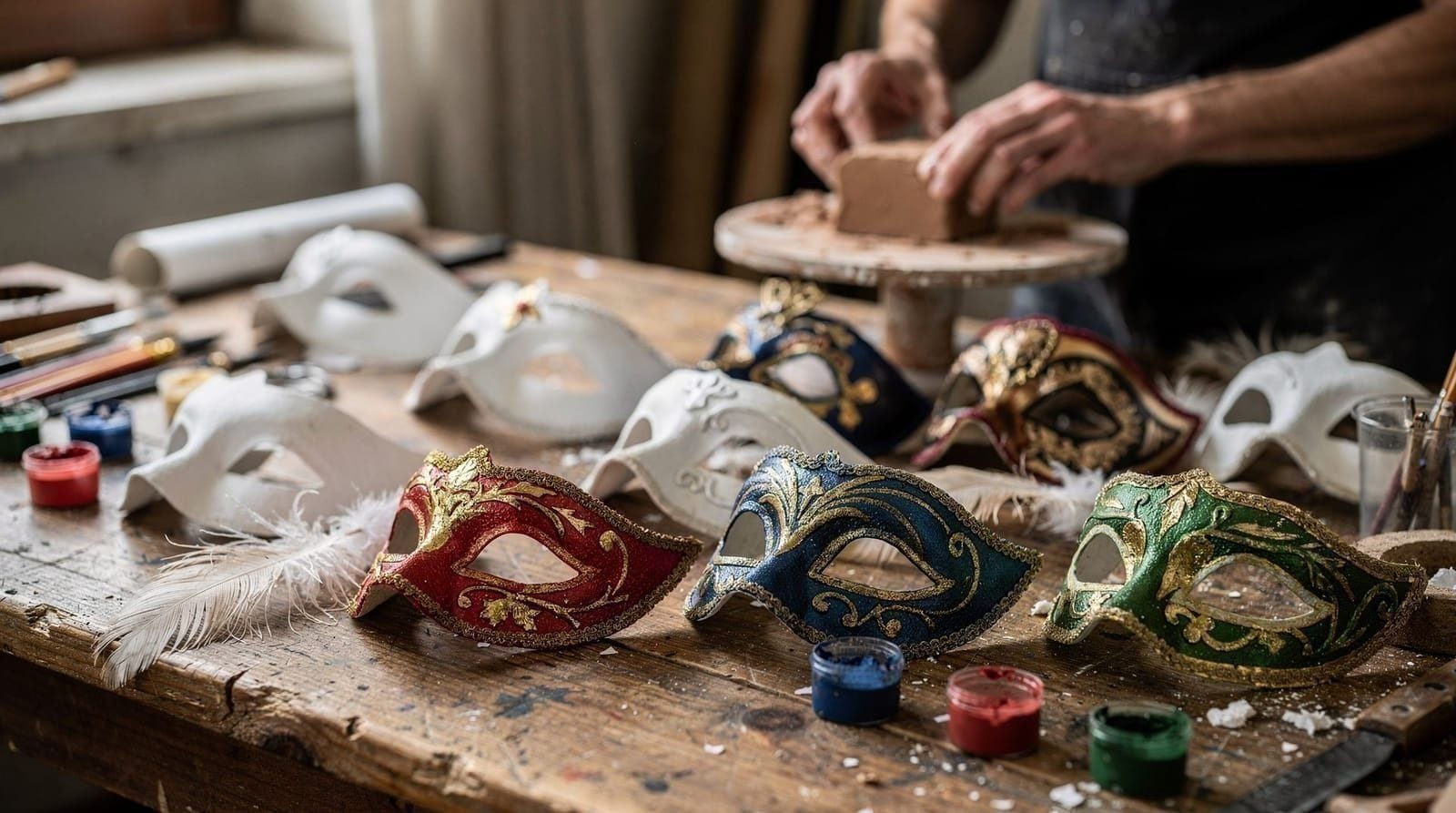
Venice: Carnival mask workshop
What Carnival in Venice is actually like
Venice Carnival 2026: 31 January – 17 February. Venice Carnival 2027: 30 January – 9 February.
The Carnival is Venice’s most complex tourist experience — simultaneously one of the world’s great spectacles and a logistical challenge that catches unprepared visitors badly off-guard. This guide is honest about both.
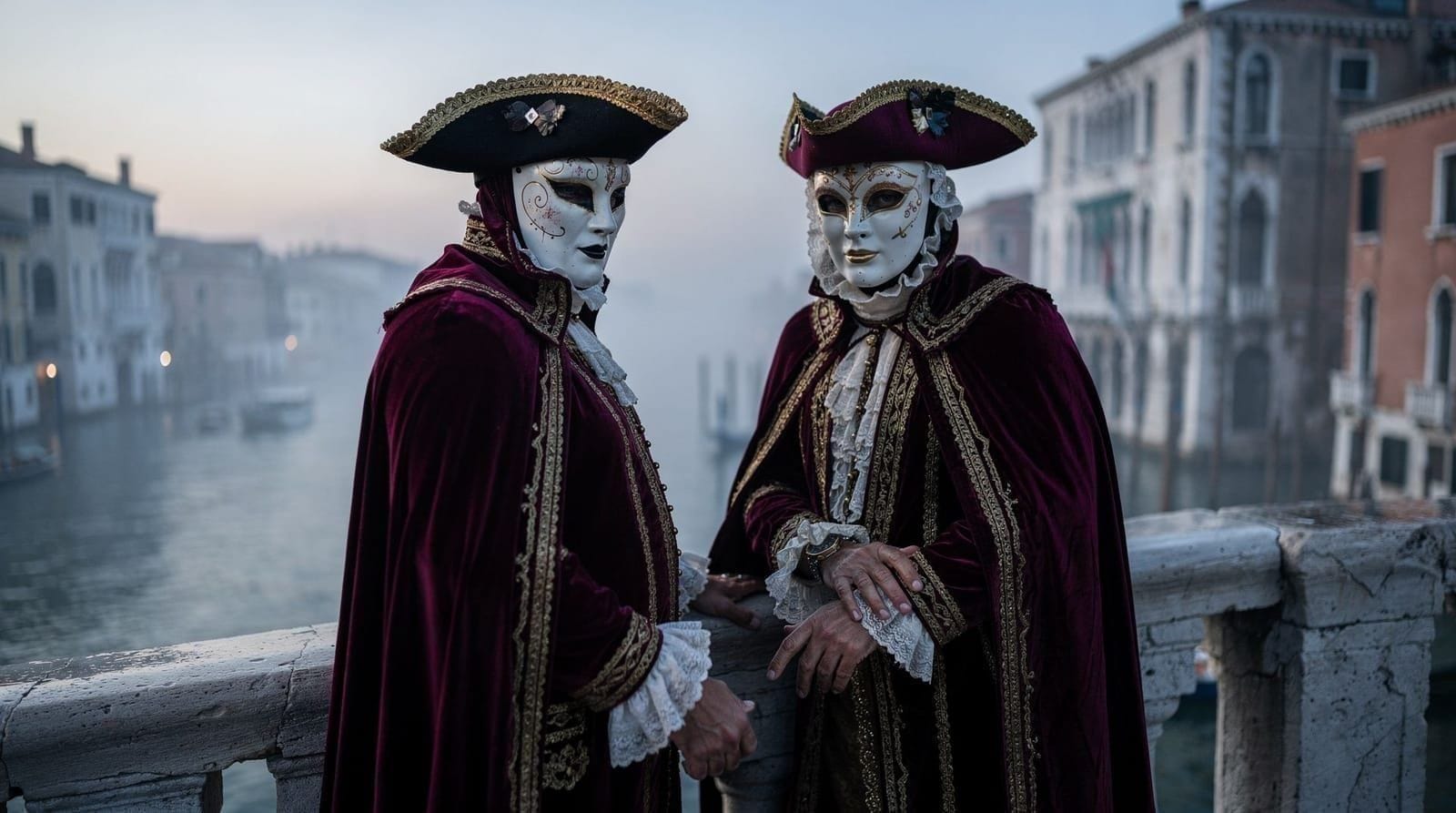
What Carnival actually looks like: On the main days (the middle weekend and the final week), Piazza San Marco fills with masked and costumed Venetians and tourists. The costumes range from the extraordinarily elaborate (hand-made 18th-century court dress with hand-painted bauta masks, costing thousands of euros) to the perfunctory (a Venetian long-nose mask bought for €15 at a tourist stall). The free events in the piazza include a daily “flight of the angel” (the Volo dell’Angelo — a performer or prominent figure descending on a wire from the Campanile over the piazza, which is as dramatic as it sounds) and various open-air performances.
What the brochure version does not mention: Hotel prices during Carnival week double or triple from off-peak rates. The crowds at peak times in San Marco are genuinely extreme — not uncomfortable, but dense. Many of the “Carnival events” are ticketed commercial events (masked balls, costume contests) that cost €100–500 per person for the better ones. Acqua alta is more likely in January and February than any other time of year.
What makes it worth coming: Venice in winter is extraordinary under any circumstances. With Carnival’s costumes adding to it, the city produces images that are genuinely unlike anywhere else in the world. The quality of light in January and February — low angle, often misty, reflective — is better for photography than any summer month. And the non-Carnival parts of the city (Cannaregio, Castello, Dorsoduro residential streets) are quieter than almost any other time.
| Where | San Marco, Campo San Polo, Murano, Cannaregio, Castello |
| Duration | 4 days |
| Cost | Mid-range; add €100–500 per person for a masked ball if attending one |
| Getting there | On foot and vaporetto within Venice; Line 4.1 to Murano |
| Best time | The middle weekday stretch (2–6 Feb) for lower crowds; final week for full spectacle |
Carnival dates and key events (2026)
31 January (Saturday): Opening ceremony in Piazza San Marco. The Volo dell’Angelo typically falls on the first weekend.
1 February (Sunday): Main piazza events continue. Costume contest at Campo San Polo (the largest free competition, with prizes for best historical and best creative costumes).
2–6 February: Midweek. The piazza is relatively quieter; this is when locals participate more visibly.
7–8 February (weekend): Second major weekend. Crowds return to peak levels.
9–17 February: Final week, building toward the last days. The most elaborate masked balls (Thursday–Saturday nights). The peak of acqua alta season.
17 February (Shrove Tuesday / Fat Tuesday): The final night. Midnight fireworks, the burning of symbolic effigy. After midnight, Carnival is officially over and Venice becomes a different city almost immediately.
Practical: Book accommodation 3–4 months in advance for the first and last weekends, 2 months in advance for midweek. The price difference between arriving on a Tuesday and arriving on a Saturday can be €50–100/night.
Day 1: arrival and the first costumes
Afternoon: arrive into Carnival
2:00pm — Arrive
If arriving by train or bus, the walk from Piazzale Roma toward San Marco already shows you the first costumes — Carnival participants begin wearing their disguises from mid-morning throughout the festival period.
Take the vaporetto Line 1 down the Grand Canal. In Carnival season, it is not uncommon to be sharing the boat with a gentleman in a full 18th-century bauta (black cloak, white mask, tricorn hat) standing next to a food delivery person. The juxtaposition is part of the experience.
3:00pm — Piazza San Marco first look
The first visit to San Marco during Carnival should be relaxed and exploratory. Note the costume density (it builds through the festival), find the best vantage points for tomorrow’s events, and walk the full piazza.
The Museo Correr on the north side of the piazza (entry via the museum pass, €25) has a permanent Carnival history section and opens onto the terrace overlooking the piazza — useful for photography of the costumed crowd below.
5:00pm — Aperitivo in Cannaregio
Escape the San Marco crowd. Cannaregio at Carnival aperitivo hour has its own character — local participants in less elaborate disguises, neighbourhood bars serving the standard Venetian spritz, the same Misericordia waterfront you would visit in any season but with a different cast. More convivial and cheaper than anything near San Marco.
Evening: first Carnival dinner
8:00pm — Dinner reservation
Restaurants during Carnival are busy; book ahead. Trattoria da Gigio (Cannaregio) or Osteria ai 40 Ladroni (Cannaregio) for mid-range, honest food. The Carnival crowd means later service times — arrive at your reservation time precisely, not 30 minutes late.
Day 2: the main events and a mask workshop
Morning: mask workshop in Murano
9:30am — Mask workshop
The most memorable Carnival souvenir is a mask you made yourself — or one made in front of you at a traditional papier-mâché studio. Murano has excellent mask workshops that combine the glassblowing island with the Carnival craft tradition. Alternatively, workshops in Venice proper are available near the San Polo and Castello areas.
Venice Carnival mask workshopThe traditional Venice Carnival masks are:
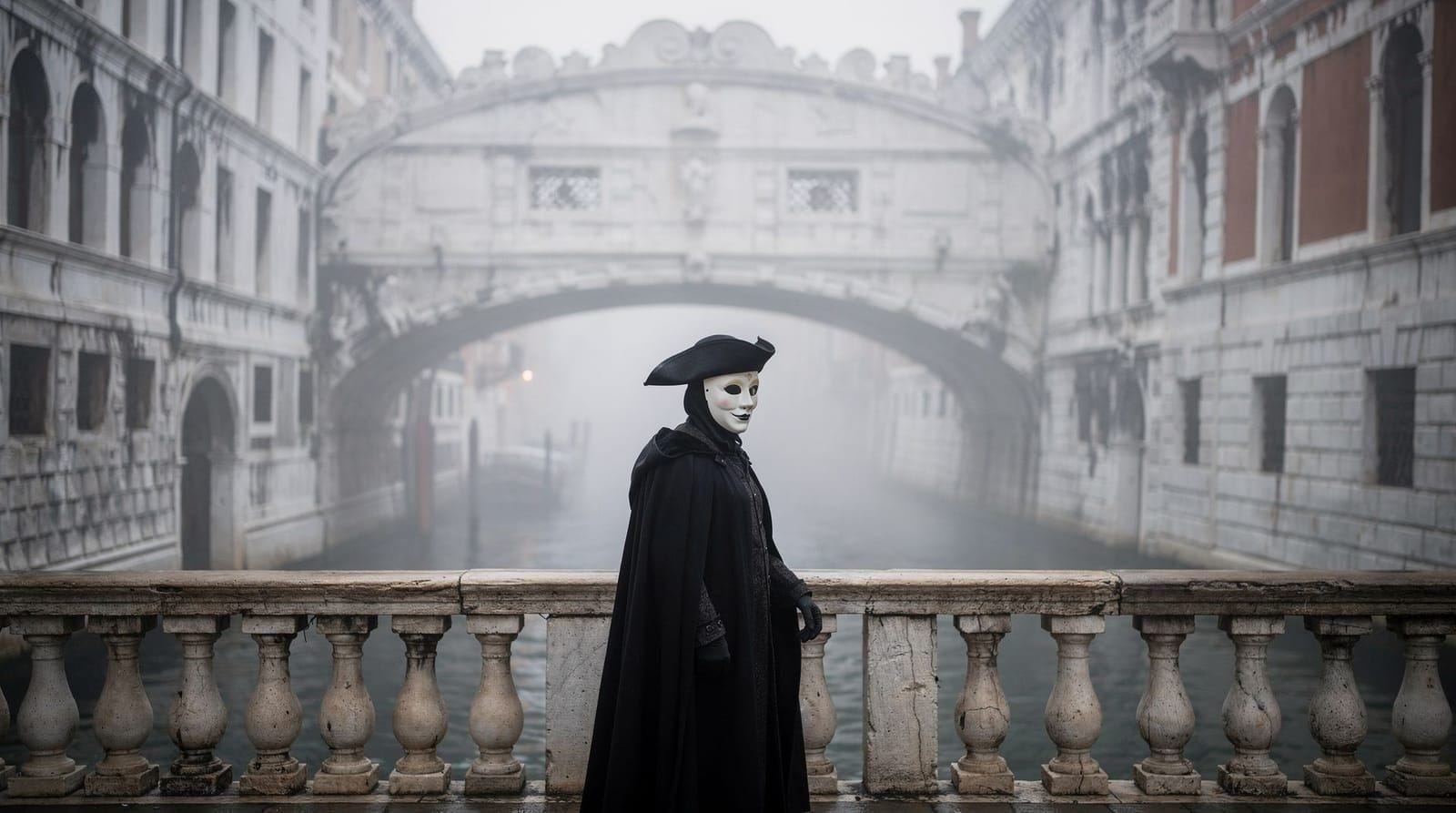
- Bauta: the white, squarish full-face mask worn under a black cloak (tabarro) and tricorn hat. The most recognisable Venetian carnival disguise.
- Moretta: a black velvet oval mask held in place by biting on a button inside — designed to prevent women from speaking (genuinely: designed for female silence)
- Volto (or Larva): the white full-face mask worn alone
- Columbina: the half-face mask worn at the eye level, often decorated with feathers and gems
- Pantalone, Zanni, Arlecchino: the Commedia dell’Arte characters, coloured and characterful
Read the Venetian mask history guide for the full cultural context.
12:30pm — Return to Venice, lunch near Rialto
Afternoon: Carnival in the campi
2:00pm — Campo San Polo costume competition
During Carnival, Campo San Polo hosts the largest free open-air costume competition in Venice. Participants display elaborate historical recreations of 18th-century Venetian court dress — costumes that can take months to make and cost thousands of euros. The competition is judged by experts; the crowd participation is genuine and enthusiastic.
This is the best free Carnival event for understanding what the serious costumed participants are doing. The best costumes are extraordinary — hand-sewn from period-accurate fabrics, with hand-painted or gilded masks, period wigs, and correct accessories.
4:00pm — Piazza San Marco at its fullest
Return to San Marco in the late afternoon when the Carnival crowd peaks. The light at 4pm in February is already low and golden — the combination of elaborate costumes and winter light in the piazza is the defining image of Venice Carnival.
The Volo dell’Angelo (flight of the angel) traditionally happens in the early afternoon on the main weekends — check the official programme at carnevale.venezia.it for the exact time. It takes about 10 minutes and the crowd beforehand can be very dense; position yourself on the edges of the piazza for a better view.
6:00pm — Aperitivo
After the afternoon crowd, find a quieter bar. Campo Santa Margherita is 20 minutes from San Marco and substantially less chaotic — the students and locals who live in Dorsoduro continue their normal aperitivo routines throughout Carnival, which is either reassuring or slightly surreal depending on your perspective.
Evening: Carnival nightlife
9:00pm — Masked ball or free evening
The Carnival masked balls (balli in maschera) are held at several historic Venetian venues including the Casino, the Ca’ Sagredo, and the Palazzo Pisani Moretta. Tickets range from €100 (entrance only, no costume required) to €500+ for seated dinners with a full programme.
These events are commercial, carefully organised, and genuinely opulent — if the Carnival-as-historical-theater experience is what you want, a masked ball delivers it. Our Carnival guide has the specific events and booking details.
For a free Carnival evening: walk the streets of San Marco and Cannaregio after 9pm when the costumed participants circulate freely. The best street photography of the Carnival happens at night, when long exposures blur the crowd into a context for the static costumed figures.
Day 3: Venice — the monuments and Carnival’s quieter side
Day three prioritises the major Venice landmarks, which are open throughout Carnival.
Morning: Doge’s Palace
9:00am — Doge’s Palace
Doge’s Palace has direct relevance to Carnival — the Doges themselves presided over 900 years of Carnival celebrations from these rooms. The palace’s connection to Casanova (who escaped from its prisons in 1755, just before Carnival) and to the Council of Ten (which banned Carnival masks in certain contexts) gives the Secret Passageways tour additional resonance during the festival.
Doge’s Palace Secret Passageways — especially relevant during Carnival11:00am — St Mark’s Basilica
Pre-book entry. The Basilica interior is remarkable year-round but the Carnival context gives additional meaning to the Byzantine ceremonial grandeur that the space originally served.
Afternoon: the winter Venice
1:30pm — Lunch in Castello
Castello at Carnival lunchtime is a different city from San Marco. Neighbourhood restaurants serving local customers at local prices, no costumes visible in the streets beyond the odd one heading to or from San Marco.
2:30pm — Walk the quiet sestieri
The residential parts of Venice — Castello east of Zanipolo, Cannaregio north of the Strada Nova — are almost unchanged by Carnival. The same corner bars, the same boats delivering groceries. This is the winter Venice that long-term visitors return for: low winter light on the fondamente, mostly empty streets, the cold smell of the lagoon, and the sense of a city that is genuinely inhabited.
5:00pm — Acqua alta (if applicable)
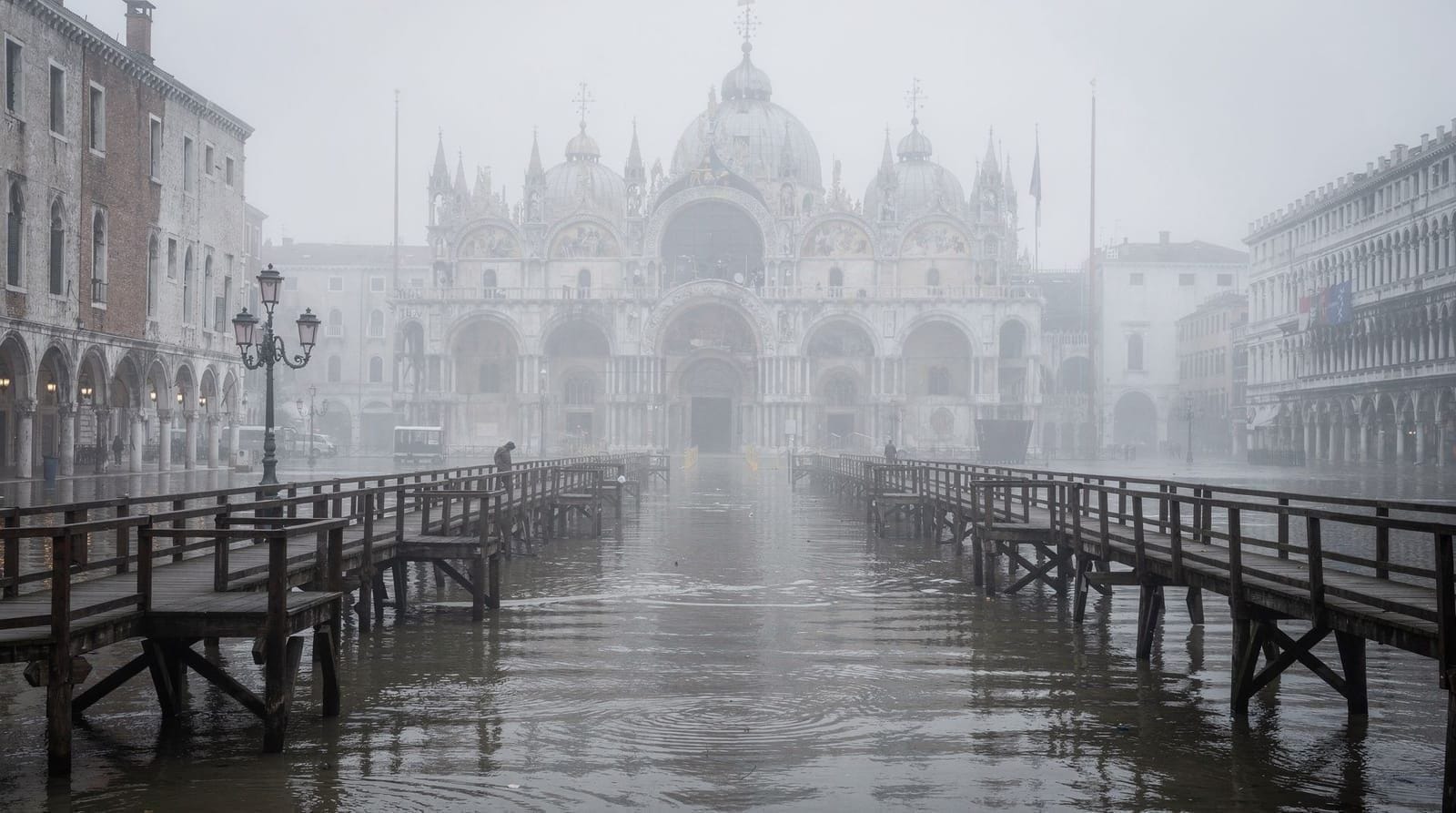
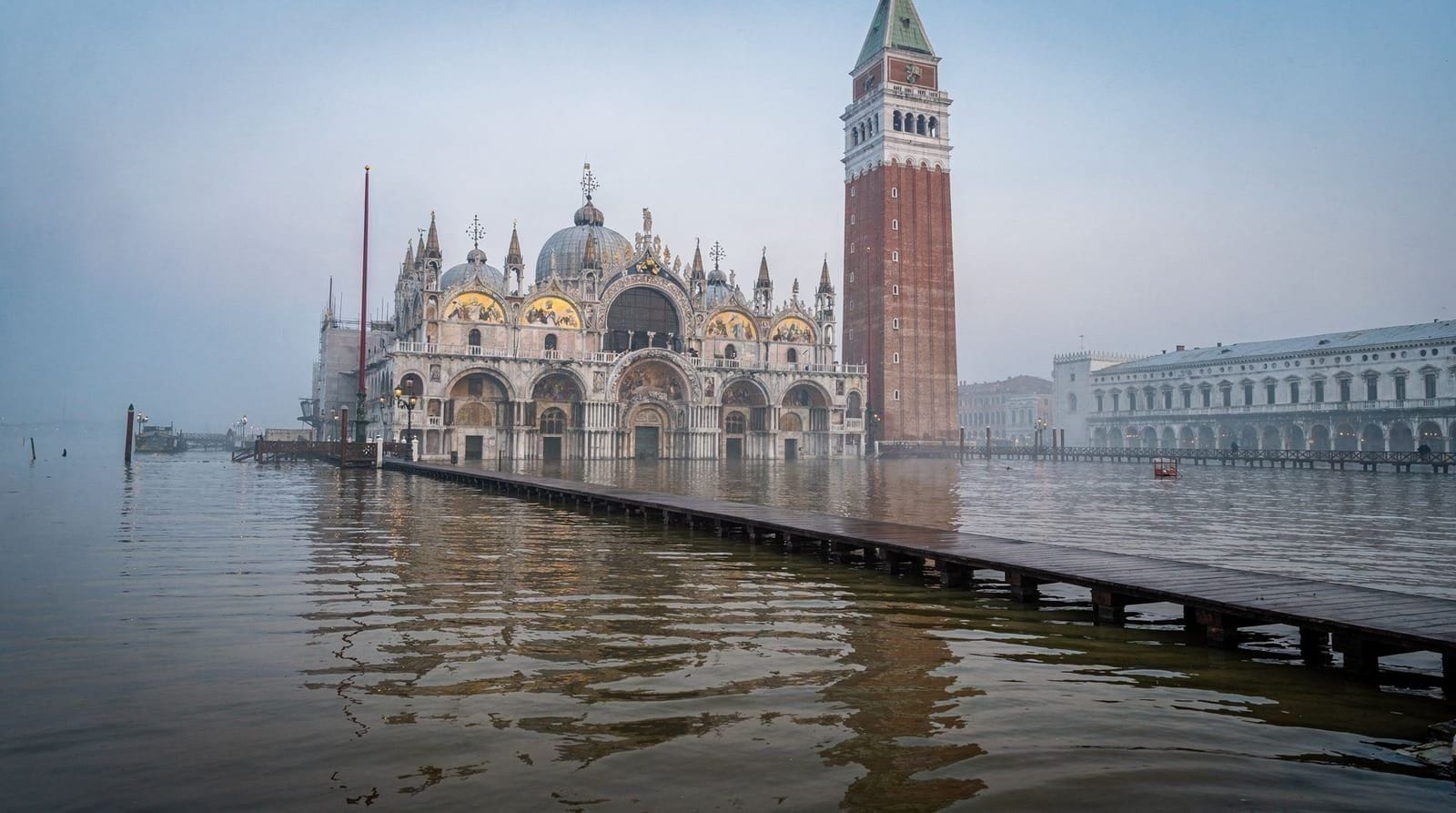
January and February are peak acqua alta months. Since the MOSE barriers became operational in 2020, the most severe flooding is rarer, but moderate acqua alta (80–100cm) still occurs. The raised wooden passerelle platforms are deployed on the main routes. Check the Centro Previsioni Maree forecast at comune.venezia.it.
Walking through moderate acqua alta at Carnival time is its own experience: the masked figures reflecting in the flooded piazza, the passerelle forming elevated walkways above the water, the strange doubling effect of costumes and reflections. If you have good waterproof boots or the disposable boot covers sold at tobacconists, it is worth experiencing rather than retreating from.
Our acqua alta guide covers preparation in full.
7:00pm — Final Carnival aperitivo
One more round at the Misericordia in Cannaregio. Third evening, familiar bar, familiar faces.
Evening
8:30pm — Dinner at the restaurant from day one (if it was excellent) or somewhere new
Carnival evenings in Venice are social in a way that ordinary tourism is not. The tables around you at dinner will be occupied by people in various stages of costume, and the Venetians who are participating in Carnival at the serious level are worth speaking to if you have the Italian.
Day 4: final morning and departure
Early morning: San Marco without the crowds
7:30am — Final visit to San Marco
On a weekday morning before 9am, Piazza San Marco during Carnival is manageable — the overnight revellers have gone home, the daytime crowds have not yet arrived. A few extraordinary costumes are still circulating from the previous night’s ball. The light in winter at this hour, with the mosaic facade of the Basilica catching the first direct sun, is the definitive Venice image.
9:30am — Murano glass visit (if not done)
If the mask workshop was taken on day two in Venice rather than Murano, consider a final morning visit to Murano for the glassblowing demonstrations. The island at 9:30am in January is very quiet — the seasonal contrast with its summer crowds is extreme.
11:30am — Return to Venice, final walk
Walk whichever route you have not yet walked. Buy something from the Rialto market for the train or plane.
Departure
Allow ample time. Venice’s transport infrastructure gets stressed during Carnival weekends — vaporetti can be crowded and delayed on peak days. Build in an extra hour to your airport or station timeline.
Practical notes for Carnival
Accommodation: Book 3–4 months in advance for the major weekends (opening weekend, final week). Midweek dates book with 1–2 months’ notice. Prices 2–3× the off-season rate during peak Carnival days.
Contributo di Accesso: The Venice access fee applies on peak Carnival days. Carnival Saturday and Sunday are almost certainly on the peak day list. Check venicevisitpass.com. Hotel guests are exempt.
Wearing a costume: Entirely optional but enriches the experience. Costume rentals are available in Venice for €50–150 per day; buying a basic mask at the market costs €15–30. A mid-range papier-mâché mask from a genuine Venetian maker costs €80–200. Commissioning a serious costume or ordering from one of the major Venetian ateliers (MondoNovò, La Bottega dei Mascareri) costs considerably more.
Cold weather: Venice in January–February is cold — typically 2–8°C during the day, below freezing at night. Dress for winter tourism, not Italian spring. Waterproof shoes are essential (acqua alta risk); layers are necessary (evenings are significantly colder than afternoons).
Children at Carnival: The free daytime events (costumes in the piazza, the Volo dell’Angelo, the Campo San Polo costume contest) are excellent for children. The evening masked balls are adult events. The elaborate adult costumes are generally not frightening to children — they are theatrical rather than grotesque.
The history of Venice Carnival in context
Venice Carnival has existed, in various forms, since the 11th century. The word “carnival” derives from the Latin carne vale (farewell to meat) — the final period of feasting before the Lenten fast that the medieval Church imposed between Ash Wednesday and Easter. Venice’s version became the most elaborate in Europe partly because the Venetian Republic’s strict social hierarchy could be suspended behind a mask: a doge and a servant wore the same bauta and could not be distinguished. The anonymity was institutionalised.
At the Carnival’s height in the 18th century, the festival lasted from St Stephen’s Day (26 December) until Lent — roughly two months of masked balls, theatre, gambling, and social transgression. The masks were not merely entertainment: they were legally recognised as social equalizers, and wearing a disguise in Venice during Carnival carried specific legal protections against recognition-based crimes.
Napoleon abolished Carnival in 1797 when he dissolved the Venetian Republic. The modern Carnival was revived in 1979 as a cultural and commercial event, initially small-scale and locally oriented, now attracting over a million visitors in its final week.
The costumes you will see are of two types. The serious participants — the members of costume associations, the families who sew or commission period-accurate 18th-century court dress — wear costumes that represent months of preparation and thousands of euros. These are the extraordinary images that define Venice Carnival in global media: the gold and silver brocade, the hand-painted porcelain masks, the enormous powdered wigs. The casual participants — the tourists who bought a basic colourful mask at a market stall — are also present in large numbers. The contrast between the two groups, in the same piazza at the same time, is part of the Carnival’s character.
The bauta: The most historically significant Venice Carnival costume is not the most photogenic. The bauta — a white squarish mask worn under a black cloak (tabarro) and a tricorn hat (tricorno) — was the everyday Carnival disguise of ordinary Venetians rather than the courtly outfit of aristocrats. Its design allowed eating and drinking without removing the mask (the lower part is cut away) and was deliberately unglamorous. Wearing a bauta in the Campo, eating cicchetti and drinking wine, is a more authentically Venetian Carnival experience than any costume ball.
Free piazza events vs a ticketed masked ball
The single biggest planning decision for a Carnival trip is how much of the ticketed programme to add on top of the free events. Here’s how the two compare directly:
| Free piazza events | Ticketed masked ball | |
|---|---|---|
| Cost | Free | €100–500+ per person |
| What you get | Costume-watching, the Volo dell’Angelo, the Campo San Polo contest | A seated evening at a historic venue, live music, period decor |
| Crowd level | Dense, especially on the two main weekends | Controlled — capped guest list |
| Booking lead time | None needed | Weeks to months for the best venues |
| Best for | Most first-time Carnival visitors | Travellers wanting the full historical-theatre experience once |
For most visitors doing this four-day itinerary, the free programme genuinely delivers the core Carnival experience — the costumes, the piazza atmosphere, the Campo San Polo contest are not a consolation prize, they’re the main event for the majority of participants too. A masked ball is worth adding if you specifically want the seated, historic-venue version of Carnival for one evening, not as a replacement for the free days.
Seeing Carnival without the worst of the crowds
The main weekends (opening Saturday and the final week) are, by design, when Carnival is at its most crowded — that’s also when the best free events (the Volo dell’Angelo, the big costume displays) happen, so avoiding crowds entirely means missing some of the spectacle. But there are real ways to soften it.
Midweek (2–6 February in 2026) is consistently the quietest stretch — the piazza is still active, costumed participants are still circulating, but the crowd density drops substantially from weekend peaks. If your dates are flexible, this window gives most of the atmosphere with a fraction of the crush.
Early mornings, even on the busiest weekend days, are manageable — the day 4 plan above (San Marco at 7:30am) works precisely because overnight revellers have left and the daytime crowds haven’t arrived yet.
Away from San Marco entirely, Cannaregio and Castello keep their normal winter character throughout Carnival, with a lighter, more local version of the costume culture. Our Carnival without the crowds guide has a fuller route through the quieter alternatives if the San Marco crush isn’t for you.
Venetian mask-making workshop — an alternative to Murano’s mask workshop if you’re staying closer to San MarcoFrequently asked questions about Venice Carnival
Do I need a costume for Venice Carnival?
No. The majority of visitors, including many Italians, attend without a costume. A costume enhances the experience and unlocks certain interactions (costumed participants photograph each other more freely, costumed groups are more social in the campi) but is not required.
Are the masked balls worth the money?
The best ones are — specifically, the events at genuinely historic Venetian venues (Ca’ Rezzonico, Palazzo Pisani Moretta, Ca’ Sagredo) with live music, period-appropriate decor, and good food. They are expensive (€150–500 per person) but for one evening of that specific experience, the cost is reasonable. The lower-priced commercial balls at venue halls are less worth the money. Our Carnival guide has specific event recommendations.
What is the Volo dell’Angelo?
The “flight of the angel” is a ceremony in which a performer descends on a wire from the top of the Campanile bell tower to a platform in the middle of Piazza San Marco, accompanied by music and theatrical fanfare. It typically takes 10–12 minutes and the crowd beforehand is substantial. Position on the edges of the piazza for the best photography.
How bad are the crowds during Carnival?
The final weekend (Shrove Tuesday area) and the opening Saturday are the most crowded. The piazza at peak times (noon–5pm, major weekends) reaches densities comparable to a stadium concourse. It is manageable but not comfortable. Early morning, weekdays, and any location more than 15 minutes from San Marco is significantly quieter.
Is acqua alta more likely during Carnival?
January and February are the highest-probability months for acqua alta. The MOSE barriers have reduced the frequency of flooding since 2020, but moderate acqua alta (80–100cm) still occurs. Check the forecast at comune.venezia.it during your visit. Pack waterproof footwear.
Which days of Carnival have the smallest crowds?
The midweek stretch, roughly 2–6 February in 2026, is consistently quieter than either the opening or final weekend. The piazza is still active and costumed participants still circulate, but crowd density drops noticeably. Early mornings on any day, including weekends, are also manageable.
Do I need to attend a masked ball to experience Carnival properly?
No. The free piazza programme — costume-watching, the Volo dell’Angelo, the Campo San Polo costume contest — is the core Carnival experience for most visitors and participants alike. A masked ball adds a formal, historic-venue evening on top, worth it if that specific experience appeals, but it isn’t required to see “real” Carnival.
Top experiences
Bookable activities with verified prices and instant confirmation on GetYourGuide.