Santa Croce
Venice's arrival district — Piazzale Roma, the Ca' Pesaro museum, and quiet residential streets that reward early-morning exploration before the crowds
Venice: city center historical guided walking tour
Quick facts
- Best for
- Arrival/departure logistics, Ca' Pesaro, quiet streets, local atmosphere
- Vaporetto stops
- Piazzale Roma, Ferrovia (at border with Cannaregio), Riva de Biasio, San Stae
- Time needed
- 2–3 hours; an hour more with Ca' Pesaro
- Don't miss
- Ca' Pesaro modern art museum, the early-morning canal light on Rio Marin
- Note
- Piazzale Roma is bus/car terminus — not a tourist attraction
The neighbourhood most visitors pass through without stopping
Santa Croce is Venice’s least-visited historic sestiere — and for understandable reasons. It borders Piazzale Roma, the bus and car terminus where visitors arrive from the mainland, and most people treat it purely as a transit zone. The vaporetto stop, the bags, the first glimpse of the Grand Canal — and then everyone rushes east toward San Marco without looking back.
| Where | Western Venice, bordering Piazzale Roma and the train station |
| Cost | Ca’ Pesaro ~€14; churches €3.50 with Chorus Pass; local meals 20–30% below San Marco |
| Time needed | 2–3 hours; add an hour for Ca’ Pesaro |
| Getting there | Vaporetto to Piazzale Roma, Ferrovia, Riva de Biasio or San Stae |
| Best time | Early morning, before the crowds moving east toward San Marco build up |
That is a small missed opportunity. Santa Croce is genuinely residential, with streets that run quieter than anywhere else in central Venice, a significant art museum in the Ca’ Pesaro, several small Gothic and Baroque churches, and the Fondaco dei Turchi (now a natural history museum). It is also the best area for a first morning in Venice before the main monuments open and before the crowds build — the Rio Marin canal is beautiful in early light, and the Fondamenta del Papadopoli along the Piazzale Roma canal is one of Venice’s more unexpected green spaces.
Piazzale Roma: arrival logistics
Piazzale Roma is where the road ends — literally. It is the terminus for buses, coaches, and cars arriving from the mainland. From here, the only options are the vaporetto (water bus) or walking. It is noisy, congested, and not scenic. Spend as little time as possible at Piazzale Roma itself.
What to do from Piazzale Roma:
- Take vaporetto line 1 from the stop east of the piazzale for the full Grand Canal journey to San Marco (40 min, €9.50)
- Take line 2 for a faster journey to Rialto and San Marco (20 min)
- Walk east to the Ferrovia (train station) in 5 minutes and take the vaporetto from there
- Walk directly into Santa Croce and Cannaregio — the main pedestrian route northeast takes you toward the train station and the main island
Luggage storage: The Deposito Bagagli at Santa Lucia train station (Ferrovia vaporetto stop) handles left luggage for €8–12 per item per day. Useful if you arrive before check-in or need to store bags on a departure day.
See the luggage in Venice guide and the arriving by train guide for full logistics.
Ca’ Pesaro — international gallery of modern art
The Palazzo Pesaro on the Grand Canal is one of Baldassarre Longhena’s most ambitious Baroque palaces (completed after his death in 1710). It now houses the Galleria Internazionale d’Arte Moderna di Venezia (Ca’ Pesaro), a substantial collection built from acquisitions at Venice Biennale exhibitions from the late 19th century onward.
The collection includes works by Klimt (Judith II, one of his less-seen masterpieces), Kandinsky, Ernst, Chagall, and Moore alongside a strong showing of Italian art from the Biennale years. The Orientale Museum on the upper floor holds one of Europe’s best collections of Japanese and Chinese decorative arts, assembled by the Bourbon di Schio collection.
Entry to Ca’ Pesaro is around €14 (combined museums); the building itself with its Grand Canal views from the piano nobile windows is worth the price. Open Tuesday to Sunday. Usually far less crowded than the Accademia or the Peggy Guggenheim.
San Stae church and the Grand Canal frontage
The church of San Stae (Sant’Eustachio) on the Grand Canal in Santa Croce has a Baroque facade by Domenico Rossi (1709) that is among the most dramatic on the canal. The interior holds early 18th-century works by Tiepolo, Pittoni, and Ricci — a good snapshot of how Venetian painting was developing in the years before Tiepolo’s great ceiling frescoes. Entry with the Chorus Pass (€3.50).
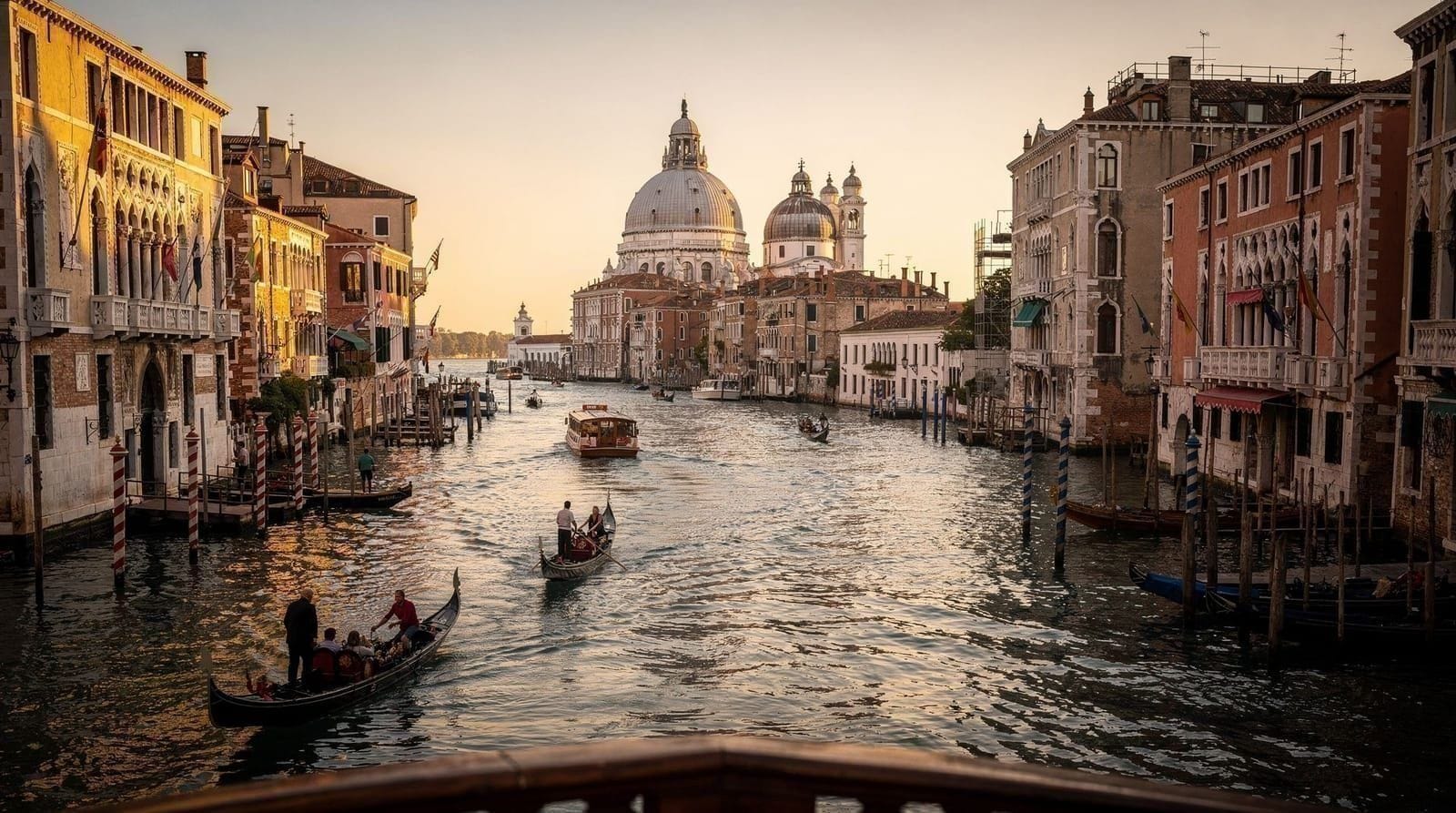
The Grand Canal frontage of Santa Croce between San Stae and the Ferrovia is lined with Gothic palaces (Ca’ Corner della Regina, Ca’ Pesaro) that are best seen from the water on the vaporetto.
Fondaco dei Turchi — natural history museum
The Fondaco dei Turchi is one of Venice’s oldest buildings, a 13th-century Byzantine-style palace that served for 150 years as the residence and warehouse of the Turkish merchants in Venice. It now houses the Museo di Storia Naturale di Venezia, Venice’s natural history museum, with strong palaeontology and Veneto ecology sections. Entry around €10. The ground floor dinosaur fossils (collected from the Sahara) and the Venetian lagoon ecology section are the highlights.
Not a top-tier museum by any measure, but interesting for children or visitors with a naturalist’s interest in the lagoon ecosystem. Open mornings.
Churches in Santa Croce
Santa Croce has several worthwhile churches that are easy to combine with a walk through the sestiere.
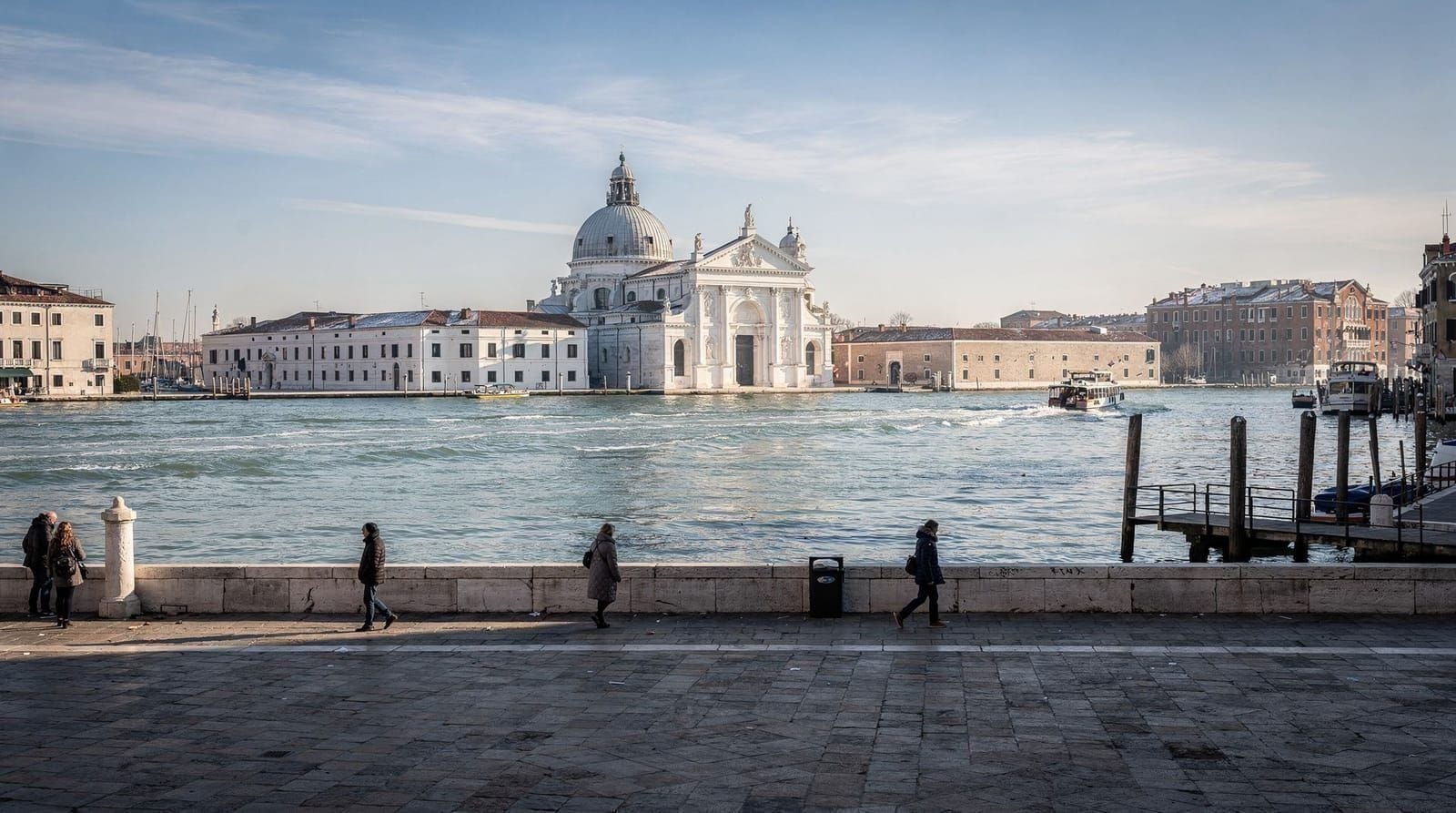
San Simeone Piccolo: The extraordinary neoclassical church directly facing the train station across the Grand Canal — green dome, Corinthian portico, built 1718–1738. It looks slightly out of place in Venice, which is entirely the point. The interior is rarely open but the facade dominates the view from the Ferrovia vaporetto stop. Named Piccolo (small) to distinguish it from the larger San Simeone Profeta nearby.
San Stae: Baroque facade on the Grand Canal (discussed above), plus interior works by Tiepolo and Piazzetta. The facade is best photographed from a vaporetto passing on the Grand Canal.
San Giovanni Decollato (San Zane Degolà): A small church near the Piazzale Roma end of Santa Croce with the best surviving Byzantine-style frescoes in Venice (12th–13th century). Quietly extraordinary. Entry free, irregular opening hours — check locally or ask at the sacristy of a neighbouring church.
The Tolentini and the university area
The church of San Nicolò da Tolentino (i Tolentini) near Piazzale Roma is a large 17th-century church with a grand baroque portico added in 1706 and a busy interior — Jacob van Loo’s St Jerome in the Desert and Johann Liss’s St Jerome Visited by an Angel are highlights. The church serves in part as a university venue; Iuav (the Venice architecture university) has offices in the surrounding former convent complex.
The presence of architecture students at Iuav gives the Santa Croce-Dorsoduro border area a slightly different energy from the purely tourist-facing parts of Venice — young people with portfolios, architecture bookshops, and a less exclusively commercial atmosphere around the Tolentini and Santa Marta areas.
Quiet streets and canals
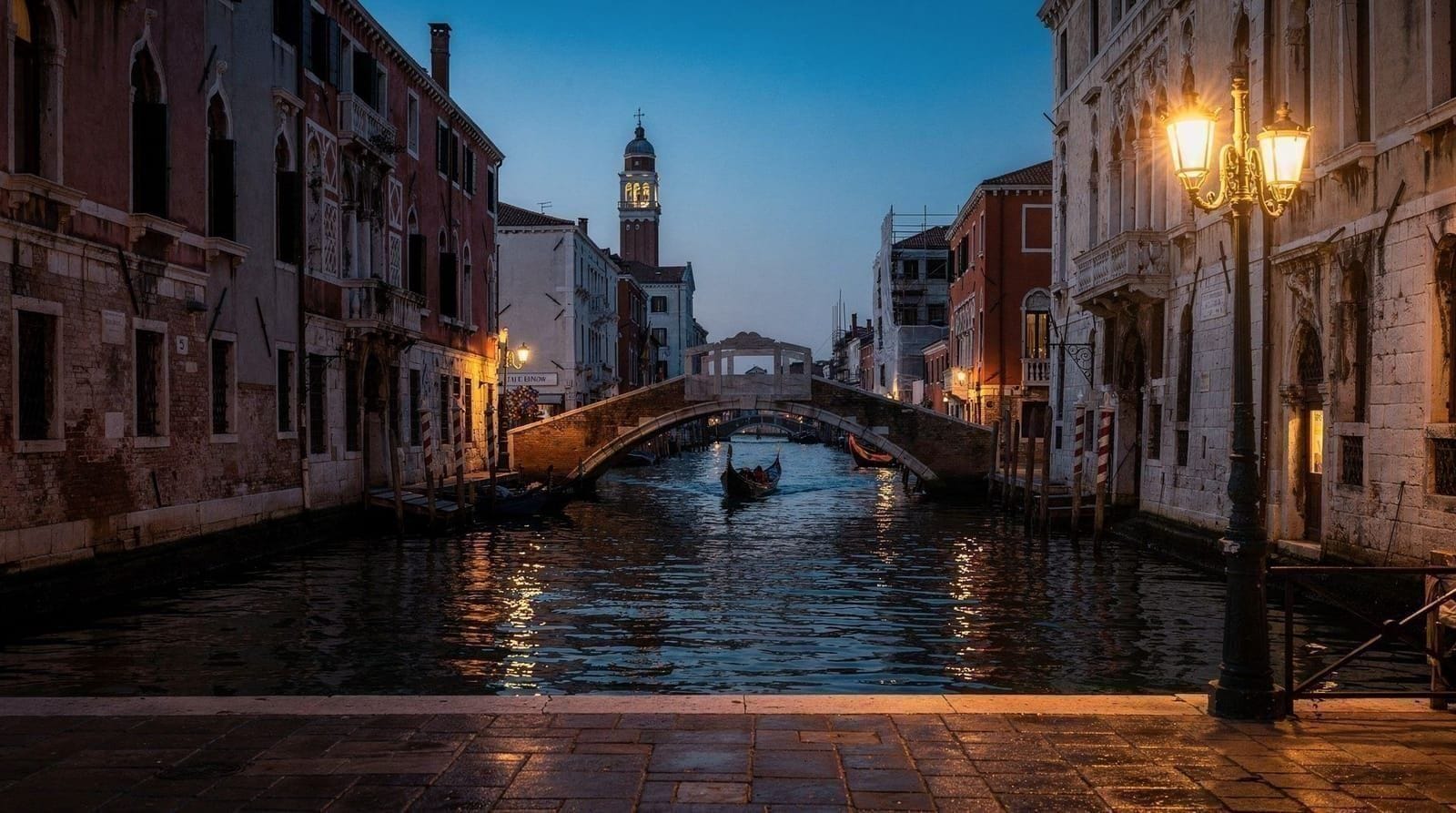
The best reason to walk through Santa Croce is for the quality of the streets. The Rio Marin canal runs east-west through the sestiere and is one of the most photographically satisfying canals in Venice — wide enough to reflect the sky, lined with typical Venetian palaces, minimal tourist traffic. The Fondamenta Rio Marin on the north bank is a quiet walk connecting San Polo to Cannaregio.
The area around Campo San Giacomo dell’Orio is the inner residential core of Santa Croce — a large campo with a leaning medieval church tower, a playground, several bacari, and the feeling of genuine neighbourhood life. Campo San Giacomo dell’Orio is worth half an hour for a coffee and a look at the church interior (good Tintorettos and a Palma il Vecchio altarpiece).
Photography and morning walks
Santa Croce’s early-morning streets, before the arrival of day-trippers and tourist groups, are among the most pleasant in central Venice for photography and walking. The Rio Marin canal with morning mist, the Fondamenta del Papadopoli with its canal-side trees (unusual in Venice), and the Gothic facades along the Grand Canal viewed from the San Stae vaporetto stop are all good.
The Papadopoli Gardens just east of Piazzale Roma is Venice’s small public park — a few minutes of grass and trees, useful as a landmark if you are meeting arriving visitors or resting with luggage. The garden is nothing special, but it is one of the few grassed open spaces anywhere in the main island. See the best photo spots guide for Grand Canal photography from Santa Croce.
What people miss about Santa Croce
The conventional wisdom treats Santa Croce as merely a transit zone — the place you arrive at and leave from. But the Ca’ Pesaro alone justifies a half-morning, and the combination of Sant’Alvise’s quiet streets, Campo San Giacomo dell’Orio’s local atmosphere, and the Fondamenta Rio Marin canal walk is as good as anything in the more famous sestieri.
Santa Croce is also where you can eat well at genuinely local prices. Osteria al Nono Risorto (Sottoportego de Siora Bettina, near San Giacomo dell’Orio) has a garden and reliable Venetian cooking at prices 20–30% below San Marco equivalents. Bacareto da Lele (near the Piazzale Roma end) is a tiny, legendary stand-up bar serving the cheapest spritz in Venice (€1.50) — mostly to students and workers from nearby offices.
Santa Croce as a base for Venice exploration
Because Santa Croce borders both San Polo (directly east and south) and Cannaregio (north), it is a practical base for exploring those sestieri without being at the epicentre of tourist activity. Some of Venice’s better-value hotels and apartments are in Santa Croce — you are 10–15 minutes from Rialto and 25–30 minutes from San Marco.
For transport connections: the Piazzale Roma vaporetto stops cover lines 1, 2, N (night), and the Alilaguna airport boat, making airport arrivals and departures simple. See the Marco Polo airport transfer guide and water taxi vs vaporetto comparison.
Honest assessment of Santa Croce’s place in a Venice trip
Santa Croce is not Venice’s most rewarding sestiere for a visitor on a short trip. If you have two days in Venice and want to maximise the cultural experience, you will spend more time in San Marco, Cannaregio, Dorsoduro, and San Polo. But Santa Croce rewards visitors who are staying three or more days, who are arriving or departing via Piazzale Roma, or who specifically want to understand how Venice functions as a working city rather than as a tourist attraction.
The key insight: most of Venice’s tourist experience is compressed into about 20% of the main island’s area. Santa Croce is mostly in the other 80%. It is not undiscovered — locals, academics, and architects know it well — but it is genuinely less visited by international tourists than any other central sestiere.
For budget-conscious travellers, it is worth noting that Santa Croce consistently offers lower accommodation prices and restaurant prices than the tourist-core sestieri, with easy vaporetto access to all the main sights. The venice on a budget guide and free things to do guide both recommend Santa Croce specifically for the cheapest eating in the city.
Santa Croce versus the tourist-core sestieri
For visitors deciding how much time, if any, to give Santa Croce, it helps to see it against the sestieri most people prioritise.
| Sestiere | Main draw | Crowd level | Typical visit length |
|---|---|---|---|
| San Marco | Basilica, Doge’s Palace | Very high | Half to full day |
| San Polo | Rialto market, Frari | High around Rialto | 2–4 hours |
| Santa Croce | Ca’ Pesaro, quiet streets | Low | 2–3 hours |
| Cannaregio | Jewish Ghetto, local life | Moderate | Half day |
Santa Croce won’t outrank San Marco or San Polo on a short trip, but on a stay of three days or more, it’s the sestiere most likely to feel like a discovery rather than a checklist item.
A first-morning walk through Santa Croce
For visitors arriving by bus or car at Piazzale Roma, the strongest single recommendation in this guide is to walk rather than immediately board a vaporetto. From Piazzale Roma, head northeast past the Papadopoli Gardens toward Campo San Giacomo dell’Orio (about 10 minutes), stop for a coffee at one of the campo’s bacari, then continue east to Ca’ Pesaro on the Grand Canal (another 10 minutes) for the museum or simply to see the Baroque facade from the fondamenta. From there, San Polo and the Rialto market are a further 10-minute walk, making this a natural, unhurried start to a first day rather than a rushed transfer straight to San Marco.
Venice: 1.5-hour walking tour of the historic centerSanta Croce in itineraries
The Venice 2-day itinerary suggests using a Santa Croce walk as the starting point for day two — arriving at Piazzale Roma by vaporetto from your hotel, walking east through the quiet streets to San Polo for the Rialto market, then continuing to the Frari, and south toward Dorsoduro. The total morning walk is under 30 minutes but gives you a genuine sense of the city’s residential fabric.
Venice: city center historical guided walking tourFrequently asked questions about Santa Croce
Is Santa Croce worth visiting?
For dedicated sightseeing, it is the least essential of Venice’s six sestieri. But if you arrive at Piazzale Roma or the train station, walking through Santa Croce rather than taking the vaporetto immediately is a good first-morning option — you see the real city rather than just the waterway. Add Ca’ Pesaro and you have a perfectly good half-day programme.
Where is Campo San Giacomo dell’Orio?
About 10 minutes on foot northeast from Piazzale Roma, through the calli of Santa Croce. It is the best campo in the sestiere — a tree-shaded square with a Romanesque campanile, good bacari, and almost no tourist presence. Good for a morning coffee.
Are there good restaurants in Santa Croce?
Better than average for the price, because the tourist concentration is lower. Try the area around Campo San Giacomo dell’Orio — Osteria al Nono Risorto is a local favourite with a garden, and Muro Venezia Rialto just over the San Polo border is a lively bar-restaurant with good cicchetti. Avoid the restaurants immediately adjacent to Piazzale Roma, which are tourist-facing.
How do I get from Piazzale Roma to San Marco quickly?
Vaporetto line 2 from Piazzale Roma takes about 20 minutes to Rialto and 25 minutes to San Marco. Line 1 takes about 40 minutes but gives a better Grand Canal view. If you want the canal experience, line 1 is the better choice on your first journey.
Is it safe to walk through Santa Croce at night?
Yes. Venice’s overall crime rate is very low, and Santa Croce is quieter rather than unsafe at night. The streets between Piazzale Roma and the train station can feel isolated after 10pm, but this reflects the low tourist traffic rather than any security concern.
Should I stay in Santa Croce or a more central sestiere?
Santa Croce is a reasonable choice if value and easy airport/mainland transport matter more to you than being steps from San Marco. Accommodation tends to run cheaper than San Polo or San Marco, and Piazzale Roma’s transport links (vaporetto lines 1, 2, N, and the Alilaguna airport boat) make arrivals and departures simple. You’ll be 10–15 minutes from Rialto and 25–30 minutes from San Marco on foot or by vaporetto.
What’s the best single reason to visit Santa Croce if I only have one day in Venice?
Ca’ Pesaro. If your one day is dedicated to San Marco and San Polo, Santa Croce is easy to skip entirely — but if you have any interest in modern art and want a break from the Byzantine and Gothic monuments elsewhere, the Klimt and Kandinsky works at Ca’ Pesaro, seen without Accademia-level crowds, are worth the detour.
Top experiences
Bookable activities with verified prices and instant confirmation on GetYourGuide.