Hidden lagoon islands: beyond Murano, Burano, and Torcello
Private north lagoon: traditional Venetian boat tour
Are there quieter islands to visit in the Venetian Lagoon beyond the famous three?
Yes — Sant'Erasmo (the lagoon's vegetable garden), Mazzorbo (connected to Burano by a wooden bridge, with an unusual vineyard), San Francesco del Deserto (a Franciscan monastery island), Le Vignole (orchards and a fishing community), and several abandoned or lightly inhabited islands accessible by private boat. All are far less crowded than Murano, Burano, or Torcello.
The lagoon beyond the famous islands
The Venetian Lagoon covers about 550 square kilometres of shallow water, reed beds, fish farms, salt marshes, and small islands. Of these islands, roughly 45 have some form of habitation or structure. Visitors typically know three: Murano (glass), Burano (colours), and Torcello (history). The rest are almost entirely unknown — and many are worth visiting.
This guide covers the most accessible and most interesting of the lesser-known lagoon islands: how to reach them, what you will find, and why they are worth the extra effort. The key thing they share is the absence of tourist crowds — even in high summer, islands like Sant’Erasmo and Mazzorbo receive a fraction of Burano’s visitor numbers.
| Where | Northern lagoon, beyond Murano/Burano/Torcello |
| Best islands | Sant’Erasmo, Mazzorbo, San Francesco del Deserto, Le Vignole |
| How to get there | Vaporetto line 13/14 from Fondamenta Nuove, or private boat |
| Cost | Vaporetto fare only, or around €150–250 for a half-day private boat |
| Best time | Spring (April–May) or early autumn (September–October) |
For orientation on the vaporetto network that serves these stops, see the vaporetto guide and the dedicated guide to reaching the islands.
Sant’Erasmo: the lagoon’s kitchen garden
Sant’Erasmo is the largest island in the lagoon by area and one of the least visited. It has a permanent community of a few hundred residents, flat agricultural land, and an almost complete absence of tourist infrastructure. For centuries it was Venice’s primary source of vegetables — particularly the famous carciofo violetto di Sant’Erasmo (violet artichoke), harvested in spring.
How to reach it: Vaporetto line 13 from Fondamenta Nuove or Madonna dell’Orto (Cannaregio). Journey time approximately 30–35 minutes. The line serves three stops on the island: Capannone, Chiesa, and Punta Vela.
Cycling: Sant’Erasmo is the best lagoon island for cycling — flat, with quiet farm roads, good views across the lagoon, and a clearly marked route from one end to the other. Bikes can be hired from a small rental near the Chiesa stop (limited availability; call ahead in summer). The circuit of the main paved roads takes about 2 hours at a gentle pace.
What to see: The island itself is the point — lagoon light, farmland, the distant Venice skyline, birds in the reed beds at the margins. There are no significant monuments. A trattoria near the Chiesa stop serves food from the island’s own produce. The seasonal market during artichoke harvest (May) is a genuinely local event — Venetians travel specifically for fresh carciofi di Sant’Erasmo.
Enchantment of the lagoon: Murano, Burano, Torcello, Sant’ErasmoMazzorbo: Burano’s quiet neighbour
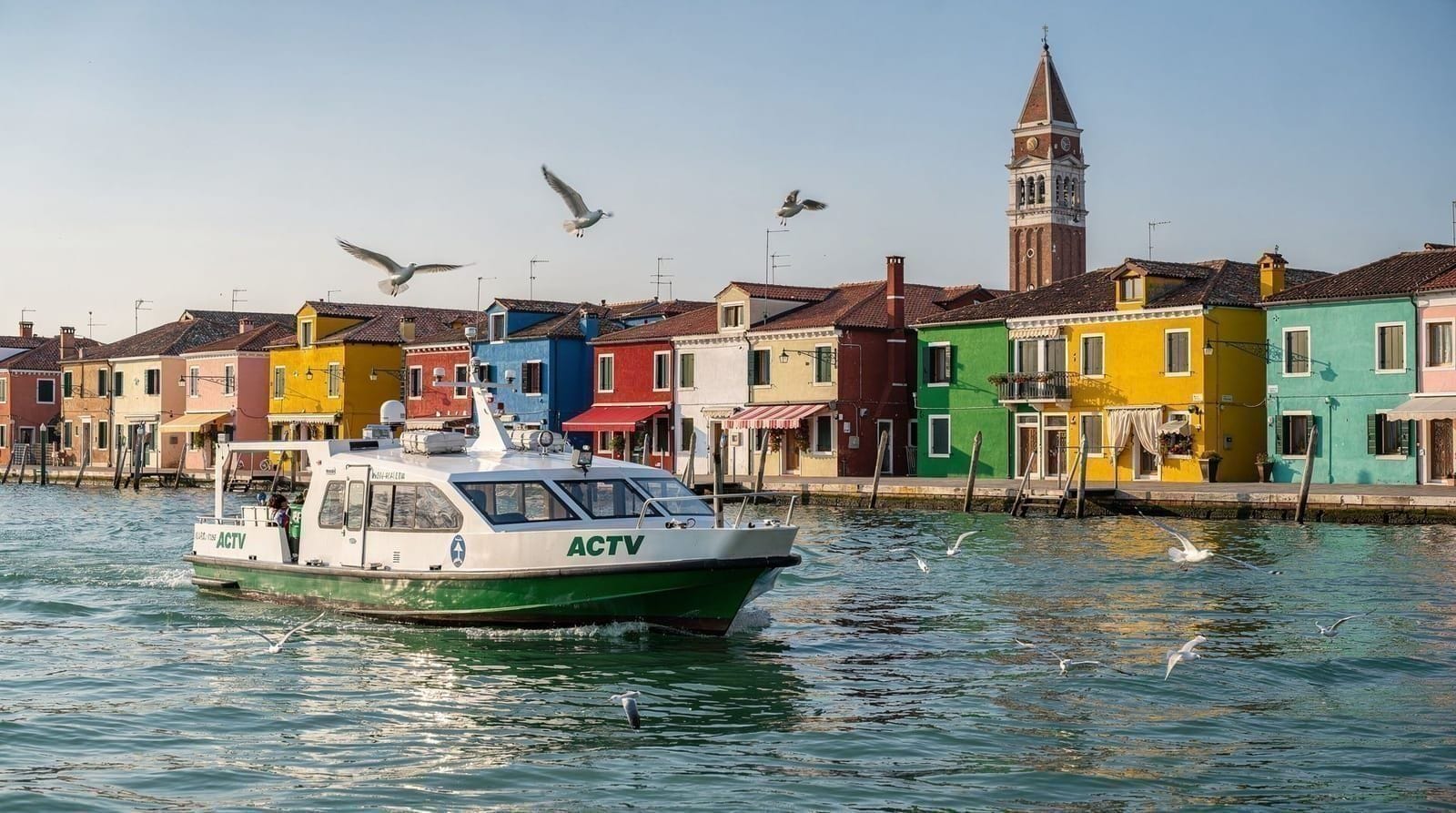
Mazzorbo is connected to Burano by a wooden pedestrian bridge — visible from Burano’s southern edge. Most visitors who cross to Burano walk past the bridge entirely. Mazzorbo is smaller, far quieter, and has an unusual distinction: a working vineyard.
The Venissa estate: In the early 2000s, a rare Venetian grape variety — the Dorona — was rediscovered in a garden on Mazzorbo. It had survived because the lagoon environment (saline soil, limited rainfall, high humidity) was too difficult for wine production elsewhere but this particular variety had adapted over centuries. The Venissa estate now produces a small quantity of Dorona wine per year — wine made from the unique conditions of the lagoon. The Venissa restaurant serves lagoon-sourced food with an extraordinary setting: a walled vineyard on a quiet island, one wooden bridge away from the most photographed village in the Venetian Lagoon.
Practical: Mazzorbo is 5 minutes on foot from Burano (via the bridge). Line 14 also serves Mazzorbo directly from Fondamenta Nuove with a stop separate from Burano, but it is easier to combine it with a Burano visit. The Venissa restaurant requires booking in advance (and carries a corresponding price point — €60–100 per person); the wine shop sells Dorona by the bottle.
San Francesco del Deserto: the monastery island
San Francesco del Deserto is a small island east of Burano, home to a Franciscan monastery that has operated almost continuously since the 13th century (St Francis of Assisi is believed to have sheltered here in 1220 on his return from the Holy Land). The monastery is still inhabited by a small community of brothers.
How to reach it: There is no public vaporetto service to San Francesco del Deserto. Small private boats can be hired from Burano (the boatmen who run the service are usually found near Burano’s landing stage; expect €10–15 round trip). The crossing takes about 10 minutes.
The visit: The Franciscan brothers offer guided tours of the monastery and gardens — free to visit, donations welcomed. The garden is extraordinarily peaceful: a formal cloister with peacocks (a traditional monastery bird), tall cypresses, and the lagoon visible through the trees. The church interior is simple and atmospheric. Tours run during the late morning and afternoon (roughly 9am–12pm and 3–5pm); check locally for current times.
Note: This is a working monastery. Appropriate dress is required (shoulders and knees covered). The atmosphere is genuinely meditative — very different from the tourist-island dynamic of Murano or Burano.
Le Vignole: orchards and fishing
Le Vignole is two small adjacent islands between the Lido and Sant’Erasmo, accessible on vaporetto line 13. The name means “the vineyards” — the islands were historically cultivated with vines and fruit orchards, and some fruit trees remain. A small permanent population maintains a fishing and horticultural tradition.
How to reach it: Line 13 from Fondamenta Nuove, stopping at Le Vignole before continuing to Sant’Erasmo. Journey time approximately 20 minutes.
What to find: A quiet path from the landing stage through the island; a trattoria popular with Venetians who know it; and the atmosphere of a working lagoon community that has not been set up for tourists. The island has military fortifications from various historical periods (Republic-era through World War II) that are partially visible.
Best time: A summer weekday morning, when local Venetians sometimes come for a short boat trip and lunch.
The northern lagoon by private boat
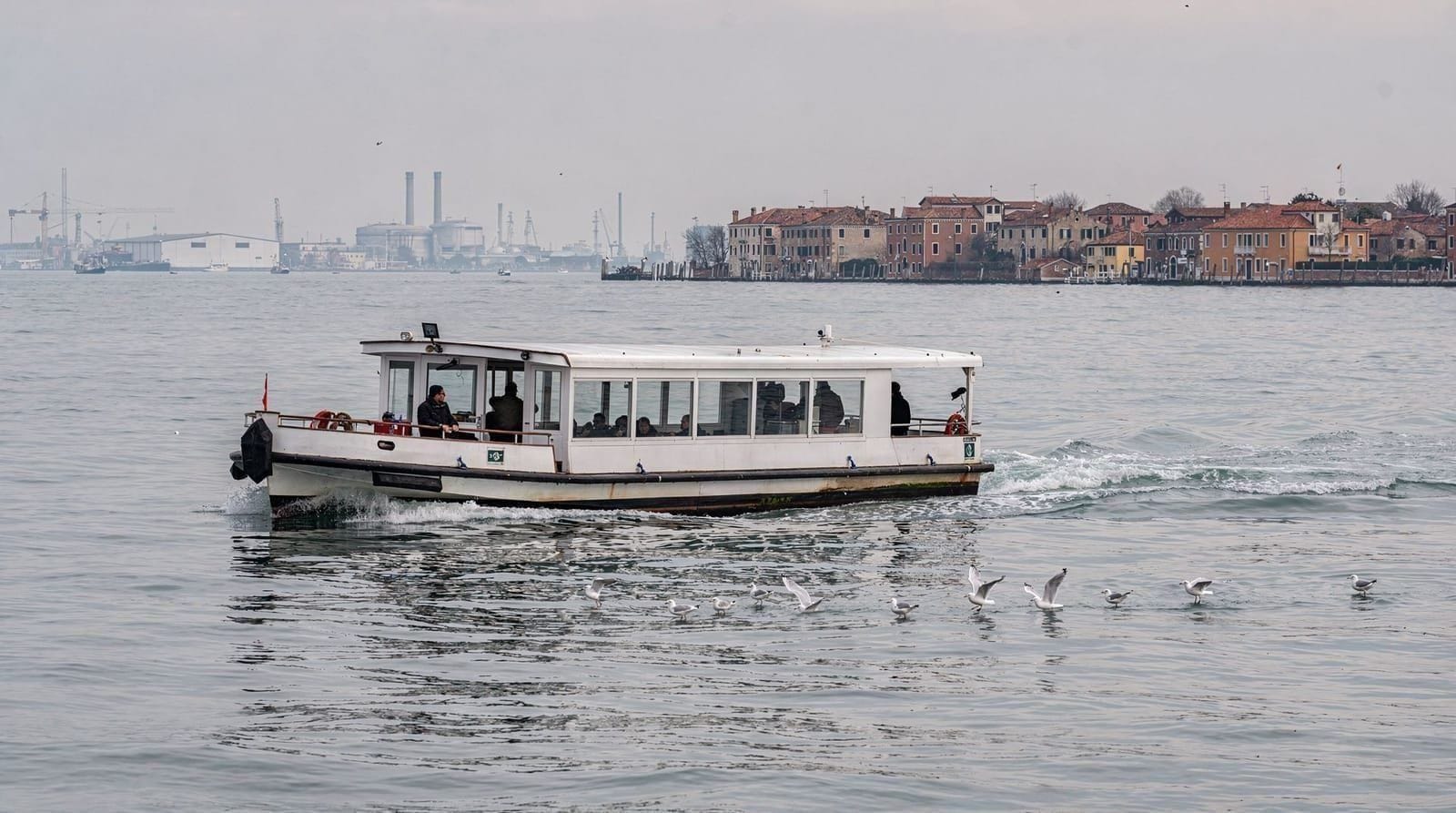
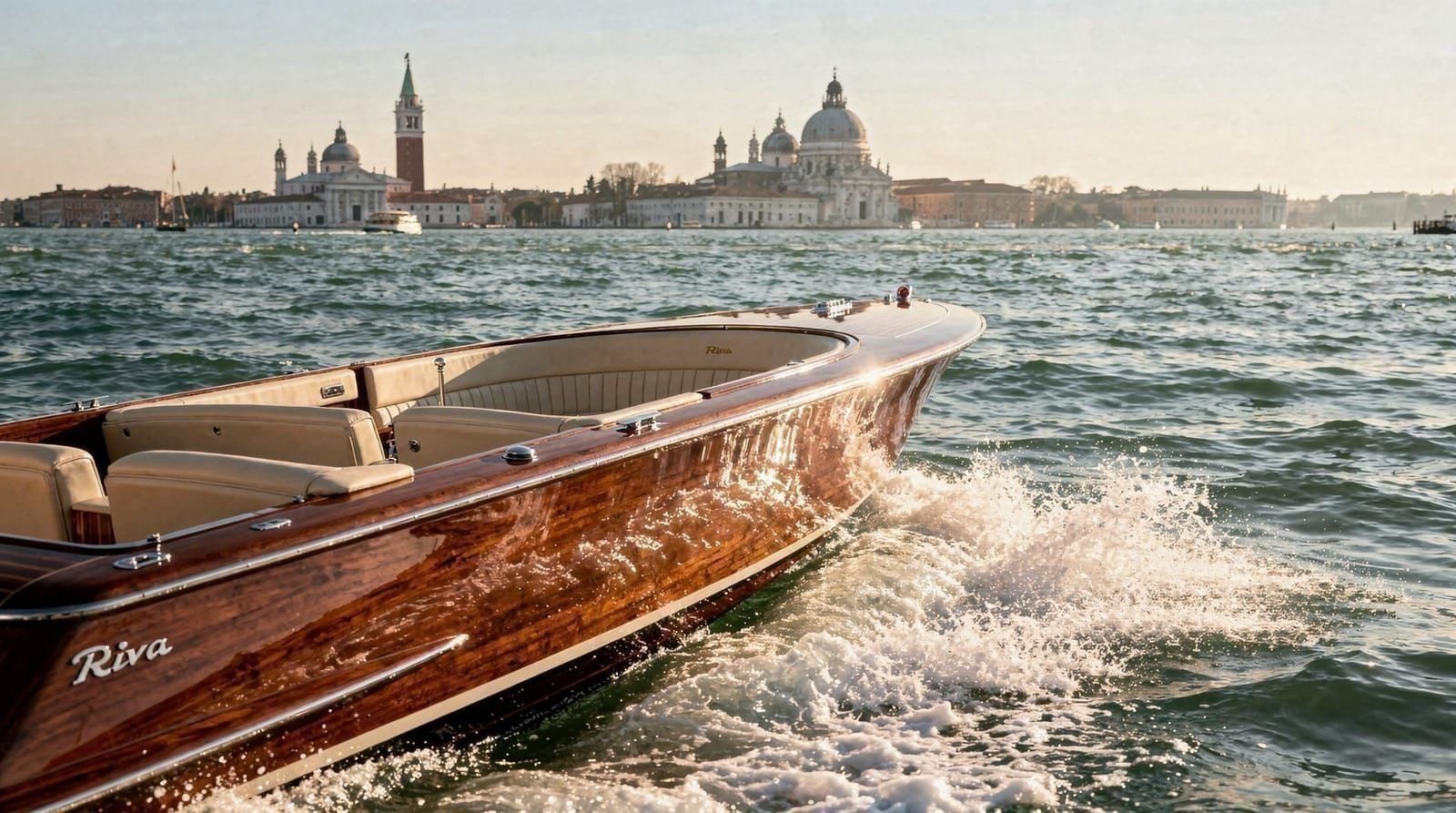
The most revealing way to explore the lesser-known islands is by private boat — a traditional Venetian wooden boat with a local guide or skipper. This allows access to islands without public vaporetto service, to the narrow channels between reed beds (ghebi) that form the lagoon’s hidden circulatory system, and to the outer margins of the lagoon where the water opens toward the sea.
A northern lagoon boat tour can cover: Murano, Sant’Erasmo, the marshes, possibly a stop at Torcello or Burano, and the return through the main channel past the cemetery island of San Michele.
Private north lagoon: traditional Venetian boat tourLazzaretto Nuovo: the quarantine island
Lazzaretto Nuovo is one of two historic quarantine islands in the Venetian Lagoon (the other, Lazzaretto Vecchio, is more restricted). During the period of the Republic, all ships arriving in Venice had to stop at one of the lazzaretti (quarantine stations) for inspection. At the height of the 1575–77 plague, the islands held thousands of sick and dying Venetians.
The island is now managed as an archaeological reserve. Organised visits run on certain weekends and during the archaeological season — check the Ekos Club website (the organisation that runs visits). There is no permanent public access. The visits are guided and focus on the archaeological remains (carvings, inscriptions, and structures from the 16th–17th centuries) and the history of the plague and quarantine system. Interesting for those with a historical interest; not a casual tourist destination.
San Giorgio in Alga: the abandoned island
Several lagoon islands are entirely uninhabited ruins. San Giorgio in Alga is the most visible from public vaporetto routes — a small island with the remains of a 14th-century church visible from the water, now off-limits to public access. It once held a monastery (briefly inhabited by reformist monks including the future Pope Eugenius IV) and later a powder magazine. The ruins are visible from the Tronchetto area of Venice.
These abandoned islands are the most atmospheric lagoon exploration available by private boat. Several Venice boat tour operators include a pass-by (not landing) at various abandoned islands as part of a lagoon tour itinerary.
Comparing the hidden islands at a glance
| Island | Best for | How to reach | Time needed |
|---|---|---|---|
| Sant’Erasmo | Cycling, open landscapes | Vaporetto 13 | Half day |
| Mazzorbo | Wine, quiet lunch | Foot from Burano | 1–2 hours |
| San Francesco del Deserto | Monastery, peace | Private boat from Burano | 1–2 hours |
| Le Vignole | Fishing village atmosphere | Vaporetto 13 | 1–2 hours |
| Lazzaretto Nuovo | History, quarantine archaeology | Organised weekend visits | Half day |
Compared with a standard Murano, Burano and Torcello day trip, these islands trade must-see monuments for open space and near-total absence of other visitors — a fair trade for travellers who have already covered the famous three, or who simply prefer the quieter version of the lagoon. If you are still deciding how to split your lagoon-island time, the day-trip comparison guide sets the hidden islands against Verona, Padua and the Dolomites.
Practical advice for the hidden islands
Vaporetto line 13 (Fondamenta Nuove → Madonna dell’Orto → Le Vignole → Sant’Erasmo) is the key route for the northern agricultural islands. It runs less frequently than lines 12 or 4.1/4.2 — roughly every 60–90 minutes during the day. Check the ACTV timetable carefully and plan your return timing.
Private boat hire: The best way to combine multiple off-the-beaten-path stops is by hiring a private boat with a local skipper for 3–4 hours. Prices run approximately €150–250 for a small group for a half-day. Several operators in Venice offer this service; ask at the hotels or check with operators near Fondamenta Nuove.
Timing: The hidden islands are most enjoyable in spring (April–May) or early autumn (September–October). Summer works but heat can be intense on flat, treeless islands like Sant’Erasmo.
How the hidden islands fit into a Venice visit
The hidden lagoon islands are best for visitors on a 3-day stay or longer who have already covered the main island monuments and the famous three islands. They reward a different pace — slower, less monument-focused, more about landscape and atmosphere.
The Venice 4-day itinerary suggests reserving one full day for the main islands (Murano/Burano/Torcello) and a shorter morning for a quieter island if staying longer. The Venice photography 3-day itinerary includes Burano and considers Mazzorbo as an extension. If you’re unsure whether Venice merits the extra day these islands require, the how many days in Venice guide and best time to visit guide help you plan around it, and Sant’Erasmo itself is worth checking for the current agricultural calendar before you go.
Frequently asked questions about the hidden lagoon islands
Can I visit the abandoned Venice lagoon islands?
Most cannot be visited legally. Lazzaretto Nuovo has periodic organised visits. Several others can be seen from the water on a private boat tour. There is no general public access.
Is there accommodation on the smaller lagoon islands?
Venissa on Mazzorbo has a small number of rooms (a converted farmhouse with a very particular setting). Sant’Erasmo has limited B&B accommodation. Le Vignole and San Francesco del Deserto do not have tourist accommodation. The Locanda Cipriani on Torcello is the most established island accommodation beyond Venice proper.
How do I organise a private boat for the lagoon islands?
Ask at your Venice hotel or search for Venetian lagoon boat tours. Several operators offer traditional wooden boat excursions (bateau or bragozzo) with local guides. The private boat tour guide covers the main options.
Is Sant’Erasmo really worth visiting?
For a particular kind of traveller — one who prefers open landscapes, cycling, and the absence of tourist infrastructure over monuments and organised sights — Sant’Erasmo is among the best things you can do from Venice. It is not for everyone; it requires an appetite for “nothing in particular” that many Venice visitors don’t have.
What is the Dorona grape?
Dorona di Venezia is a white grape variety that nearly disappeared when the lagoon islands were largely depopulated and their vineyards abandoned. A few surviving vines were found on Mazzorbo in the early 2000s; the Bisol family and partners established the Venissa estate to revive the variety. The resulting wine is expensive, highly limited in production, and genuinely interesting as a piece of living lagoon history.
Can I combine the hidden islands with Murano, Burano and Torcello in one day?
It is possible but rushed. A single boat tour or a well-planned vaporetto day can add Sant’Erasmo or Mazzorbo onto a Murano/Burano/Torcello itinerary, but you will spend more time in transit than at any one stop. Most visitors get more out of treating the hidden islands as a separate, unhurried outing — see the Murano and Burano guide for the standard combined route first.
Do I need to book a private boat in advance?
In peak season (June–August and around Redentore or Carnival), yes — book at least a day or two ahead, since operators near Fondamenta Nuove have limited boats and skippers. Outside peak season, same-day arrangements are often possible, but advance booking still guarantees your preferred time slot.
Top experiences
Bookable activities with verified prices and instant confirmation on GetYourGuide.