Torcello guide: Venice's oldest island and its Byzantine mosaics
Guided tour of Murano, Burano and Torcello from Venice
What is special about Torcello and is it worth the trip from Venice?
Torcello was the first major settlement in the Venetian Lagoon — its cathedral predates St. Mark's Basilica by centuries. The 12th-century apse mosaic of the Madonna Orant is one of the finest Byzantine mosaics in Italy. The island is now nearly uninhabited and deeply quiet. Combine it with Burano (5 minutes by vaporetto) for a full morning or afternoon.
The ghost of Venice’s first city
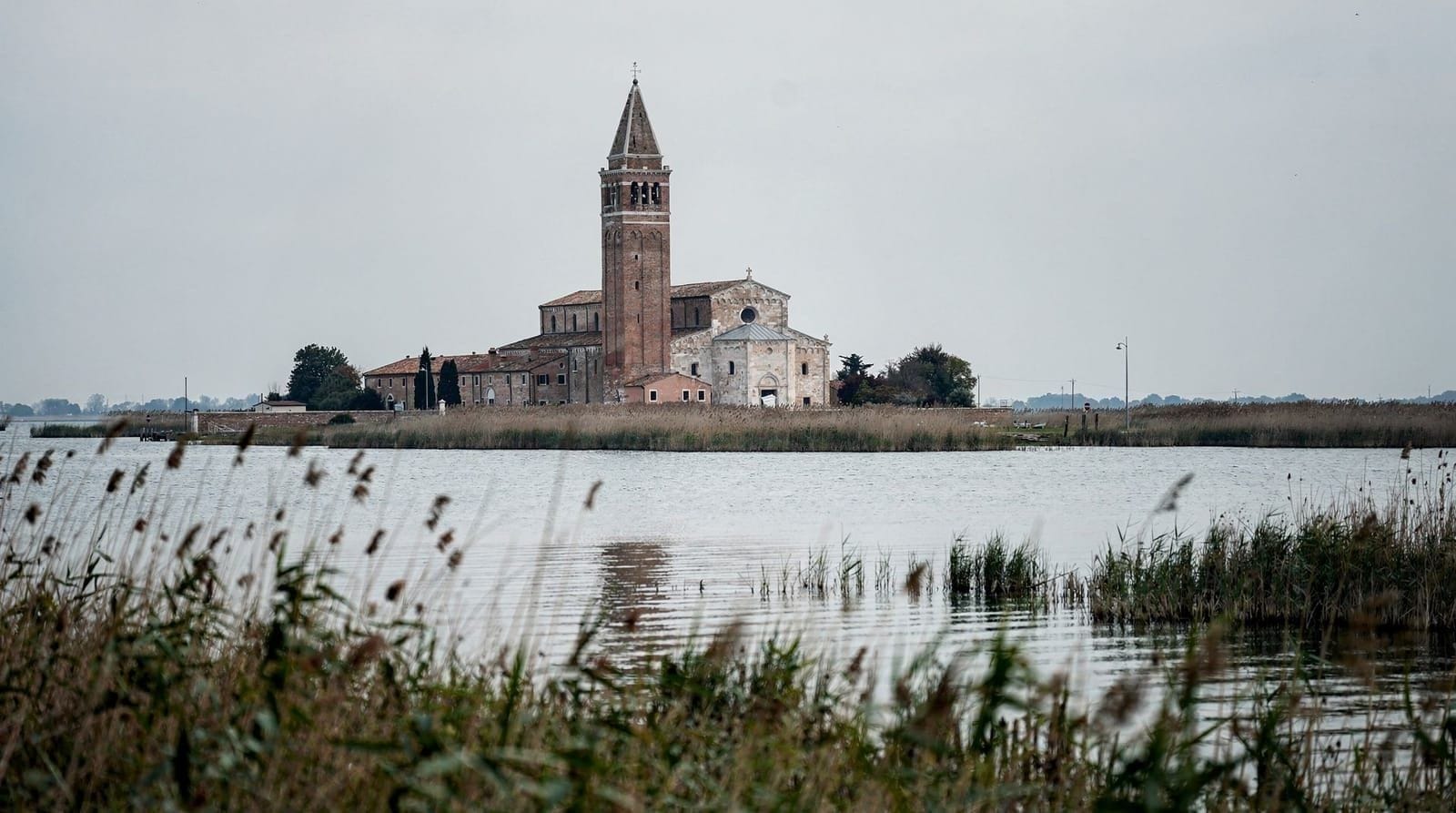
Before Venice, there was Torcello. The island in the northern Venetian Lagoon was the first major settlement in the lagoon area — a substantial city in the 7th–10th centuries with a cathedral, a bishop, thousands of residents, and a functioning commercial economy. It was from Torcello and the surrounding lagoon islands that the population gradually shifted, over centuries, to the more defensible islands that eventually became Venice proper.
By the 14th century the shift was largely complete, and Torcello had begun its long decline. Malaria from the silting marshes, the rise of Venice, and the relocation of trade all combined to empty the island. Today, Torcello has around 10–20 permanent inhabitants — one of the lowest populations of any European island. What remains is a Byzantine cathedral of extraordinary quality, an ancient church of Santa Fosca, a small archaeological museum, and a quiet landscape of marsh grasses and waterways that feels genuinely remote.
Most visitors to the northern lagoon islands combine Torcello with Burano — the two are 5 minutes apart by vaporetto. This guide covers what Torcello offers and how to make the most of a short visit. See the Torcello destination page for a broader orientation to the island alongside this practical guide.
| Where | Northern Venetian Lagoon, ~50 min from Venice via Burano |
| Cost | Cathedral ~€8 (combined with museum ~€12); day pass €25–35 covers transport |
| Time needed | 1.5–2 hours for the cathedral, Santa Fosca, and museum |
| Getting there | Vaporetto line 12 to Burano, then line 9 to Torcello |
| Best time | Morning for the apse mosaic’s light; combine with Burano for a full day |
Getting to Torcello
From Venice: Take vaporetto line 12 from Fondamenta Nuove (Cannaregio) to Burano — approximately 45 minutes. From Burano, take line 9 to Torcello — 5 minutes. Total travel from Venice: approximately 50 minutes.
Line 9 runs roughly every 30 minutes. The connection at Burano is usually straightforward; you will see the line 9 pontoon on the south side of Burano’s main landing area.
Cost: Standard ACTV day pass (24h €25, 48h €35) covers the full route from Venice to Burano to Torcello and back. A single ticket (€9.50/75 minutes) is not enough for the full journey — you would need multiple tickets. A day pass is clearly better value for an islands day trip.
See the vaporetto to islands guide for the full timetable and practical details.
The Cattedrale di Santa Maria Assunta
The cathedral of Santa Maria Assunta is the oldest building in the Venetian Lagoon, with the original foundations dating to 639 AD (though the current structure is primarily 11th–12th century). It is also, in terms of the quality of its Byzantine decoration, one of the most important medieval buildings in northern Italy.
The apse mosaic (12th century): The Maddalena Orant — a single, monumental figure of the Virgin in prayer, gold-ground, against a deep blue lower register — dominates the apse. The figures of the twelve apostles below are stylised in the Byzantine manner but anatomically confident. The gold tesserae retain their lustre after 900 years. In morning light, when the sun enters from the east, the apse glows with an intensity that is difficult to describe adequately.
The Last Judgement mosaic (west wall): The entire west wall of the cathedral is covered with a 12th-century mosaic of the Last Judgement — a densely populated composition covering heaven, purgatory, and hell in registers. The detail is rich: the weighing of souls, the beast devouring the damned, the blessed ascending in orderly procession. It is a fundamentally different sensibility from the more humanist paintings of the Renaissance; the effect is hieratic, systematic, and wholly medieval.
Entry and logistics: Entry to the cathedral costs approximately €8 (combined tickets with the Museo di Torcello are available for around €12). The cathedral is open daily, roughly 10:30am–5pm; check for seasonal variations. No photography permitted during services; photography generally allowed at other times.
Allow 30–45 minutes inside the cathedral. The exterior is less impressive than the interior; the apse view from the garden behind the church is worth seeing.
Santa Fosca church
Adjacent to the cathedral, the church of Santa Fosca (11th–12th century) is a small, centrally planned Romanesque church with an octagonal portico. The interior is simple — white limestone, a clean Byzantine plan — with a handful of early capitals and fragment mosaics. The building is structurally almost intact from the 11th century; the portico arcades are particularly elegant.
Entry is included with the cathedral ticket or available separately. The contrast between the empty interior of Santa Fosca and the densely decorated cathedral is itself instructive — two different approaches to devotional space from the same era.
The Museo di Torcello
The small Museo di Torcello (near the cathedral, in a 13th-century palazzo) holds excavated material from the island’s early medieval occupation: Byzantine jewellery, ceramics, stone carvings, fragments of early mosaics, and domestic objects from the 7th–12th centuries. The collection is small but the quality of individual pieces is high — particularly the goldsmith work.
Entry approximately €6, or combined with the cathedral at around €12. Allow 30 minutes.
The Devil’s Bridge (Ponte del Diavolo)
Torcello has two bridges without parapets — the local architectural term for these is “devil’s bridges” (Ponte del Diavolo). The larger one, near the vaporetto stop, is one of the most photographed subjects on the island. In the absence of a parapet, the bridge has a more ancient feel than most Venetian bridges.
The etymology is local: bridges without parapets were built before anyone felt the need for them (medieval builders trusted their footing). The “devil” association is 19th-century romanticism.
The lagoon landscape
Beyond the cathedral complex, Torcello is primarily salt marsh, reed beds, and shallow waterways. The canal path that connects the vaporetto stop to the cathedral runs along a straight, tree-lined ditch with views across the marsh. Egrets, herons, and other lagoon birds are common; the vegetation in spring and summer is lush. The silence is total compared to the main island.
Walking the canal path (about 10 minutes each way) and standing at the lagoon edge at the far end of the island gives the clearest sense of what the Venetian Lagoon actually is: a shallow, marshy, ecologically rich ecosystem, largely managed for centuries by the Republic, and still wild at its margins.
Torcello is one of several near-abandoned or lightly inhabited islands in the northern lagoon; for visitors who find its quiet appealing, the hidden lagoon islands guide covers a handful of others rarely visited even by people who have already done the standard Murano-Burano-Torcello circuit.
Photography: The canal path, the view back toward the cathedral campanile from the northern end, and the marsh landscape at dawn or dusk are the most atmospheric subjects on Torcello. The best photo spots guide includes Torcello for early-morning light on the cathedral.
Locanda Cipriani
The Locanda Cipriani is the one restaurant of note on Torcello — opened in 1935 by Arrigo Cipriani (founder of Harry’s Bar in Venice), now a hotel and restaurant. It occupies a converted farmhouse on the island with a garden. The restaurant serves classic Venetian cuisine at high prices (€60–100 per person for a full meal). Ernest Hemingway stayed here; the guest book is a roll-call of 20th-century notables.
It is not essential to eat at the Locanda Cipriani — but if you want a special lunch on Torcello, it is the only real option. Reserve well in advance for summer visits.
For a simpler approach: bring food from Venice or Burano. The picnic option is entirely viable — the canal path and the area around the Devil’s Bridge are pleasant for a rest with food.
Combining Torcello with Burano and Murano
A standard islands day trip from Venice:
- Venice (Fondamenta Nuove) → Murano (line 4.1/4.2, 10 min): glass demonstration and/or Glass Museum (1–1.5 hours) — see the Murano glass guide for what to prioritise there.
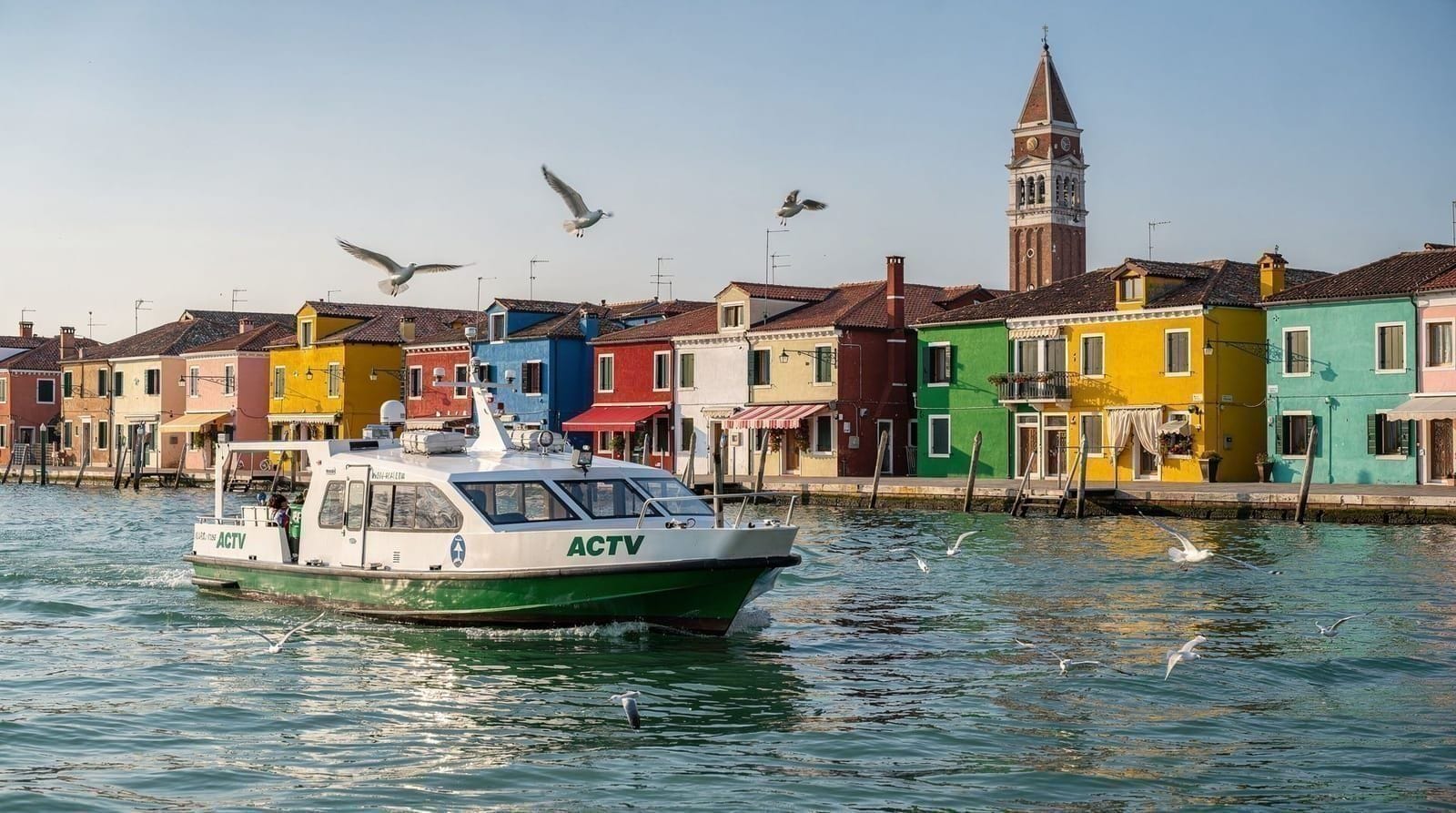
- Murano → Burano (line 12, 35 min): coloured houses, lace museum, lunch (2–2.5 hours) — the Burano lace and colours guide has the photography and shopping detail.
- Burano → Torcello (line 9, 5 min): cathedral, Santa Fosca, museum (1.5–2 hours)
- Torcello → Venice (line 9 back to Burano, then line 12 to Fondamenta Nuove)
Total: a full day, comfortably managed with a 9am departure. Earlier is better. The how to visit Murano and Burano guide covers the logistics of the first two stops in more depth if you’re planning the route yourself rather than joining a guided tour.
Guided tour of Murano, Burano, and Torcello from VeniceFor the complete logistics of all three islands, see the lagoon islands day trip guide.
Torcello in context: the fall of a city
The story of Torcello’s decline is a useful counterpoint to Venice’s rise. At its 9th-century peak, Torcello had perhaps 20,000 inhabitants — larger than contemporary Venice. It was the commercial and religious hub of the northern lagoon, with a bishop, a cathedral, and dense settlement.
The decline was gradual: siltation of the channels made navigation more difficult and created malaria-breeding marshes; Venice grew more powerful commercially; families relocated to the main island for its greater security and trade connections. By the 15th century Torcello was already nearly empty. The medieval city was systematically demolished — its stone used in Venice’s building campaigns. What survived was the cathedral complex, which was too sacred to dismantle, and the marsh landscape.
The Venice history overview guide covers the full arc of Venetian history from the lagoon settlements to the fall of the Republic.
Frequently asked questions about Torcello
How does Torcello compare to Murano and Burano?
Torcello is quieter and more historically significant than either. Murano is primarily about glass; Burano about colour and photography. Torcello offers Byzantine art at the level of Ravenna, a medieval landscape, and genuine solitude. Combining all three gives a full picture of the northern lagoon.
Is Torcello suitable for children?
The cathedral’s mosaics are visually impressive enough to engage older children with some explanation. The canal path walk is appropriate for all ages. The island’s quiet makes it less engaging for young children than the colourful streets of Burano; many families spend more time in Burano and make Torcello a shorter stop.
Can I visit Torcello independently without a tour?
Yes, easily. The island has one main route from the vaporetto stop to the cathedral complex — you cannot get lost. The museums are self-guided. A guide adds historical context, particularly for the mosaics, which repay explanation. The best walking tours guide covers the guided options for the northern lagoon.
What is the Torcello throne?
The large stone chair on the square in front of the cathedral is known as “Attila’s Throne” — a local legend claims it was used by the Hunnic leader during his Italian campaigns, which is entirely fictional. The chair is actually an early medieval episcopal throne, used by the bishop of Torcello. The legend is charming; the reality is only slightly less interesting.
Is there accommodation on Torcello?
The Locanda Cipriani has a small number of rooms (around 6). They are expensive and booked far in advance. For most visitors, Torcello is a day trip from Venice or Burano — staying overnight would be extremely quiet and atmospheric but requires advance planning and acceptance of the island’s extreme quietness.
How much time should I actually allocate to Torcello versus Murano and Burano?
If you have a full day for all three islands, Torcello deserves 1.5–2 hours — enough for the cathedral, Santa Fosca, and a walk along the canal path, but not so much that it crowds out Murano and Burano. If you only have time for two of the three islands, most first-time visitors get more immediate enjoyment from Burano’s colour and Murano’s glass; Torcello rewards visitors with a specific interest in Byzantine art or medieval history more than casual sightseers, so weigh your own priorities rather than assuming all three deserve equal time.
Is Torcello worth visiting if I’ve already seen Ravenna’s mosaics?
Yes, though the comparison is instructive rather than redundant. Torcello’s apse mosaic is later (12th century versus Ravenna’s 5th–6th century) and stylistically distinct — more monumental and severe, less naturalistic. Visitors who know Ravenna well often find Torcello’s Last Judgement wall the more surprising element, since nothing quite like it survives at Ravenna’s scale. Torcello is a worthwhile addition to a Byzantine art itinerary, not a repeat of it.
Top experiences
Bookable activities with verified prices and instant confirmation on GetYourGuide.