Burano guide: the coloured houses, the lace, and how to visit well
From Venice: Murano and Burano half-day island tour by boat
How long do I need to spend on Burano and is it worth the trip?
2–3 hours is enough to see everything on Burano. The island is genuinely beautiful and worth visiting for the photography and the atmosphere — but it is very small, and the main streets are crowded by mid-morning. Arrive before 10am for the best experience.
The island of colour and lace
Burano is a small fishing island in the northern Venetian Lagoon, about 45 minutes by vaporetto from Venice. It is famous for two things: the intensely coloured houses of its fishermen (painted in bright yellows, reds, blues, pinks, and greens) and its tradition of handmade needlepoint lace. Both are real — the colours are not a marketing invention, and the lacemaking tradition genuinely dates to the 16th century — but both need a dose of honesty before you visit.
The colours are extraordinary and the photography is genuinely worth the trip. The lace sold in most shops on the island is not made in Burano. These are the two most important things to know before you go.
This guide covers both, plus the logistics, the photography, the food, and what to realistically expect from a visit.
| Where | Northern Venetian Lagoon, about 45 min by vaporetto from Venice |
| Cost | Vaporetto around €9.50 single, or a day pass; Lace Museum around €6 |
| Time needed | 2–3 hours |
| Getting there | Vaporetto line 12 from Fondamenta Nuove (Cannaregio) |
| Best time | Before 10am, on a weekday if possible |
The coloured houses: what you’ll see and when
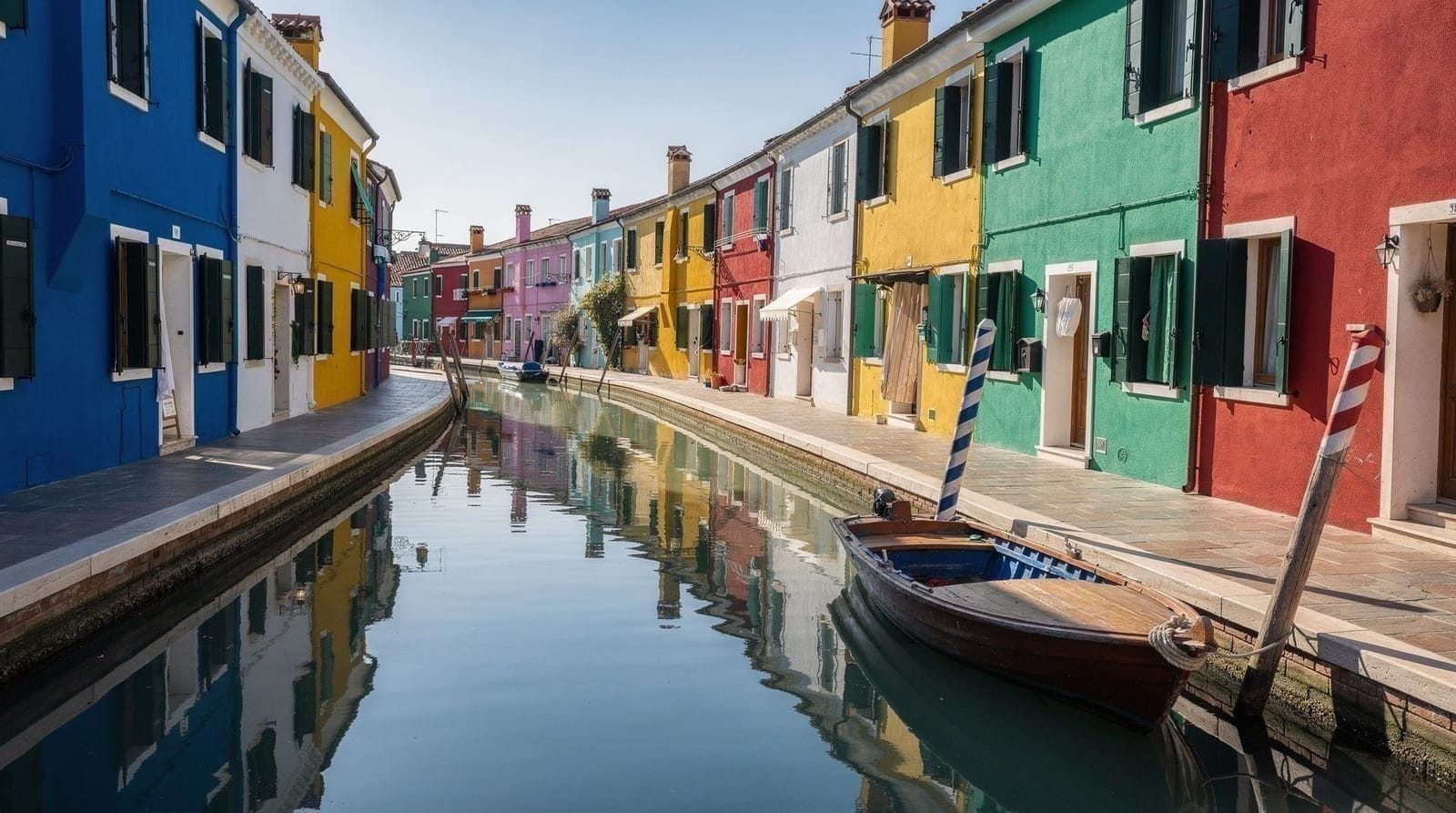
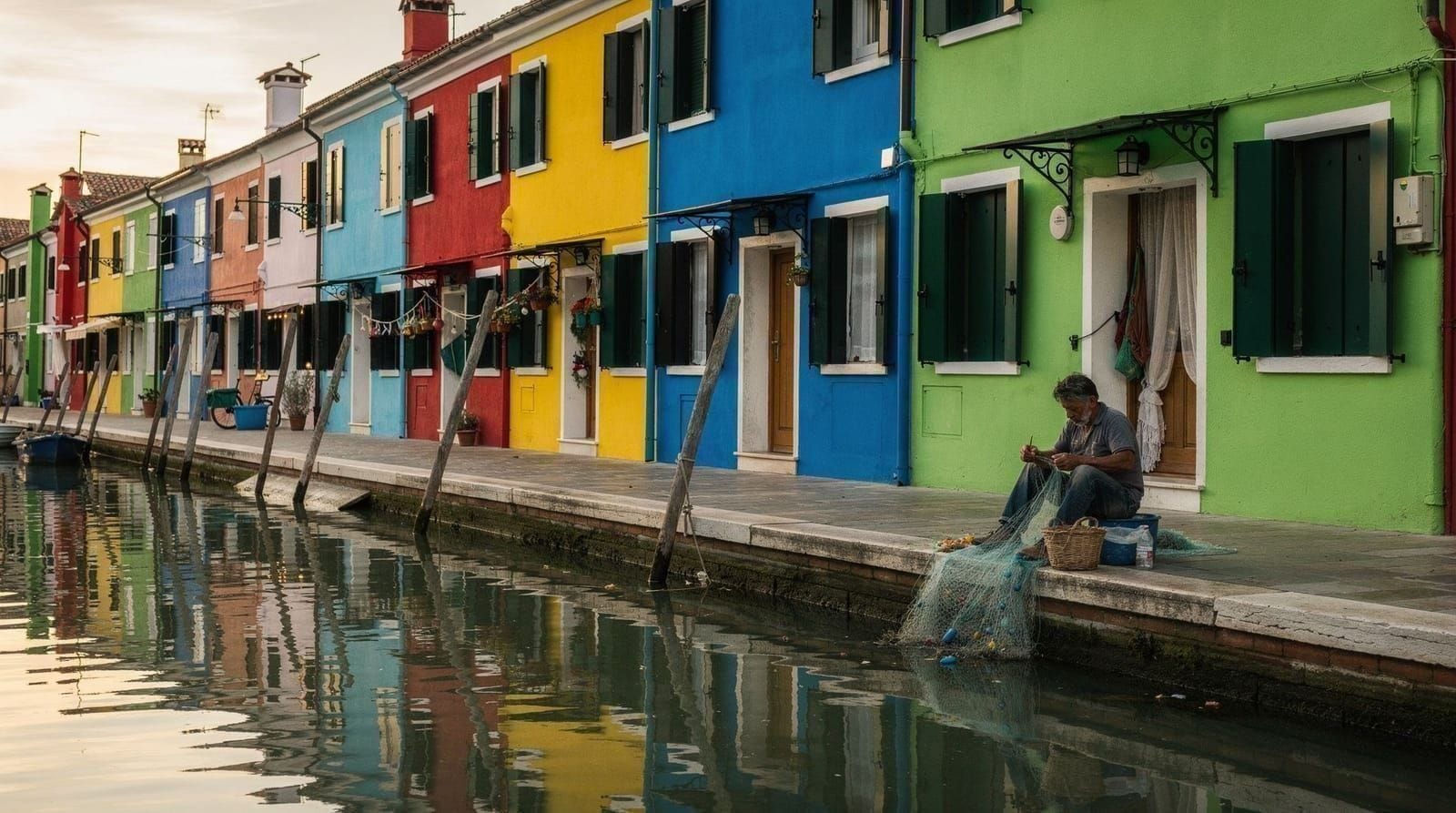
Burano’s houses are painted in a regulated palette of colours — traditionally the result of individual household colour choices that became, over centuries, a municipal tradition. The municipality now requires homeowners to apply for a colour from an approved palette before repainting; you cannot simply choose any colour. The effect, however achieved, is genuinely striking: blocks of terracotta, cobalt, lime green, and deep red in close proximity, reflected in the canals.
The main canal (Fondamenta della Pescheria and Fondamenta di Cao di Rio): The island’s central canal is the first thing you see arriving from the vaporetto stop. This is the most photographed view — the canal with its coloured buildings mirrored in still water, the occasional fishing boat. The morning light from the east falls on the north-facing facades; afternoon light is on the south side.
Via Baldassarre Galuppi: The main pedestrian street through the island, leading from the vaporetto stop to the Piazza Baldassarre Galuppi. This is where the majority of visitors walk and where the souvenir shops and restaurants are concentrated. The buildings here are brightly coloured and well-maintained; the street is narrow enough to feel enclosed by the facades.
The side streets: The alleys east of the main canal — particularly around Via San Mauro — are quieter, often more varied in their colours (some buildings are older and less frequently repainted), and far less crowded. The best Burano photography is frequently found by wandering off the main route.
Photography: the honest advice
Burano is the most Instagrammed island in the Venetian Lagoon for good reason — the colour combinations are genuine and the scale is human (the island is small; you are never far from a remarkable wall). But a few things to know:
Arrive early: By 10am on a summer weekend, Burano is crowded enough that getting people-free photographs of the main streets is difficult. Before 9am, the island is quiet. The best light (east-facing facades in morning light) is also in the early morning.
Overcast vs. sunny: The colours are arguably more saturated and photograph better on a bright overcast day (flat, even light without harsh shadows) than in direct sunlight (which creates strong contrast that can blow out the lighter colours). A bright overcast morning in spring is ideal.
The leaning campanile: The bell tower of the church of San Martino tilts visibly — one of the more notable leaning towers in the Veneto after the obvious one in Pisa. Worth including in a wide shot from across the piazza.
The Burano photography guide covers the best shooting locations and times in more detail.
The lacemaking tradition
Burano lace (merletto di Burano) is a needlepoint lace of exceptional fineness, traditionally worked by women of the island using a needle and thread on a pattern cushion. The technique — punto in aria (“stitch in air”) — creates three-dimensional patterns without a fabric base; it is among the most technically demanding of all lace traditions.
The craft was reputedly introduced to Burano in the 16th century, though the historical record is imprecise. At its peak in the 17th–18th centuries, Burano lace was among the most expensive textile products in Europe; it was purchased by European courts and aristocracy. The industry declined with the Industrial Revolution and the availability of machine-made lace.
Today, genuine Burano needlepoint lace is made by a small and dwindling number of women — most elderly, trained in the tradition before it began to disappear. A genuine small piece (a bookmark, a small decorative section) takes many hours to make and costs proportionally: a small bookmark might be €40–100; a tablecloth takes months and costs thousands.
What is sold in most shops: The vast majority of “lace” sold in Burano’s tourist shops is machine-made, or hand-made outside Italy (primarily in China or Eastern Europe). It is sold at prices that make the labour economics immediately obvious — a “Burano lace” tablecloth at €30 cannot be genuine. A genuine piece is tagged with a certification showing the maker’s name and the Merletto di Burano mark.
Where to see genuine lace: The Museo del Merletto (Lace Museum) at Piazza Baldassarre Galuppi 187 has authentic historical pieces and a small number of contemporary makers in residence on some days. Entry around €6. The museum also explains the needlepoint technique in detail.
The Museo del Merletto
The Lace Museum on Piazza Baldassarre Galuppi is modest in scale but genuinely informative. The collection includes historic pieces from the 16th–19th centuries; there are exhibits on the technique with visual demonstrations of the stages of making a piece of needlepoint lace. On certain days, elderly lacemakers demonstrate the technique in person — ask at the entrance when the next demonstration is scheduled.
Entry is around €6 (included in some combined lagoon island tickets). Open Tuesday–Sunday, roughly 10am–5pm.
Eating on Burano
Burano has a handful of genuine restaurants serving traditional lagoon seafood. The signature dish is risotto di gò — a risotto made with goby fish (gò), a small, bony lagoon fish whose flavour is prized locally. It is not easy to make well and is rarely done well outside Burano. If you eat one thing on the island, this is it.
Trattoria da Romano has been serving lagoon fish on Burano for over a century — tourist-known, but reliable, with a commitment to traditional recipes. Reserve ahead for lunch in summer.
Al Gatto Nero is the other reliable option, also tourist-known and also genuinely good, with a strong fish menu.
Prices are higher than cicchetti in Venice but roughly comparable to a mid-range Venice sit-down restaurant — €30–50 per person for a full meal with wine.
For coffee and pastry: the bars near the vaporetto stop are fine and at normal prices (€1.30–1.80 for espresso at the counter). No need to overpay.
Combining Burano with Torcello
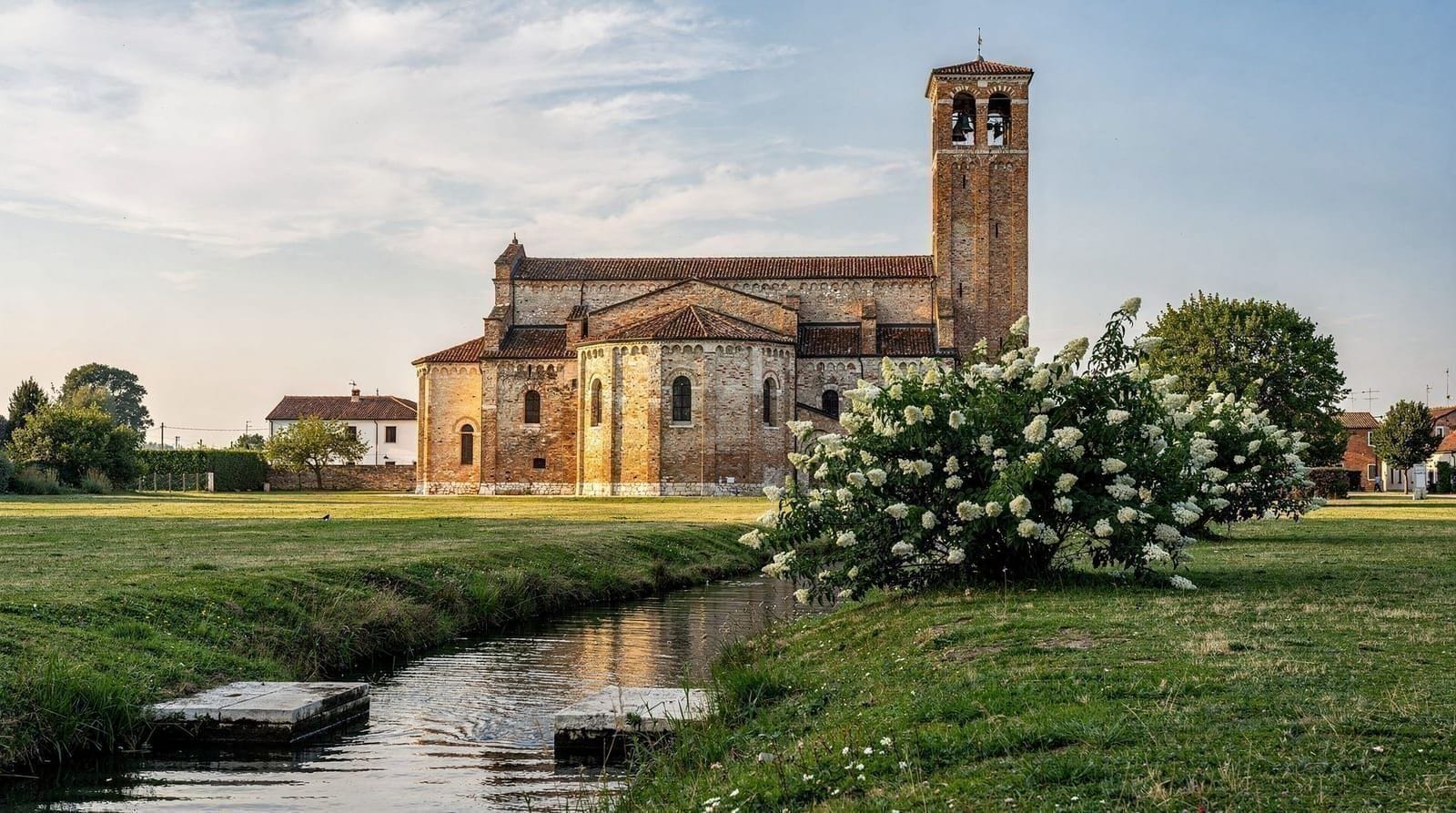
Torcello is a 5-minute vaporetto ride on line 9 from Burano. It is almost always combined with Burano in a day trip — the contrast is stark: Burano is colourful and busy, Torcello is quiet, green, and ancient. Allow 1.5–2 hours on Torcello for the cathedral mosaics and a walk around the island. See the Torcello guide.
A typical combined itinerary:
- Arrive Burano from Venice by 9am (before crowds)
- 2 hours on Burano — main canal, side streets, Lace Museum
- Vaporetto to Torcello (line 9, 5 min)
- 1.5 hours on Torcello — cathedral, devil’s bridge, lagoon view
- Return to Burano for lunch (if not eaten before)
- Return to Venice via Murano (line 12) — stop at Murano glass demo
Combining Burano with Murano
Most day-trip itineraries include both Murano and Burano. They are on opposite sides of the route from Venice: Murano is closer (10–15 minutes from Venice), Burano further (45 minutes). The standard order is Venice → Murano → Burano → (Torcello) → Venice.
For the detailed logistics of the full route, see the how to visit Murano and Burano guide and the lagoon islands day trip guide.
From Venice: Murano and Burano half-day island tour by boatSpotting genuine lace vs imported lace
Because the price gap between real and fake lace is so large, a few concrete checks help before buying:
| Sign | Genuine Burano lace | Machine-made or imported |
|---|---|---|
| Price | €40+ for even a small piece | €5–30 for a “tablecloth” or large item |
| Certification | Tagged with maker’s name and Merletto di Burano mark | No maker attribution |
| Texture | Slightly irregular stitch, visible hand variation | Perfectly uniform machine stitching |
| Where sold | Museo del Merletto shop, named individual makers | Generic souvenir shops on Via Galuppi |
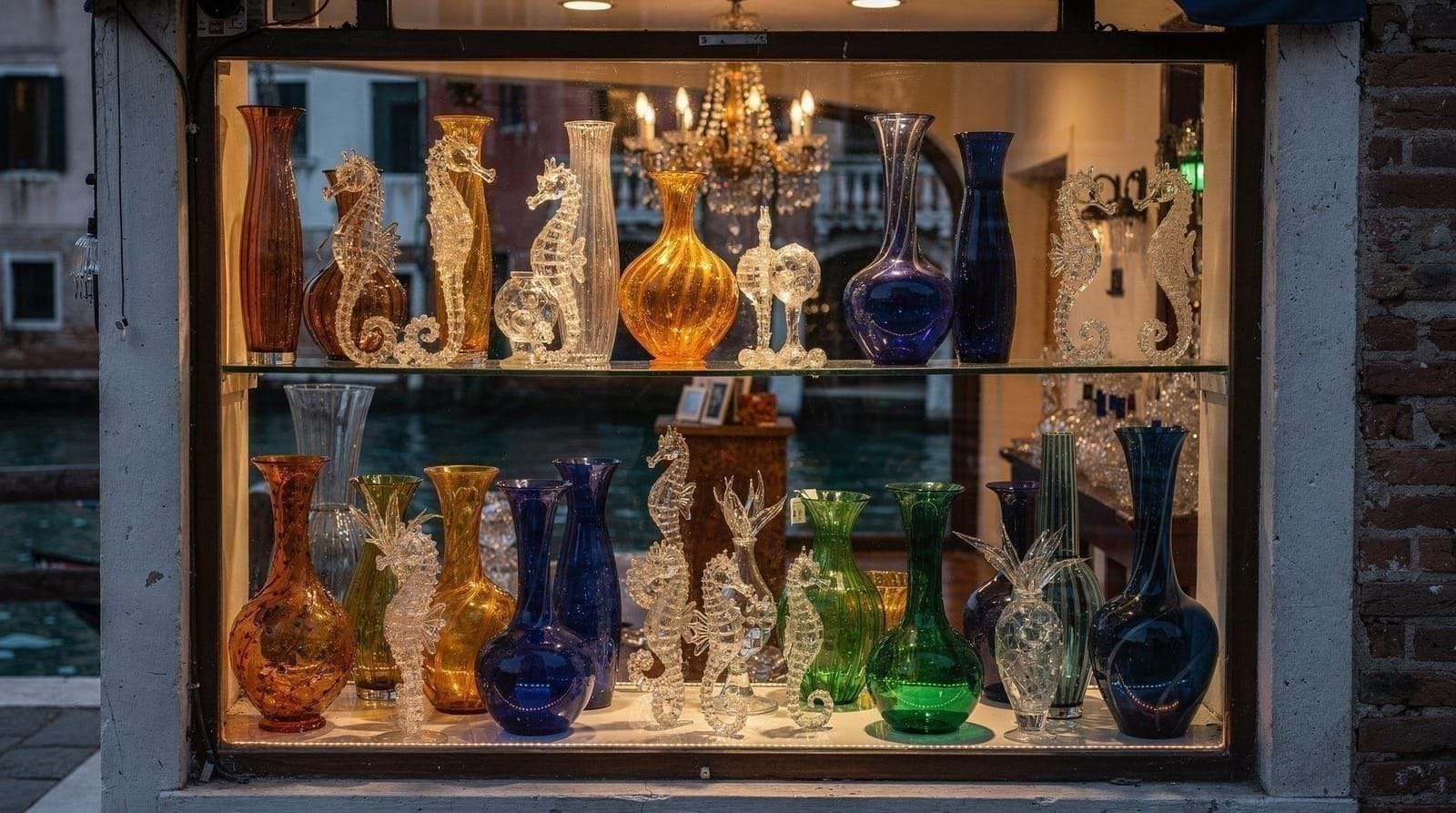
If a shop cannot tell you who made a piece, it almost certainly was not made on the island. This is not a scam unique to Burano — it is the same dynamic as unmarked “Murano glass” sold across the lagoon — but it is worth knowing before you spend real money on a souvenir.
Getting to Burano: vaporetto in detail
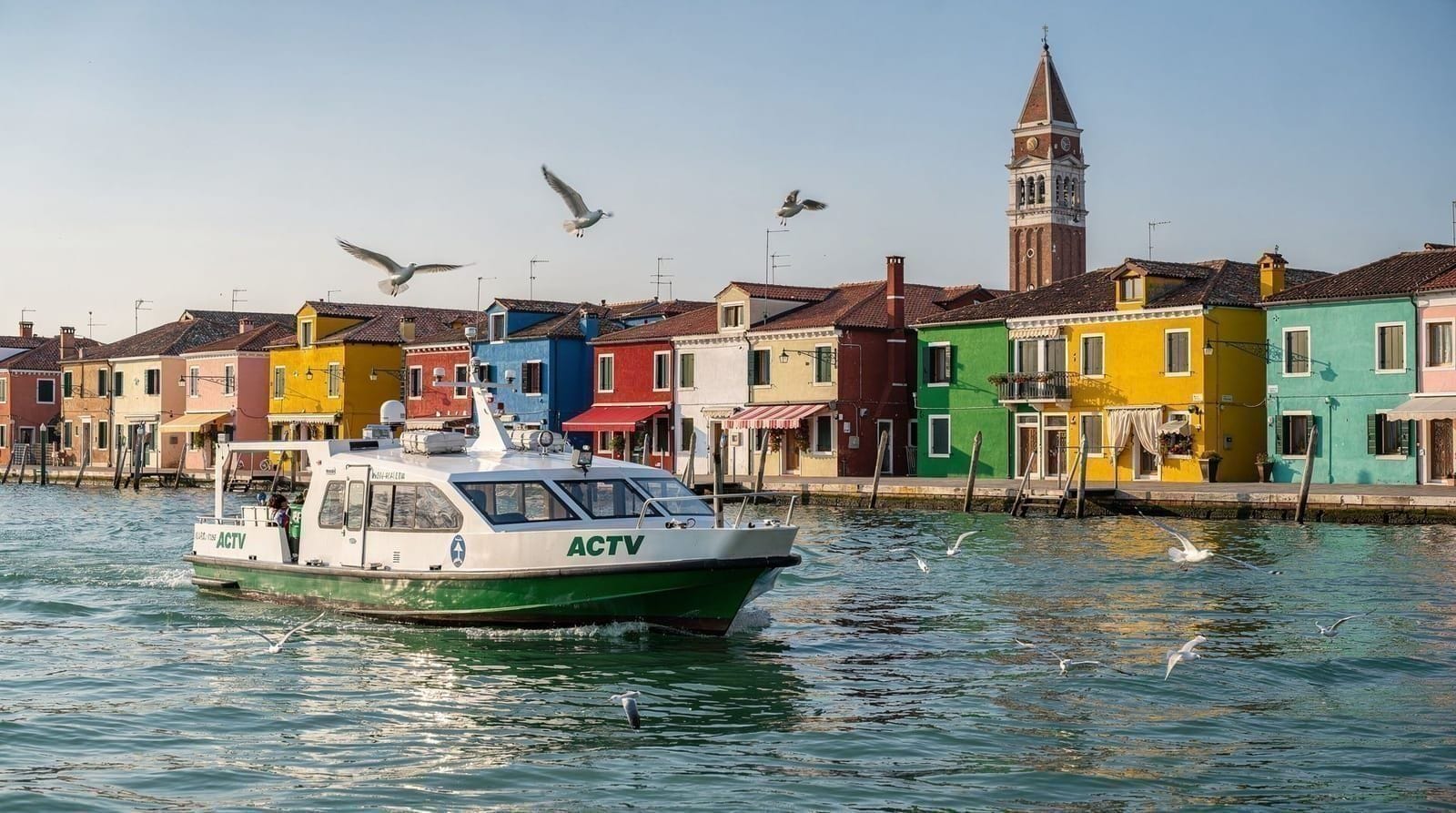
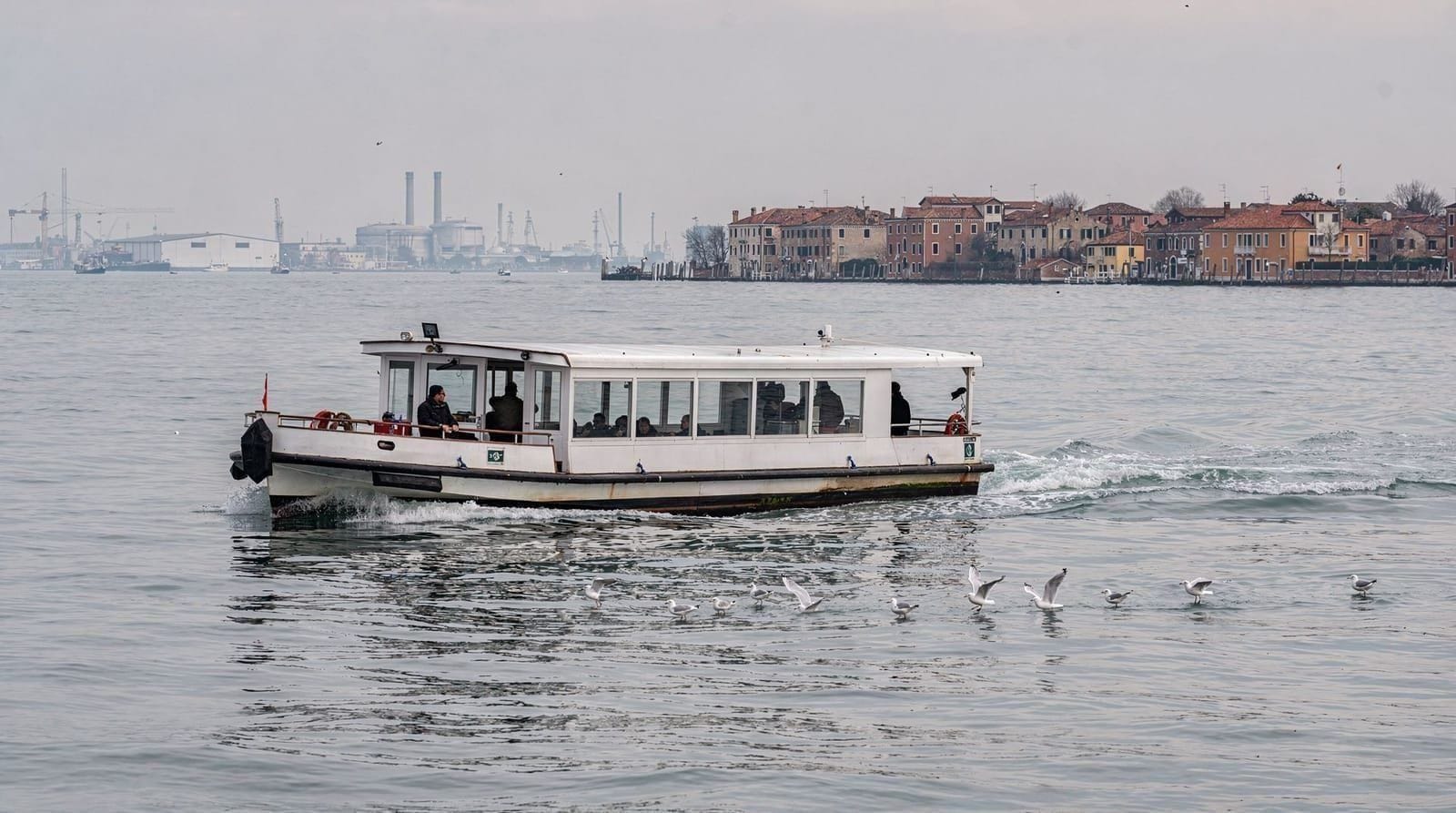
Line 12 from Fondamenta Nuove (Cannaregio): Departs roughly every 30 minutes. Journey time to Burano: approximately 45 minutes. The line passes through Murano (stop at Murano-Faro), across the open northern lagoon, and arrives at Burano’s main landing stage. The lagoon crossing offers views of the marshes, the green islands, and distant mountains on clear days.
Frequency: Line 12 runs regularly during the day but reduces in the evening and stops early. Last boats back to Venice typically depart Burano around 8–9pm; check the ACTV timetable for the current schedule.
Cost: Standard ACTV single ticket €9.50 (valid 75 minutes), or use a vaporetto day pass (24h €25, 48h €35). A day pass is usually better value if you are visiting multiple islands.
See the vaporetto to islands guide for the complete timetable breakdown.
Burano for photography enthusiasts
The Venice photography 3-day itinerary dedicates a morning to Burano, with specific guidance on the best shooting positions. The Burano photography guide covers equipment settings, the best light directions by street, and timing advice for different seasons.
Frequently asked questions about Burano
How many people visit Burano in a day?
On peak summer weekends, several thousand tourists pass through Burano in a single day — a significant crowd for a small island with a permanent population of around 2,500. The main streets can be genuinely congested between 11am and 3pm. This is the primary reason to arrive before 10am.
Is Burano worth visiting in bad weather?
Yes — arguably better than in full sun. The colours are more saturated under grey skies. There are fewer visitors. Rain is rare in summer; in autumn and winter, fog on the lagoon adds atmosphere to the crossing. Bring an umbrella.
Is genuine Burano lace still made?
Yes, but in very small quantities by a small number of ageing makers. The Museo del Merletto sometimes has makers in residence demonstrating the technique. Buying genuine lace directly from a maker or from the museum shop is the surest way to get something authentic.
Can I visit Burano without a guided tour?
Yes — the island is simple to navigate independently. The vaporetto is public transport; the streets are easy to explore. A guided tour adds context about the history and lace tradition, and often includes a demonstration; it is not necessary for the photography and atmosphere.
What is the best time of year to visit Burano?
Spring (April–May) and early autumn (September–October) for the best balance of light, fewer crowds, and mild temperatures. Summer mornings work if you arrive early. Winter is atmospheric on the lagoon but some restaurants close or reduce hours.
How do I tell if lace I’m buying on Burano is real?
Check for a maker’s name and a Merletto di Burano certification tag, and be sceptical of any large piece under €30 — genuine hand-worked needlepoint lace is slow to make and priced accordingly. The Museo del Merletto shop is the most reliable source for authenticated pieces.
Can I visit Burano as a half-day trip and still see Murano too?
Yes, but it is a full morning-to-afternoon commitment, not a quick add-on. A typical combined route is Venice → Murano (short stop) → Burano (2 hours) → return, or Murano → Burano → Torcello for a longer day. See the how to visit Murano and Burano guide for realistic timings.
Top experiences
Bookable activities with verified prices and instant confirmation on GetYourGuide.