Our Venice rainy day plan: indoor options, covered routes, and why rain isn't a disaster
Why rain in Venice is not actually the problem
Most visitors panic slightly when rain is forecast for their Venice days. This is understandable — you have booked the gondola, planned the outdoor walks, imagined the light on the Grand Canal. What you have not accounted for is that Venice in rain is extraordinarily atmospheric, that the city’s architecture was designed for wet weather (the sotoporteghi — covered passageways under buildings — form a partial covered network through much of the historic centre), and that the indoor options in Venice are among the best of any small city in Europe.
| Best indoor option | Accademia gallery or Doge’s Palace |
| Cost per major museum | Around €15–25 |
| Covered walking | Sotoporteghi network, partial |
| Rainy-day fallback | A bacaro, unhurried |
| Season with most rain | November–February |
We visited in November with three consecutive grey days and steady rain for two of them. Those two days included what we still consider the best afternoon of any Venice trip: the Accademia in the morning with almost no queue, then lunch at a bacaro, then a long slow afternoon in the Peggy Guggenheim, then cicchetti and spritz in Dorsoduro while the rain continued and we could not have cared less.
Here is the full rainy-day plan.
The Accademia gallery
The Accademia gallery is the greatest collection of Venetian painting in the world, housed in three connected buildings on the Grand Canal in Dorsoduro. On a dry day in October it has significant queues; on a rainy Tuesday in November it was nearly empty when we arrived. This is the museum where the logic of Venetian art becomes comprehensible — the progression from Bellini through Giorgione, Titian, Veronese, Tintoretto, to the vedutisti Canaletto and Guardi. Allow two to three hours and do not rush through the first rooms, which contain the most important material.
The building itself, a former scuola and convent, is beautiful. The terrace over the Grand Canal is not accessible in rain but the interior rooms have good natural light even on overcast days.
Book online in advance even for rainy days in shoulder season — it is a small effort and avoids any chance of finding it sold out.
Peggy Guggenheim
The Peggy Guggenheim Collection occupies the Palazzo Venier dei Leoni on the Grand Canal, next to the Accademia. It is smaller than the Accademia but arguably more immediately pleasurable — the collection covers the first half of the twentieth century, from Cubism through Abstract Expressionism, and Peggy Guggenheim’s personal tastes make it more eclectic and interesting than a systematic survey would be. Picasso, Braque, Léger, Dalí, Ernst (she was married to him briefly), Pollock, Rothko — the hits are genuine hits.
The sculpture garden is one of the best places in Venice to sit when it is not raining; when it is raining, the interior is more than enough. Café on site, very good gift shop.
The Doge’s Palace: not just for fair weather
The Doge’s Palace is entirely indoors and entirely extraordinary — the rain is irrelevant once you are through the door. If you have not yet done the Secret Itineraries tour (which accesses the prisons, the interrogation rooms, and the administrative corridors above the main rooms), a rainy day is an ideal time to book it. The less-visited upper areas of the palace are cooler and quieter than the main state rooms, and the view from the highest windows onto the Bacino di San Marco in rain, with fog softening the outlines of San Giorgio Maggiore, is one of the photographs that does not come out as expected but that you remember for years.
The sotoporteghi network
Venice was built for rain in ways that most visitors do not notice. The sotoporteghi — covered passages under buildings — are everywhere, and if you learn to navigate via them rather than fighting the weather, you can move through significant parts of the city in reasonable dryness.
The calle between the Frezzeria and the Mercerie, running from San Marco toward the Rialto, is largely covered or easily sheltered. The Sottoportego dei Preti and connected passages through San Marco district. Much of the route through Cannaregio between the Strada Nova and the Fondamenta della Misericordia has covered sections. These do not form a complete indoor route — you will get wet between them — but a good raincoat and knowledge of where the sotoporteghi are will get you further than an umbrella alone.
The getting around Venice guide notes some of these routes.
Bacari in the rain: the actual answer
The honest answer to “what do we do in the rain” is usually “find a bacaro and stay there for a while.” Venice’s bacari — traditional wine bars serving cicchetti — are exactly the right size and character for rain: small enough to feel warm and inhabited, unpretentious enough that spending two hours over a couple of glasses of Soave does not require pretending you are going to order more. The best bacari guide has specific addresses; the clusters in Cannaregio around the Fondamenta degli Ormesini and in San Polo near the Rialto market are the most atmospheric.
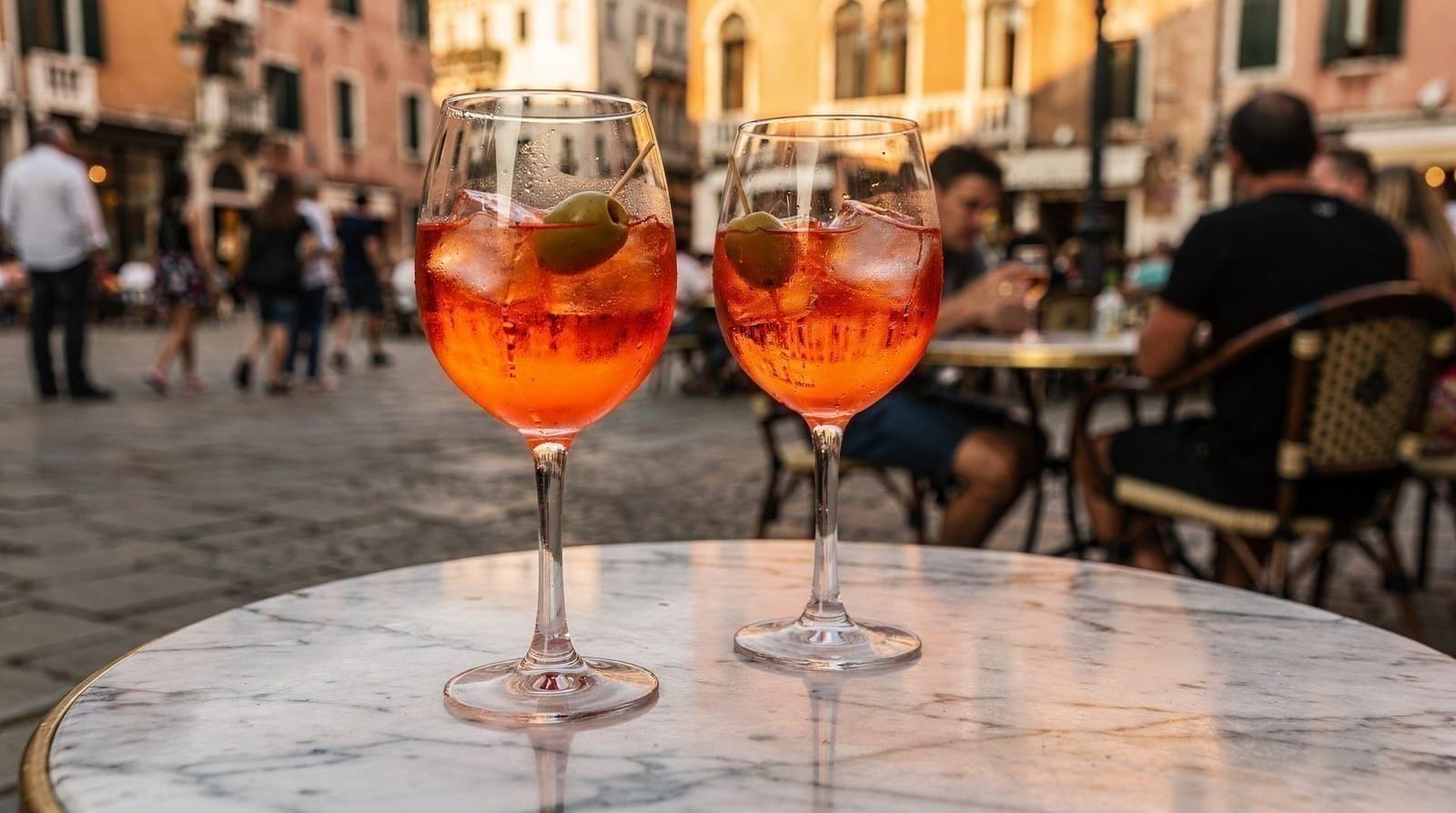
Cicchetti — the small snacks — are part of the experience. Baccalà mantecato on bread, sardine in saor, a polpetta: these are €2-3 each and are genuine food, not bar snacks. The cicchetti guide covers what to order and how. The spritz guide explains the drink that comes alongside.
A note on acqua alta
High water in Venice — acqua alta — occurs most often between October and March and is not quite the same thing as rain. The acqua alta guide explains it thoroughly: it is a tidal phenomenon, usually lasting two to four hours, and the warning comes via sirens and SMS alerts several hours before. The MOSE barrier system, operational since 2020, now prevents the worst events that would previously have flooded San Marco and the lower-lying parts of the city. Minor acqua alta — ankle-deep water on the lowest streets — still occurs and is actually interesting to experience if you have boots.
Passerelle — raised walkways — are deployed on predictable high-water routes. The sight of them in the morning and the community response to tidal water is one of the more authentic Venetian experiences available to visitors. Do not approach it with dread; approach it with waterproof shoes and mild curiosity.
La Fenice opera house
The Teatro La Fenice runs its season in autumn and winter, making it a natural complement to a November or December Venice trip. The opera house — rebuilt after the catastrophic 1996 fire and reopened in 2003, an exact recreation of the previous nineteenth-century interior — is one of the great opera houses in Italy, and performances here are attended with genuine local enthusiasm rather than tourist-performance obligation.
Check the programme at teatrolafenice.it; tickets range from around €25 for restricted-view upper levels to €150-200 for stalls on major nights. Guided tours of the building are available during the day for €14 if you want to see the interior without attending a performance.
The Correr Museum and the Campanile
Two more indoor options worth knowing about:
The Museo Correr, occupying a large wing of the Procuratie Nuove on Piazza San Marco, is systematically undervisited because it is in the shadow of the Doge’s Palace and lacks the same dramatic reputation. This is undeserved. The collection covers Venetian history and decorative arts comprehensively — maps, coins, paintings, sculpture, and one of the best views of the piazza available from any museum window. The entry is included with the Doge’s Palace ticket, so if you have that, there is no additional cost.
The San Marco Campanile in the rain is actually slightly better than in sun, counterintuitively. The clouds and fog create atmosphere rather than eliminating view — instead of a sharp distant horizon, you get the city materialising out of grey, which is a different but equally striking perspective. If the weather is only light rain rather than downpour, the covered viewing gallery at the top is reasonably protected. The San Marco Campanile guide covers the access details.
What to do if the rain is heavy and continuous
Sometimes the rain in Venice is not dramatic or photogenic — it is simply heavy, cold, and continuous, and the sotoporteghi do not help. On those days, the honest recommendation is: find the largest, most comfortable bacaro or wine bar you can, order a spritz or a glass of Veneto red, and accept that this particular hour is not for sightseeing.
Venice is full of places where this kind of weather-induced pause is not only acceptable but natural: the kind of bacaro where the proprietor refills your glass without being asked, where the television in the corner is showing football at low volume, where the cicchetti are replenished mid-afternoon. These places are the city’s real infrastructure, and finding one on a rainy afternoon and staying too long is one of the legitimate Venice experiences that no guidebook can actually prescribe for you.
The best bacari guide has names. The principle is to get away from the tourist concentrations near San Marco and find something in the back streets of Cannaregio or the residential parts of Dorsoduro or Santa Croce. The food at these places is better, the prices are lower, and the experience of sitting out a Venetian rainstorm with locals is worth more than most museums.
The weather perspective
Venice is not a city that apologises for weather. The winter — November through February — has fog, rain, cold, and occasional acqua alta, and it also has half the tourist load, 30-40% lower hotel prices, and a pace that is entirely different from the exhausting August crush. Some of the best photographs of Venice have been taken in flat grey November light, which removes the postcard gloss and reveals the actual city.
The Venice in winter guide makes the full case for the winter visit. The rainy day plan above applies year-round — there is no month in Venice where a wet day cannot be a good one.
Indoor options ranked for a rainy day
| Option | Cost | Time needed | Best for |
|---|---|---|---|
| Accademia gallery | Around €15 | 2–3 hours | Venetian painting, quiet on wet days |
| Doge’s Palace | Around €25–30 | 2–3 hours | Grand interiors, Secret Itineraries option |
| Peggy Guggenheim | Around €16 | 1–2 hours | Modern art, smaller and faster |
| Correr Museum | Included with Doge’s Palace | 1 hour | Overlooked, great piazza views |
| A bacaro | Around €10–15 | Open-ended | When you’d rather stop sightseeing |
For churches specifically, several of Venice’s finest interiors — including some covered by the Chorus Pass — are a good rainy-day complement to the major museums; the Venice churches guide has the details.
Accademia gallery guided tour with an art expertFAQ
Is Venice worth visiting if the forecast is all rain? Yes. Venice has enough high-quality indoor options — the Accademia, Doge’s Palace, Peggy Guggenheim, La Fenice, several major churches — to fill multiple full days without ever needing clear skies, and rain often means shorter queues.
What should I pack for a rainy Venice day? A proper raincoat rather than just an umbrella (calli are narrow and windy), waterproof shoes for any minor acqua alta, and a dry bag for camera gear if you’re photographing. The what to pack guide has the fuller seasonal list.