Vaporetto vs walking in Venice: how we actually decide
| Walking | Free, best for the historic centre and calli |
| Vaporetto | €9.50 single / €25-45 for 24-72hr pass |
| Islands | Vaporetto only — Murano, Burano, Torcello, Lido |
| Traghetto | €2, sixty-second Grand Canal crossing |
| Rule of thumb | Walk within a sestiere, boat between islands or when exhausted |
The question everyone asks
Venice is a tiny city. The historic centre is about four kilometres from west to east. You can walk across it, if you know the route and do not stop, in forty-five minutes. You can also take a vaporetto, the water bus system that runs on the main canals and across the lagoon, for €9.50 a single trip or €25 for twenty-four hours.
The honest answer to “vaporetto or walking” is that it depends almost entirely on what you are trying to do, and that most visitors get it wrong in the same direction: they take the vaporetto more than they should on the Grand Canal routes and walk less than they should through the back calli.
Why walking is better most of the time
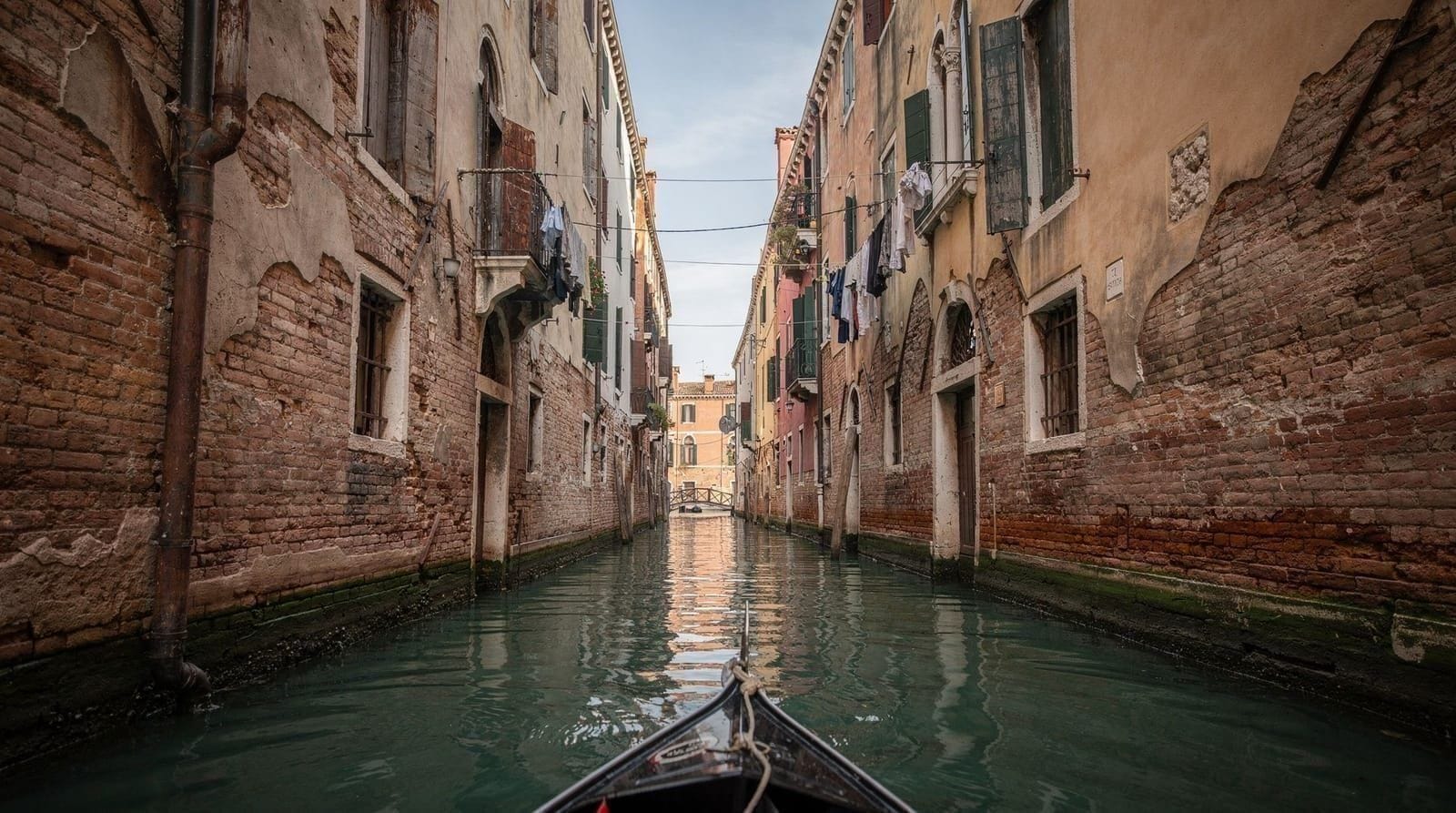
Venice reveals itself on foot. The calli — the alleyways that form the city’s real circulatory system — are where you actually encounter the place: the narrow passages that open suddenly into campi, the bridges that give you views down quiet rios, the courtyards that are not on any map. None of this is accessible by boat. You cannot take a vaporetto through the heart of Cannaregio or across the back of Castello. You can only walk.
The distances are also shorter than they appear. The straight-line distance from the train station (Ferrovia) to San Marco is about 2.5 kilometres. On foot, following the Strada Nova through Cannaregio, it takes about thirty minutes — or forty if you stop to look at things, which you will. By vaporetto on line 1, stopping at every station along the Grand Canal, it takes about forty minutes. Walking is faster and considerably more interesting.
The mental map of Venice also develops far more rapidly on foot than by boat. After one day of walking, you understand where things are. After one day of taking vaporettos, you still do not know where anything is because the Grand Canal is not a spatial guide to the city — it is a loop around the outside, and the interior remains a mystery until you walk through it.
The getting around Venice guide makes this case in more detail; the Venice orientation map guide is useful for understanding the spatial logic before you arrive.
When the vaporetto is genuinely essential
There are specific situations where the vaporetto is not a luxury but a necessity:
The islands. Murano, Burano, Torcello, Lido di Venezia are not accessible on foot. The lagoon requires a boat. Full stop. The vaporetto to islands guide covers the routes and schedules.
The full Grand Canal trip. Once, at a slow hour, on line 1 from end to end, sitting at the front or on the side deck: this is worth doing as an experience in itself. The Grand Canal from water level is a different Venice from any other angle — the palazzi, the loading bays, the churches glimpsed at intersections. Not as transport, but as the thing itself.
Crossing to Giudecca or San Giorgio. Short hop vaporettos that cross the Giudecca canal or reach San Giorgio Maggiore — you cannot do these by bridge.
When you are exhausted. Three days of walking on Venice’s stone calli and stepping over dozens of bridge steps is hard on the legs. There is no shame in taking the vaporetto from San Marco to the station on your last day when your feet have had enough. The Venice with mobility issues guide covers the case where the vaporetto is not optional.
Heavy luggage. Pulling a wheeled suitcase up and over Venice’s bridge steps is possible but unpleasant. The luggage in Venice guide covers the logistics; for arriving and departing, the vaporetto is much easier with bags.
The pass question
The 24-hour pass (€25), 48-hour (€35), and 72-hour (€45) ACTV passes make the economics of vaporetto use much more favourable. If you are doing any island trips at all, the 48- or 72-hour pass almost certainly pays for itself. The vaporetto guide has a full cost breakdown.
The pass does not increase the amount of the city you see — that is done by walking — but it removes the per-trip calculation and makes the vaporetto feel like public infrastructure rather than an expensive taxi. With the pass in pocket, taking a line 2 Express across the Grand Canal for a six-minute ride to save twenty minutes of walking on a rainy evening feels entirely rational.
The water taxi question
Water taxis — private boats hired by destination rather than by route — are fast and expensive. A water taxi from Marco Polo Airport to a central Venice hotel costs €120-150 for the private taxi or €35 per person for a shared service. Within the city, a water taxi from one point to another costs €50-80. We take one once per trip for the pleasure of it, usually on arrival or departure, and consider it a luxury rather than routine transport.
The water taxi guide and the comparison of water taxi vs vaporetto cover the full picture.
The traghetto (and why everyone should use it)
There are gondola crossings of the Grand Canal — traghetti — at six points between the station and San Marco. These are gondolas shared with whoever else is crossing, fare €2, journey approximately sixty seconds. They are used primarily by Venetian residents crossing the canal where there is no bridge.
Standing in a gondola for sixty seconds as a Venetian gondolier crosses the Grand Canal is, paradoxically, a more authentic gondola experience than the standard tourist gondola ride — not because it is secret (it is in every guidebook) but because it is functional. People cross for a reason. The gondolier is doing his daily route. You are briefly part of the rhythm of the city. The gondola vs traghetto guide explains the locations and operating hours; some traghetti no longer operate or have reduced schedules.
The walking routes worth knowing
Walking in Venice improves dramatically if you know two or three reliable routes before you arrive and trust them as anchors while you explore off them.
Ferrovia to San Marco (via Cannaregio and San Polo). The standard route following the Strada Nova through Cannaregio, crossing the Rialto Bridge, and continuing through San Polo and San Marco. About thirty minutes without stops, an hour with them. This is the most interesting route from the station and teaches you the basic geography of the northern half of the island.
Rialto to Accademia (via San Polo and Dorsoduro). Crossing back over the Rialto and heading south through San Polo and into Dorsoduro. About twenty-five minutes. The back alleys of San Polo are among the least tourist-crowded passages in Venice, and the transition into Dorsoduro, with its campo Santa Margherita and university atmosphere, is one of the pleasanter neighbourhood changes in the city.
Cannaregio eastward. Following the Fondamenta degli Ormesini and then the Fondamenta della Sensa eastward from the Guglie bridge toward the Fondamente Nove: about twenty minutes of the most genuinely residential Venice available to a casual walker. This is where locals do their shopping, where the bars are for residents rather than tourists, and where the canal-side walking is at its most intimate.
The hidden Venice tour guide covers the less-known routes in more detail; the self-guided Venice guide gives a complete framework for independent walking days.
What first-time visitors usually get wrong
The most common mistake: following the yellow signs everywhere. Venice has a system of yellow direction signs pointing toward San Marco, Rialto, Ferrovia, and Piazzale Roma. These signs exist and are useful — they will get you where you need to go — but they follow the most touristed routes, which are also the most crowded and the least interesting.
The second most common mistake: treating the Grand Canal as a walking route. It is not. There are only three bridges across the Grand Canal (Scalzi near the station, Rialto, Accademia) — it is a barrier rather than a corridor. The actual city is on either side of it.
The best habit: pick a destination, look at the map, find a plausible route through the interior of whichever sestiere you are crossing, and walk it. You will get slightly lost, which is fine. Venice is small enough and bounded by water on all sides that you cannot lose yourself irretrievably. The getting-lost is part of the point.
Our actual daily rhythm
When we are in Venice, the pattern looks like this: arrive somewhere by walking through the back calli — the direct route by foot, not the tourist route along San Marco and the Grand Canal. Take the vaporetto when heading to islands or when going somewhere too distant or too heavy to walk. Take a traghetto once per day for the experience of it. Walk back from wherever we end because the evening calli in Venice, especially in the less-visited sestieri, are one of the best things about the city.
The first time in Venice guide has a practical orientation section for first-time visitors who are figuring out the spatial logic; the how many days in Venice guide places all of this in the context of how much time you actually need.
Walking vs vaporetto by situation
| Situation | Better choice |
|---|---|
| Crossing within one sestiere | Walking |
| Ferrovia to San Marco | Either — walking is faster and more interesting |
| Reaching Murano, Burano, Torcello, Lido | Vaporetto (only option) |
| Heavy luggage, arrival/departure | Vaporetto or water taxi |
| Grand Canal as an experience | Vaporetto line 1, off-peak |
| Legs tired on day three | Vaporetto |
A note for shorter stays
If you only have one or two days in Venice, the calculation shifts slightly toward walking more than this post generally recommends, simply because the islands take a half-day each and you may not have the time to spare. A single vaporetto pass covering the Grand Canal experience and one island — most likely Murano or Burano — is usually enough; spend the rest of your limited hours on foot in San Marco, Cannaregio, and Dorsoduro, which is where a short trip’s memorable moments tend to happen anyway.
FAQ
Is it better to walk or take the vaporetto in Venice? Walking wins for most of the historic centre — it’s often faster than the vaporetto once you count waiting and stops, and it’s the only way to see the calli. The vaporetto is essential for the lagoon islands, heavy luggage, or when you’re too tired to walk further.
Do I need a vaporetto pass if I’m only in Venice for two days? Usually yes if you plan to visit even one island — a 24 or 48-hour pass covers that plus a few Grand Canal rides and is cheaper than buying single €9.50 tickets for each trip.