Romantic Venice on a budget: what we did for under €80 a day each
| Where | Central Venice, based near Dorsoduro |
| Cost | Around €75-80 per person per day, all-in |
| Time needed | Three days minimum, longer is better |
| Getting there | Standard Venice arrival, budget for a 72-hour ACTV pass |
| Best time | February, outside Carnival dates |
February, fog, and the best version of Venice
We arrived on a Tuesday in early February and the city was half-empty. Not the melancholy kind of empty, but the quietly extraordinary kind: the one where you walk across the Rialto Bridge at 8h15 and there are four other people on it, all of them residents going to work. The light was flat and grey, the water almost still, and we had the most romantic three days in Venice either of us has had — at a total cost of roughly €75 per person per day, including accommodation.
The romantic Venice of postcards — candlelit gondola rides, Bellinis at Harry’s Bar, a suite overlooking the Grand Canal — exists and is lovely and costs a great deal of money. This is not that version. This is the version where you eat standing up at a bacaro and find it more intimate than any restaurant table, where you get lost in Cannaregio for an afternoon because you stop to watch a cat and then follow a calle you have never seen on a map, where the fog comes down in the evening and suddenly you are the only two people in the world on a narrow fondamenta lit by a single lamp.
The honest budget breakdown
We spent three nights in a small private room in a guesthouse near Dorsoduro, booked about three weeks ahead. Rate: €95 per night for two, so €47.50 each. This is on the lower end for Venice but February is genuinely the cheapest month — the best time to visit Venice guide confirms hotel rates drop 30-40% between November and February compared to summer. We had our own bathroom and a very good breakfast included.
Daily food budget: roughly €18-20 per person. This is completely achievable if you eat the way locals eat, which also happens to be more enjoyable. Breakfast at the guesthouse. Lunch at a bacaro: two or three cicchetti (€2-3 each), a glass of house white (€2-3). Dinner at a trattoria away from the tourist centres: primi and secondi, a carafe of local wine, €25-30 for two. The best bacari guide and the cicchetti guide are both worth reading before you go.
Transport: the 72-hour vaporetto pass at €45 each was our single largest discretionary expense and worth every cent. We used it constantly. The vaporetto guide explains the pass options in detail. We also walked most of the time, which is free and often better.
Attractions: we chose our two or three priorities and skipped the rest. If you are trying to see everything in Venice, budget either explodes or you are exhausted. We chose one major attraction each day — the Accademia gallery, the Doge’s Palace on our third morning — and spent the rest of the time wandering. The free things to do in Venice guide has a solid list of what costs nothing.
What is actually romantic for free
Walking in fog. This sounds like a joke but it is genuinely true. Venice in winter fog — nebbia — becomes something extraordinary. The outlines of palazzi soften, the canals reflect only greyness and a faint glow from windows, sounds travel oddly. We walked back from a bacaro in Cannaregio one evening through thick fog and it was one of the best hours of the trip. You cannot plan it; it either comes or it doesn’t.
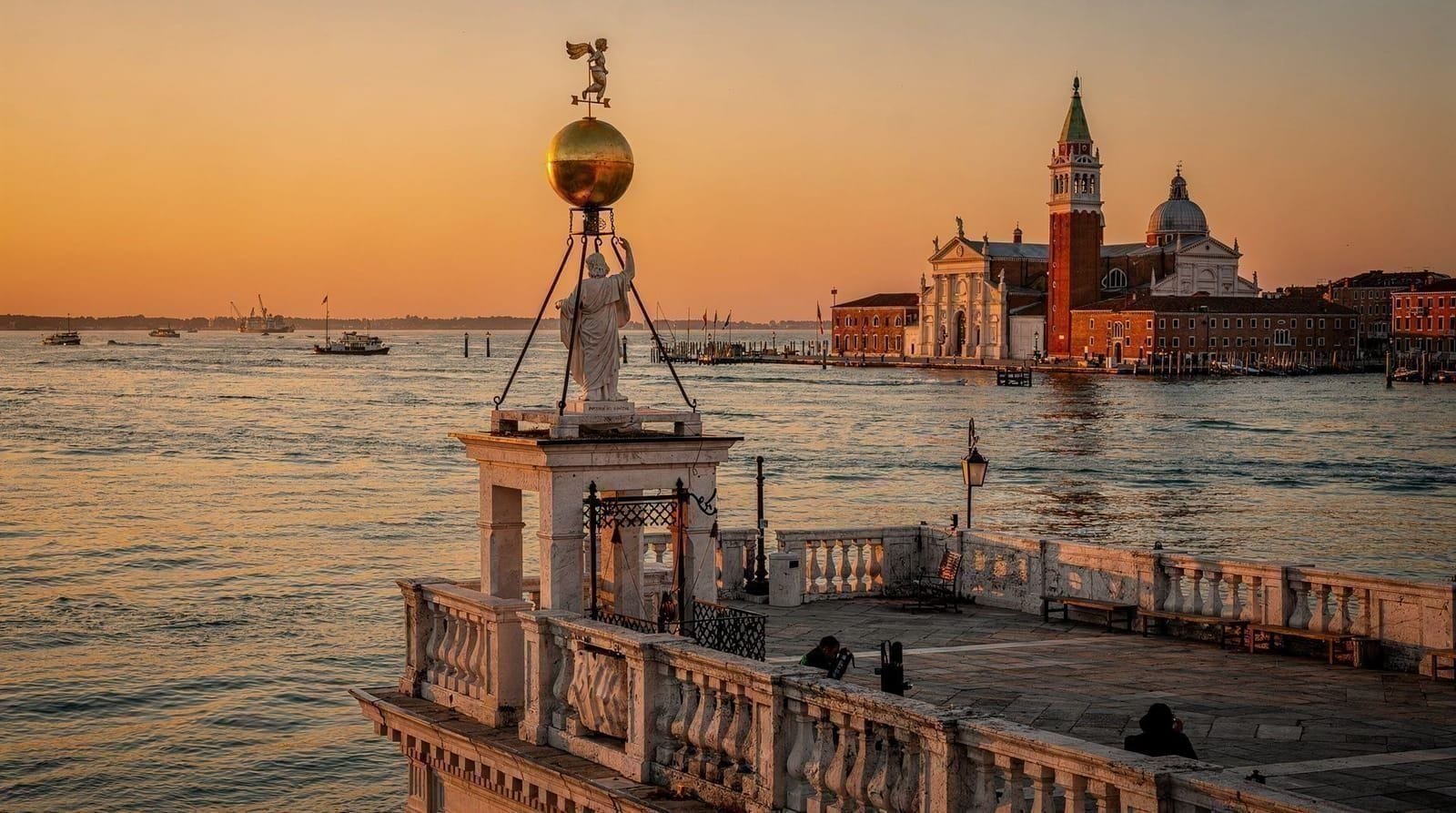
Watching the light change on the water from somewhere with a good view and nowhere to be. We found a bench on the Zattere embankment in Dorsoduro one afternoon, drank cheap coffee from a thermos, and watched the light change over the Giudecca canal for an hour. This cost nothing and was more romantic, in the way that actually matters, than most expensive experiences I can think of.
Getting lost deliberately. Take a map, put it away, and walk into the less-frequented parts of Castello or Santa Croce and just see what you find. We found a small campo with a well in the middle and a single elderly man selling grilled chestnuts. We bought some, ate them on the well, talked. That was February in Venice.
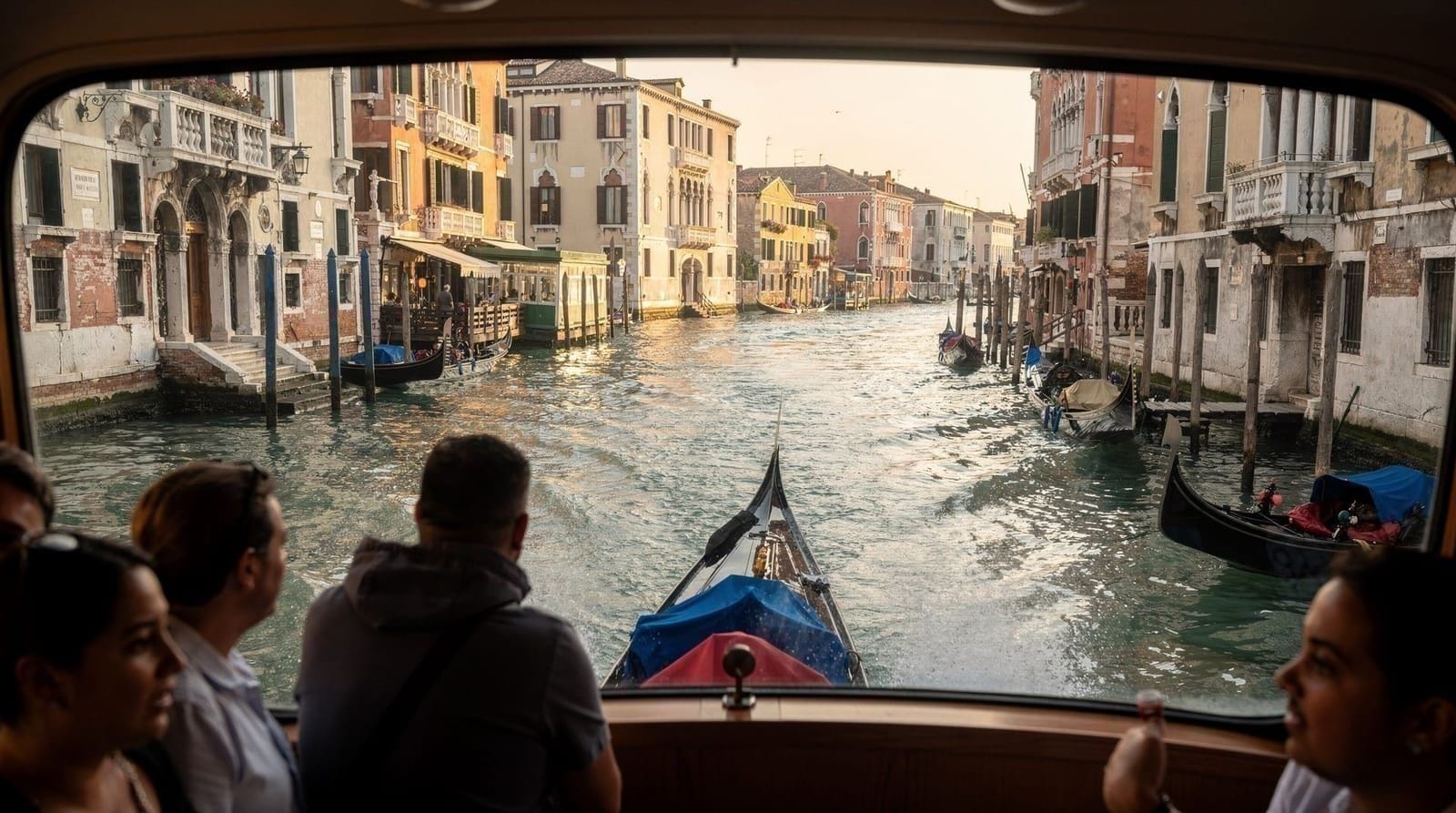
The traghetto. For €2 each you can cross the Grand Canal on a standing gondola — a traghetto — alongside commuting Venetians. It is a thirty-second crossing and completely wonderful. The gondola vs traghetto guide explains where to find them. It is also, practically, the most authentic gondola experience available at any price.
What we spent money on
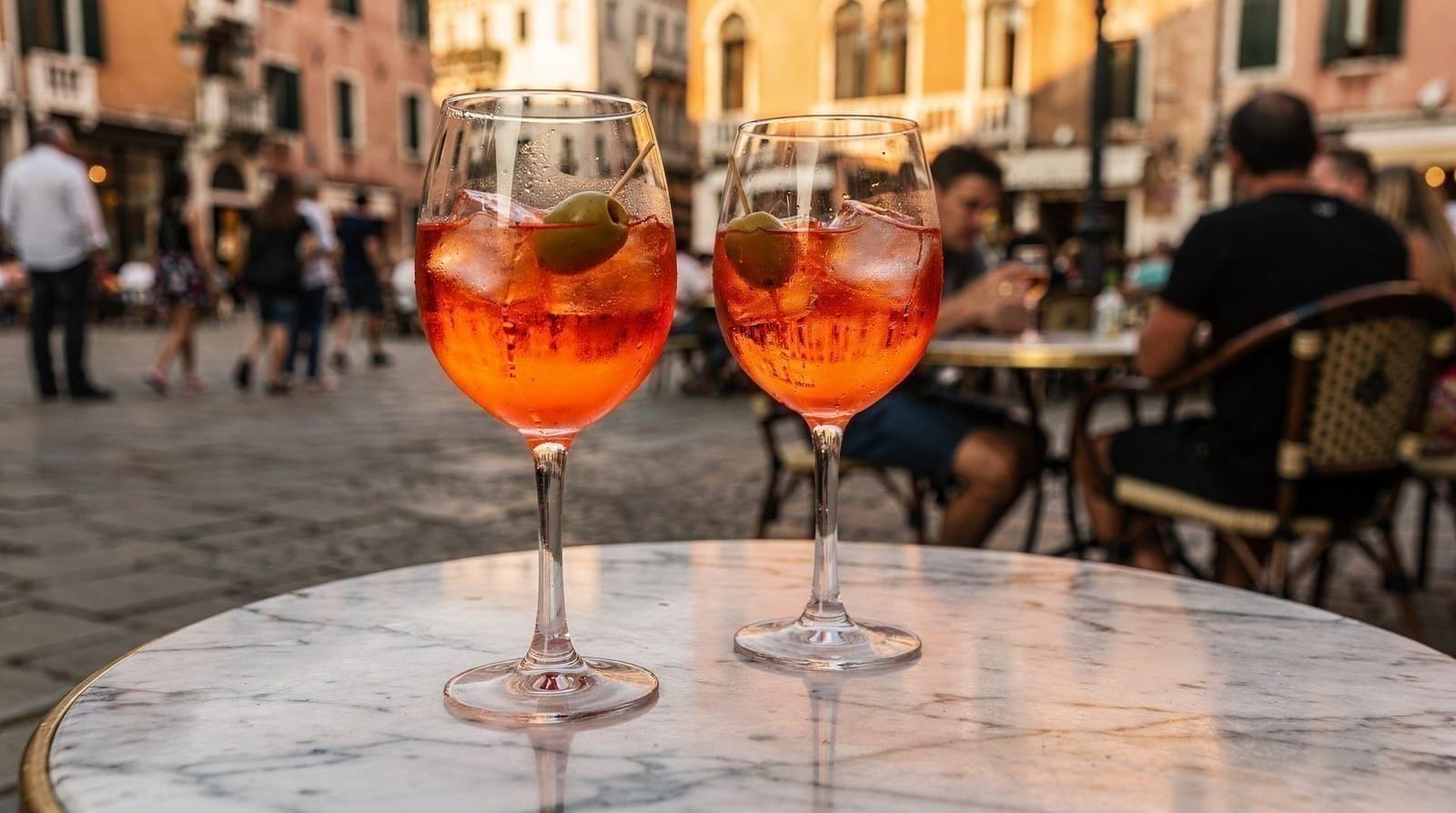
One thing: a spritz each at a canal-side bar in San Polo just before sunset. About €5 each. This is a legitimate small luxury — Aperol spritz is the natural aperitivo of Venice and drinking one while watching vaporettos pass on a late afternoon in February is entirely worth the cost. The Venetian spritz history post explains why this drink is genuinely local and not a tourist invention.
We also took a vaporetto to Torcello on our second day, which cost nothing beyond the pass we already had. The island in winter is almost entirely empty — perhaps a dozen other visitors when we were there — and the walk from the vaporetto stop to the cathedral, along a narrow path between bare vines with a flat grey lagoon on either side, was oddly moving. The Torcello post covers the island in detail if you are considering it.
What we skipped
The gondola. I want to be clear that we skipped it deliberately, not reluctantly. The romantic gondola of imagination — drifting through quiet canals at dusk, alone, with a serenade — is available but costs €100-120 for forty minutes in the evening. That is a completely legitimate thing to spend money on if it matters to you. It did not matter to us more than the other things we did with that €200, which included an extremely good dinner on our last night.
The big restaurants near San Marco. Everything the Venice tourist traps guide warns you about is accurate. The coperto alone at some of these places is more than a cicchetti lunch at a bacaro. We ate near San Marco once, lunch, deliberately choosing a place on a back calle rather than the main piazzetta, and it was fine rather than memorable.
Specific places that worked
A trattoria near San Polo where neither of us knew the name and we found it by following someone who looked like they were going somewhere specific. Cuttlefish in its ink, a bigoli in salsa, a litre of house Soave: €36 for two.
A bacaro on the Fondamenta della Misericordia in Cannaregio — I will not name it because the appeal is partly in the finding — that had excellent baccalà mantecato and a house Friulano at €2.50 a glass.
Breakfast at the guesthouse, which included pastries, yogurt, and a very good espresso. We lingered every morning.
What February offers that summer cannot
The budget case for February is clear. The romantic case is more specific.
Summer Venice — June through August — is extraordinary to look at and genuinely difficult to be in. The temperatures are high, the crowds are extreme at the major sights, and the heat amplifies the smell of the canals in a way that is characteristic rather than unpleasant but is certainly present. The atmosphere of a city overwhelmed with its own visitors is not romantic, however beautiful the backdrop.
February Venice is the opposite problem managed better: the city is cool, occasionally foggy, and populated at a scale where it feels inhabited rather than overwhelmed. The people walking past you in the calli are mostly residents or a small number of visitors who have chosen the same off-season gamble. The restaurants are quieter. The museums have no queues. The bacari at 18h are full of the neighbourhood rather than tour groups.
The specific romantic quality of February is harder to articulate than “cheaper and quieter.” It has something to do with the intimacy of a city that is not performing for you. Venice in August knows it is being watched; Venice in February has largely forgotten. Walking across the Rialto Bridge at 7h30 in February with nobody else on it is a form of Venice that most visitors never encounter, and it produces a different kind of attachment to the place.
A note on the Carnival timing
Venice Carnival 2026 runs from 31 January to 17 February (2027 dates: 30 January to 9 February). If your February trip overlaps with Carnival, the dynamic changes significantly: the city fills with visitors in costume, there are events in the main piazzas, and the atmosphere is festive rather than quiet.
Carnival is wonderful but it is not the same as the February quiet I have been describing. If you want the winter quiet and budget rates, choose dates after Carnival ends or before it begins. If you want Carnival itself — the masks, the music, the theatrical atmosphere — the carnival guide covers it in detail, and the couples itinerary tips has specific romantic recommendations within the Carnival period.
What to pack
February in Venice: the average high is around 8-10°C, the lows around 2-4°C. It rains with moderate frequency. The wind off the lagoon is real and can make the waterfront embankments very cold. You need: a genuinely warm coat, waterproof shoes (not just water-resistant — Venice pavements stay wet), layers that can be removed in heated interiors, and small umbrellas that can fit in a bag rather than the enormous ones that are impossible to navigate in narrow calli.
Acqua alta is possible in February — not inevitable, but the season runs October through March. The acqua alta guide covers what to do, and the short answer is: bring rubber-soled waterproof boots or be prepared to buy cheap disposable boot covers from the vendors who appear instantly whenever the water rises.
The overall verdict
Venice in February on €75-80 per person per day is not a compromise version of a romantic trip. It is in many ways the best version — fewer people, better light, lower prices, a city that feels like it belongs to itself rather than to tourism. The Venice in winter guide makes this case comprehensively, and I think it is right.
If you are planning a romantic trip on a limited budget, I would say: go in late January or early February, book accommodation with a good breakfast, get the vaporetto pass, eat the way locals eat, and plan at least one afternoon with no agenda at all. The city will do the rest. It is very good at this.
Plan your routes with the Venice on a budget itinerary if you want a three-day framework — the days are structured around exactly this kind of experience.
Budget by category
| Category | Daily cost per person |
|---|---|
| Accommodation (shared room) | €40-50 |
| Food (bacaro lunch, trattoria dinner) | €18-22 |
| Transport (72hr pass, prorated) | €15 |
| Extras (one attraction, one spritz) | €5-10 |
| Total | €75-90 |
A note on shoulder-season alternatives
If February’s fog and chill don’t appeal but you still want the low-crowd, low-price version of Venice, late November or early March offer a milder middle ground — hotel rates are still discounted compared to summer, though not quite as low as deep February, and the weather is less likely to mean full waterproof gear every day. Acqua alta season overlaps with both windows, so pack accordingly regardless of which shoulder month you choose; our acqua alta diary covers what an actual flood day looks like if you want to know what you might be dealing with.
Where this budget breaks down
Two things push this budget higher without warning if you’re not careful. The first is restaurants near San Marco — even a modest-looking place there can be double the price of the same meal in Santa Croce or San Polo, and the restaurant traps near San Marco are worth reading before you sit down anywhere with a photo menu. The second is impulse attractions — a gondola ride booked on the spot, an extra museum you hadn’t planned for. Neither is a mistake exactly, but both should be a deliberate choice rather than something that happens to your budget by accident. The money-saving tips guide has the fuller checklist.
FAQ
Is Venice actually affordable for a romantic trip? Yes, particularly in the shoulder and winter months. Eating at bacari instead of tourist-menu restaurants, using a multi-day vaporetto pass, and skipping the private gondola ride can bring a couple’s daily cost to around €75-80 per person including accommodation.
Is February too cold for a romantic Venice trip? Not really — average highs sit around 8-10°C, which is comfortable with a warm coat and waterproof shoes. Many visitors find the quieter, foggier atmosphere more romantic than the crowded summer months, and hotel rates drop 30-40% compared to peak season.