Hidden canals by boat: what we saw when we left the Grand Canal behind
An October afternoon, and nobody else on the water
It was mid-October when we finally did it — hired a small electric boat and set off through the canals that don’t appear on the fridge-magnet maps. Our guide was a Venetian in his late thirties named Marco, and within five minutes of leaving the landing stage near Cannaregio he had pointed out a palazzo that had been in his family’s neighbourhood for four centuries. A palazzo with laundry strung between its chimneys, a cat watching us from a first-floor ledge, and not another tourist in sight.
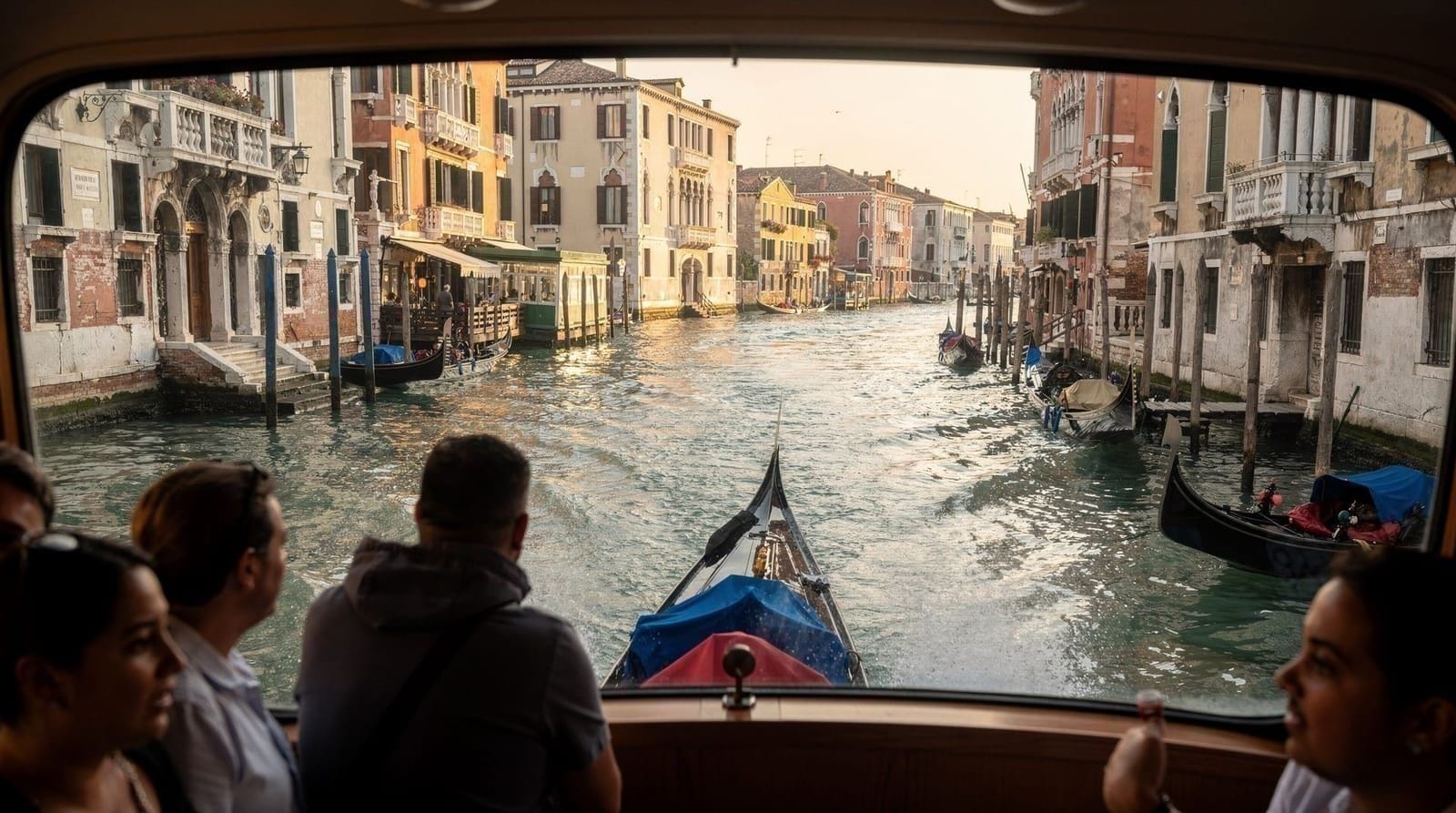
That is what the hidden canal experience really offers: not necessarily secret history (most of it is findable with a good guidebook), but physical quietude. The rio — the smaller waterways that thread between the calli — are narrow enough that two boats can barely pass, calm enough that you can hear the water slap the mossy foundation stones, and empty enough in October that you can stop mid-canal and just listen.
| Where | Rii of Cannaregio, Dorsoduro and Castello, off the Grand Canal |
| Cost | Small-group electric boat tour, around €60–90 per person |
| Time needed | About 2.5 hours for a proper loop |
| Getting there | Landing stages near Cannaregio, San Polo or Fondamenta Nuove |
| Best time | Late afternoon, October or May, book a week+ ahead in summer |
Why the Grand Canal is worth leaving
I want to be honest here. The Grand Canal is magnificent. Riding Vaporetto line 1 from Piazzale Roma to San Marco with a window seat is one of the great urban journeys in Europe. But it is also shared with hundreds of other passengers, water taxis, delivery barges, and the constant wash of their wake. By mid-morning in summer, it feels like the A1 motorway at a bank holiday.
The smaller canals — Rio della Misericordia, Rio dei Santi Apostoli, the labyrinth of waterways east of Castello — are a different Venice. They are the Venice that residents actually use: gondoliers washing their boats, delivery men heaving crates of produce onto stone steps, a couple arguing in Venetian dialect through an open window three floors up. You become briefly part of the texture of the city rather than a spectator of its highlights.
What an electric boat tour actually involves
We booked a small-group tour through GetYourGuide using an electric boat — genuinely silent, no fumes — with a maximum of six passengers. I would strongly recommend keeping numbers low; I have heard of similar tours with ten or twelve people crammed onto a single vessel, which defeats the intimacy entirely. The hidden canals electric boat tour we took ran about two and a half hours, covered roughly four sestieri, and included a stop in a very quiet corner of Dorsoduro for a Prosecco.
The guide navigated under low bridges we would never have found on foot — you duck your head slightly as the arch grazes the air above you — and pointed out the backstage infrastructure of Venice: the rubbish barges that collect waste every morning, the fire-brigade boats moored at their stations, the way building foundations are driven into wooden piles that have hardened over centuries in the oxygen-deprived mud.
The canals nobody talks about
The Rio di San Barnaba, in Dorsoduro, is the kind of canal that used to appear in every coffee-table book about Venice but has since been overshadowed by more photogenic spots. It is quieter for it. A floating vegetable barge still moors here on certain mornings, and the light in late afternoon comes in at an angle that turns the water a deep, shifting green.
Rio della Sensa in Cannaregio, running roughly parallel to the Fondamenta della Misericordia, sees almost no tourist boat traffic at all. Walk or drift along it and you will understand why Venetians who work in the hospitality industry say they come here to remember what their city is actually like.
East of San Marco, the Rio di Palazzo carries water beneath the Bridge of Sighs from behind — the view that photographs have never quite captured because almost everyone sees the bridge from the canal in front. From a small boat at the right angle, you can look directly up at it.
Practical notes
Time of year matters more than you might expect. October was ideal for us: the summer crush has thinned, temperatures are mild, and the golden-hour light lasts well into the evening. November can bring acqua alta, which actually makes certain lower-lying rios briefly impassable even for small craft. If you are coming in November or December, check weather forecasts and confirm with your operator. The acqua alta guide has the full picture on what to expect and how to prepare.
Morning versus evening. Morning light is colder and cleaner; the canals are also busier with delivery traffic until around 10h. From about 16h onward, the delivery rush fades and the light turns golden. We took a late-afternoon slot deliberately, and the last thirty minutes — drifting back toward the Grand Canal as the sun dropped behind the buildings — were genuinely beautiful.
What to look for. Watch the waterlines on buildings: the dark stain roughly half a metre up from the water marks the high acqua alta zone. Above it, pale plaster and painted shutters; below, a permanent tide-mark. It is one of the subtler signs that this city fights the water every single year, not as a dramatic emergency but as a way of life.
Booking logistics. Tours fill quickly in September and October. Book at least a few days ahead, and if you are travelling as a couple, consider whether a private tour is worth the premium — we took shared and enjoyed the company of the other guests, but a private boat gives you complete control over the pace and route.
Comparing it to other boat experiences
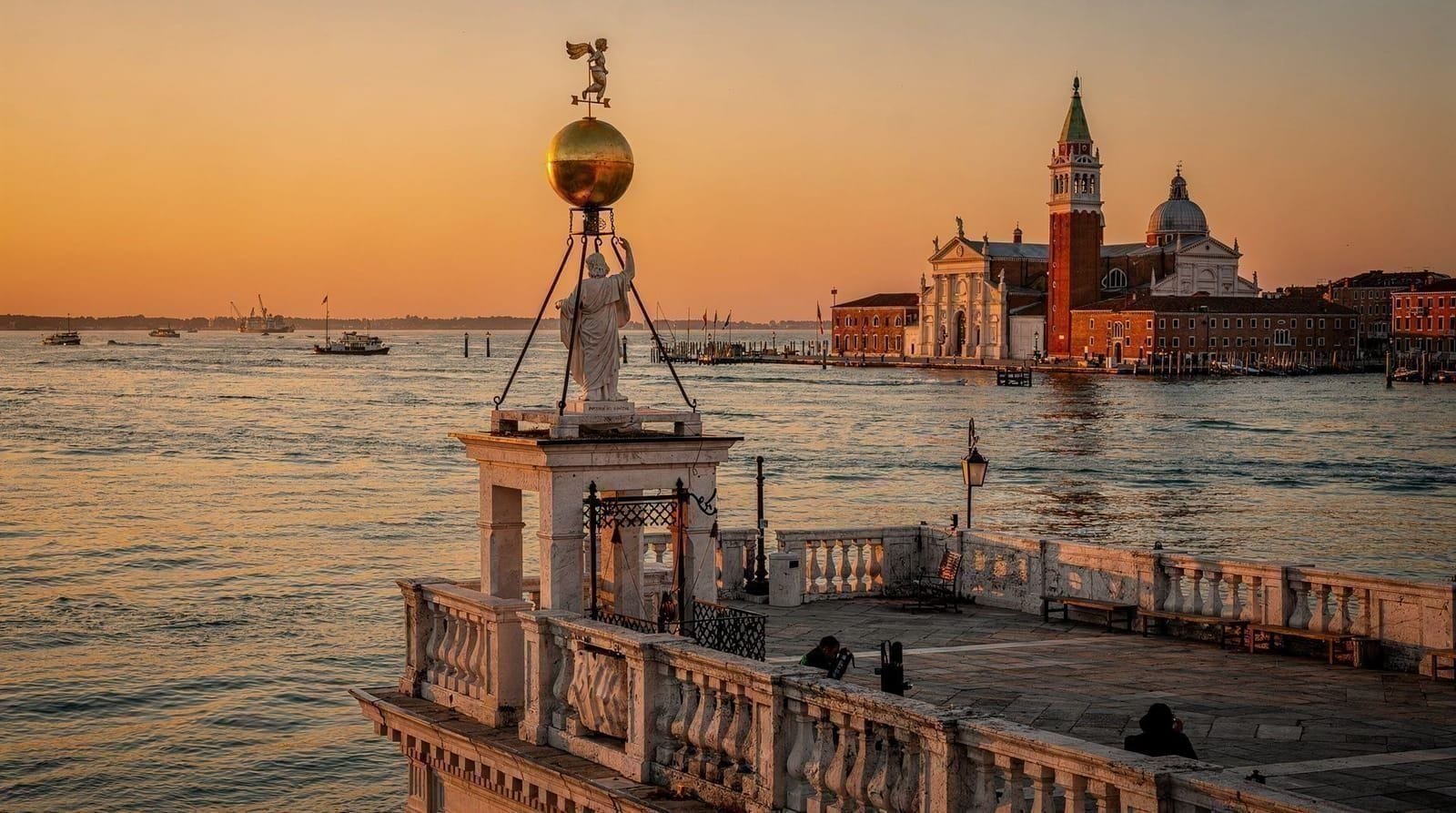
We have also tried the grand canal by boat on a traditional wooden sandolo, which was lovely but followed the main artery rather than the back streets. The sunset lagoon cruise is a different animal entirely — it takes you out into the open water toward Murano and San Giorgio rather than through the city’s veins.
For sheer intimacy with how Venice actually works, the small-canal electric boat wins. The private boat tour guide has good advice on how to choose between these options depending on your priorities.
What surprised us most
Honestly? How many Venetians we saw. Not performing Venetian-ness for tourists, but simply going about their lives: an elderly woman lowering a basket on a rope to collect her groceries from a delivery man in a small boat below, two boys on a fondamenta skipping stones, a pair of nuns walking briskly along a calle above a canal, apparently unmoved by the six tourists floating past below them. We were in the city for the fourth time, and this was the first time it felt less like a museum and more like a place.
If you have done the major islands already, have walked the sestieri at least once, and are wondering what to do with a free afternoon, this is our answer. Two and a half hours, mostly in silence, in the parts of Venice that belong to Venice.
Planning the practicalities
Booking. Small-group electric boat tours of the hidden canals book out in advance, particularly from late March through October. A week ahead is usually sufficient in November; three to four weeks in July and August. We used GetYourGuide for the booking but you can also find operators directly at Fondamenta Nuove and near the main landing stages in Cannaregio and San Polo.
What to bring. Layers, even in summer — the canals are in shade for much of the day and the boat moves slowly but the water amplifies any breeze. A camera with something other than a phone if you care about the low-light photography under bridge arches; the contrast between the dark canal interior and the bright sky above makes phone cameras struggle. Water, which is rarely provided on small tours.
Language. The better guides speak excellent English and can provide historical and contextual information throughout. Some cheaper operators send guides with limited English; if language matters to you, check reviews specifically for this.
Group size. We took a tour with six passengers, which felt right — intimate enough to hear the guide, small enough that the boat could manage the narrowest canals. I would be hesitant about tours with more than eight passengers; the back canals are sized for Venetian sandoli and small motor boats, and a large group would feel cramped and would lose the sense of discretion.
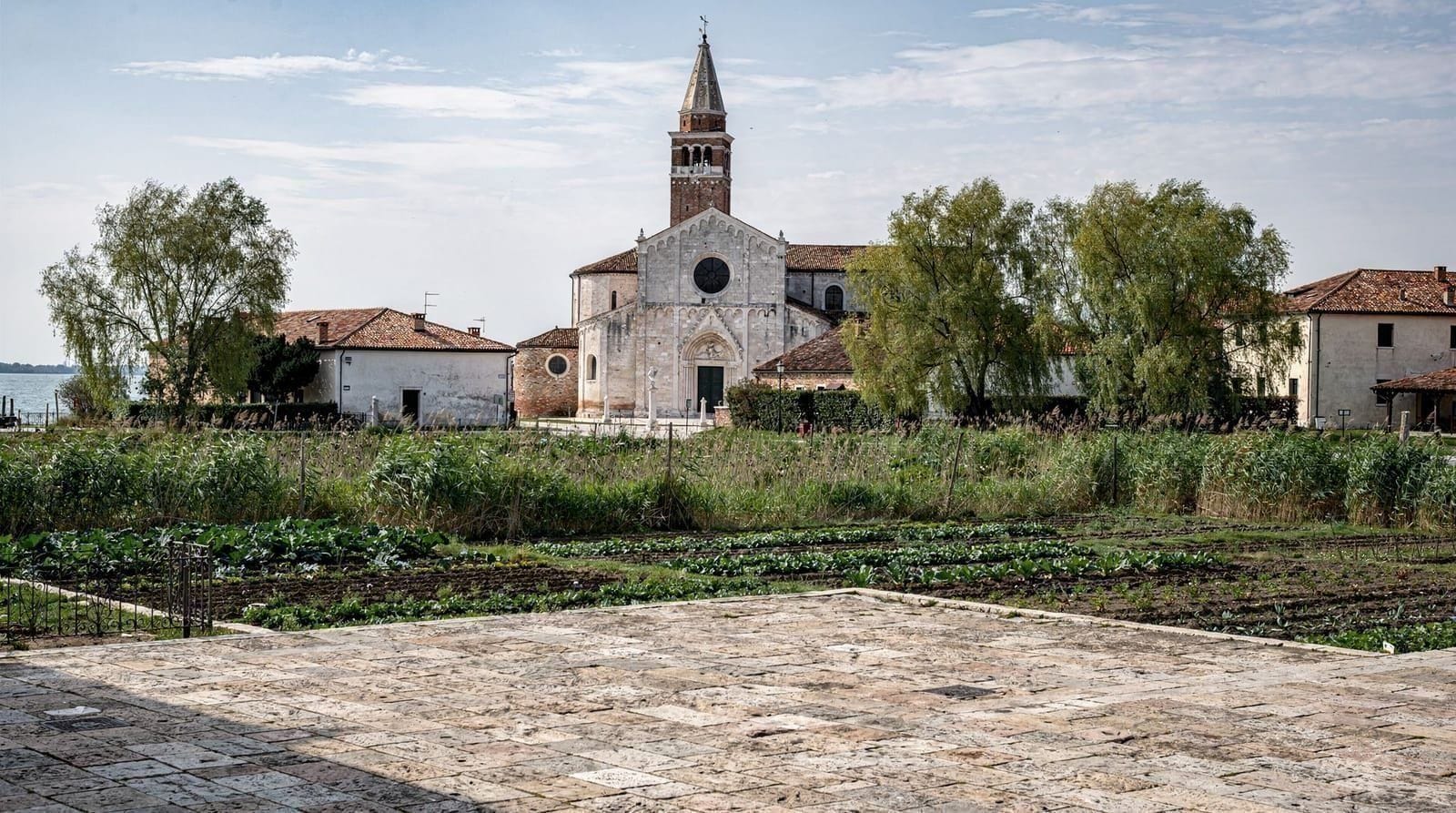
Combining with a lagoon trip. If you want the quiet-water feeling but also want to get out of the historic centre entirely, a hidden lagoon islands excursion extends the same idea into open water, past Sant’Erasmo and the smaller uninhabited islands where fishermen still work. It’s a different kind of quiet — open sky rather than close stone walls — but the two pair well across a two-day stretch if you have the time.
How it compares to a gondola
The standard tourist gondola ride — thirty minutes on fixed routes in the main canals, costing €80-90 in the day and €100-120 in the evening — is a different experience from a two-and-a-half-hour canal exploration by electric boat. Both are legitimate and both have their qualities.
The gondola is closer to the water, the gondolier often provides a running commentary, and the traditional craft itself is beautiful in a way that an electric motor launch is not. But the gondola route is fixed and well-travelled; you will share most of the route with other gondolas. The electric boat tour goes where the gondola routes do not, moves at its own pace, and stops where the guide decides to stop.
If I had to choose one, I would choose the canal exploration. If I had budget for both, I would do the gondola in the evening for the atmosphere, and the canal tour in the afternoon for the discovery. The gondola ride guide and the private vs shared gondola guide cover the gondola side of this comparison.
| Electric boat, hidden canals | Traditional gondola | |
|---|---|---|
| Duration | about 2.5 hours | 30 minutes |
| Route | back rii, guide’s choice | fixed, mostly shared with other gondolas |
| Cost | around €60–90 per person | €90 (day) / €110 (evening) per boat |
| Atmosphere | quiet, exploratory | classic, romantic, more theatrical |
| Best for | discovery, photography, a longer outing | a single iconic thirty minutes |
Who this trip is for, and who it isn’t
This is the wrong choice for a first Venice visit with only a day or two — you’ll get more value from the Grand Canal vaporetto and the headline sights first, and save the back canals for a return trip or a longer stay. It’s the right choice if you’ve already walked San Marco and the Rialto, or if you’re the kind of traveller who’d rather spend an afternoon watching a city function than photographing its postcard corners. It also works well as a rainy-day alternative to walking — the electric boats run in light rain, and the low bridges and quiet rii feel, if anything, more atmospheric under grey skies.
One last thing
Marco, our guide, told us that the word for the back canals — rio — comes from the Latin for stream. Venice is essentially built on a series of streams that were gradually brought under control, widened, deepened, lined with stone. The Grand Canal was always larger, he said, but the rios were there first. Something about that felt right: that the oldest parts of the city are also the quietest, and that you have to leave the obvious routes to find them.
We were back on the Grand Canal within three hours, and for a moment it felt almost overwhelming — the boats, the noise, the scale. Then it subsided into familiarity, and we went to find cicchetti and wine at a bacaro in Cannaregio, and talked about how we would do the same tour again, earlier, in the morning light.