Venice in 48 hours as a first-timer: what we got right and wrong
The first morning: arrival confusion
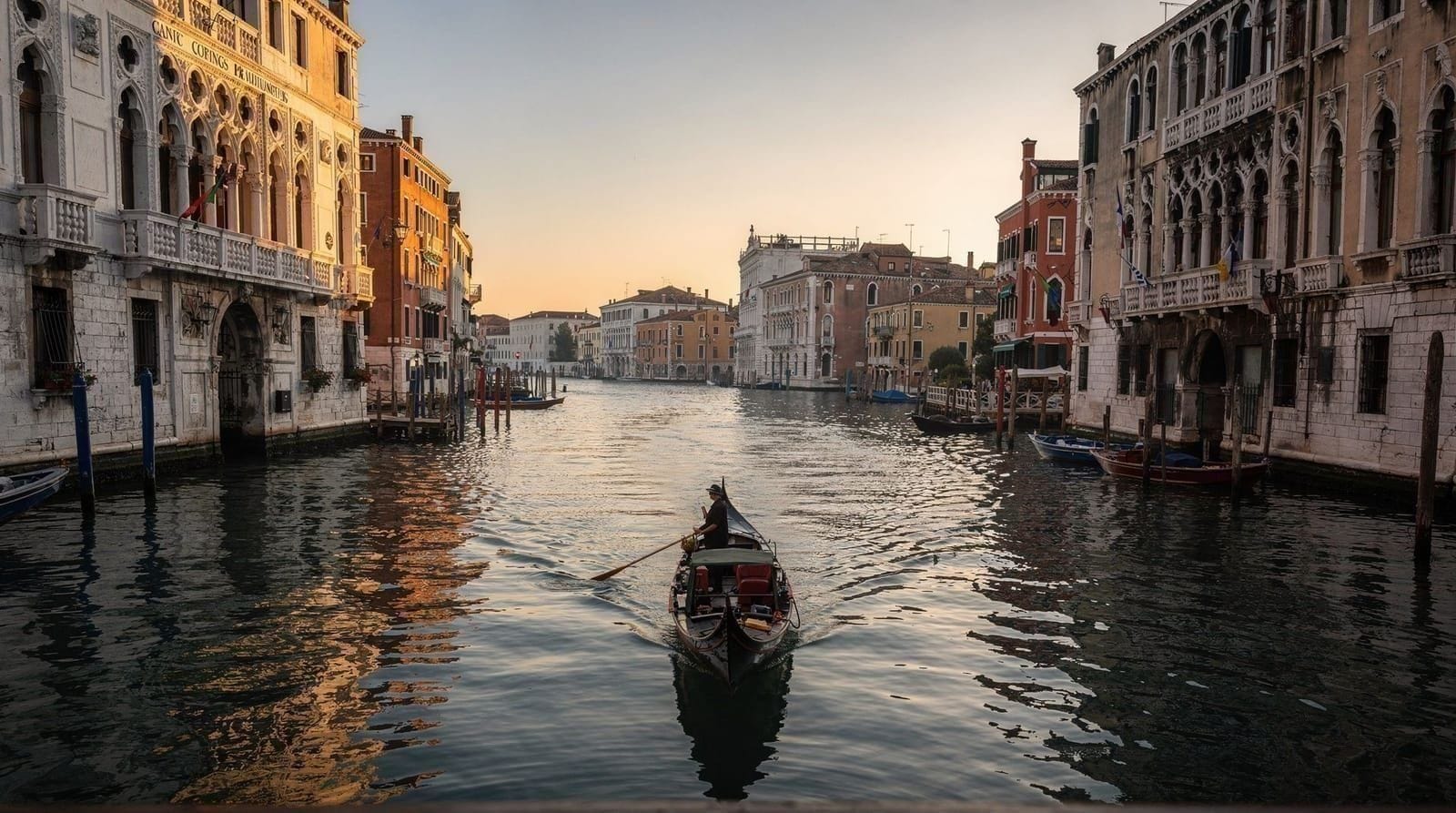
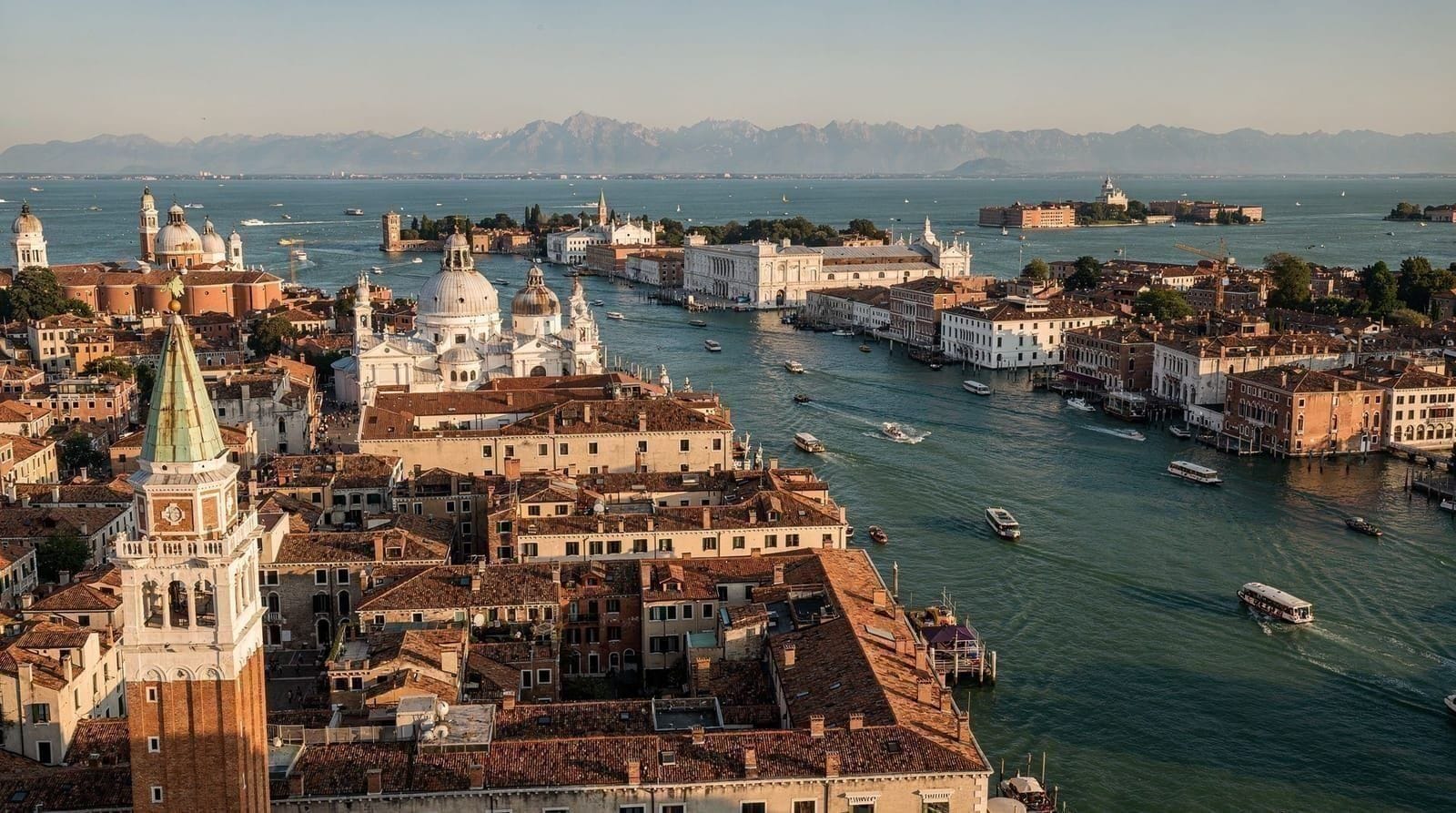
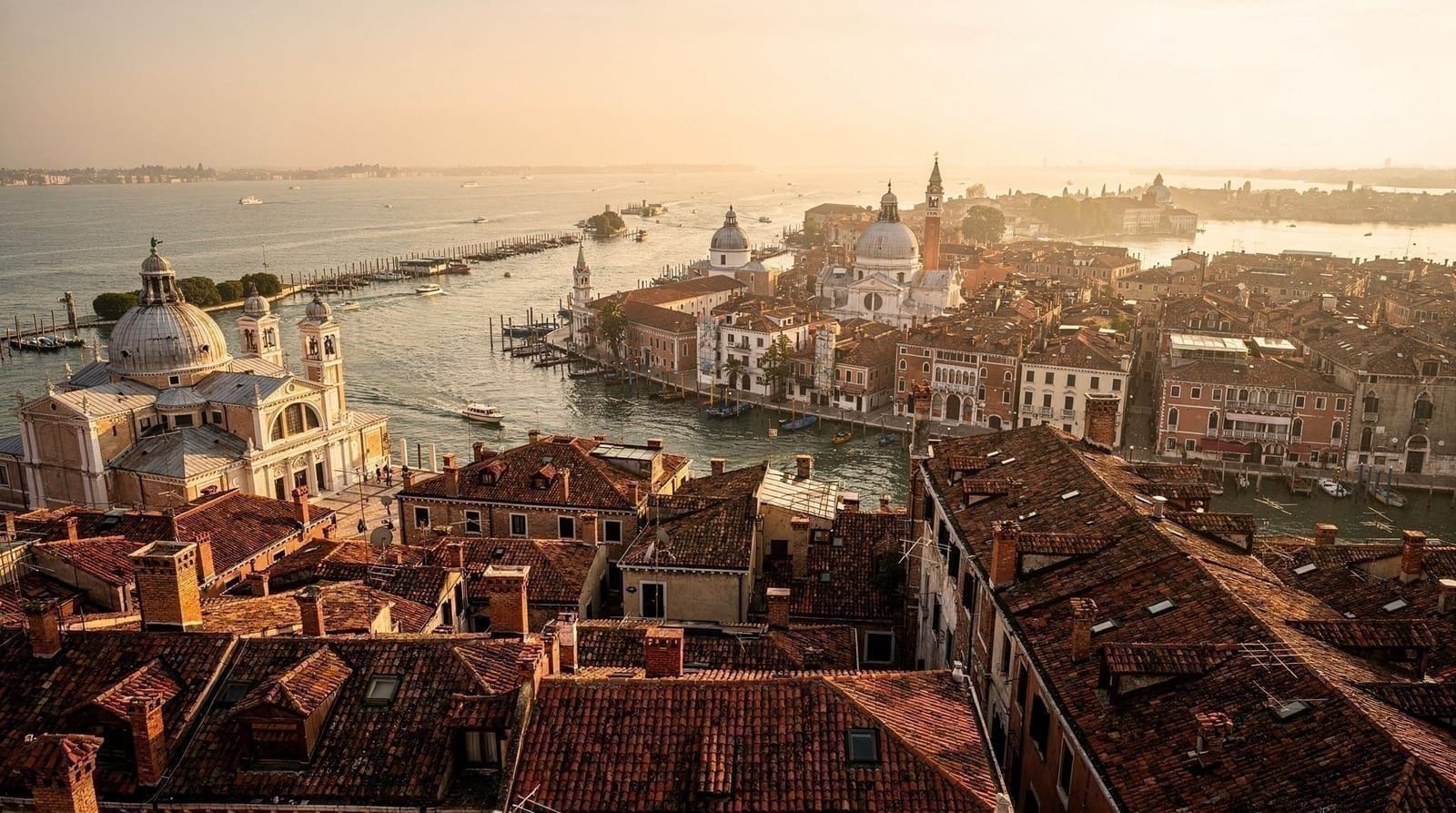
We arrived by train at Venice Santa Lucia station — the correct arrival point for tourists heading into the historic city rather than the mainland Mestre. The station opens directly onto the Grand Canal. On a June morning in 2019 this was my first view of Venice: the water, the vaporetti, the opposite bank with its cluster of white churches and the dome of San Simeon Piccolo.
| Arrival point | Venice Santa Lucia station |
| Total budget (2 people, sights + food) | Around €200–260 for 48 hours |
| Transport pass | 48-hour vaporetto pass, around €35 |
| Book ahead | Basilica, Doge’s Palace, Secret Itineraries |
| Best hours | Before 9am, after 6pm |
I stood there for about three minutes processing the fact that there really are no cars. That the taxis are boats. That the Grand Canal is genuinely as wide and as busy as in photographs. Then we dragged our bags in the wrong direction for fifteen minutes.
The orientation problem is real. Venice doesn’t have the grid logic that even irregular European cities tend to have. The streets (calle) curl into dead ends. The main pedestrian routes are marked with yellow signs pointing to “Per San Marco” or “Per Rialto” but the less obvious paths between those two nodes are a learning process. On day one, you will get lost. Budget for this.
What we did right: the early start
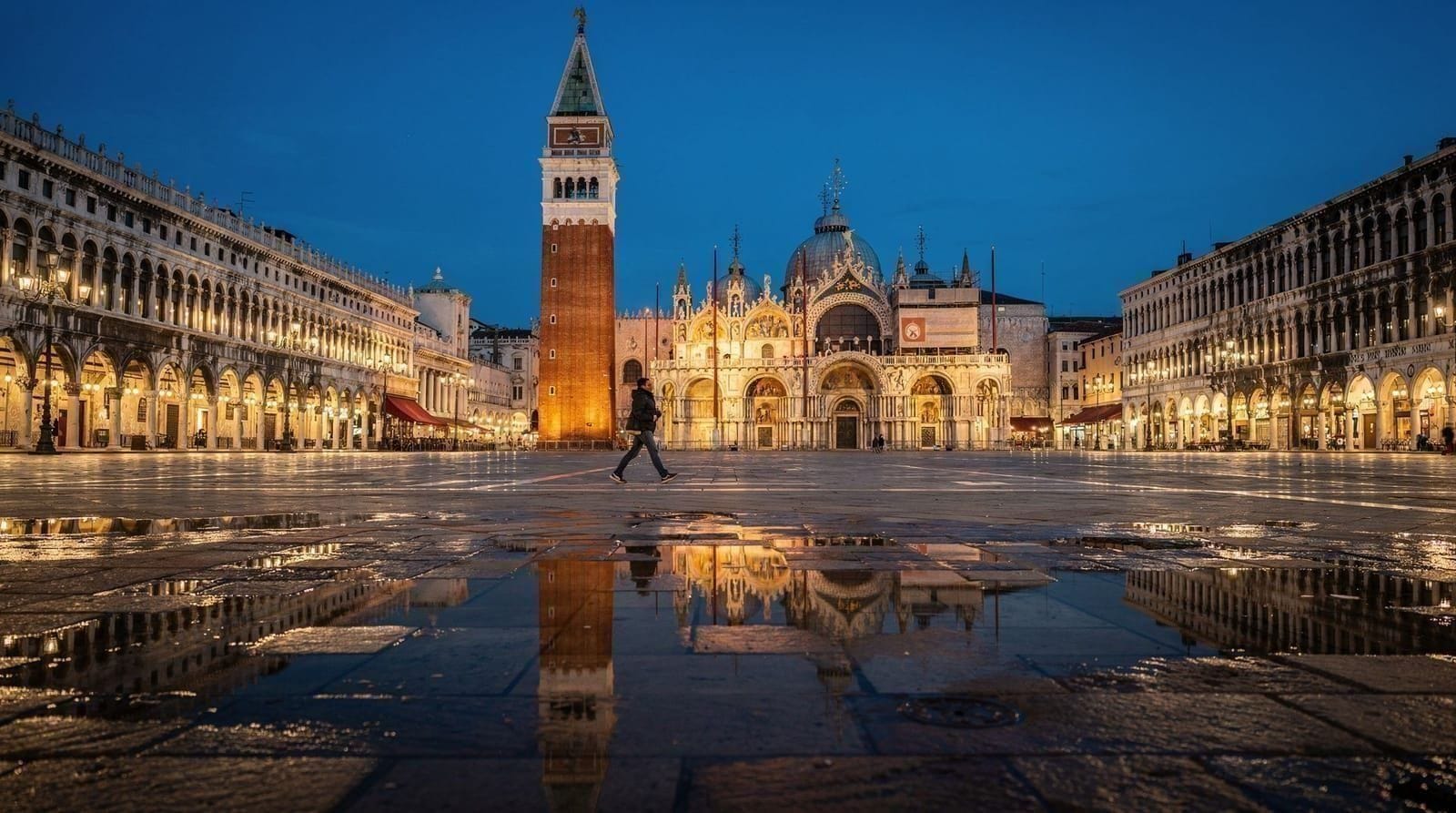
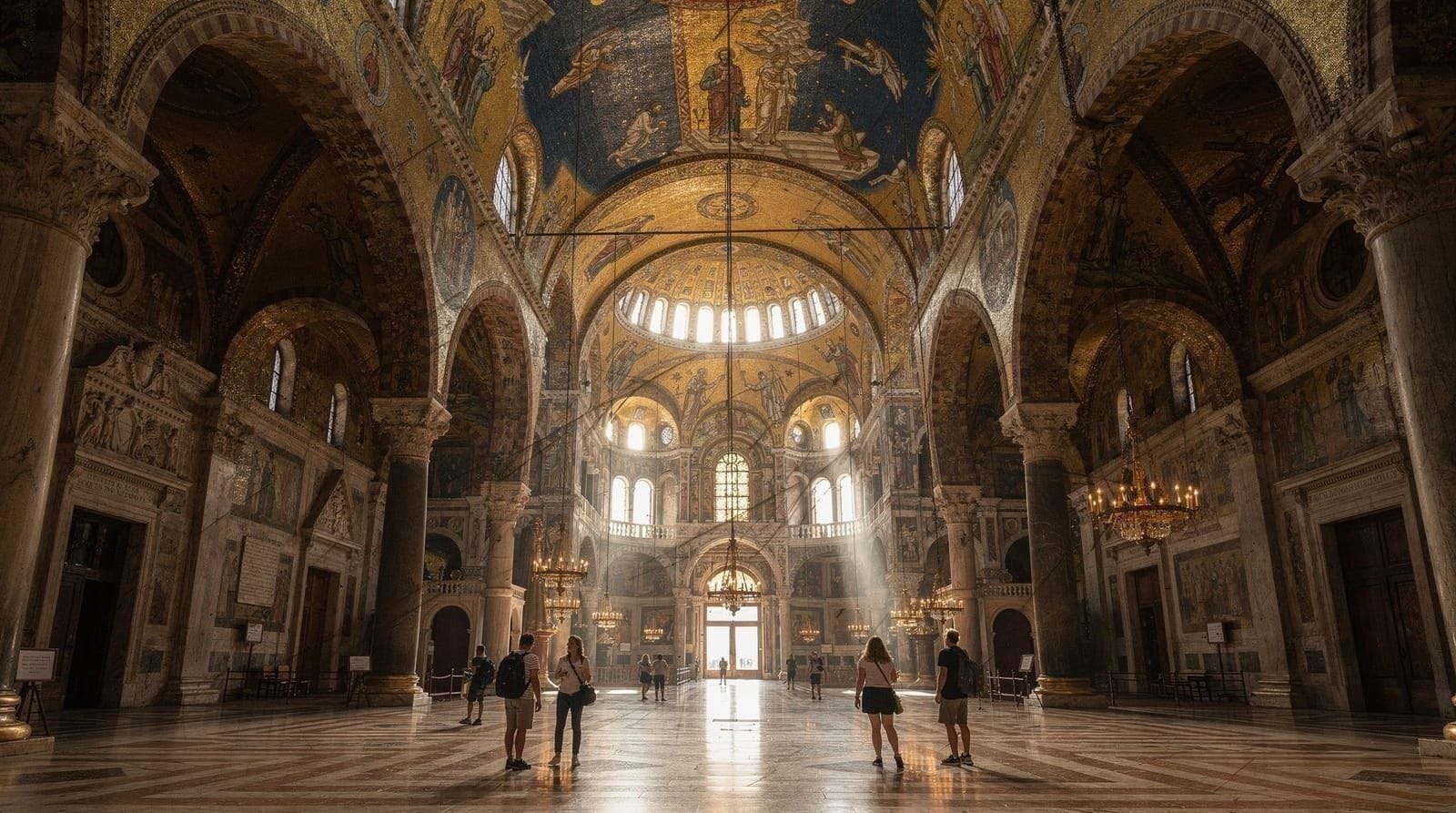
We were at St Mark’s Basilica at 8am. This is, without question, the right time. The Basilica opens at 8am for the first hour of prayer-focused visits, before the tourist entrance queues form. We walked in with perhaps forty other people and spent an hour looking at the floor (which is extraordinary — twelfth-century mosaic Byzantine work, heaved up into waves by the lagoon subsidence), the ceiling mosaics (which are even more extraordinary), and the dim gold atmosphere of the whole interior.
By nine-thirty, when we came out, there were several hundred people waiting for entry on the adjacent street. We’d bypassed them entirely by knowing the schedule.
The same logic applies to almost everything in Venice. The city rewards early risers disproportionately. The crowds don’t really build until nine or ten. The first ninety minutes after dawn are a different place from the mid-morning surge.
What we did wrong: the San Marco restaurant
At noon on day one, hungry and slightly tired, we sat down at the first restaurant with available tables on the edge of the piazza near San Marco. We were two. The coperto (cover charge) was €4 each. We ordered two pasta dishes, two glasses of house wine, and two waters that arrived without being asked for. The total was €82.
The pasta was average. The water had been charged at €6 a bottle. The bread that appeared automatically was €3.50. The wine was €9 a glass. None of these prices were legible on the menu, which was laminated and had photographs.
This is the San Marco restaurant trap in operation. We’ve written about it extensively because it happened to us on our first visit and apparently happens to a meaningful percentage of first-time visitors. The fix is simple: walk three minutes off the piazza into the surrounding calli and the prices drop by 40 to 60 percent. The food quality also goes up, because the places doing tourist-volume business near major landmarks aren’t trying to impress you.
What we did right: Doge’s Palace in the afternoon
We’d pre-booked afternoon tickets for the Doge’s Palace, which in June is essential — the walk-up queue in peak season can add an hour to your wait. The palace is one of the great medieval buildings in Europe: the scale of the halls, the Veronese and Tintoretto ceilings, the Bridge of Sighs connection to the old prison.
We didn’t book the Secret Itineraries tour (which requires advance booking and goes through the attic passages and prison cells above the standard route). This is the thing I’d do differently most readily — the Secret Itineraries sells out early and delivers a completely different experience from the main floor. Book it first.
Doge’s Palace secret itineraries — book early for this oneThe evening and the cicchetti discovery
Wandering toward Cannaregio before dinner, following a vague recommendation from someone at our hotel, we stumbled into our first bacaro around six in the evening. A dark wooden bar, a glass case of small plates (cicchetti), an older man refilling wine glasses from an unlabelled bottle.
We ate baccalà mantecato on crostini, polpette (small fried meatballs with herbs), and sarde in saor (sweet-sour sardines). We had two glasses each of house wine from the bottle on the counter. The total was €19 for both of us.
This was the meal that recalibrated the trip. Venice’s food culture, encountered properly, is not expensive — it’s generous and good and specific to the city. The problem is that the tourist infrastructure steers you away from it toward the San Marco restaurants. Avoiding that steering is the primary food skill for first-time visitors.
Day two: the Rialto and the islands question
We spent the second morning at the Rialto market (opens around 7am, best from 7:30 to 9:30 before the stallholders start packing). The fish market section is notable: whole octopus, razor clams, lagoon fish whose names I didn’t know, and the specific smell of very fresh seafood that differs entirely from the supermarket experience.
We had to make the islands decision with limited time. We chose Murano over Burano because someone had specifically mentioned the glass factories, and we had three hours before our train. In retrospect, three hours on Murano is not enough to do it properly (the basilica alone is worth an hour), but it was enough to see the glass demonstration and understand why the island matters.
The how-many-days guide makes the argument that 48 hours is not really enough for Venice — two days lets you see the major landmarks but doesn’t allow the city to reveal itself gradually, which is how it works best. We agree with this in retrospect. Our second trip was four days and felt like the first time we’d actually been to Venice.
What the 2-day itinerary should look like
From our experience and several more trips since: day one morning in San Marco area (Basilica at opening, Doge’s Palace mid-morning), day one afternoon in Dorsoduro or Cannaregio walking, evening cicchetti crawl. Day two: Rialto market at opening, mid-morning to Murano or Burano by vaporetto, afternoon for whatever you missed, departure evening.
This is tighter than it sounds but workable with early starts and pre-booked tickets for the major sights. The Venice first-time guide has more of the orientation logistics including how to navigate the vaporetto system and which neighbourhoods to stay in for walking access.
The vaporetto confusion
This caught us on day one. The vaporetto system has multiple lines and the same stop can be served by boats going in opposite directions. Line 1 runs the full Grand Canal slowly, stopping at every landing. Line 2 takes a different, faster route. The San Marco and Rialto stops are the main sources of confusion: a boat at “Rialto” going toward “Piazzale Roma” (west) is useless if you want to go east toward San Marco.
Read the destination board on the vaporetto before boarding. Allow five minutes more than you think you need for any vaporetto journey. Check the direction board twice.
The getting around Venice guide has the full network explained if you want to study it in advance. The honest first-visit advice is: buy the 48-hour transport pass (€35), use it freely, and don’t try to save money by walking everywhere on day one when you don’t yet know where anything is.
The money question, honestly
Venice is expensive if you eat and drink near the major sights, and reasonable if you don’t. Hotel prices are high by Italian standards but lower off-season. The attractions — Doge’s Palace, the Accademia, the Basilica timed entry — add up if you don’t track them, but the major sights can be covered for €60 to €80 per person with a little planning.
The biggest cost surprises for first-timers are almost always restaurants. Budget €35 to €55 per person for a sit-down dinner in a mid-range restaurant; less if you’re doing cicchetti at bacari; more if you’re near San Marco. The tourist traps guide covers the food-cost issue specifically if you want to go in forearmed.
The one thing worth knowing before your first visit
Venice does not reward hurrying. The instinct when you arrive is to tick off the landmarks — Basilica, Doge’s, Rialto, gondola, done. This produces a competent but unsatisfying trip.
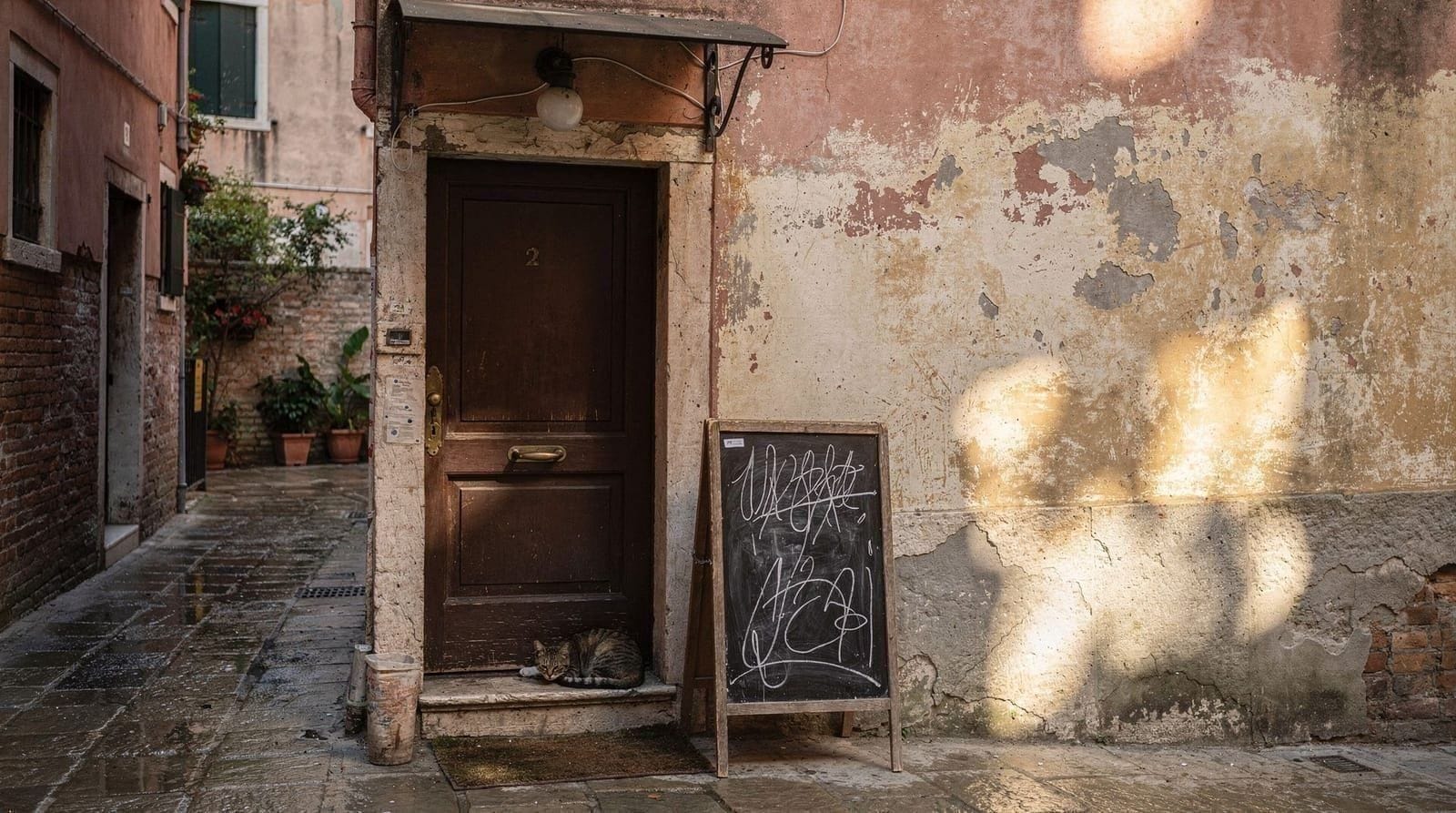
The city rewards getting lost in the small calli, sitting by a quiet canal, eating in a bacaro where nobody speaks English, watching the boat traffic from a bridge you don’t know the name of. These things happen in the margins of an itinerary, not in the structure of it.
Build in margin. Venice will fill it.
Our 48 hours, hour by hour
This is the actual structure that emerged from the trip, cleaned up with hindsight:
| Time | Day 1 | Day 2 |
|---|---|---|
| 8am | St Mark’s Basilica (opening hour) | Rialto market |
| 10am–12pm | Doge’s Palace | Murano or Burano by vaporetto |
| 12–2pm | Bacaro lunch, not San Marco | Lunch on the island |
| 2–5pm | Cannaregio wandering | Whatever you missed |
| 6–8pm | Cicchetti crawl | Final walk, departure |
If you have more than two days, the Venice 4-day itinerary spreads this same structure out with far less rushing, which is closer to what we’d recommend in hindsight. A museum pass covering the Doge’s Palace and the civic museums is worth pricing against buying tickets separately if you know you’ll visit more than two sights.
Venice museum pass — Doge’s Palace and civic museumsFAQ
Is 48 hours enough to see Venice properly? It’s enough to see the major landmarks — the Basilica, Doge’s Palace, Rialto, one lagoon island — but not enough for the city to reveal itself gradually. Most repeat visitors, us included, come away from a 48-hour trip planning a longer second one.
What’s the single biggest mistake first-timers make in Venice? Eating at the first restaurant they find near Piazza San Marco. It’s consistently the most expensive, least good food in the city; walking a few minutes into Cannaregio or Dorsoduro solves this immediately.