Three days on the Prosecco Road: what we drank and what surprised us
| Where | Conegliano-Valdobbiadene hills, about 1hr20 from Venice by car |
| Cost | €8-50+ per bottle at the winery; a guided day tour runs separately |
| Time needed | A full day minimum, three days for the full road trip |
| Getting there | Car via the A27, or a guided tour from Venice |
| Best time | September (harvest) or May-June (green hills, fewer crowds) |
What the Prosecco hills actually look like
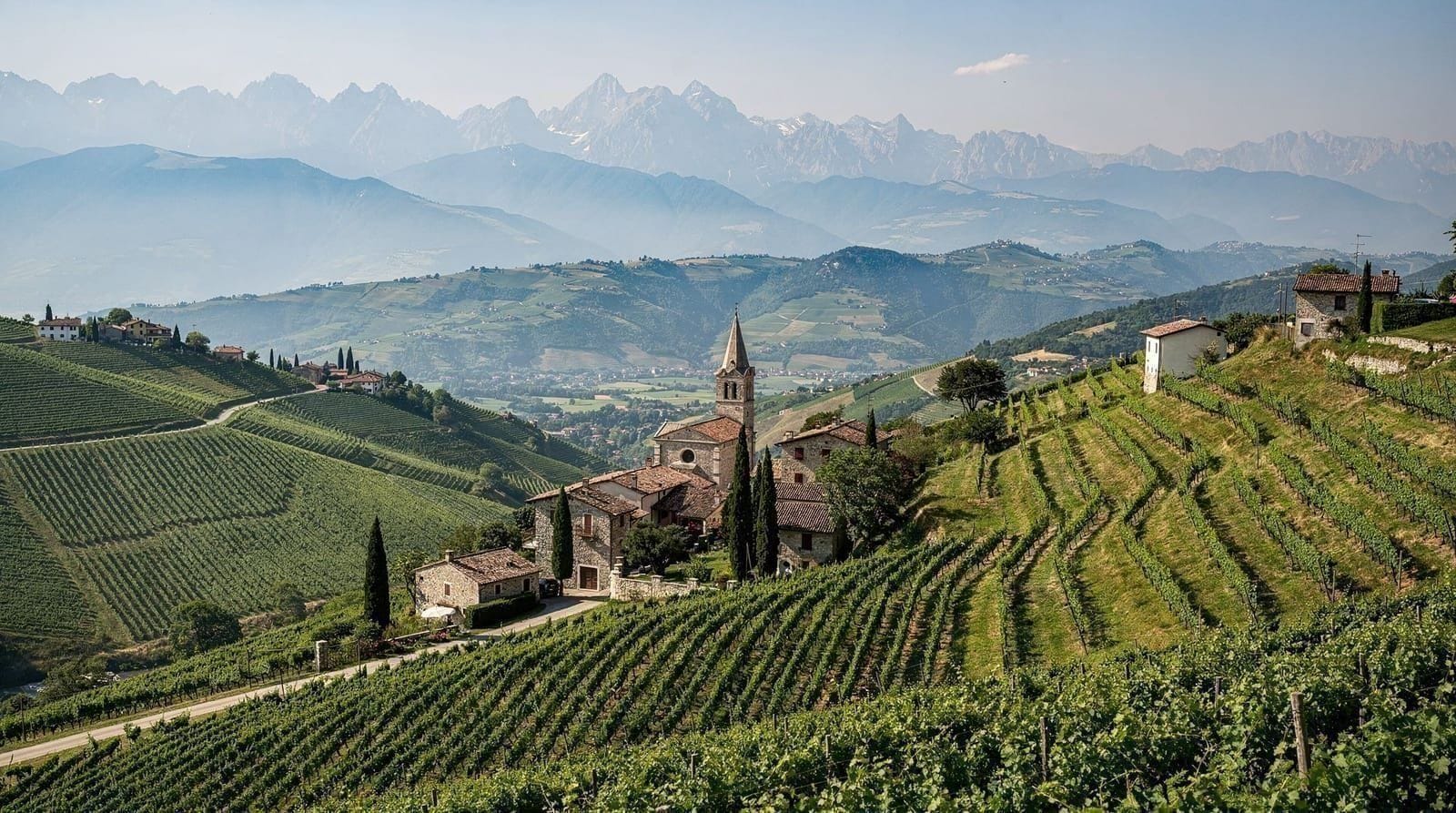
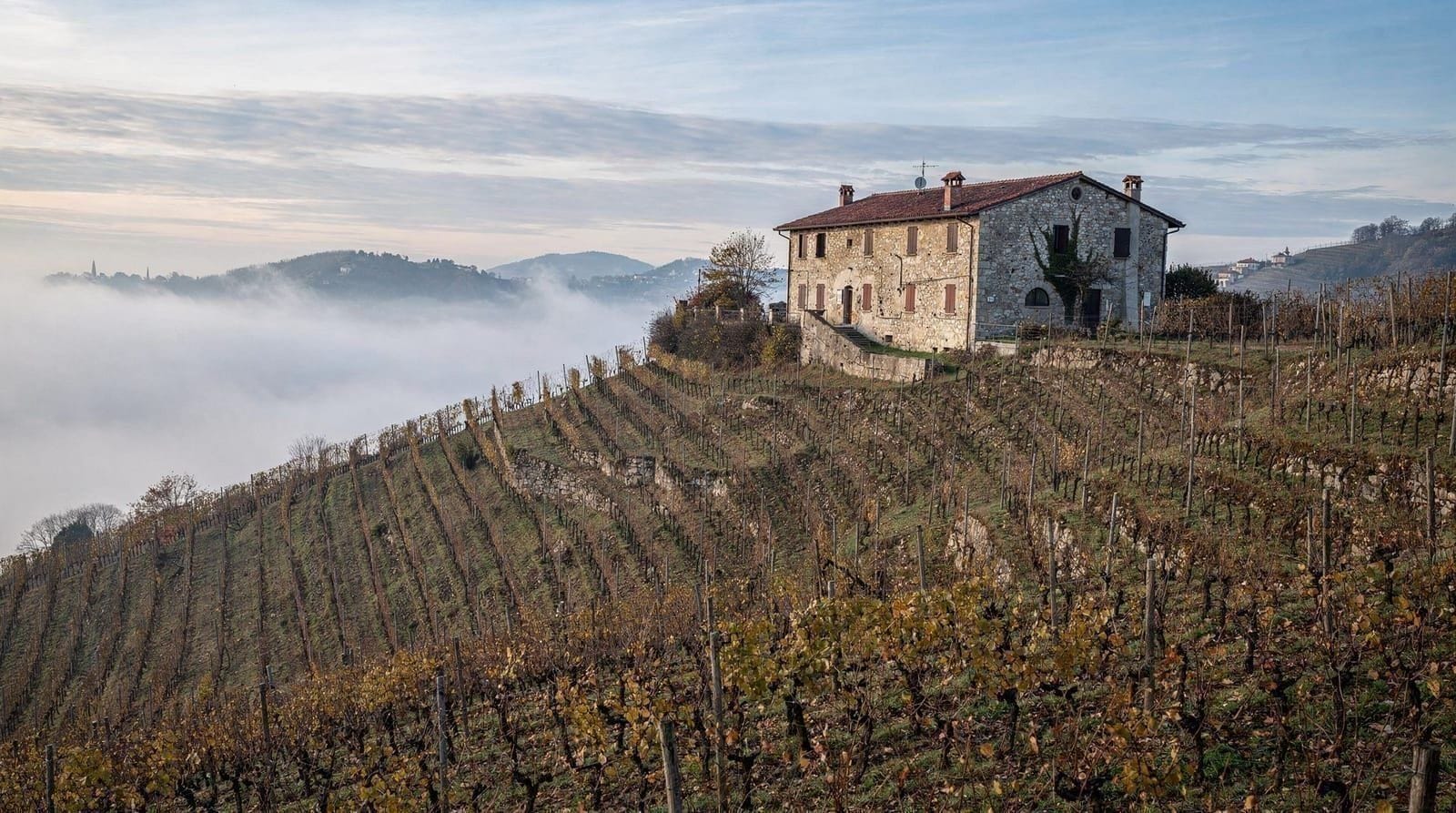
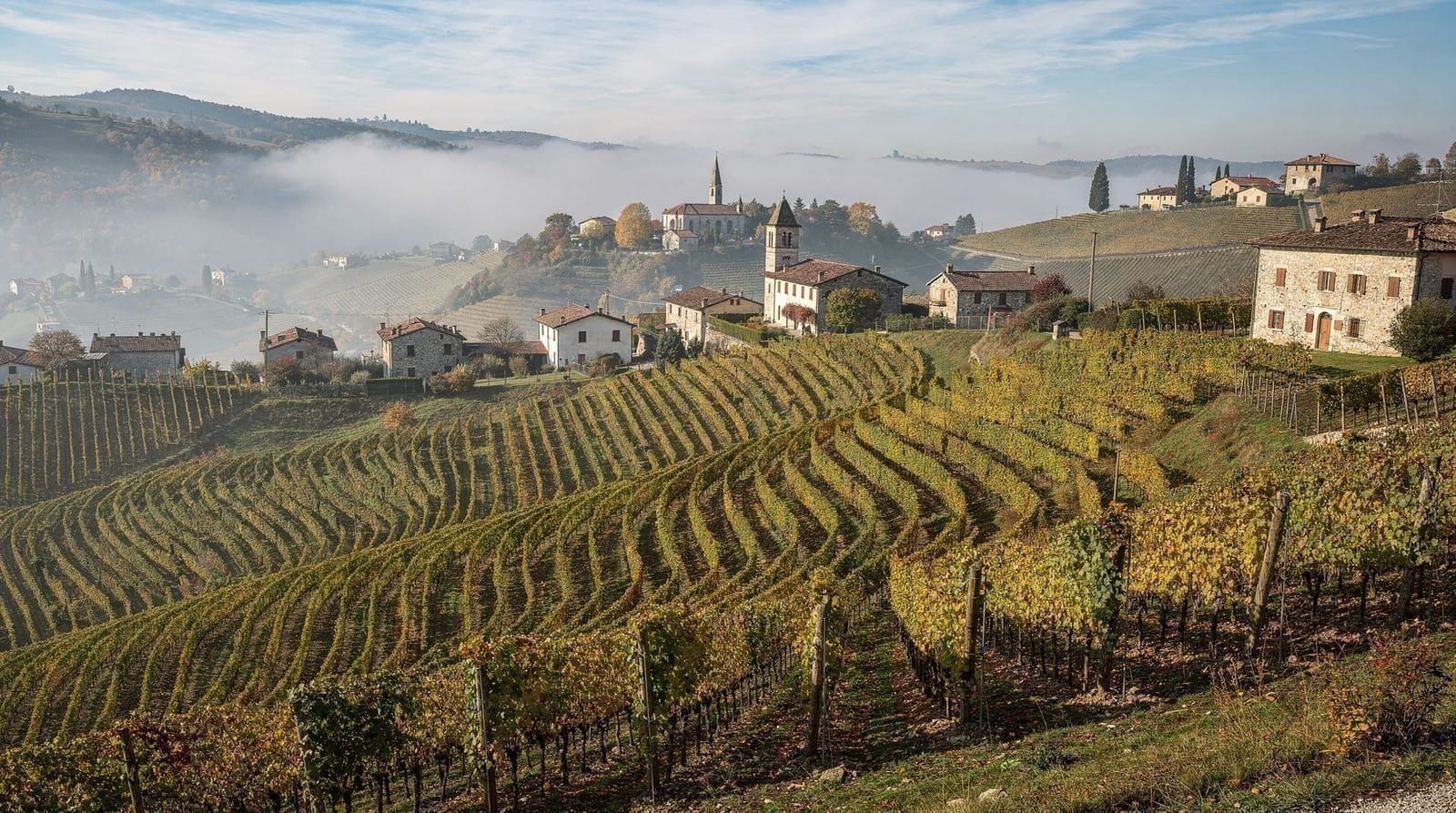
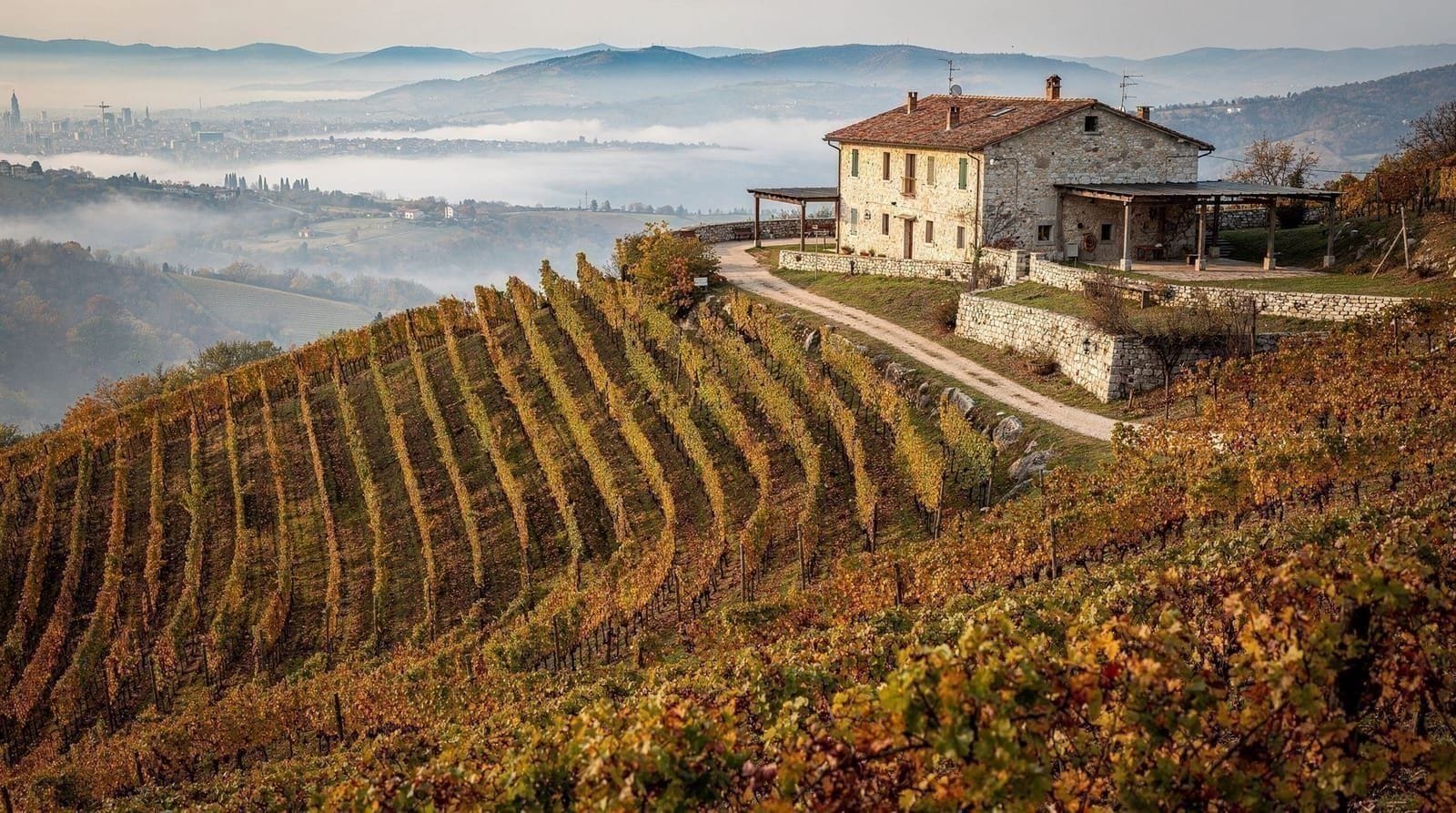
We’d driven through the Veneto on the A27 before — the autostrada north from Venice toward the mountains, through the flat agricultural plain around Treviso. The Prosecco hills appear suddenly on your right after the Conegliano exit: steep, terraced, implausibly green in September, the rows of vines curving over the hillsides in patterns that look less like farming and more like a kind of formal land geometry. The UNESCO designation (2019) was for the cultural landscape, not just the wine, and when you see it from a bend in the road above Valdobbiadene, you understand the distinction.
The hills between Conegliano and Valdobbiadene are the heartland of Prosecco Superiore, the DOCG designation that distinguishes the serious stuff from the base Prosecco DOC that appears in supermarkets. The terrain is too steep for machine harvesting. Everything is done by hand. The labour costs alone explain some of the price difference.
Day one: arriving via Treviso
We drove from Venice — about 50 minutes on the A27 to Treviso, then another 30 minutes north on smaller roads to Valdobbiadene. You could do this without a car using trains and buses, but the small-producer visits are much harder to arrange without your own transport.
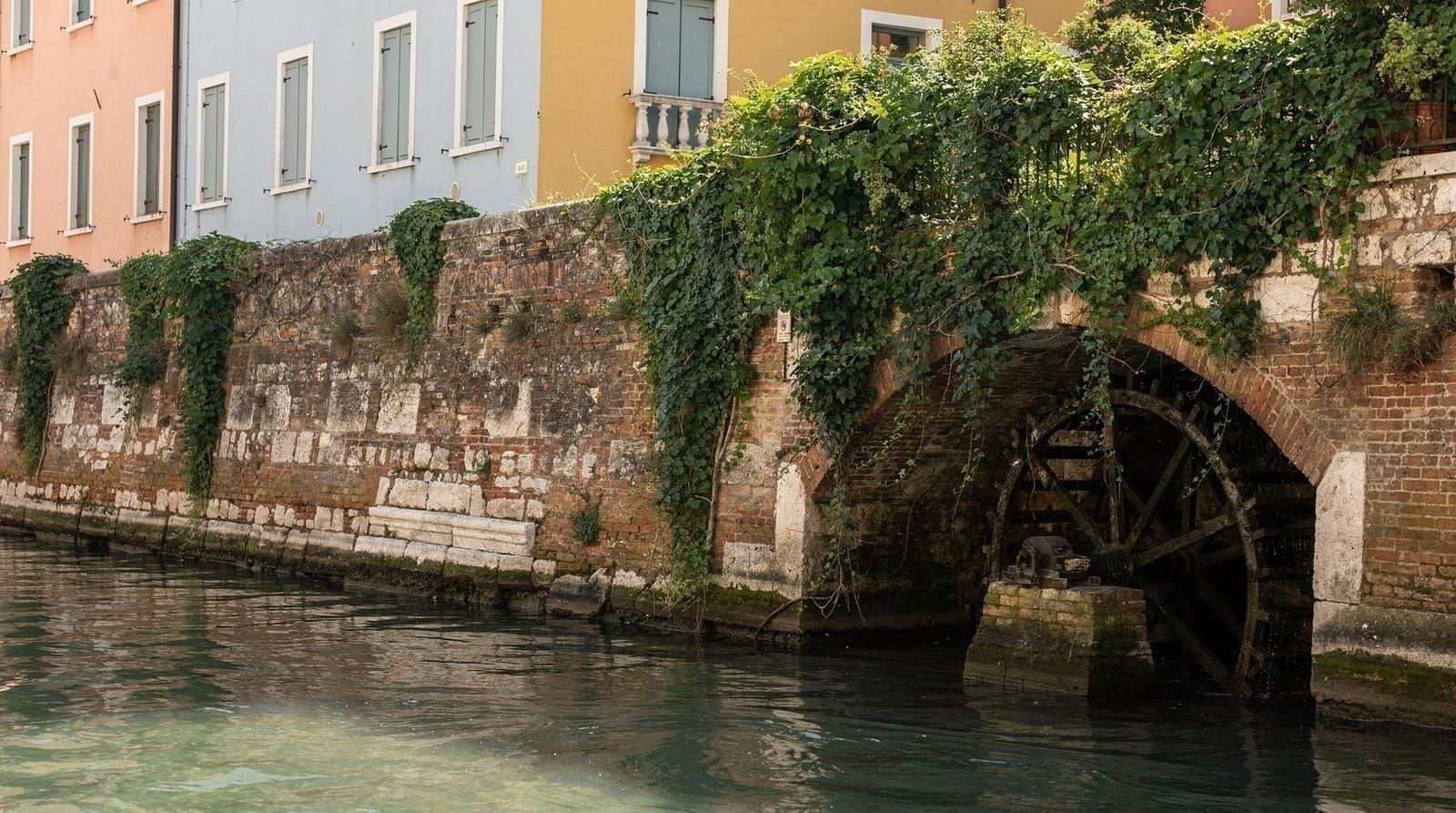
Treviso is worth the stop if you have an hour. The city centre has a canal system that echoes Venice in miniature, less famous and proportionally more enjoyable. Piazza dei Signori is genuinely beautiful. The local dialect has given the world prosecco and tiramisu, which feels like an unreasonable contribution from a mid-sized city.
We ate in Treviso that evening — the cooking is grounded in the Veneto tradition, heavier than Venice, more meat and polenta. The radicchio di Treviso, the long-leafed variety with the bitter finish, is available from September and was on every menu we saw. If you like bitter flavours, it’s excellent. If you don’t, you’ll be ordering around it.
Day two: the small producers
The big names of Prosecco are the multinational brands (Mionetto, Martini, Zonin) that produce millions of cases and export globally. They’re efficient and consistent. They’re also not why you come to the hills.
The small producers — families farming ten or fifteen hectares on the steep terraced hillsides — make wine that tastes different. Not always better in the absolute sense, but more particular. There are flavours in a rive Prosecco (from a specific steep hillside designated by commune and village) that you won’t find anywhere else: the mineral edge, the apple and pear tones adjusted by altitude and soil, the finish that stays dry rather than collapsing into sweetness.
We visited three producers over the course of the day, all pre-arranged by email a week before. Two offered formal tastings with small fees; one just invited us to stand in the cellar, tasted us through four wines from his tank samples, and sold us six bottles for €9 each. The informal ones are often the best.
If you’re coming without a car and want to visit multiple producers, a guided Prosecco tour from Venice handles the logistics and the driving and typically includes two winery visits with tastings, transport, and often a meal.
Exclusive small-group Prosecco tour from Venice with 2 wineriesThe Prosecco hills guide has notes on several specific producers and the differences between Valdobbiadene, Cartizze (the famous single-cru hillside), and Conegliano styles. Cartizze is the most expensive and the most debated — the slope is 107 hectares and everything from it carries a premium. Whether it justifies the price is a conversation the local producers have approximately every evening.
What Cartizze actually tastes like
We bought a bottle from a producer whose family has owned their Cartizze plot for four generations. She poured it for us in a room overlooking the valley, the hillside behind her visible through the window. It was a sparkling wine — fine bubbles, persistent — with white peach and lychee on the nose, quite dry on the palate despite the fruit, and a finish that lasted longer than I expected.
Was it worth three times the price of the rive bottles we’d tasted that morning? Probably not in pure value terms. As an experience of a specific place at a specific time, tasting something that came exclusively from that slope visible through that window — yes, absolutely. That’s what fine wine is selling you.
Day three: the view from above
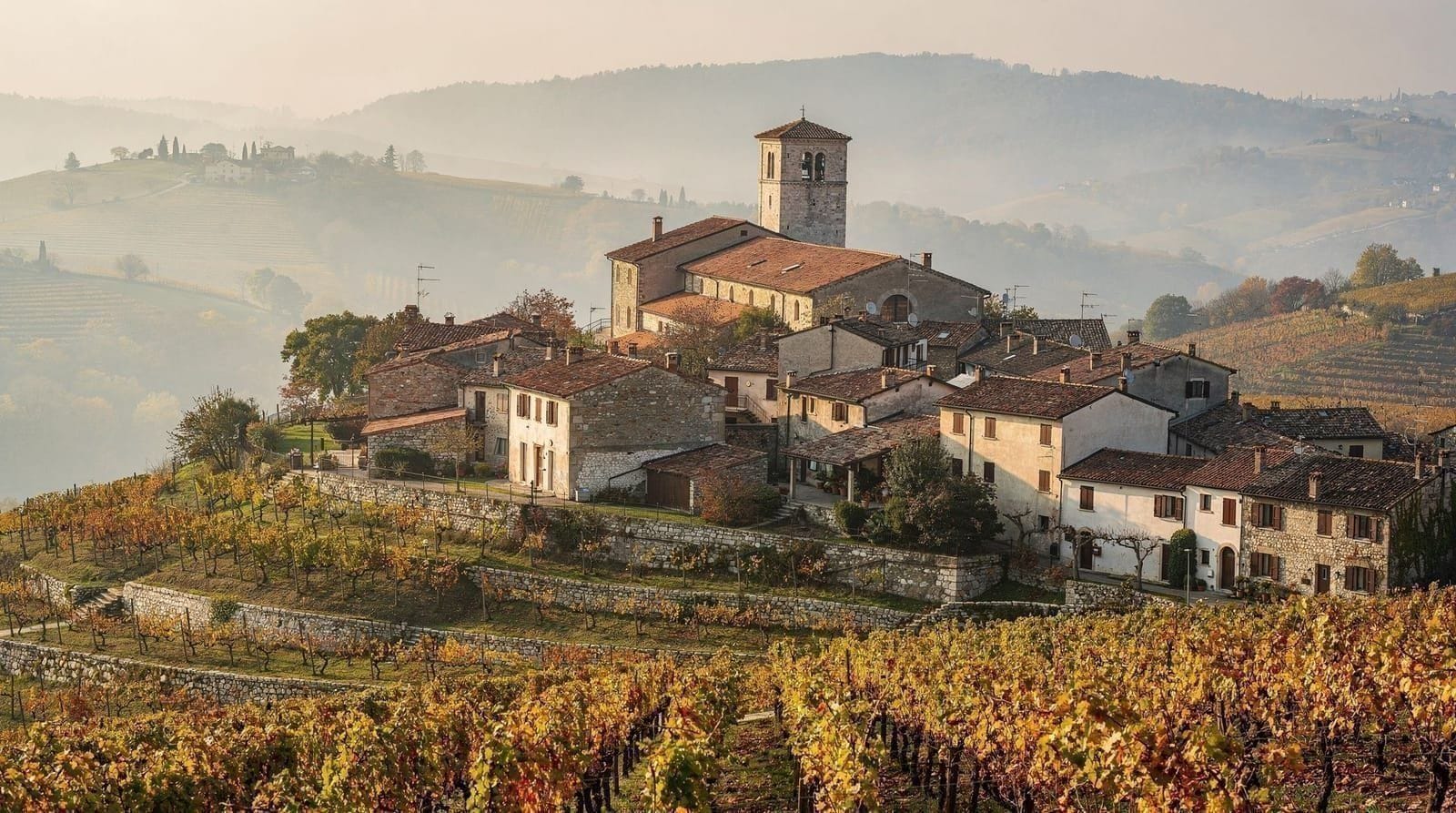
On the third morning we drove up to Rolle, a small village above Valdobbiadene at about 450 metres. It’s not signposted in any tourist sense. There’s a gravel car park, a small church, and a viewpoint that looks north toward the Dolomites (snow still visible on the higher peaks in September) and south over the entire Prosecco hillscape — the terracing rolling down to the Piave river valley, the villages visible at intervals, the distant towers of Conegliano at the far end.
This view is the argument for the road trip over the day tour. Not that the day tour isn’t excellent — it is, and it’s the right choice if you don’t have a car or three days. But the road trip gives you the morning light on the hills, the lunch stops at places with no websites, the accidental conversations with a local at a bar who spent thirty years working a specific slope and has opinions about it.
The food alongside the wine
The Veneto hills are not just Prosecco. The food culture of the area between Treviso, Conegliano, and Valdobbiadene has developed alongside the wine industry: the local cheeses (Piave, a hard mountain cheese with a slightly caramelised finish; Morlacco, a softer fresher cheese from Castelfranco), the cured meats (soppressa Vicentina, a soft salami with spices), and the radicchio di Treviso (a bitter forced chicory that appears from October and appears on every local menu through spring).
We had lunch on day two at an agriturismo — a farm-restaurant operated by a wine family who also raise pigs and keep a small kitchen. The menu was fixed, three courses, €22 including wine. Cured meats from their own pigs, a risotto with local cheese and Prosecco worked into the stock, a beef stew braised in wine. It was one of the better lunches we’ve had in Italy, which is a sentence I don’t deploy casually.
The agriturismo model is widespread in the Prosecco hills — many of the small wine producers also offer simple lunches or dinners. Booking ahead is essential; walking in is almost never possible. Ask at your hotel in Valdobbiadene for recommendations, or search the Consorzio di Tutela del Conegliano Valdobbiadene Prosecco DOCG website, which lists member estates.
Getting back to Venice
The drive back was two hours with a stop in Treviso for a final coffee. We had twelve bottles in the boot wrapped in our softest clothes — Prosecco Superiore doesn’t travel well in checked luggage, but it’s fine on Italian motorways at sensible speeds. If you’re flying home, the wine-shipping services in Venice and Treviso will pack bottles properly for cargo hold.
The Prosecco hills day trip guide covers the one-day version from Venice if three days is more than your schedule allows. The Veneto 7-day itinerary includes Valdobbiadene as a night stop if you’re building a longer regional trip.
Either way: go. The hills are extraordinary, the wine is honest, and the Veneto outside Venice remains one of the most underexplored parts of northern Italy.
Road trip versus guided day tour
The three-day version described above is not for everyone, and it doesn’t need to be. If you have a single free day in a Venice trip and want the hills without the logistics, a guided tour from Venice — like the two we mention above — covers the driving, pre-arranges the winery visits, and typically fits two tastings and a meal into a day that starts and ends in Venice. What you lose is the freedom to linger at a viewpoint like Rolle or take a producer up on an impromptu cellar visit; what you gain is not having to plan any of it yourself. For most visitors with three days or fewer in the Veneto, the guided day tour is the more realistic option, and it’s a genuinely good one — this isn’t a consolation-prize comparison the way some day-tour-versus-independent debates are.
FAQ
Can I visit the Prosecco hills as a day trip from Venice without a car? Yes — a guided day tour from Venice handles transport and pre-arranges winery visits, which is easier than public transport in the hills if you don’t have your own vehicle.
What’s the difference between Prosecco DOC and Prosecco Superiore DOCG? Prosecco DOC comes from a wide area across the Veneto and Friuli and is the base product sold in supermarkets and bars. Prosecco Superiore DOCG comes specifically from the steep, hand-harvested hillsides between Conegliano and Valdobbiadene and is meaningfully more complex and expensive.
Understanding the Prosecco categories before you taste
The labelling system for Prosecco is worth understanding before you visit a producer, because the terminology affects what you’re tasting and what it costs.
Prosecco DOC: Made from Glera grapes grown across a wider Friuli-Venezia Giulia and Veneto area. The base product. Widely exported. Typically €8 to €15.
Prosecco Superiore DOCG (Conegliano Valdobbiadene): From the specific hillside zone between Conegliano and Valdobbiadene. Steeper terrain, hand-harvested, more complex. €12 to €25 at the winery.
Rive DOCG: Single-vineyard designation within the DOCG zone — the specific commune and hamlet where the grapes grew. These are more expensive (€18 to €35) and more particular in flavour.
Cartizze DOCG: The famous 107-hectare cru hillside above Valdobbiadene. The most prestigious Prosecco appellation. €25 to €50+ per bottle.
Extra Dry versus Brut versus Dry refers to the sugar level — Extra Dry (counter-intuitively) is slightly sweeter than Brut. Most of the rive and Cartizze wines are Brut or Extra Brut, with the fruit driving the perception of sweetness. The Dry style with residual sugar is the one your grandmother prefers at Christmas.
A practical note on the wine
Prosecco from the hills ranges from €8 to €35 at the winery. Cartizze starts at €20 and climbs quickly. The base Prosecco DOC — which is what you’re drinking at bars and from supermarkets — comes from a much wider region and is a different product in terms of quality and production method. Neither is wrong; knowing which you’re buying helps you spend appropriately.
The Prosecco you’ll drink with breakfast in Venice (in a Bellini or a spritz) is almost certainly DOC or lower. The bottles you’ll buy in Valdobbiadene to bring home are DOCG Superiore, which is meaningfully different. The label says “Prosecco di Conegliano Valdobbiadene DOCG” on the real thing.
Wine tour from Venice to Prosecco hills with tastings