Padua is underrated, and Venice is the reason
| Where | Padua, 30 min from Venice by train |
| Cost | Around €16 for Scrovegni Chapel, €20 combo ticket |
| Time needed | A full day, or a focused half-day |
| Getting there | Regional train from Venezia Santa Lucia to Padova |
| Best time | Spring (March-May) or a quiet November weekday |
The problem with being thirty minutes from Venice
Padua (Padova in Italian) has an image problem, and the image problem is Venice. When you are thirty minutes from one of the most famous cities in the world, a city with an extraordinary skyline and centuries of accumulated grandeur, you become a day trip rather than a destination. Most people in Padua are there because Venice was full, or too expensive, or they wanted a cheaper base for the day. They go to the Scrovegni Chapel, have lunch, and get back on the train.
The Scrovegni Chapel alone justifies the trip, and I will come to it in a moment. But Padua is more than one chapel: it is a genuinely ancient, genuinely alive city with a medieval centre that would be the main attraction in any region that did not have Venice as its neighbour. The university is one of the oldest in the world, the piazzas are the best daily market squares in the Veneto, the aperitivo culture is real and good, and the whole place has an energy — slightly academic, slightly market-town — that Venice, for all its extraordinary qualities, specifically does not have.
The Scrovegni Chapel
Giotto’s fresco cycle in the Scrovegni Chapel, commissioned by the merchant Enrico Scrovegni around 1300 and completed approximately 1305, is considered the beginning of Western painting as a tradition — the first systematic attempt to represent three-dimensional space on a two-dimensional surface, to paint human beings with psychological interiority rather than symbolic flatness.
I am not a person who uses “must-see” carelessly, but this is a must-see. The chapel is a single rectangular room. The walls and ceiling are covered entirely with Giotto’s work — the ceiling blue-black with gold stars, the walls divided into narrative panels depicting the Life of Joachim and Anna, the Life of the Virgin, the Life of Christ, and the Last Judgement on the west wall. The colours have been carefully restored; the figures, despite seven centuries, are vivid and specific — Judas betraying Christ with a kiss of recognisable human complexity, the Lamentation over the dead Christ with figures that grieve with actual grief.
Booking is essential and must be done significantly in advance. Visits are limited to a maximum of 25 people for 15 minutes, with a mandatory 15-minute climate acclimatisation period beforehand. The private Padua tour with Scrovegni Chapel included handles the booking logistics and adds a local guide’s context to the experience. The Padua day trip guide has the full independent booking instructions.
The Piazzas
Piazza delle Erbe and Piazza della Frutta, separated by the Palazzo della Ragione, form a daily market space that has been operating since the Middle Ages. On a weekday morning: fruit and vegetable stalls, cheese sellers, clothing merchants, a general energy of transaction and argument that is entirely at odds with the museum-calm of Venice. This is a functioning Italian city. People are buying tomatoes and complaining about prices.
The Palazzo della Ragione itself is extraordinary — a vast medieval building with an interior hall on the upper floor that is the largest medieval hall in Europe, its walls covered with frescoes of the zodiac and astrological calendar (the originals by Giotto, destroyed in a fire; the current cycle from the early fifteenth century). It is entered from either piazza for a small fee and almost nobody is inside.
The Basilica di Sant’Antonio
The basilica, typically called il Santo by locals, is a vast and slightly strange building: Romanesque arches, Byzantine domes, Gothic spires — a medieval pastiche that is somehow coherent and magnificent. It contains the tomb of St Anthony of Padua, who died here in 1231, and the pilgrimage is continuous and real — people arrive from across Italy and beyond to touch the tomb. The contrast between the tourist visiting and the pilgrim visiting is interesting and worth observing without judgment.
The equestrian statue of the Condottiere Gattamelata in the piazza outside — Donatello, 1453, the first large freestanding bronze equestrian statue cast since antiquity — is one of the defining works of Renaissance sculpture and has a presence that photographs do not convey.
The Bo Palace and the Anatomical Theatre
The main building of the University of Padua, founded in 1222, contains the oldest surviving anatomical theatre in the world, built in 1594. It is an elliptical wooden room with six tiers of gallery surrounding a central stone table — the dissection table — where human anatomy was demonstrated to students. The narrowest top tier is close enough to the ceiling that you are essentially looking down a well. The experience of standing in it is one of the more unusual and affecting things available in any university city in Europe.
Visits are by guided tour only and must be booked; the Padua day trip guide has the logistics.
When to go
Spring — March through May — is excellent: the market piazzas are full, the weather is pleasant for walking, and the university is in session which gives the city its proper atmosphere. April in particular is very good.
November is when we visited most recently, and the fog that settles over the Venetian plain in late autumn gives Padua, like Venice itself, a specific quality: the piazzas shrink inward, the light is grey and diffused, the students walk fast. It is worth experiencing.
Eating and drinking
Padua has genuinely better restaurants than Venice at most price points, simply because it has a local population to serve. The market piazzas are surrounded by bacari and osterie that open at aperitivo time (from about 17h30) and are full of students and office workers rather than tourists.
The local first course is bigoli — a thick pasta typical of the Veneto — served con l’anatra (with duck ragu) or in salsa (with anchovies and onion). The risotto uses the same Vialone Nano rice grown in the Po delta that Venice uses, and the way it is prepared in Padua has a slightly different rhythm — all’onda, “in waves,” meaning looser and more liquid than the firmer version.
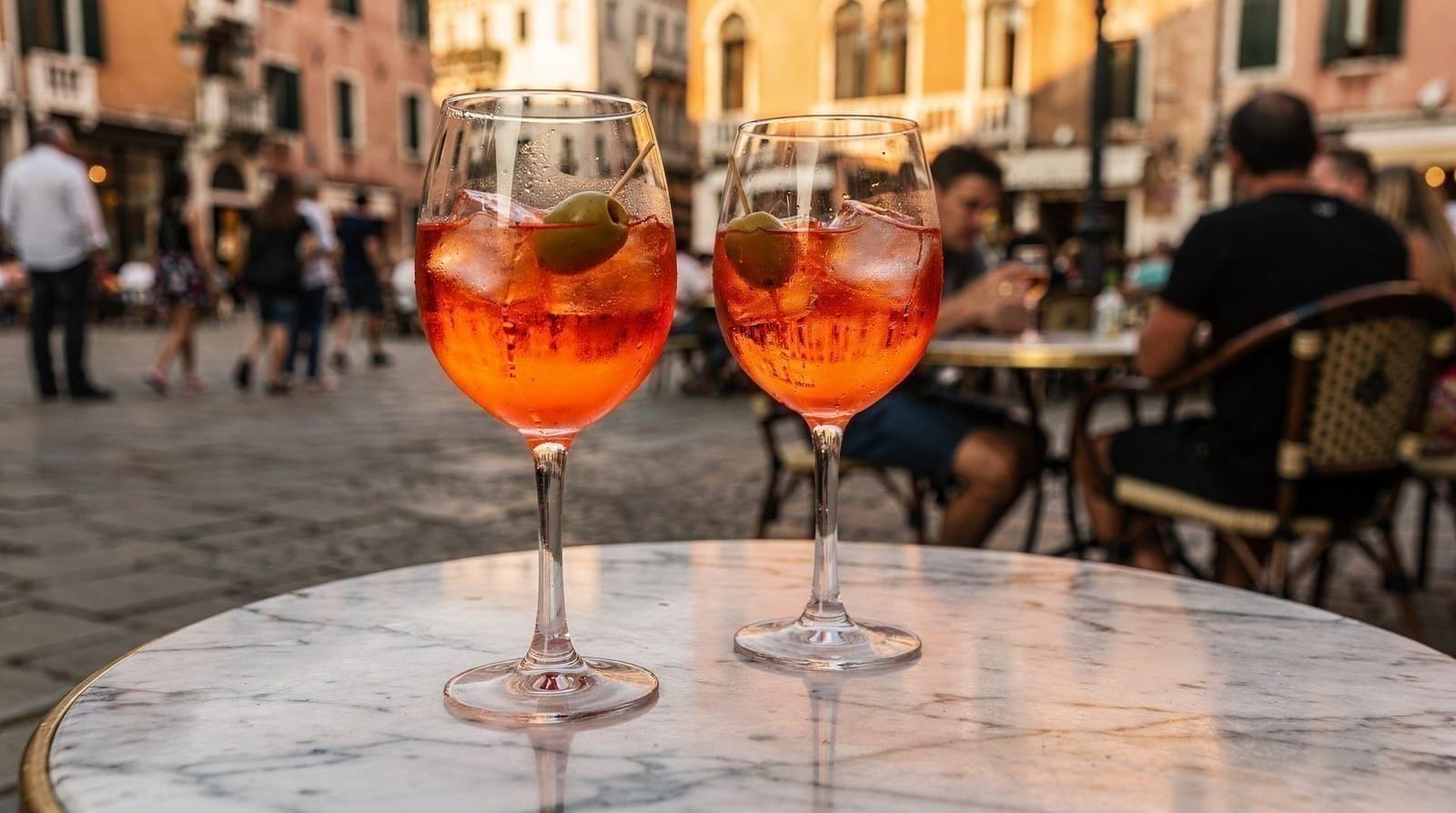
Spritz culture is strong. The Venetian spritz history post is accurate for Padua too — this is the heartland of the aperitivo tradition, and drinking a spritz in Piazza delle Erbe at 18h as the market stalls fold up around you is one of the specific pleasures of the Veneto.
Practical notes
The Scrovegni Chapel is non-negotiable. It must be booked at least several days in advance — ideally a week or more in high season — via the Musei Civici di Padova booking system. Entry is strictly timed: groups of 25 for 15 minutes, with a mandatory 15-minute climate acclimatisation period in an anteroom beforehand. The combination of small groups and limited time makes the booking essential; walk-ins are not normally possible.
The private Padua tour with Scrovegni Chapel handles all of this logistics and adds a guide who can explain the iconography of the frescoes — which significantly enhances the experience of the 15 available minutes.
Admission to the Scrovegni Chapel costs approximately €16 as of 2026. Combined with the Musei Civici ticket that covers the Palazzo della Ragione and the Museo degli Eremitani (which has the only surviving Mantegna frescoes outside of Mantua, damaged in the war but still extraordinary), the combo ticket is around €20 and represents remarkable value.
The Bo anatomical theatre tours run at specific times, are in Italian or English on different days, and cost about €8. Check the schedule at the Università di Padova website before visiting.
The comparison with Verona
Padua and Verona are the two major Veneto day trips from Venice, and they attract different types of visitors. Verona is for Roman history, a complete city experience, and summer opera. Padua is for art, specifically Giotto, and the quieter pleasures of a university town.
For most visitors, doing both on a Venice trip is perfectly possible — Verona one day, Padua another. For visitors who only have one day-trip available, the choice depends on interest: if you have any engagement with the history of Western art, Padua is the priority. If Roman history, a complete medieval city, and the option of an evening opera matter more, Verona wins.
Our position, stated plainly: Padua is more culturally significant and less visited. Verona is more immediately beautiful and easier to navigate without specific art-historical knowledge. Both are excellent. The best day trips ranked post works through the comparison in more detail.
How it fits into a Venice trip
Padua works best as an early day trip — take the 8h or 9h train, be at the Scrovegni Chapel for the first entry, spend the morning there and at the Bo, eat lunch in the piazzas, spend the afternoon more slowly (Sant’Antonio, a pasticceria, a last spritz), catch the 18h or 19h train back. You arrive in Venice for dinner having done something genuinely extraordinary without feeling rushed.
The Venice 3-day itinerary doesn’t include Padua because it is Venice-focused, but the Venice Veneto 7-day itinerary builds in a full Padua day and treats it as the equal of a day in Venice, which is what it deserves.
There is a reason Padua had the second-oldest university in the world, a reason it attracted Giotto and Donatello and Galileo (who taught here for eighteen years). It is not a consolation prize. It is a different great city that happens to be thirty minutes from a more famous one, and that proximity is your advantage.
Padua versus Padua-as-a-stop
Most visitors arrive with a Scrovegni Chapel ticket and a return train time already fixed, and treat everything else as filler. We’d argue the ordering should be reversed: book the chapel, then build the rest of the day around the city rather than around the chapel. The Padua day trip guide has the full logistics if you want a structured single day; the how we plan a Veneto week post shows how Padua fits into a longer regional trip alongside Verona and the Prosecco hills.
Padua costs at a glance
| Item | Cost |
|---|---|
| Scrovegni Chapel entry | Around €16 |
| Combo ticket (chapel + Palazzo della Ragione + Eremitani) | Around €20 |
| Bo anatomical theatre tour | Around €8 |
| Train from Venice (each way) | Around €5-10 |
| Lunch in the market piazzas | Around €12-20 per person |
FAQ
Do I need to book the Scrovegni Chapel in advance? Yes, essentially always. Visits are capped at 25 people for 15 minutes with a mandatory acclimatisation period beforehand, and slots fill up days to weeks ahead in spring and summer.
Is Padua worth it if I only have one Veneto day trip to spend? If you have any interest in art history, yes — the Scrovegni Chapel is considered the start of Western painting as we know it. If you want a livelier, more immediately picturesque day out, Verona is the alternative; the best day trips ranked post compares the two directly.