A day at the Lido: Venice's beach that most visitors miss entirely
The beach that Venice-haters never find out about
Here is a thing about the Lido that surprises most people: it exists. Not metaphorically — Venice has a real barrier island, accessible in twenty minutes by public vaporetto, with a proper Adriatic beach, sand, waves you can swim in, and a pace of life so different from the tourist-choked streets of San Marco that it is difficult to believe you have not changed countries.
We spent one full August day there during our most recent Venice trip and left wishing we had scheduled two. This is everything we found.
| Where | Lido di Venezia, 20 min by vaporetto from San Marco / Piazzale Roma |
| Cost | Free public beach; around €25-40 for loungers + umbrella at a private stabilimento |
| Time needed | Half a day minimum, a full day is better |
| Getting there | Vaporetto 5.1, 5.2 or 6 to Santa Maria Elisabetta |
| Best time | Late June to mid-September for swimming; September for fewer crowds |
Getting there
The vaporetto line 5.1 or line 6 from Piazzale Roma reaches the Lido in about twenty minutes via the Ferrovia and various intermediate stops. If you are already on the San Marco side, take the 5.2 from San Zaccaria — it crosses the lagoon and arrives at Santa Maria Elisabetta, the Lido’s main stop, in twelve minutes. With the standard ACTV pass the crossing costs nothing beyond what you already have; a single €9.50 ticket covers it if you are not using a day pass.
The vaporetto guide has full schedule and pricing information. In August the boats run frequently — every ten to fifteen minutes at peak times — but they fill up. Go early or late to avoid standing the whole way.
Once you arrive at the Lido, the beach is a fifteen-minute walk straight ahead along Gran Viale Santa Maria Elisabetta. You cannot miss it. The avenue is wide, tree-lined, and lined with cafes and gelaterie — already a different scale from the narrow calli of historic Venice. Bikes are available to rent near the vaporetto stop for a few euros an hour, and the flat island is well-suited to cycling.
The beach itself
The Lido’s beach divides into two types: privately managed concessions (stabilimenti balneari) and free public sections.
The private sections are the ones you see in photographs — rows of blue or orange sun loungers under matching umbrellas, a shower block, a bar serving Aperol spritz and club sandwiches. These cost money: a pair of loungers and an umbrella typically runs €25-40 for the day depending on the establishment and the row (front rows nearest the water are more expensive). The service is good, the facilities are clean, and there is something pleasant about having a designated patch of beach in August when the free sections fill up.
The free sections (spiaggia libera) are at the northern and southern ends of the main beach, and they are genuinely free — no reservation, no charge, you lay your towel and swim. They are more crowded, obviously, but perfectly functional if you are not staying all day and do not need a lounger.
The water is the Adriatic: warm in August (around 25°C), clear, and shallow enough near the shore that young children can wade without being immediately out of their depth. There is a light current but nothing alarming. We swam for an hour in the morning and found it excellent.
The Lido beyond the beach
The Lido is a proper town, not just a beach strip. The main avenue has decent restaurants, a supermarket, a pharmacy, and the kind of calm residential neighbourhood where people live their actual lives rather than existing for tourists.
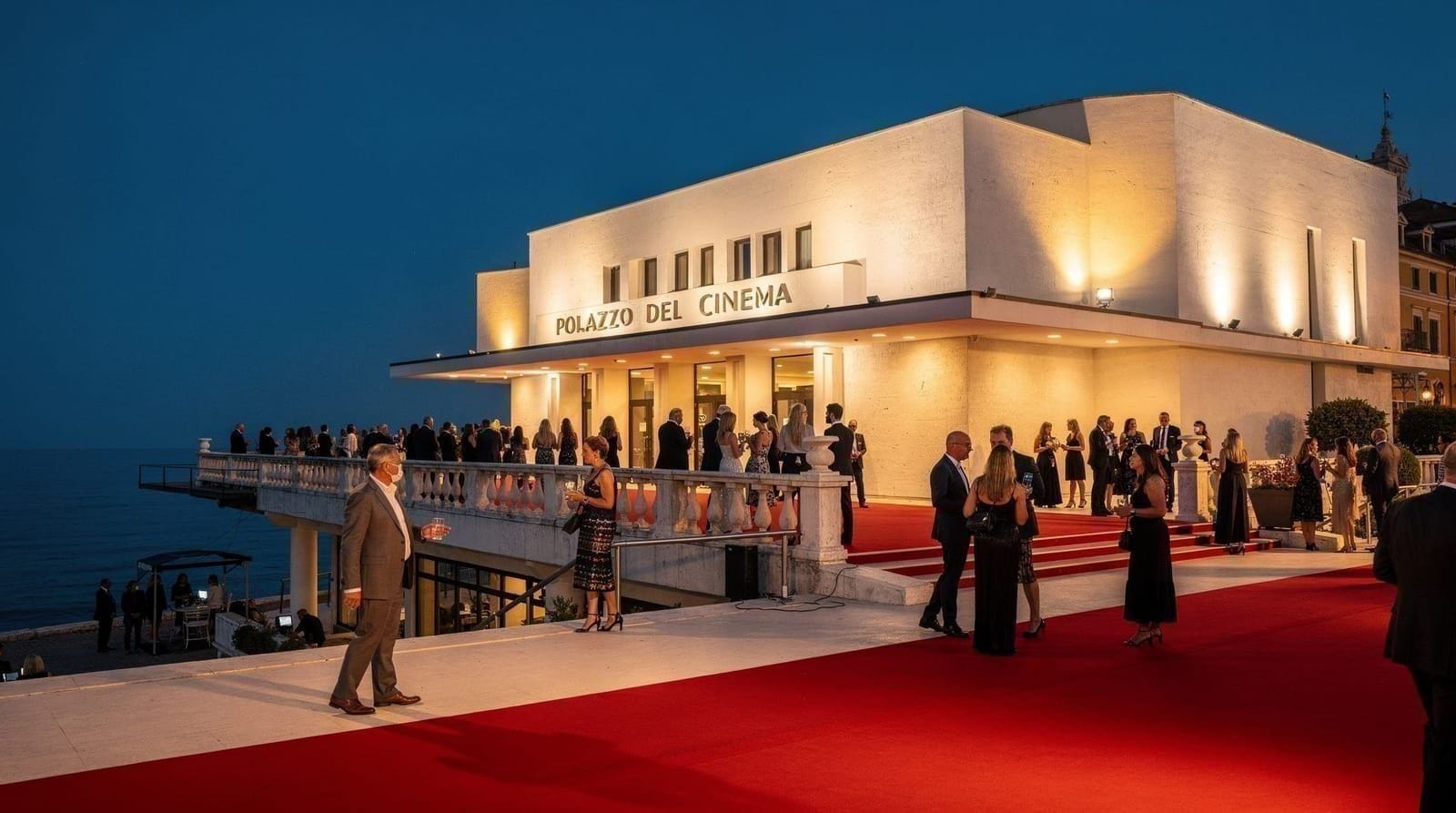
The Grand Hotel des Bains, now converted to private apartments, is the famous Thomas Mann hotel from Death in Venice — looking slightly melancholy and very beautiful behind its fence. The Palazzo del Cinema, home to the Venice Film Festival every September, is a slightly battered art deco structure that becomes the most glamorous building in Europe for eleven days a year and otherwise sits peacefully waiting. The Venice Film Festival visitor post covers the September atmosphere in detail if you are considering timing your trip around it.
The northern tip of the Lido has a small natural reserve worth an hour if you are interested in lagoon ecosystems. It is mostly lagoon birds and reeds, very quiet, completely free.
Eating and drinking
We had lunch at a restaurant on the seafront — a basic but good place that served grilled branzino, insalata di mare, and a cold Soave. Total for two: about €55, which is mid-range by Venice standards and reasonable by beach restaurant standards anywhere. The food was noticeably better than similar seafood restaurants near San Marco, possibly because the Lido has enough of a year-round local population that restaurants have to maintain quality.
For a cheaper option, the alimentari on Gran Viale do good sandwiches and you can eat on the beach. There are also several gelaterie that were excellent — we had a small boat (barchetta) of mixed gelato mid-afternoon that cost €3.50 and was very well spent.
When to go
August is busy but the Lido manages crowds better than central Venice because it has the physical space to absorb them. A Saturday in August will have more people than a Tuesday, but the beach is long and there is always room.
September is better in almost every respect: the film festival has usually just finished, the water is still warm, the crowds are thinner, and the late-September light on the Adriatic is extraordinary. The Lido guide has full seasonal notes.
October, if you are considering it: the beach establishments close around mid-month, and the free sections can have a windswept, end-of-season quality that is either charming or bleak depending on your temperament. Swimming is possible but brisk. We have not tried it ourselves.
How it fits into a Venice trip
The conventional wisdom is that you do central Venice first and the islands — Murano, Burano, Torcello, Lido — as day excursions once you have covered the main sights. This is sensible. We would say the Lido works best when you deliberately schedule it as a rest day: a day with no museums, no major monuments, no queues, just the sea and a long lunch. The how many days in Venice guide suggests four days is the minimum to see both the city and its islands without rushing.
If you are doing a sunset cruise on the lagoon, the Lido makes a natural complement — the Venice sunset cruise on a traditional Venetian boat departs from the San Marco side and loops out toward the Lido and back, so you get the outside view of the island in the golden hour even without spending the day there.
Cycling the Lido
The Lido is flat and relatively small — the main island is about twelve kilometres long and no more than a kilometre wide at most points. This makes it ideal for cycling in a way that Venice itself is not (Venice’s bridges make bikes impractical for most visitors).
Bikes can be rented near the Santa Maria Elisabetta vaporetto stop from several shops — expect €8-12 for a half-day, €15-18 for a full day for a basic city bike. With a bike, you can cover the length of the island in twenty minutes, access the quieter northern and southern beaches beyond the main tourist concentration, and explore the residential streets that most visitors never see.
The northern tip of the island, near the ferry terminal at Punta Sabbioni, has a beach area that is significantly less crowded than the main section in front of the Palazzo del Cinema. The road along the lagoon-facing western side of the island gives you Venice in the distance, with the boats and the horizon and a completely different perspective than anything available from the main island.
On the southern end, the Malamocco village is a small fishing community with a few restaurants, a couple of bacari, and a pace entirely at odds with the tourist version of the Lido. It is worth the twenty-minute bike ride from the centre.
A comparison with other beach options from Venice
If you are staying in Venice and want sea swimming, the Lido is the practical option. The nearby Pellestrina island, further south in the lagoon, is quieter and less developed but requires a longer boat journey (vaporetto to Chioggia or specific lines). Jesolo, on the mainland northeast of Venice, is a proper beach resort with long sandy beaches, but requires a bus or car and is more of a day trip for those based in Venice.
For most visitors, the Lido’s combination of easy vaporetto access, decent beach infrastructure, and genuine Adriatic swimming makes it the right choice. The lagoon islands day trip guide discusses the Lido alongside Murano, Burano, and Torcello for context on planning an islands day.
The Lido in October
We visited once in early October and found it transitional in a pleasant way. The main beach establishments were still open but winding down — fewer umbrellas, quieter service, prices slightly lower. The Adriatic was still warm enough for a brief swim (around 20°C). The summer crowds were almost entirely gone and the island had the relaxed feel of a place returning to its own pace.
If you are visiting Venice in October and want a beach afternoon, the Lido still works — but check that the specific stabilimento you want to use is still operating. The free public beaches remain accessible regardless. The best time to visit Venice guide covers the October context for the main city too.
The thing about the Lido
It is not spectacular in the way that San Marco is spectacular, or mysterious in the way that Torcello is mysterious. What it is, is normal — in the best sense. It is the part of Venice where people go to the beach, argue about where to park their bikes, walk their dogs along the waterfront in the evening. In a city that can feel overwhelmingly theatrical, the Lido’s ordinariness is a relief. One day there in the middle of a Venice trip and you return to the main island with fresh eyes, better ready to appreciate the extraordinary parts of it.
Bring sunscreen. The Adriatic sun is more direct than you might expect, and the beach provides no shade beyond the umbrellas. We made the first-day mistake of underestimating it and paid for it later.
Lido versus the other lagoon islands
If you are trying to decide where to spend a spare day, the Lido answers a different question than Murano, Burano, or Torcello do. Those three are about culture, colour, and history — a morning of looking and photographing. The Lido is about doing nothing on purpose. If your Venice trip has been wall-to-wall museums and campi, the Lido is the corrective; if you are already short on time, the northern islands earn their place first. The lagoon islands day trip guide weighs all four options against each other in more depth, and the how many days in Venice guide is worth checking before you commit a whole day to the beach.
A short seasonal cheat sheet
| Month | Sea | Crowds | Notes |
|---|---|---|---|
| June | Warm enough, ~22°C | Moderate | Long daylight, stabilimenti fully open |
| July-August | Warm, ~25°C | Busy on weekends | Peak season, book loungers in advance |
| September | Still warm, ~23°C | Thinner | Our pick; film festival crowd clears by mid-month |
| October | Cool, ~20°C | Quiet | Beach clubs wind down mid-month; free sections stay open |
FAQ
Do I need to book a sun lounger on the Lido in advance? In July and August, yes, especially on weekends — the popular stabilimenti near Santa Maria Elisabetta fill up. Outside peak summer, or if you are happy with the free public beach, no booking is needed.
Can I visit the Lido as a half-day trip from central Venice? Yes. The vaporetto crossing takes 12-20 minutes depending on the line and starting point, so a half-day of two to three hours on the beach is realistic if you are short on time — though a full day lets you also explore Malamocco or rent a bike.