Going to Venice for the film festival: what it's actually like as a visitor
The festival the general public can actually attend
The Venice Film Festival — officially the Mostra Internazionale d’Arte Cinematografica — is the world’s oldest film festival, running since 1932. Every year in late August and early September, the Lido transforms from a pleasant Adriatic beach island into something altogether more theatrical: red carpets, studio limousines arriving by water taxi, camera crews at every entrance, and an atmosphere of controlled glamour that is quite unlike anything else Venice offers.
| Where | The Lido, Palazzo del Cinema |
| When | Late Aug–early Sept, 2026: 2–12 Sept |
| Public screenings | Around €12–25, book online ~2 weeks ahead |
| Outdoor Arena screenings | Around €3–5, free some evenings |
| Getting there | Vaporetto 5.2 from San Zaccaria, ~12 min |
The 2026 edition runs from 2 to 12 September. I can tell you from experience that most visitors assume the film festival is for industry professionals only — that without press credentials or industry accreditation, there is nothing to see or do. This is not quite right. Here is what is actually available.
What the general public can access
Public screenings. A portion of the festival programme is available to the general public via online ticketing. These are typically the same films shown to industry and press, at the same venues, on slightly different schedules. Tickets go on sale online about two weeks before the festival opens — check the official La Biennale di Venezia website for dates. Prices range from roughly €12 for an early-afternoon screening to €20-25 for evening showings at the Sala Grande. These sell out, particularly for anticipated titles, so book as soon as they are available.
The outdoor screenings (Arena). Each evening, the festival screens a film on an outdoor screen in an open-air space at the Lido. These are free or very low cost (€3-5 in recent years) and enormously popular — queues form an hour or more before. The films are often the same day’s major premieres or classic retrospective titles. This is the most accessible way to participate in the festival atmosphere without booking anything weeks in advance.
The red carpet. Technically public, in the sense that the approach to the Palazzo del Cinema has a public area where spectators gather for the evening premieres. The reality is that this space fills from mid-afternoon for major-star premieres, and the actual red carpet is separated from the public by barriers, so what you see is a distant glimpse of people walking up stairs. It is entertaining for an hour if you are already there; not worth a specific trip from central Venice.
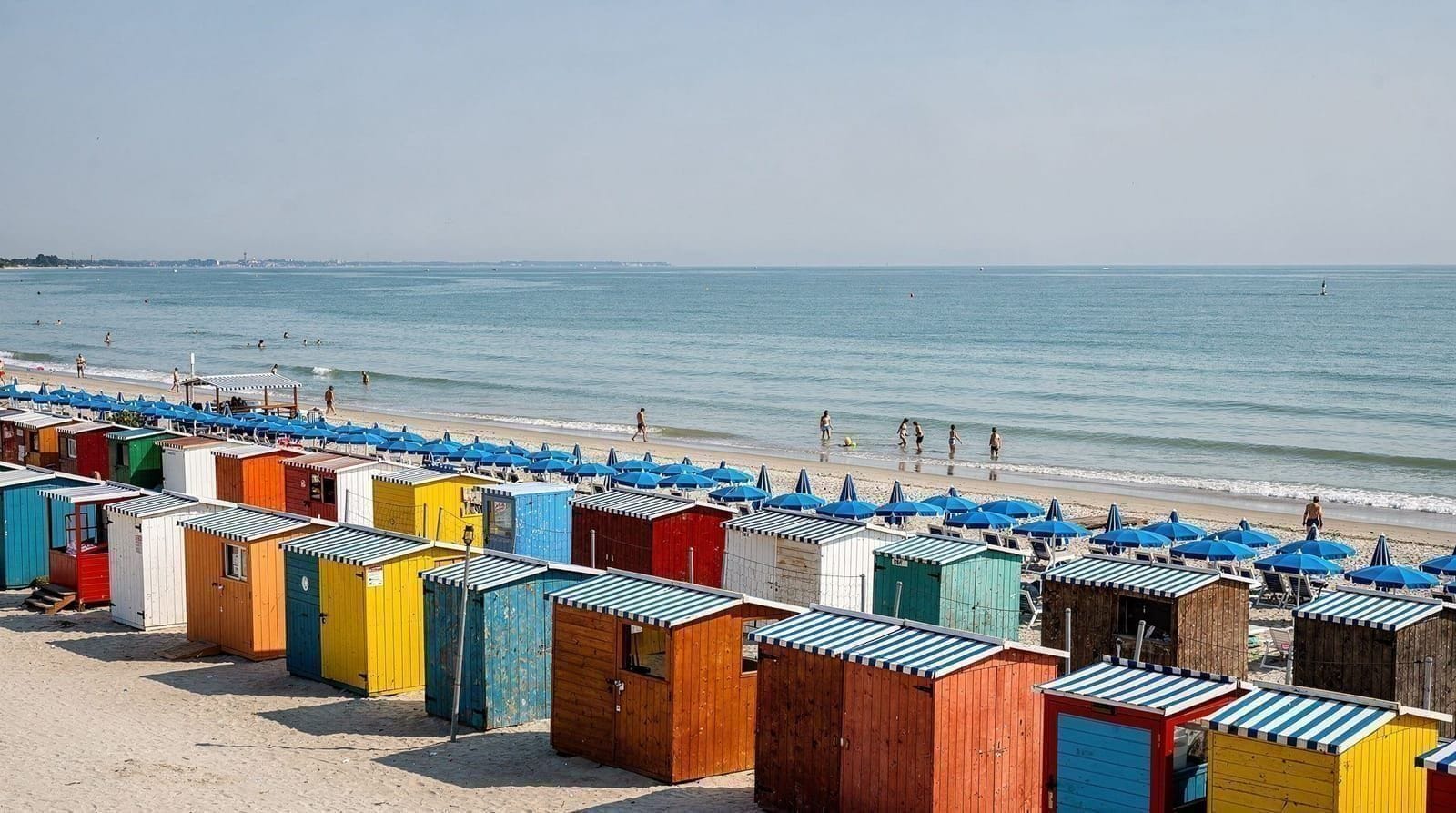
The Lido itself. The entire island changes during the festival. Restaurants are booked solid for evening meals but lunch and mid-afternoon tables are easier to find. The beaches continue operating normally; the combination of an Adriatic swimming afternoon and a film in the evening is genuinely pleasant. The main avenue fills with film posters, production company banners, and the particular charged atmosphere of an event where something is happening that matters to many people.
Getting there during the festival
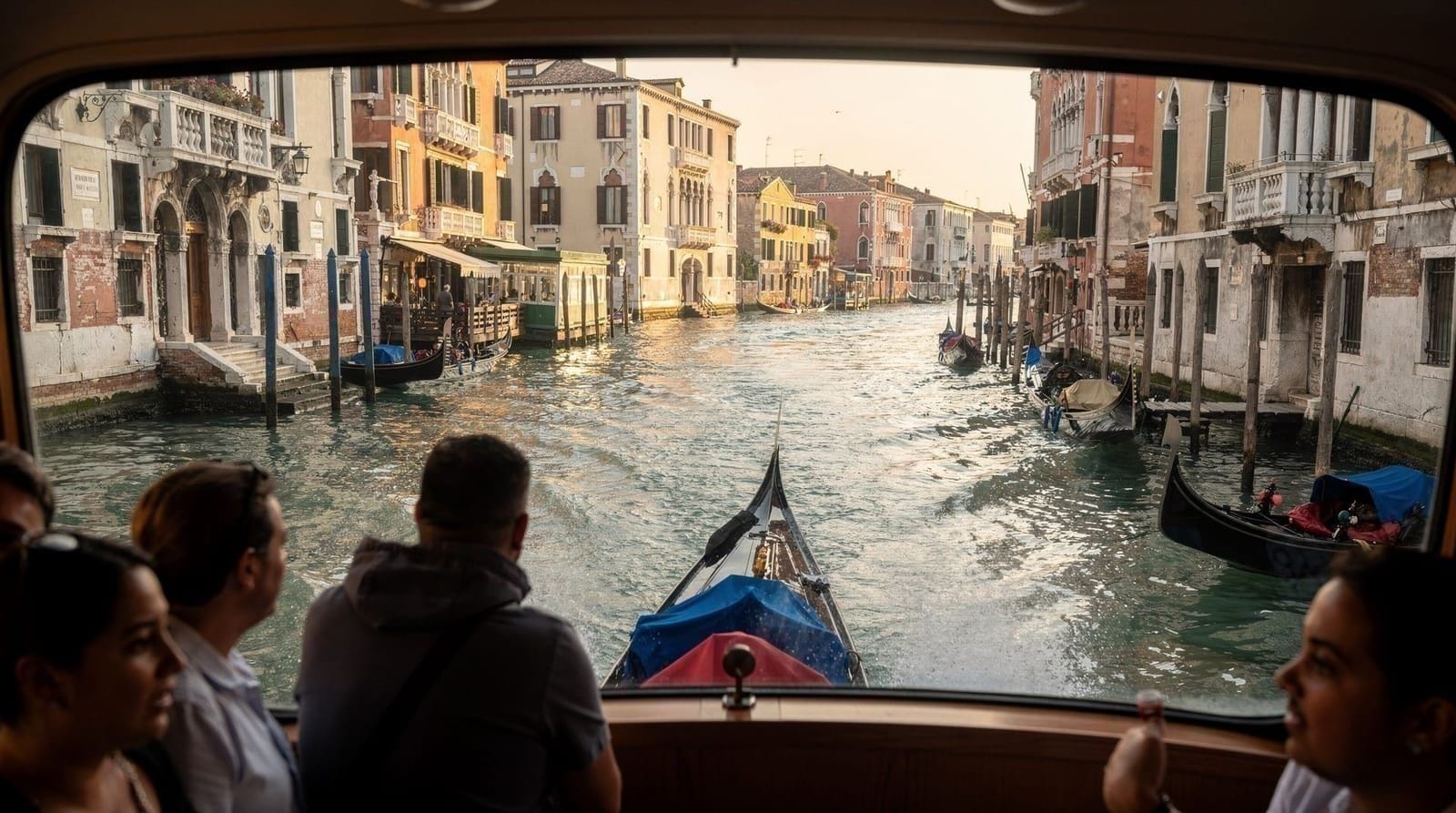
The vaporetto is the standard route from central Venice — line 5.2 from San Zaccaria, about twelve minutes. During the festival, particularly in the early evening when premieres are starting and again after midnight when they end, these boats are extremely full. Add thirty minutes to your journey time in either direction. The water taxi option is faster but costs €50-80 one-way from San Marco; some people split this among a group for evening events.
Festival organisers also run special shuttle boats from the main vaporetto stops to the Palazzo del Cinema, which are free with a valid film ticket.
The Lido guide has the full transport picture for the island year-round; the vaporetto logistics are the same but considerably more crowded during the festival period.
Where to stay
If you want to be based at the Lido during the festival, book six months in advance. The cluster of hotels near the Palazzo del Cinema — the Hotel Excelsior, the Hotel des Bains complex (now apartments, so no longer bookable), and the smaller hotels on Via Lepanto and nearby streets — fills entirely with press, industry, and serious cinephiles. Mid-range options on the Lido fill almost as quickly.
The alternative, which many visitors choose, is to stay in central Venice and commute. This works well for daytime screenings but makes late-evening viewings more complicated — the last vaporetto runs until around 1h, which is manageable for most screenings.
The where to stay in Venice guide has general advice on Venice accommodation; for festival timing specifically, expect prices 25-40% higher than the same dates without the festival.
The reality of star-spotting
I will be honest: if you are going primarily to see famous actors in person, the film festival is less reliable than it sounds. Major stars attend for their film’s premiere and are often gone within twenty-four hours. The chance of being in the right place at the right time for any particular celebrity is low unless you have specific schedule information (published in advance by the festival).
What you will see are filmmakers, producers, critics, and people involved in the industry at every level — plus a general atmosphere of cinematic excitement that is quite real. The films are the actual product, and they are very good.
September in Venice generally
The film festival runs at the very end of summer, and even the days without screenings have a particular quality at this time of year. The August crowds have thinned — locals say Venice feels like itself again from September. The water is still warm enough to swim at the Lido. The light is turning toward autumn gold. The evenings are cooler and pleasant for walking.
September is also the month of the best time to visit Venice: many experienced travellers and the how many days in Venice guide specifically recommend it as the optimal month. The festival adds an extra layer of energy to what is already an excellent time to be there.
Acqua alta at this point in the year is rare but not impossible — the season runs from October through March, with the very earliest tidal events sometimes occurring in late September. It is not something to plan around in September; simply be aware it exists. The acqua alta guide explains the MOSE barrier system that now limits the worst flooding.
The programme and how to read it
The Mostra programme is published on the La Biennale website several weeks before the opening. It divides into several sections: the main Competition (which awards the Golden Lion), Horizons (Orizzonti, for less mainstream international cinema), Biennale College Cinema (works made with festival funding), and Out of Competition (larger commercial films, documentaries, special events).
For general visitors, the Out of Competition section often has the most accessible material — major films from directors and studios that audiences already know. The Horizons section has the more adventurous programming and is where the most interesting films often appear, but requires more tolerance for unfamiliar subject matter.
The Retrospective, which focuses on cinema history and screens classic or restored films, is worth looking at if you have a particular interest in film history — screenings are typically cheaper and less crowded than the main competition.
What to do when you are not watching films
The festival exists within a wider Venice that continues normally. Central Venice during the Mostra period has its usual range of things to offer — the Accademia gallery, Doge’s Palace, the back calli of Cannaregio and Dorsoduro, the cicchetti and spritz circuit. The festival concentration is on the Lido; the city itself is not dramatically more crowded in September than in late August.
For visitors combining a festival visit with a broader Venice trip, the natural structure is: two or three days at the Lido with screenings; two or three days in central Venice and the lagoon islands; a day trip to Verona or Padua. The Venice 3-day itinerary and the how many days in Venice guide provide the framework.
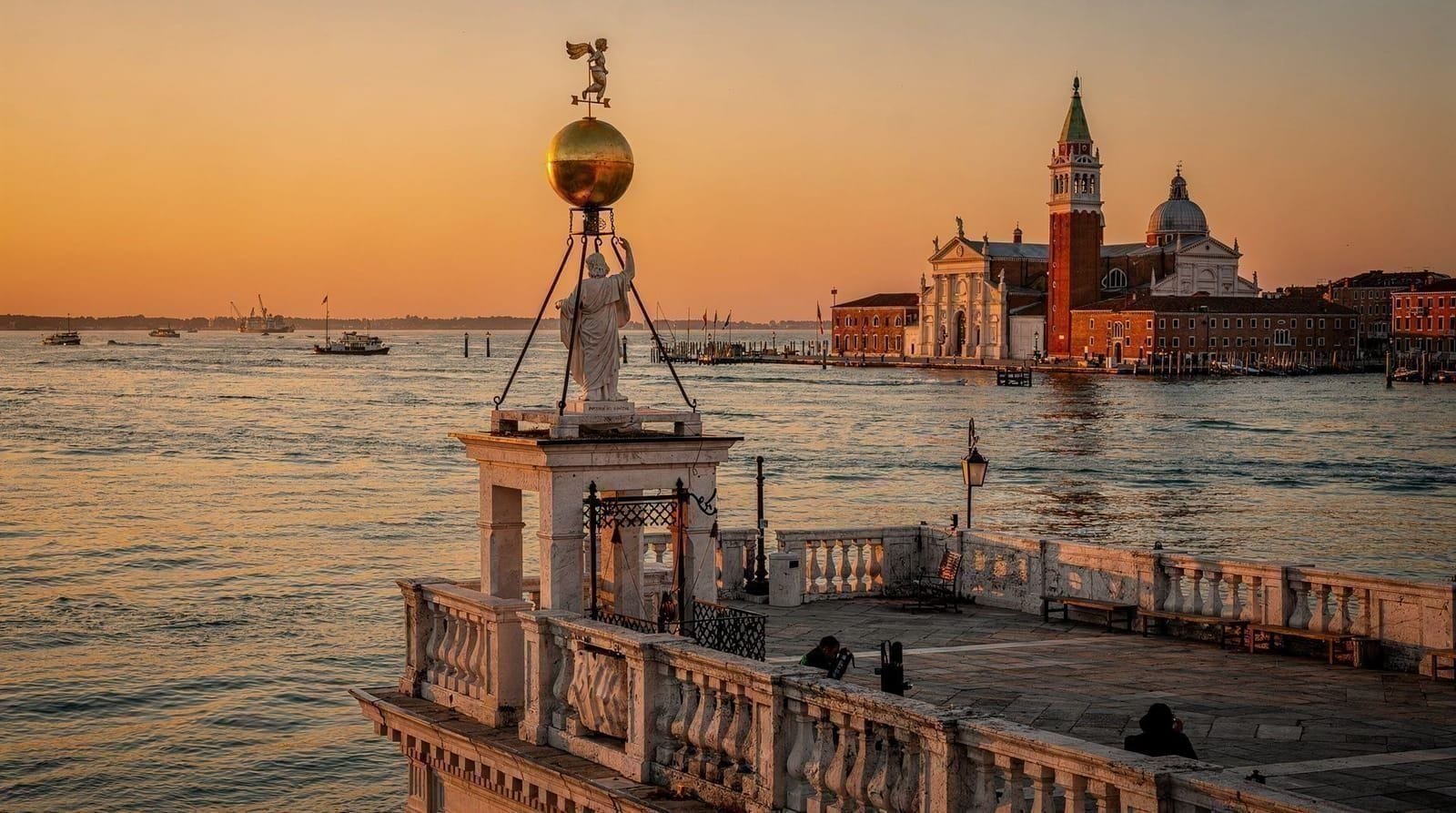
Sunset from the Lido’s lagoon side, looking back at Venice in the fading light, is one of the better September evening options — see the where to watch sunset post for alternatives if you are not Lido-based.
One thing worth knowing about the films
Many of the films premiering at Venice go on to win major awards — the Golden Lion competition is one of the most prestigious in world cinema. In recent years the festival has been notable for a high proportion of genuinely excellent films that were not yet widely distributed, which means attending screenings is a real opportunity to see important work before it reaches wider audiences. The films shown in public screenings are not second-tier material; they are the same titles the press sees.
If you are a film enthusiast and happen to be in Venice in early September, arranging your trip around even two or three screenings is one of the best experiences the city offers in that season. If the festival is not your primary interest, the Lido is worth an afternoon visit regardless — the Lido beach day post covers the island in normal operation — and the festival atmosphere adds something extra without requiring any specific planning.
Ticket types compared
| Option | Cost | Booking window | Best for |
|---|---|---|---|
| Public daytime screening | Around €12–15 | ~2 weeks ahead online | Casual visitors, weekday flexibility |
| Public evening screening (Sala Grande) | Around €20–25 | ~2 weeks ahead, sells out fast | Anticipated premieres |
| Outdoor Arena screening | Around €3–5, some free | Same day, queue-based | Budget, festival atmosphere |
| Red carpet viewing area | Free | No booking, arrive early afternoon | Star-spotting, low reliability |
Combining the festival with the rest of your trip
Because the festival concentrates on the Lido, it slots naturally into a longer Venice stay rather than requiring a dedicated trip. If you are only interested in a taste of the atmosphere, a single evening — outdoor Arena screening plus a walk along the Lido’s main avenue among the festival banners — is enough to say you’ve experienced it. For a fuller visit, pair a night or two of screenings with the best time to visit Venice guide, which flags September generally, and with late-night Venice if you’re planning to stay out for post-screening drinks, since the last vaporetti back to central Venice run until around 1am.
The 2026 Mostra runs 2-12 September. Public tickets typically go on sale in late August.
FAQ
Do I need industry accreditation to attend the Venice Film Festival? No. A portion of the programme is open to the general public through online ticketing for standard screenings, plus free or low-cost outdoor Arena screenings each evening — no press pass or industry credential required.
How far ahead should I book tickets? Public screening tickets typically go on sale about two weeks before the festival opens on the official La Biennale di Venezia website. Popular evening screenings sell out within days, so book as soon as tickets appear if you have specific titles in mind.