Lido di Venezia guide: Venice's beach island and Film Festival home
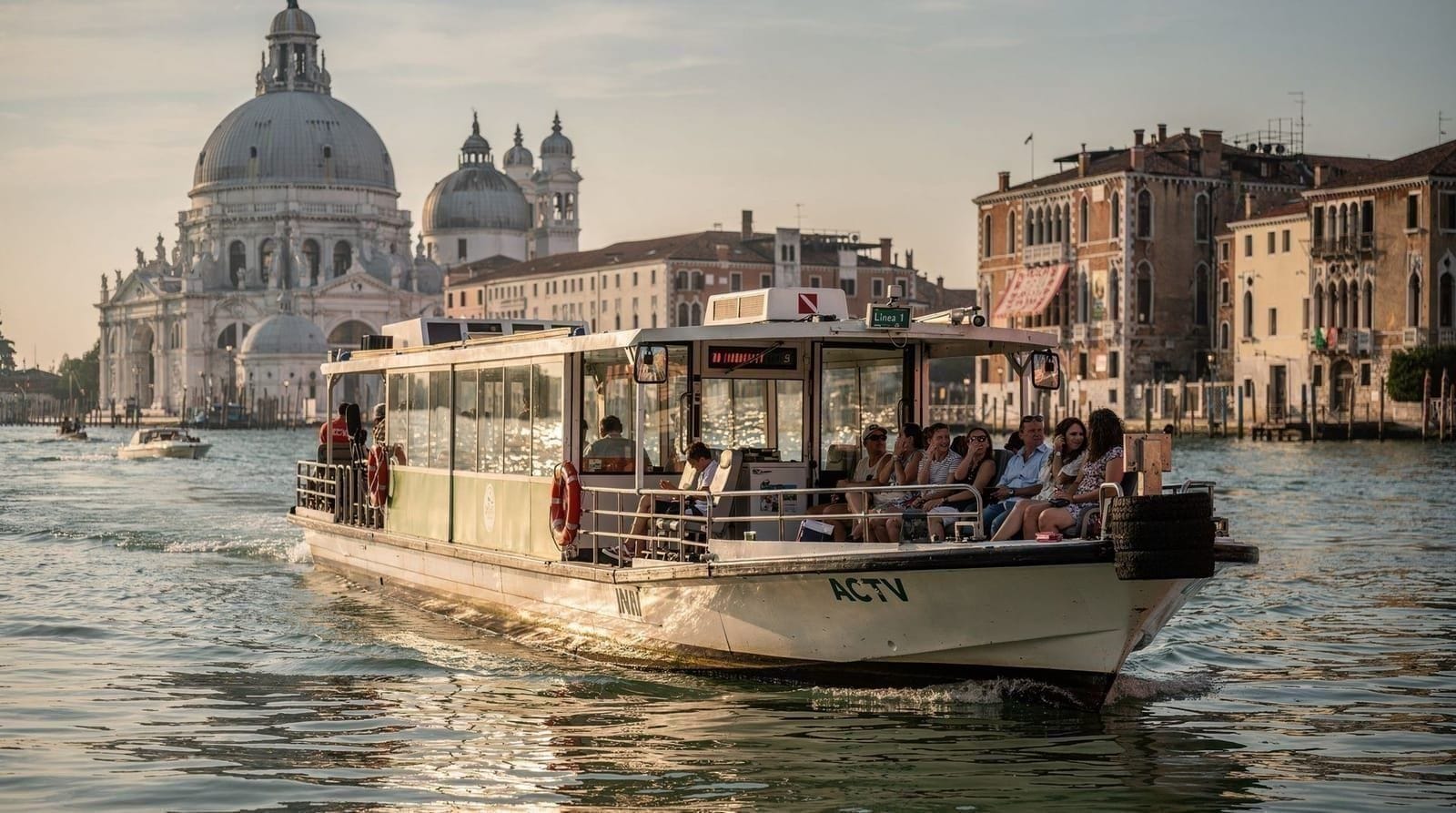
Venice: sunset cruise by typical Venetian boat
Is the Lido worth visiting as a day trip from Venice?
Yes, especially in summer. The Lido offers proper Adriatic beaches (free and paid), a completely different pace from Venice proper, and a pleasant cycling route along the seafront. In September, the Venice Film Festival takes over the Palazzo del Cinema. Budget half a day or a full beach day.
The beach and the films: Venice’s other island
The Lido di Venezia is a narrow barrier island — 12 kilometres long, rarely more than a kilometre wide — that separates the Venetian Lagoon from the Adriatic Sea. It is the island where Venice’s residents come to swim, where the world’s oldest Film Festival takes place every September, and where the art deco hotels and beach cabins of early 20th-century resort culture are best preserved.
The Lido is emphatically not like the rest of Venice. There are cars here (one of the very few parts of the Venice commune where they operate). The pace is slower and more resort-like. The streets are broader, lined with trees. In summer, the island’s permanent population of around 17,000 swells significantly with Venetians coming for beach days and tourists staying in the beachfront hotels.
Most visitors to Venice either ignore the Lido entirely or treat it as a quick half-day beach excursion. Neither does it full justice. This guide explains what the Lido actually offers and how to spend time there effectively.
| Where | Barrier island, 25 minutes by vaporetto from San Marco |
| Cost | free beach available; paid loungers around €15–25/day |
| Time needed | half day for a quick visit; full day for beach + cycling |
| Getting there | vaporetto lines 1, 5.1, or 5.2 to Piazzale Santa Maria Elisabetta |
| Best time | May–September for beach and cycling; September for the Film Festival |
Getting there and orientation
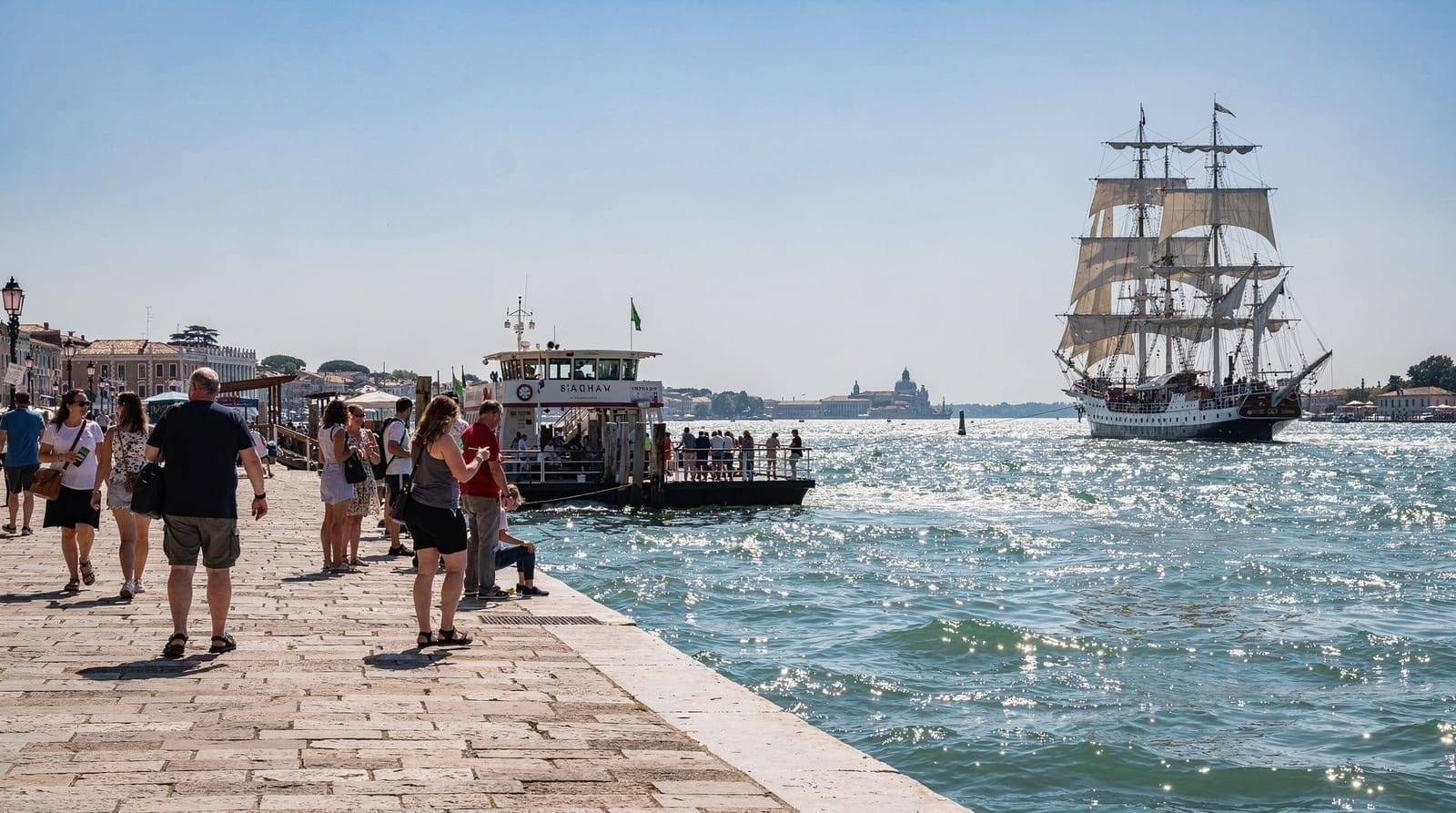
Vaporetto: Line 1 (slow, scenic) and lines 5.1/5.2 (faster) connect Venice to the Lido. From San Marco Zaccaria, the journey on line 5.1 takes about 25 minutes; on line 1 it takes longer but passes the Giudecca canal and Giardini in Castello. The main Lido landing is at Piazzale Santa Maria Elisabetta on the lagoon side (west) of the island.
From the vaporetto stop, Gran Viale Santa Maria Elisabetta runs straight east across the island to the Adriatic beach — about a 10-minute walk.
Orientation: The island runs northwest to southeast, with the lagoon on the west side and the Adriatic on the east. The northern tip (Sant’Erasmo ferry) is lagoon-facing; the southern end is predominantly residential. The town centre and beach resorts are concentrated in the northern third of the island.
The beaches
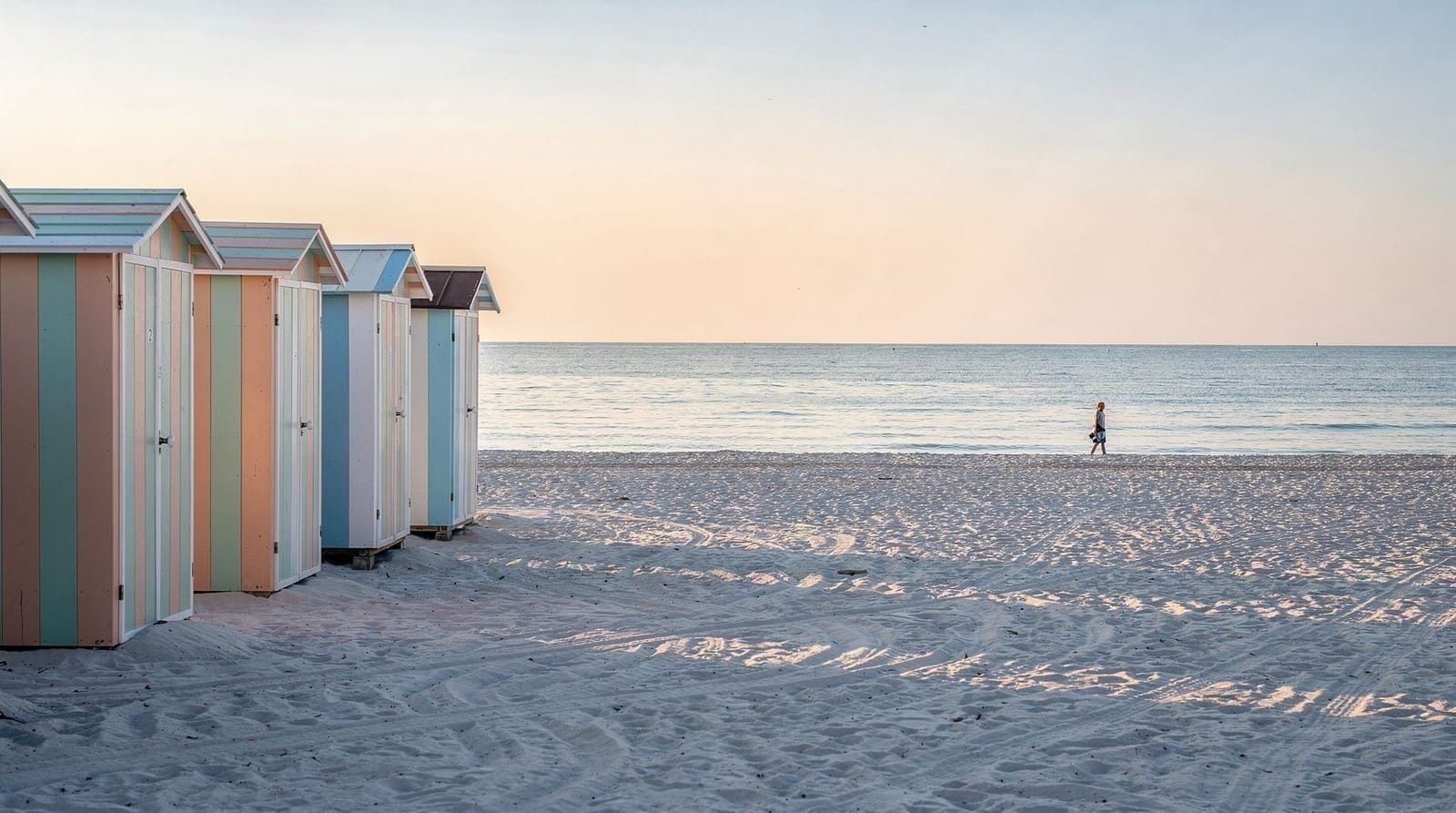
The Adriatic beaches of the Lido are the main summer draw. The beach faces east, which means morning sun and afternoon shade — good for those who want to avoid direct afternoon sun; less ideal for sunset swimming.
Free beach (spiaggia libera): At the southern end of Gran Viale, and at several other points along the seafront. Facilities are minimal (a few changing rooms); the sand is clean. Can get crowded in July and August; arrive early for a good spot.
Paid beach concessions (stabilimenti): Most of the organised beach area is divided into private concessions — each with their own coloured umbrellas, sun loungers, changing cabins, and beach bars. Prices range from €15–25 per person per day for a sun lounger with umbrella in peak season. The quality is generally good: clean sand, regular maintenance, a beach bar with food and drinks. The major establishments — Bagni Alberoni, Stabilimento Ausonia, and several others — have established clienteles and are worth booking ahead in July and August.
Swimming: The Adriatic at the Lido is generally clean (Blue Flag status in recent years). Water temperature peaks in July–August at around 26–28°C. Jellyfish occasional but not usually problematic.
Free beach vs. paid stabilimento
| Free beach (spiaggia libera) | Paid stabilimento | |
|---|---|---|
| Cost | Free | around €15–25/person/day |
| Facilities | Minimal changing rooms | Loungers, umbrellas, beach bar, showers |
| Crowding | Busy July–August, arrive early | Managed capacity, more comfortable |
| Booking | Not needed | Recommended ahead in peak season |
| Best for | Budget days, short visits | A full relaxed beach day |
For a practical beach day, see the Venice in summer guide and the beach day trip guide.
Cycling the Lido
The Lido is flat and has proper cycling infrastructure — almost unique in the Venice area. Bike hire is available from several shops near the Piazzale Santa Maria Elisabetta vaporetto stop, typically €5–10 per hour or €15–20 per day for a standard bicycle.
A recommended cycling route: from the vaporetto stop, east across Gran Viale to the beach, then south along the seafront cycle path toward Malamocco (a lagoon-fishing village worth stopping in), and further south to Alberoni at the southern tip — about 10km each way, flat, well-surfaced. The Alberoni end has a nature reserve (Dune degli Alberoni), a golf course, and a quieter beach section.
Alternatively, cycle north toward the Sant’Erasmo ferry terminal for views across the northern lagoon.
The Venice Film Festival (Mostra del Cinema)
The Venice Film Festival (Mostra del Cinema) is the world’s oldest international film festival, held annually at the Palazzo del Cinema on the Lido. In 2026, it runs 2–12 September. The red carpet and main competition screenings are celebrity-heavy and covered by international press; the competitive sections (Golden Lion, Silver Lion) are taken seriously by serious cinema.
For visitors:
- Press and industry screenings require accreditation. Not available to the general public.
- Public screenings exist for many non-competition films — tickets go on sale in advance at the festival box office and online. Popular screenings sell out fast; book early.
- Red carpet access as a spectator is possible from certain areas outside the Palazzo del Cinema — free, but competitive for position. Arrivals typically happen in the late afternoon.
- The atmosphere during the festival is noticeably different — the Lido fills with film industry people, international press, and Venice residents who follow the festival. Several outdoor screenings and events run in the evenings.
Read the Biennale guide for the broader context of Venice’s cultural events calendar.
Art deco architecture
The Lido’s resort boom in the early 20th century left a legacy of art deco and Liberty-style architecture that is one of the island’s underappreciated assets. The Hotel Excelsior (now a Marriott property) and the Hotel des Bains (closed as a hotel, converted to apartments) are the most prominent examples — both near the Palazzo del Cinema and both from the 1900–1930 period. The Excelsior’s Moorish-influenced facade and the des Bains’ Belle Époque interiors (partially visible) represent a resort culture that has almost entirely vanished elsewhere.
Walking north from Gran Viale toward the Palazzo del Cinema, the neighbourhood contains numerous villas and small hotels in the same art deco and Liberty style — worth a slow walk even without a specific destination.
Malamocco: the lagoon village
Malamocco is a small village on the lagoon side of the Lido, about 4km south of the main town, accessible on foot or by bicycle. It is one of the most photogenic and least-visited places in the Venice area — a tiny fishing village with canals, a small campo, and a church, looking essentially unchanged from the 16th century. Malamocco was once the capital of the Venetian lagoon settlements before Venice proper grew to dominance.
The village has a few hundred permanent residents, one or two osterie, and a fishing harbour. There are no tour groups. The cycle ride from the main Lido town to Malamocco is about 30 minutes on flat roads.
Lido as an alternative to the lagoon islands
Visitors deciding between a Lido beach day and a Murano/Burano lagoon islands trip are choosing between two genuinely different experiences: the Lido is about beaches, cycling, and resort pace; the lagoon islands day trip is about glass, colour, and history. Both are reachable in under an hour from San Marco, so combining a Lido morning with a lagoon-islands afternoon is possible for an ambitious day, though most visitors are happier splitting them across two days if time allows.
The Lido for families
The Lido is one of the better options in the Venice area for families with children — particularly in summer. The beaches (both free and paid) are child-appropriate, the cycling is excellent for older children, and the pace is more relaxed than the main island. The vaporetto journey from Venice is short enough that a Lido beach day can be combined with a morning on the main island.
The Venice with kids guide and the family-friendly Venice guide both include the Lido as a primary recommendation.
Eating on the Lido
The restaurants along Gran Viale and around the main town are more varied and generally better value than equivalent options near San Marco. A sit-down lunch for two in a reasonable restaurant runs €30–50. The seafood options (the lagoon-facing side has several restaurants serving fresh-caught fish) are notably good — the Lido’s position between lagoon and sea means the fish supply is fresh.
For a beach lunch: most of the stabilimenti serve food at their beach bars — typically panini, salads, and simple hot dishes at prices slightly above normal but not extravagant. A bar in Malamocco will make you a sandwich for lunch at prices aimed at residents.
Venice: sunset cruise on a Venetian boatLido in other seasons
The Lido is primarily a summer destination — beaches and cycling work best from May to September. In autumn and winter it is considerably quieter, and many beachfront establishments close. However:
- September: Film Festival plus shoulder-season prices and weather
- October–November: Quiet, atmospheric, easy cycling without crowds; some of the art deco hotels stay open
- Spring (April–May): Good cycling weather, beaches begin to prepare; some establishments open from Easter
The best time to visit Venice guide covers seasonality across the whole Venice area including the Lido.
Frequently asked questions about the Lido
Can I see Venice from the Lido?
Yes — from the lagoon-facing (west) side of the Lido, particularly from the northern end near the vaporetto stop, you have a view across the lagoon toward the Venice skyline: the campanile, the Salute dome, and the rooftops of Dorsoduro in the distance. This view is best at golden hour.
Is the Lido a good base for visiting Venice?
Yes — accommodation is generally cheaper than on the main island, and the vaporetto connection is regular (every 10–15 minutes in peak hours). The commute from the Lido to San Marco is 25–35 minutes each way. Some visitors prefer the quietness of the Lido as a base while making day trips into the main island.
Is the Lido expensive?
Compared to the main island, no. Beach access (paid sections) can add up to €20–25 per person per day, but restaurants, accommodation, and everyday purchases are noticeably cheaper than in San Marco or even Cannaregio.
Does acqua alta affect the Lido?
The Lido is higher-lying than the main island and is rarely flooded — the Lido is actually part of the barrier system that the MOSE flood barriers are built into. During the highest acqua alta events, low-lying parts of the Lido town can be affected, but it is far less vulnerable than Piazza San Marco.
What is there to do on the Lido in the evening?
Evening options on the Lido are limited by mainland standards. The main town has a cluster of restaurants and a few bars along Gran Viale. During the Film Festival, outdoor screenings and festival events run in the evenings. For a broader evening, it is easier to take the vaporetto back to Venice proper — see the evening in Venice guide.
Top experiences
Bookable activities with verified prices and instant confirmation on GetYourGuide.