A photography morning in Burano: what time to arrive and where to stand
Why the time of day is everything
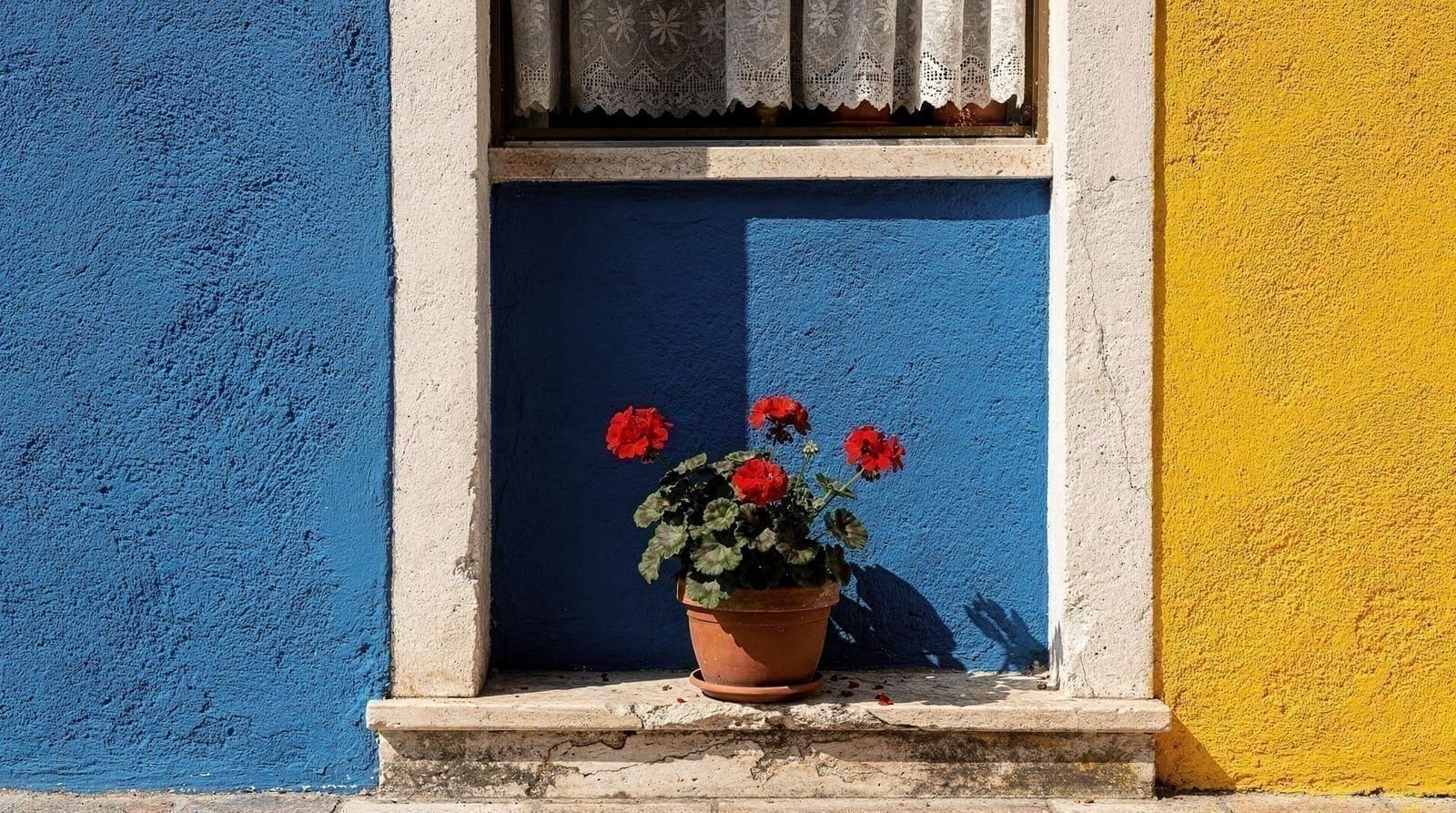
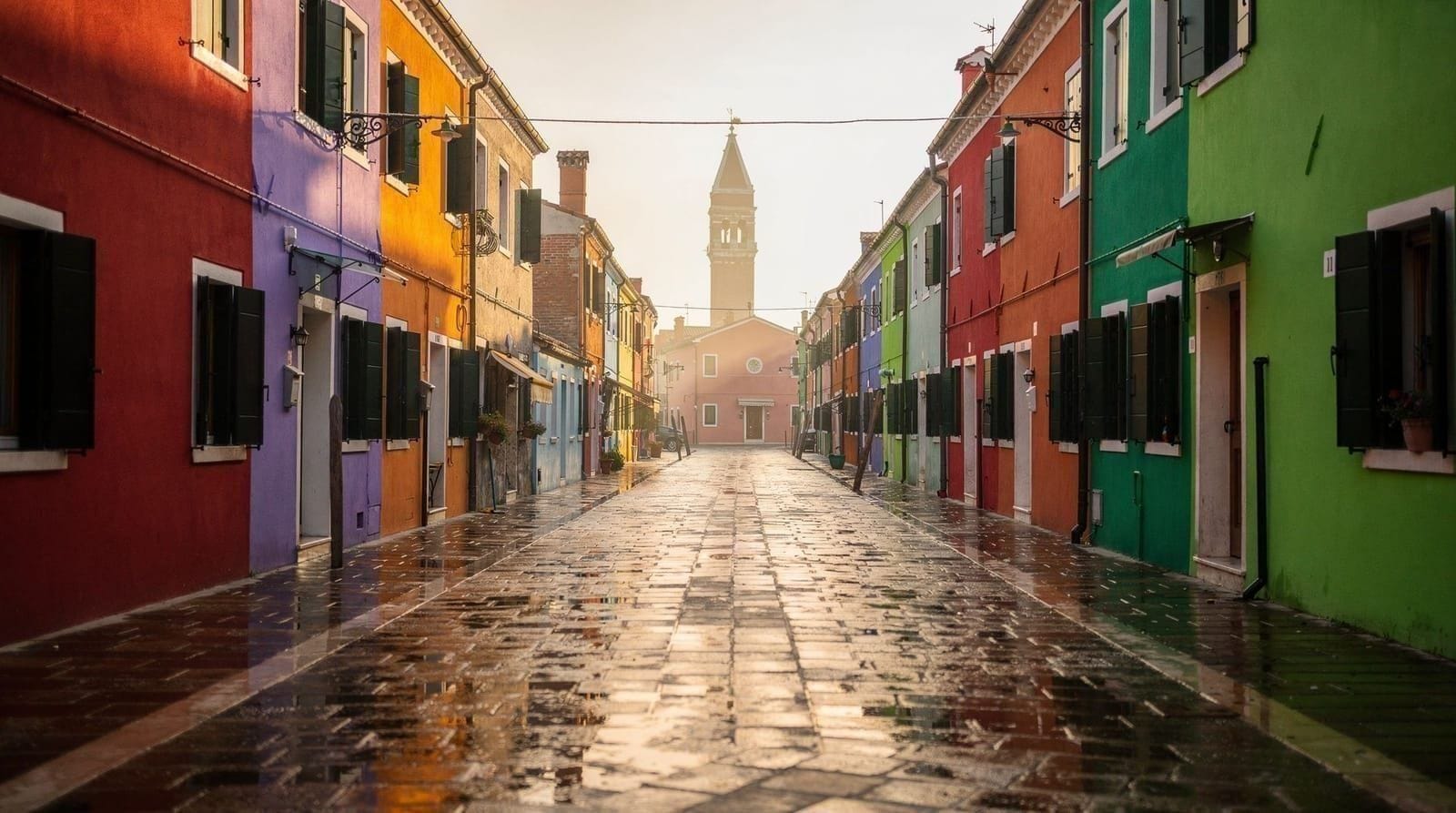
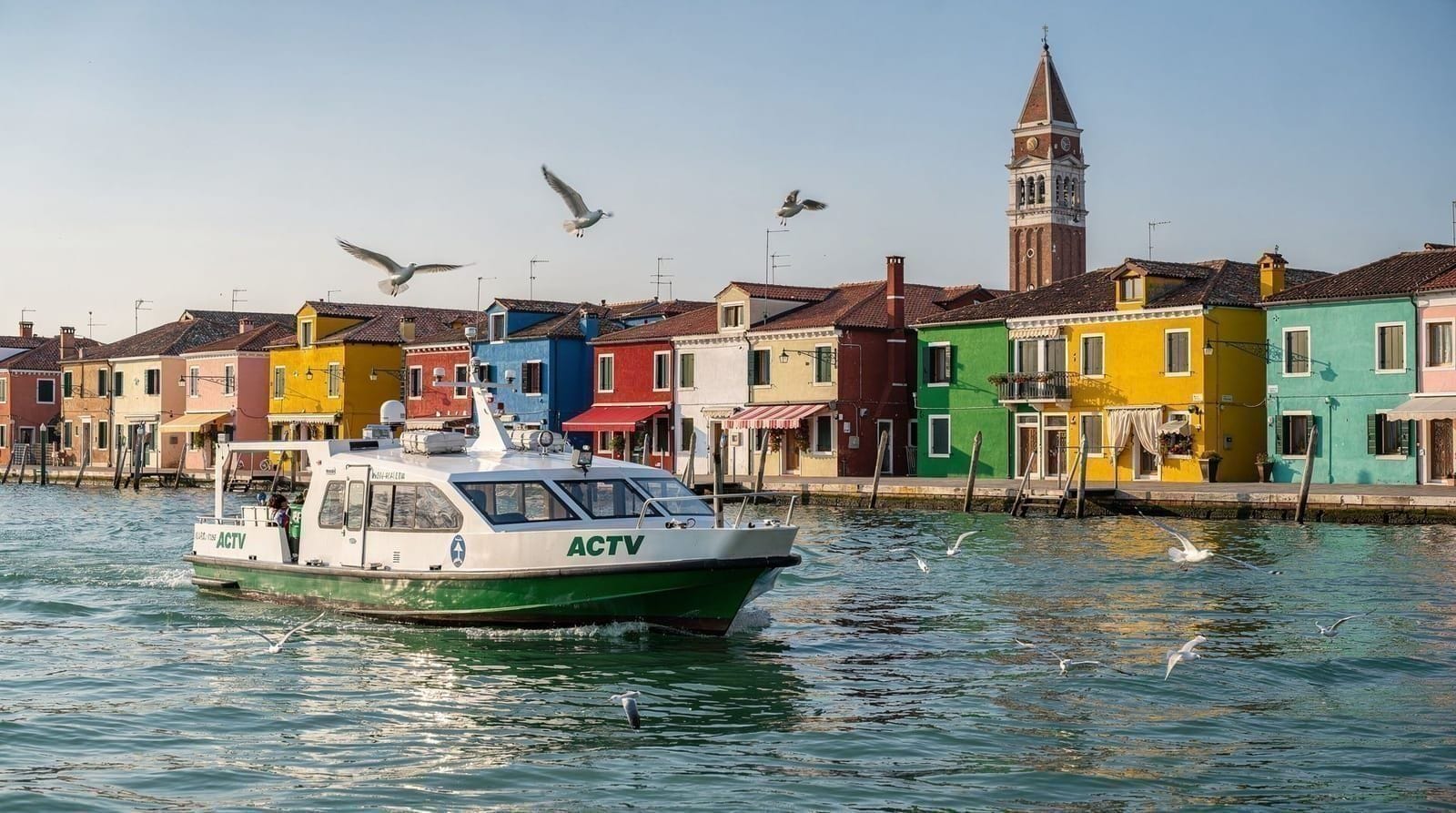
Burano is a photography subject that behaves differently depending on when you arrive. The colours of the houses — the legally regulated, officially assigned palette that each building owner must maintain from the city’s approved list — are vivid in almost any light. But in noon light they flatten. In morning light they saturate. In the golden hour before nine on a clear June morning, the yellow-painted house on Via Baldassarre Galuppi that appears in approximately every travel photographer’s portfolio turns the specific shade of deep warm gold that is technically impossible to recreate in post-processing because it’s only real in the original light.
We’ve done Burano wrong (arrived at 11am in August — already warm, already crowded, the canal reflections broken by traffic) and right (first boat from Fondamente Nove, 7:20am departure, arrived at 8:05, walked the empty fondamenta for ninety minutes before the day tours started arriving). This post describes doing it right.
| Where | Burano, reached from Fondamente Nove |
| Cost | Around €32–40 for the morning, incl. vaporetto |
| Time needed | 2–3 hours on the island for a proper shoot |
| Getting there | Vaporetto line 12 from Fondamente Nove, about 45 minutes |
| Best time | First boat, arriving by 7:30–8am, before the photo tours |
The logistics of an early arrival
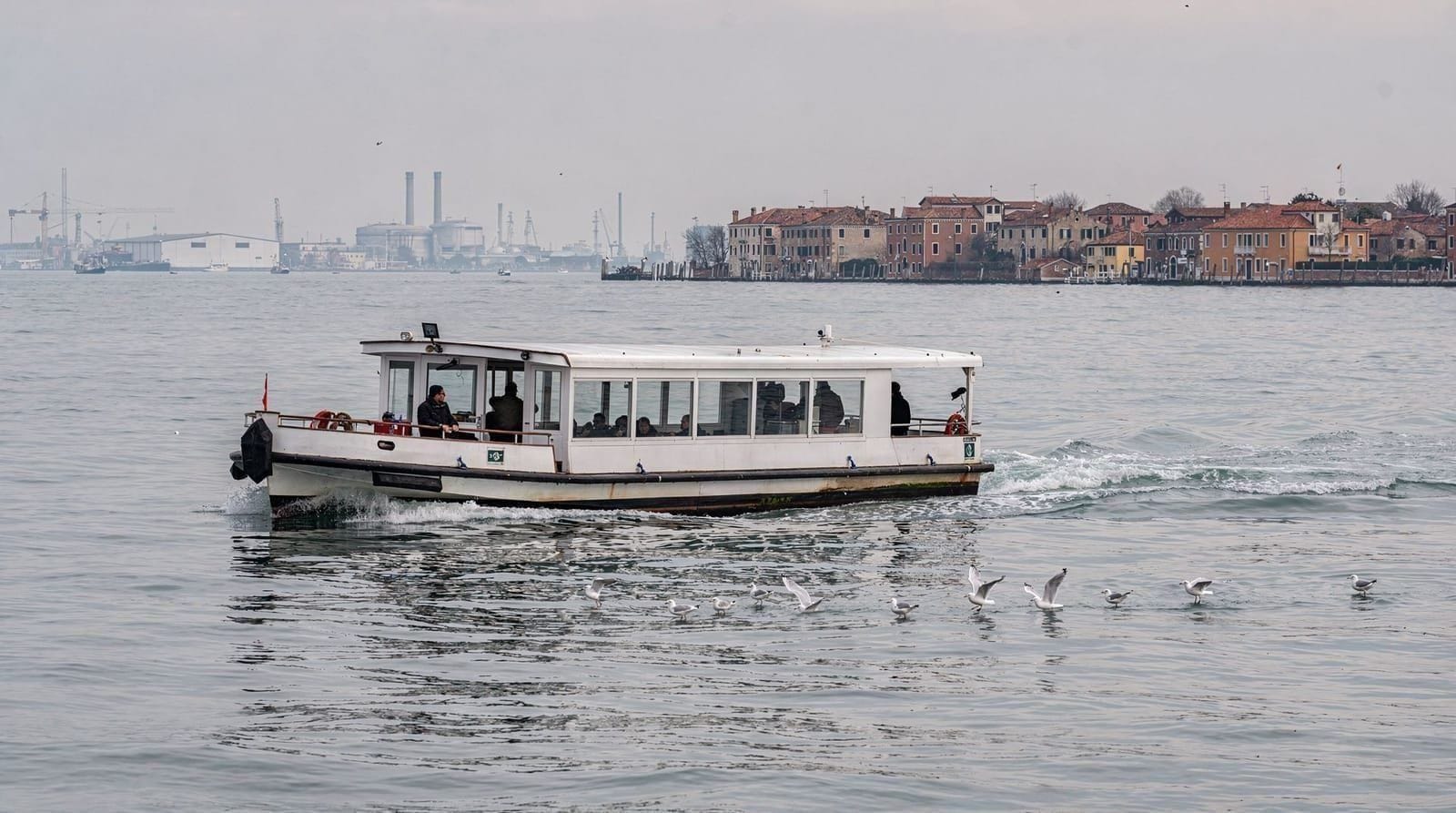
The number 12 vaporetto from Fondamente Nove starts its runs early in the morning. In summer the first departure to Burano is around 7am or earlier — check the current ACTV timetable, as the summer schedule (orario estivo) runs more frequently than the winter one.
Journey time to Burano is roughly 45 minutes. The route goes via Murano (you don’t need to get off) and across the northern lagoon. In June at 7am this journey is its own reward: the lagoon is flat, the air is cool, the light is horizontal across the water, and Burano appears as a low stripe of colour on the horizon about twenty minutes before you arrive.
On my June morning, there were eleven other passengers on the boat. By the time I left at eleven, the same route back was standing room.
What to photograph and where
The canal on Via San Martino Destro
This is the canal you’ve seen in every Burano image. The houses immediately to the north of the main vaporetto stop, facing the Fondamenta di Terranova, are the primary subject — the row of red, yellow, pink, and blue houses reflected in the canal. In the morning, before boats start moving on the canal, the reflections are nearly perfect.
The angle that works best is from the bridge at the north end looking south, with the low eastern light coming from behind you. Get there before eight if you want this with minimal people in frame.
The street near the church
Via Baldassarre Galuppi, the main pedestrian street, has the Burano church (San Martino) at its northern end with the leaning campanile — Venice’s own Pisa, listing about 1.8 metres from vertical. The campanile and the church facade photograph well in morning light; by midday the shadow from the bell tower cuts across the facade in a way that complicates exposure.
The side streets off Via Galuppi are worth exploring for compositions without the tourist infrastructure. Early morning, these calli are usually empty.
The fishing boat corner
The northeast corner of the island, accessible by walking around the perimeter from the main stop, has a small area where traditional Venetian fishing boats (batele, bragozzi) are sometimes moored and maintained. The painted wooden boats against the coloured houses with nets drying is a composition that feels less staged than the main canal shots.
This is also where you occasionally see actual fishermen working, which is a reminder that Burano is still, residually, a fishing community rather than exclusively a tourism exercise.
What happens when other photographers arrive
By nine o’clock on a June morning, the guided photo tours start arriving. There are several operators who specifically offer early Burano photography tours, and their participants are typically serious photographers who’ve read the same light argument you have. The island is small enough that you’ll be in the same spaces.
This is not a disaster. Burano’s streets are narrow enough that two or three photographers at a location spread out naturally rather than clumping. But the compositions that require an empty street — the classic canal reflection shot, the alleyway with no figures — become harder after nine.
After ten, the general day-trip crowd arrives: coach tours, island hopper tourists, the people who didn’t know about the light. By eleven the main fondamenta is genuinely busy. This is still fine for photographing the houses themselves, less fine for minimalist street compositions.
The efficient Burano photography approach: arrive at 7:30 or 8am, work until 9:15, find a café for a coffee, work again from 9:30 to 10:30 (the light is still good, the tourist crowd not yet critical), catch the midday boat back.
Gear and settings
I shoot with a full-frame DSLR but Burano rewards any camera that handles colour well. The subjects don’t require telephoto — the island is small and everything is at street level. A 24-50mm range covers most of what you’ll want.
The main technical challenge is exposure in contrasty morning light. The shadows in the narrow calli are deep; the house facades in direct sun are bright. Shoot RAW if your camera supports it, expose for the highlights on the house fronts, and recover shadow detail in post. HDR approaches tend to look overprocessed against subjects this inherently saturated.
Patience is a more important variable than any gear choice. The best Burano photographs happen when a human element — a resident passing, a boat moving on the canal, a cat crossing the bridge — enters the frame at the right moment. These moments are frequent enough that waiting for them is efficient rather than futile. Stand in a good position, watch the light, and let the scene develop.
What changes by season
June offers the best combination of early sunrise and manageable crowds — the summer tourist season has started but the peak volume of July and August hasn’t arrived. The colour of the morning light in June is the best of the year: warm, long, arriving at a low angle.
September is the second choice. Slightly less harsh midday light than summer, and the daytripper crowd has diminished. The autumn quality of light in Venice is specifically valued by local photographers for the way the mist on the lagoon diffuses colour.
Winter (November to February) — Burano in grey light with sparse tourists is a different kind of beautiful. The colours hold up even in overcast conditions; if anything, the absence of hard shadows makes the saturation more even. You won’t get the golden-hour warmth, but you’ll have the place to yourself.
Burano by season, side by side
| Season | Light | Crowds | Notes |
|---|---|---|---|
| June | best golden hour, warm and low | growing, still manageable before 9am | our top pick overall |
| July–August | harsh by mid-morning | heaviest of the year | arrive before 7:30 or skip |
| September | softer, some lagoon mist | thinning versus summer | strong second choice |
| November–February | flat, even, no hard shadows | sparse | best for solitude, not warmth |
Combining Burano with Murano and Torcello
If you have a full day rather than just a morning, the same early-boat logic extends to Murano and Torcello. Murano’s furnaces get busy from mid-morning with tour groups, so seeing a glassblowing demonstration before 9am is its own version of the light argument — fewer people between you and the furnace. Torcello, the quietest of the three islands, rewards almost any time of day since it rarely gets crowded at all; its cathedral mosaics are a good indoor option if the morning light on Burano has already peaked by the time you arrive there.
Murano, Burano and Torcello half-day boat tourThe Murano vs Burano guide helps decide how to split your time if you can’t do a full three-island day, and the how to visit Murano and Burano guide has the fuller logistics for combining them without rushing either.
The practical tour alternative
If navigating the vaporetto timetable feels complicated or you’d rather have someone handle the routing, a guided photography tour of Burano is available. These typically depart early — the good operators know the light argument — and include time in Murano as well.
Murano and Burano half-day island tour by boatThe Burano photography guide has more compositional advice including tide timing (the canal reflections are best at low tide, when the water is shallow and still). The Venice photography itinerary builds a three-day plan around the morning timing at both Venice and Burano.
What Burano costs for a morning visit
The vaporetto to Burano costs €9.50 for a 75-minute single ticket or is covered by a multi-day pass. Given the 45-minute journey each way plus two to three hours on the island, this is the main expense (food on Burano is modestly priced at the local bars; the tourist restaurants are more expensive but avoidable).
A morning photography visit to Burano costs roughly: vaporetto return (€19 if single tickets, or €12.50 of a 24h pass), coffee and pastry (€3), a light lunch if you stay (€10 to €18). Total: €32 to €40 for the morning including travel. It’s one of the best-value half-days available from Venice.
The lagoon islands day trip guide covers the full logistics including whether to combine Burano with Murano and Torcello in a single day — possible but rushed, which defeats the photography purpose.
The one composition I keep coming back to
There’s a moment, maybe twice a morning, when a local passes through the alley beside the red house on the canal — their reflected colour visible in the water below them, the boat behind, the wash of gold from the east. It lasts for maybe six seconds. I’ve caught it twice and missed it four times.
It’s not a technically demanding shot. It requires you to be in the right place at the right time and to have your camera up. Which means being in Burano before eight, with no agenda beyond being present.
That sounds simple. Most of the best photographs are.