Venice with kids: a three-day family itinerary
From Venice: Murano and Burano half-day island tour by boat
Honest expectations for Venice with children
Venice is genuinely good for children — better than many Italian cities. There are no cars, the streets are safe to walk freely, the boats are a constant source of excitement, and the city’s strangeness is more interesting to children than to adults who have been told to find it beautiful.
| Where | San Marco, Dorsoduro, San Polo, Murano, Burano |
| Duration | 3 days |
| Cost | Mid-range; entrance fees run about half-price for children 6–14 |
| Getting around | On foot, plus vaporetto (ACTV) — free for under-6s |
| Best for | Children aged 5–14 |
What is challenging: the distances. A child walking 6–8km over uneven stone bridges will be exhausted by 3pm. Stairs are everywhere and unavoidable. Strollers are technically possible but practically miserable — baby carriers or toddler backpacks work much better. For children under three, many of the experiences (museums, history) are adult-focused; for children over five, Venice is genuinely engaging.
This itinerary for three days covers Venice, Murano, and Burano — the three most child-friendly destinations in the lagoon — with realistic daily distances, planned rest periods, and activities that specifically interest children rather than simply tolerating them.
Age note: This itinerary is best suited to children aged 5–14. For children under 5, see our general Venice with kids guide.
Day 1: Venice — boats, bridges, and a gondola
Morning: arrive by boat
9:00am — The vaporetto from the station
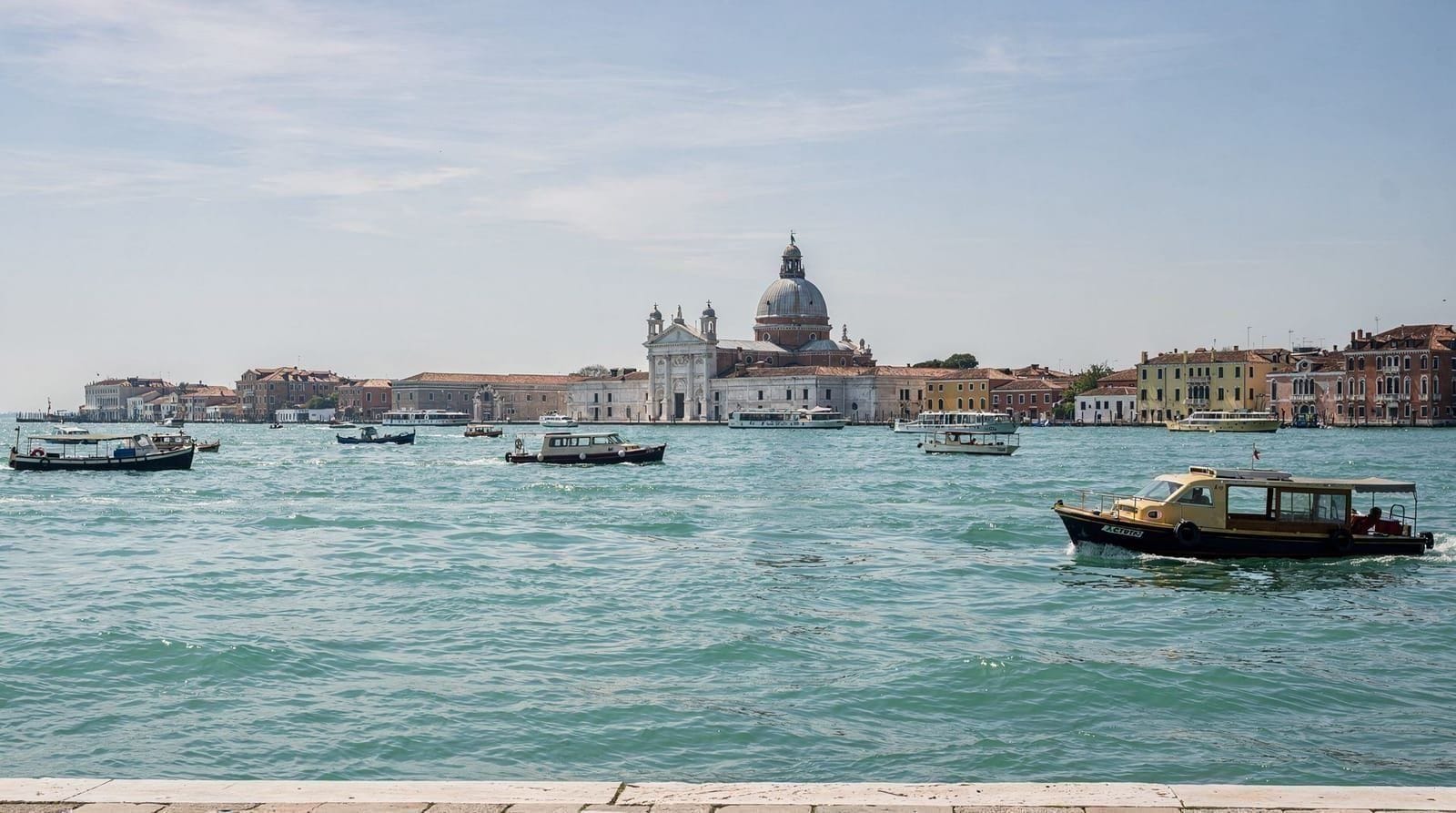
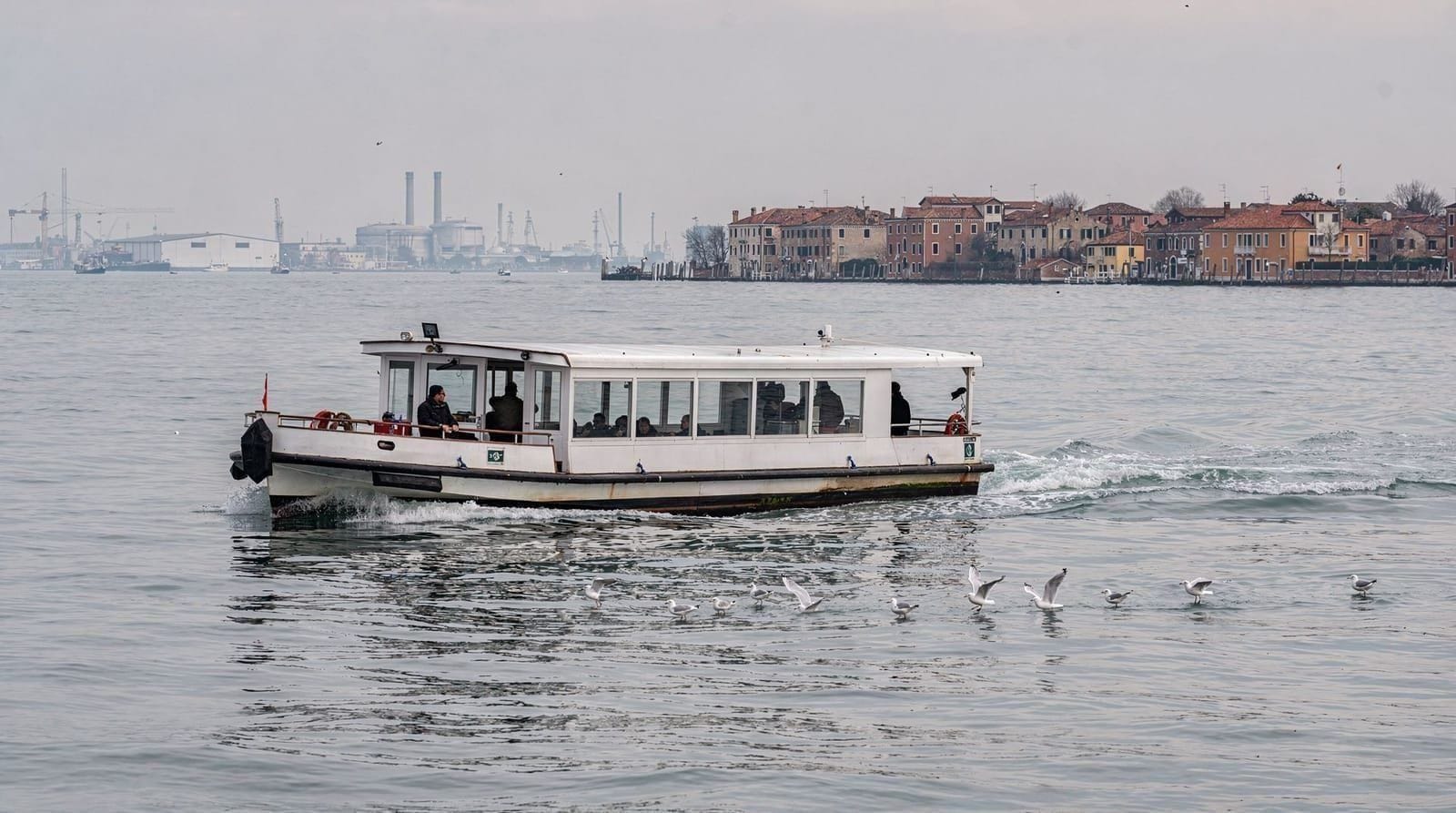
If arriving by train, take the vaporetto (water bus) from Ferrovia rather than walking — the 45-minute ride on Line 1 down the Grand Canal is one of the best introductions to Venice for children. They will stand at the front of the boat watching the palazzos slide past and counting the bridges and other boats. This is free entertainment for 45 minutes.
Buy a 24-hour vaporetto pass (children under 6 travel free, 6–14 pay the same rate as adults, €25 for 24 hours). The vaporetto guide explains how the system works.
10:00am — Piazza San Marco
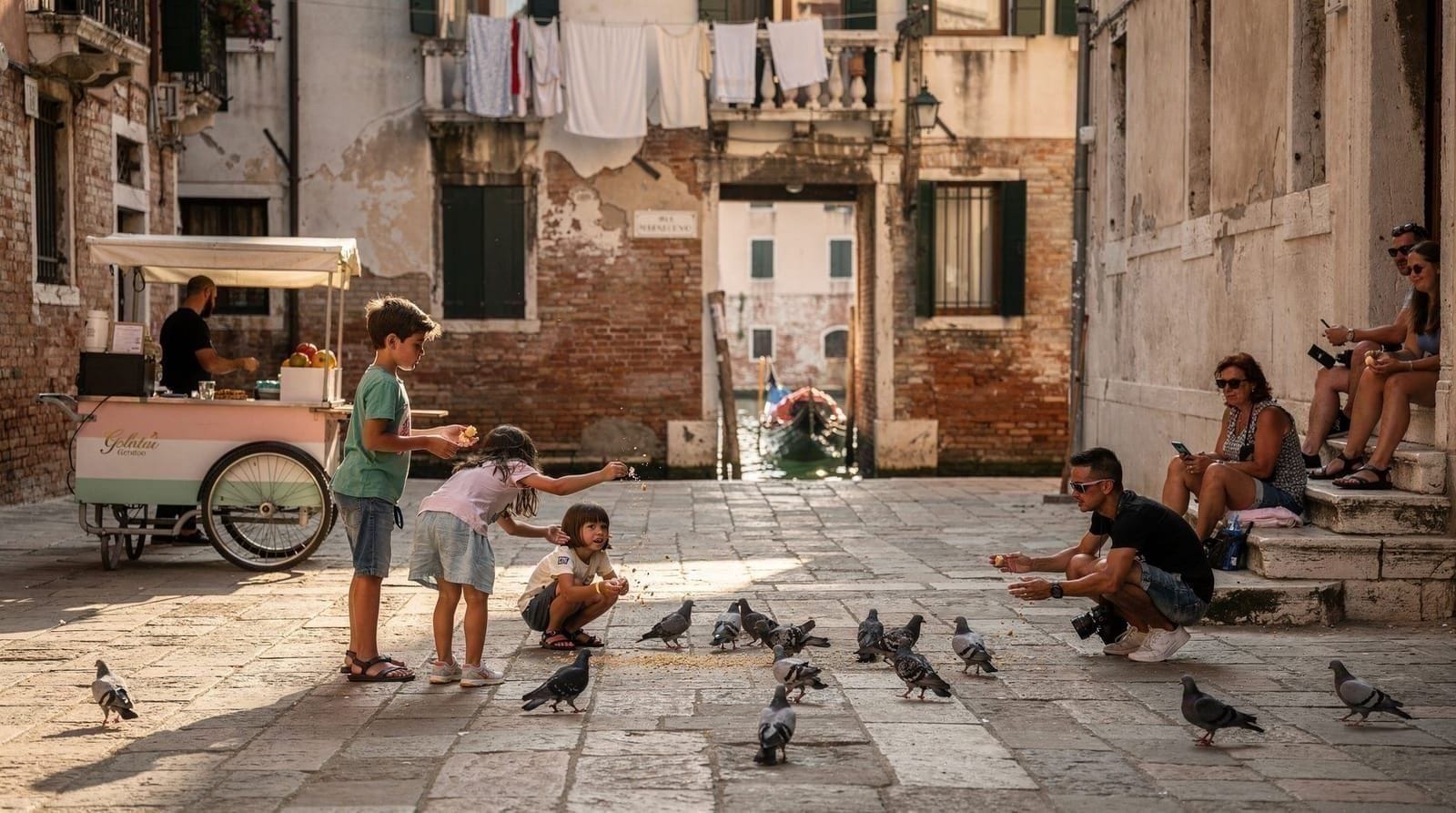
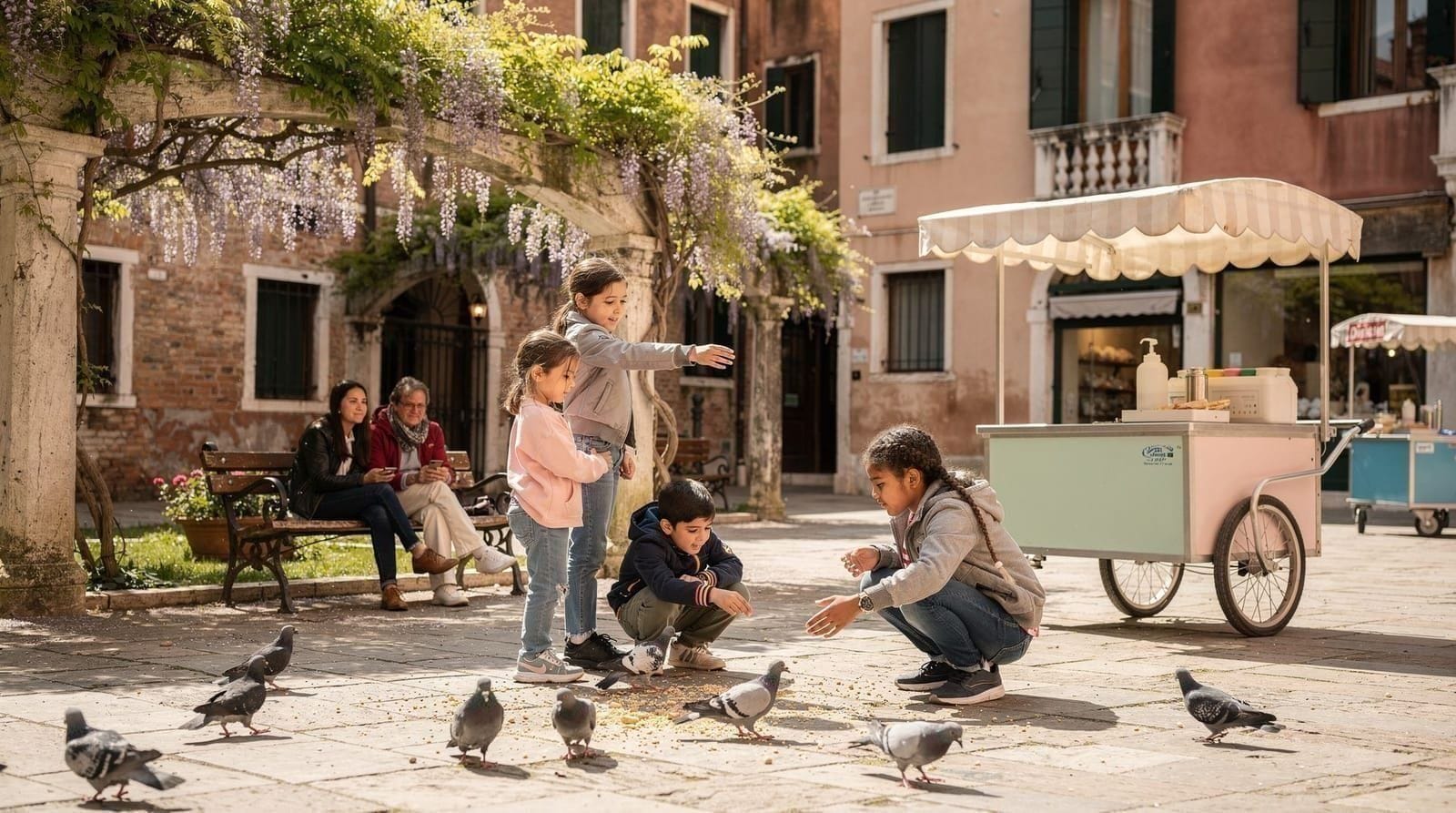
The piazza is vast and the pigeons are a reliable child distraction. Point out the four bronze horses on the Basilica facade (the originals are inside) and the 24-hour clock on the Torre dell’Orologio — it works differently from a standard clock, which is interesting to older children.
10:30am — St Mark’s Basilica
The interior is stunning and children generally respond to it well — the golden ceiling is immediately impressive, the strange tilted floor is something they can touch, and the darkness punctuated by candlelight creates genuine atmosphere. Pre-book skip-the-line entry; standing in a 90-minute queue with children is a reliable day-ruiner.
Allow 30–40 minutes inside. Keep children close — the floor is uneven and the space is crowded.
11:30am — Campanile for the view
The Campanile bell tower has a lift (the only one in Venice’s main attractions). The queue is usually short. The view from the top covers the entire lagoon and is the best way to explain Venice’s geography to children: “that’s the island we are on, those are the lagoon islands we are visiting tomorrow.” Entry €10, lift included.
Midday: gelato and the Rialto
12:30pm — Lunch near the Rialto
Walk from San Marco to the Rialto — 12 minutes. The bacari near the market do standing cicchetti lunches that children usually find interesting (point at things, eat them). For children who are going through a “nothing new” phase, Ristorante da Ivo (near the Frari) does a reliable pasta menu. Budget €15–20 per person for a sit-down lunch.
1:30pm — Gelato at Rialto
Gelateria Nico (Zattere, Dorsoduro) is considered one of Venice’s best. Closer to the Rialto, try SuSo (Campo San Bartolomeo) for quality artisan gelato. Budget €3–4 per cone.
Afternoon: gondola
2:30pm — Gondola
For a family, a gondola is more fun than for almost any other category of visitor. Children will want to drag their hands in the water, wave at people on bridges, and ask the gondolier approximately one hundred questions. Book a gondola designed for families — shared boats are fine if you do not mind sharing with strangers.
Shared gondola ride across the Grand CanalThe 30-minute ride covers the more cinematic smaller canals where children can see how Venice works at water level — boats delivering groceries, cats watching from windowsills, laundry on lines. Book in advance for best prices (around €25–30 per adult; children’s rates vary).
4:00pm — Campo Santa Margherita
The campo in Dorsoduro is the best open play space in Venice. Children play football in it; adults sit with drinks at the perimeter. Buy an ice cream and let children run around for an hour.
5:30pm — Return to hotel for rest
Build in rest time on day one. Children who are walked into exhaustion on day one are miserable on days two and three.
Evening: early dinner
6:30pm — Early dinner
Children eat better at 6:30pm than 8:30pm, and restaurants are more relaxed about children before the main dinner rush. Campo Santa Margherita and Fondamenta Nani in Dorsoduro have several good options for families. Budget €15–20 per child for pasta and water; €30–40 for adults with wine.
Day 2: Murano and Burano
The islands are the highlight of Venice for most children. Murano’s glassblowing is genuinely spectacular; Burano is a visual sugar rush of colour.
Getting to the islands
8:30am — Depart
Take the organised tour — the half-day island tour by boat is the most efficient way to cover both islands and includes the glassblowing demonstration as a scheduled stop (not something you have to find independently).
Murano and Burano half-day island tour by boatIf going independently: Line 4.1 from Fondamente Nove to Murano (10 minutes), then Line 12 from Murano to Burano (25 minutes). The how to visit Murano and Burano guide covers the DIY route in detail.
Murano
9:00am — Glassblowing demonstration
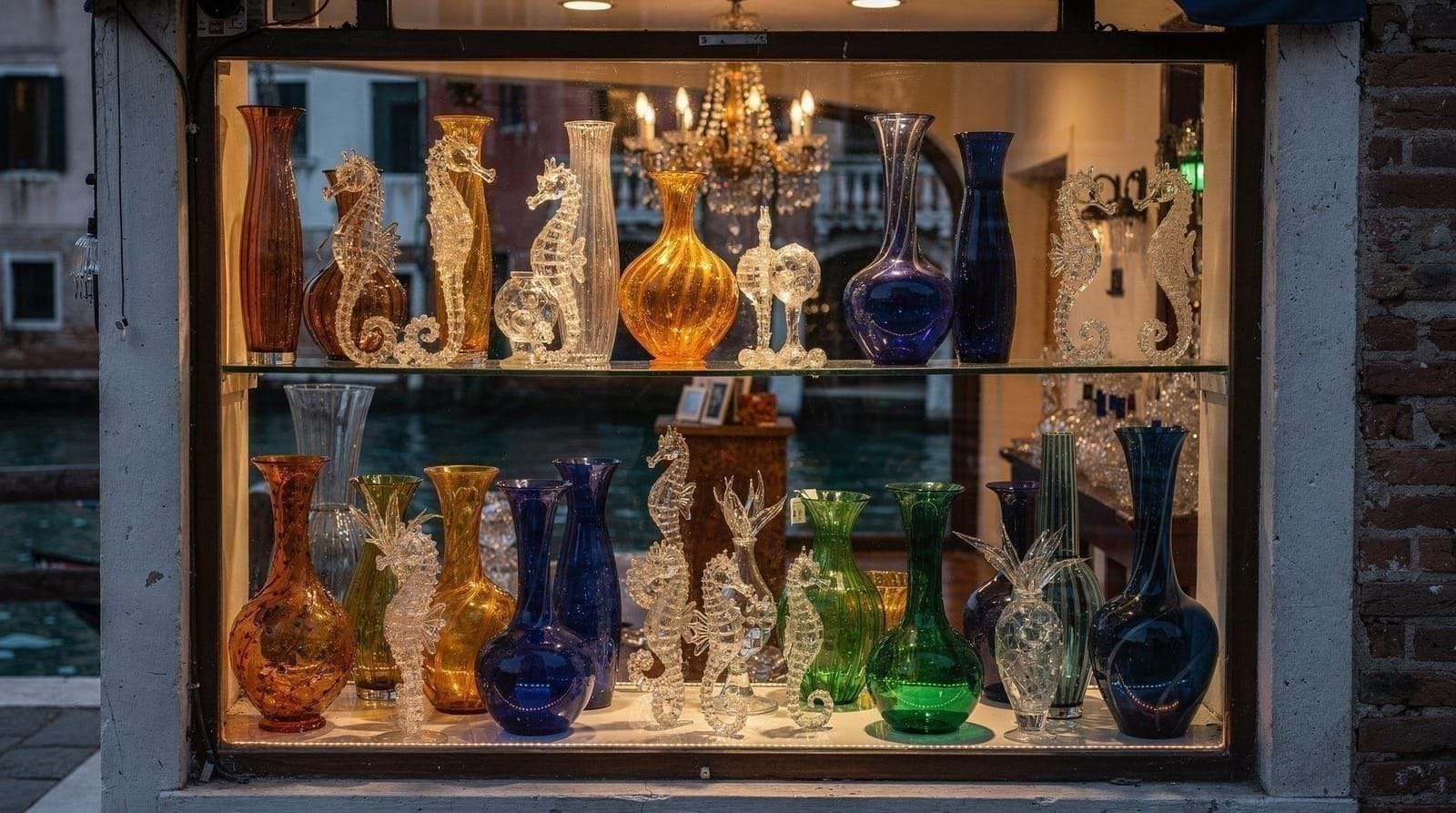
Murano glassblowing is near-universally the highlight of the Venice trip for children. The maestro takes a lump of molten glass at 1,400°C and transforms it into a horse or a fish in under two minutes. The furnace is dramatic (the heat radiates into the room), the speed is astonishing, and the finished object is immediately available to hold. Children are transfixed.
The demonstrations at most factories are free with entry to the showroom. The showroom is a sales pitch, but you are under no obligation to buy. If you want to buy a genuine piece of Murano glass as a keepsake, read the Murano glass guide first to avoid buying inferior pieces sold as authentic.
10:30am — Walk Murano
Walk the canal-side fondamente of the island. The church of Santi Maria e Donato has a 12th-century mosaic floor with an improbable dragon and assorted medieval wildlife — interesting to children who will crouch down and look at it closely.
Burano
11:45am — Boat to Burano
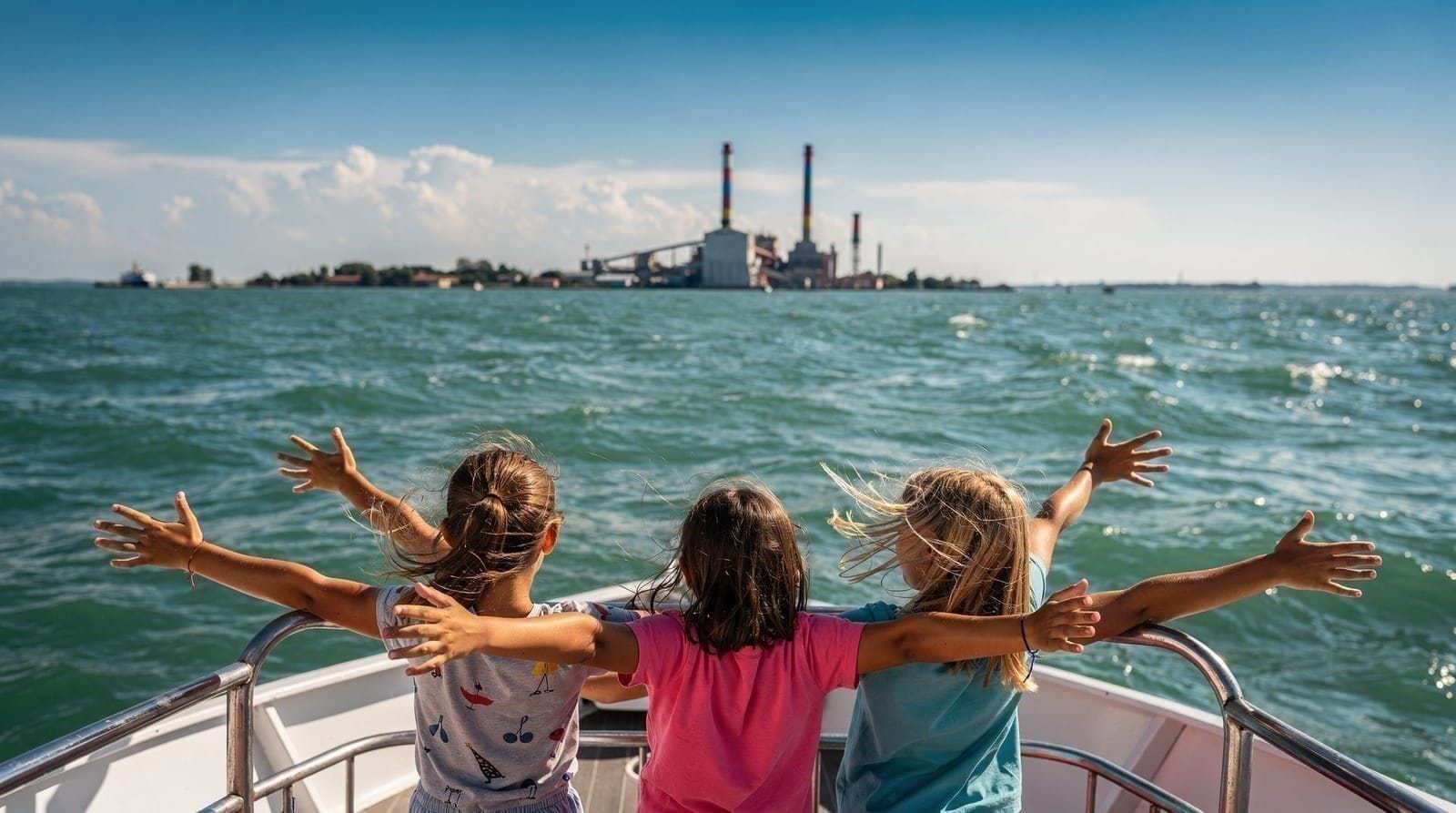
The 25-minute crossing to Burano on Line 12 goes through the open northern lagoon. Children enjoy the boat crossing as much as the destination.
12:30pm — Lunch in Burano
Burano has good fish restaurants. Trattoria da Romano is the island’s best; it fills quickly at lunchtime — arrive by 12:15 or you will wait. For a simpler option, there are several cafes and snack bars along the main Via Galuppi. Budget €20–30 per adult for a proper sit-down meal.
1:30pm — Walk the coloured streets
Burano is the most visually immediate place in the Venice lagoon — the pastel-coloured houses are such an unlikely palette that children often start naming the colours and comparing them. The island is small enough to walk across in 20 minutes; with children stopping to look at things, allow 45 minutes.
The Museo del Merletto (Lace Museum) is interesting for older children (10+) who will find the historical lace pieces and the women demonstrating traditional techniques genuinely fascinating. For younger children, the exterior architecture is enough.
3:00pm — Return to Venice
Back at Fondamente Nove by 4pm. Children who have done Murano and Burano are typically tired and satisfied.
Evening
5:30pm — Gelato and rest
Gelateria Nico (Zattere) or a scoop near Fondamente Nove. Rest. Tomorrow is day three.
7:00pm — Early dinner in Cannaregio
Cannaregio has good family-friendly restaurants. Osteria L’Orto dei Mori is relaxed and good; Trattoria da Gigio (Fondamenta San Felice) is excellent if you book ahead.
Day 3: museums, a church, and free time
Morning: San Polo and the Frari
9:30am — Rialto market
The Rialto market is best before noon. The fish market closes by noon but is at its most interesting at 9–10am — huge swordfish on slabs, strange lagoon creatures in tanks, and fishermen in rubber boots. Children who are curious about food will be engaged; even those who are not will be impressed by the scale.
Buy fruit for snacks. The produce stalls are good and significantly cheaper than supermarkets.
10:30am — Santa Maria Gloriosa dei Frari
The Frari church in San Polo contains Titian’s Assumption of the Virgin — the single most impressive painting in Venice, installed above the high altar where it was made in 1518. Even children who are not interested in paintings react to its scale and colour. The light through the windows at the right time of morning falls directly on it. Entry €5 via Chorus Pass.
12:00pm — Campo San Polo
The largest campo in Venice outside San Marco. Children can run around it. Adults can sit at one of the outdoor cafes and watch them. There is nothing else to accomplish at noon on day three; this is the correct ambition.
Afternoon: Ca’ Rezzonico or free exploration
1:30pm — Lunch in Dorsoduro
Cross the Accademia bridge for lunch. Budget €15–25 per person. The stretch of Fondamenta del Vin along the southern bank of the Grand Canal has outdoor tables with boat views.
3:00pm — Ca’ Rezzonico (optional)
Dorsoduro’s 18th-century palazzo museum has a puppet theatre in one of its upper rooms that children find more interesting than the Tiepolo frescoes (which are also excellent). Entry €12 adults, €8 children. Allow 1.5 hours.
Alternatively, use the afternoon for a second gondola if the children asked for another one, or return to Murano if there is a specific glass piece someone wanted to buy.
5:00pm — Sunset from Accademia bridge
The Accademia bridge at golden hour, looking west toward Santa Maria della Salute, is one of Venice’s defining images. Entirely free, entirely photogenic. The best photo spots guide notes the exact timing.
Final evening
6:30pm — Last aperitivo in Campo Santa Margherita
One more spritz in the campo. Children can have a juice. The square fills with local life at this hour; it is the best possible farewell to a Venetian afternoon.
8:00pm — Last dinner
Choose somewhere you liked. Venice in three days develops loyalties to specific places; follow them.
Practical notes for families
Strollers: Technically possible but not recommended. Bridge steps are narrow and frequent; the historic centre has no flat routes end-to-end. A soft carrier for babies, a toddler backpack for older babies, and for children over 4, walking. Bring the lightest stroller you own if you must.
Children under 6 on vaporetto: Free (ACTV rule). Children 6–14 pay adult rate. The family vaporetto pass can be economic if you have multiple children.
Entrance fees for children: Most Venice museums charge reduced rates for children 6–14 (typically half price) and free under 6. Check individual museum websites for current rates.
Hot weather: Venice in July–August is hot and humid. Carry water, take a mid-afternoon break during the hottest hours (1–4pm), and avoid scheduling major walks after 2pm.
Safety: Venice is extremely safe for children — no cars, manageable crowds in the non-summer months, low crime. The main hazard is the canal edges, which have no barriers. Children need to be reminded to stay back from edge drops, particularly on narrow fondamente.
Planning the trip: what parents should know
Booking ahead: The critical advance bookings for a family trip are St Mark’s Basilica (skip-the-line to avoid long queues with children), the gondola (pre-booking is cheaper and guarantees your time slot), and the island tour (organised tours run at set times; independent vaporetto is possible but requires knowing the schedule). The Basilica and Doge’s Palace can both be booked online through their official sites or through GetYourGuide.
Meal times: Venice’s restaurants serve lunch noon–2pm and dinner 7–10pm. Children eating by 7pm find most restaurants reasonably relaxed. The bacari (cicchetti bars) serve food continuously from noon — completely family-appropriate with no table service pressure. Children can point at what they want from the counter.
Gelato: Venice has excellent artisan gelato and mediocre commercial gelato in equal measures. Look for the label “artigianale” and metal tubs with covers rather than enormous colourful mounds in the window. Good choices: Gelateria Nico (Zattere, Dorsoduro) and SuSo (Campo San Bartolomeo, near the Rialto). Budget €3–4 per cone.
Bridge steps: Venice has approximately 400 bridges, most with stone steps on both sides. The bridge steps are the main physical challenge for young children and for adults carrying small children in strollers. Plan rest stops at open campi and factor in extra time for any route that crosses multiple bridges.
Acqua alta (October to March): The tidal flooding that raises water levels in lower parts of Venice is a real but manageable consideration. MOSE barriers have reduced the worst flooding, but moderate acqua alta still occurs. Raised wooden platforms (passerelle) are deployed on the main routes. For children, acqua alta with rubber boots is often experienced as an adventure. The acqua alta guide covers preparation. Pack waterproof footwear if visiting in autumn or winter.
Matching activities to age
Not every stop in this itinerary works equally well for every age band. Here’s a rough guide to which parts of the three days to lean into or trim depending on who’s travelling.
| Activity | Toddlers (under 5) | Ages 5–8 | Ages 9–14 |
|---|---|---|---|
| St Mark’s Basilica interior | Short attention span; keep it brief | Generally engaged by the golden ceiling | Engaged, can handle the full 30–40 min |
| Gondola ride | Excellent — pure sensory fun | Excellent | Good, may want the smaller side canals over the Grand Canal |
| Murano glassblowing | Loud furnace can startle | Usually transfixed | Genuinely impressive at this age |
| Museo del Merletto (Burano lace) | Too abstract | Limited interest | Better fit — see the Burano lace guide |
| Ca’ Rezzonico puppet theatre | Good, short visit | Very good | Mixed — some find it babyish |
| Campo Santa Margherita free play | Excellent | Excellent | Good but less novel |
If travelling with a toddler under 5, our companion Venice with toddlers guide adjusts this itinerary’s pacing further — shorter museum stops, more campo time, and a different view on strollers versus carriers.
If it rains
Venice’s weather doesn’t always cooperate, and this itinerary leans heavily on outdoor walking and boat rides. A wet day doesn’t have to derail the three-day plan — St Mark’s Basilica, the Doge’s Palace, Ca’ Rezzonico, and the Murano glass showrooms are all indoor or covered, and the gondola itself runs in light rain (ask your booking about cancellation policy for heavier weather). The rainy day plan guide has a fuller indoor-first route if the forecast looks genuinely wet across more than one day, including which museums work best for restless children and where to find covered walking routes between them.
Venice city pass — bundles the Basilica, Doge’s Palace and vaporetto transport, useful across a family’s three daysFrequently asked questions about Venice with kids
What age is Venice appropriate for?
Venice works well from about 3 years old (when a child can walk some distance and engage with boats and colours) up to any age. The most rewarding age range for the sites in this itinerary is 6–14. See our full Venice with kids guide.
Is Venice dangerous for small children near the canals?
The canal edges in Venice are unprotected, which sounds alarming. In practice, most adults are alert to this from the first hour of walking. Children adapt quickly. The real risk is not canals but exhaustion — a tired child near a canal edge is more concerning than an alert one. Keep children’s hands held near water and the risk is equivalent to any city walking tour.
What is the Contributo di Accesso and do children pay it?
The Venice access fee of €5 (advance) or €10 (day of) applies to visitors 14 and older. Children under 14 are exempt. Hotel guests of all ages are exempt. Check the current peak day calendar at venicevisitpass.com.
Can children eat well in Venice?
Yes. Venice has good fish, good pasta, good gelato, and good pizza. The restaurant quality is variable near the tourist corridors but reliable away from them. Children who eat pasta or pizza will find plenty of options; children who eat only chicken nuggets will need to broaden their horizons or survive on gelato.
Is Murano appropriate for children who are nervous about heat or fire?
The glassblowing demonstrations are conducted at a safe distance from the furnaces — you watch from behind a rope line. The heat is perceptible but not overwhelming unless you are very close. Children who are apprehensive about fire should be fine watching from the viewing area. The demonstration takes about 8–10 minutes.
What should I do with a toddler under 5 instead of this exact itinerary?
Shorten the museum stops significantly, add more unstructured campo time, and consider a carrier rather than attempting the full three-day pace. The Venice with toddlers guide rebuilds this itinerary’s structure specifically around a younger child’s attention span and nap needs.
What’s the backup plan if it rains for a whole day?
Lean on the indoor stops already in this itinerary — St Mark’s Basilica, the Doge’s Palace, Ca’ Rezzonico — and add the Murano glass showrooms, which are covered. The rainy day plan guide has a fuller indoor-first route if the forecast looks wet for more than a single afternoon.
Top experiences
Bookable activities with verified prices and instant confirmation on GetYourGuide.