Venice in one day: the honest first-timer's itinerary
Venice: Doge's Palace, prison and secret passageways tour
What you can realistically see in a single day
One day in Venice is enough to feel the city but not enough to understand it. You will walk across bridges you cannot name, get briefly lost in a sestiere that smells of algae and coffee, and eat something standing at a marble bar that costs less than a sandwich at an airport. That is the honest promise of a single day here.
This itinerary is for anyone arriving in the morning and leaving in the evening — whether you came by train from Milan, by cruise ship to the Marittima terminal, or by bus from Marco Polo airport. It covers the non-negotiable landmarks without pretending you can do everything, and it leaves room for the only true Venice activity: wandering slowly.
One important logistical note: if you visit between April and late July 2026 on a day listed on venicevisitpass.com, you will pay the Contributo di Accesso — €5 booked in advance, €10 on the day. Hotel guests are exempt. Book your slot before you arrive.
| Best for | First-timers, cruise passengers, solo travellers |
| Total cost (excl. lodging) | Around €80–130 per person, incl. tickets, gondola and meals |
| Getting around | On foot, plus one traghetto crossing (€2) |
| Book ahead | St Mark’s Basilica, Doge’s Palace, gondola |
| Best season | April–May or September–October |
Morning: San Marco before the crowds arrive
8:00am — Arrive at San Marco
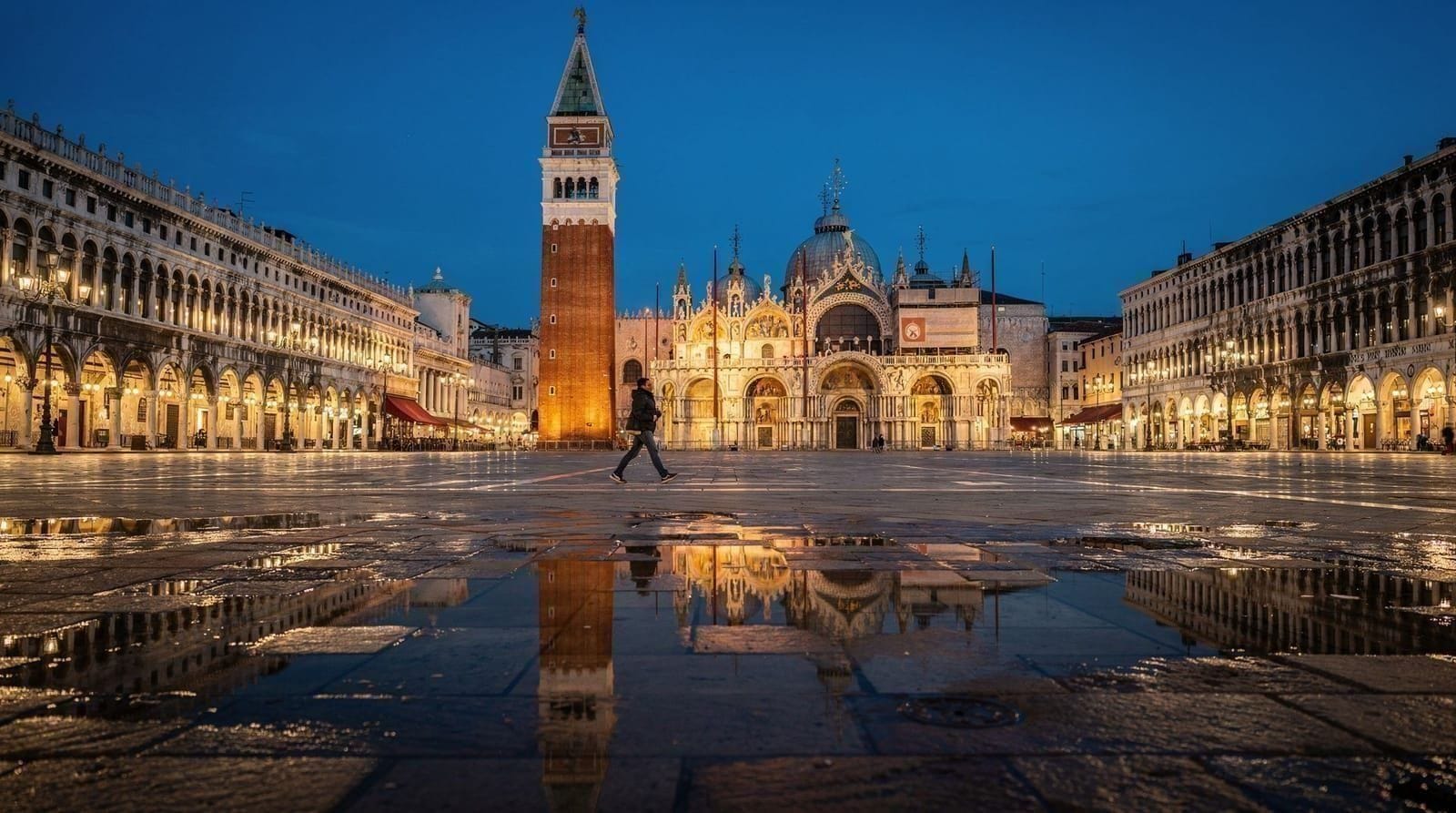
The best single piece of advice for a one-day visitor: be at Piazza San Marco by 8am, when the square is still half-empty and the light falls at a low angle across the Basilica’s golden mosaics. Read our St Mark’s Square guide before you go — the history of how Venice literally stole the bones of a saint to build its centrepiece church is worth knowing.
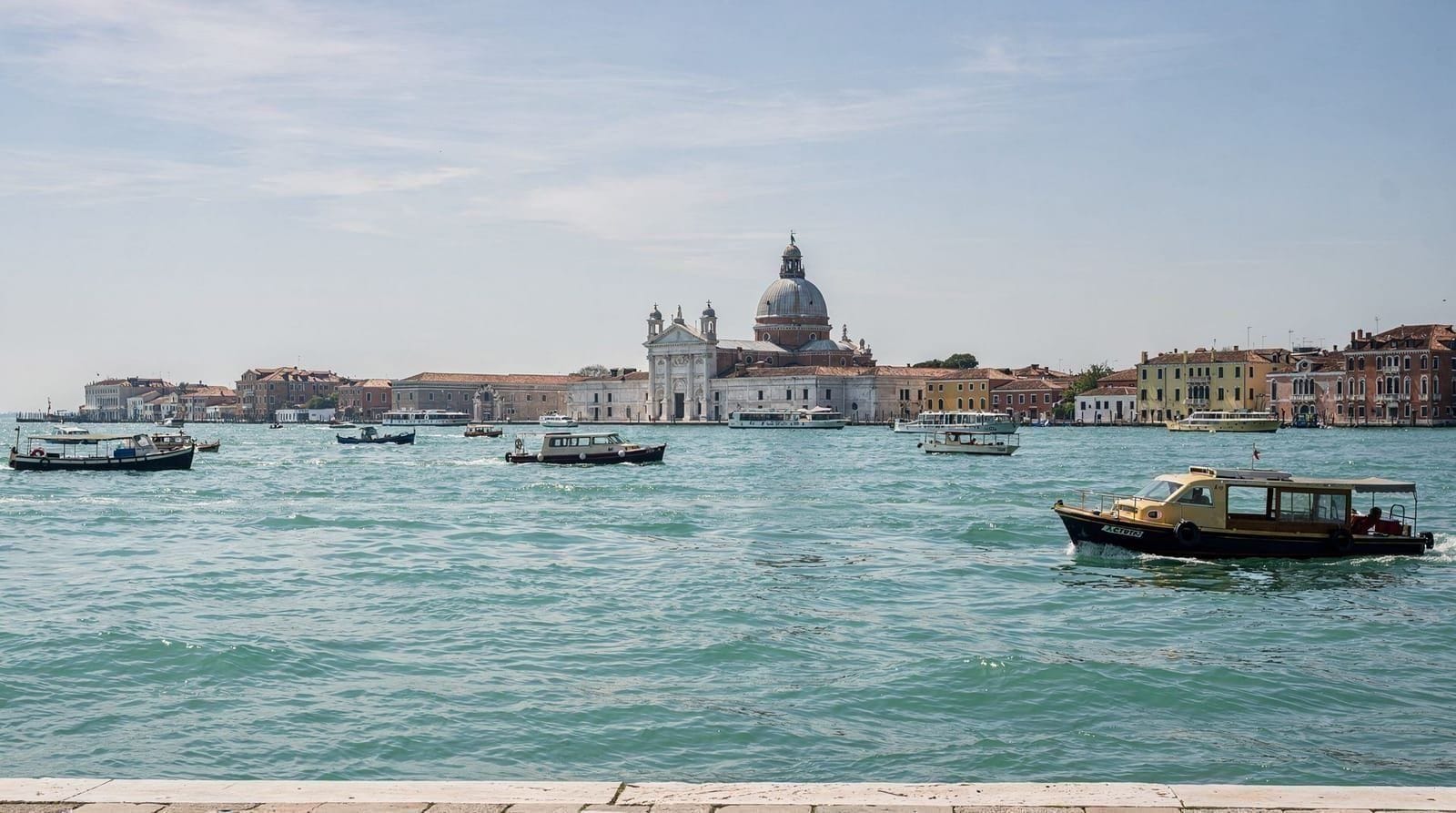
St Mark’s Basilica opens at 9:30am (earlier for pre-booked visitors), but the piazza itself is worth an hour of quiet walking first. The Doge’s Palace and the Campanile anchor the southern and western edges; the Procuratie arcades frame the north. Cross to the waterfront and look out across the lagoon toward San Giorgio Maggiore.
9:30am — St Mark’s Basilica (pre-booked skip-the-line)
Book your entry in advance without exception — the free queue in high season routinely reaches 90 minutes. A skip-the-line ticket gets you in within 15 minutes and includes the main floor mosaics and the Pala d’Oro altarpiece area.
Book St Mark’s Basilica skip-the-line entry with audio appInside, move slowly. The floor is uneven medieval mosaic, the ceiling 8,000 square metres of gold tessera, and the light shifts constantly depending on the weather outside. Allow 45 minutes minimum. The terrace level (separate ticket) gives views over the piazza and is worth adding if you have the appetite.
10:30am — Doge’s Palace
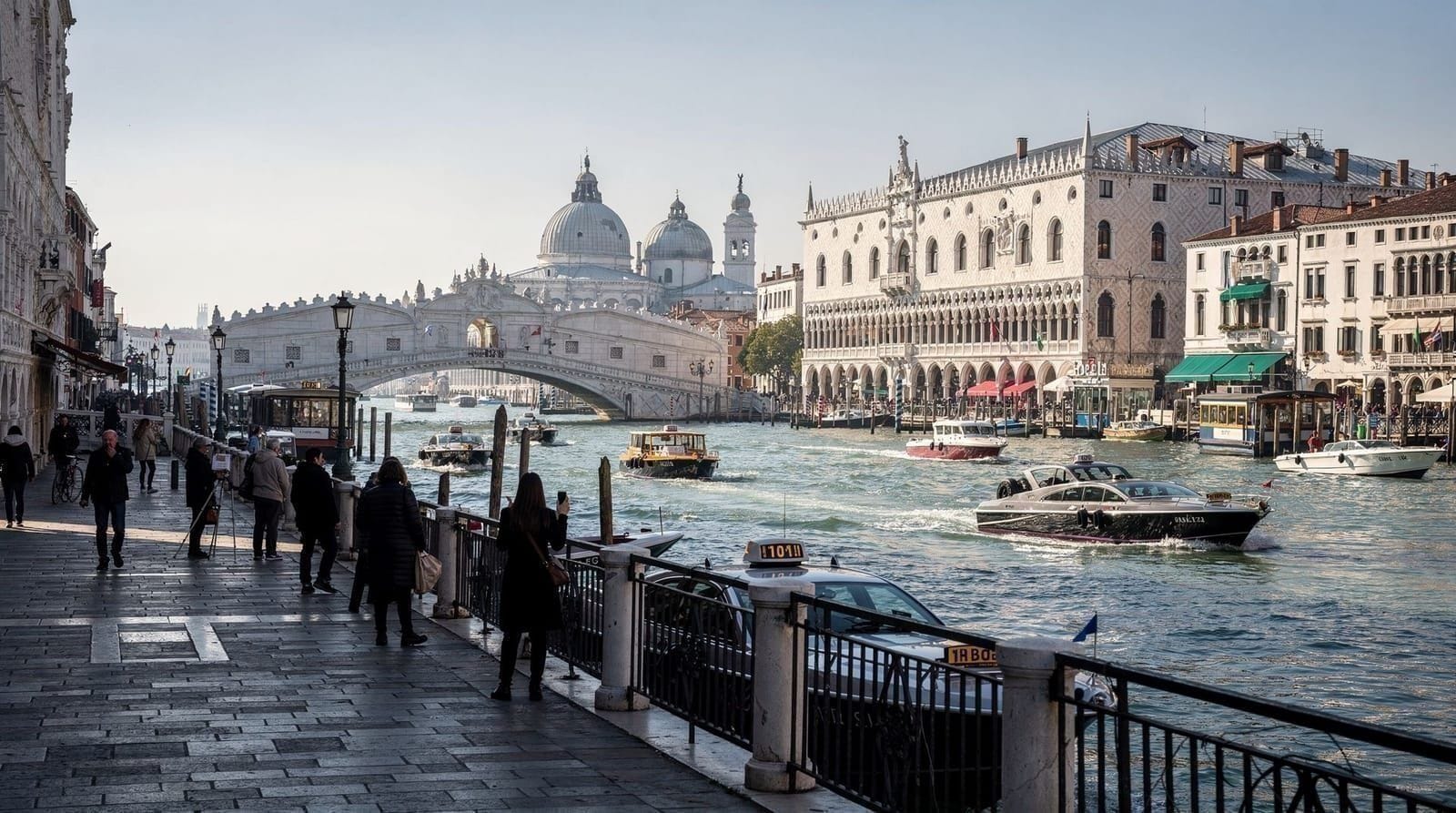
Adjacent to the Basilica, Doge’s Palace is one of Europe’s great civic buildings — Gothic on the exterior, Renaissance inside, with a prison wing connected via the Bridge of Sighs. Pre-book to avoid queuing alongside the Basilica crowd.
The Secret Passageways tour is a step above standard entry: it takes you through the concealed rooms where the Council of Ten conducted its surveillance state and where Casanova was imprisoned before his famous escape. It runs in small groups and costs roughly €35.
Doge’s Palace Secret Passageways guided tourAllow 1.5 to 2 hours. Exit by noon.
Midday: Rialto and lunch among locals
12:15pm — Walk to the Rialto
The walk from San Marco to the Rialto takes 12 minutes if you go directly and 30 minutes if you follow curiosity down narrower calli. Go via the Mercerie — Venice’s old commercial street — and notice how the architecture is almost entirely residential once you leave the tourist corridor.
The Rialto market winds down by noon, but the fish market closes by 1pm. Even arriving at 12:15 you will still see the last of the vegetable stalls and the nearby bacari that cater to the market workers.
12:30pm — Lunch at a bacaro near the Rialto
The rule near the Rialto is simple: sit down inside a restaurant = tourist pricing, stand at a bar with cicchetti = honest pricing. A spread of four or five cicchetti and a glass of Soave or house prosecco runs €10–15. Good options along Calle dei Botteri and Campo Bella Vienna include All’Arco (the city’s most famous cicchetti counter, arrive early for the best selection), Bancogiro overlooking the canal, and Do Mori a few steps further west.
Avoid any place with laminated photos on the menu within 200 metres of San Marco — our tourist traps guide explains exactly why. The cicchetti guide tells you what to order and what the correct etiquette looks like.
Afternoon: Dorsoduro and the gondola
2:00pm — Cross to Dorsoduro
Take the traghetto at San Tomà (€2, a standing gondola crossing that takes 2 minutes) or walk across the Accademia bridge. Dorsoduro is quieter than San Marco and contains two world-class museums within 150 metres of each other.
The Accademia gallery holds Bellini, Carpaccio, Titian, and Tintoretto in a former monastery — allow 1.5 hours. The Peggy Guggenheim Collection is 20th-century international — Picasso, Dalí, Pollock, and Ernst in a low palazzo directly on the Grand Canal, with a terrace that has one of the best views in the city. Combined, they take most of an afternoon; pick one depending on your interests.
3:30pm — Gondola ride
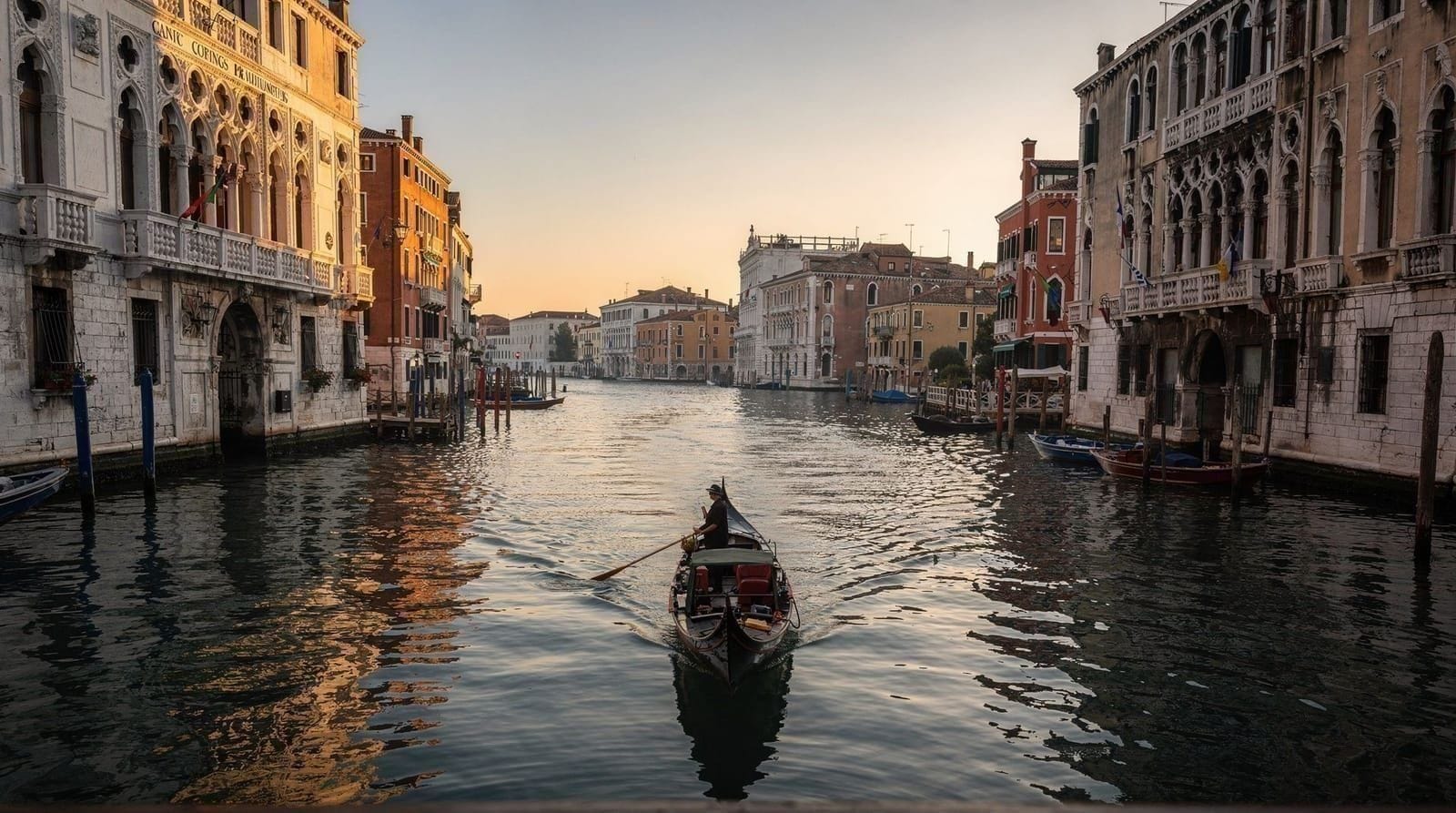
A gondola is not a scam. The official rates are posted by the gondoliers’ association: approximately €80–90 for a 30-minute shared ride during the day, €100–120 in the evening. You can book a shared gondola tour (cheaper, sociable) or a private one for two. Do not pay more than the official rate, do not agree to a longer route without confirming the price first, and read our gondola guide before you negotiate.
Shared gondola ride across the Grand CanalThe best departure points for scenic routes are along the Zattere in Dorsoduro or near Campo San Stefano — these routes pass through quieter canals rather than the congested Grand Canal.
4:30pm — Campo Santa Margherita
The liveliest square outside San Marco and a world away from it. Campo Santa Margherita in Dorsoduro is where students, locals, and a handful of tourists mix at outdoor tables. Buy a spritz (around €3.50 at a decent bar, €6 at tourist pricing) and sit with it in the square. Ignore any bar charging more than €5.
Evening: sunset and cicchetti in Cannaregio
6:00pm — Walk to Cannaregio
Cannaregio is the residential north of Venice, home to the world’s first Jewish ghetto (established 1516) and a string of bacari along the Fondamenta della Misericordia that serve the best aperitivo in the city. The walk from Dorsoduro takes 25 minutes and crosses the Grand Canal at the train station bridge.
6:30pm — Aperitivo along the Misericordia
The fondamenta running alongside the Misericordia canal is lined with bars that fill up from about 6:30pm. The Venice spritz — Aperol or Campari with prosecco and a green olive — costs €3–4 at these bars. Pick a spot with outside tables and watch the canal traffic slow down for the evening. Osteria alla Vedova (Calle del Pistor) has some of the city’s finest polpette (meatballs) served as cicchetti.
Venice food tour with wine and spritz — book for another evening8:00pm — Dinner in Cannaregio
For a sit-down dinner, the streets north of the main Strada Nova — particularly around Madonna dell’Orto church — offer better value than anywhere near San Marco. Budget €35–55 per person for a full meal with wine. Trattoria da Gigio (Fondamenta San Felice) and Osteria ai 40 Ladroni are reliable choices that don’t require booking weeks in advance.
9:30pm — Walk back to your departure point
Venice at night is a different city. The streets empty, the canal reflections double the lamp-light, and the only sounds are footsteps and water. Give yourself 30 minutes to walk rather than taking the vaporetto for your final crossing. You will not regret it.
What Venice actually feels like for one day
The experience of Venice for a single day has a consistent arc. In the morning, you are disoriented — the city’s canal system, lack of cars, and labyrinthine streets remove all the usual urban navigation cues. By midday, you start to understand the system: every route either follows a canal (fondamenta) or cuts between buildings (calle), and the city’s sestieri (neighbourhoods) have distinct characters.
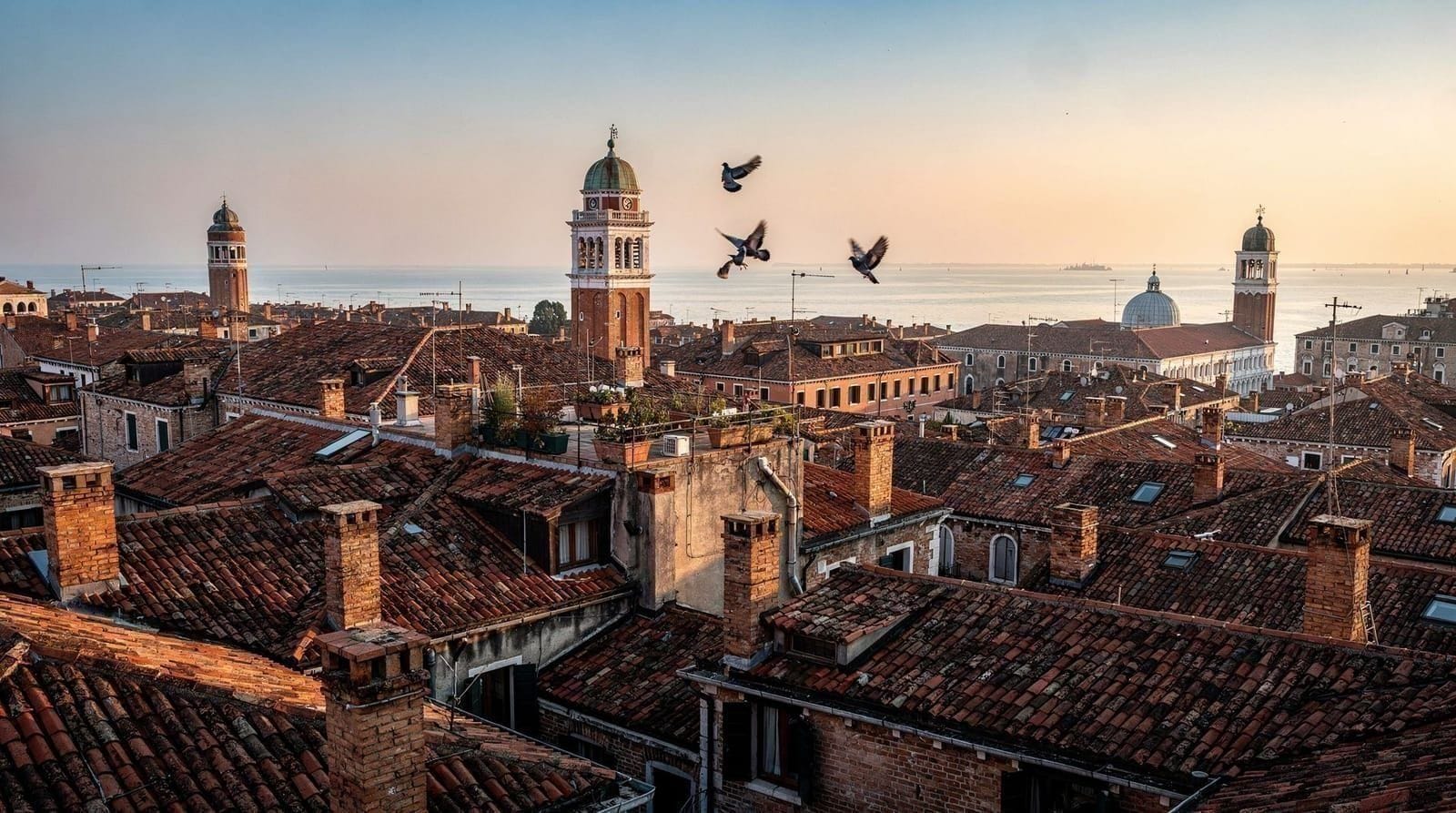
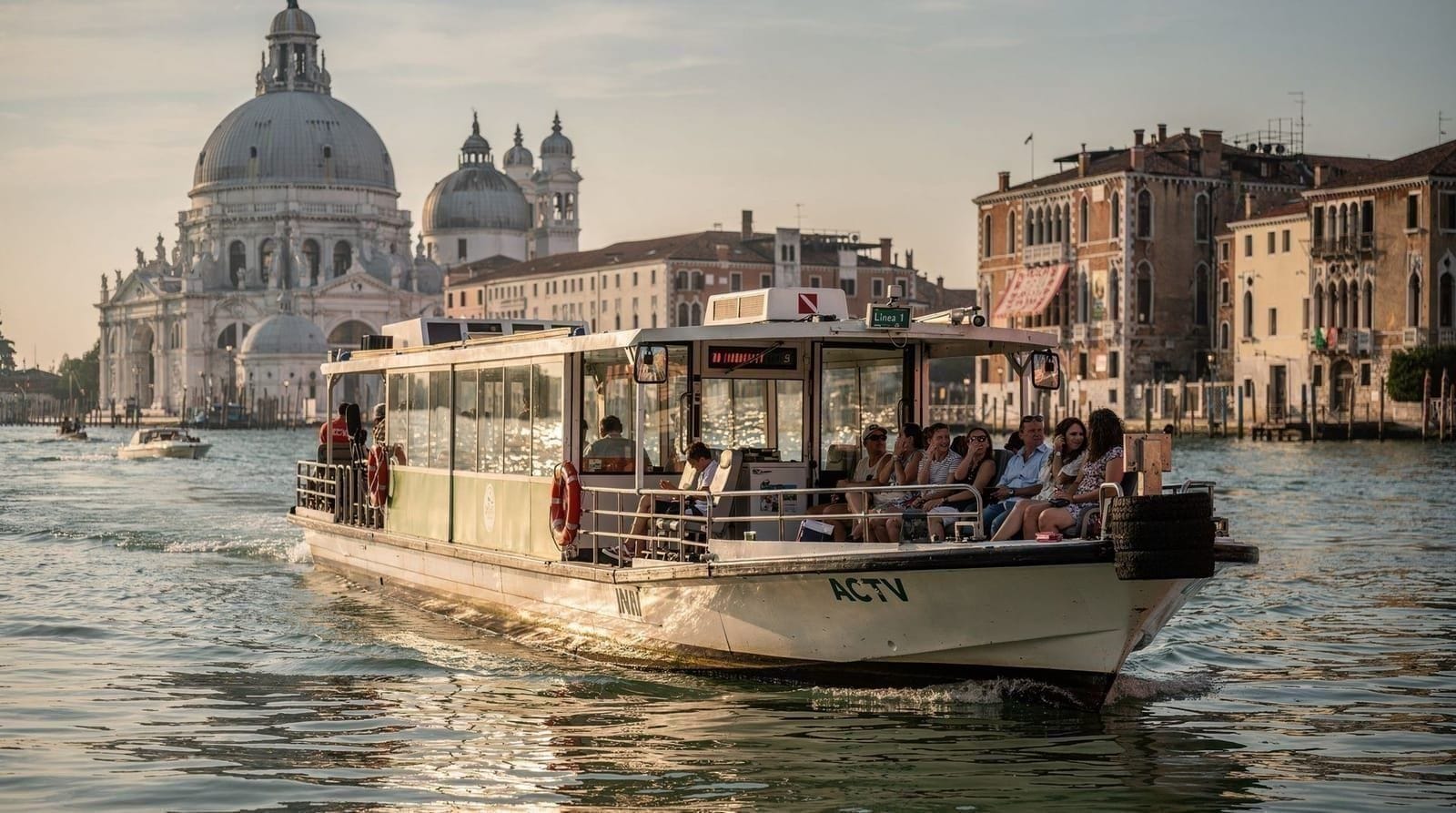
By late afternoon, something shifts. You start to feel the specific quality of light that makes Venice different from any other city — the water reflecting the sky’s colour back upward, so that the city is lit from two directions simultaneously. The buildings look different from how they looked in the morning. The evening light on the Grand Canal around 6pm in late spring or early autumn is one of the natural phenomena of Mediterranean Europe.
By 9pm, if you have been walking since 8am and eaten well, you will be tired in a way that is distinct from tourist fatigue. It is closer to the tiredness of having actually been somewhere rather than passed through it.
The honest assessment of what you will miss: In one day in Venice you will not understand Dorsoduro’s art world concentration, or the Jewish Ghetto’s 500-year history, or the specific social ecology of Campo Santa Margherita in the evening. You will not see Burano’s coloured houses or Murano’s glassblowing. You will not get lost in a way that leads somewhere interesting rather than just confusing. All of that is the argument for coming back. One day is enough to understand why.
On tourist traps: The single most common mistake on a one-day Venice visit is eating a restaurant meal within two blocks of Piazza San Marco. The economics are straightforward: restaurants in the highest-traffic zone charge maximum prices for minimum quality because they depend on walk-up tourists who will never return. Two hundred metres from the main tourist corridor, the same meal costs 40% less and tastes significantly better. Our tourist trap guide names the specific streets to avoid.
On skipping things: One day is not enough for the Accademia gallery and Doge’s Palace and St Mark’s Basilica and a gondola. Pick two or three. The Doge’s Palace is the most historically substantial. St Mark’s Basilica is the most visually overwhelming. The gondola is the most uniquely Venetian. All three in one day leaves no time for the unscheduled wandering that Venice rewards most.
Practical notes
Getting around: Walk everywhere except for the airport transfer. The vaporetto (water bus) is useful for getting from one end of the Grand Canal to the other (Line 1 stops at every landing stage, taking 50 minutes end-to-end; Line 2 is express). Single fare is €9.50/75 minutes. The traghetto gondola crossing is €2 at seven points across the Grand Canal.
What to book in advance: Doge’s Palace entry, St Mark’s Basilica entry. Gondola booking (via GYG or directly at the gondolier stands) saves you from being quoted inflated walk-up rates.
On St Mark’s Basilica: The free queue for the Basilica’s interior is genuinely long in peak season (60–90 minutes). The paid skip-the-line option reduces this to under 15 minutes. The basic interior (main floor, apse, nave) is free; supplements pay for the Pala d’Oro gold altarpiece (€5), the terrace level and horses museum (€7), the treasury (€5), and the Narthex mosaic access (included). For a one-day visitor, the base entry covers the most spectacular parts.
On walking distances: A full one-day Venice itinerary covering San Marco, the Rialto, Dorsoduro, and Cannaregio involves 8–12km of walking on uneven stone surfaces. Wear shoes with real support — leather-soled fashion shoes are not adequate. The bridge steps are relentless; there are approximately 400 bridges in the main island, most with steps on both sides. Comfortable walking shoes make a qualitative difference to the day.
On luggage: If arriving from a train or bus with luggage, leave it at the station (Stazione di Santa Lucia left-luggage, open 6am–11pm, approximately €6/bag) or use a luggage storage service near Piazzale Roma. Walking with large bags through Venice’s narrow calli and bridge steps is difficult and alienates the locals whose doorways you will be blocking.
Weather: Venice in summer (July–August) can be oppressively hot and crowded. April–May and September–October are the best months for a one-day visit. Winter visits (November–March) risk acqua alta, particularly in November, but the city is half-empty and the light is extraordinary.
Understanding the sestieri you are passing through
Even in one day, you will pass through four or five of Venice’s six sestieri (neighbourhoods). Knowing the basic character of each helps orient the experience:
San Marco: The tourist centre. The piazza, the Basilica, the Doge’s Palace, and the most expensive 200 metres in Italy radiating out from it. Exceptional architecture, difficult restaurant economics.
San Polo: West of the Grand Canal from San Marco, home to the Rialto market and the best bacari strip in the city. The Frari church is here; the Scuola di San Rocco is here. The most useful neighbourhood for a one-day visitor who wants good food.
Dorsoduro: The southern tip of Venice, where the Accademia and Peggy Guggenheim concentrate. Campo Santa Margherita is its social heart. The Zattere waterfront faces the Giudecca canal and has the best afternoon sun.
Cannaregio: The residential north. Further from San Marco, genuinely quieter, with the best bacari-to-tourist-ratio in Venice. The fondamenta along the Misericordia canal is the correct place for an evening aperitivo.
For a more detailed orientation read our Venice orientation guide before you arrive.
Arriving with only a morning or only an afternoon
Not everyone gets the full day. If you are on a cruise ship with a short port call, focus on San Marco and the Rialto and skip Dorsoduro and Cannaregio entirely — see the dedicated cruise day itinerary for a port-timed version of this same logic. If your train arrives midday instead of the morning, shift the whole schedule two to three hours later and swap the sunset aperitivo in Cannaregio for a shorter version near wherever you are staying; St Mark’s Basilica and the Doge’s Palace both keep last-entry times late enough in summer to make an afternoon arrival workable, but check current hours before committing to the swap.
This itinerary hour by hour
| Time | Stop | Approx. cost |
|---|---|---|
| 8:00–9:30am | Piazza San Marco (quiet) | Free |
| 9:30–10:30am | St Mark’s Basilica | €3–19 depending on ticket |
| 10:30am–12:00pm | Doge’s Palace | Around €35 (guided) |
| 12:15–1:30pm | Rialto walk + cicchetti lunch | €10–15 |
| 2:00–3:30pm | Dorsoduro museum (Accademia or Guggenheim) | Around €16 |
| 3:30–4:30pm | Gondola ride | €80–90 shared per boat |
| 4:30–6:00pm | Campo Santa Margherita spritz | €3.50–6 |
| 6:00–8:00pm | Cannaregio aperitivo crawl | €3–4 per drink |
| 8:00–9:30pm | Dinner in Cannaregio | €35–55 |
If it rains
Venice does not stop for rain, and a wet day here has its own charm — the stone underfoot goes slick and dark, and the crowds thin noticeably. Swap the Zattere gondola departure point for one nearer San Marco to cut down on walking exposure, and treat the Accademia gallery or the Peggy Guggenheim Collection as your extended midday anchor rather than a quick 90-minute stop — both are large enough to fill two unhurried hours. Pack a compact umbrella rather than a poncho (Venice’s narrow calli make ponchos awkward around other pedestrians), and check the tide forecast if you are visiting between November and March: genuine acqua alta flooding is rare outside autumn and winter but worth knowing about in advance.
If you decide you want more time
Plenty of one-day visitors reach Cannaregio in the evening and regret not booking a second night. If that is you, the honest move is to extend rather than force everything into a single day next time — our two-day itinerary adds Murano and Burano at a realistic pace, and the three-day version folds in Torcello and a proper Dorsoduro afternoon. Both build directly on the route above rather than replacing it, so nothing here is wasted if you come back.
Frequently asked questions about this one-day Venice itinerary
Is one day in Venice really enough?
One day is enough to see the main landmarks and get a feel for the city, but not enough to relax or explore the quieter sestieri. Most people who visit for one day wish they had booked two. See our how many days in Venice guide for an honest comparison.
What is the Contributo di Accesso and do I need to pay it?
The Venice access fee is €5 (booked in advance) or €10 (paid on the day) on approximately 60 peak days per year, between 8:30am and 4pm. Hotel and B&B guests are exempt. Check the current calendar at venicevisitpass.com before your visit.
Do I need to book Doge’s Palace in advance?
Yes. The queue for standard entry in peak season is routinely 60–90 minutes. Book online at least a day ahead to skip the line.
How much does a gondola cost in 2026?
Official gondolier association rates are approximately €80–90 for 30 minutes during the day, €100–120 in the evening. You can book shared gondola tours on GetYourGuide for around €25–30 per person. Never pay more than the posted rates. Read our gondola prices guide for full details.
Where should I eat on a budget near San Marco?
Avoid restaurants within two blocks of Piazza San Marco unless you have specifically researched them. Instead, walk 10 minutes to the Rialto area and eat cicchetti standing at a bacaro bar — you will eat better and pay half as much. Our cicchetti guide has specific bar recommendations.
Can I do this itinerary if I arrive by cruise ship?
Yes, but your effective time in the city is shorter. Cruise ships dock at the Stazione Marittima; the vaporetto Line 5.1 reaches Piazzale Roma in under 10 minutes, and from there it is a 20-minute walk to San Marco. Allow for embarkation/disembarkation time at both ends. See the dedicated cruise day itinerary for a port-optimised version.
What is the best single thing to do if I only have a few hours?
Walk from the train station to San Marco along the Riva degli Schiavoni waterfront, pay the €3 entry to climb the Campanile bell tower for a panorama of the entire lagoon, and have a spritz in a campo on the way back. Total cost under €15, total time two to three hours.
Should I book a gondola or skip it on a one-day visit?
Book it if budget allows — it is the one Venice experience with no equivalent elsewhere, and 30 minutes fits comfortably into this itinerary’s afternoon slot. If you are tight on money, skip it without guilt and put the €80–90 toward a better lunch and a second museum; the gondola guide covers the private-versus-shared trade-off in more detail.
Is one day enough to see Murano or Burano as well?
No. Fitting the lagoon islands into a single Venice day means rushing both the historic centre and the islands, and boat transfers alone take over an hour round trip. If the coloured houses of Burano or Murano’s glass workshops matter to you, plan a two-day itinerary instead and give the islands a proper half-day.
Top experiences
Bookable activities with verified prices and instant confirmation on GetYourGuide.