Venice cruise port day: the realistic 6-10 hour itinerary
Venice: Doge's Palace, prison and secret passageways tour
The honest cruise passenger’s guide to Venice
A cruise port day in Venice is not the same as a normal day visit. You have a hard out — the all-aboard time — and missing it has consequences that missing a train home does not. This itinerary builds in realistic buffers, covers the things worth seeing in the time you have, and tells you exactly which things to skip.
Venice cruise ships dock at one of two terminals: the Stazione Marittima (closest, in the western part of Cannaregio/Santa Croce) or Marghera/Fusina (mainland, requiring a transfer). If your ship docks at Marittima, you can walk to Piazzale Roma in about 10 minutes or take a free shuttle. From Marghera, there is a bus to Piazzale Roma. Once at Piazzale Roma, you are on the main island.
Critical rule: Know your all-aboard time and build in 90 minutes of buffer before that time for return travel, queues, and the unexpected. If all-aboard is 6pm, plan to be back at the port gate by 4:30pm.
| Best for | Cruise passengers, one-day visitors, first-timers with limited time |
| Total cost (excl. excursions) | Around €70–110 per person for an 8-hour day |
| Getting around | Vaporetto Line 1 or 2 between Piazzale Roma and San Marco |
| Book ahead | St Mark’s Basilica, Doge’s Palace, gondola (if time allows) |
| Critical rule | Leave San Marco 90 minutes before all-aboard |
Port arrival logistics
Terminal to San Marco travel time:
- Stazione Marittima → Piazzale Roma: 10 minutes on foot or free shuttle
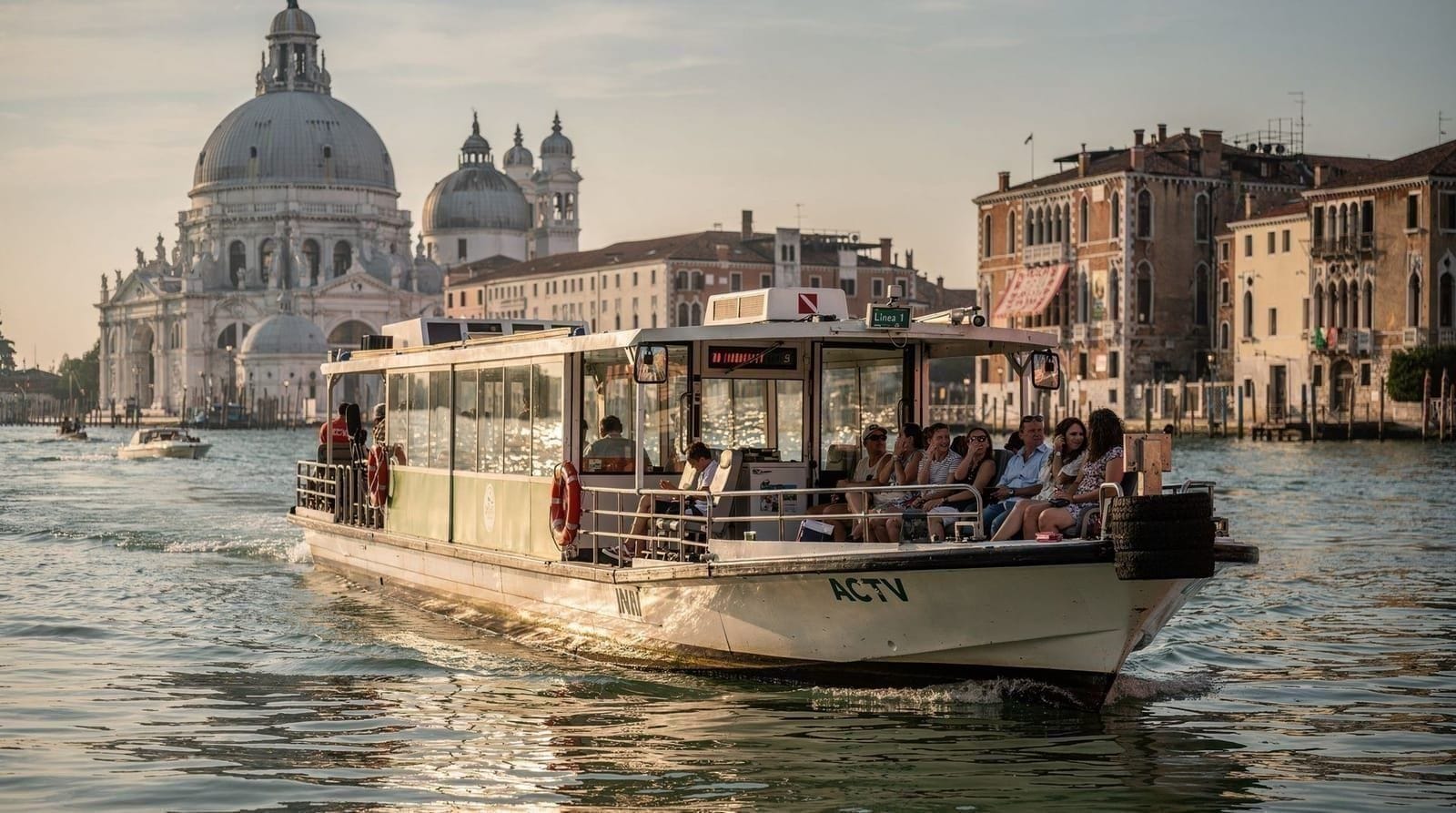
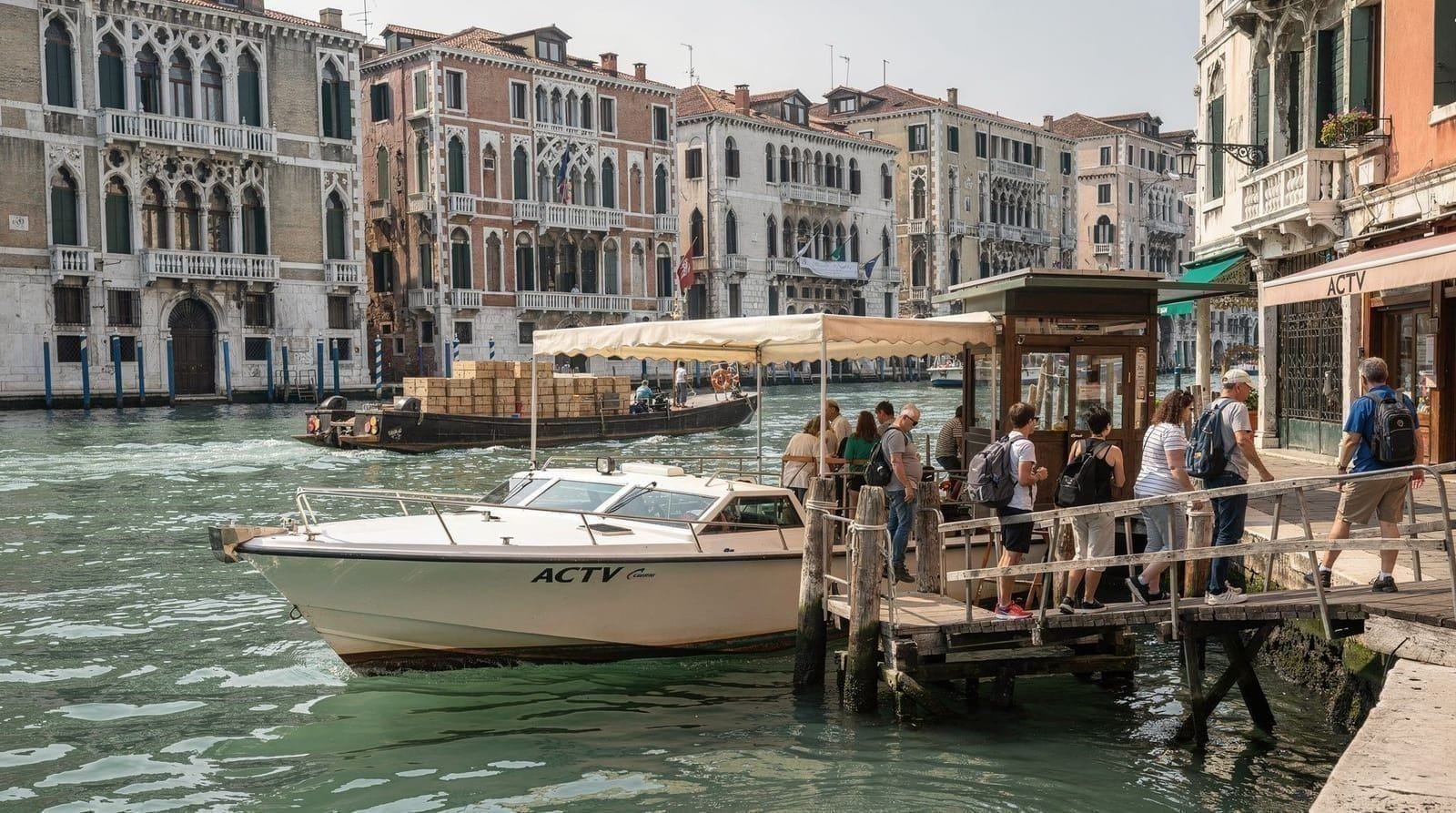
- Piazzale Roma → San Marco (Vallaresso): vaporetto Line 1, approximately 45 minutes (all stops); Line 2, approximately 30 minutes (express)
- Total port to San Marco: 55–75 minutes
Return buffer:
- San Marco → Piazzale Roma: 30–45 minutes by vaporetto
- Piazzale Roma → Marittima: 10 minutes on foot/shuttle
- Port gate check-in: 30 minutes buffer
- Total return buffer from San Marco: 80–95 minutes
For a 6pm all-aboard, leave San Marco by 4:30pm at the latest. For 5pm, leave by 3:30pm.
The 8-hour itinerary (most common scenario)
This schedule assumes 8 hours of usable time — port arrival at 8:30am, all-aboard at 6pm.
Morning: the landmarks
8:30am — Arrive at Piazzale Roma, board vaporetto
Buy a single vaporetto ticket (€9.50) or a 24-hour pass (€25) depending on how much you plan to use the vaporetto. Line 1 for scenic; Line 2 for speed.
9:20am — San Marco
Arrive at San Marco Vallaresso and walk directly to Piazza San Marco. The square itself needs 20 minutes. The Campanile bell tower (€10, fast queue) gives panoramic views of the lagoon and takes 30 minutes with the queue — worthwhile if you want the view, skippable if the landmark count is sufficient.
9:40am — St Mark’s Basilica (pre-booked only)
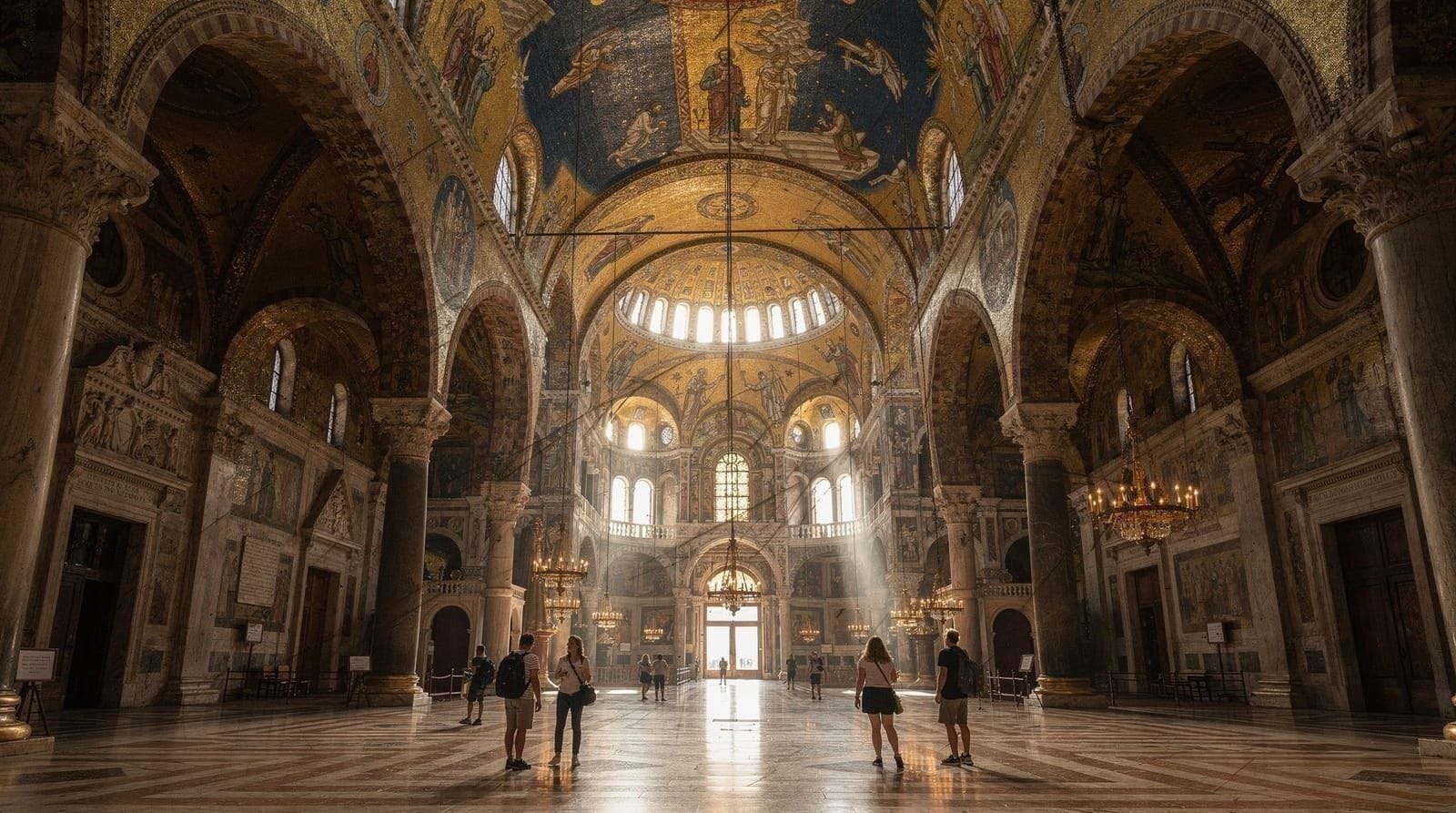
If you pre-booked skip-the-line entry, you have a time slot here. If you did not pre-book, the walk-up queue is 60–90 minutes in high season — almost certainly not worth attempting on a port day. Book online before your ship arrives in Venice or accept that you will see the exterior only.
St Mark’s Basilica skip-the-line entry — book before your cruise arrivesAllow 45 minutes inside.
10:30am — Doge’s Palace
Adjacent to the Basilica, with separate entry. Pre-booking is strongly recommended — the queue for walk-up tickets is routinely 45–60 minutes. Standard entry covers the main apartments, the Bridge of Sighs, and the prison.
Doge’s Palace Secret Passageways — small-group tour (pre-book)Allow 1.5 hours for a self-guided visit or the Secret Passageways tour.
12:00pm — Walk to the Rialto
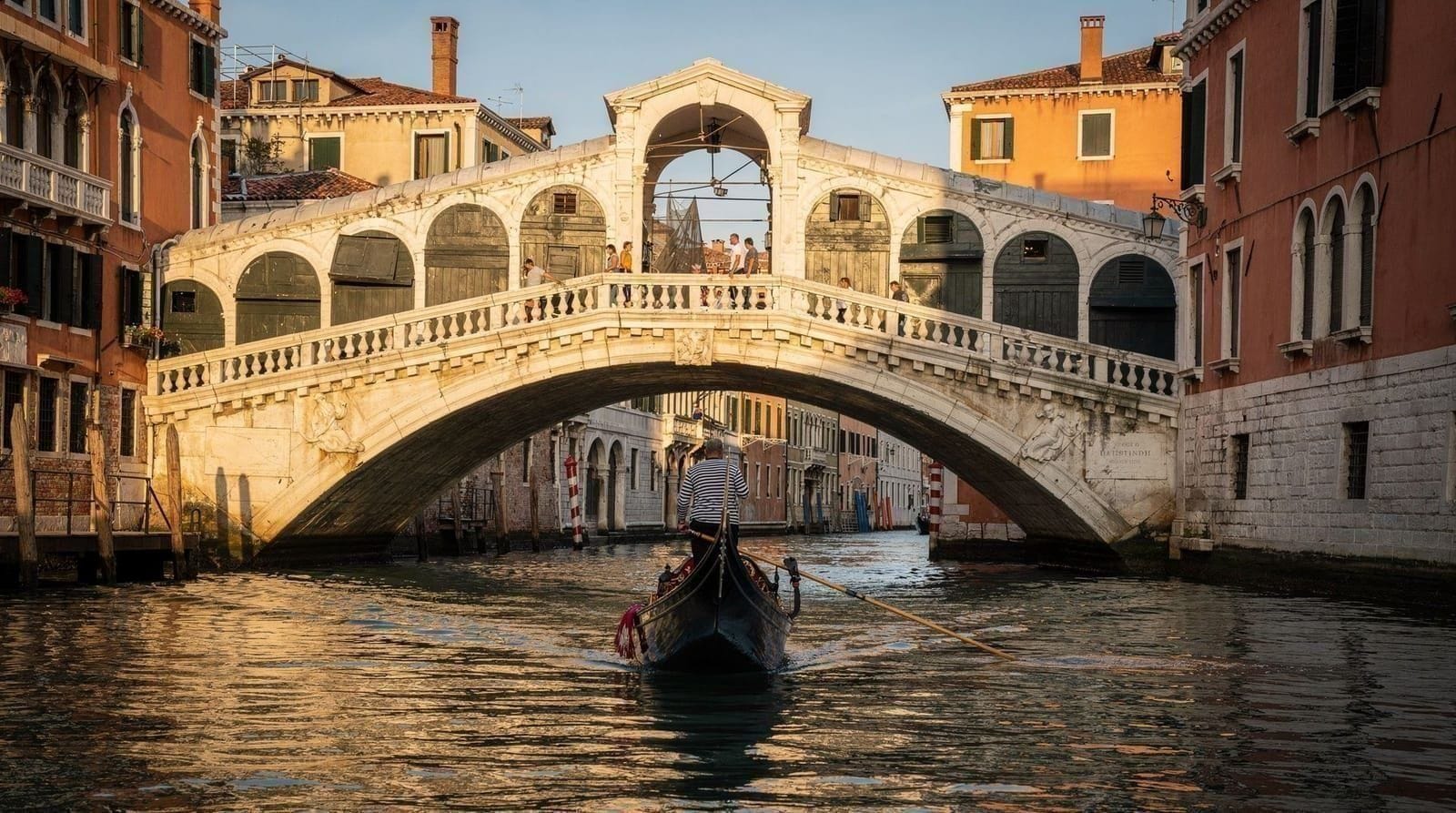
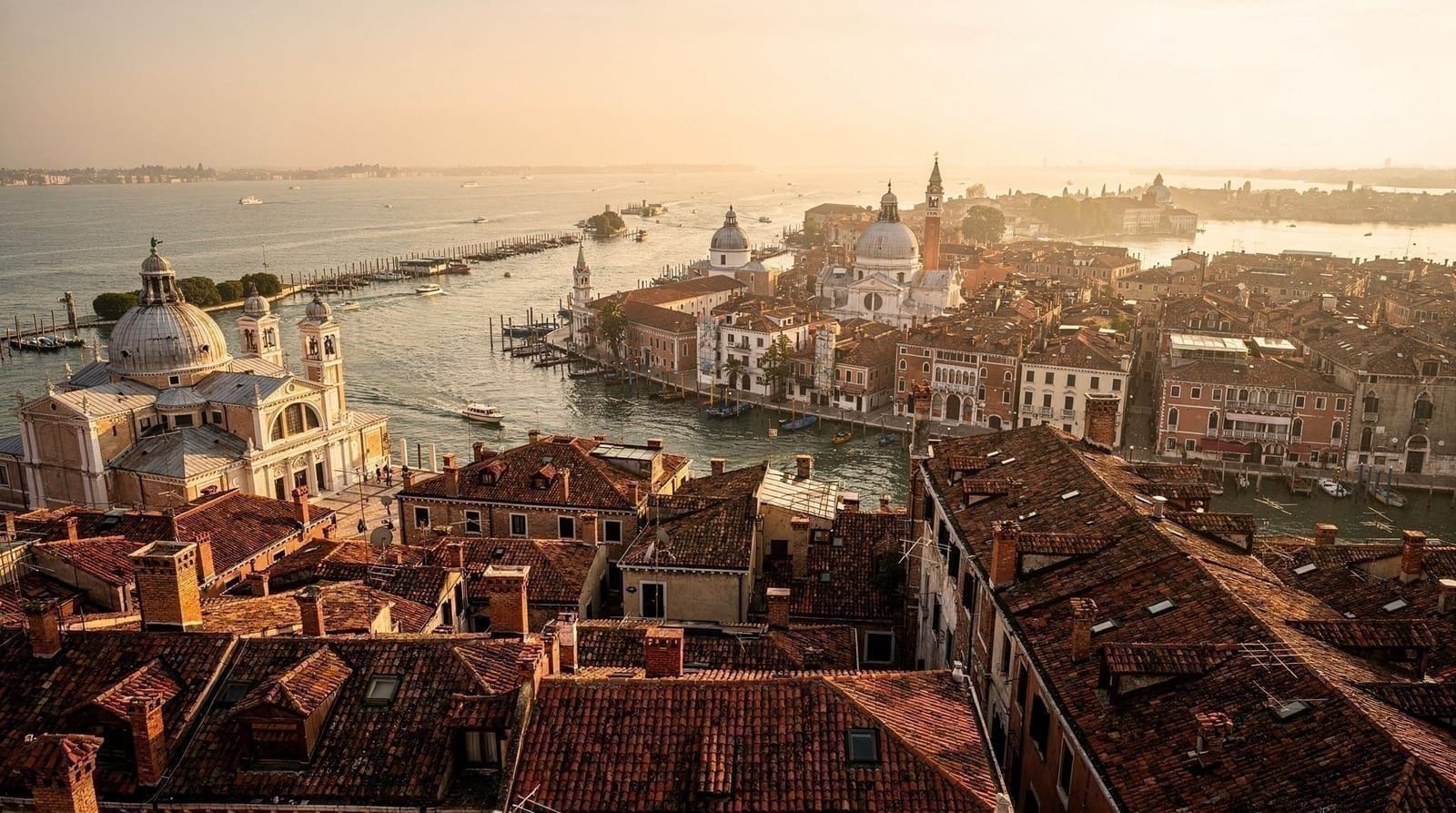
The 12-minute walk from San Marco to the Rialto bridge passes through the Mercerie shopping street. Cross the bridge and look down both sides of the Grand Canal. The view upstream is one of Venice’s best photographs.
Midday: lunch and the Rialto
12:30pm — Lunch at a bacaro
The bacari near the Rialto market are the honest option for a fast, good lunch. All’Arco (Calle dell’Occhialer, 100 metres from the bridge’s market side) serves exceptional cicchetti — small bread rounds with toppings — from about €2 each. Four or five pieces and a small glass of prosecco costs €10–12 and takes 15 minutes standing at the bar.
Avoid the restaurants with outdoor tables and printed photos on the menu near San Marco. You will pay €25–35 for mediocre food and wait 30 minutes for a table. Our tourist trap restaurant guide explains the economics.
Afternoon: gondola and the quiet streets
1:30pm — Gondola (if you want one)
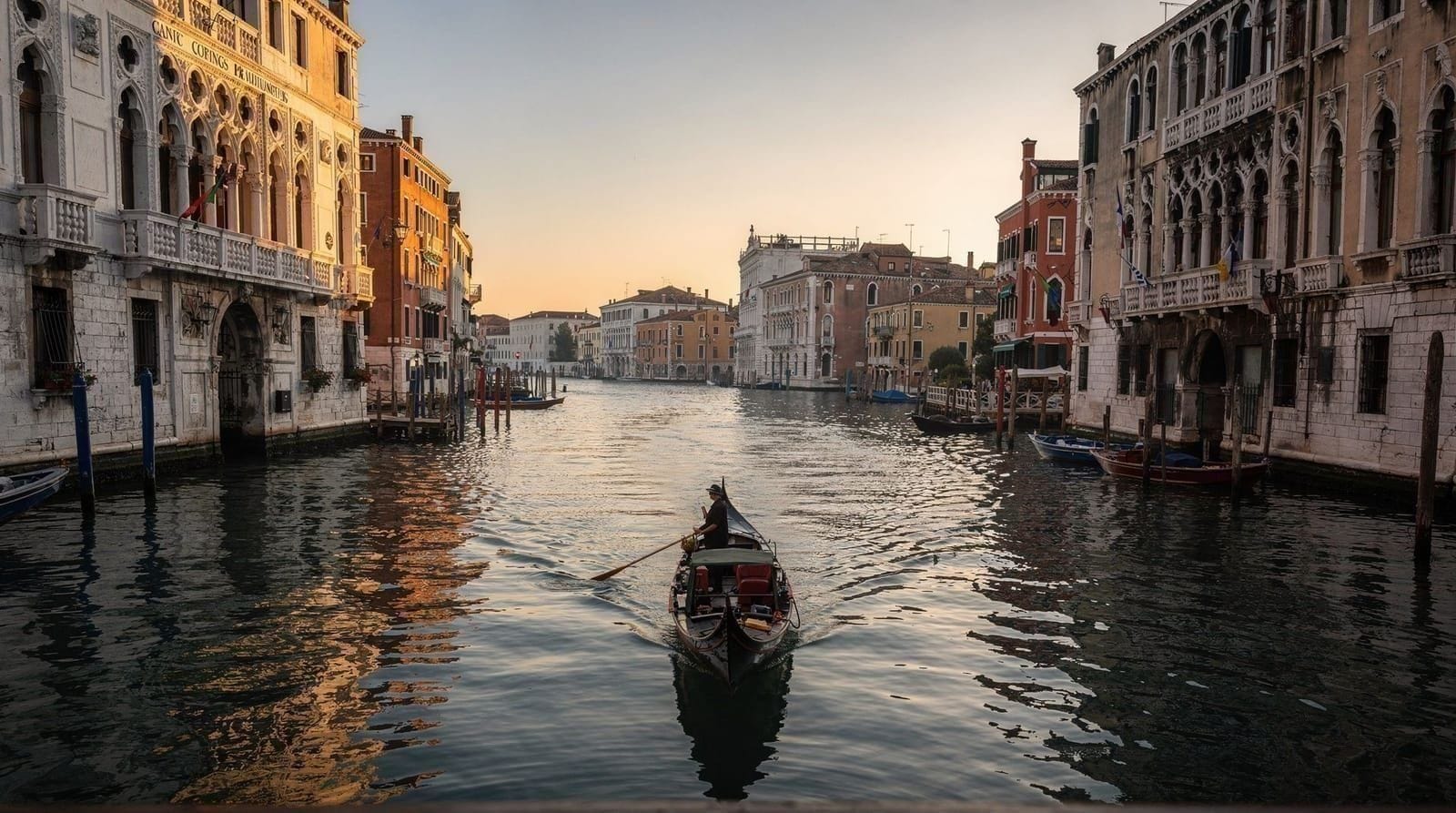
A shared gondola is approximately €25–30 per person booked in advance; a private gondola for two is €80–90 for 30 minutes. The official rates are posted at all gondolier stands. The most scenic routes start from Campo San Stefano (Accademia area) or the traghetto crossing points near San Tomà — these go through smaller canals rather than the congested Grand Canal itself.
Shared gondola ride — book in advance to save time at the port2:30pm — Walk the quiet calli
You now have approximately 2 hours before you need to leave San Marco. Use it to wander. The streets west of San Marco toward Dorsoduro — particularly the Calle Lunga San Barnaba, Campo San Barnaba, and the canal-side Fondamenta del Vin — are quieter and more genuinely Venetian than the tourist corridor.
If you cross the Accademia bridge into Dorsoduro, allow 20 extra minutes for the return journey to San Marco.
3:30pm — Campo Santa Maria Formosa
A beautiful and undervisited campo in Castello, 10 minutes’ walk east from San Marco. Several churches around the perimeter, a fruit and vegetable market on weekday mornings, and bars that charge normal prices.
Return
4:30pm — Leave San Marco
Board Line 1 or Line 2 back to Piazzale Roma. Line 1 is slower (45 minutes) but more scenic — particularly along the Grand Canal past the Rialto bridge. Line 2 takes 30 minutes. Add walking time from the vaporetto stop to the port terminal.
5:30pm — Back at the terminal
You have 30 minutes before all-aboard. Use it to collect your bearings and any bags.
The 6-hour itinerary (tight schedule)
If your all-aboard is early — 4pm or 5pm — you have time for the essential San Marco area only.
Hours 1–2: Walk the piazza, Campanile (skip if queue is long), exterior of Basilica and Doge’s Palace if not pre-booked.
Hours 2–4: Either Doge’s Palace interior (pre-booked) OR a gondola and the Rialto walk — not both.
Hours 4–5: Cicchetti lunch near the Rialto, walk the back streets.
Hour 5–6: Return to the port, 90-minute buffer.
Honest advice for a 6-hour port day: do not try to do the landmarks and the gondola. Pick one set piece and let the rest of the time be unhurried walking.
The 10-hour itinerary (late all-aboard)
With 10 hours (8am to 6pm, or similar), you can add Dorsoduro to the itinerary. The Peggy Guggenheim Collection (1.5 hours) or the Accademia gallery (2 hours) fit into the early afternoon after the Rialto lunch.
You could also take a vaporetto to Murano for a quick glassblowing demonstration (2 hours round trip minimum from San Marco), though this leaves almost no margin for the rest of the itinerary. Only attempt the islands if your all-aboard is genuinely 7pm or later.
A note on guided walking tours
For a cruise port day, a guided walking tour of the San Marco area solves the main problem: you do not know which queue to be in, which churches to enter, or what you are looking at. A good 2.5-hour guided tour covers the Basilica exterior, the square, the Doge’s Palace exterior and Bridge of Sighs with context, the Rialto walk, and the bacaro culture — leaving the afternoon free for a gondola.
Venice historical walking tour — good option for cruise passengersUnderstanding what you are seeing
Venice’s disorienting quality — especially for a first-time visitor with a hard time limit — is that it looks wrong in a way that takes a few hours to process. There are no streets in the conventional sense: the calli are lanes between buildings, the fondamente are paths along canals, and the campi are the open squares where the city’s social life plays out. The Grand Canal, which looks like a main road, functions exactly as one — boats carry everything.
The brief explanation: Venice is built on 118 small islands connected by 400 bridges in the middle of a lagoon. The lagoon itself is shallow (averaging 1 metre depth), and the islands are separated by a network of roughly 170 canals. The main island (the one you are visiting) has been continuously inhabited since the 5th century; the buildings you will walk past include 14th-century Gothic palazzos, 16th-century Renaissance churches, and 18th-century baroque warehouses.
The architecture has one consistent logic: the facades always face the water. The back doors face the calli; the formal entrances face the canals. This is why canal-facing photography looks palatial and back-street photography looks merely old.
What to photograph on a port day: The best three shots available on a Venice port day, all free and all within 30 minutes of the vaporetto:
- The view from the Molo waterfront across the Bacino to San Giorgio Maggiore — iconic, free, best before noon
- The Rialto bridge from either bank at mid-span, looking up or down the Grand Canal — free
- A narrow side canal with laundry above and a gondola below — found by wandering 10 minutes west of San Marco
Practical notes
Contributo di Accesso: On peak days (April–July, weekends), day visitors pay €5 (advance) or €10 (day-of) between 8:30am and 4pm. Cruise passengers are technically day visitors if not staying in a hotel. Check venicevisitpass.com for the current calendar.
Weather in summer: Venice in July and August is hot — 30–35°C is common, with high humidity. Wear light clothing, carry water, wear comfortable shoes. The afternoon heat is at its worst 2–5pm.
Pickpockets: Active at the Rialto, San Marco, and the train station area. Keep documents and cash in a front pocket or money belt. This is not an unusual risk for Venice, but it is higher than in many Italian cities.
Vaporetto crowding: Lines 1 and 2 in peak season carry more passengers than is comfortable during the 9–11am and 4–6pm periods. If your schedule is flexible, travel slightly before or after those windows.
Eating and drinking on a Venice port day
Food on a port day requires strategy. The rule is geographic: the further you are from Piazza San Marco, the better the food and the lower the price. The worst eating decision a cruise passenger can make is sitting down at a restaurant in direct sight of the Basilica.
The 15-minute rule: Walk 15 minutes from San Marco toward the Rialto and the food quality increases while prices drop. The bacari along the Rialto market side — All’Arco, Do Mori, Cantina Do Spade — serve cicchetti (Venice’s bar snacks: small bread rounds topped with fresh seafood, cured meats, or vegetables) for €2–3 each. Five pieces and a small glass of house wine costs €10–12 and takes under 15 minutes standing at the bar. This is Venice’s honest food tradition, available for the same price in 2026 as it was in 1996.
What to order at a bacaro: The cicchetti counter changes throughout the day. The best options before noon include baccalà mantecato (salt cod whipped with oil into a mousse, served on white bread — the definitive Venetian cicchetto), sarde in saor (sardines marinated in sweet vinegar with onions and pine nuts, a dish that has been eaten in Venice since the 14th century), and polpette (small fried meatballs). See the cicchetti guide for the full vocabulary.
Drinks: A spritz (Aperol or Campari with prosecco and a green olive) at a local bar costs €3.50–4. At tourist-facing bars within sight of San Marco, the same spritz is €8–12. Coffee standing at the bar is €1.10–1.50 everywhere except the tourist corridor.
Avoid: Any restaurant with a printed menu in five languages displayed at the street, outdoor tables in the San Marco piazza itself (€12 for a cappuccino), and any bar that approaches you proactively. Read the tourist trap guide for the specific patterns to recognise.
The most efficient routes from the port
Stazione Marittima → San Marco (direct): Walk 10 minutes to Piazzale Roma. Take vaporetto Line 2 (express, 30 minutes) or Line 1 (scenic, 45 minutes) to San Marco Vallaresso. Total: 40–55 minutes.
Stazione Marittima → Rialto (for the market): Same vaporetto route; disembark at Rialto (Line 1 only). The Rialto market is a 5-minute walk from the landing stage. Total: 55–65 minutes port to market.
Return journey planning: The vaporetto runs every 5–10 minutes during the day. The journey back to Piazzale Roma takes 30–45 minutes depending on the line. Walk from Piazzale Roma to the port: 10 minutes. Total return time from San Marco: 45–60 minutes. Include 30 minutes buffer for unexpected delays. If your all-aboard is 6pm, leave San Marco by 4:30pm — this is the conservative but correct calculation.
What to do in the last 30 minutes at the port: Buy wine (Venice’s tabacchi and supermarkets sell Veneto whites — Soave, Pinot Grigio — for €5–8 a bottle), eat a last cicchetto at a bar near Piazzale Roma, or simply sit at the waterfront and watch the boat traffic. Venice port-side has its own industrial beauty: the freight boats, the vaporetti, the water taxis, and the occasional superyacht sharing the lagoon in the afternoon light.
Doing this with a group of mixed ages
Cruise excursion groups often include grandparents and children in the same party, which changes the pacing math above. Build in a sit-down break every 90 minutes rather than the two- to three-hour blocks the schedule assumes for solo or couple travellers, and treat the Doge’s Palace as optional for anyone who tires of queuing rather than mandatory. Campo Santa Maria Formosa, mentioned above, doubles well as a rest stop with real bars rather than tourist cafes. See the family-friendly Venice guide for further pacing tips if your group includes young children.
Comparing the three schedules
| Time available | Landmarks | Food | Extras |
|---|---|---|---|
| 6 hours | San Marco exterior + one interior | Cicchetti lunch only | None — pick one set piece |
| 8 hours | Basilica + Doge’s Palace | Cicchetti lunch, aperitivo option | Gondola or quiet-street walk |
| 10 hours | Basilica + Doge’s Palace | Lunch + possible aperitivo | Dorsoduro museum or Murano (7pm+ all-aboard only) |
What to do if your ship docks at Marghera instead of Marittima
Not every Venice cruise call uses the Stazione Marittima terminal. If your ship docks at Marghera on the mainland, the transfer bus to Piazzale Roma typically takes 20–30 minutes depending on traffic, longer than the 10-minute walk from Marittima. Build this extra time into both ends of your day — a Marghera port day effectively has 30–40 fewer usable minutes than a Marittima one, which usually means dropping the gondola or the quiet-streets wander rather than the core landmarks. Confirm your terminal with your cruise line before finalising which itinerary length above fits your day.
If your ship changes the all-aboard time
Cruise schedules shift, and Venice port days are less forgiving of a moved-up all-aboard than most stops, given the vaporetto-dependent return journey. If you get a notice that all-aboard has moved earlier, immediately drop back to whichever schedule above matches your new remaining time rather than trying to compress the original plan — a rushed Doge’s Palace visit with one eye on the clock is worse than skipping it and keeping the Molo waterfront photograph and a proper cicchetti lunch instead. The vaporetto guide has live-ish frequency information if you need to recalculate travel time on the fly.
Frequently asked questions about Venice cruise port days
Can I pre-book Venice entry tickets from a cruise ship?
Yes — Doge’s Palace and St Mark’s Basilica both offer online booking through their official websites and through GetYourGuide. Do this before your ship reaches Venice. Last-minute booking on your phone as you disembark is possible but not guaranteed.
Is it safe to go ashore independently rather than taking ship excursions?
Completely. Venice is straightforward to navigate independently — the historic island is compact, public transport is easy to use, and the main sites are well-signed. Ship excursions cost two to three times more than the same activities booked independently.
What happens if I miss the all-aboard?
You are responsible for your own transport to the ship’s next port of call — at your own expense. Do not cut margins fine. The 90-minute return buffer in this itinerary is not excessive.
Is Venice’s cruise terminal walkable to the city centre?
Yes, from Stazione Marittima. The walk to Piazzale Roma is about 10 minutes; from Piazzale Roma to San Marco is a 25-minute walk or a 30–45-minute vaporetto ride. The walk is pleasant through the Cannaregio waterfront.
Should I book a gondola in advance or find one at the port?
Booking in advance (through GYG or similar) is slightly cheaper and guarantees availability in peak season. Walk-up gondoliers at the official stands use the fixed association rates; do not pay a gondolier who quotes you significantly above the official rate (€80–90 per 30 minutes for a private gondola, €25–30pp for a shared tour).
What should I absolutely not skip if I only have one port day in Venice?
The view from the Molo waterfront at San Marco — looking across the Bacino di San Marco to San Giorgio Maggiore — is the single image that defines Venice and costs nothing. If you have time for only one paid experience, the Doge’s Palace (with pre-booked skip-the-line) gives you more of the city’s history and spectacle than anything else in the same time window.
What if my ship docks at Marghera rather than Marittima?
Add 20–30 minutes each way for the mainland bus transfer to Piazzale Roma compared with a Marittima walk-off. Recalculate your usable hours before choosing between the 6-, 8- and 10-hour schedules above, since the difference can shift you down a tier.
Can I do this itinerary as a return visitor rather than a first-timer?
Yes — swap the Basilica and Doge’s Palace slots for whichever quieter sestiere you did not see last time, since the return-buffer logic and food strategy in this guide apply regardless of what you choose to see. Castello or Cannaregio both fit well within an 8-hour window.
Top experiences
Bookable activities with verified prices and instant confirmation on GetYourGuide.