San Marco neighbourhood guide: beyond the piazza
Venice St. Mark's pass: basilica, Doge palace & bell tower
Is San Marco worth spending time in beyond the main sights?
Yes — once you leave the main tourist drag, San Marco has atmospheric calli, Gothic palaces, and excellent museums within a compact area. The challenge is avoiding the overpriced restaurants clustered around the piazza.
More than monuments: San Marco as a neighbourhood
San Marco is Venice’s smallest sestiere and its most visited. It is home to the most famous square in Italy, two of the city’s top museums, the opera house, and a dense grid of designer shops, hotels, and overpriced restaurants. It is also, underneath all of that, a neighbourhood with some of the most beautiful Gothic and Byzantine architecture in Europe — and a handful of quieter streets where you can step off the tourist route entirely.
The challenge with San Marco is managing your way through the crowds. The main axis from the Rialto Bridge down Mercerie to the piazza is, during peak hours, nearly impossible to move through comfortably. But the streets running south of Mercerie — toward Campo Santo Stefano and Campo Sant’Angelo — carry a fraction of the tourist traffic and have a completely different character.
This guide focuses on what San Marco offers beyond the Basilica and Doge’s Palace — both covered in depth in their own dedicated pages. See the St. Mark’s Basilica guide and Doge’s Palace guide for those.
| Where | Venice’s central sestiere, around Piazza San Marco |
| Cost | Piazza and streets free; Basilica free, Doge’s Palace €17–25 |
| Time needed | Half a day for the essentials; a full day with the quieter streets and museums |
| Best time | Before 8:30am or after 8pm for the piazza with minimal crowds |
| Getting there | Vaporetto lines 1, 2, 4.1/4.2 to San Marco Vallaresso or Zaccaria |
Piazza San Marco: the essentials without the overwhelm
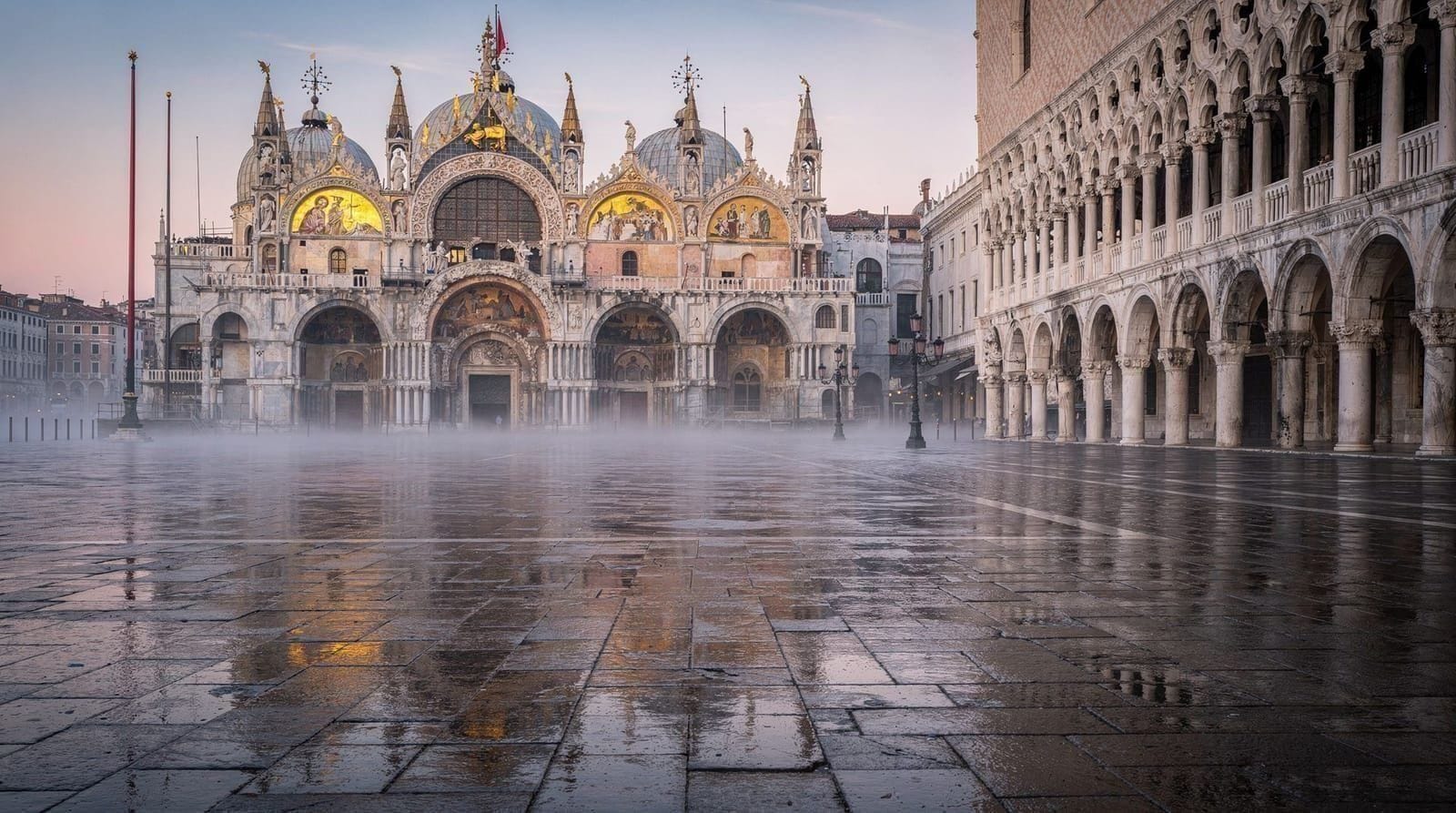
Piazza San Marco is extraordinary on first encounter — the largest square in Venice, ringed by Byzantine arcades, with the golden facade of the Basilica at its eastern end and the Campanile rising above. It is also extremely crowded from roughly 9am to 6pm in peak season.
Timing: The piazza is at its most atmospheric before 8:30am and after 8pm. At these hours the light is better (golden morning light on the Basilica facade; evening illumination), the crowds are minimal, and the cafés on the arcades are at their most civilised. The famous (expensive) orchestras at Caffè Florian and Caffè Quadri play in the evening — a €15 drink comes with a live concert, which depending on your perspective is a fair trade.
The Campanile: The bell tower offers the best elevated view in Venice. Lifts run throughout the day; a ticket costs €10. No queuing past the first hour of opening. Read the full St. Mark’s Campanile guide for what you can see from the top.
The Procuratie: The long arcaded buildings on either side of the piazza once housed Venice’s Procurators. The Procuratie Nuove now contains the Correr Museum — one of the most underrated museums in Venice, covering Venetian history from the Republic era through the 19th century. Combined entry with the Doge’s Palace is available and worth considering.
Venice: St. Mark’s pass — basilica, Doge’s Palace and bell towerSt. Mark’s Basilica: practical realities
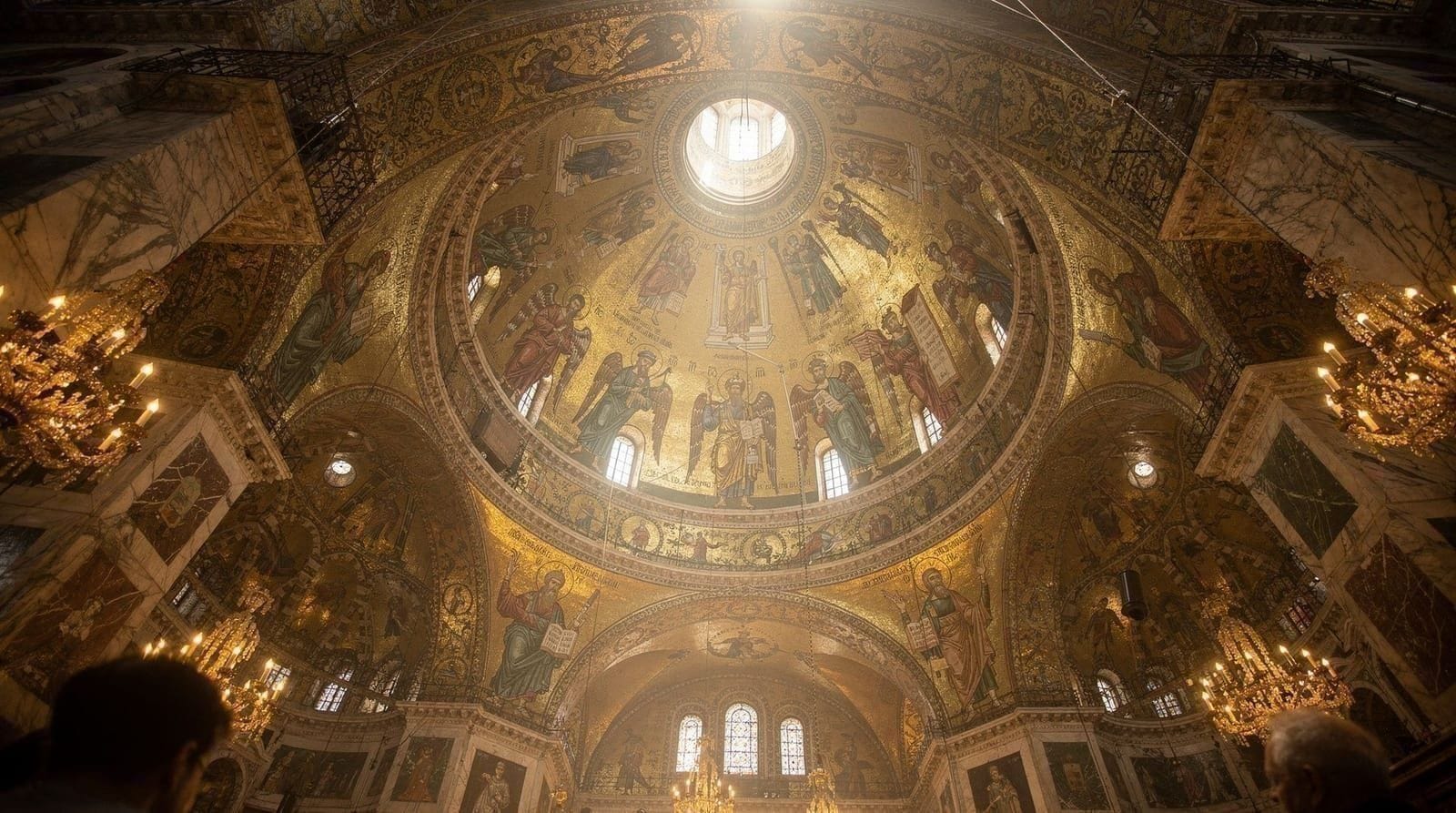
The Basilica opens daily at 9am (2pm on Sundays). Entry to the nave is free; special areas (Golden Altarpiece, Treasury, Loggia) each cost €2–5 extra. The queue can be 30–90 minutes in peak season. Skip-the-line tickets (€5–8 for reserved entry) are nearly always worth it.
Photography inside: since 2024 strict restrictions apply. No photos inside the atrium or main nave at any time; the exteriors are fair game. This is properly enforced.
Dress code: shoulders and knees covered, or you will be turned away at the door. A €1 scarf from a nearby shop solves the problem.
The detailed logistics — what to see inside, the best tour options, what the mosaics actually depict — are in the St. Mark’s Basilica guide.
Doge’s Palace: more than you expect
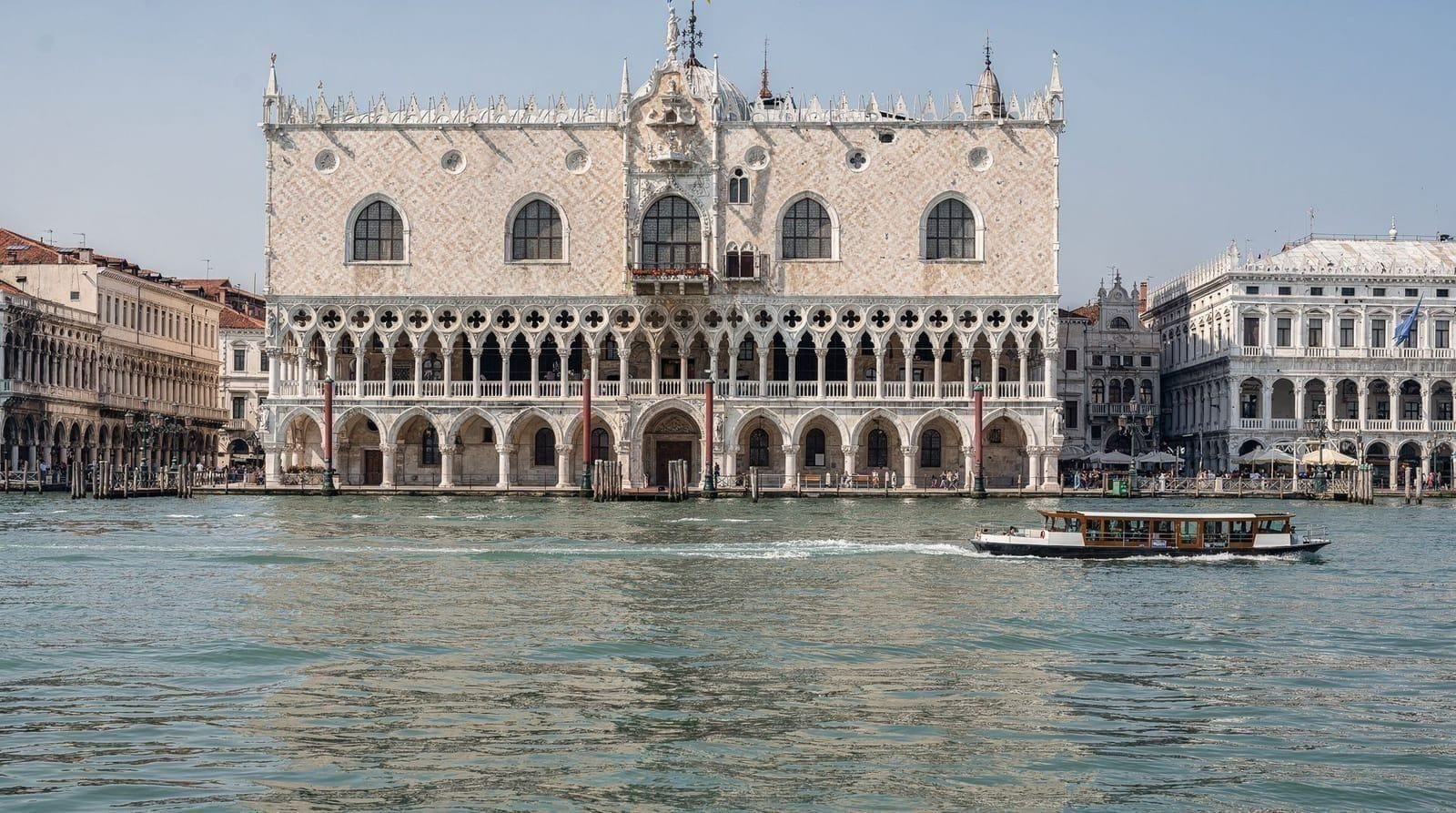
The Doge’s Palace (Palazzo Ducale) connects directly to the piazza via the Porta della Carta. It is among the most important Gothic civic buildings in Europe and contains one of Venice’s most extraordinary collections of painted rooms, including Tintoretto’s Paradise (one of the largest oil paintings on canvas in the world).
Standard entry runs €17–25 depending on the ticket tier. The Secret Itineraries tour (Itinerari Segreti) adds access to the doge’s private apartments and the interrogation chambers — it costs more and must be booked in advance, but is a qualitatively different experience.
Venice: Doge’s Palace, prison and secret passageways tourThe Doge’s Palace guide covers the rooms, the Bridge of Sighs, and how to link it with the Basilica visit efficiently.
La Fenice and the squares south of Mercerie
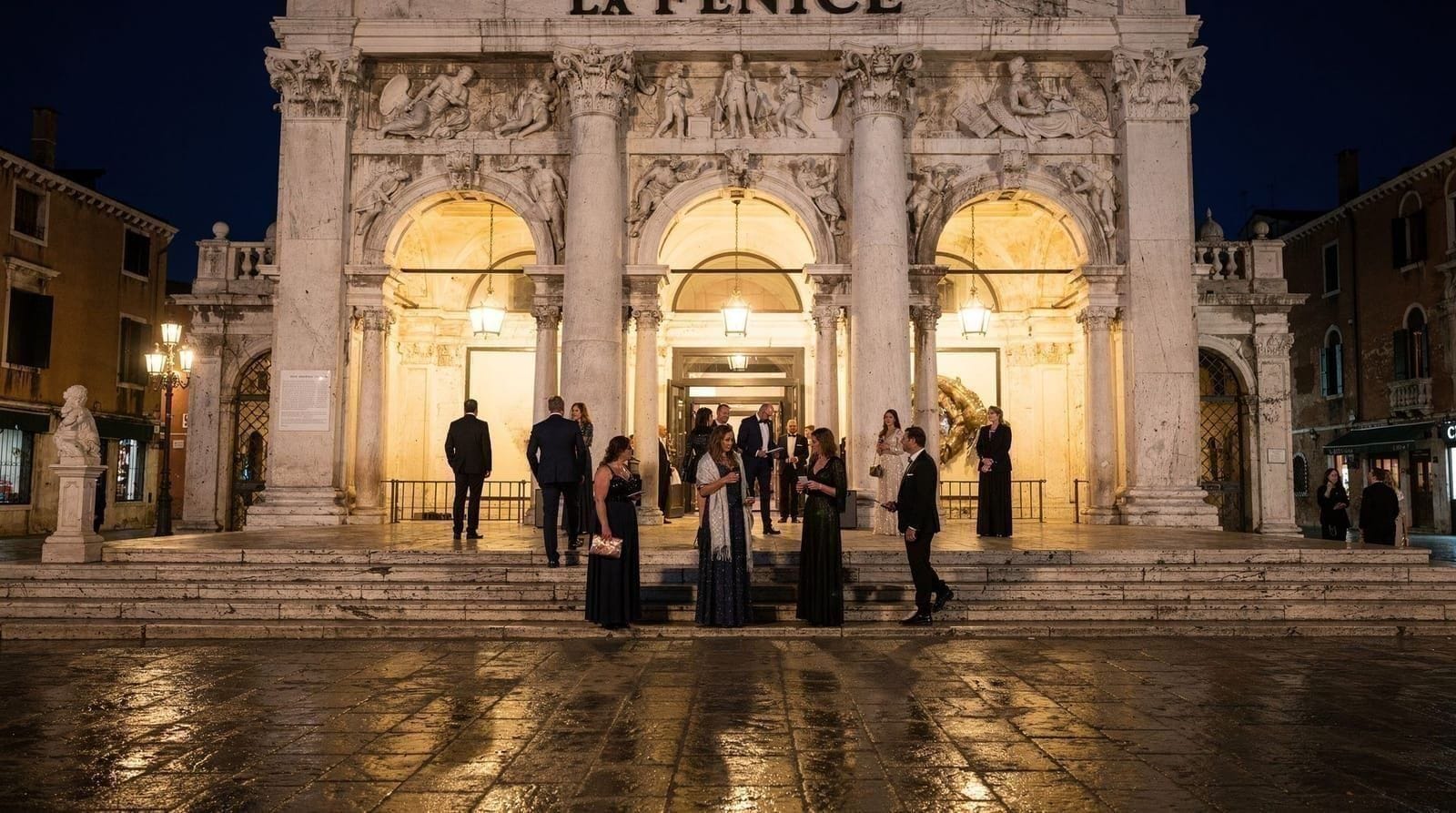
La Fenice: Venice’s opera house sits in a small campo south of Mercerie, a 10-minute walk west of the piazza. The current building is the third on this site — the previous two burned down, the last in 1996 in suspicious circumstances. The interior, reconstructed to the original 1836 design, is one of the most beautiful small opera houses in Italy. Day visits (€12–15) run when no rehearsal is scheduled. Evening performances during the season (roughly October–June) range from €40 to €250+. Read the La Fenice guide for the full programme.
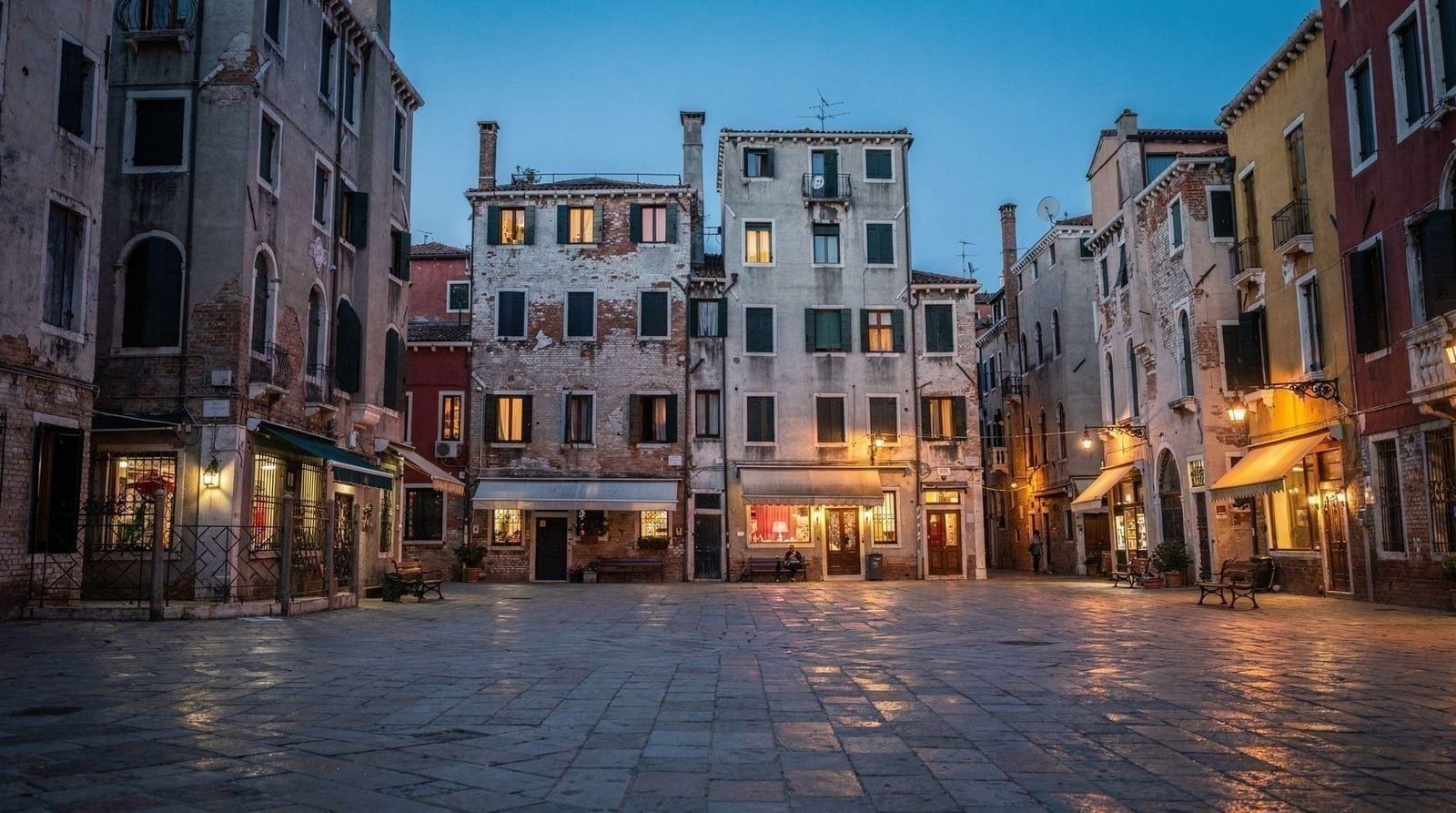
Campo Santo Stefano: Reached from the piazza by walking south-west past La Fenice or through the Accademia area, Campo Santo Stefano is one of the most pleasing outdoor spaces in Venice — a long, broad campo with a small market during the day, a statue of the historian Niccolò Tommaseo, and several genuinely good café-bars and restaurants not aimed primarily at tourists. The church of Santo Stefano (Gothic, free entry) has a remarkable ship’s keel ceiling and Jacopo Tintoretto paintings in the sacristy.
Campo Sant’Angelo: The smaller square just north of Campo Santo Stefano, connected by a short calle, is almost always uncrowded. It is a good place to stop for a coffee or sit on a bench without being surrounded by tour groups.
The calli you won’t find on the tour route
The area between the piazza and the Accademia bridge has a number of narrow streets — calli — that tourists walk through but rarely slow down in. The streets around Campo San Maurizio (just west of the main tourist axis) are peaceful and contain a good mix of artisan shops, a small antiques market on some weekends, and several reliable bacari.
Calle del Pestrin and Calle dei Fuseri (running south from Mercerie toward Campo Santo Stefano) are typical of the denser residential texture of San Marco. These narrow streets have almost no tourist businesses — a cobbler, a laundry, a hardware shop — in among the residential buildings.
Ponte dei Bareteri (near the piazza end of Mercerie) gives a view along a narrow canal that is genuinely photogenic without being on anyone’s official Instagram route. Early morning or evening.
Palazzo Grassi and the Pinault Collection
On the Grand Canal at the southern edge of San Marco, Palazzo Grassi is one of two Venice venues (alongside Punta della Dogana in Dorsoduro) operated by the Pinault Collection — one of the world’s major private contemporary art collections. Exhibitions here are substantial and genuinely interesting, usually running for six months at a time. Tickets cost €20–25. The building itself — a neoclassical palace with a stunning interior courtyard — is worth seeing even if contemporary art isn’t your primary interest.
The collection’s other Venice venue, Punta della Dogana, is across the water in Dorsoduro and can be visited on a combined ticket.
Honest eating in San Marco
San Marco has the worst reputation for tourist-trap restaurants in Venice — and that reputation is largely earned. The restaurants lining the main tourist routes between the Rialto and the piazza are among the most likely in the city to serve mediocre food at high prices, charge undisclosed coperto (cover charges of €3–5 per person), and push expensive bottled water. The San Marco restaurant traps guide has the detail on what to avoid.
However, decent eating does exist in San Marco — you just need to leave the main tourist axis.
Reliable areas: Campo Santo Stefano and Campo Sant’Angelo have restaurants more oriented toward a local clientele. The streets between La Fenice and the Accademia (particularly around Calle del Traghetto) have a few osterie that serve proper food at reasonable prices.
For cicchetti in San Marco: There are a few bacari near the Rialto end of San Marco — particularly on the streets leading toward San Polo — that serve genuine cicchetti at bar prices. Avoid any bar with laminated English menus on the door. A cicchetti and spritz should cost €5–8 all-in at a standing bar.
Coffee: Caffè Florian and Quadri are historic and expensive (€6–8 for an espresso with service charge, more during orchestra hours). For normal Venetian coffee at Venice prices (€1.30–1.80 at the bar), there are several bar-cafés on the back streets. Bar or counter service; the price jumps if you sit.
The Scala Contarini del Bovolo and other overlooked sights
Scala Contarini del Bovolo: A remarkable exterior spiral staircase attached to a Gothic palace just south of the Rialto. “Bovolo” means spiral shell in Venetian dialect — an accurate description. Entry to the courtyard and the staircase costs around €10 and takes 30 minutes. Almost always much less crowded than the main monuments. The Scala Contarini del Bovolo guide covers it fully.
Ca’ d’Oro: Technically in Cannaregio, but visible from the Grand Canal near the San Marco Vallaresso stop and easily combined with a San Marco visit. Read the Ca’ d’Oro guide.
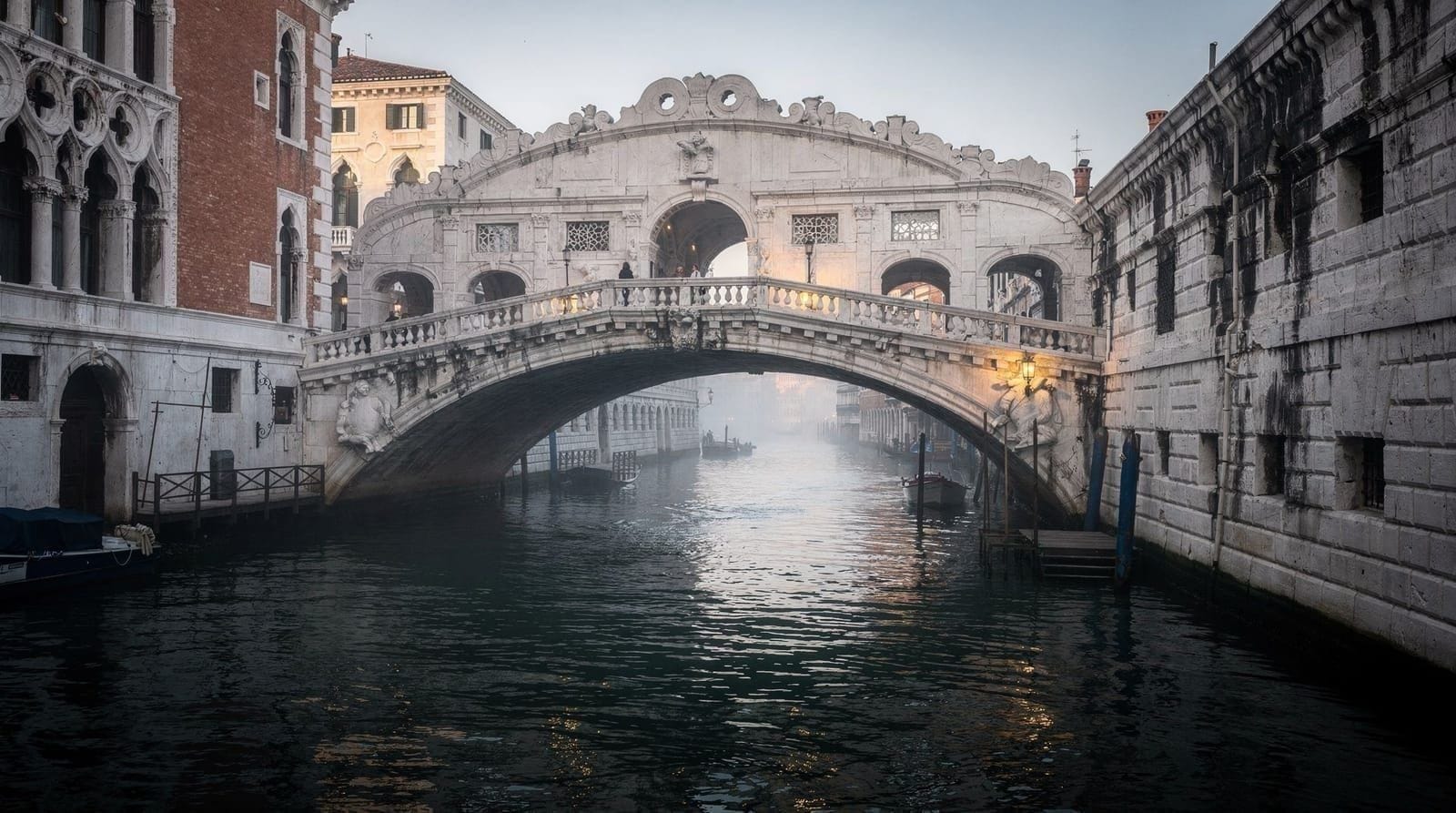
Bridge of Sighs: Visible from the Ponte della Paglia on the waterfront. The view is free; the bridge itself is passed through as part of the Doge’s Palace tour. The Bridge of Sighs guide explains the history and the best vantage points.
Getting around San Marco
San Marco’s main vaporetto stops are San Marco Vallaresso (line 1, 2) and San Marco Zaccaria (lines 1, 4.1/4.2). For arriving from the train station or Piazzale Roma, take line 1 (the slow boat along the Grand Canal) or line 2 (faster). From the Fondamenta Nuove in Cannaregio, take line 4.1/4.2 to Zaccaria.
Within the sestiere, everything is walkable. The piazza to the Accademia bridge takes about 15 minutes; the piazza to the Rialto is under 10 minutes on the direct route (longer through the crowds of Mercerie). See the getting around Venice guide for vaporetto line details.
San Marco in your itinerary
The Venice 1-day itinerary is necessarily dominated by San Marco — the Basilica and Doge’s Palace alone consume most of the day once travel time and queues are factored in. For a 2-day stay, day one is best spent in San Marco (arriving early, hitting the monuments before 10am, then exploring the quieter streets in the afternoon); day two branches out to Cannaregio or Dorsoduro. The Venice 2-day itinerary is structured this way.
For first-time visitors with limited time, the first-time Venice guide prioritises which elements of San Marco to do in which order.
Frequently asked questions about San Marco
What are the best hidden spots in San Marco?
Campo Santo Stefano, Campo Sant’Angelo, the area around La Fenice, and the courtyard of the Scala Contarini del Bovolo are all significantly quieter than the main tourist routes. The streets south of Mercerie (toward Accademia) also thin out quickly.
Is San Marco better in the morning or evening?
Early morning (before 9am) for an empty piazza and golden light on the Basilica. Evening (after 7pm) for atmosphere, the cafés’ orchestras, and the best lighting for photos. Mid-morning to mid-afternoon is the busiest time.
How do I avoid the restaurant tourist traps in San Marco?
Walk two streets off the main tourist axis. Any restaurant with a standing tout, a laminated multi-language menu in a window, or seats directly on the piazza will be expensive and often mediocre. The restaurant traps guide has specifics.
Can I combine San Marco with Dorsoduro in one day?
Yes, comfortably — the Accademia bridge connects them in a 15-minute walk. Many visitors do the Basilica and Doge’s Palace in the morning, then cross to Dorsoduro for the Accademia gallery or Peggy Guggenheim in the afternoon. See the Dorsoduro guide.
Does San Marco flood during acqua alta?
Yes — it is the first area to flood, because it sits lowest in the city. Piazza San Marco floods at a relatively modest tide level (around 80–90cm above sea level). When flooding is forecast, temporary elevated walkways (passerelle) are installed on the main tourist routes. Most flooding is ankle-deep and lasts 2–4 hours. See the acqua alta guide for what to do if you are caught in it.
Is the Contributo di Accesso charged in San Marco specifically?
The day-tripper access fee (€5 in advance, €10 on the day) applies to the entire historic island of Venice, not just San Marco. It is in force on designated peak days — roughly April to July 2026, on Saturdays and public holidays. Hotel guests are exempt. Check the current fee calendar at venicevisitpass.com.
What is the best view of the piazza?
From the top of the Campanile, obviously. But also from the Doge’s Palace balcony (on the guided tour), from the roof terrace of the Museo Correr, and from the water approaching on a vaporetto from the San Giorgio Maggiore direction.
San Marco by season
| Season | What to expect | Notes |
|---|---|---|
| Winter (Nov–Feb) | Lowest crowds, acqua alta risk | Piazza can flood; check forecasts, elevated walkways go up |
| Spring (Mar–May) | Rising crowds, good light | Book Basilica and Doge’s Palace ahead from April |
| Summer (Jun–Aug) | Peak crowds and heat | Early morning or evening essential; middle of the day is the worst version of San Marco |
| Autumn (Sep–Oct) | Warm light, thinning crowds | One of the best windows for the piazza and Campanile views |
A practical half-day in San Marco beyond the monuments
If you have already done the Basilica and Doge’s Palace on a previous visit, or are saving them for another day, a half-day built entirely around the neighbourhood’s quieter side works well: start at Campo Santo Stefano for a coffee at a genuinely local café-bar, walk to La Fenice for a day visit if a performance isn’t showing, continue to the Scala Contarini del Bovolo for the 30-minute detour few visitors bother with, and finish at Campo Sant’Angelo or back through the calli around Calle dei Fuseri. None of this requires advance booking, all of it is walkable in under three hours, and it shows a version of San Marco that the piazza alone does not.
Shopping in San Marco: what’s worth it
San Marco has Venice’s highest concentration of both genuine artisan shops and mass-produced tourist tat, often on the same street. The Mercerie, the main axis between the Rialto and the piazza, is overwhelmingly the latter — chain stores and souvenir shops aimed at foot traffic volume. Better shopping is in the quieter streets around Campo Santo Stefano and Calle Larga XXII Marzo, where a handful of genuine Venetian ateliers (mask-makers, bookbinders, glass jewellery) operate away from the main crush. As a rule, a shop with a queue of tour groups outside is rarely where the interesting craft is happening.
Top experiences
Bookable activities with verified prices and instant confirmation on GetYourGuide.