Giudecca guide: Venice's quietest island, a 5-minute vaporetto away
Basilica San Giorgio Maggiore tour with water transport
Is Giudecca worth the short vaporetto trip from Venice proper?
Yes, especially for escaping crowds. Giudecca is a 5-minute boat ride from Dorsoduro (Zattere stop) with almost no tourist traffic outside the Redentore church. It has the Cipriani hotel, the quietest canal-side walks in Venice, and a different pace that most visitors never discover.
| Where | South of Dorsoduro, across the Giudecca canal |
| Getting there | Vaporetto line 2 or 4.1/4.2 from Zattere, ~5 min, €9.50 |
| Time needed | 2–3 hours for a meaningful visit |
| Cost | Free (Redentore church entry by donation) |
| Best time | Morning for the Redentore’s light, evening for the quiet walk |
The island most Venice visitors skip
Giudecca is separated from the main island by the Giudecca canal — a broad, deep-water channel that historically allowed the largest ships to pass. Five minutes on a vaporetto from Zattere in Dorsoduro, and you are on a completely different island: quieter, more industrial in character (old warehouses and former factories line the north shore), with a permanent Venetian population and almost no tourist infrastructure.
Most visitors see Giudecca from the Zattere in Dorsoduro, or from the water as part of a boat tour. Very few cross over. This is, depending on your perspective, Giudecca’s defining quality — it remains genuinely off the main circuit, even though it is 5 minutes and one stop away from the heart of the city.
The Giudecca destination page gives the overview. This guide is about what to do with a few hours on the island.
The Redentore: Palladio’s masterpiece
The Redentore (Il Redentore) is Andrea Palladio’s most celebrated Venetian church — and many architects’ choice for the most perfect church facade in Venice. It was commissioned in 1576 by the Venetian Senate as an act of gratitude for the end of a devastating plague that killed over 50,000 Venetians (roughly one-third of the city’s population). Every year since, a pontoon bridge has been constructed across the canal from Zattere to the church on the third Sunday of July for the Redentore procession.
The interior is classical and controlled — white plaster, proportioned arches, restrained ornament — with an apse that seems to glow with light on clear mornings. The paintings include works by Tintoretto and Paolo Veronese. Entry is free or by small donation; the church is quiet on most days. Arrive in the morning when the light inside is best.
The facade — white Istrian stone, with a high drum and semi-circular pediment — is best seen from the Zattere waterfront across the canal, where the full composition is visible. The best photo spots guide recommends the Zattere view at golden hour.
The Redentore festival (July)
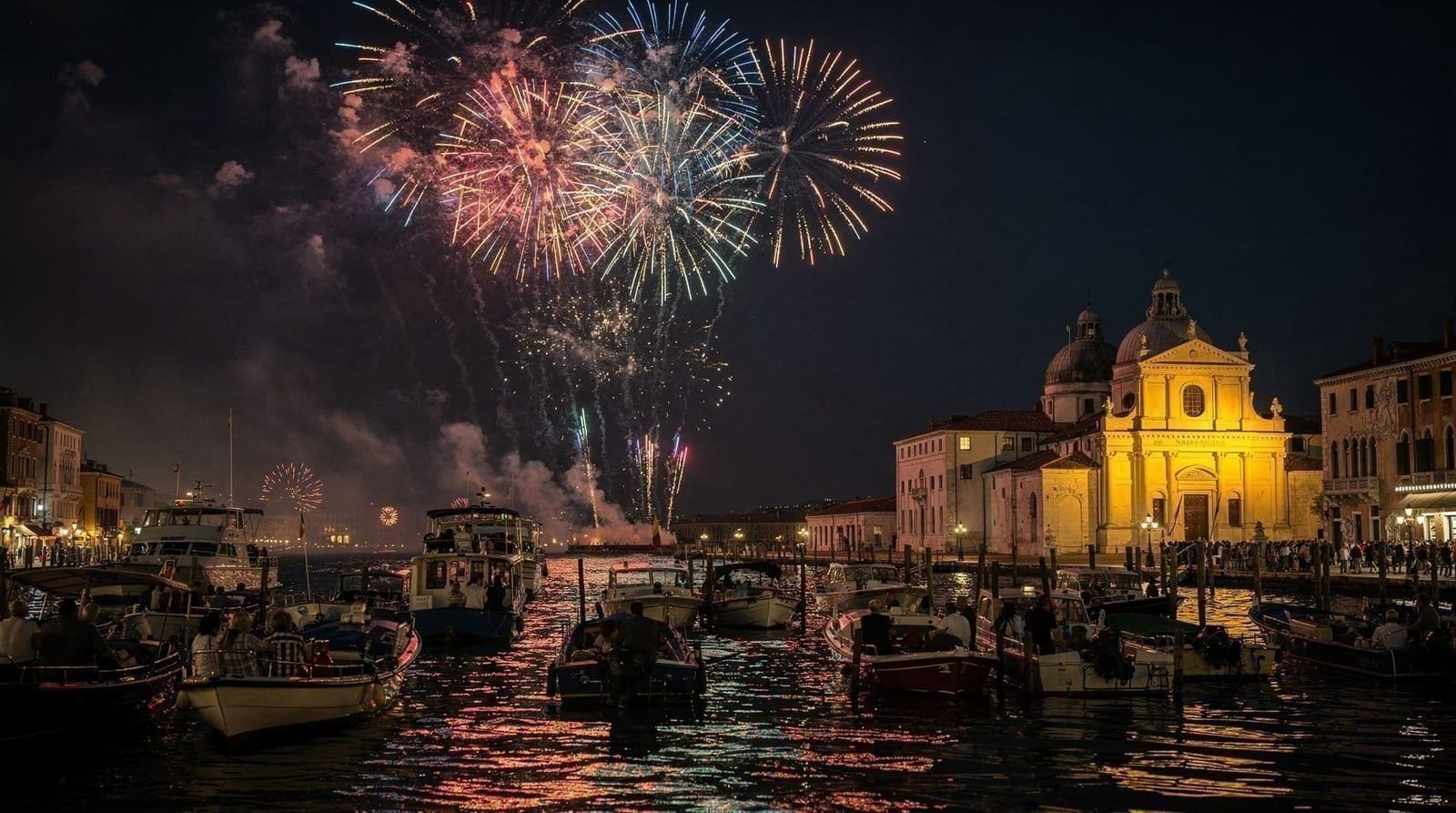
The Feast of the Redentore on 18–19 July 2026 (third Saturday and Sunday of July) is one of the most important calendar events in the Venetian year — part religious procession, part mass community celebration. The pontoon bridge goes up on Saturday morning across the Giudecca canal; hundreds of boats moor alongside it in the evening; fireworks are launched from the lagoon at midnight.
The traditional way to experience it is to hire or borrow a boat and anchor in the canal for the fireworks — a Venetian family tradition. Visitors without boat access can watch from the Zattere waterfront or from the bridge itself. The church is open for mass on Sunday morning.
See the Redentore festival guide for logistics, timing, and how to book a boat.
The north shore: former factories and the Molino Stucky
The north shore of Giudecca (facing the Dorsoduro waterfront across the canal) is a mix of converted industrial buildings and working structures. The most prominent landmark is the Molino Stucky — a vast neo-Gothic flour mill built in 1884, converted into a Hilton hotel in 2007. The building dominates the western end of Giudecca’s north shore; the rooftop bar of the hotel offers a panoramic view of Venice and the lagoon. Non-hotel guests can access the bar; worth knowing for a sunset drink at relatively affordable prices compared to the main island’s rooftop options.
Further east along the north shore, several former warehouses and industrial buildings remain unconverted — a reminder of Giudecca’s working-class and industrial past. The island had rope-making factories, a cotton mill, and boatyards into the 20th century. Traces of that history are visible in the building types even where the functions have changed.
San Giorgio Maggiore: nearby but technically separate
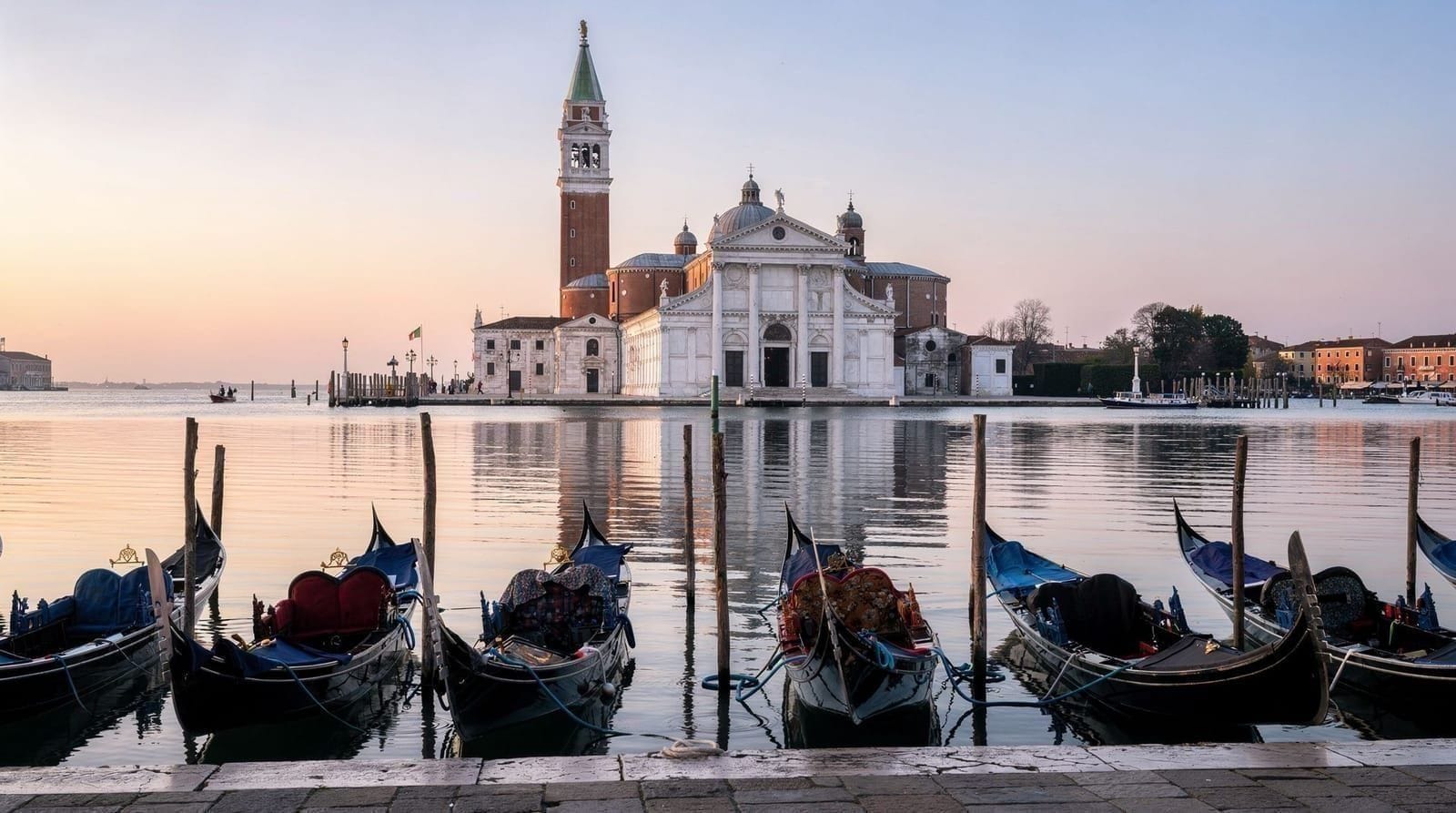
San Giorgio Maggiore is a separate island just south-east of Giudecca — not strictly part of Giudecca but often grouped with it for visit planning. Palladio also designed the Basilica di San Giorgio Maggiore (1565–1610), one of his most influential buildings. The interior has Tintoretto’s Last Supper (one of his last major works). The campanile offers what many consider the best elevated view of Venice — looking toward the piazza, with the Lagoon in the foreground.
The boat connection from Giudecca (across a short stretch of water) is informal; most visitors arrive from San Marco Zaccaria or Piazza San Marco on dedicated boat service (line 2 or a short water taxi). Read the guide at /destinations/san-giorgio-maggiore/.
Venice: San Giorgio Maggiore boat tourThe quieter side streets and west end
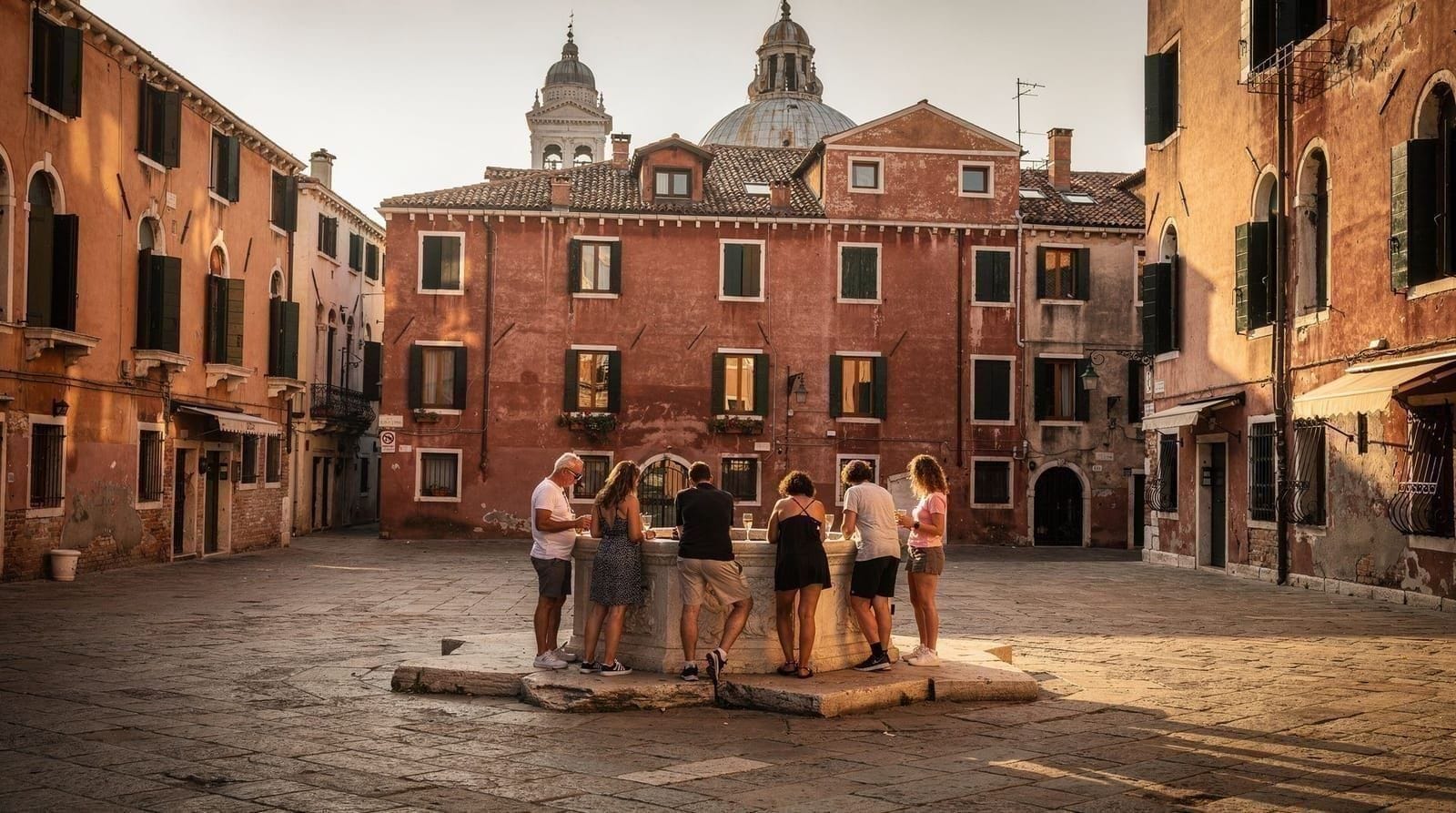
Giudecca’s back streets (the calli running south from the north shore waterfront) have a residential texture entirely unlike anything in the tourist areas of Venice: local shops, children coming home from school, people moving between houses with shopping bags. There are no souvenir sellers and very few cafés targeting visitors. The fondamenta (canal-side paths) on the south side of the island, facing south toward the outer lagoon, are particularly quiet — almost never visited by tourists, with views out toward the industrial port of Marghera across the water.
The Giardini di Michelangelo — a small private garden attached to a former monastery on the west end of the island — is sometimes accessible on open heritage days. The view from the western tip back toward the Redentore dome is excellent.
Artisan workshops: Giudecca has retained a few traditional crafts businesses — glass studios, boat restorers, a small number of artisan workshops that relocated from the main island as rents increased. Not set up for tourism in the way Murano’s glass factories are, but visible and approachable.
Eating on Giudecca
Giudecca has a handful of osterie and pizzerie serving a local clientele — not numerous or spectacular, but genuine. Prices are substantially lower than equivalent restaurants on the main island. The concentration of options is along the north shore waterfront.
The Cipriani (now a Belmond property) is the luxury option — a hotel restaurant with Grand Canal views and prices to match. Not essential for a neighbourhood visit, but the setting is genuinely beautiful if you want a special occasion option.
For a practical lunch: pick a pizza or pasta place along the waterfront that has locals eating in it. Avoid any place that is obviously orientating its menu toward the tourist boats.
Giudecca as a vantage point for photographers
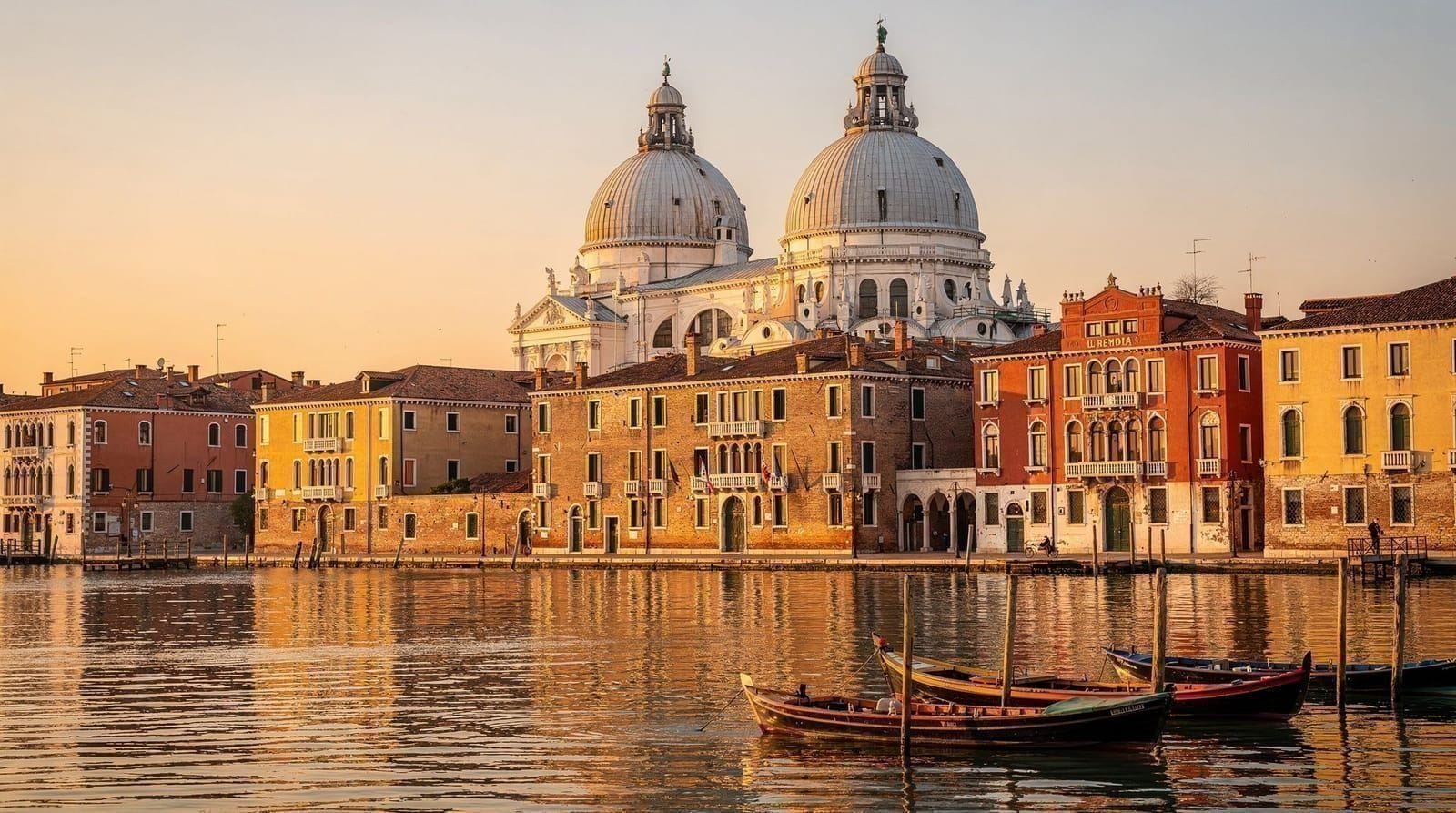
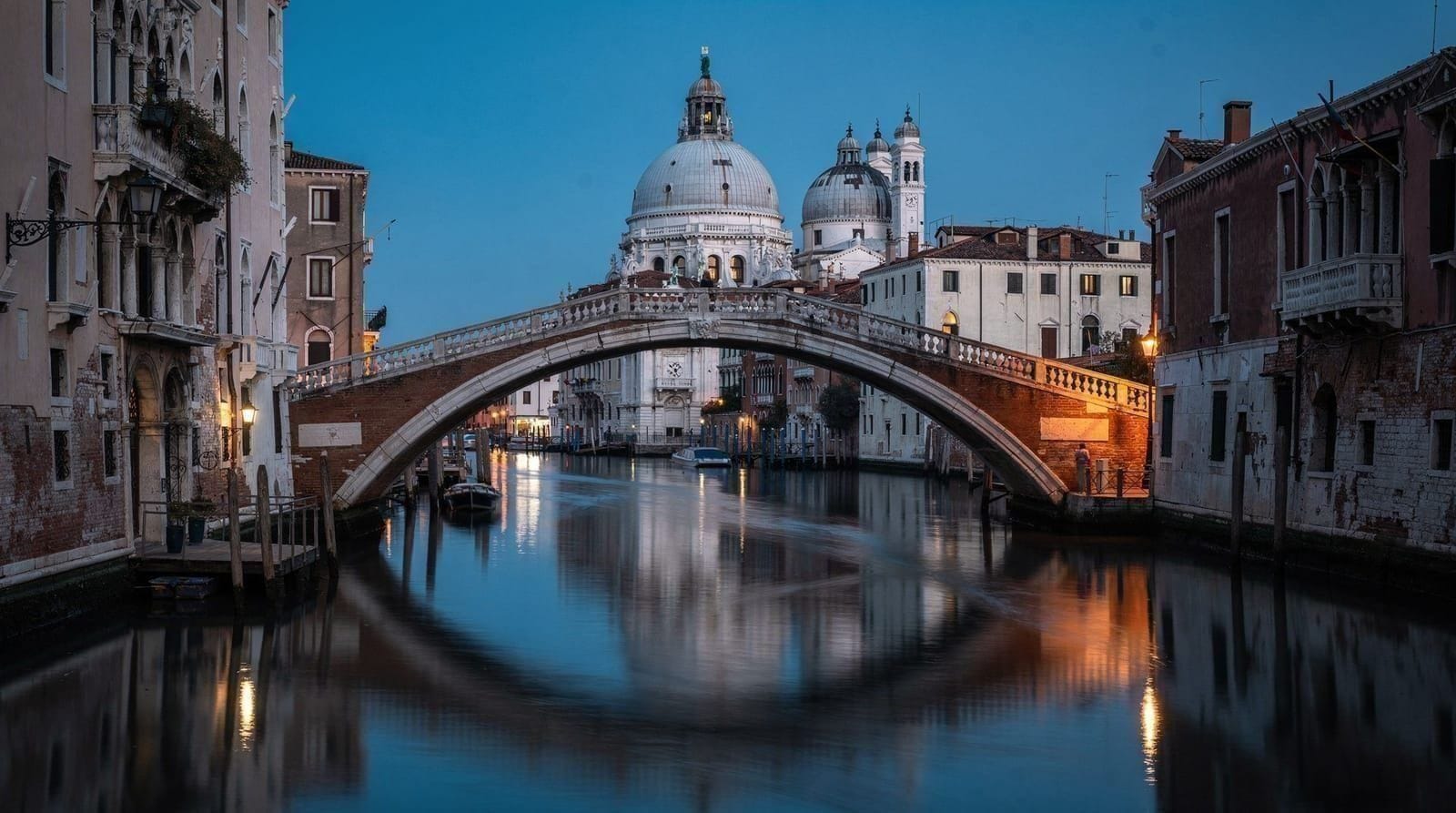
The north shore of Giudecca offers a view across the Giudecca canal to the Zattere and the Dorsoduro skyline that is rarely photographed because few tourists cross to this side. The view of the Salute dome, the Punta della Dogana, and the rooftops of Dorsoduro from Giudecca’s waterfront is a reversal of the usual Venice perspective — and for photographers who have exhausted the standard viewpoints, worth the 5-minute crossing.
The best photo spots guide and sunset photography guide both include the Giudecca perspective.
Giudecca in the evening
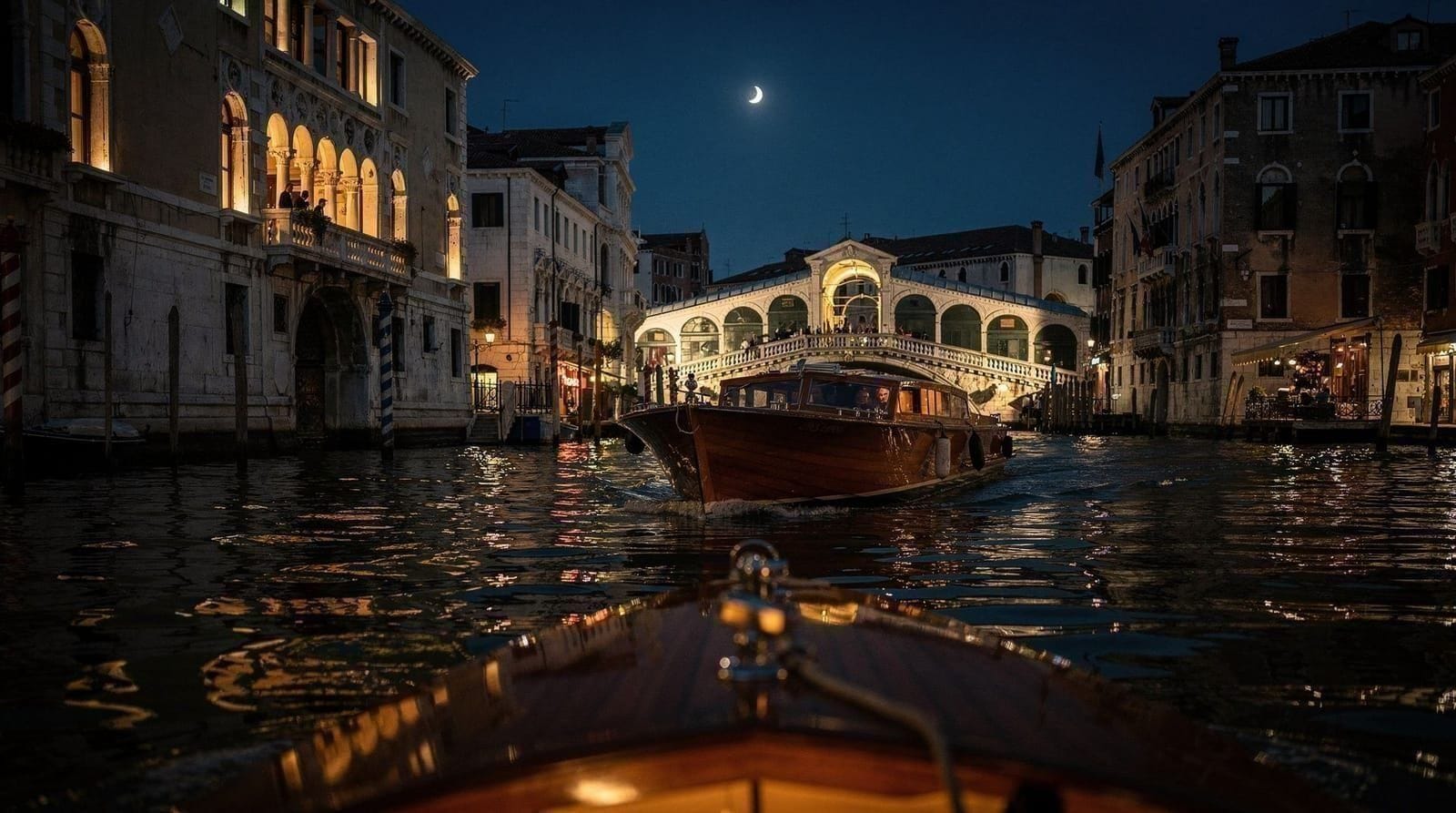
Giudecca is atmospheric in the evening — quiet, dimly lit, with the lights of Dorsoduro reflected in the canal. The vaporetto runs until midnight or later (check ACTV schedules for the specific line 2 timetable). A late-evening visit — crossing at 9pm, walking the north shore, taking the last vaporetto back — is one of the low-cost romantic options in Venice. Read the evening in Venice guide for more after-dark ideas.
Venice: sunset cruise on a Venetian boatGetting around Giudecca
Giudecca is a long, narrow island. The main stops on the north shore are (from west to east): Palanca, Redentore, Zitelle, and Sant’Eufemia. Vaporetto lines 2 and 4.1/4.2 serve these stops. The island is walkable end to end in about 30 minutes at a moderate pace. There are no cars.
From the main island: take vaporetto line 2 or 4.1/4.2 from Zattere (Dorsoduro) — single ticket €9.50, or use a day pass (24h €25, 48h €35). A vaporetto ticket is single-use in principle, but passes are better value for a day of exploration.
Giudecca vs the other quiet options
| Option | Distance from San Marco | Character | Time needed |
|---|---|---|---|
| Giudecca | 5 min vaporetto from Zattere | Working neighbourhood, Palladio church | 2–3 hours |
| Castello’s far end (Sant’Elena) | 15–20 min walk from Riva | Residential, green spaces | 1–2 hours |
| Torcello | ~60 min by vaporetto | Historic, near-empty island | 2–3 hours |
| Cannaregio back streets | 10–15 min walk | Residential, bacari-heavy | 2–3 hours |
Giudecca stands out on this list for being closest and least effort — a genuine change of pace without committing a half-day the way Torcello does. For a fuller island-hopping plan, see the lagoon islands day trip guide and hidden lagoon islands guide.
A simple half-day plan
Cross on the vaporetto from Zattere to Redentore stop mid-morning, when the church’s light is best. Spend 20–30 minutes inside, then walk east along the north shore fondamenta toward Sant’Eufemia, glancing across the canal at the Dorsoduro skyline — a reversed view most visitors never see. Stop for lunch at a waterfront osteria away from the Cipriani. In the afternoon, walk west instead, toward the Molino Stucky, and consider a drink at its rooftop bar for the panoramic view before heading back. For a longer day combining Giudecca with San Giorgio Maggiore, budget 4–5 hours total and check the getting around Venice guide for vaporetto timing between the two.
Why Giudecca stays quiet
The main reason Giudecca sees so few visitors relative to its 5-minute distance from the centre is simple: it has no headline attraction that appears on a “top 10 Venice sights” list, and crossing the canal requires a deliberate decision rather than happening along a natural walking route. The Redentore is significant architecturally but doesn’t carry the name recognition of St Mark’s Basilica or the Doge’s Palace, so most itineraries never include it. This works in visitors’ favour — the island absorbs the small number who do cross without ever feeling busy, even in August.
Frequently asked questions about Giudecca
Is Giudecca worth visiting without a specific festival or event?
Yes — the Redentore church alone justifies the short crossing, and the island’s quietness is an attraction in itself if you have been in San Marco for a day or two. Allow 2–3 hours for a meaningful visit.
Can I stay in Giudecca?
Yes — the Cipriani/Belmond is one of the most famous luxury hotels in Venice. There are also smaller hotels and apartments at lower price points. Staying on Giudecca gives a very different atmosphere from staying in the main island’s tourist zones — more peaceful, but less convenient for early-morning monument visits.
How does Giudecca compare to the lagoon islands?
Very different. Giudecca is not primarily a tourist destination; it is a working neighbourhood. The lagoon islands (Murano, Burano, Torcello) are explicitly set up for visitors and have designated attractions. Giudecca is more rewarding for travellers interested in what Venetian neighbourhood life actually looks like.
Are there any boat tours that include Giudecca?
Most Venice boat tours focus on the Grand Canal, the lagoon islands, or sunset cruises. Giudecca is often passed in view from boat tours but rarely included as a stop. Some private boat hire options will stop there on request. The private boat tour guide covers customisable options.
What is the Zitelle church?
The Zitelle (Church of Santa Maria della Presentazione) is near the eponymous vaporetto stop at the east end of Giudecca — a Palladian design (attributed to Palladio’s school if not the man himself) for a convent that trained young women in lacemaking. The building is now partly a conference centre; the church exterior is always visible, interior access limited to services.
Top experiences
Bookable activities with verified prices and instant confirmation on GetYourGuide.