Murano or Burano: how we finally chose, and what we'd do differently
The classic Venice dilemma
Every first-time Venice visitor reaches the same point, usually on day two: do I go to the colourful island or the glass island? The boats go in different directions. The time in each is similar. You probably can’t do both properly in a half-day. So you pick one.
| Where | Northern lagoon, reached from Fondamente Nove or Piazzale Roma |
| Cost | Vaporetto covered by an ACTV pass; factory demos free, workshop visits from a few euros |
| Time needed | Half a day for one island, a full day for both |
| Getting there | Vaporetto 4.1/4.2 or 3 to Murano; line 12 to Burano |
| Best time | Weekday mornings, outside July-August peak |
We’ve been to Venice four times. On trip one we went to Murano. On trip two we went to Burano. On trip three we did both in the same day, which was genuinely too much. Trip four, we went back to Murano with purpose and finally got it right. This post is an honest accounting of all of that.
What Murano actually is
Murano is not what the glass shop brochures suggest. Those leaflets make it sound like a single showroom with water around it, which is wrong and a shame. Murano is a real island with a real community — about five thousand residents, its own bars and restaurants, a twelfth-century basilica that most visitors walk straight past, and a quieter canal system that rewards wandering.
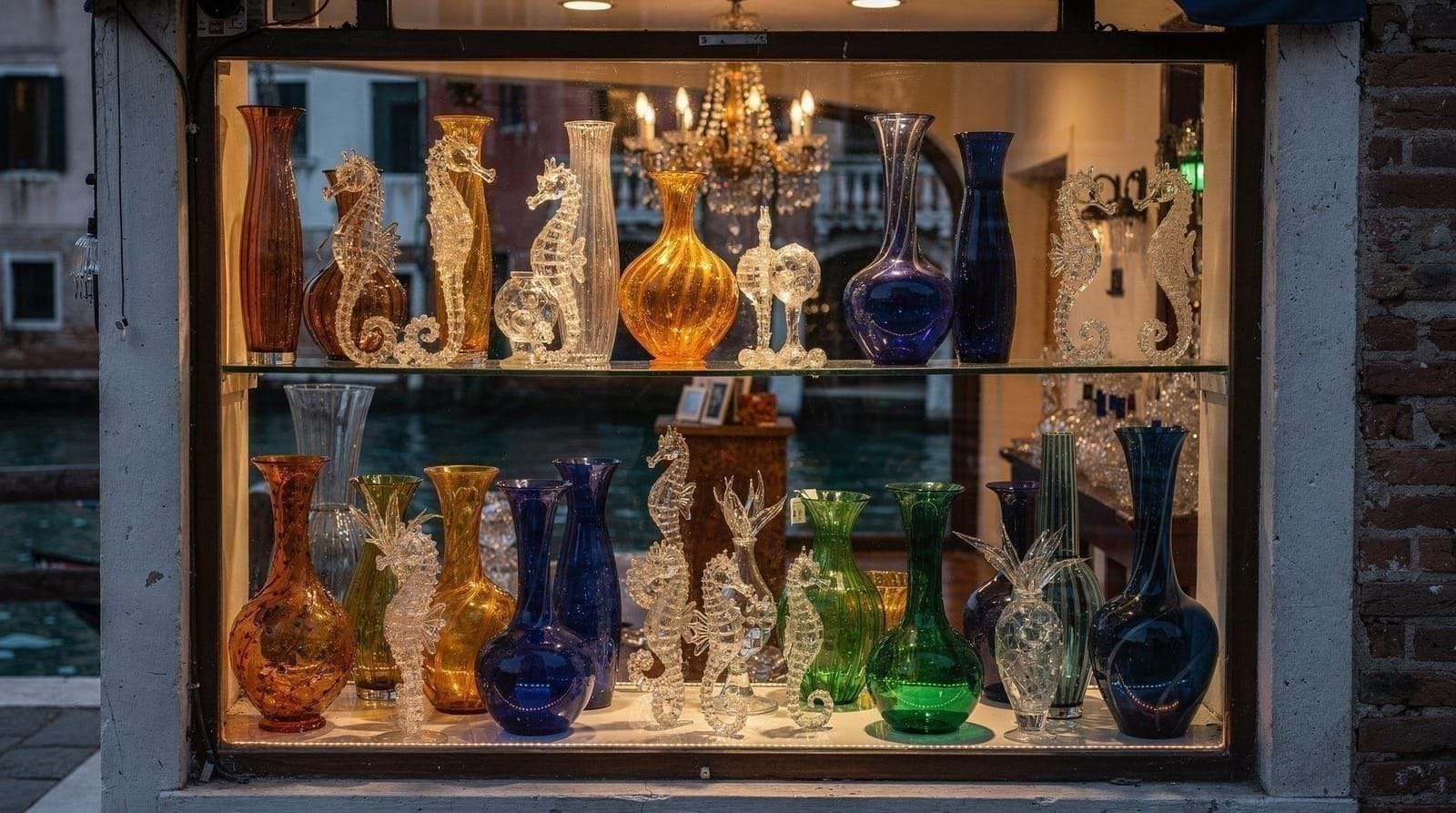
The glass industry is genuinely fascinating if you engage with it properly. The factory demonstrations are the key point here: watching a maestro pull a horse or a fish from a blob of molten glass in forty-five seconds, using only iron tools and breath, is one of those craft experiences that justifies itself immediately. The free demonstrations in the tourist-facing factories are often rushed and slightly performative. A proper workshop visit — where you’re watching actual production, not just a show — is a different thing entirely.
Murano glass factory tour with demonstrationThe Murano glass guide goes into the difference between the two experiences in more detail. The short version: if the sign outside says “free demonstration,” the demonstration is optimised to sell you a €350 vase. If you’re paying a small fee for a workshop visit, you’re seeing the real thing.
The basilica — Santa Maria e Donato — is genuinely underrated. Twelfth-century apse mosaics, a floor that pre-dates the one in St Mark’s, and on our March visit it had exactly six other visitors. It’s about a five-minute walk from the main boat stop.
What Burano actually is
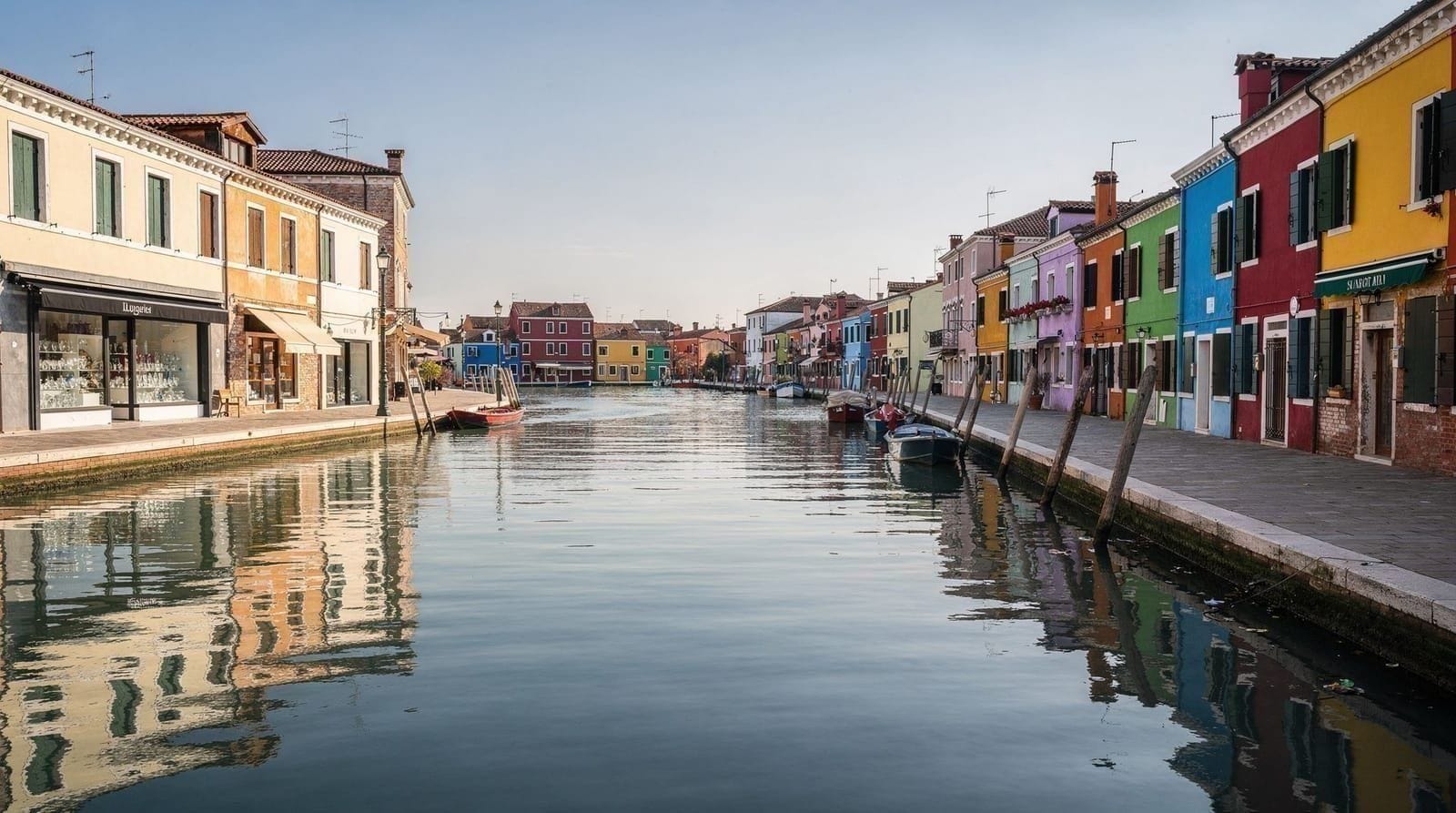
Burano is the painted houses. Everyone knows this. What’s less predictable is how they affect you when you actually arrive.
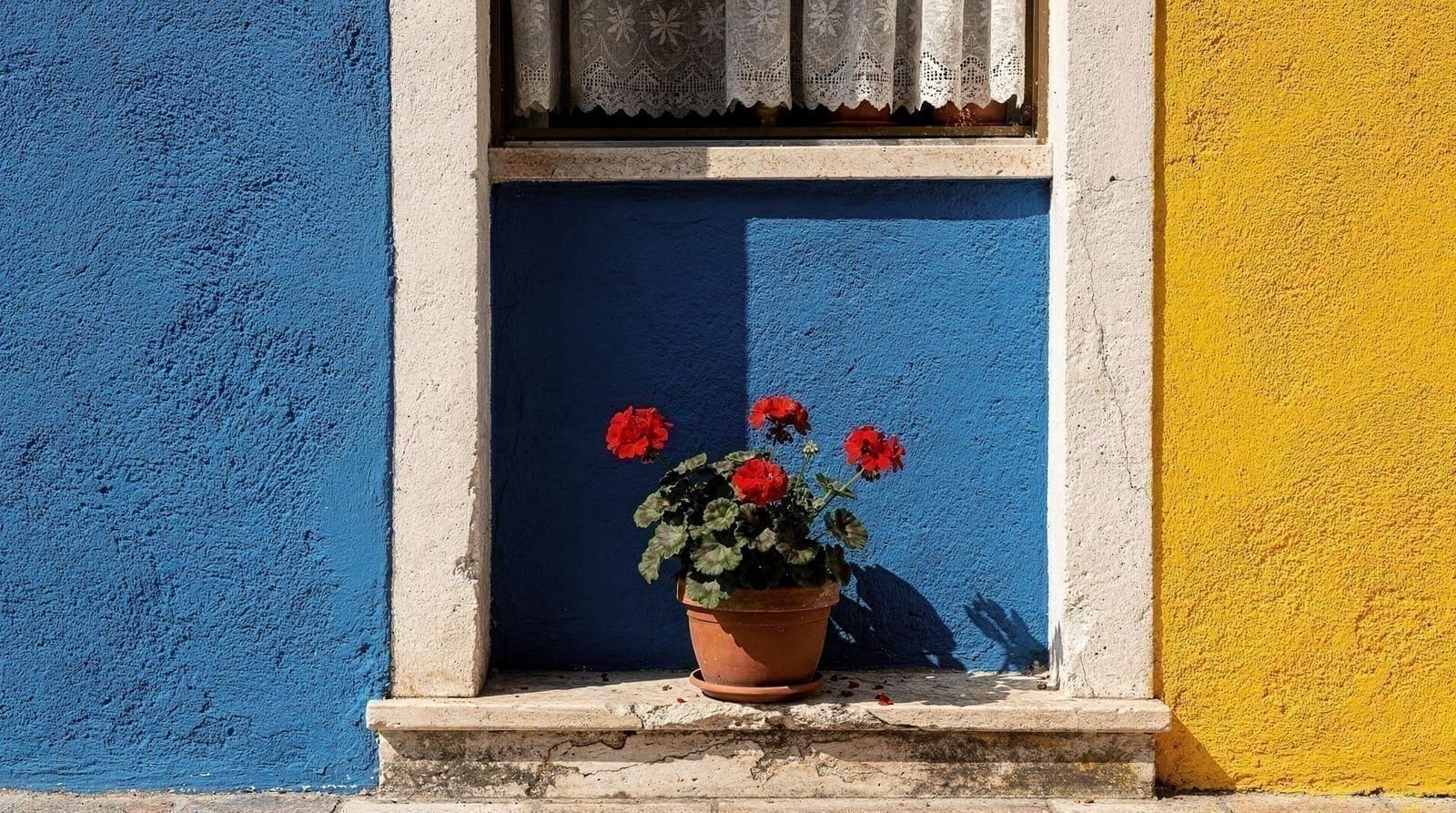
The colours are not subtle. Venetian red, sunflower yellow, cobalt blue, grass green — houses painted in full saturation right up against each other, their reflections splitting in the canal. The photography instinct kicks in immediately, which is both understandable and slightly worth resisting. The people who put their cameras down first seem to enjoy Burano more.
The island is smaller than Murano and the tourist concentration is higher. In March this was manageable — maybe a third of the visitors you’d encounter in June. In August I understand it becomes genuinely difficult.
Lace is the traditional Burano craft, though the authentic hand-made version is expensive and rare. Most of what’s sold in the shops is imported. The Museo del Merletto (Lace Museum) has the real thing and explains the difference clearly.
The food on Burano is better than you’d expect from a tourist island. Risotto di gò (made from goby fish from the lagoon) is the local dish and a few of the restaurants do it well.
What Torcello adds to the equation
There’s a third island that rarely appears in the Murano-or-Burano decision but should: Torcello. This is the oldest island in the lagoon — settled before Venice itself — and the cathedral of Santa Maria Assunta contains Byzantine mosaics that predate those in St Mark’s Basilica. The island has a few hundred residents and almost no tourist infrastructure beyond a handful of restaurants and the museum complex.
Torcello is accessible via the number 12 vaporetto line, stopping between Burano and the northern lagoon islands. If you’re going to Burano by vaporetto, Torcello is forty-five minutes further. This makes it a natural extension for visitors with a full day rather than a half-day.
What Torcello gives you that neither Murano nor Burano quite manages: the sense of an inhabited place that tourism has not fully colonised. The walk from the boat landing to the cathedral (about fifteen minutes on a path beside a canal, through farmland) is one of the more unusual experiences in the Venetian lagoon. There are almost no souvenir shops. The restaurant at the far end of the walk (Locanda Cipriani) is very good and very expensive and we’ve never been able to afford it.
The half-day calculation
Here’s the honest breakdown for a half-day starting from Venice:
Murano by itself: Take the number 4.1 or 4.2 vaporetto from Fondamente Nove or the 3 from Piazzale Roma. Journey time 40 to 50 minutes. Allow two to three hours on the island: a factory visit, the basilica, a walk along the main canal, lunch if you want it. Back by vaporetto: same line.
Burano by itself: Take the number 12 from Fondamente Nove. Journey time 45 to 50 minutes. Allow two hours minimum on the island — the photography alone takes longer than you think. The walk around the island’s perimeter is about 40 minutes. Back by the 12.
Both in one day: It’s possible via Torcello in the middle (the 12 stops there). But it becomes a transit exercise rather than a visit. You’ll be rushing at both ends and the vaporetto time adds up. The guided island tour makes more sense than trying to self-navigate both, simply because you don’t lose time working out connections.
Murano and Burano half-day island tour by boatWhat we’d do differently
Our first Murano visit was rushed because we tried to cram in both islands. We hit the main canal, walked past a dozen glass shops, watched a three-minute demonstration that felt like watching someone perform for commission, and left. We’d spent forty minutes on the island and understood almost nothing.
The second visit — specifically to Murano, with a pre-booked factory workshop and two hours of no fixed plan — was entirely different. We watched the maestro work for forty-five minutes. We saw the cooling ovens, the pipe storage, the apprentices’ practice pieces. We found the basilica by accident. We had lunch at a place that had no English menu outside. We missed the first two return boats because we were still walking around.
Burano needs less time in a sense — the visual experience is immediate — but deserves more stillness than we gave it on trip two. We walked fast, photographed everything, found a gelateria, and left in ninety minutes. What we missed was sitting somewhere with a glass of wine and just watching the place move.
Which one for a first visit
If you’re coming primarily for the visual experience and Instagram-friendly scenery: Burano is more immediate.
If you want to understand something about Venetian craft and history, or if you’re the kind of traveller who likes a slightly slower, more residential atmosphere: Murano.
If you’re on a longer Venice trip and can do both: do Murano with a proper factory visit in the morning and Burano in the early afternoon via the 12 line. Build in four to five hours and you’ll be fine.
The detailed comparison — distances, transport times, which months to avoid, what to eat — is in the Murano vs Burano guide. That page has the logistics; this post has my opinions. Make of both what you will.
Reading the island question against your overall trip
The Murano-or-Burano decision looks different depending on how long you’re in Venice. Here are the three main scenarios:
Two days in Venice: Choose one island, choose the morning, take the vaporetto early and leave by noon. Don’t attempt both. Your afternoon is better spent in Dorsoduro or Cannaregio on foot.
Three days in Venice: Do one island properly on day two. The three-day Venice itinerary suggests Murano on the morning of day two with an afternoon back in Venice, or Burano via the 12 line for a slightly longer boat journey. Either works; both give you enough time.
Four or more days: Do both, but not in the same day. Murano in the morning of day three, Burano (and optionally Torcello) on day four. This gives you time on each island rather than rushing both into a single transit exercise.
The island day trip guide has more detail on the scheduling logistics, including which times of year the boats run more frequently and whether a combined Murano-Burano tour is better than independent vaporetto navigation for first-timers.
One thing I haven’t mentioned yet
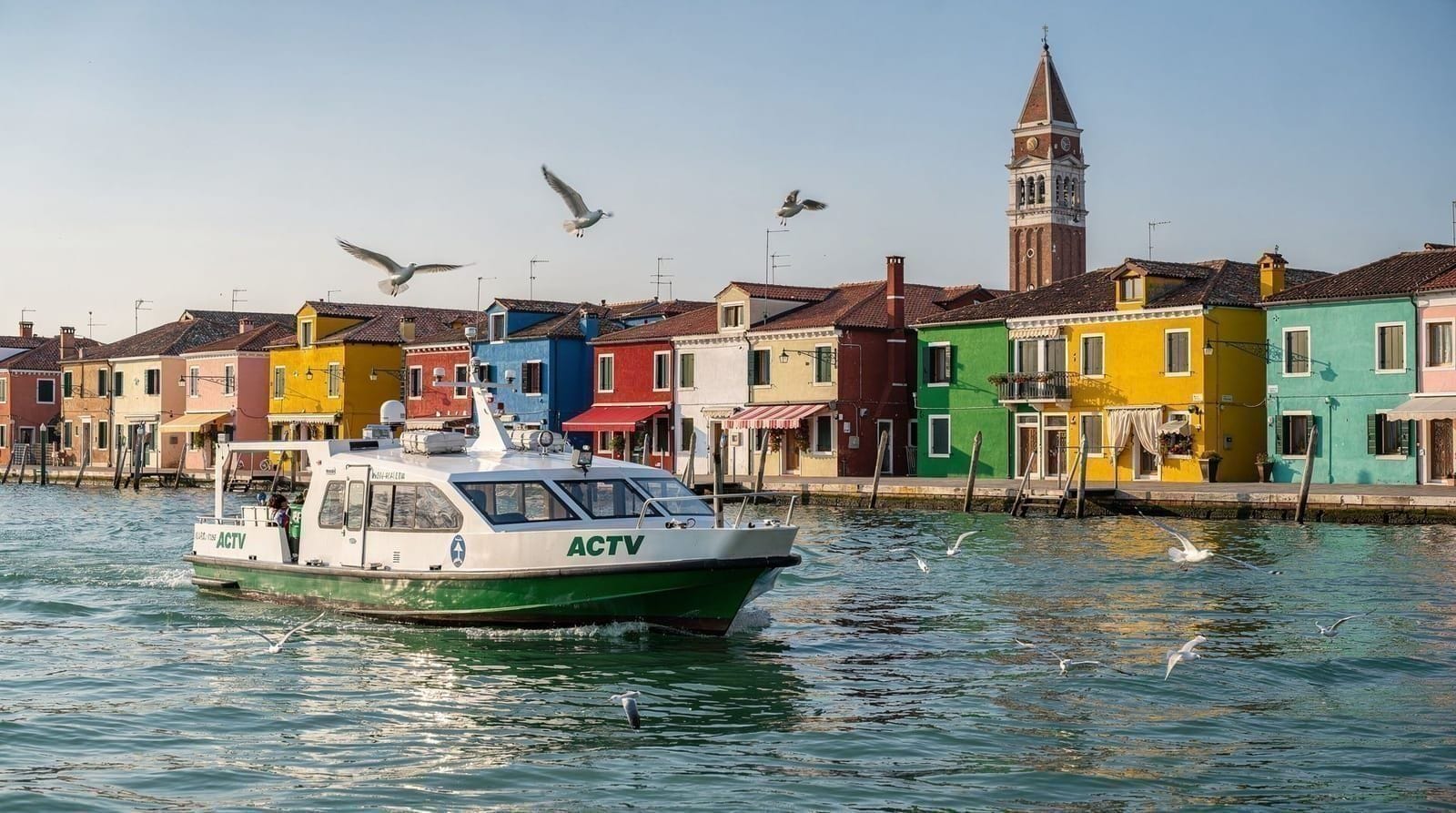
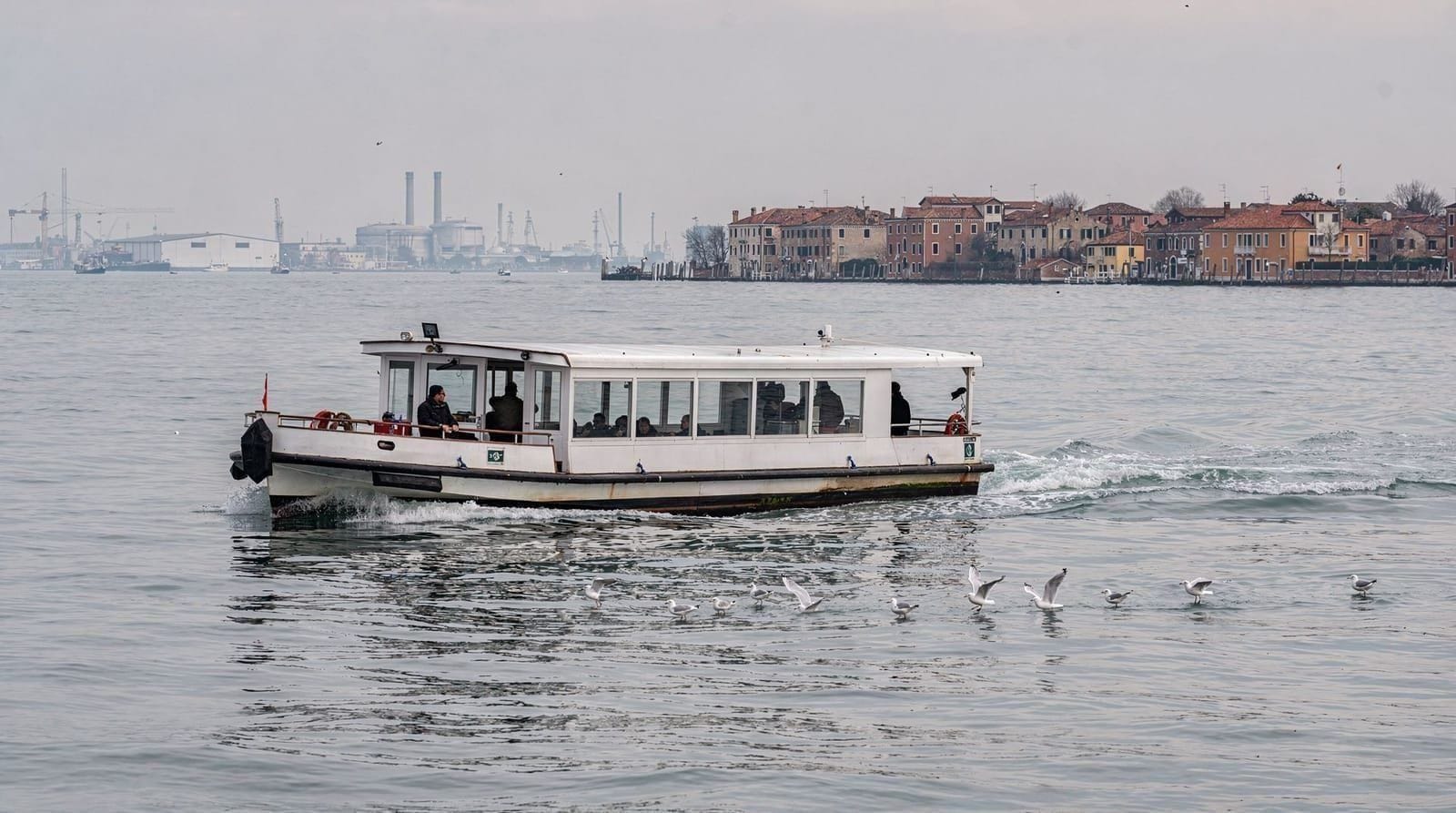
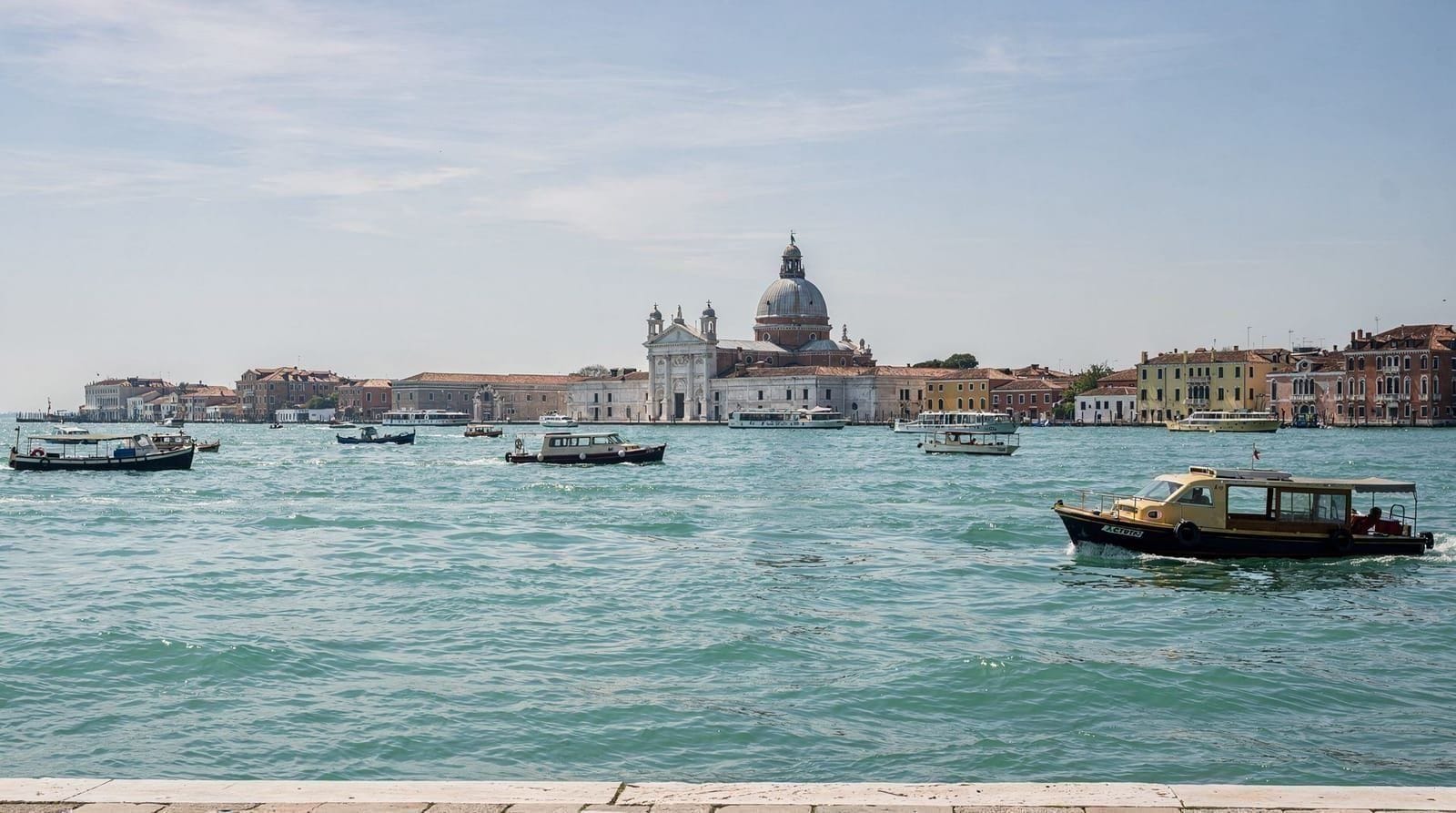
The boat ride itself. The northern lagoon on a clear morning, looking back at Venice with the campanile and the dome of the Salute visible across five kilometres of flat water, is one of those views that snaps into focus as the image of Venice you’ll carry in your head. Not the canals, not the gondolas — the city seen from the water, low against the horizon, slightly unreal.
Whatever island you’re going to, leave ten minutes to watch where you’re going from and where you came from. The journey is part of the experience.
The vaporetto to the islands guide has the current line numbers, departure points, and journey times — worth checking before you go, since the ACTV schedule changes seasonally and the winter and summer frequencies are quite different.
Murano or Burano: the quick comparison
| Murano | Burano | |
|---|---|---|
| Draw | Glass craft, basilica, quieter canals | Colour, photography, lace |
| Journey time | 40-50 min from Fondamente Nove | 45-50 min from Fondamente Nove |
| Minimum time on island | 2-3 hours | 2 hours |
| Best for | First-timers wanting craft/history | Photographers, shorter attention spans |
| Crowds | Lower, spread across a bigger island | Higher, concentrated on a small centre |
What we’d tell a first-timer standing at the vaporetto stop
If you only get one shot at this decision, here is the honest shortcut: pick Murano if the words “glassblowing demonstration” make you lean forward, and pick Burano if you are already reaching for your phone to picture the colours. Neither is the wrong answer, and both islands sit close enough to Venice proper that missing one this trip does not mean missing it forever — a three-day itinerary or longer usually has room to add the other island on a later visit. What matters more than which island you choose is not rushing whichever one you pick; the single biggest regret we hear from other visitors is trying to do both badly rather than one well.
FAQ
Can I visit Murano and Burano without a guided tour? Yes, both are straightforward by public vaporetto — line 4.1/4.2 or 3 for Murano, line 12 for Burano, both from Fondamente Nove. A guided tour mainly saves time working out connections and adds context at the glass factory.
Is Torcello worth adding to a Murano-Burano day? Yes, if you have a full day rather than a half-day — it’s a short extension from Burano and offers Byzantine mosaics and a genuinely quiet, half-abandoned atmosphere neither of the other two islands has.