Venice under snow: what we saw that almost nobody sees
It happened at four in the morning
I woke up to a quality of silence that felt different. No rain — the usual winter soundtrack of droplets hitting the canal outside. No wind. A silence that had a texture to it.
I pulled back the curtain and the entire campo was white.
Venice in snow is not a thing you plan for. It happens maybe once a decade, in the narrow window of late December through February when a cold front comes down from the Alps or off the Adriatic with actual moisture. Most winters it gets cold, it gets foggy, it rains sideways — but the white stuff doesn’t arrive. When it does, it tends to last a day or two and then melt back into the grey.
We had one full day of snow in January 2021, plus a morning of falling flakes on day two before the rain took over. I took approximately four hundred photographs, of which maybe six are any good. This is what I remember.
| How often it happens | Measurable snow every 3–5 years, significant snowfall about once a decade |
| Window | Late December–February |
| Best hours | Before the city wakes, roughly 7–10am |
| What to bring | Grippy footwear, weather-sealed camera if possible |
| Typical January temp | Around 6–8°C by day |
What Venice looks like in snow
The stone turns from grey to white, which sounds obvious until you see it. The Istrian stone that faces most of the major buildings — the Basilica, the Doge’s Palace, the colonnades around San Marco — is already pale, and under snow it becomes luminous in a way that summer visitors simply don’t see. The darkness of the canals against the white of the bridges makes every reflection sharper.
The gondolas were tied and covered, their ferro ornaments capped with small white peaks. The campo dogs, those communal cats and the stray terrier near Campo Santa Margherita who acts like he owns the cistern, were all unusually dignified about proceedings.
What surprised me most was the quiet. Venice is already quieter in winter than summer, but snow silenced it further. No boats running beyond the essential vaporetti. The footsteps muffled. Sound arriving from distances. The only disruptions were the pigeons of San Marco, who were profoundly annoyed and made this known continuously.
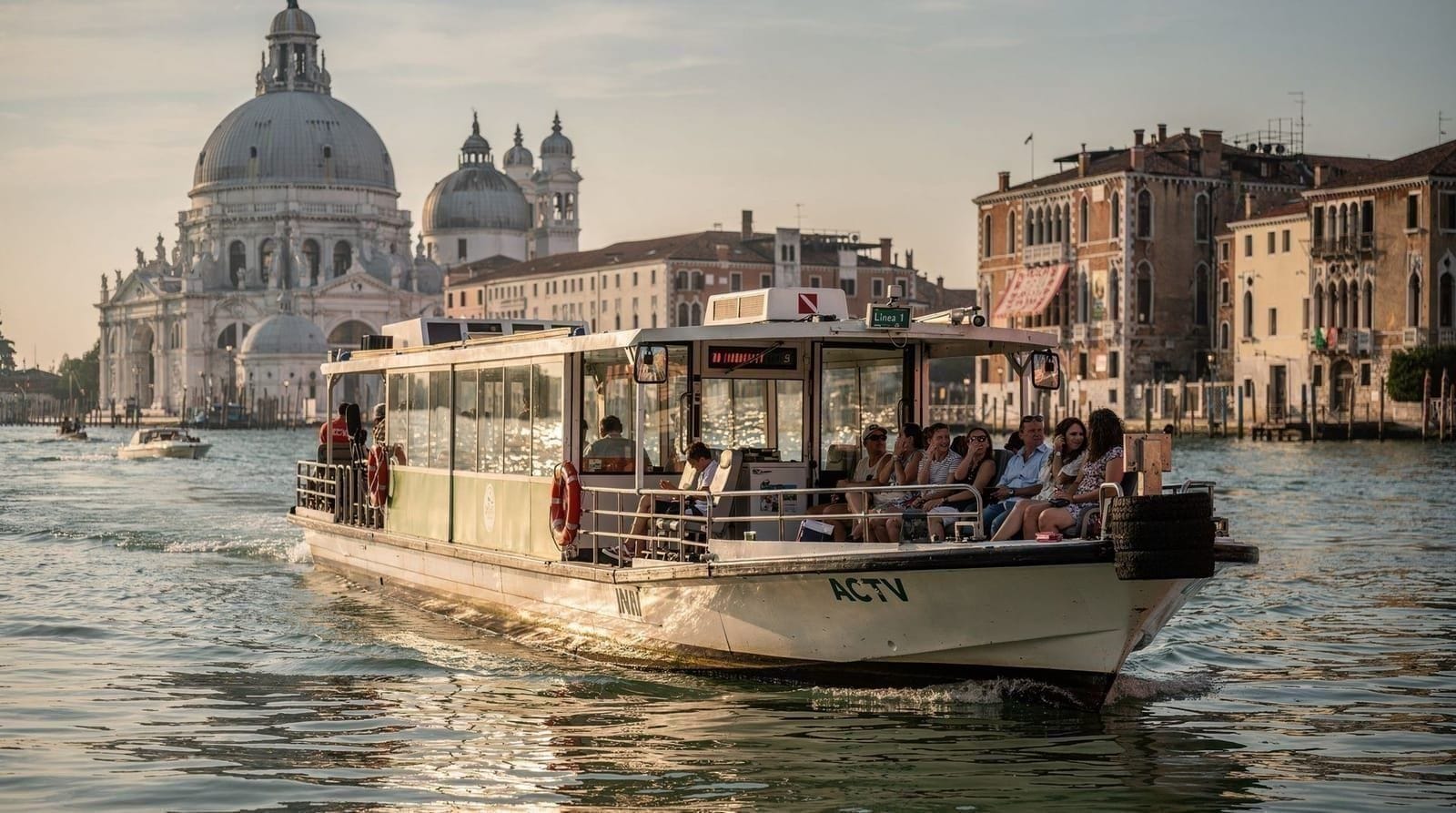
The Grand Canal was the strangest transformation. From the Accademia bridge, looking both directions, the palazzi had their rooflines frosted — a thin white line tracing the cornice of Ca’ Rezzonico, the piano nobile windows of the Palazzo Grassi with snow accumulated on the window frames. The water itself was unchanged: grey-green, moving, indifferent to the conditions on the land. But the contrast between that ordinary water and the extraordinary whiteness above it was genuinely hallucinatory.
I crossed the Accademia bridge several times that day simply to look at the view from both directions. This is already among the three or four best views in the city. Under snow it was something else entirely.
Where to be when it snows
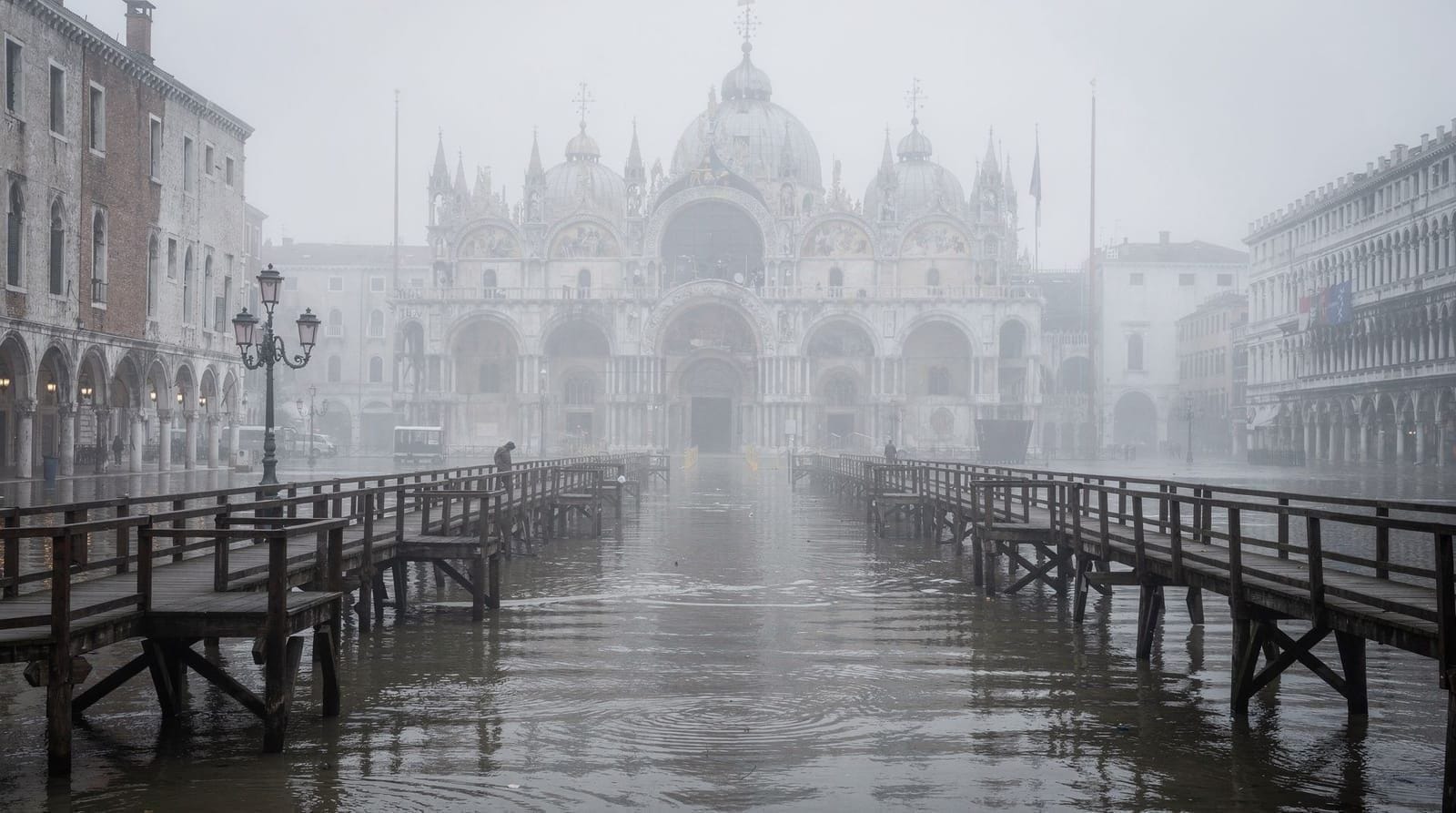
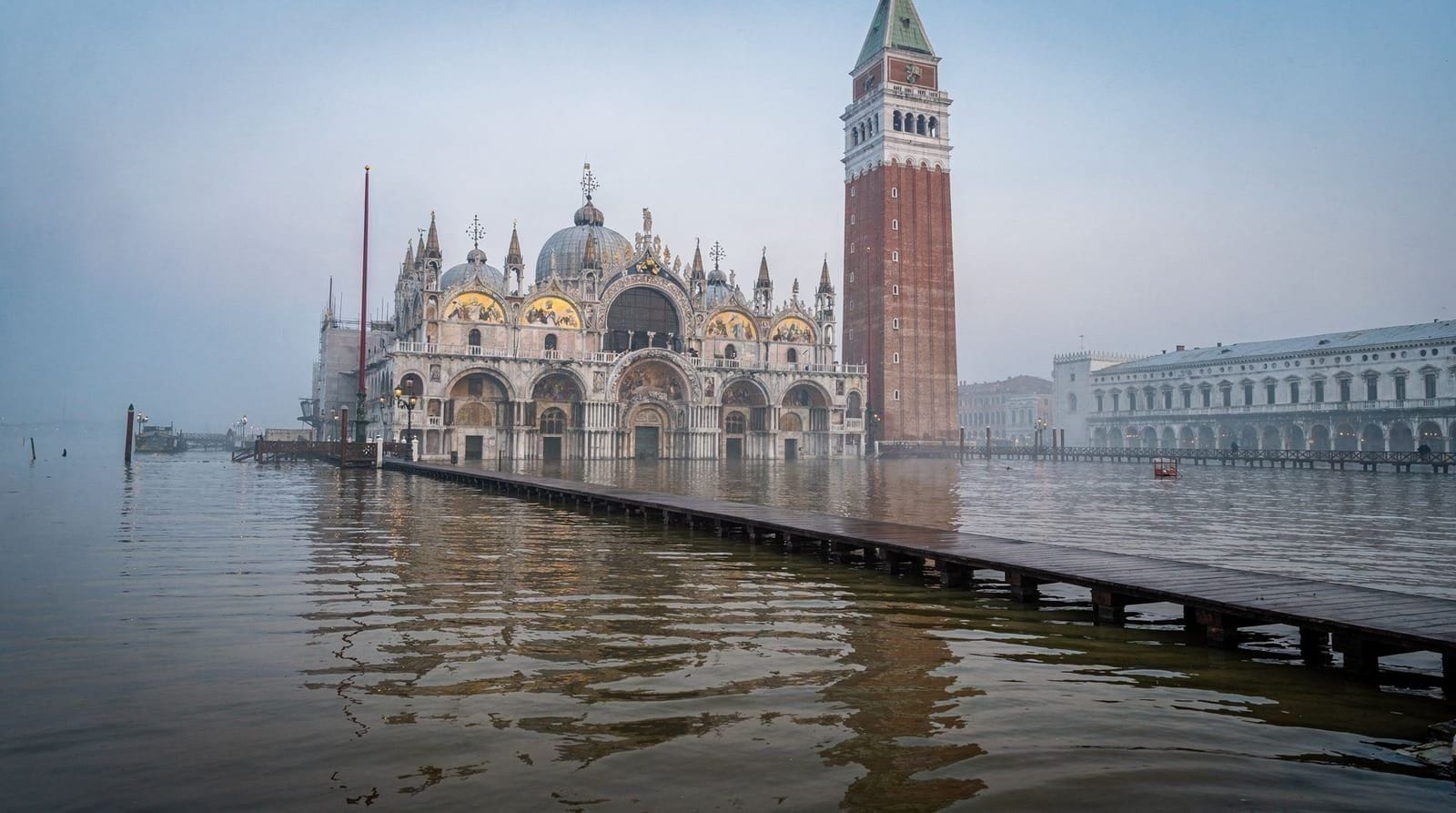
The logical answer is San Marco, for the photographs that already exist in your imagination: the Basilica dome, the campanile, the loggia of the Doge’s Palace — all white. These are real images and worth having, but they’re also the images that appear on every art calendar and screensaver.
The less logical answers were better. We walked to the waterfront near the Salute before seven in the morning, when the snow was still clean and the Giudecca church across the water was just visible through light flurries. We had the Zattere entirely to ourselves. We stood on the bridge over the Rio di San Trovaso and watched snow fall into the water for twenty minutes.
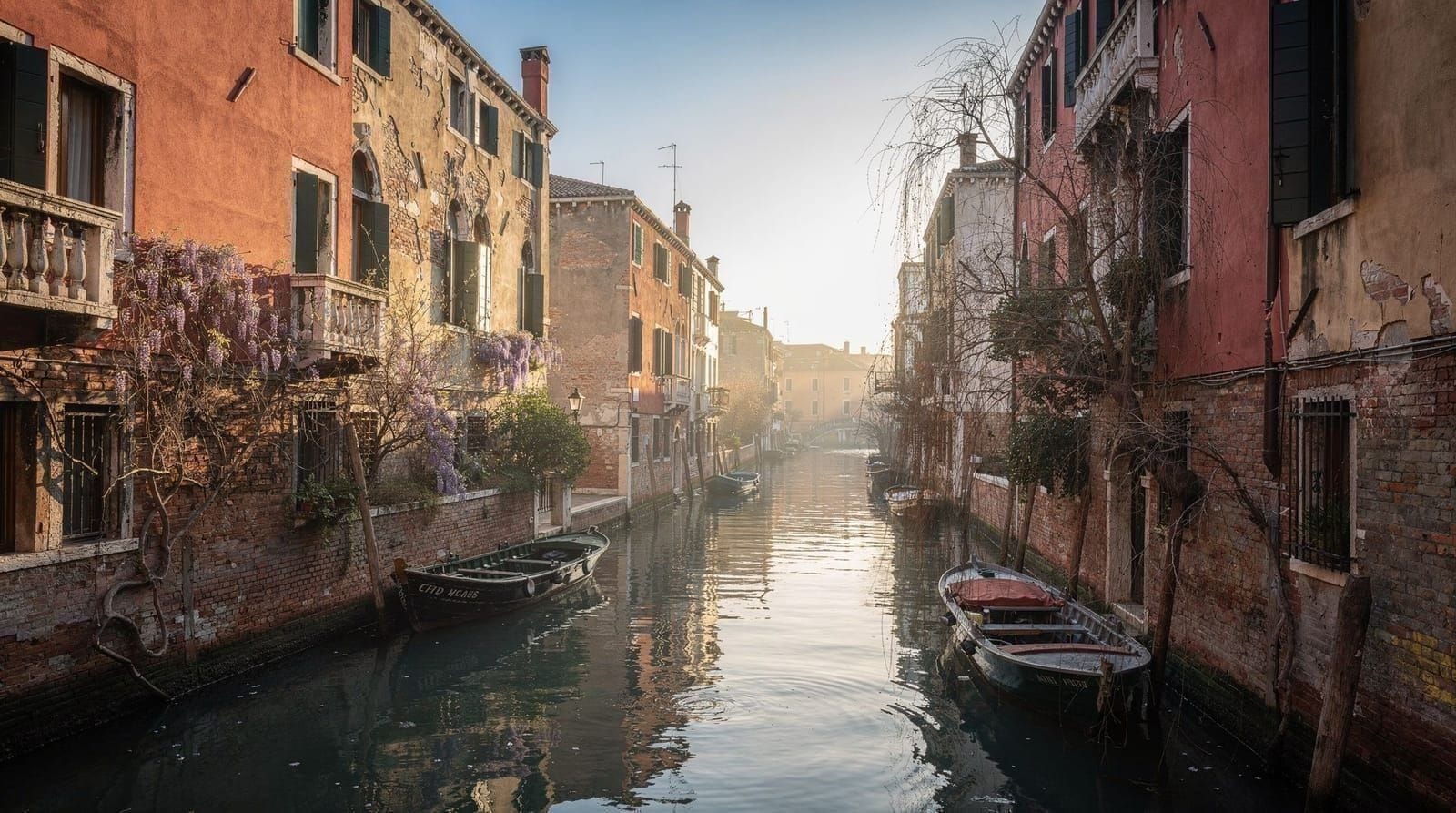
Cannaregio in snow was extraordinary — the long fondamenta beside the Cannaregio canal, usually the best walking street in the city, took on a quality I’ve only seen in photographs of Northern European cities, the snow accumulating on the quayside chairs and the boat covers. There are normally a few people around this part of the city in the morning; in the snow there were none.
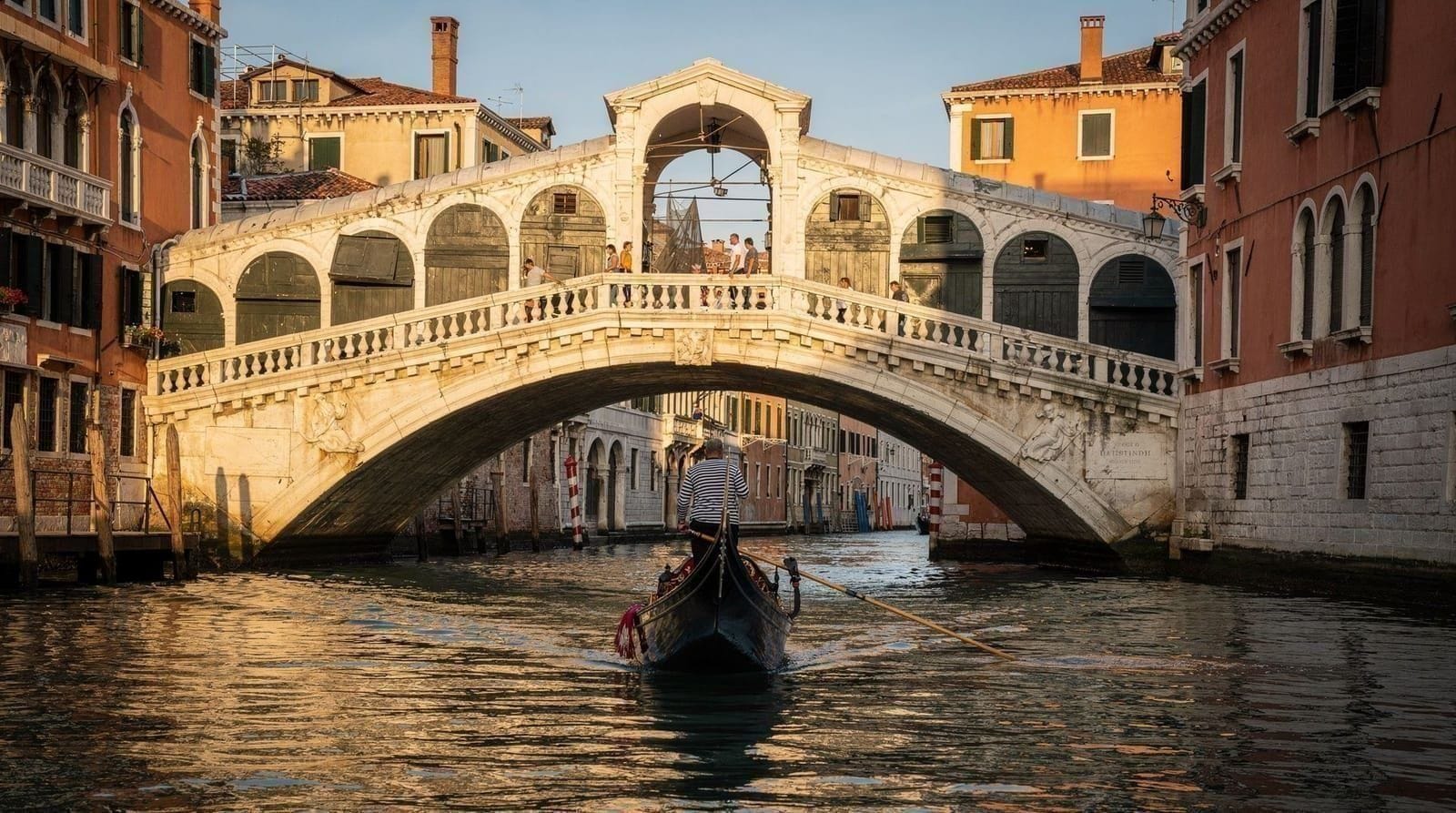
The Rialto bridge at eight in the morning, before the market fully set up, with snow on the stone balustrades: four photographs taken, none adequate to what I saw, one framed anyway.
Dorsoduro along the Zattere — the wide quayside facing the Giudecca channel — was the most astonishing transformation. The benches where students and pensioners sit in any weather had accumulated perfect white cushions of snow. The lamplight reflected in the snow-covered pavement created a diffused glow that doesn’t exist at any other time. We sat on a snow-covered bench for a few minutes, not photographing anything, just feeling how cold it was and how strange.
The practical reality
Snow in Venice is briefly beautiful and quickly becomes logistically complex. The stone surfaces are slippery — more than you’d expect, because the flat flags and bridge steps have been polished by centuries of foot traffic. Take sensible footwear or walk very carefully on bridges.
The vaporetti run, though sometimes on reduced schedules. The restaurants generally stay open if they’re staffed — Venetian life does not stop for an inch of snow. But some smaller shops and tourist-oriented businesses close when conditions feel unusual.
The acqua alta risk is lower during cold, dry weather than during warm, wet southerlies — the flooding mechanism is tide plus wind, not temperature. But the cold is real: January temperatures in Venice average 6 to 8°C by day, and with wind chill and dampness the effective temperature is lower. Layer properly or hire regret.
The winter Venice guide covers the practical side of cold-weather visits in more depth. Snow specifically gets about a paragraph there, which reflects its rarity rather than its importance.
How to be ready for snow you probably won’t get
There’s a productive version of hoping for Venice snow: arrive in January or February with appropriate gear and no fixed plan for the mornings. Snow in Venice, if it comes, typically starts overnight and peaks in the first half of the day. The city’s administration is not adapted for significant accumulation — there are no snow ploughs, no grit trucks — so the bridges become slippery and some fondamenta are closed as a precaution.
What you need: grippy footwear (rubber-soled boots, not leather soles on wet stone), a camera with a weather-sealed body if you have it, and the willingness to be outside at seven in the morning in cold. The morning after snowfall, before the city fully wakes up and before any melting begins, is the window.
The light on fresh snow in Venice’s east-facing campi at eight in the morning is directional and warm — the low winter sun comes over the rooftops at an angle that catches the white on the stone. By ten o’clock in January the sun is still relatively low and the light is still good. By noon, if temperatures allow, the snow has started to go grey and soft.
The winter Venice guide has the complete cold-weather planning section including expected temperatures, what’s open in January, and why winter is underrated even without the once-in-a-decade snow event.
The chance of it happening to you
Low, but not zero. Venice gets measurable snow roughly once every three to five years, and genuine significant snowfall — the kind where you’re photographing bridges rather than just noting a dusting — perhaps once a decade. Climate trends suggest the frequency is declining.
If you’re going in January or February and hope for snow: you will probably be disappointed. Go anyway. Winter Venice without snow is still quieter, cheaper, and more atmospheric than Venice in its busy seasons. The light in February has qualities that compensate for the cold. The bacari are warm and the locals are present.
But if it snows: you will have seen something that most visitors to Venice — and many Venetians themselves — have never seen. The city transforms in a way that neither the Renaissance painters nor the twentieth-century photographers captured quite accurately, because the combination of this specific architecture and this specific landscape under snow is one of those experiences that exceeds any image of it.
Even the photographs you take will disappoint you slightly on return, not because they’re bad but because they don’t contain the quiet, the cold air, or the specific feeling of being somewhere that almost nobody ever sees this way. Some experiences resist documentation. Venice under snow is one of them.
The thing I’ll remember
The afternoon of the snow day. We were somewhere between Santa Croce and San Polo, a small campo I couldn’t name, and a Venetian couple in their seventies were standing by the well in the middle of the campo, looking up at the falling flakes. Not photographing anything. Just watching.
They’d probably seen snow in Venice before. They were watching it anyway. I think that’s the correct response.
Winter Venice, month by month
Snow is the exception, not the rule — this is what the season generally looks like if you’re deciding when to go:
| Month | Typical weather | Crowds | Notes |
|---|---|---|---|
| December | Cold, occasional fog, festive lights | Moderate (holidays) | Best for atmosphere, some acqua alta risk |
| January | Coldest month, 6–8°C, rare snow chance | Low | Quietest month, best hotel prices |
| February | Cold, Carnival crowds late month | Rises sharply for Carnival | Snow chance drops as month goes on |
If you want the general cold-weather case rather than the snow gamble specifically, the winter Venice guide makes it in full, and the Venice in autumn guide covers the shoulder season leading into it.
FAQ
How likely is it to snow in Venice during a winter visit? Low. Venice sees measurable snow roughly once every three to five years, and the kind of dramatic snowfall worth photographing perhaps once a decade. Plan a winter trip for its general quiet and lower prices, not for snow specifically.
Is Venice safe to walk around in the snow? With the right footwear, yes, though the polished stone flags and bridge steps get slippery. Grippy rubber-soled boots matter, and it’s worth taking bridges slowly rather than at a normal walking pace.