A day in Valpolicella: what we drank, where we went, and what Amarone actually is
| Where | Valpolicella, northwest of Verona, ~90 min from Venice |
| Cost | €10-80+ per bottle at the winery; tour price separate |
| Time needed | A full day |
| Getting there | Organised tour from Venice, or train to Verona + car |
| Best time | September harvest, or spring for the landscape |
Why Valpolicella, and why now
We had been saying we would do a proper wine day in the Veneto for three or four Venice trips before we finally did it. The usual obstacle: Venice itself, which is always full enough of things to fill any available day, and the slight intimidation of wine tourism without a car or local knowledge.
We resolved the logistics by booking an organised day tour from Venice rather than driving — the Verona and Valpolicella Amarone wine tour covers the valley itself plus a stop in Verona, which solved the transport problem and added a local guide who knew which producers were worth visiting. What follows is the day we had, plus the context for planning your own version.
What Valpolicella is
The Valpolicella zone occupies a series of valleys northwest of Verona — the word roughly means “valley of many cellars” — and produces four distinct wines from the same three grapes (Corvina, Rondinella, Molinara):
Valpolicella DOC. The basic version: a light, cherry-fruit red that is drinking wine rather than serious wine. Best served slightly cool, good with lunch. Low price point, low stakes.
Valpolicella Ripasso DOC. The in-between step. Basic Valpolicella wine is “re-passed” over the grape pomace left from Amarone production, picking up body, tannin, and complexity. Sometimes called the “poor man’s Amarone,” which is not quite accurate — it is its own thing, with a richer texture and more ageing potential than basic Valpolicella. The price point (€12-20 in shops) makes it the most practical wine from the region.
Amarone della Valpolicella DOCG. The serious wine. Corvina grapes are dried for three to four months on bamboo racks (the appassimento process) before pressing, concentrating the sugars. The result is a dry red with 14-16% alcohol, extraordinary density of flavour — cherry, chocolate, dried fruit, leather, smoke — and ageing potential of twenty-plus years in good vintages. A good bottle from a serious producer costs €30-80 in the region, significantly more in a restaurant. This is one of the great wines of Italy.
Recioto della Valpolicella DOCG. The same drying process but the fermentation is stopped before all the sugar converts, leaving a sweet dessert wine. Exceptional, rarely seen outside the region, and worth trying if you encounter it.
The valley itself
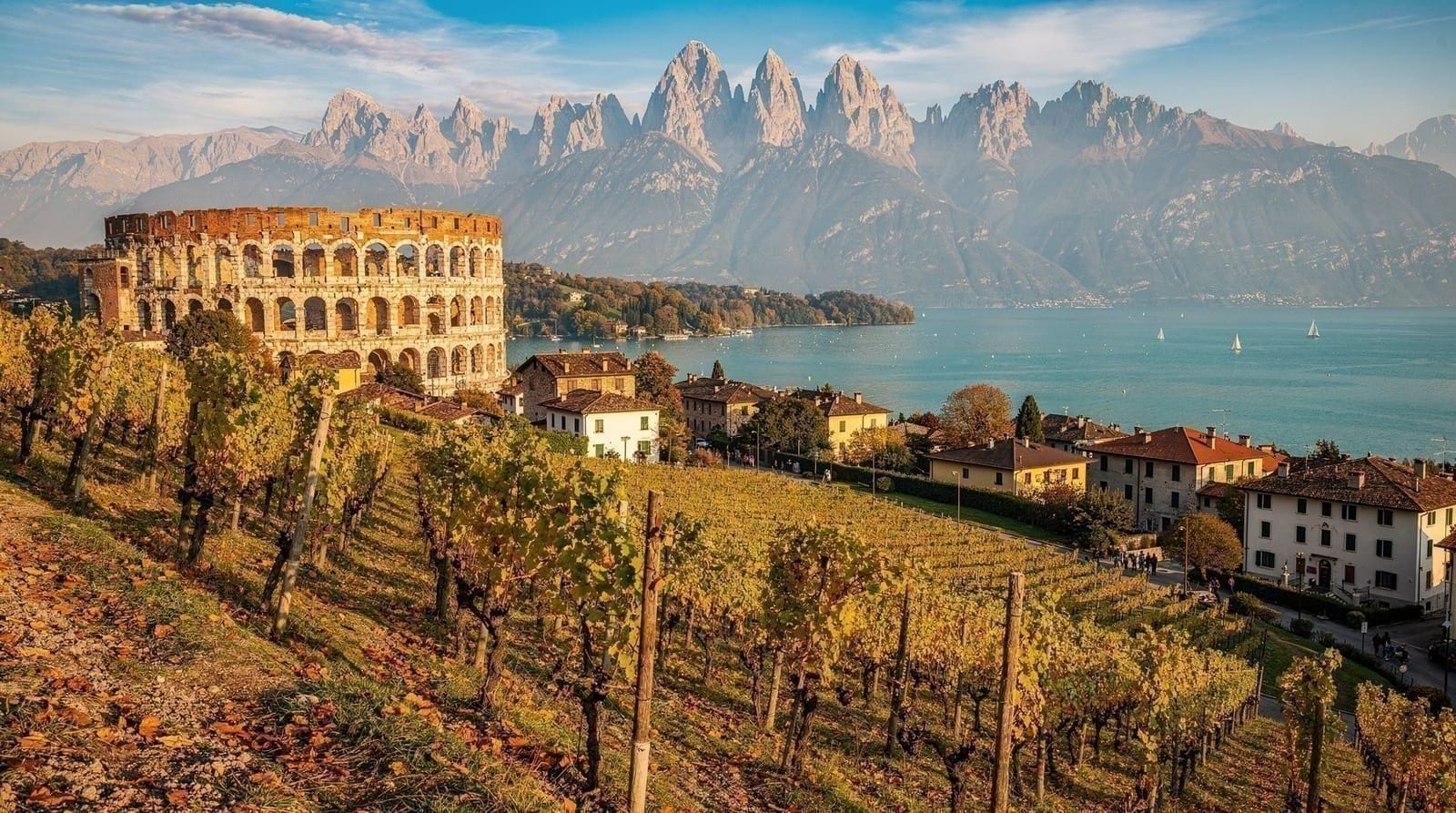
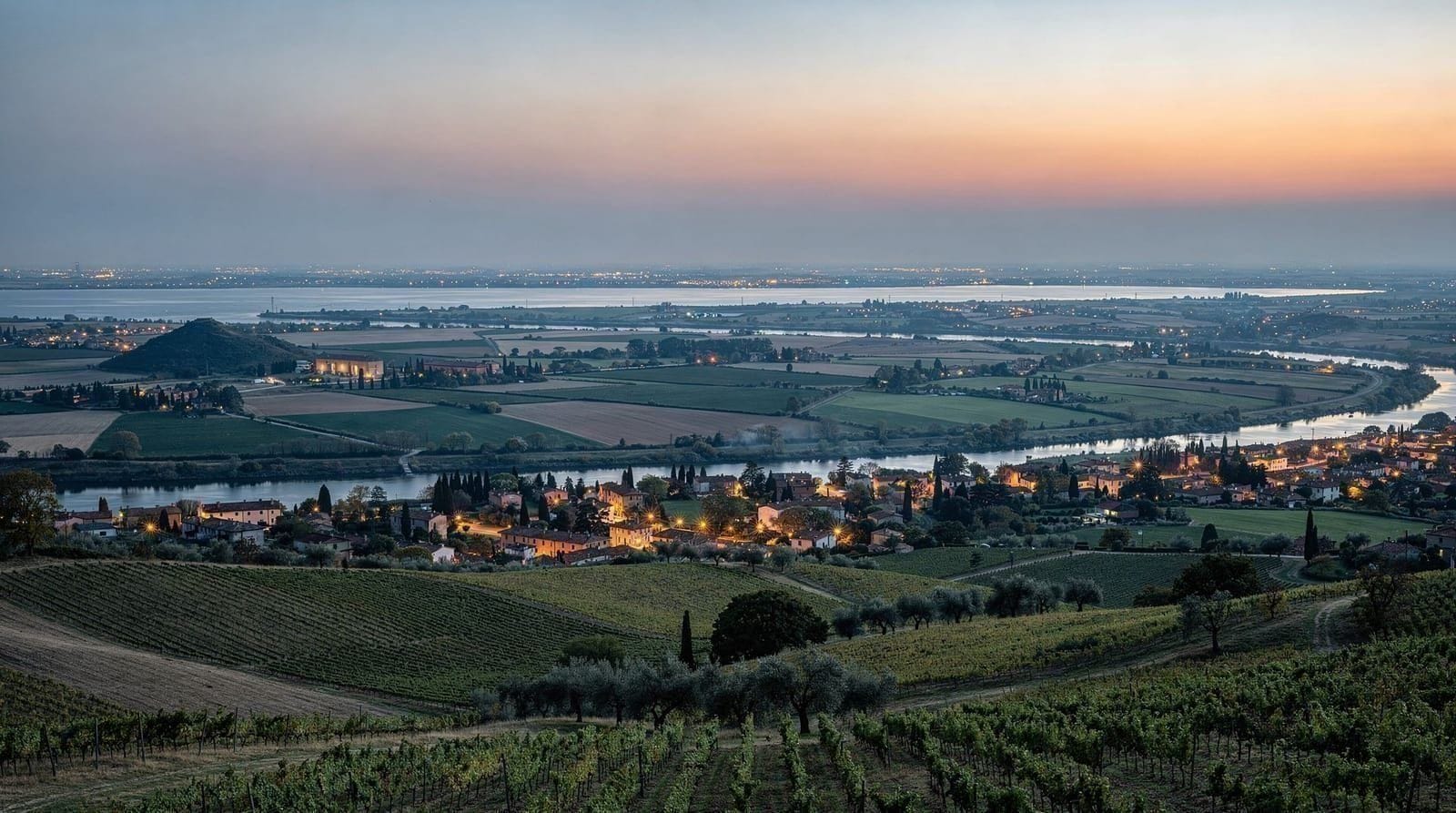
The landscape is different from what I expected. I had imagined steep terraced hillsides like the Prosecco hills or the Rhine valley; what Valpolicella actually looks like is gentler — rolling hills, olive groves mixed with the vine rows, small villages with Romanesque churches, farmhouses with the distinctive bamboo drying lofts (fruttai) visible on the upper floors or in outbuildings. In April, with the vines just budding, the colour is the grey-green of limestone hills under variable cloud. In September, when the harvest begins, the lofts fill with drying grapes and the whole valley smells faintly of slowly concentrating fruit.
The zone divides into three sub-valleys — Negrar, Marano, and Fumane — each with slightly different character. Our tour visited producers in two of them; independent exploration by car would let you cover all three at your own pace.
The wineries
I will not give specific producer names because recommendations date quickly and what was an excellent small producer three years ago may have been bought out, changed winemakers, or raised prices to the point where the value equation has shifted. What I will say: the best experiences were at medium-sized family estates (not the enormous commercial operations that produce most of the cheap Ripasso sold in supermarkets, but also not the tiny boutique estates that exist primarily as tasting-room experiences for collectors).
What to look for in a tasting: ask to taste the Ripasso alongside the Amarone from the same producer and the same year, if possible. The contrast illustrates what the appassimento process does — same grapes, same vineyard, the dried-fruit concentration making the difference. If they offer a Recioto, try it last; the sweetness resets the palate in a useful way.
Bottle prices from the estate: Ripasso €10-18, Amarone €25-60 depending on producer and vintage, Recioto €20-35 for a 500ml bottle. These are cellar-door prices; the same wines in Venice restaurants cost two to three times more.
Combining with Verona
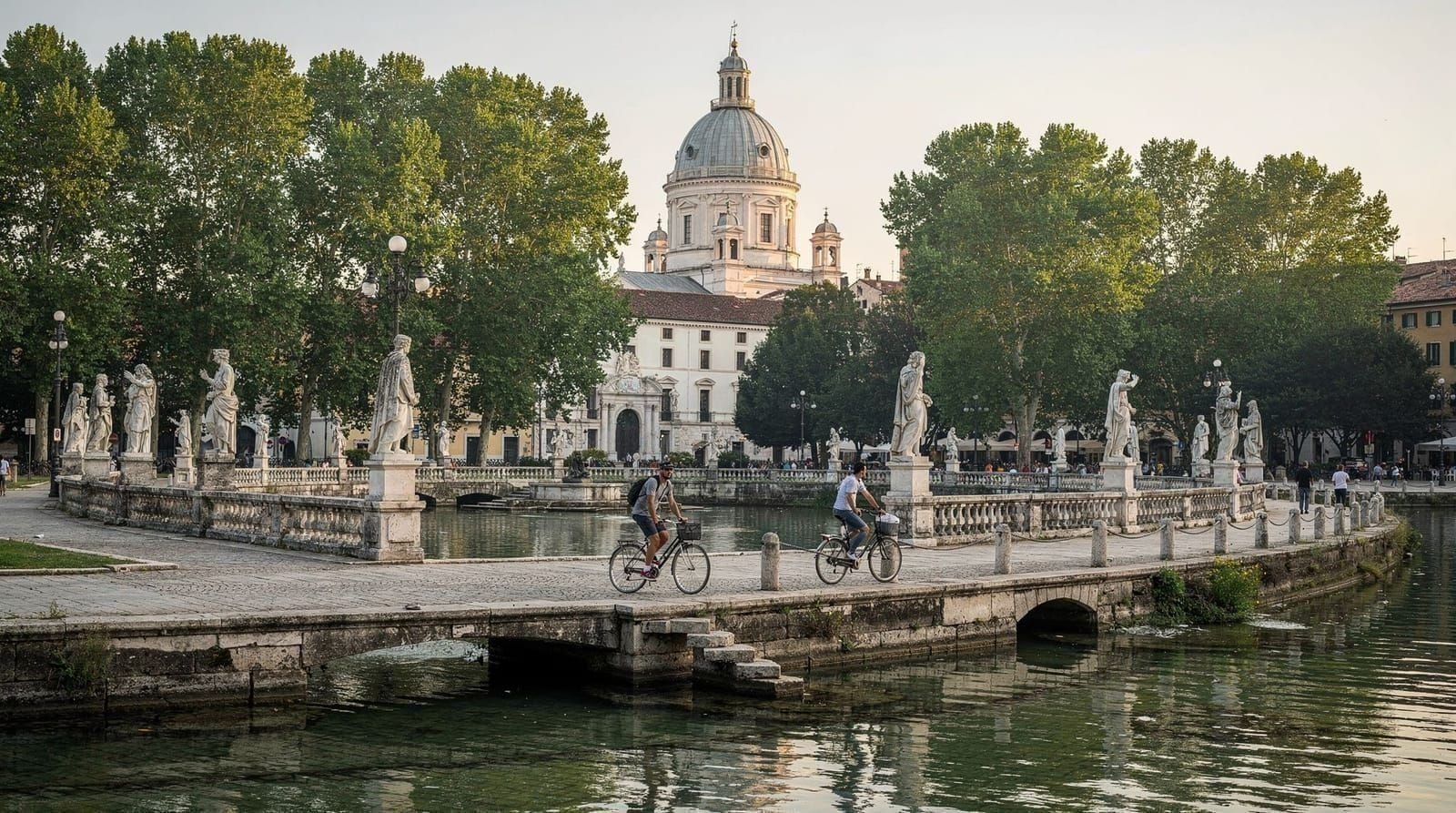
The Verona connection is natural — the city is the commercial capital of the wine region and has its own considerable appeal (the Roman arena, the medieval historic centre, excellent aperitivo). Our tour included a two-hour stop in Verona after the winery visits, which was enough for a walk through the main squares and an aperitivo at a bar on the Piazza Bra before heading back.
If you are making a dedicated trip — spending a night in Verona rather than treating it as a day — the Verona day trip guide is worth reading alongside the Valpolicella Amarone guide for the context on the wine side.
Without a car: the organised tour vs renting
Our conclusion after doing this as an organised tour: it is the right choice for a first visit. The guide provided context we would not have had independently, the producers visited were pre-vetted, and not having to drive meant we could taste freely. For a second visit or for serious wine enthusiasts who want to set their own agenda, renting a car and spending a full day independently in the valley makes more sense.
Train to Verona (70 minutes, €10-18) plus a car rental from Verona station is the practical self-drive option — the valley is twenty minutes from Verona by car. The wine tasting from Venice guide covers both independent and organised options across the Veneto.
What we brought back
Four bottles: two Ripasso from different producers (comparative tasting at home), one entry-level Amarone from a year the guide described as a solid rather than exceptional vintage (affordable for cooking with or opening within five years), and one half-bottle of Recioto that we have been saving for something. Total cost at cellar door: about €85. In Venice’s wine bars, the same quality would have cost €200-250.
A note on transport: wine travels well if you wrap it properly. We used the tissue paper the estate provided, wrapped in clothing in the centre of the bag, checked rather than carried on. All four bottles arrived home intact.
What to ask at a winery tasting
A few questions that produce useful responses at Valpolicella estates:
“What vintage do you recommend for the Amarone currently?” Amarone releases vary significantly by year — the 2015, 2016, and 2019 vintages are widely regarded as exceptional. The current release year in 2026 is typically 2020 or 2021, which were solid rather than exceptional — good wines but below the best vintages. Asking this shows you are paying attention and often produces a more engaged tasting.
“Do you produce a Ripasso, and can we try it alongside the Amarone?” This comparison is educationally valuable and producers usually enjoy explaining the process difference.
“Is there anything you produce that you don’t export much?” The answer is often the Recioto, or a white wine, or a local varietal that the producer is proud of but which doesn’t fit export-market expectations. These are usually the most interesting things to taste and sometimes to buy.
Price expectations at cellar door: Valpolicella DOC around €8-12, Ripasso €12-20, Amarone entry-level €25-40, Amarone riserva €50-80+. Recioto €18-30 for a 500ml bottle.
Getting the logistics right
The tour we took departed from Venice around 9h, reached the valley by 10h30, visited two estates over three hours (including extended tastings and a light lunch), and returned to Venice by 19h. This is a full day but not exhausting — the pace was relaxed and the estate lunches (typically cold cuts, cheese, bread, and olive oil alongside the wines) meant nobody was hungry or rushed.
The alternative structure — morning in Verona by train, car rental there, afternoon in Valpolicella, return to Verona for dinner, overnight, return to Venice next day — is the version for anyone who wants more time and is comfortable spending a night away from Venice base. This gives you a full evening in Verona, which the one-day version doesn’t.
The Verona day trip guide works alongside the Valpolicella logistics; the wine tasting from Venice guide has the comprehensive options for the entire Veneto wine region.
The bigger Veneto wine picture
Valpolicella is one of three major wine zones in the Veneto worth knowing. The Prosecco hills around Valdobbiadene produce the sparkling wine that has become Italy’s most exported wine category; the hills are UNESCO-listed and worth visiting for the landscape as much as the wine. Soave, east of Verona, produces a white wine from Garganega grapes that is too often dismissed as a cheap restaurant white — the serious Soave Superiore from the volcanic hills is a completely different proposition. The Veneto wine regions guide covers all three in detail.
Of the three, Valpolicella offers the most dramatic wine experience: Amarone is genuinely one of Italy’s great wines, the valley is beautiful, and the connection to Verona makes it logistically easy from Venice. For anyone staying in Venice for five or more days and interested in wine, it is the most rewarding day trip after Padua — and it offers something Padua cannot: a reason to come back.
The four Valpolicella wines compared
| Wine | Style | Cellar-door price | Ageing potential |
|---|---|---|---|
| Valpolicella DOC | Light, cherry-fruit red | €8-12 | Drink young |
| Ripasso DOC | Fuller-bodied, “re-passed” | €12-20 | 3-5 years |
| Amarone DOCG | Dense, dried-fruit, 14-16% ABV | €25-80+ | 10-20+ years |
| Recioto DOCG | Sweet dessert wine | €18-35 | Several years |
Fitting Valpolicella into a Venice trip
Because it pairs so naturally with Verona, Valpolicella works well either as a single long day from Venice or as part of a two-night detour that includes an evening in Verona itself — walking the arena at dusk, an aperitivo on Piazza Bra, dinner somewhere that isn’t rushing you back to a tour bus. The Verona and Lake Garda 5-day itinerary builds this kind of pacing in properly if wine and Verona both matter to your trip; the single-day version described above is the version for anyone whose Venice stay is shorter.
FAQ
How is Amarone different from regular Valpolicella wine? Amarone uses Corvina grapes dried for three to four months on racks before pressing (the appassimento process), concentrating sugars and flavour into a dense, 14-16% ABV wine with decades of ageing potential — a different product from the light, everyday Valpolicella DOC.
Can I visit Valpolicella without a car? Yes, most easily via an organised day tour from Venice that includes transport and pre-arranged winery visits. Independently, train to Verona plus a rental car from the station is the practical self-drive option, since the valley itself has limited public transport.