Venice and the Dolomites: the 5-day mountain itinerary
From Venice: Cortina and Dolomites mountains day trip
The canal-and-mountain combination
The Dolomites begin approximately 100km north of Venice, which makes this one of the most striking geographic contrasts available in a single short trip. In the morning you are on a canal in a city that cannot decide if it is sinking or floating; in the afternoon you are standing below vertical limestone towers 3,000 metres high. The transfer between the two worlds takes about 2.5 hours by car.
This five-day itinerary spends three days in Venice and devotes one full day to the Dolomites — specifically Cortina d’Ampezzo, Lake Misurina, and if the season is right, the Tre Cime di Lavaredo. The fifth day is flexible: a rest day in Venice, a return to the mountains, or a day in one of the Veneto cities en route.
Critical seasonal note: The Dolomites as a day trip from Venice are only viable mid-June to mid-September. The Tre Cime di Lavaredo road is typically closed October to May due to snow. Cortina itself is accessible year-round, but the high-altitude experiences that make this trip worth doing are seasonal. Do not book this itinerary for winter unless you are here specifically for skiing.
| Best for | Mountain-and-culture combination, outdoor travellers, photographers |
| Total cost (excl. lodging) | Around €700–950 per person for five days, incl. one mountain day |
| Getting around | On foot/vaporetto in Venice, car or organised tour for the Dolomites |
| Book ahead | St Mark’s Basilica, Doge’s Palace, Dolomites tour or rental car |
| Best season | Mid-June to mid-September only for the Dolomites day |
Day 1: Venice — arrival and the Grand Canal
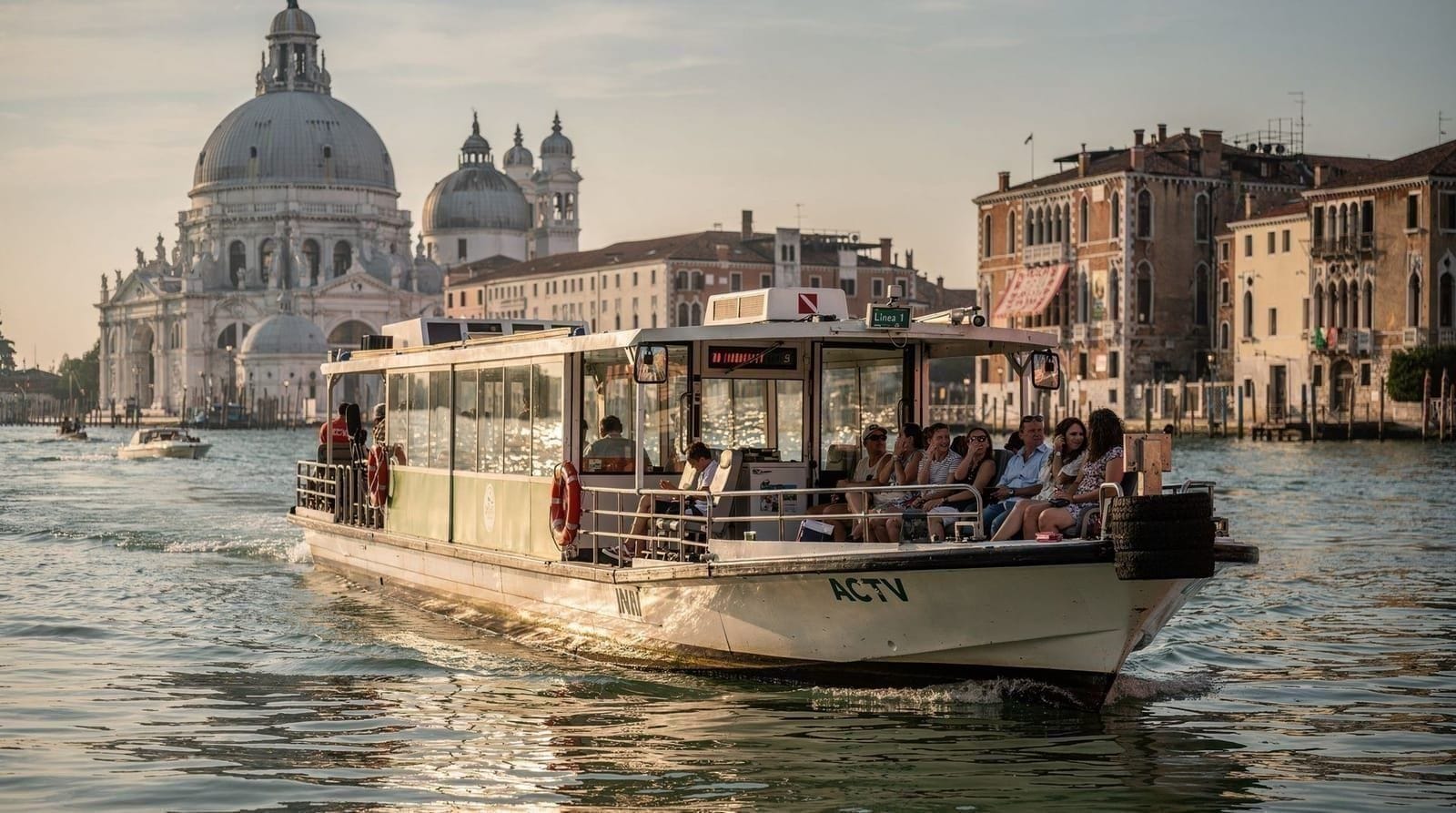
Afternoon arrival: Take the vaporetto from the station or airport to your accommodation. Line 1 from the train station is the scenic 45-minute option; the ACTV bus to Piazzale Roma + vaporetto is cheaper from Marco Polo airport.
Evening: aperitivo and dinner in Cannaregio
Do not attempt landmarks on arrival day. Get a spritz (€3.50) at the Fondamenta della Misericordia in Cannaregio, eat a cicchetti dinner at one of the canal-side bacari, and orient yourself for the next day. Budget €15–20 for a full standing dinner.
Day 2: Venice — the major landmarks
Morning: San Marco
8:00am — Piazza San Marco
Early morning in the piazza before the crowds. St Mark’s Basilica with pre-booked entry at 9:30am — allow 45–60 minutes inside. Doge’s Palace follows, with pre-booked entry to avoid queues.
Doge’s Palace Secret Passageways guided tourAfternoon: Dorsoduro and a gondola
1:00pm — Lunch in San Polo, then cross to Dorsoduro
The Accademia gallery (Venetian painting, 2 hours) or Peggy Guggenheim Collection (modern international, 1.5 hours). One is enough for an afternoon — save the other for day three.
5:00pm — Gondola
Shared gondola ride across the Grand Canal7:00pm — Campo Santa Margherita aperitivo, then dinner in San Polo
Day 3: Venice — islands and free time
8:30am — Murano and Burano by vaporetto
Line 4.1 to Murano for the glassblowing demonstrations. Line 12 to Burano for the coloured houses and a seafood lunch (Trattoria da Romano, book ahead). Return by 3pm.
Afternoon: wherever you missed on day two
The second museum (Accademia or Guggenheim, whichever you skipped), or the Scuola Grande di San Rocco for Tintoretto’s full cycle, or a walk through Castello’s quiet streets.
Evening: rest and early night
The Dolomites day (day four) is long. An early dinner and an early night.
Day 4: Cortina d’Ampezzo and the Dolomites
This is the day that makes the itinerary. Block out the full day — departure at 7am, return to Venice by 8pm minimum.
Option A: organised day trip (recommended)
The organised tour from Venice to Cortina and the Dolomites is the most practical option for a single day: the transport is handled, the guide provides context for the geology and history, and the stops are optimised for the available time.
From Venice: Cortina and Dolomites full-day tourDeparture approximately 7–7:30am from Venice. The tour typically covers:
- Cortina d’Ampezzo town centre (the Dolomites’ most famous resort)
- Lake Misurina (the clearest alpine lake in the region, set below the Auronzo di Cadore peaks)
- Tre Cime di Lavaredo viewpoints (the Dolomites’ most iconic rock formation — three vertical towers visible from the SS48 road above the lake)
- Return to Venice approximately 7:30–8:30pm
Total time: 12–13 hours.
Option B: by rental car (more flexibility)
A rental car from Venice (Piazzale Roma) picked up at 7am. The drive to Cortina via Belluno takes approximately 2.5 hours on the SS51.
7:00am — Depart Venice
Drive north through the Veneto plain. The Dolomites appear approximately 90 minutes from Venice, rising abruptly from the foothills in a way that is consistently shocking to people who have not seen them before.
9:30am — Cortina d’Ampezzo
Cortina d’Ampezzo is Italy’s most prestigious mountain resort — the venue for the 1956 Winter Olympics and the 2026 Winter Olympics’ alpine skiing events. The town itself is elegant, expensive, and oriented toward the skiing season (December to April); in summer it is busy with hikers and walkers but feels slightly too large for its summer visitor numbers.
The Museo delle Regole d’Ampezzo covers the Ampezzano people’s history. The Ristorante Tivoli (above the town, accessible by road) has views of the Cristallo massif and food that reflects the prices (€45–60 per person).
The best strategy in Cortina in summer is to head immediately uphill. The Dolomites’ visual power is at altitude, not in the valley.
11:00am — Lake Misurina (30km east of Cortina)
Lake Misurina sits at 1,754 metres, surrounded by pine forests and framed by the Sorapiss and Tre Cime groups. It is one of the most beautiful alpine lakes in Italy — the water clarity is exceptional and the reflection of the peaks in calm mornings is exceptional. A complete walk around the lake takes approximately 45 minutes on flat ground.
12:30pm — Tre Cime di Lavaredo
The road from Lake Misurina to the Tre Cime car park (Rifugio Auronzo) rises to 2,320 metres in 7km — a toll road (approximately €30 per car). From the car park, the classic circular hike around the base of the three towers is 10km and takes 3–4 hours. A shorter walk to the viewpoint takes 45 minutes and covers the most dramatic perspective.
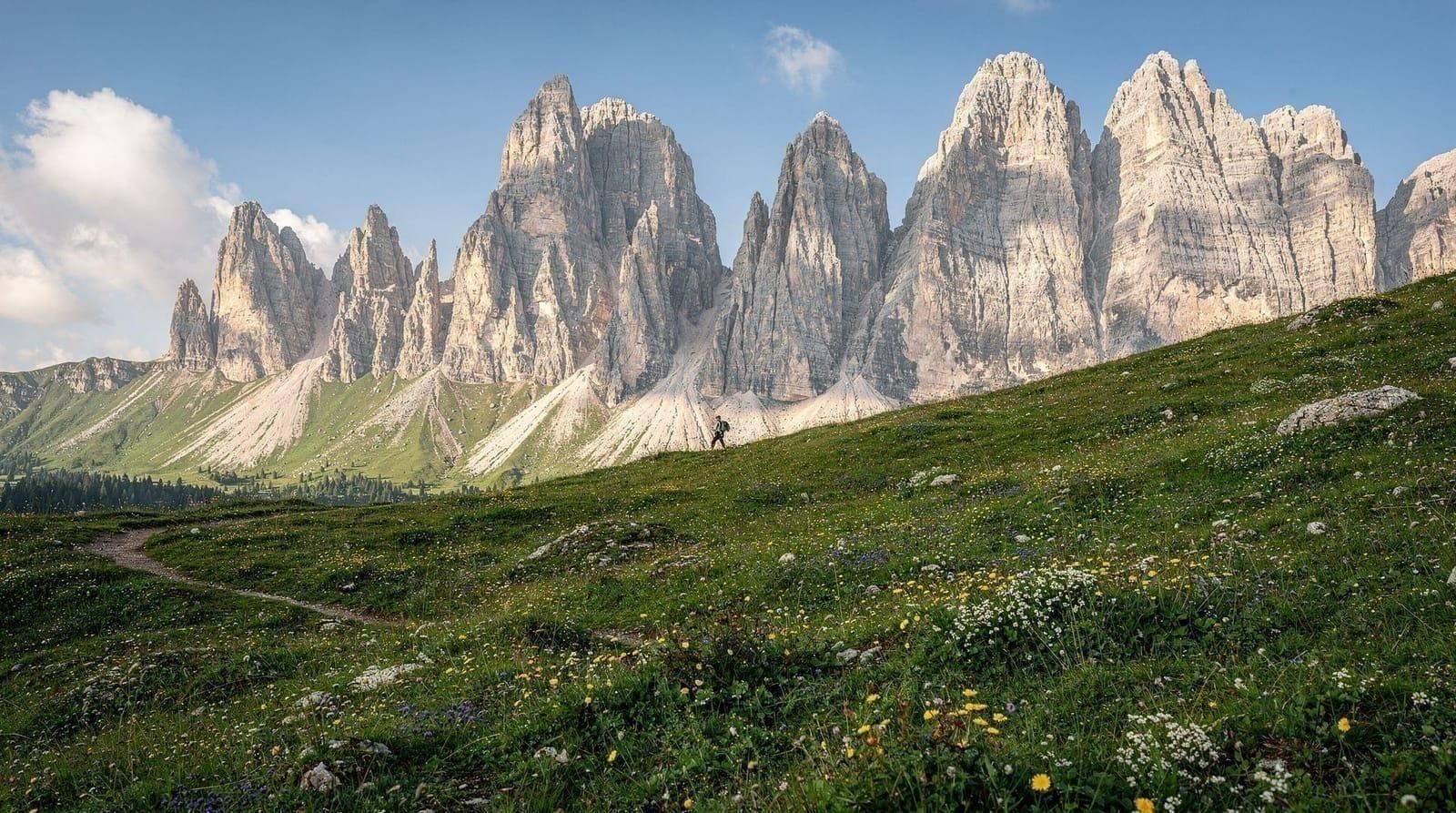
The Tre Cime di Lavaredo are the Dolomites in three towers: vertical faces of grey limestone with the characteristic pale warmth of dolomite rock at sunset, each tower approximately 300 metres above the surrounding plateau. No photograph does them justice; even inferior photographs do them some justice.
Note: The toll road to Tre Cime is closed in bad weather and from approximately October to June due to snow. Always check road conditions at comune.auronzodicadore.bl.it before driving up.
4:00pm — Return via Belluno
Lunch at one of the Rifugio huts near the car park or descend to Misurina for a more substantial meal. The Rifugio Auronzo (at the car park) serves pasta and soup; expect €15–20 for a basic lunch.
Drive back to Venice via Belluno, arriving approximately 7:30–8pm.
Dolomites: what makes them unique
The Dolomites are UNESCO World Heritage-listed for their geology — the rock is a specific calcium-magnesium carbonate (named after French geologist Déodat de Dolomieu) that gives the peaks their distinctive pale colour and their extraordinary vertical faces. The towers, faces, and gruppi of the Dolomites were formed by ancient coral reefs lifted by the Alps’ formation — which is why ammonite fossils appear at 2,500 metres above sea level.
The dolomites day trip guide covers the geology, the best viewpoints, and the hiking options in more detail.
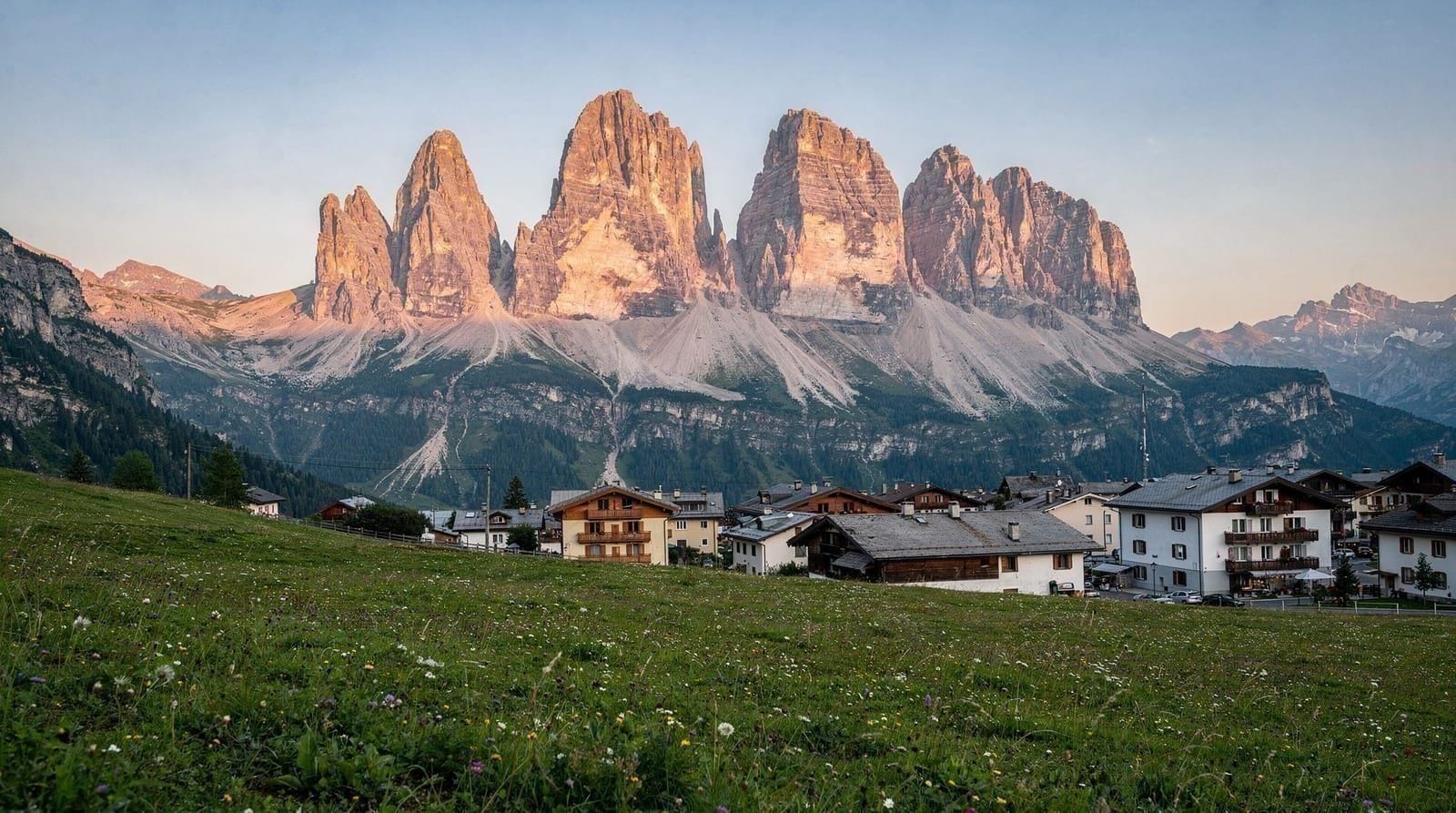
Photography note: The Dolomites at sunrise and sunset turn a phenomenon called Enrosadira — the pale rock turns deep pink and then red as the light angles across the towers. The effect lasts approximately 15 minutes and is worth planning your day around. In summer, sunset in the Cortina area is approximately 9pm; sunrise approximately 5am.
Day 5: return to Venice or Veneto exploration
Option A: Venice rest day
Day five for many people is a recovery day after the previous day’s altitude and distance. Sleep later, have a slow breakfast, walk slowly through whichever part of Venice you have not yet explored.
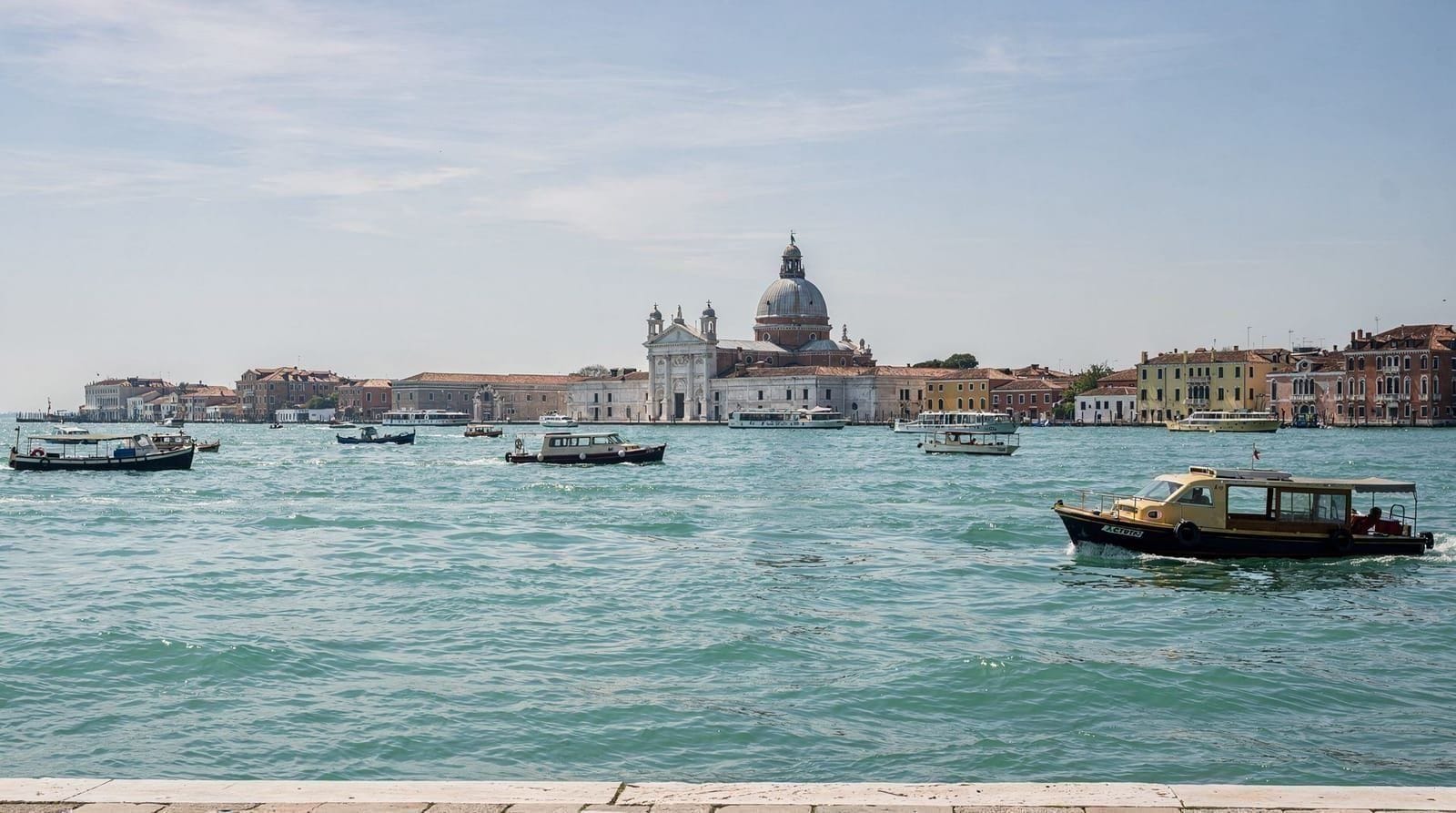
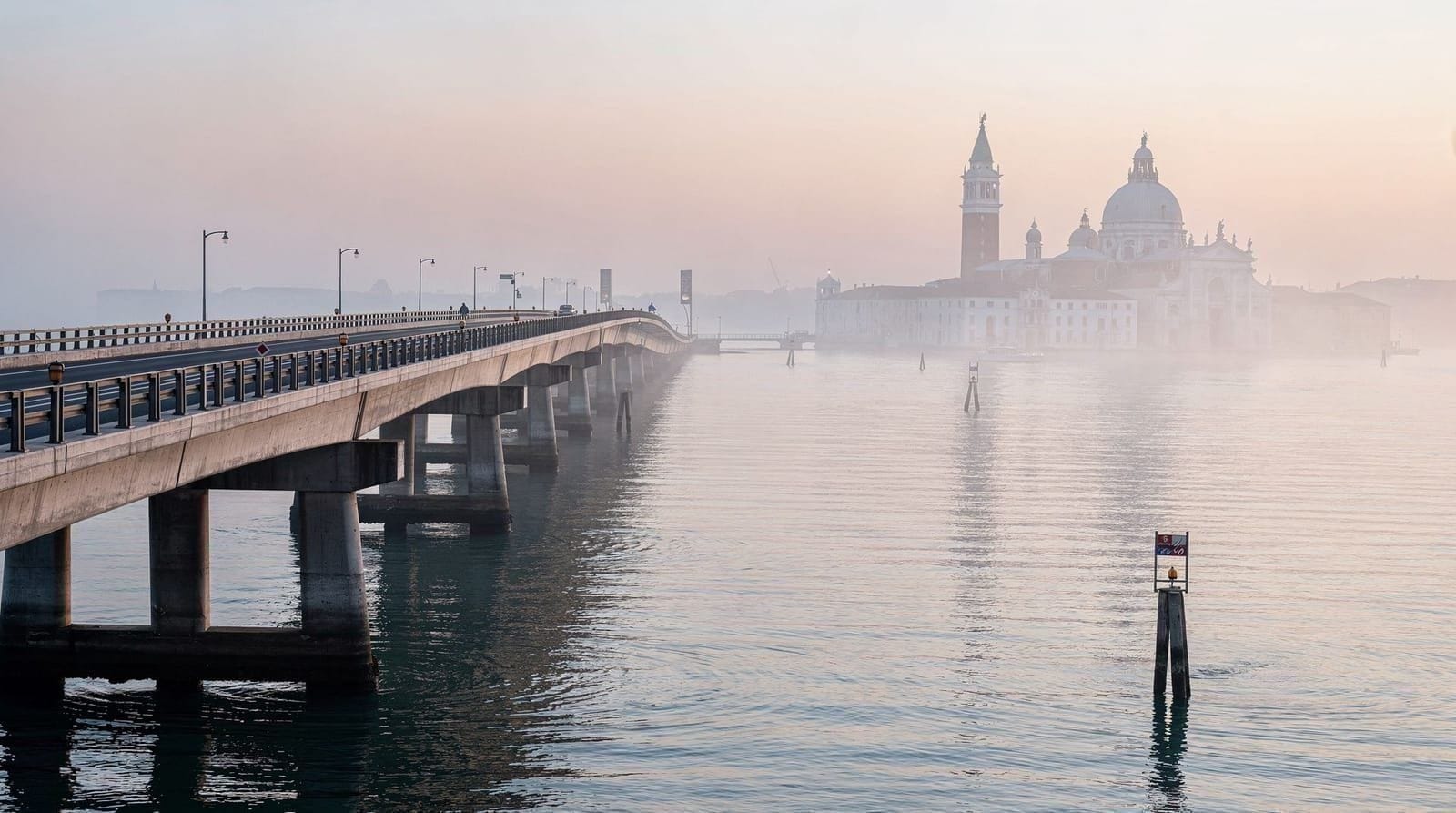
Good options: the Arsenale exterior and the shipyard gate, the far eastern tip of Castello around San Pietro di Castello, the island of San Giorgio Maggiore by vaporetto (5 minutes, Palladio church with campanile elevator, €8), or the Lido by vaporetto for a beach afternoon (July–August).
Option B: Belluno and the lower Dolomites
If the Dolomites day left you wanting more, Belluno (50 minutes by train from Venice) is the regional capital at the foot of the mountains — a beautiful, almost tourist-free medieval city with direct access to the lower Dolomite valleys. The drive from Belluno to Cortina is 55km through the Boite valley, one of the most scenic mountain roads in Italy.
Option C: Treviso
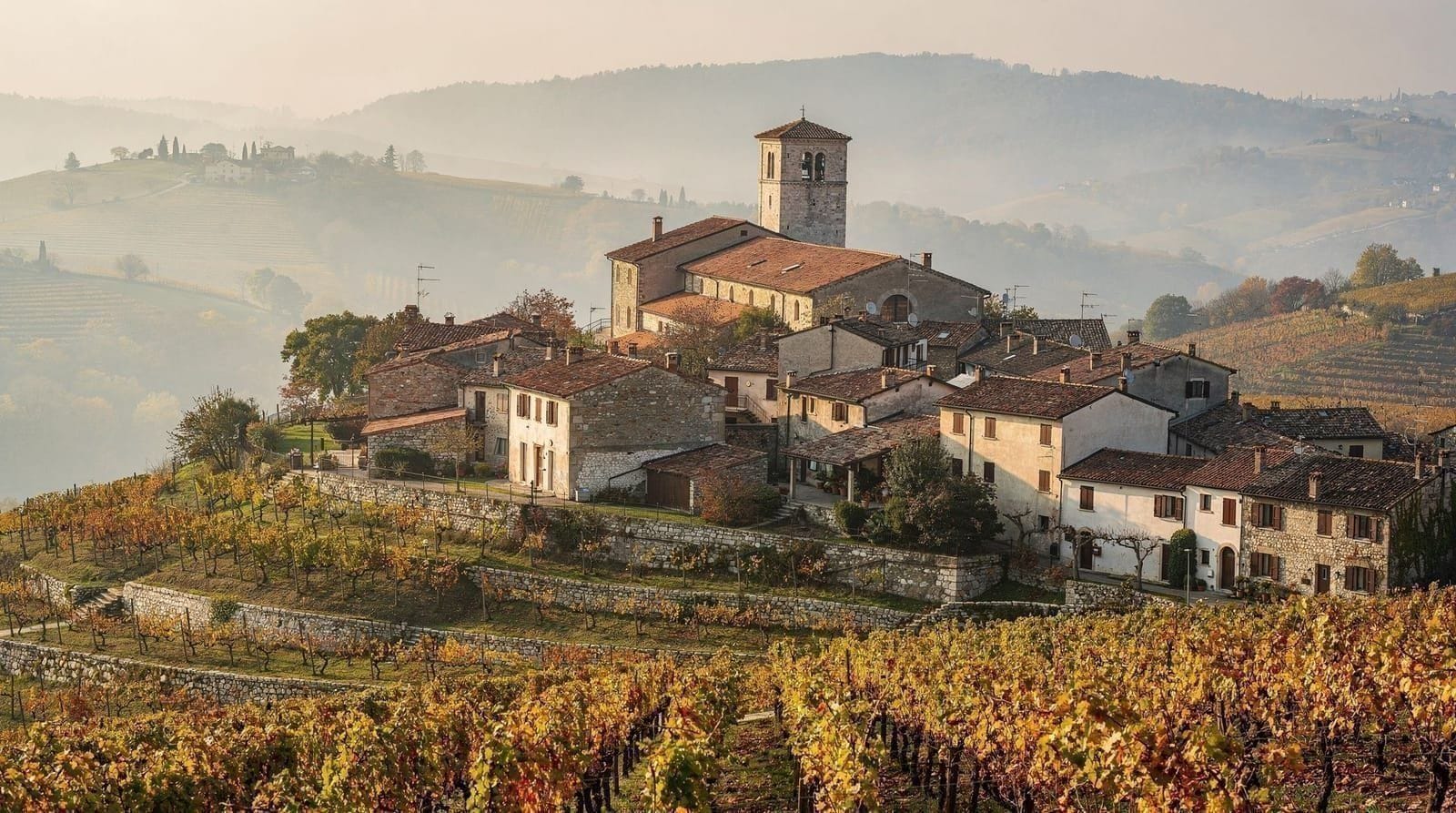
Treviso is 30 minutes from Venice by train — a walled medieval city with canals, good food (the birthplace of tiramisu, though Veneto provenance is contested), and the Prosecco hills visible from its northern edge. Almost no tourists; excellent for a final half-day. See the Treviso day trip guide.
Understanding the Dolomites before you arrive
The Dolomites are a mountain range in northeast Italy that forms the southeastern edge of the Alps. The name comes from Déodat de Dolomieu, the French geologist who first described the unusual calcium-magnesium carbonate rock (dolomite) that gives the range its distinctive character. Geologically, the towers and walls of the Dolomites are ancient coral reefs lifted 3,000 metres above sea level by the same tectonic forces that built the Alps — which is why fossilised sea creatures appear at altitude, and why the rock’s vertical faces are so dramatically unlike anything in the main Alpine chain.
The UNESCO World Heritage designation covers nine “systems” within the Dolomites, recognising both the geological significance and the landscape quality. The Cortina d’Ampezzo area falls within several of these systems; the Tre Cime di Lavaredo is the most internationally recognised formation.
Why the Dolomites feel different from other mountain ranges
The key visual distinction is the contrast. The Dolomites are pale — almost white at midday — against a blue sky, but they turn deep orange and then red at sunrise and sunset (the Enrosadira effect). The walls are vertical rather than simply steep; the towers are separated from each other by valleys and col passes that give them a three-dimensional quality lacking in continuous ridge systems. The scale is human rather than infinite — the Tre Cime, at around 2,900 metres, are clearly legible as three distinct structures when seen from below, which is why they photograph so effectively.
The summer season in the Dolomites (mid-June to mid-September) brings hikers from across Europe, but the density per square kilometre is still much lower than Venice. The rifugi (mountain huts) at altitude serve food and accommodation; the infrastructure for walking is excellent and well-signed.
What a day trip gives you vs a dedicated Dolomites trip
A day trip from Venice covers the iconic sights (Cortina, Misurina, Tre Cime viewpoint) in one long day. It does not give you:
- Sunrise or sunset from altitude (requiring overnight at a rifugio or a mountain hotel)
- Multi-day hiking routes (the Alta Via trails through the Dolomites require 3–7 days)
- The quieter, less-visited areas (Fanes-Senes-Braies nature reserve, the Gardena valley, the Pale di San Martino)
- Deep immersion in the Ladin culture (the Dolomites have a fourth Italian culture alongside Italian, German-speaking Trentino-Alto Adige, and Venetian — the Ladin people of the central valleys with their own language and traditions)
For anyone who does the day trip and wants more, a dedicated 3–5 day Dolomites trip (based in Cortina, Ortisei, or Corvara) is the logical next step.
Practical notes for this itinerary
Car rental: Rental cars cannot enter historic Venice. Pick up and drop off at Piazzale Roma or the Venezia Mestre train station (on the mainland). Budget €50–80/day for a small car. Parking at Tre Cime toll road: €30.
Altitude: The Tre Cime di Lavaredo viewpoint is at 2,300+ metres. Anyone with cardiac issues should discuss high-altitude hiking with a doctor. Altitude sickness is uncommon at these levels for healthy adults but possible for people arriving from sea level on the same day.
Weather: The Dolomites create their own weather. A forecast for Venice is not a forecast for Cortina. Check the local forecast at meteo.it or Bergfex (bergfex.com) the day before. Afternoon thunderstorms are common in summer (July–August); start the mountain portion early.
What to bring: Layers (temperatures drop significantly with altitude — plan for 10°C cooler at Tre Cime than at Cortina), waterproof jacket, good walking shoes (trail runners at minimum — the Tre Cime path is rocky), sunscreen at altitude.
Getting the most from a Dolomites day trip
A single day in the Dolomites requires accepting its constraints and working within them rather than fighting them. The principal constraint is time: the 2.5-hour drive each way consumes 5 hours of a 12-hour day, leaving 7 hours on the ground. Used efficiently, those 7 hours cover Cortina (1.5 hours), Lake Misurina (1 hour), and the Tre Cime area (2–3 hours), with an hour for lunch.
What to prioritise: If you can only do one stop at altitude, the Tre Cime di Lavaredo viewpoint is it. The combination of scale, distinctiveness, and visual impact is unmatched in the accessible Dolomites. Lake Misurina adds 45 minutes and is the second priority — the water clarity and mountain reflection on calm mornings justify the extra stop. Cortina town is the least essential element of the day trip — it is beautiful but not dramatically unlike other Alpine resorts.
Light and timing: The Dolomites photograph best in the morning (before 11am) and in the golden hour before sunset (after 6pm in summer). A day trip arriving in Cortina at 9:30am gets the morning light on the early stops. The drive back at 4–5pm misses the golden hour. Visitors who want the sunset light need to either arrive very early or stay overnight.
Hiking if you want it: The circular hike around the Tre Cime base is 10km with approximately 500 metres of elevation change — manageable for fit walkers in 3–4 hours. Shorter options include the viewpoint path (45 minutes, no significant elevation change from the car park) and the Forcella Lavaredo path (1.5 hours, steeper). All require proper footwear — trail runners at minimum, hiking boots preferred. The terrain is rocky and uneven above the car park.
Rifugio culture: The mountain huts (rifugi) scattered across the Dolomites are a tradition in themselves — serving food and wine to hikers, some offering overnight accommodation in dorm beds. Rifugio Auronzo (at the Tre Cime car park, 2,333 metres) serves full meals including pasta and goulash. Rifugio Lavaredo (30 minutes on foot from the car park) is smaller and more atmospheric. Both serve local wines and grappa. For a day trip, lunch at a rifugio at altitude is the most appropriate meal of the day.
Cortina in 2026: The town is in preparation mode for the 2026 Winter Olympics (alpine skiing events are scheduled for the slopes above the town, February 2026). Construction work may affect some areas of the town during the 2025 lead-up period. The town centre and the access roads to Misurina and Tre Cime are unaffected.
This itinerary at a glance
| Day | Focus | Key decision |
|---|---|---|
| Day 1 | Arrival + Cannaregio | Keep it low-key, orient yourself |
| Day 2 | San Marco + Doge’s Palace | Accademia or Guggenheim (pick one) |
| Day 3 | Murano + Burano | Save the second museum from day 2 |
| Day 4 | Cortina + Misurina + Tre Cime | Organised tour vs rental car |
| Day 5 | Rest, Belluno or Treviso | Recovery day vs another excursion |
Fitting this itinerary around the wider Veneto
Five days is enough to add the Dolomites without sacrificing Venice, but it does mean the wider Veneto — Verona, Padua, Vicenza — gets no time at all in this version. If those cities interest you as much as the mountains, the honest move is not to try squeezing a sixth destination into five days but to extend the trip. Our seven-day Venice and Veneto itinerary covers both the Dolomites day and a proper Verona or Padua day trip without the rushed feeling that comes from adding one more stop to an already full five days. Treviso, mentioned as a day-five option above, is the one Veneto destination genuinely close enough to fit without extending the trip.
Whether to base yourself in Venice for all five nights
Some travellers consider spending night four in Cortina rather than driving back to Venice the same evening, and there is a real case for it — a Cortina overnight lets you catch sunrise light on the Tre Cime (the Enrosadira effect is best at dawn, not dusk) and removes the fatigue of a 2.5-hour drive after a full day of hiking and altitude. The trade-off is losing a Venice night and needing separate accommodation logistics for a single stop. For most first-time visitors doing this trip as described, staying in Venice throughout and doing the Dolomites as a long single day is simpler and keeps the itinerary’s other four days intact; only split the base if sunrise photography at altitude is a specific priority.
What to do if the Dolomites day gets weathered out
Mountain weather is genuinely unpredictable, and the toll road to Tre Cime closes in poor conditions regardless of season. If day four’s forecast turns bad, the honest move is to swap it with day five rather than pushing ahead into fog or storms that will erase the views you came for — Cortina and Misurina are pleasant even in cloud, but the Tre Cime viewpoint is the whole point of the drive and is genuinely disappointing with no visibility. Check meteo.it or Bergfex the evening before and be willing to shift the mountain day by 24 hours if your schedule allows even a little flexibility.
Budgeting the mountain day separately
Day four is the most expensive single day of this itinerary and worth budgeting for distinctly from the Venice days. The organised tour typically runs €120–160 per person including transport and a guide; a rental car plus tolls and fuel runs roughly €120–180 total split between however many people share the car, which is meaningfully cheaper for groups of three or more. Either way, add €30–50 per person for meals at altitude (rifugio prices run higher than Venice bacari) and the €30 Tre Cime toll if driving. Budgeting day four at roughly double a normal Venice day avoids an unpleasant surprise partway through the trip.
Frequently asked questions about this Venice-Dolomites itinerary
Is one day in the Dolomites worth the trip from Venice?
Yes, but with realistic expectations. You will see the Dolomites’ most spectacular scenery (Tre Cime, Misurina) and have one long hiking day. You will not have time to do multi-day hikes, explore multiple valleys, or experience the mountain culture properly. One day is an introduction that makes most people want to return for a dedicated mountain trip.
Is the organised tour better than renting a car for the Dolomites day?
The organised tour is significantly easier — you arrive and leave without thinking about directions, parking, or the toll road. The car gives flexibility (you can stay at Tre Cime for a longer hike or make your own stops) but the driving is demanding on mountain roads. For a single day trip, the tour is the better choice for most visitors.
What is Cortina d’Ampezzo like in summer?
Busier than expected but quieter than in ski season. The resort infrastructure (cable cars, hotels, restaurants) is set up for winter; summer visitors use the hiking trails and valley infrastructure. The 2026 Winter Olympics preparations have changed some of the town’s infrastructure. It is beautiful but expensive.
Can I do the Tre Cime hike in a day from Venice?
The circular hike around the Tre Cime (10km, 3–4 hours) is feasible in a day but leaves very little time for Venice or anything else. Most day trippers do the shorter viewpoint walk (45 minutes from the car park). The full hike is better done on a dedicated Dolomites trip with accommodation at a rifugio.
What is the best viewpoint of the Dolomites without hiking?
The viewpoint from the road above Lake Misurina looking north toward the Tre Cime towers. Accessible by car without any walking. Free to stand there. Best in the morning when the light hits the towers from the east.
Is this itinerary realistic without a car?
Yes, provided you take the organised day tour for day four rather than renting a car — the tour handles the transport, the toll road, and the mountain driving that would otherwise require confidence on unfamiliar alpine roads. Days one, two, three and five all work entirely on foot and by vaporetto within Venice itself.
Should I swap day five for Treviso or a Venice rest day?
If you did the Tre Cime hike on day four, a Venice rest day usually serves you better — the legs need it. If you kept day four to the shorter viewpoint walk and have energy left, Treviso makes an excellent half-day that shows a different, quieter side of the Veneto than Venice itself.
Top experiences
Bookable activities with verified prices and instant confirmation on GetYourGuide.