Why we always skip the San Marco restaurants
The €82 pasta lunch
Our first Venice trip taught us this lesson at a cost of €82, which is what we paid for two pasta dishes, two glasses of wine, and two unrequested bottles of water at a restaurant on the edge of Piazza San Marco. The food was fine in the sense that it was not dangerous. The experience was fine in the sense that nothing went dramatically wrong. We sat outside, the view was extraordinary, and we felt mildly victimised for the rest of the afternoon.
Nobody had warned us. This post is the warning.
| Typical trap-restaurant coperto | €3–8 per person |
| Typical honest coperto | €2–3 per person |
| Trap-zone pasta main | Around €28–40 |
| Cannaregio bacaro cicchetti | Around €2–4 per piece |
| Rule of thumb | Walk 2+ minutes off the main tourist route |
What the San Marco restaurant trap actually involves
The area within roughly 300 metres of Piazza San Marco is home to dozens of restaurants that operate on a tourist-volume model. Their economics don’t require good food or returning customers. They need high throughput, visible outdoor seating, menus in six languages with photographs, and the proximity to Venice’s most-visited square.
The specific tactics vary, but the common pattern includes: a coperto (cover charge) of €3 to €6 per person that may be mentioned in small print but is rarely emphasised; unrequested bread and water that appear automatically and are charged at €3 to €6 per item; fish dishes priced “per 100g” rather than as dishes, where the actual portion arrives as 400g; wine charged at €8 to €14 per glass rather than by the carafe; and an absence of prices on displayed boards (even though displaying menu prices outside is legally required for restaurants in Italy).
None of this is illegal in most cases, though some of the tactics skirt consumer protection rules. It’s a model that exploits the information asymmetry between first-time visitors who don’t know the norms and operators who rely on that ignorance.
The red flags to look for
Laminated menus with photographs: Not universal — there are some very good restaurants with illustrated menus — but in the San Marco area specifically, the laminated photograph menu is a strong signal.
The host outside waving you in: Legitimate restaurants in Venice do not need hawkers at the door. If someone is actively beckoning from the entrance, the restaurant is relying on passing trade rather than quality.
Outdoor tables facing the main tourist flow: The premium outdoor tables at the edge of the piazza charge the location, not the food. There’s nothing wrong with sitting outside — but know that a percentage of your bill is for the view.
“No cover charge” signs: Paradoxically, this is sometimes a sign that the menu contains other mechanisms — because it draws attention to the absence of something that’s unusual not to charge.
Fish priced “al kg” (by kilogram, or per 100g): This is legal but requires you to ask what the actual portion size will be, and to do the arithmetic. On a menu where pasta is €18, fish “al kg” might mean a €45 portion if you don’t specify.
The rule we use
If the menu is outside and readable in three languages with photos, and the outdoor seating faces the main pedestrian traffic, we keep walking.
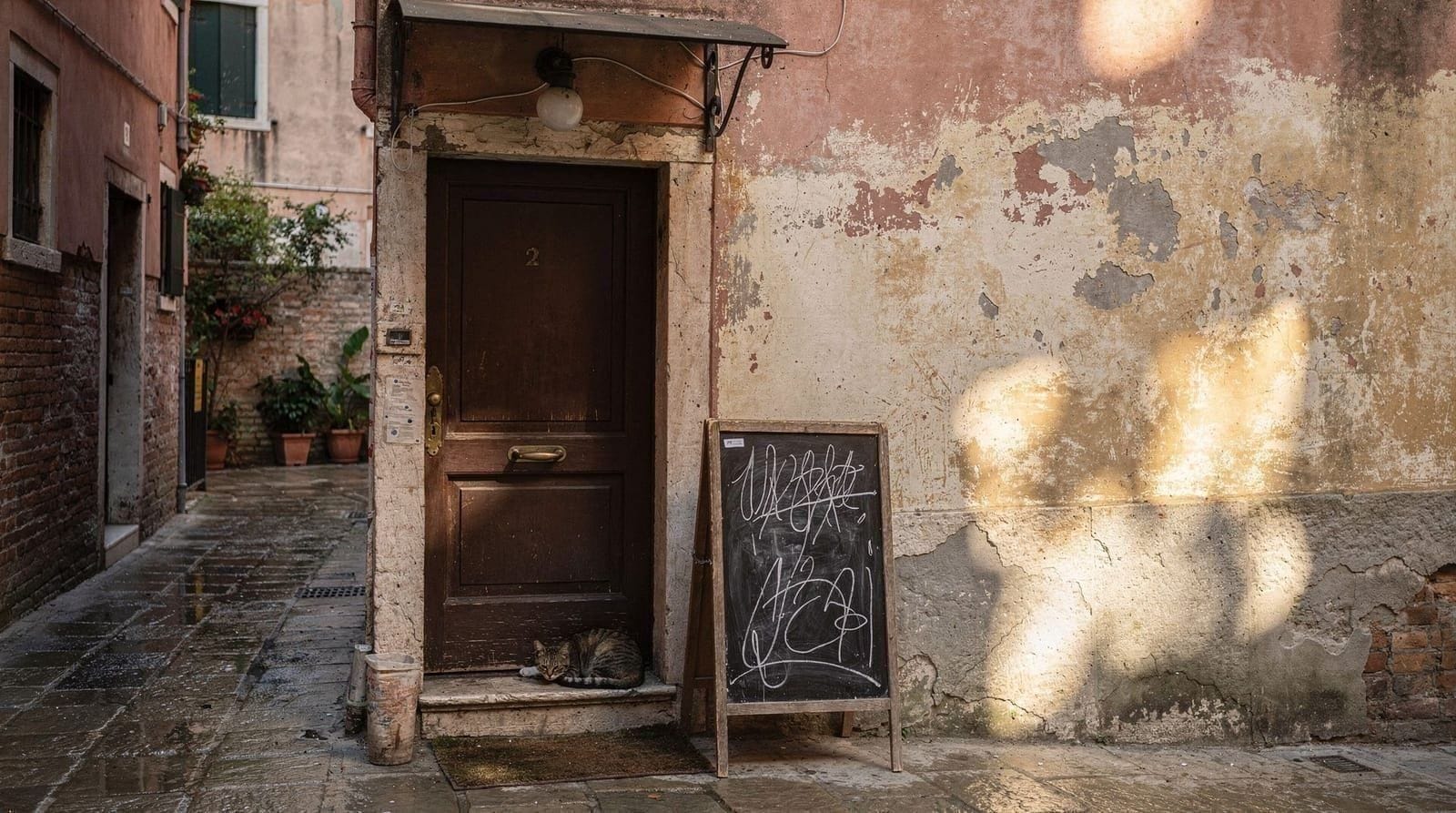
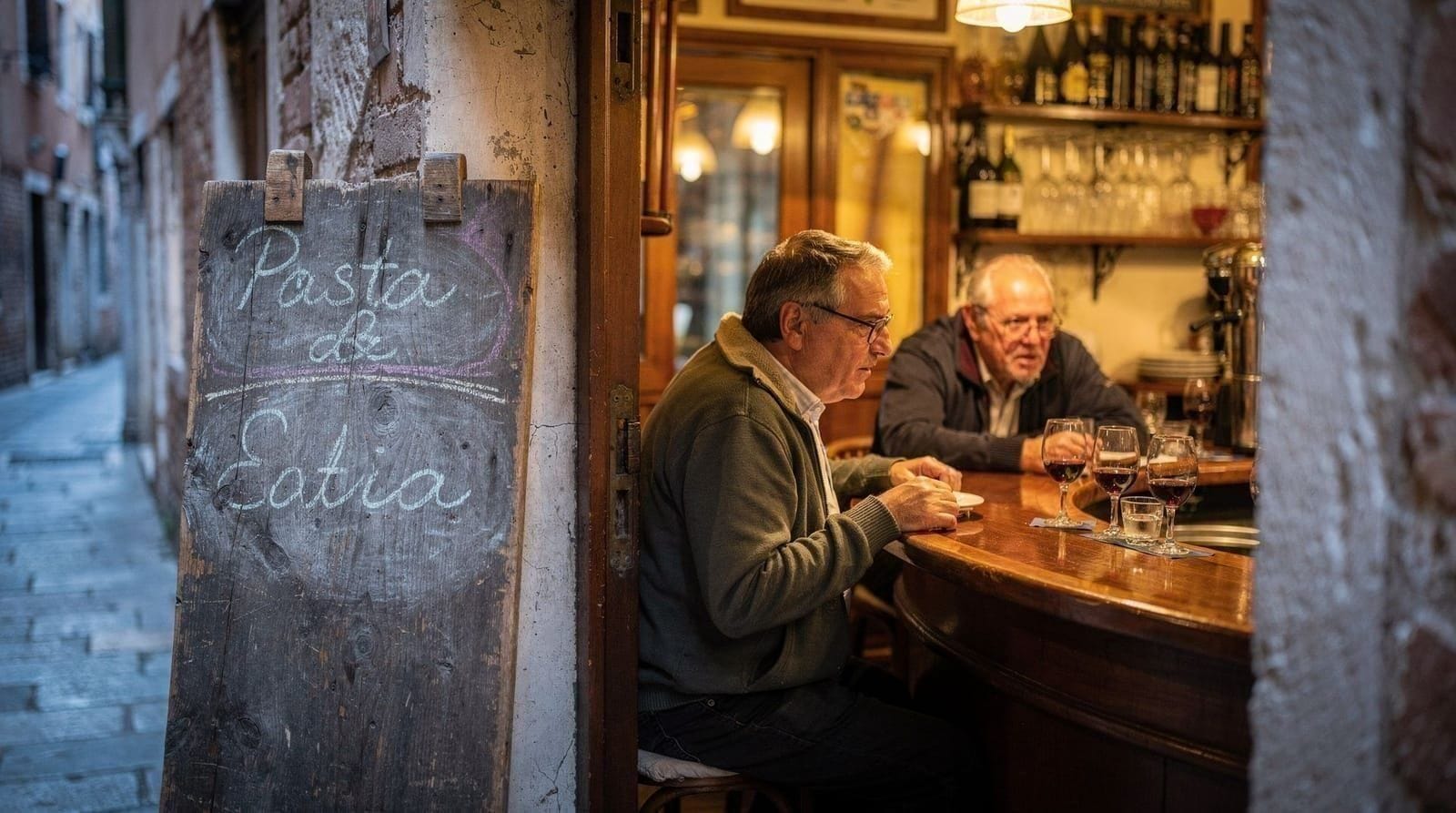
If there’s no English on the blackboard outside, or the specials are handwritten, or there’s a local at the bar eating — we stop.
This isn’t a foolproof heuristic. There are tourist traps without photographs on the menu. There are good restaurants near San Marco. But the rule is correct often enough to save money and eat better.
What to do about the “we want to eat with a view” problem
The request is legitimate. Sitting outside with the view of Piazza San Marco or the Grand Canal is genuinely one of the great terrace experiences in Europe. The problem is not the view — it’s that the restaurants charging for the view know you’ll pay almost anything to have it.
The solution is to manage expectations: have the view at a café for a coffee or a spritz, rather than at a restaurant for a full meal. Caffè Florian on the Piazza di San Marco has been serving coffee since 1720 and charges accordingly — €12 to €15 for a coffee with the orchestra playing. This is outrageous and also exactly what it is, transparently priced, and the experience is remarkable on its own terms. It’s a different proposition from a restaurant that hides its true prices until the bill arrives.
The Rialto Bridge and the Grand Canal view tables near the Fondamenta del Vin have the same dynamic. A spritz with the view is affordable. A full fish dinner with the view, ordered without knowing the al-kg fish pricing, is not.
Understanding the coperto honestly
The coperto (cover charge) is legal in Italian restaurants and is not a scam in itself — it’s a bread-and-service charge that dates back to an old Italian regulatory system. A coperto of €2 to €3 per person is normal. A coperto of €6 to €8 per person in a tourist-facing restaurant near San Marco is exploitative but legal.
What makes the coperto a problem is undisclosure. Under Italian consumer protection law, the coperto must be on the menu, clearly legible, before you sit down. Restaurants that mention it only in fine print at the bottom of the back page, or only when you ask why the bill is higher than expected, are violating the spirit if not always the letter of the law.
Ask to see the full menu before you order. If the coperto isn’t listed, ask what it is. If the answer is evasive or the number changes between the conversation and the bill, you’re in the wrong place.
The geography of the trap
The highest concentration of tourist-trap restaurants in Venice forms a horseshoe around the main San Marco tourist circuit: the east side of the piazza toward the waterfront, the Riva degli Schiavoni toward Castello, the area around the Rialto bridge (both sides of the Grand Canal), and the alleys immediately adjacent to the major tourist routes between San Marco and Rialto.
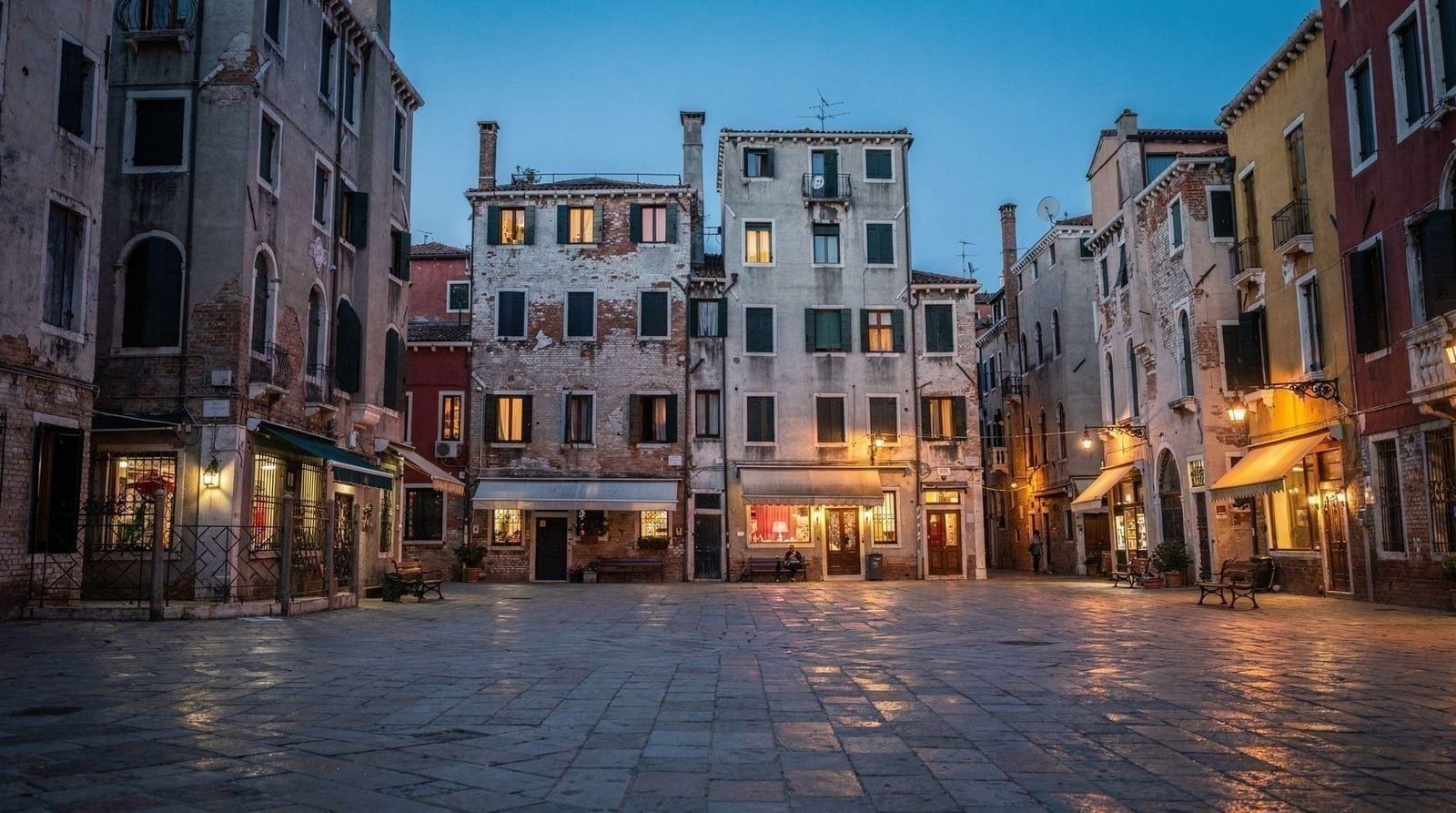
Move off this circuit and the economics change. Castello east of San Marco — the residential district toward Sant’Elena — has a completely different restaurant landscape. Dorsoduro between the Accademia and the Zattere is student-facing and tourist-light. The area around Campo Santa Margherita is the most genuinely mixed in the city: students, locals, and tourists coexisting, prices reflecting the mix.
The tourist traps guide maps this geography in more detail. The core principle is simple: when you leave the main tourist corridor, you leave the pricing corridor too.
Where we eat instead
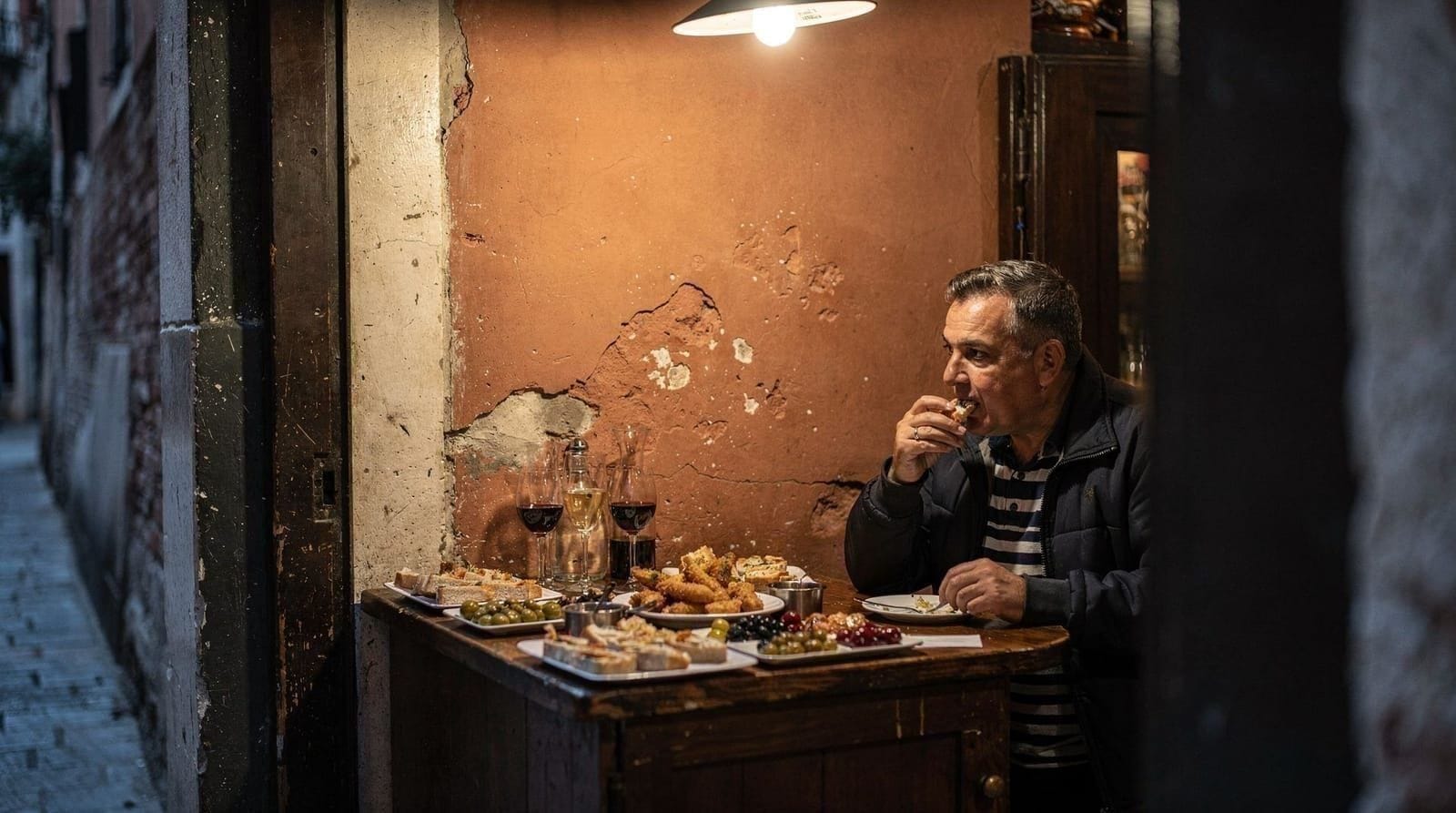
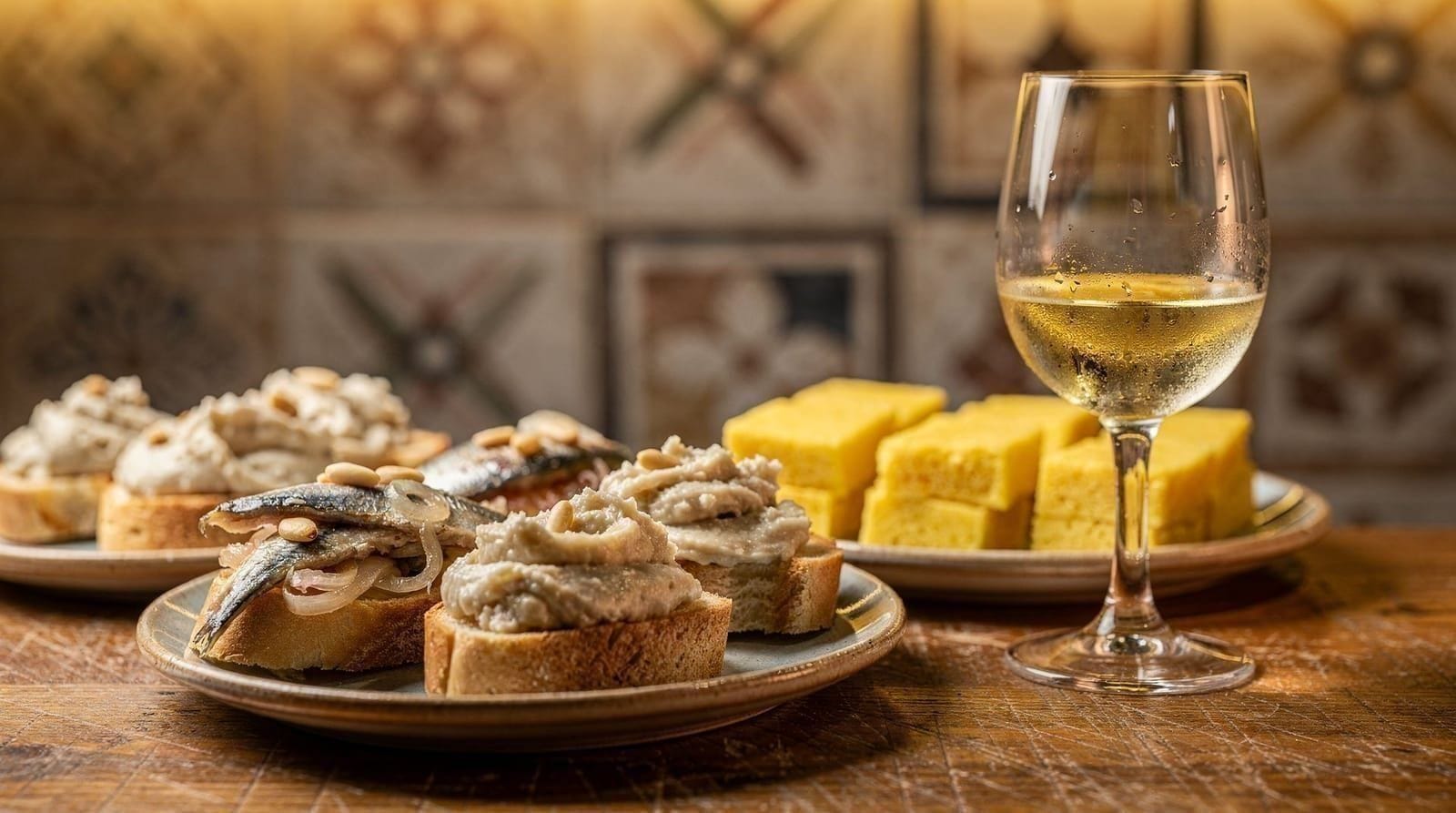
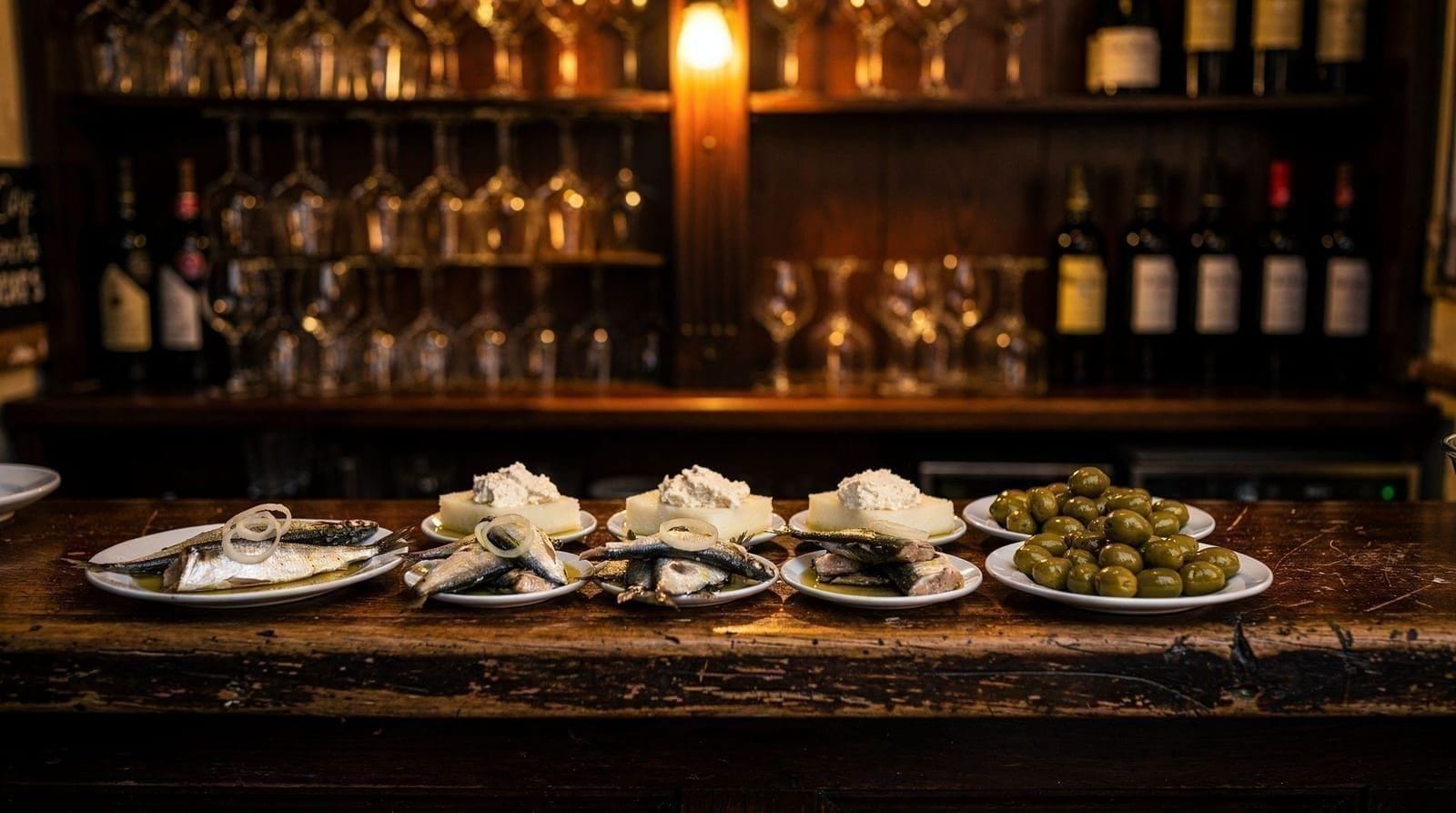
Cannaregio is the main redirect. The bacari along Fondamenta degli Ormesini are the canonical alternative — cicchetti culture at €2 to €4 per piece, ombra wine at €1.50 to €3 a glass, standing at the bar in the Venetian tradition. For a full meal, the small osterie in Dorsoduro between Campo Santa Margherita and the Zattere are consistently decent and not primarily tourist-facing.
The practical rule for full meals: cross at least one canal and walk at least two minutes from the edge of the tourist current before sitting down. In most of Venice, this gets you into genuinely local territory.
The aperitivo option as an alternative strategy
One way to solve the “we want to sit somewhere nice near San Marco” problem without paying tourist-trap dinner prices: have aperitivo instead of dinner. Spritz at Caffè Florian costs €12 to €15 but includes the orchestra, the setting, and the extraordinary view of the Basilica. It’s expensive as a drink; it’s reasonable as an experience ticket.
Alternatively, the bars on the Riva degli Schiavoni waterfront between San Marco and Arsenale do aperitivi with the lagoon view — spritz at €4 to €6, cicchetti at €2 to €3, the water and Giudecca visible across the channel. This is the compromise that satisfies the “view” requirement without the restaurant bill.
After aperitivo, walk fifteen minutes to your actual dinner somewhere without the view premium.
A few places we’ve actually liked near the centre
There are good restaurants in the San Marco area. They tend to be: away from the main pedestrian routes, with daily specials written on a board, priced at €15 to €25 for a main dish rather than €28 to €40, and requiring reservations (a restaurant that’s full two weeks in advance is not relying on passing trade).
Vino Vero (Dorsoduro side), Osteria Alle Testiere (Castello, small, excellent, always full), Al Covo (Castello, fish-focused, slightly formal) — these require advance booking and won’t seat you on impulse. That’s actually a signal of their own.
The honest summary
The San Marco restaurant trap is not a secret. The Venice tourism board acknowledges it. The consumer protection office for the Veneto receives complaints. Individual restaurants have been fined. The model persists because it’s profitable and the pool of first-time visitors is large.
The defence is information. The restaurant traps guide goes through specific verification steps — asking for the complete menu in advance, confirming the price of fish before ordering, noting whether the coperto was disclosed. Armed with these, you can eat near San Marco without being financially damaged. Or you can walk four minutes to Castello and eat better for less money.
We do the latter.
Where to eat instead, by neighbourhood
| Neighbourhood | Typical price for two | Vibe |
|---|---|---|
| Cannaregio (Fondamenta degli Ormesini) | €25–40, cicchetti-style | Local, standing-room bacari |
| Dorsoduro (Campo Santa Margherita area) | €40–70, sit-down | Students and locals mixed |
| Castello (east, away from San Marco) | €40–70, sit-down | Residential, quieter |
| San Marco (main tourist circuit) | €80–120+ | Avoid for full meals |
A guided cicchetti and food tour through the Rialto market area is a low-effort way to get the honest version of Venetian eating on your first evening without doing the neighbourhood research yourself.
Rialto market food and cicchetti tourFAQ
Are all restaurants near San Marco tourist traps? Not all, but the concentration is high — the horseshoe around the main tourist circuit (piazza edges, Riva degli Schiavoni, both sides of the Rialto Bridge) is where the tactics cluster. A few genuinely good restaurants exist nearby, but they tend to be off the main pedestrian flow and require reservations.
What’s the single best sign of a tourist-trap restaurant? A host actively waving passers-by inside. Legitimate Venetian restaurants rarely need to hawk for customers at the door — it’s a strong signal the business relies on one-time passing trade rather than food quality.