Going to the opera in Verona: a complete trip report
How we ended up at the opera by accident
Neither of us is an opera person. Or we weren’t. We were in Venice for five days in mid-July, and someone at our hotel mentioned that the Arena di Verona season was running and we could make it there and back in a day. We looked at the schedule, found Aida playing that Thursday, and bought tickets with a week’s notice. The cheapest seats — standing places on the stone terraces — were about €35 each. We nearly didn’t bother. This would have been a mistake.
| Season | Mid-June to mid-September |
| Train from Venice | Around 1h10–1h30, €12–18 one way |
| Cheapest seats | Around €35 (stone terrace, cushion recommended) |
| Best value seats | Around €65–130 (numbered chairs) |
| Stay overnight | Recommended, Verona hotels cheaper than Venice |
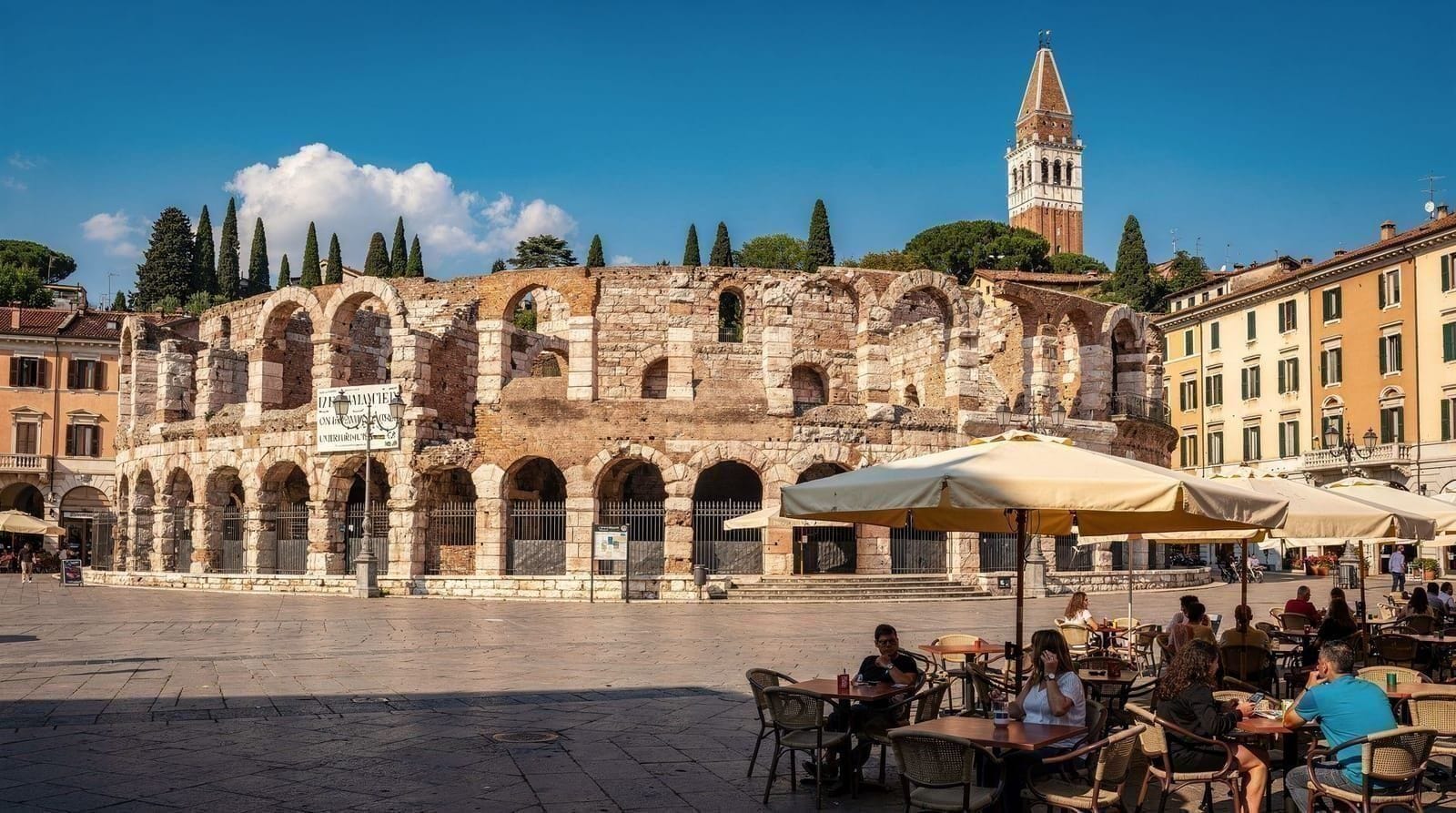
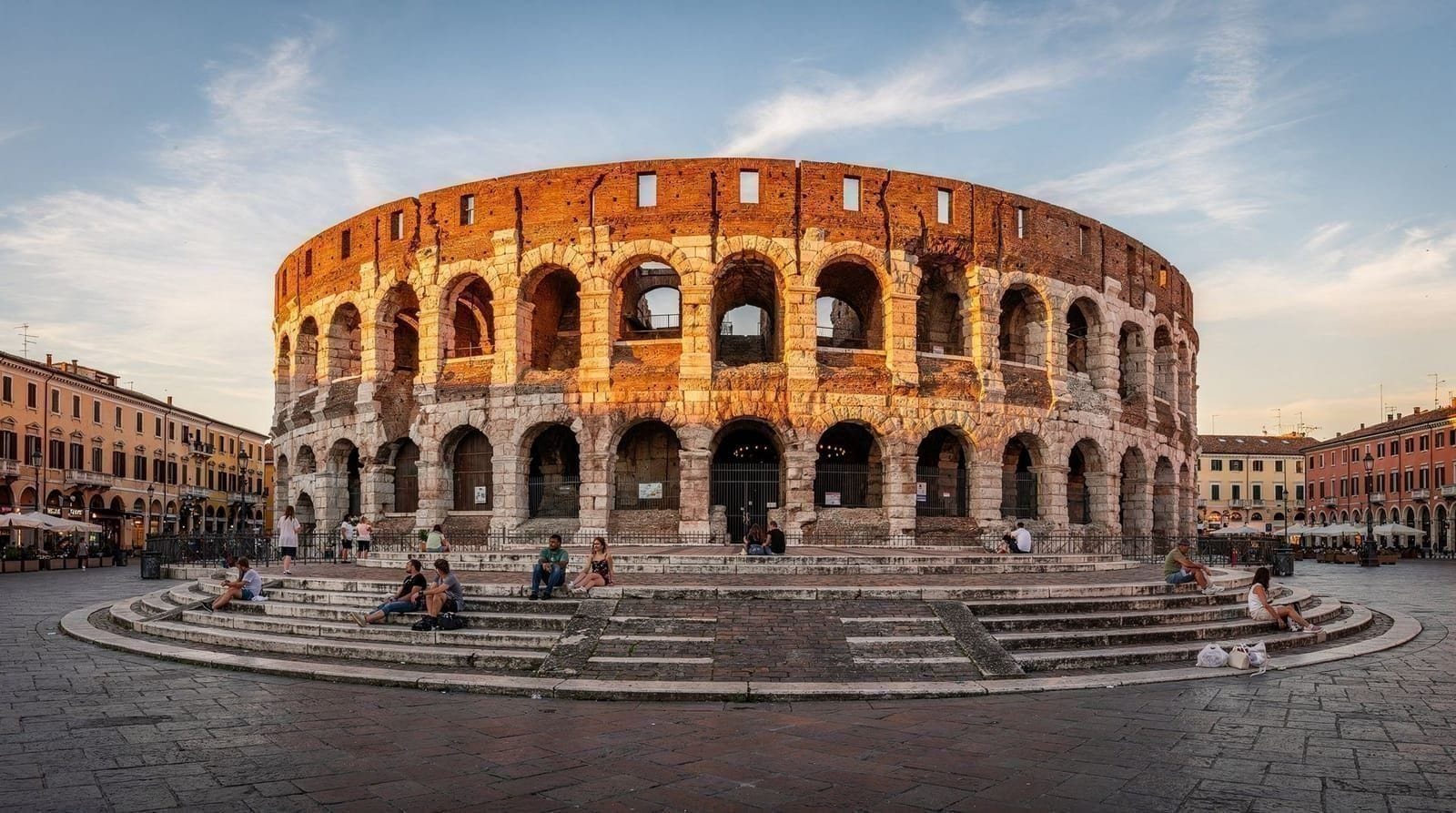
The Arena di Verona is a Roman amphitheatre. Not a reconstruction. Not a replica. A functioning first-century Roman amphitheatre, 14,000 seats, open sky, in the centre of Verona. They’ve been staging opera there since 1913. The acoustics work because of the original stone geometry. When the tenor’s voice carries to the top tier without amplification, you understand in your body what a Roman crowd heard two thousand years ago.
Getting from Venice to Verona
The train from Venice Santa Lucia to Verona Porta Nuova takes between 1h10 and 1h30 depending on the service. Trenitalia runs frequent departures — roughly every thirty minutes during the day. The Frecciabianca is faster; regional trains are slower and cheaper. Book online at Trenitalia.com and you’ll pay €12 to €18 one way; walk-up prices are higher.
Verona Porta Nuova station is not in the old city. The historic centre — the Arena, Juliet’s house, the Roman Theatre, the Duomo — is about a twenty-minute walk or a five-minute taxi. The route from the station into the city centre is walkable and pleasant if you’re not carrying much.
If you’re coming from Venice on a tour, the guided Verona trips pick up at specific points in Venice and handle all the logistics including Arena entry in some packages.
Venice day trip to Verona by train with guided walking tourThe city during the day
Verona without the opera evening is worth a full day in itself. We arrived at noon and had four hours before we needed to think about dinner.
The Arena is open for visits from 8:30am to 7:30pm during the opera season (shorter hours off-season). Walking the tiers in daylight, understanding the scale, seeing the setup for the evening performance — the stage crew were building the final elements of the Aida set as we watched — gave the whole evening more context. The seating sections and the geography of where you’ll be sitting all make more sense when you’ve seen it in daylight.
Juliet’s house (Casa di Giulietta) is a thirteenth-century building with a courtyard that has a bronze statue of Juliet and an extremely crowded balcony. The Shakespeare connection is entirely invented — there was no historical Juliet and this was not her house. The courtyard is covered in thousands of love notes and padlocks. We found it oddly moving regardless. The crowds at peak season (we were there in July) are intense; arrive before ten or after four.
The Roman Theatre across the river has a museum and is usually much quieter than the Arena. Worth the short walk and the modest entry fee.
Verona highlights walking tour with Arena priority accessFor the daytime, the Verona day trip guide covers the highlights comprehensively. The summary: the Arena and the Roman Theatre for antiquity, the Piazza delle Erbe for the medieval atmosphere and lunch, and the Castelvecchio if you have an extra hour and any interest in art.
Dinner before the performance
The performances start late — we were in our seats by nine in the evening — which means a proper sit-down dinner at seven or seven-thirty is entirely workable. Verona has a restaurant culture that’s distinct from Venice and somewhat less tourist-pressured.
We ate near Piazza Bra — the square that wraps around the Arena — which has the usual tourist-facing options alongside several places that feed actual Veronese people. Ask for risotto all’Amarone, a local speciality made with the wine from the Valpolicella hills twenty minutes north of the city. If it’s on the menu and it costs what it should (€18 to €25), it’s probably real.
What nobody tells you about the evening
The Arena fills up slowly. People arrive across a ninety-minute window before curtain. There’s a specific tradition: as darkness falls, the audience lights candles — actual small wax candles distributed at the entrance — and for a few minutes before the performance begins, 14,000 points of flame are visible in the stone tiers. This is not theatrical. It’s just what happens. It’s also one of the most beautiful things you’ll see anywhere.
The summer temperatures in Verona in July hover around 28 to 32°C during the day. By nine in the evening, with the stone radiating the day’s heat, it’s usually 24 to 26°C in the arena — comfortable, slightly warm. Bring a light jacket for after midnight when the temperature drops, and water.
The cheapest seats are on the stone terraces (gradinata) — long blocks of ancient stone with no back support. Bring a cushion or rent one at the arena for €3. This is not optional if you’re sitting for four hours. The upper stalls seats (platea numerata) have proper seating and cost €90 to €200+, depending on production and proximity to the stage.
We had the stone terrace seats. With hired cushions and acceptable sangiovese in plastic cups, we watched Aida from tier four under a sky that went from dark blue to black over three hours, with 14,000 other people, and it was extraordinary.
The morning after: Verona with time
Staying overnight means you have the next morning in Verona without the opera schedule structuring your day. This is worth having. The city at nine in the morning, before the day-trippers arrive from Venice and Milan, is considerably more pleasant than the afternoon version.
The Castelvecchio (a fourteenth-century castle with an excellent art collection) is quieter in the morning. The view from the Roman Theatre on the hill across the Adige river — the full panorama of the city’s red rooftops, the Arena visible at the far end — is one of the better city views in northern Italy and generally ignored in favour of the more famous Juliet balcony.
The Piazza delle Erbe, which is Verona’s daily market square, is best before nine when the stalls are set up and actual Veronese people are buying things. A coffee at one of the bars on the piazza at eight in the morning costs €1.20, which feels like a different economic universe from Venice’s café prices.
The Verona day trip guide covers the city’s highlights in detail, including the Romanesque churches and the Roman Theatre. If you’re building a multi-city trip, the five-day Venice-Verona-Garda itinerary includes Verona as a two-night stop with the opera as the centrepiece.
Staying overnight vs. day-tripper logistics
For an opera evening that ends after midnight, staying overnight in Verona is significantly more comfortable than taking the last train back to Venice. The return trains after midnight are infrequent and you’ll be sharing them with everyone who had the same evening.
Verona hotels are meaningfully cheaper than Venice — a decent three-star in the historic centre runs €100 to €150 in July, which is what you’d pay for a budget hotel in Venice. We stayed one night, had a slow breakfast, and took a ten-o’clock train back. This is the correct approach.
The Venice-Verona-Garda itinerary works well if you’re building a longer trip around an opera evening — arrive in Venice, take the train to Verona mid-trip, see the opera, continue to Lake Garda the following morning. The rail connections work cleanly.
A note on the Verona opera season logistics
The 2026 Arena di Verona season runs from June 12 to September 12. Productions vary year by year; the 2026 programme typically includes Verdi (Aida, Nabucco, La Traviata), Bizet’s Carmen, and sometimes a Puccini work. The full programme and ticket sales are through the official Arena di Verona website (arena.it) and through GYG.
Ticket categories range from the stone terrace seats (gradinata numerata) at €35 to the orchestra premium stalls (platea d’oro) at €220+. The midrange numbered chairs (poltronissima, poltrona) at €65 to €130 offer the best balance of comfort and cost if you want proper seating without paying the full front-row premium.
For popular productions on summer weekends, book as early as you can. The stone terrace seats (the budget option, cushions required) typically have availability until shortly before the performance.
Would we go again?
Already looking at the 2026 schedule. The Arena season runs from mid-June to mid-September, with approximately fifty performances across five or six productions. The most popular productions — typically Aida, Carmen, La Traviata — sell out weeks in advance for the premium seats; the stone terraces usually have availability much closer to the date.
You don’t need to be an opera person. You need to be a person who wants to watch extraordinary things happen in extraordinary places.
Verona Arena di Verona opera ticketSeat categories compared
| Category | Approx. price | Comfort | Notes |
|---|---|---|---|
| Gradinata (stone terrace) | Around €35 | Low — bring/rent a cushion | Usually available closer to the date |
| Poltrona / poltronissima | Around €65–130 | Proper numbered seating | Best comfort-to-cost balance |
| Platea d’oro (orchestra) | €220+ | Highest | Sells out weeks ahead for popular titles |
If you’d rather see Verona without the evening performance, or pair it with the Valpolicella wine region the Amarone comes from, the Verona day trip guide and a private day trip from Venice both cover that version of the visit.
FAQ
Do I need to stay overnight in Verona for the opera? Not strictly, but it’s strongly recommended. Performances end after midnight, and return trains to Venice are infrequent at that hour and crowded with everyone from the same show. Verona hotels are also cheaper than Venice.
Are the cheap stone-terrace seats worth it? Yes — the Arena’s acoustics work because of the amphitheatre’s original stone geometry, so sound carries well even to the upper tiers. Bring or rent a cushion, since the stone has no back support and performances run several hours.