What 48 hours in Venice off-season actually looks like
November in Venice: quieter than you’d think, stranger than you’d expect
We arrived on a grey Thursday afternoon in early November. The vaporetto from Marco Polo was half-empty, which was already a good sign. By the time we dragged our bags over the first bridge after Santa Lucia station, I counted maybe thirty people between us and the Rialto. In August, that same stretch would have felt like a stadium evacuation.
Off-season Venice is a different city. It’s not just the numbers — it’s the mood. The light goes flat and silver, the campo dogs come back out, and the bacari start filling up with actual Venetians around six in the evening. If you can handle the cold and the occasional damp, November might honestly be the best month to visit.
| Where | Historic centre, based near Cannaregio or San Polo |
| Cost | Around €300–380 total for two, two nights, incl. hotel |
| Time needed | 48 hours is enough for a real first pass, not for the islands |
| Getting there | Vaporetto from Marco Polo Airport, around 90 minutes to San Marco |
| Best time | Early-to-mid November, before the pre-Christmas bump |
Day one: arriving slowly and eating well
We didn’t rush. That’s the first rule of any November Venice trip.
The afternoon light closes in early — by four-thirty it feels like dusk — so I’ve learned to front-load any sightseeing into the morning and embrace the dark for exploring. We dropped our bags, walked the fifteen minutes to Cannaregio, and found a table at Osteria dall’Orto near the Ghetto. A shared plate of baccalà mantecato, two glasses of house white, and a tramezzino came to about €22 between us. That would be €40 in peak season, minimum.
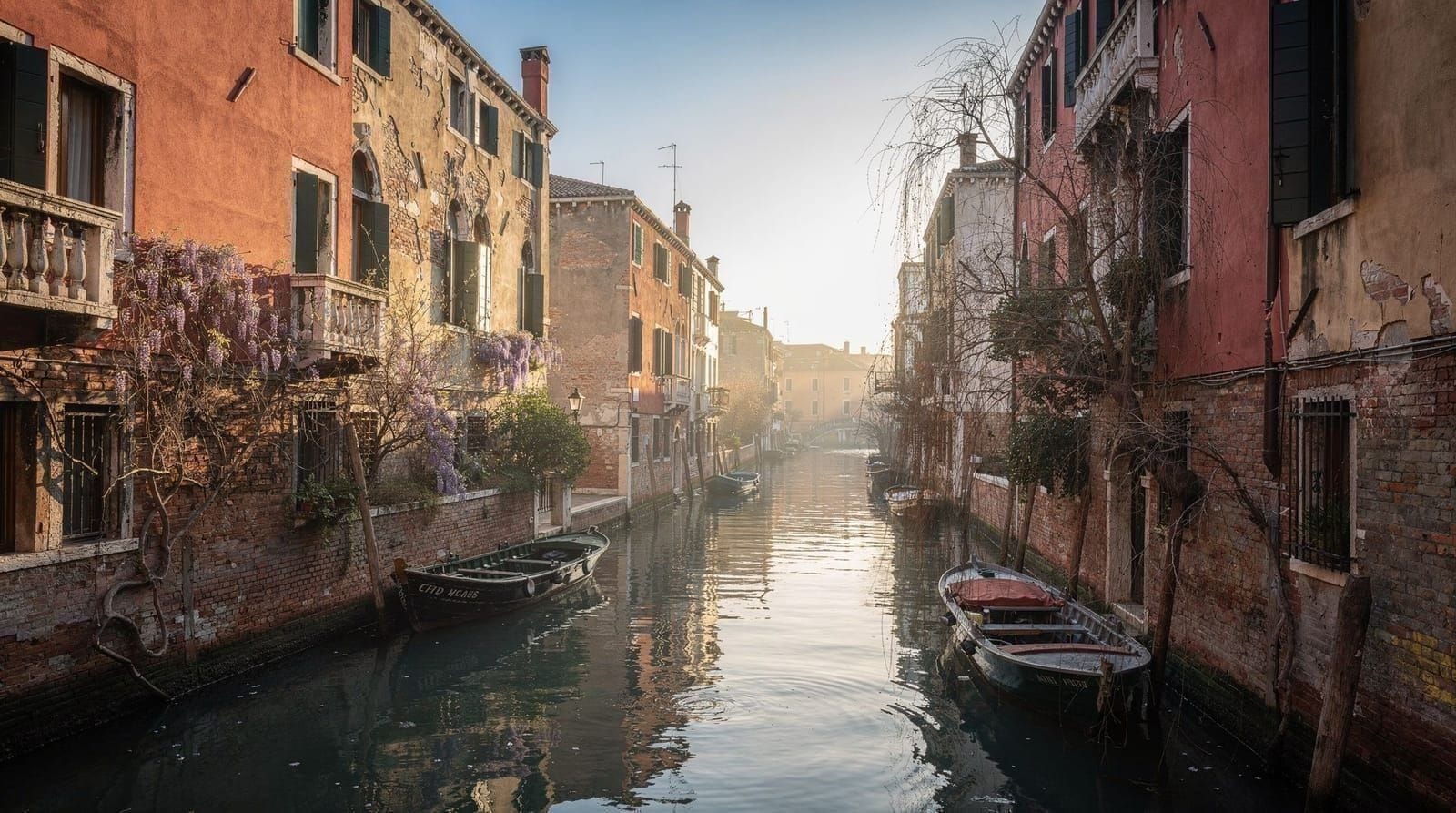
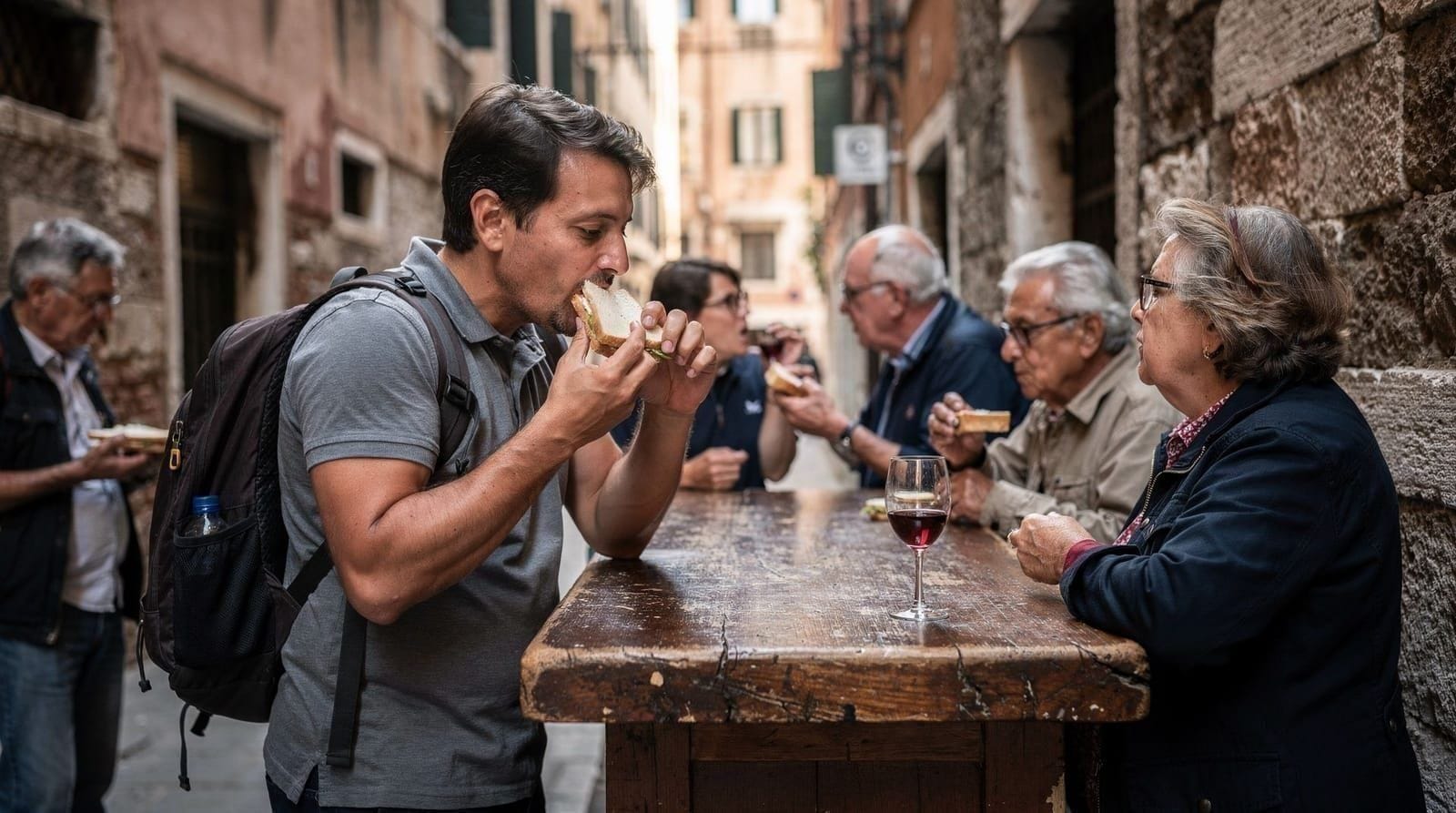
The cicchetti trail through Cannaregio is genuinely the best introduction to this part of the city, and in November it’s actually enjoyable rather than a scrum. We hit three bacari before nine, spent about €28 on food and wine combined, and walked back along the canal with the whole fondamenta almost to ourselves. If you’d rather have someone else pick the stops on your first night, a guided version does the same route with a local who already knows which counters are worth the queue.
Rialto cicchetti food tour with a local guideFor dinner we avoided the trap zone entirely. There’s a standing rule we’ve developed over many trips: if the menu has photos and is laminated, walk on. If there’s a handwritten board and a local at the bar arguing about football, sit down. We ended up at a small osteria in San Polo — I couldn’t find it again if I tried — and had sarde in saor and bigoli in salsa for about €30 total.
Day two: the real sightseeing, done right
Saturday morning, bright and cold, we were at St Mark’s at 8am. I cannot stress this enough: the Basilica before the crowds arrive is an entirely different experience from the Basilica at noon. The golden mosaics shift as the light changes and there are maybe forty people inside. By ten o’clock there were several hundred.
We had pre-booked skip-the-line tickets for the Doge’s Palace for 9am. If you’re doing this in November, you can probably walk up on the day — but booking a week ahead also gets you the option to add the secret itineraries route through the prison cells and the attic passages, which I’d recommend over the standard route every time.
Book the Doge’s Palace secret itineraries routeAfter the palace we crossed the Rialto bridge around noon and found the fish market just closing down. The vendors were hosing down the stalls and there were four tourists and several hundred seagulls. We grabbed lunch at a bacaro near Campo San Giacomo di Rialto — €8 for a plate of cicchetti and a glass of ombra — and felt smug about it.
The afternoon was ours to wander. In November I always end up somewhere I’ve never been before, simply because I’m not fighting a current of tourists toward the obvious landmarks. We found the Dorsoduro sestiere almost entirely to ourselves by two o’clock, walked along the Zattere with the lagoon completely still, and watched a water bus turn at the Dogana point.
Getting around off-season
The vaporetto network runs normally in November, and without peak-season crowds the boats are considerably more comfortable — you can sit on the exterior deck without fighting for space, and the journey from Santa Lucia to San Zaccaria takes its natural thirty-five minutes rather than the fifty-minute boarding-and-shuffling version of August.
We used the 48-hour transport pass (€35) for our stay, which covered all vaporetto travel plus the one return trip to Murano we considered but ultimately abandoned. If you’re staying in the San Marco or Cannaregio area and doing your island visit separately, a 24-hour pass (€25) may be enough — the distances within historic Venice are genuinely walkable if you have good shoes and no time pressure.
The walk from Santa Lucia station to Piazza San Marco takes about thirty-five minutes at a reasonable pace. Most people take the vaporetto. The walk is better.
The acqua alta question
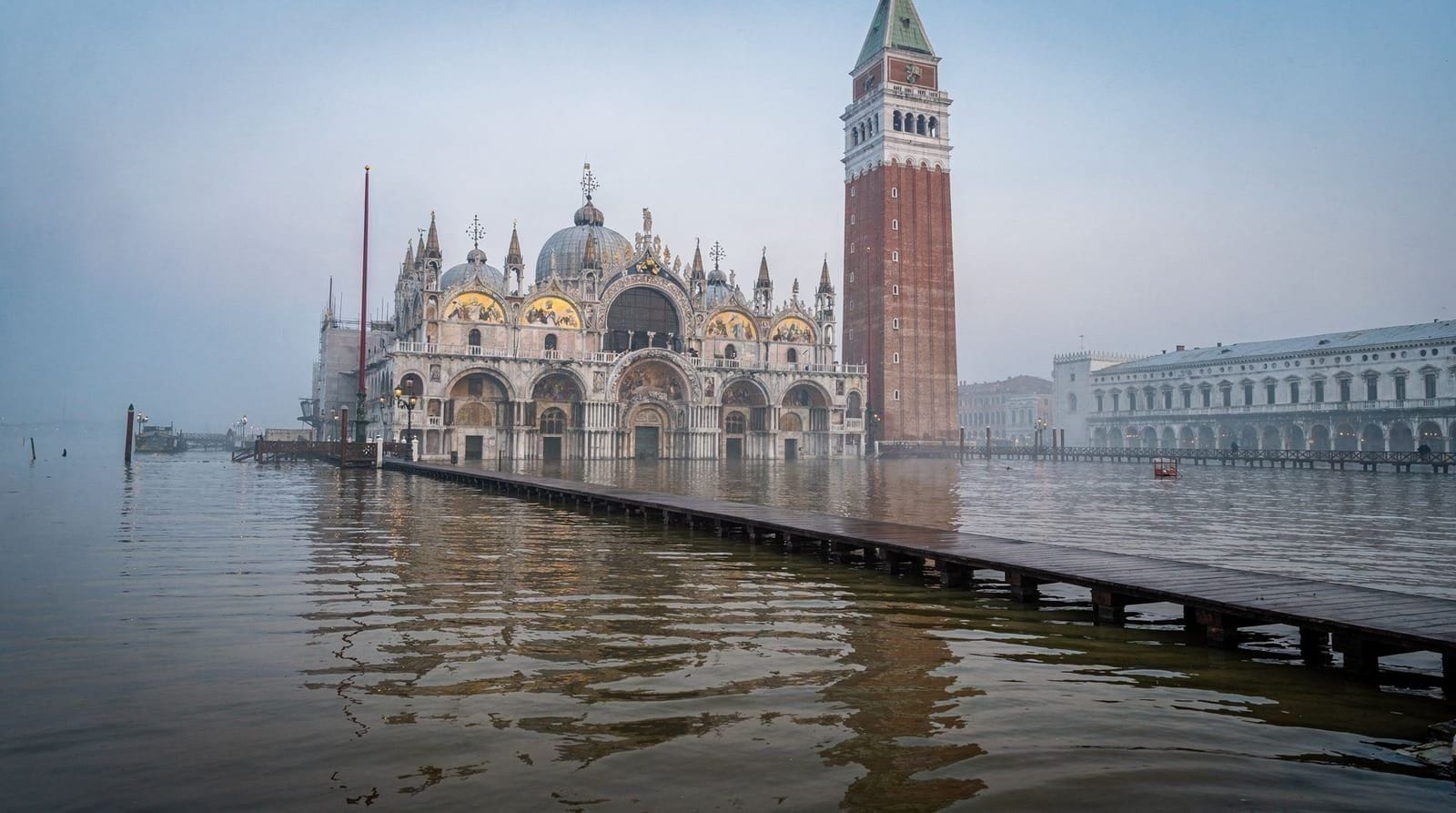
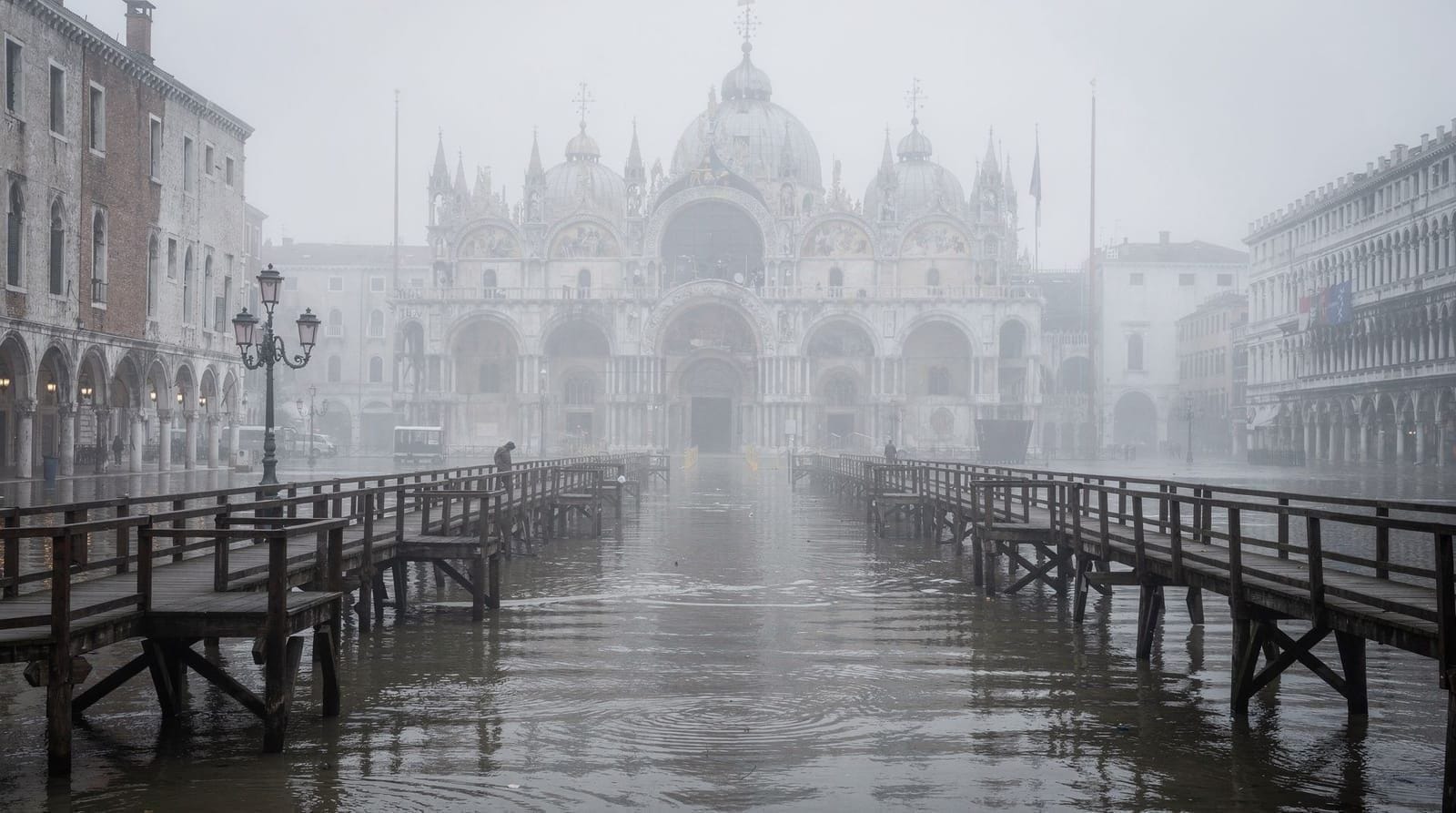
We got lucky. November 2024 didn’t produce any major flooding events during our stay, though the MOSE barriers have genuinely changed the calculus since 2020. The Venice municipality now activates the barrier system several times a week during autumn peaks, and the dramatic flooding images you might have seen online — water lapping into St Mark’s Basilica, chairs floating past restaurant fronts — are increasingly rare.
That said, you should still pack something for your feet. A lightweight pair of waterproof boots or rubber overshoes takes up almost no bag space and will save you on the one morning when 20cm of water rolls through the streets. The acqua alta forecast is posted on the city’s website and via an app, and the three-tone warning siren is genuinely useful once you learn what each tone means.
The boardwalks (passerelle) go out automatically in the areas that flood first. If you hear the sirens and you’re near San Marco, head for higher ground or just wait. It usually passes in two hours.
What off-season actually saves you
Hotel prices in early November run 35 to 50 percent below peak season in the same properties. We stayed in a small three-star near Campo Santa Margherita for €110 a night, which in August would have been close to €200. The breakfast was genuinely good, the staff were relaxed, and we had the roof terrace entirely to ourselves each morning.
Restaurants are more honest. Not universally, not everywhere near San Marco — but the tourist trap problem is meaningfully less acute when there are fewer tourists to trap. The cover charge phenomenon doesn’t disappear, but you’re less likely to get the water-you-didn’t-order-and-now-you’re-paying-for situation.
Museums are comfortable. We walked into the Accademia Gallery on a Tuesday with no queue whatsoever. The Peggy Guggenheim closes in winter until April, so check that — but the Palazzo Grimani and the Correr Museum are open and effectively empty.
What off-season costs you
Shorter days. This is the honest trade. By the time we’d had breakfast and were walking, it was nine. By four-thirty the light had gone. That’s seven and a half hours of useful daylight, which is workable but not generous.
Some restaurants keep reduced hours or close for staff holidays (ferie) in late November. We had one evening where our first choice was dark and our second was doing private events. The third worked out fine, but it was a reminder to check opening hours rather than assuming.
The islands are dimmer too. Burano in November is still beautiful — the painted houses don’t know what month it is — but the light is flatter and there are fewer boats making the run. We didn’t make it out to the lagoon islands on this trip, which is the only thing I’d change. If you have a third day, the Murano, Burano and Torcello loop is worth adding, and off-season the vaporetti out there are almost as calm as the ones in the historic centre.
What we’d have done with a third day
Two days is enough to fall for Venice, not enough to see it properly. If we’d had a third, it would have gone to Murano for the glass and Torcello for the quiet — the two islands that reward exactly the kind of unhurried pace November encourages. A guided half-day covering both, plus Burano, takes the guesswork out of the vaporetto timetables, which get sparser off-season and are easy to misjudge on a first visit.
Murano, Burano and Torcello half-day boat tourWe’d also build in more slack for Dorsoduro itself — we only gave it an afternoon, and a full morning there, starting at the Accademia and finishing at the Zattere waterfront, would have suited the November light better than rushing it in beween other stops.
November vs peak season, side by side
| November | August | |
|---|---|---|
| Hotel (3-star, per night) | around €110 | around €200 |
| Daylight hours | about 7.5 | about 14 |
| St Mark’s Basilica queue (8am) | minimal | already forming |
| Vaporetto comfort | seats available | standing room only |
| Acqua alta risk | present, manageable | negligible |
| Cicchetti crawl feel | locals outnumber tourists | tourists outnumber locals |
The trade is honest: you give up daylight and take a small flood risk, and in exchange you get a city that behaves the way it must have decades ago.
The 48-hour itinerary we’d repeat
Morning of day one: arrive, walk the Rialto slowly, eat cicchetti, don’t rush. Evening: Cannaregio food crawl, three bacari, early bed.
Day two morning: Doge’s Palace at nine, Basilica at eight if you can manage it, Rialto market until noon. Afternoon: Dorsoduro on foot, Zattere, sunset from the Punta della Dogana if the light cooperates. Evening: a sit-down dinner in San Polo or Dorsoduro, somewhere without a photo menu.
The two-day Venice itinerary I’d plan today would look almost exactly like this. But the real lesson of off-season travel is that you can afford to slow down — the city will meet you there.
A word about the access fee
Since April 2024, Venice charges a day-tripper access fee on roughly sixty peak days per year. November is not typically on this list — the busiest dates cluster between spring and midsummer. But the rules do evolve, so it’s worth checking the Contributo di Accesso before you book, particularly if your November dates land on a weekend that the city has flagged as high-pressure.
If you’re staying overnight, which you should be — you’re exempt from the fee in any case. It only applies to day visitors arriving without a hotel booking.
Would we do it again?
Already booked for next year. There’s something about this city in the cold that rewards patience in a way the summer version doesn’t quite manage. The water smells different, the light is more honest, and you eat better because you have to work a little harder to find the right places.
That effort is part of what makes it good.