The truth about gondola rides in Venice
Start with the honest summary
A gondola ride in Venice costs €90 for 30 minutes during the day (official rate), €110 in the evening after 7pm, plus €30 for each additional 20 minutes. These are the official Gondoliers’ Association rates set by the city. They’re not negotiable in the sense that the tariff is fixed; they are, in practice, routinely exceeded.
Whether a gondola ride is worth it depends entirely on what you’re expecting. If you want a private boat experience through the smaller canals, time to take photographs, a moment of quiet — it’s worth it. If you’re expecting a romantic transformation scene from a film, or an expert commentary on Venetian history, or particularly athletic navigation by someone who is also singing — you may be disappointed.
Here’s what three gondola rides over as many trips taught us.
| Where | Official stands near Rialto, San Marco, or the train station |
| Cost | €90/30min day, €110/30min evening, official tariff |
| Time needed | 30 minutes standard; add €30 per extra 20 minutes |
| Getting there | Walk to any official fermata (gondola rank) |
| Best time | Late afternoon or after 7pm for quieter canals and softer light |
What the experience actually involves
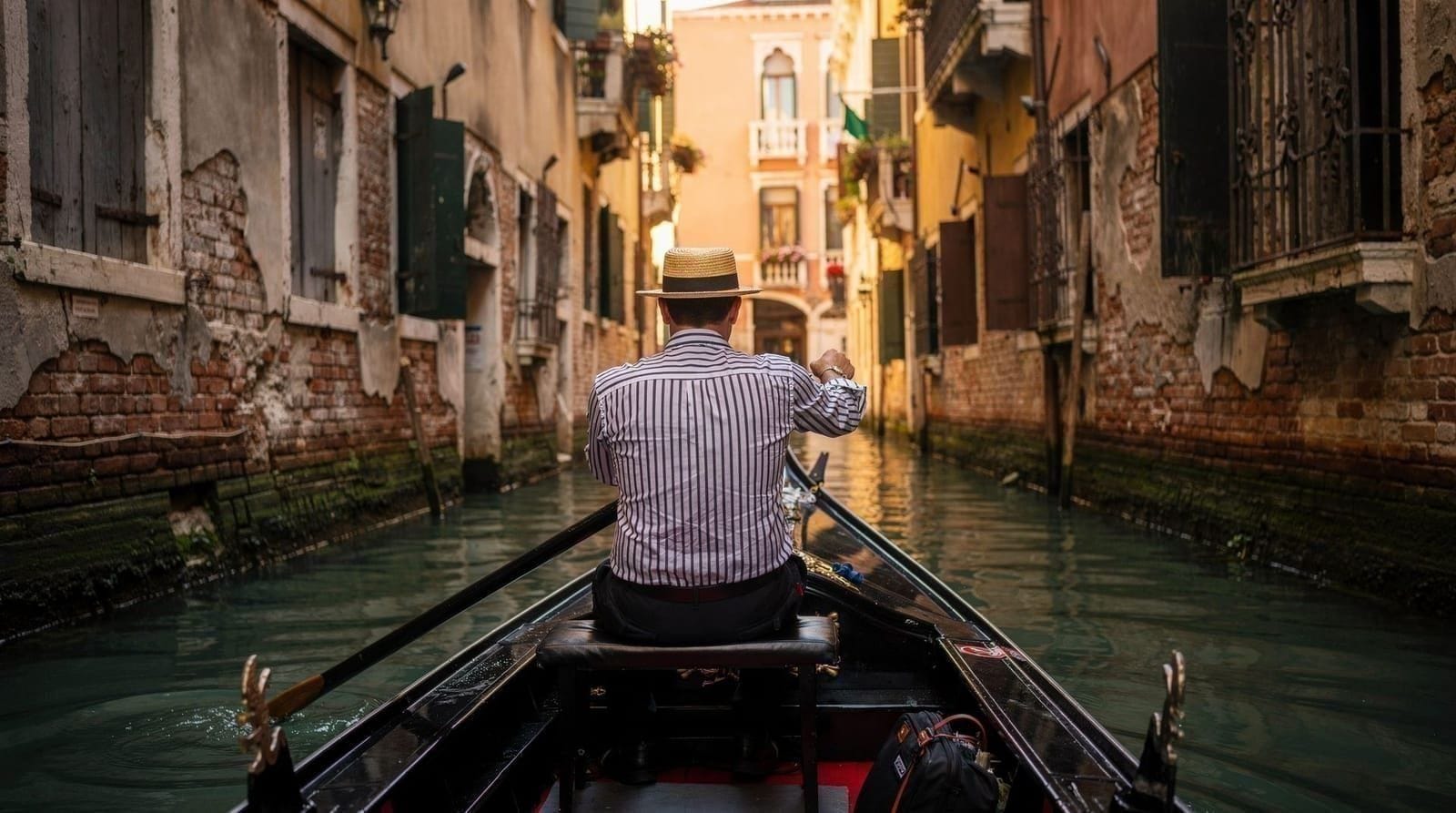
You get into a flat-bottomed wooden boat. The gondolier stands at the stern. He moves you through canals using a single oar worked in a specific Venetian rowing style (voga alla veneta). He steers by weight shift and oar angle.
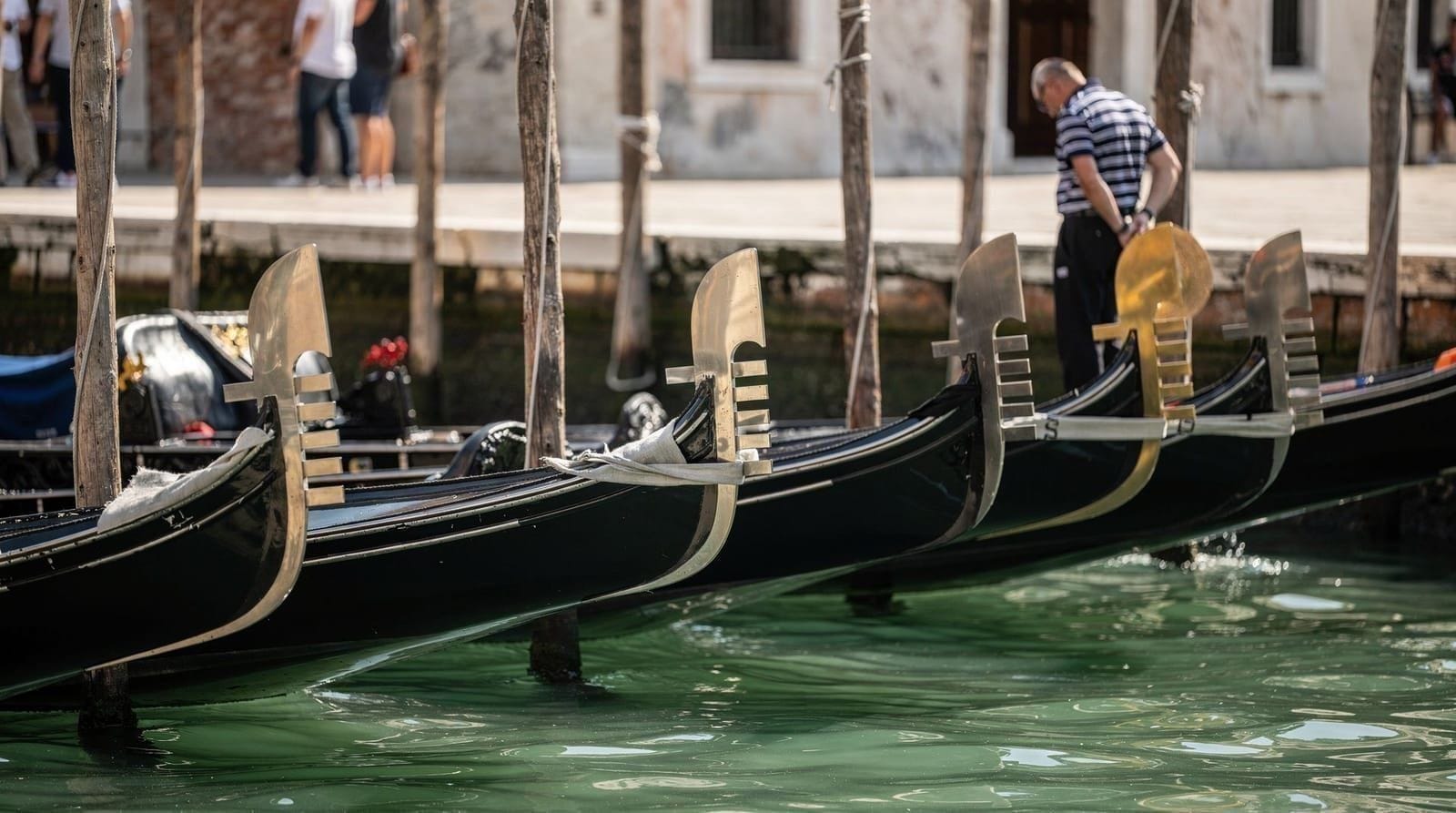
The boats are beautiful objects — each one custom-built by a squero (boatyard) according to centuries-old specifications, slightly asymmetric to compensate for the weight and stance of the rower. They’re lacquered black by tradition. The ferro ornament at the prow represents the six sestieri of Venice plus other elements depending on interpretation.
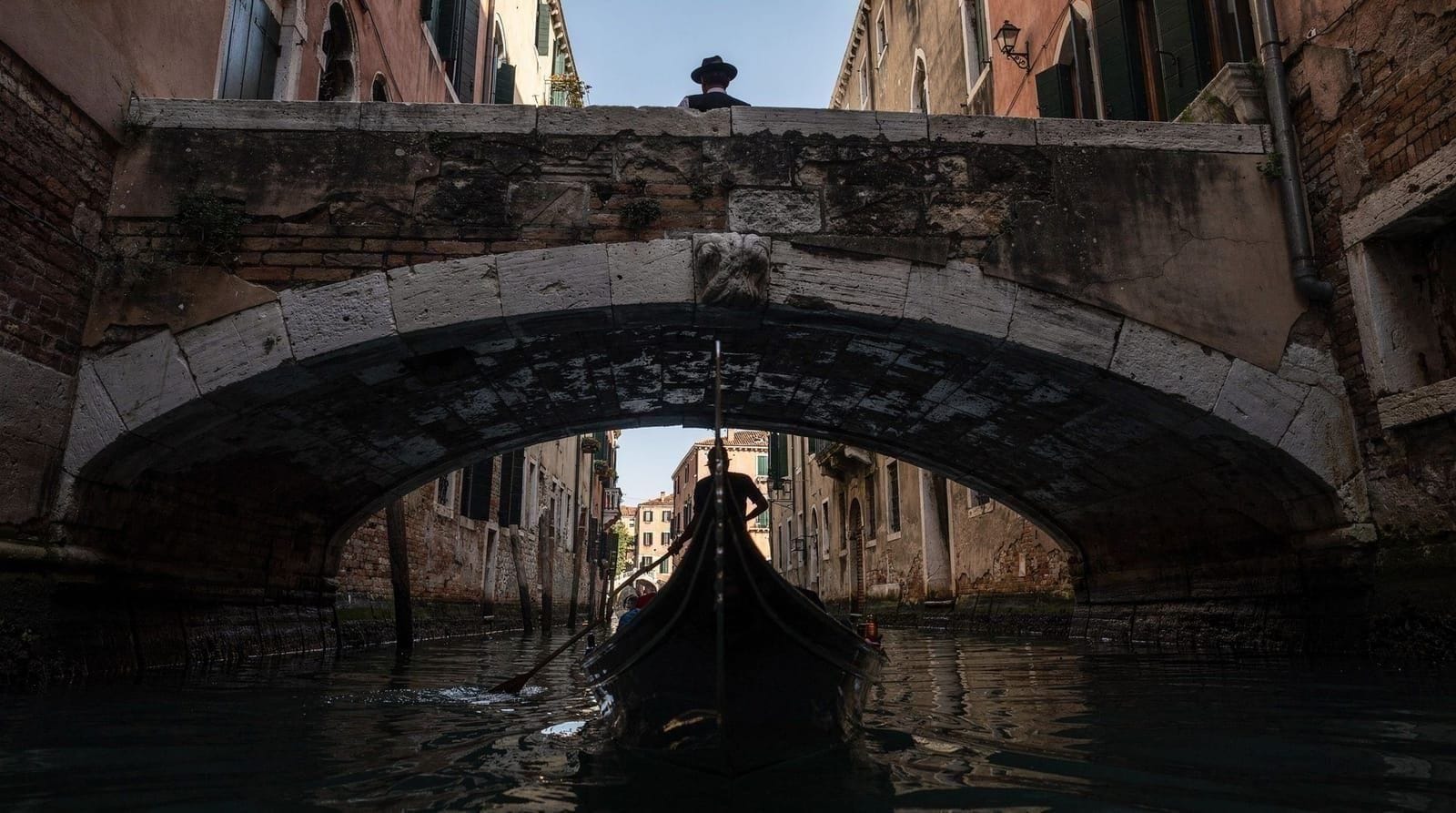
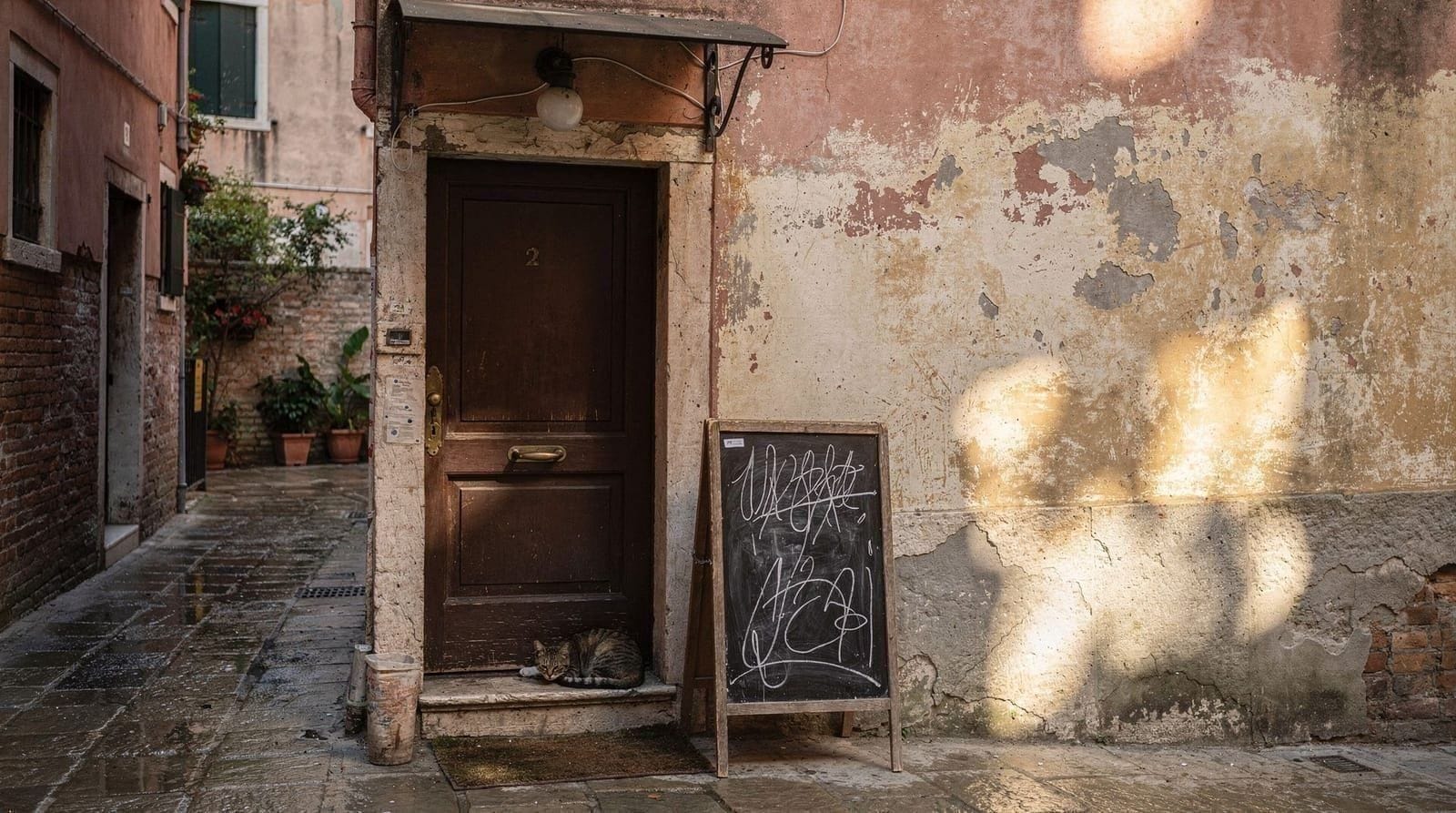
The smaller canals, away from the Grand Canal, are genuinely extraordinary seen from water level. The reflections change constantly. The scale of the buildings becomes different when you’re below the fondamenta looking up. There are cats on window ledges and laundry on the lines and the occasional resident who watches you pass from a doorway with the expression of someone who has watched tourists pass for forty years.
Your gondolier will probably not speak at length. He may answer questions if you ask. He may be friendly or taciturn, enthusiastic or businesslike. The gondoliers of Venice are employees of a hereditary profession — entry is regulated, the waiting list is long, the training is substantial — and they have varying levels of tourist engagement. Expecting a guide as well as a navigator is usually too much.
Choosing your route
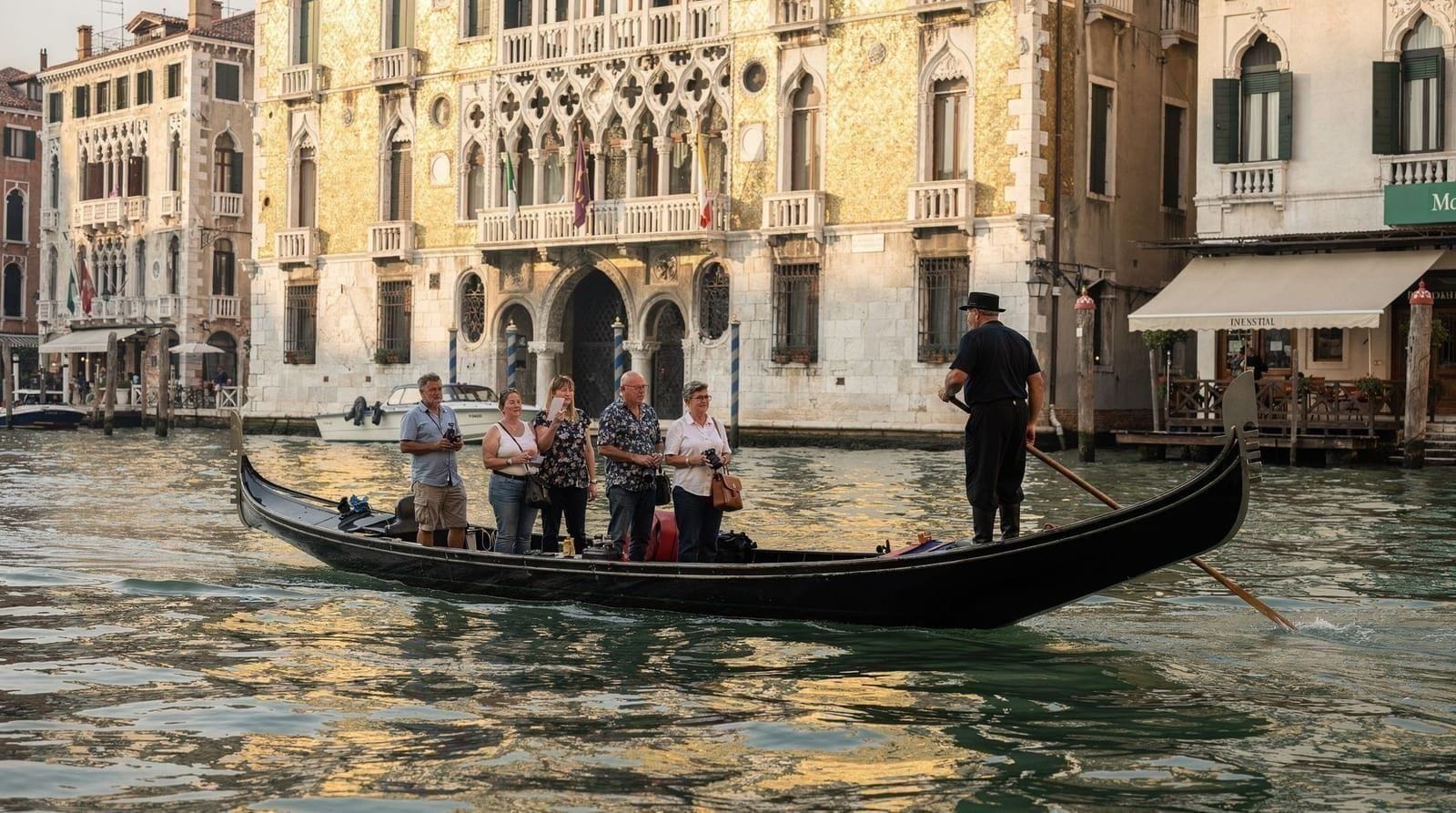
The route matters more than most gondola booking advice acknowledges. The Grand Canal by gondola sounds like the obvious choice — it’s the main artery of the city, the one you’ve seen in photographs. But the Grand Canal by gondola is actually less interesting than the Grand Canal by vaporetto. The facades of the palazzi are designed to be seen from across the water, not from below. The Grand Canal also has heavy motorboat traffic that makes the rowing choppy and occasionally unpleasant.
The better routes are through the smaller canals of San Polo, Dorsoduro, and the back ways of Cannaregio. These are quieter, slower, and more revealing. The best gondola route guide has specific routing suggestions with maps if you want to brief your gondolier in advance on what you’d like to see.
Tell your gondolier before you get in what kind of route you want. Most are happy to follow a preference — narrow canals, or specific areas — rather than doing the default tourist circuit. This is the single most useful thing you can do to improve the experience.
Booking and what to avoid
The official stand (fermata) system has gondola ranks at multiple points around the city — near the Rialto, near San Marco, near the train station. Booking through the official stand is the standard approach and the prices should match the official tariff.
What to avoid: touts who approach you near tourist sites offering “quick ride, cheap price.” These informal arrangements occasionally underdeliver on the route and sometimes involve price disagreements at the end. The gondola scam guide is more alarmist than reality strictly requires, but the basic advice stands: use official stands and confirm the price before you board.
The serenade question
The gondola-with-serenade is a separate product. A musician (usually a tenor and an accordionist) accompanies two or more gondolas through the canals, singing. It adds €30 to €40 per gondola to the cost and is available primarily in the evening.
Opinions on this divide sharply. Some visitors find it exactly as romantic as they’d hoped. Others find it slightly theatrical — a performance for people who haven’t quite decided whether they’re experiencing Venice or watching a show about it.
We did the serenade on trip two. My honest assessment: it’s enjoyable, it’s not tacky, the singers are professional, and the moment when the music carries across the water in a quiet canal in the dark is genuinely beautiful. Would I do it again? Probably not — once is exactly the right number of times. But I’m glad we did it.
What the prices are doing
The official tariff is set by the city and was most recently updated in 2023. The rates as of 2026:
- Day (before 7pm): €90 for 30 minutes
- Evening (after 7pm): €110 for 30 minutes
- Additional time: €30 per 20 minutes
These are the stand (fermata) prices. Some gondoliers operating through hotels or agencies add a booking fee. Some quote in round numbers — “€80, quick ride” — which is illegal in principle and happens anyway. Know the official rate before you negotiate.
The gondola prices guide has the full breakdown including seasonal variations and the booking fee issue. The short version: insist on the official tariff, agree the route and duration in advance, and get confirmation of the price before you step in.
The traghetto alternative
The traghetto is the public gondola ferry — a gondola that crosses the Grand Canal at specific points for €2 per passenger. This is a traditional service used by residents who need to cross the canal without going to the nearest bridge. You stand in the gondola alongside other passengers and cross in about two minutes.
The traghetto costs 45 times less than a private gondola and is a genuinely authentic Venetian transport experience. It’s not romantic and it’s not touring — but if you’ve always wanted to ride in a gondola and the price of the private version doesn’t appeal, it’s worth knowing about.
The gondola vs traghetto guide covers the logistics including which traghetto crossings are still operating (several have closed as private boat traffic increased).
What the gondoliers think
We had a conversation with a gondolier who’d been working for nineteen years, on our third Venice trip. He was frank. The job is physical — rowing for six to eight hours leaves you in a specific kind of bodily state. The peak season crowds are stressful to navigate. The questions he gets asked most are “how long have you been doing this” and “is it cold in winter.” He wished more people asked about the history of the boats.
He also said, unprompted, that the most pleasant passengers are the ones who stop trying to make the experience match what they’d imagined and just let it be what it is. “Venice from the water is not like Venice on foot,” he said. “Don’t compare. Just look.”
This is the correct gondola philosophy.
The private vs shared question
The official tariff applies per gondola, not per person. A shared gondola (shared with other tourists, typically four to six people) is sometimes available at a lower per-person rate — check at the official stands.
The calculation is: a private gondola for two at €90 is €45 per person for a more intimate experience. A shared gondola with four people at €70 total is €17.50 per person for a more crowded, less personal experience. The shared version is significantly cheaper but notably different in atmosphere.
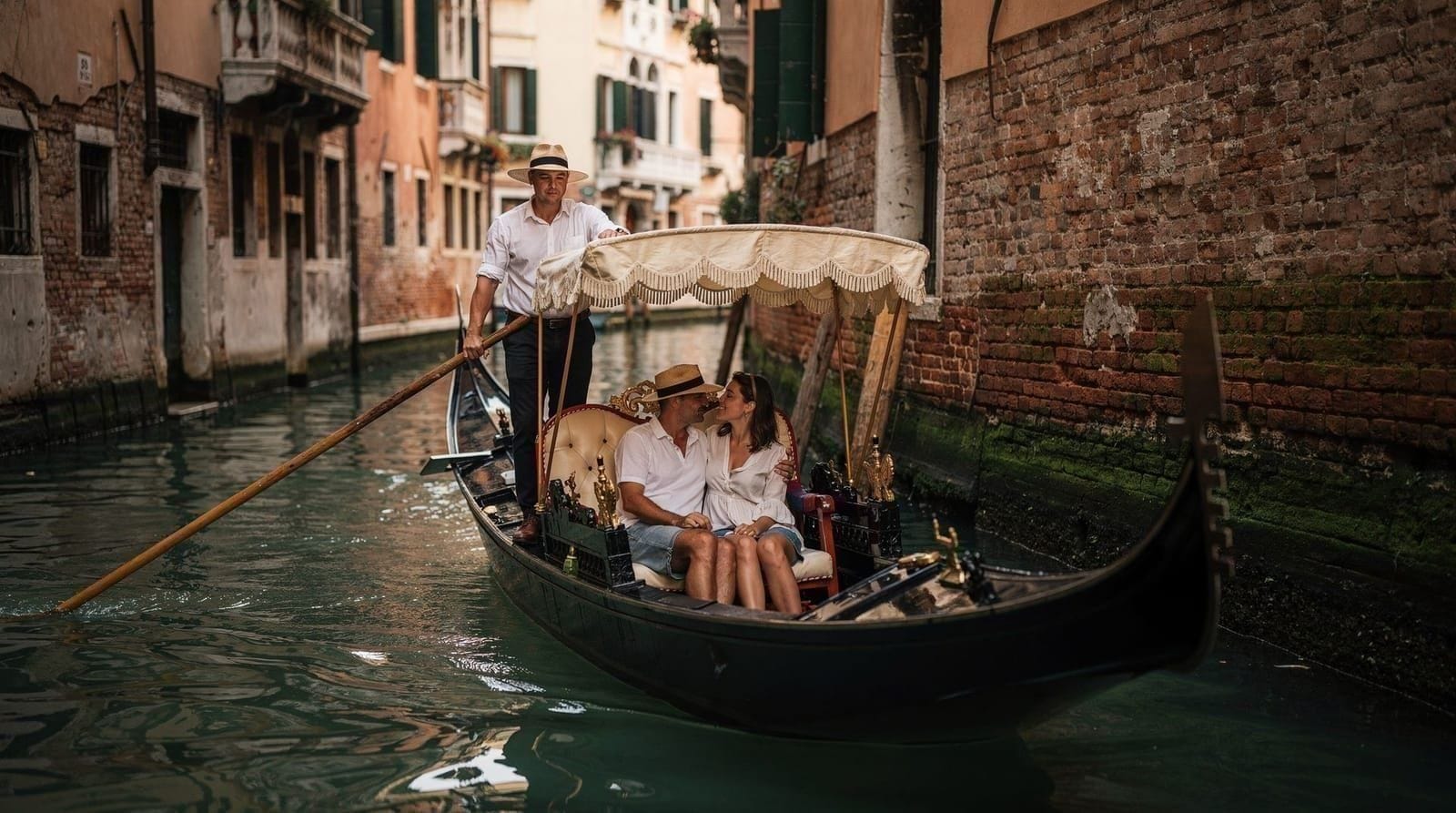
Our first gondola was shared — three couples, all awkwardly British about not speaking to each other for thirty minutes in a small boat. The second was private. The private version was worth the extra money, specifically because the route was ours to request and the pace was ours to set.
The private vs shared gondola guide makes the case for each in more detail, including which situations favour each option.
| Private | Shared | |
|---|---|---|
| Price per person (2 vs 4–6) | around €45 | around €15–20 |
| Route control | yours to request | fixed, standard circuit |
| Atmosphere | intimate, quiet | sociable or awkward, depending on the group |
| Best for | couples, photographers, a special moment | budget-conscious visitors, solo travellers |
If you’d rather book online in advance and lock in the price before you arrive, both formats are available that way, which also removes the negotiation-at-the-stand step entirely.
Private 30-minute gondola ride through Venice’s canals Shared 30-minute gondola ride, budget optionOur verdict
If you’re visiting Venice for the first time, a gondola ride through the smaller canals is worth doing once. Choose a short route through Castello or the backways of San Marco rather than the Grand Canal — the Grand Canal by gondola is actually less interesting than by vaporetto because the building fronts are designed for viewing from a distance, and the traffic is heavier. Book through the official gondola guide or a verified operator; avoid informal touting near tourist sites.
If you’ve been to Venice before and done it once: the money is better spent on a private boat tour of the lagoon or a sunset cruise, both of which give you more time, more distance, and comparable or better scenery.
The gondola is not overrated in the sense that it’s genuinely a beautiful experience. It is overrated in the sense that many people pay €90 for thirty minutes expecting transformation and receive thirty minutes in a beautiful boat in a beautiful city. The city is enough. The boat is a nice way to see it.
When we’d skip it entirely
There are trips where we’ve skipped the gondola altogether and don’t regret it. If you’re on your third or fourth Venice visit, if the budget genuinely doesn’t stretch to €90 for half an hour, or if you’re travelling with young children who won’t sit still for thirty minutes in a narrow boat, the money and time are better spent elsewhere — a private boat tour of the lagoon covers more ground for a comparable price per person in a larger group, and the sunset lagoon cruise delivers a comparable romantic payoff without the fixed 30-minute clock.
What actually determines a good gondola experience
Having done this three times, the variable that matters most isn’t the gondolier, the boat, or even the price — it’s whether you tell the gondolier what you want before you get in. A silent thirty minutes on the default circuit and a thirty minutes where you’ve asked for the quiet backwaters of Castello or Dorsoduro are genuinely different experiences on the same boat with the same person. Say what you want. Most gondoliers are happy to oblige, and it costs nothing extra.